

Composer Unsuk Chin and cellist Alban Gerhardt are featured musicians at the 75th Aldeburgh Festival this year. They have been linked in music since 2009, when Alban was the soloist in the premiere of Unsuk’s Cello Concerto at the BBC Proms in 2009. They talk to Arcana about how the piece has evolved and their hopes for this year’s festival.
by Ben Hogwood
The 75th Aldeburgh Festival of Music and the Arts is upon us – and Arcana is in the very fortunate position of talking simultaneously with two of its Featured Musicians, Korean composer Unsuk Chin and German cellist Alban Gerhardt. Unsuk is checking in from her Berlin residence, where she is deeply ensconced in composition work – of which more later. Gerhardt, as is often the case, is touring – and is about to join us from his hotel lobby in Spain, where he played the Lalo concerto the previous night.
The two have a strong musical bond, cemented by the Cello Concerto Unsuk composed for Gerhardt, first performed at the Proms in 2009 with the BBC Scottish Symphony Orchestra. Gerhardt will bring it to Aldeburgh in 2024 with the same orchestra, under Ryan Wigglesworth, on 20 June.
Firstly, however, we welcome Unsuk to the chat. Her youthful countenance is complemented by an intense focus on her music – which comes to the fore as soon as we begin to discuss Alaraph, a quarter-hour piece for orchestra receiving its first UK performance at Aldeburgh this season. Subtitled Ritus des Herzschlags (Rite of Heartbeat), it is a powerful and dramatic piece, in which Unsuk is drawn to the concept of so called ‘heartbeat stars’, that have a regular pulsation.
“I’m very interested in science”, she says, “and I was very interested in the different types of stars. These heartbeat stars have a certain rhythm of changing the brightness, and immediately I imagined a certain type of rhythm where I could compose a piece with this idea. The second idea in Alaraph came from Korean traditional music. We have very vivid, dynamic folk music, and I was always very impressed by its rhythms and melodies, and I wanted to bring them all into one piece. Lots of percussion instruments will be needed there!”
In spite of the large percussion section, the piece ends quietly, which if anything heightens the drama. “The piece is a kind of ritual,” she explains, “and the six percussionists play a very big role. The sound is moving from left to right and right to left, and at the end of the piece they repeat the cymbal sound. Then they should stand and show the cymbals, as a kind of ritual.”
On a much smaller scale, we will hear a group of Chin’s Piano Etudes, in concerts from Joseph Havlat and Rolf Hind. Talking about the Etudes almost inevitably draws parallels with Unsuk’s teacher György Ligeti, whose own Etudes for piano have proved revelatory in the course of the instrument’s recent development. Were they intimidating when she started to write in the form? “When I studied with Ligeti he had just finished the first cycle of six etudes, and I was at the premiere of those pieces”, she says. “On the other hand, I have played the piano since I was four, so it was for me the main instrument. I certainly got some influence from him in writing piano pieces, but even if he had not written piano etudes, I would have written my etudes for sure!”
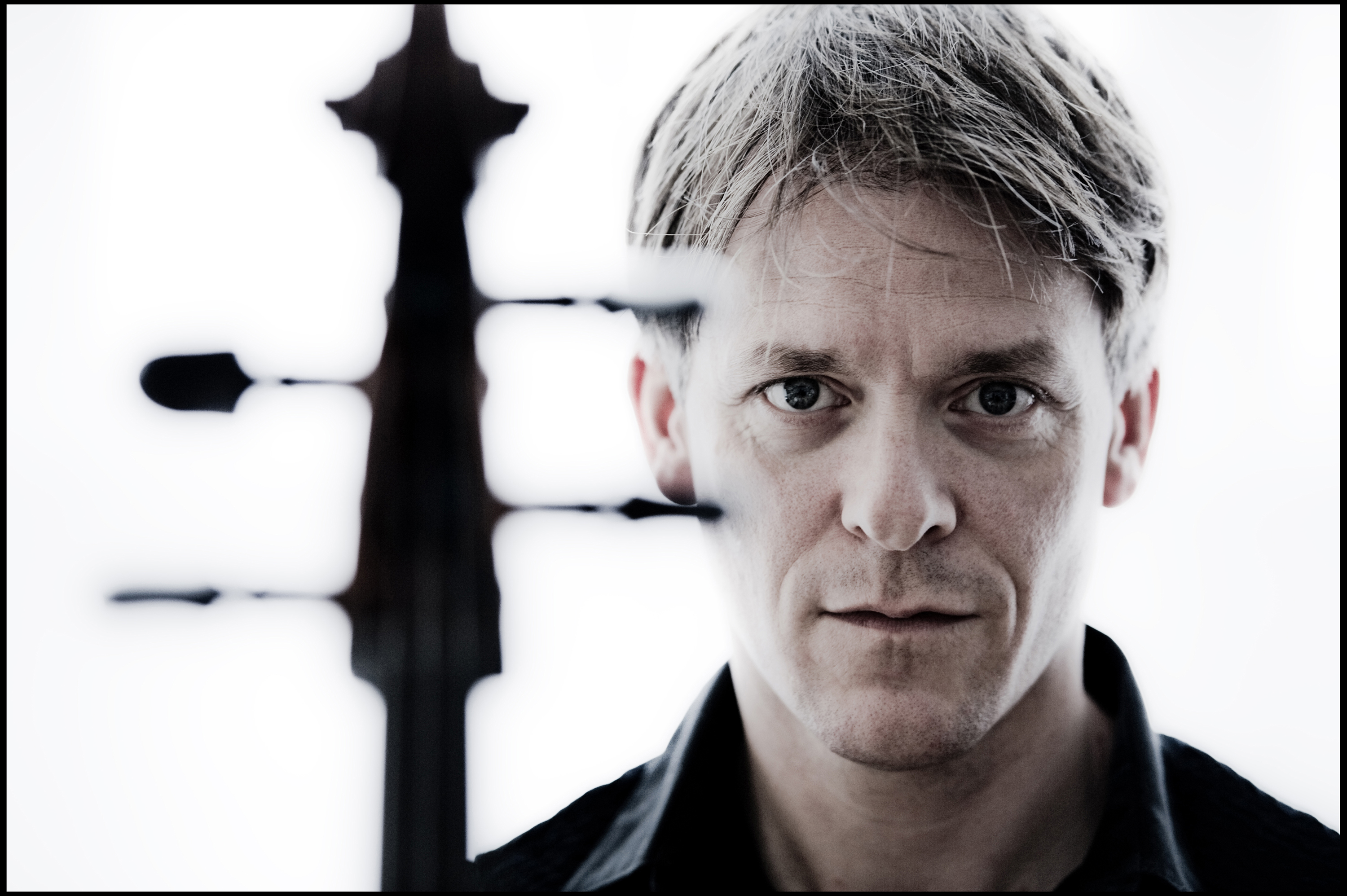
At this point Alban joins the call, and Unsuk greets him enthusiastically. “Your hairstyle is new!”, she exclaims, but he shakes his head. “No, just less hair!”, he says, smiling. Gerhardt is being modest, for he too looks bright-eyed and in good spirits. Talk inevitably turns to the Cello Concerto Unsuk wrote for him, and they recall their first meeting. “We met first in 1999 in Helsinki”, she says. “It took a couple of years, but then I had some idea of how it would be very nice to write a cello concerto for him. That was the beginning, but then he had to wait almost seven years while I got the piece ready!”
Gerhardt was not impatient for the piece, however. “I am glad you mentioned that, because it proved to me that you are not slow or lazy, but very respectful for the genre of the cello concerto. I remember at first that you were very hesitant, and that’s a wonderful quality, because these days it’s like everybody should be writing a cello concerto. One of the most difficult tasks nowadays, with a big orchestra, is that you want to use it as a composer. But if you use it, then you lose the cello. You were aware of that huge challenge, and you took your time. It got postponed a few times, and at the Proms too, but I’m so happy – because this piece works! The truth is that it was performed in Berlin by another cellist, Alisa Weilerstein, which is fantastic. Which other modern cello concerto can you say that about, that it was performed in the same city at 10 years difference by a top-class cellist? I’m very happy about that!”
Chin smiles in gratitude. “You are always supporting me!” she laughs. “The first time we met was through Lisa Batiashvili”, recalls Gerhardt, “and she is a close friend but also grew up together with Unsuk’s husband, Maris Gothóni. I knew about Maris first, and then I met Unsuk and was shocked by her charisma and aura, and then when I heard the Violin Concerto I thought, “she needs to write a cello concerto!”
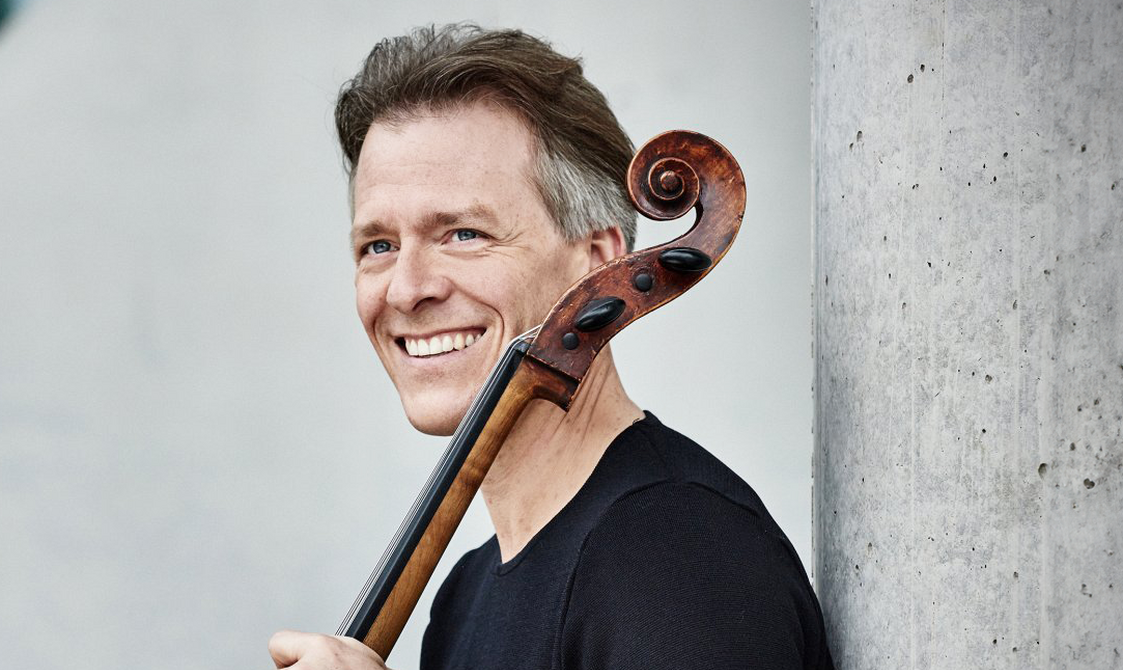
The concerto makes some fearsome technical demands, wasting no time in pitching the soloist right to the core of the action – an aspect that Gerhardt applauds. “Actually, the beginning is among the easiest bits of the whole piece! It’s not easy at all, but compared to what comes later, I’m not afraid of the beginning. I’m happy to start right away because if you sit there forever, you start thinking and getting nervous, which is not a good thing.”
“For me the working process was very interesting”, Chin interjects, “because often the artist and composer will have conversations and contacts, but with us it was not like that. I just wrote the piece to the end, and I delivered, and he delivered his playing. It was extremely professional, and there was not a need to change anything because of his technique. I wrote what I wanted, and he played it at the premiere by memory. I couldn’t believe that a human being could do that!”
At this point, Gerhardt has a confession to make. “This is the biggest shame of my life, because I was big headed, and I got lost three times – I was not happy. The most beautiful and difficult part in the last movement, which is like 80 seconds, is very wittily written and difficult to play. It is probably the 80 seconds I have practised most in my life, and I completely missed them in the world premiere. I’m so grateful that I have had 30, 40 more times now to play it. For me that is the biggest thing. I have not played so many world premieres, but each one is the worst performance – it always gets better. You need to give it a chance to grow – not with the memory slips, but the piece settles. With this piece the more I play it the more beauty and intensity I discover, and the more I understand it. There is so much to understand that you cannot grasp it all at first sight.”
He is relishing bringing the piece to the Aldeburgh Festival. “I am very happy to play it there, after 15 years and having premiered it with the same orchestra. It will be a completely different performance, and I would bet my life it will be a much better one!”
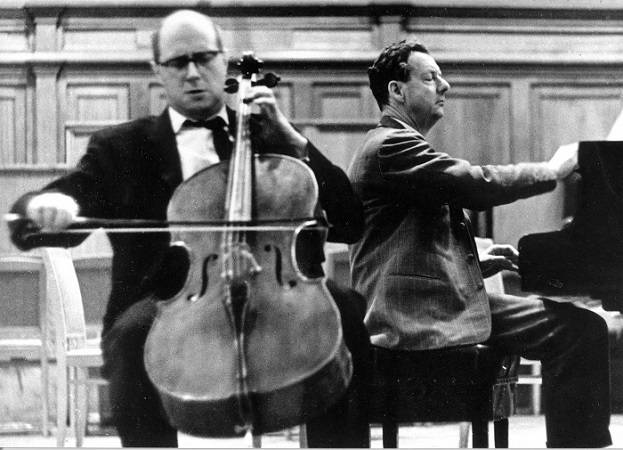
As well as the concerto Alban will be teaming up with regular recital partner, pianist Steven Osborne, in a recreation of a legendary recital given by Mstislav Rostropovich and festival founder Benjamin Britten (both above) in July 1961, where the world premiere of Britten’s Cello Sonata took place. Gerhardt considers the rapport both performers have in that recital. “Britten was a fantastic pianist and a wonderful musician, besides being a great composer. I wouldn’t say Steven and I have the same rapport because none of us is as creative as these two guys. Rostropovich was a composer himself, not a great composer, but he wrote some quite witty pieces, and conducted and played the piano. He was really a complete musician, although I don’t agree with everything he did interpretation-wise – which is perhaps bad taste on my part – but they were two giants of music! I think Steven and I understand each other well because we are closer in age and Western, whereas the Russian and the Brit – that’s quite a mix!”
He considers the concert further. “You have no idea how brave I actually am because two nights before I am playing Dvořák in Chicago, and I arrive in the middle of the night at 1am the day of the recital. I’m already very scared of that day!” We agree that Rostropovich would probably be in favour. “Yes, he would approve of doing something stupid like that!”
Both Unsuk and Alban are intensely honoured by their roles this year. “I heard lots of things about Aldeburgh and Benjamin Britten, who I really admire as a composer”, says Chin, “and it’s a really great honour to be played at the festival”. Sadly she won’t be attending in person, due to the composition of her opera Die dunkle Seite des Mondes (The Dark Side of the Moon) getting to the stage where it can’t be left. “It should be finished by the end of this year!” she confirms. “I’m not coming to Aldeburgh, then!” jokes Alban on hearing the news. “For me it’s an honour, but it is also an honour for the festival to have Unsuk, because she is one of the two or three best living composers. Anybody should be honoured to play her music.”
He recalls his first visit to the Suffolk town. “I think I was first there 20 years ago. A few months ago I went to the Red House for the first time, and saw the manuscript of Britten’s Cello Suite no.1, and it was beautiful to see the handwriting. It had a lot of the fingerings and bowings of Rostropovich on it, and I didn’t like that because I wanted to know what Britten actually said.”
He applies the same argument to the newer commission. “That’s why when we made an edition of Unsuk’s concerto I was very hesitant of putting too much of me in there, because I want the next performer to come up with their own ideas. For example, some of the metronome markings of Unsuk I cannot play, but I like that! The question is – should we change them to what I could do? I said no, because it’s good to know that she had that in mind, and the next player should try to get to it. Metronome markings are not the rule of law, but it gives us an idea of what the composer had at some point in their mind. I would hate if people came and took my interpretation as the one to do. The one to do is in the score, and what was in Unsuk’s head. I don’t think it helps much to ask her how to play it!”
Unsuk nods in agreement. “I think you said once it’s like a child you give birth to”, says Gerhardt, “but then it grows, maybe in a direction you’re not happy with!” The only few things you told me”, he recalls, “were about some slides in the first movement, which happened by accident. The great thing is that we have these scores, which are like a protocol, which give us an idea of what to do and then we do it. Every interpretation should by definition be different, if each one is the same then something went wrong. We become in a way an assistant to the composer ourselves, and if the interpretation is always presented the same then that is a job badly done. We have to be different!”
Playing solo Britten at Aldeburgh, as Gerhardt will do with the Cello Suite no.1, presents a special challenge. “It was scary when I did it the first time”, he admits. “but now the scary part is out I’m just going to enjoy it. András Schiff told me once that the older he gets the more nervous he gets. I find the older I get, the less I care about other people and what they think. I want to transmit what I feel about the music, and the older I get the more I dare to really do what I want, and not follow rules or guidelines. I take Gustav Mahler as an example, and where he reduced the Adagietto of his Fifth Symphony from nine minutes to seven minutes when conducting. Less is more!” As a listener, it is good to hear of artistic development in this way. “As a listener, I don’t want to be bored”, says Gerhardt. I hate it when people celebrate something where there is nothing to celebrate, like a dog stopping at every tree!”
Unsuk, meanwhile, will be totally immersed in competing her new opera. “I am writing the libretto myself as well”, she says, “because I created the story. It is based on the relationship between an Austrian physician Wolfgang Pauli and Karl Gustav Jung. It is a very complex story, and I can’t digest it in pure texts. It is about a man who is a genius but who has a very complicated private life and very interesting, wonderful dream every night. He is suffering, and therefore wants to be helped – so goes to Karl Gustav Jung and they start analysing Pauli’s dream. I took this biography as the base and put some fiction in there to write a story like a new version of Faust. I’m writing the music and the libretto myself, in German.”
The opera is due to be premiered in May 2025, at Hamburg State Opera, conducted by Kent Nagano, and staged by the English / Irish team Dead Centre. In the meantime a much smaller piece, Nulla est finis, will act as a companion to Thomas Tallis’ great 40-part motet Spem in alium, in a festival performance from Tenebrae at Ely Cathedral. “It is very small”, she says modestly. “It is not a piece, more a small prelude to the Tallis piece.” Has she listened to much of his music previously? “Not much, but I knew this piece. The commission came from Sweden, and they wanted a small prelude to Spem in alium, so I thought it would be nice to compose a kind of entrance where the choir are whispering, and slowly the tones come in and it goes to Spem in alium.”
Beyond the festival, Gerhardt has a typically busy year – but first a holiday. “I only think up to June”, he says, “and then I think I have three weeks free!” There are recording plans afoot with Hyperion, which remain under wraps for now. The Dvořák concerto, which he is performing in Chicago, would be a wonderful contender. “My view of it has changed, because I had a look at the facsimile of the piece and a lot of new ideas popped out, so it will be quite different. I think it’s more like what Dvořák had in mind, and I have to tell conductors off sometimes now! I find the same with Brahms symphonies, where people do these same, silly rubatos, and they are lacking in inspiration, because they cannot come up with their own!”
Finally, the question has to be asked – might there be a Cello Concerto no.2 from Unsuk Chin? She laughs, a little nervously! “At the moment there is no plan, but you never say never!” she says. “I would never push for a second one,” says Alban, “because the first one is so great, and I’ve never played it that I’m 100% happy with myself. If any other cellist was to ask for a second one, I would urge them to play the first one five or ten times, and then we can talk! For me that is one of the reasons why there are so few concertos added to the repertoire since Dutilleux. There is so much one can do with this piece, so much fine tuning one can do. We as performers should strive for higher, not for perfection necessarily but for musical expression. I don’t think the world needs number two, we should be very happy and blessed that there is a number one!”
Published post no.2,201 – Thursday 6 June 2024

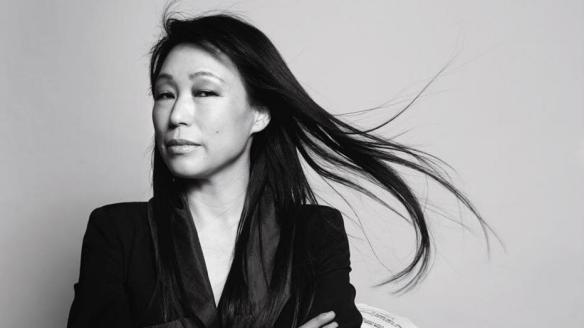

 Kari Kriiku (clarinet), BBC Scottish Symphony Orchestra / Ilan Volkov, live from City Halls, Glasgow, Thursday 14 January 2016
 Arcana.fm