Wigmore Mondays: Isabelle van Keulen & Ronald Brautigam play Beethoven, Fauré & Szymanowski

Isabelle van Keulen (violin), Ronald Brautigam (piano)

Beethoven Sonata for piano and violin in G major Op.30/3 (1801-2) (from 1:37 on the broadcast)
Szymanowski The Fountain of Arethusa from Myths Op.30 (1915) (from 19:51)
Fauré Violin Sonata no.1 in A major Op.13 (1875-6) (from 26:34)

Wigmore Hall, London; Monday 8 January 2018

Written by Ben Hogwood

The broadcast can be heard on the BBC iPlayer by clicking here

Full marks to the Wigmore Hall for their choice of established recital partners and an invigorating program to start the 2018 BBC Radio 3 Lunchtime Concert series. Isabelle van Keulen and Ronald Brautigam were clearly brought in to blow away the January blues and dispel any ‘back to school’ feelings among the audience, and they did so with freshly minted interpretations of Beethoven, Szymanowski and Fauré.

Beethoven’s eighth published Sonata for piano and violin, the third of his Op.30 set, began the concert (from 1:37 on the broadcast link). This spring-like work flew off its perch with a flourish, and once a few minor tuning issues at the outset were settled van Keulen and Brautigam enjoyed the close-knit ensemble playing in the first movement.

The second movement, a slow Minuet (from 8:00), was delivered as a passionate song and dance, a little quicker than expected, while the third movement (from 15:00) threw open the doors once again, van Keulen enjoying its folk dance associations.

The first of Polish composer Karel Szymanowski’s 3 Myths, also Op.30, had added electricity. Heralding a new sound world for the composer, The Fountain of Arethusa began with a watery cascade of notes from Brautigam (from 19:51), matched by tensile high register playing from van Keulen, both vividly portraying the fountain but also exploiting the sensual harmonies and rich textures. Hopefully van Keulen will go on to record the composer’s works for violin and piano.

The concert finished with one of the sunniest of works for the combination. Fauré’s Violin Sonata no.1, his first work in the form, surged forwards from the outset (from 26:34), the longer melodic phrases beautifully measured on the violin, while Brautigam’s sensitivity in balancing a busy piano part was a notable achievement.

The second movement (from 35:35) introduced darker, shaded thoughts and grew to a passionate climax of real stature. The third movement Scherzo (from 41:55) was a delight, showing off the qualities that secured an encore at the work’s first performance in Paris in 1877. The finale (45:45), initially elusive, brought all these elements and more together, and finished with an impressive sweep.

There was room at the end for an appropriate encore, giving homage to centenary composer Lili Boulanger. She died in 1918, aged just 24, and her Nocturne (from 52:13 on the broadcast), beautifully shaded here, was an atmospheric example of her unfulfilled potential.

Further listening

You can listen to recorded versions of the repertoire in this concert on this Spotify playlist. Meanwhile if you enjoyed the Fauré and Szymanowski in particular, this lovely disc from Augustin Dumay and Maria João Pires shows the depth of European repertoire from the 20th century for violin and piano.

Jerusalem Chamber Music Festival Ensemble – Stravinsky, Ustvolskaya & Shostakovich

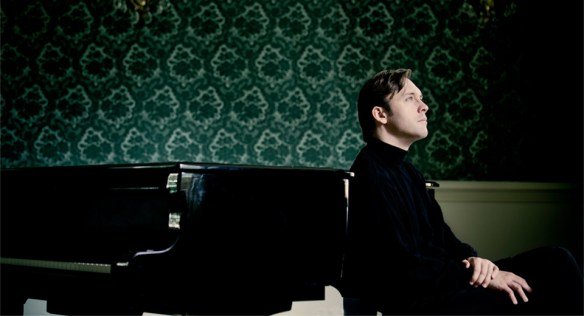
Jerusalem Chamber Music Festival Ensemble: Elena Bashkirova (piano, above), Marina Prudenskaya (soprano), Pascal Moragués (clarinet), Sergej Krylov (violin), Alexander Knyazev (cello)

Stravinsky Suite from The Soldier’s Tale (for violin, clarinet and piano) (1918-19)
Ustvolskaya Piano Sonata no.5
Shostakovich Seven Poems of Alexander Blok, Op.127 (1967)
Ustvolskaya Trio for clarinet, violin and piano (1849)
Shostakovich Piano Trio no.2 in E minor Op.67 (1944)

Wigmore Hall, London; Thursday 14 December 2017

Written by Ben Hogwood

Pianist Elena Bashkirova founded the Jerusalem Chamber Music Festival in 1998, and this celebration at the Wigmore Hall was part of a desire to continually expand the festival beyond Israel’s borders. Here we had a well-conceived program of Russian music, if a little unremitting in its darkly coloured focus.

It was especially gratifying to see the prominence given to Galina Ustvolskaya’s music. A pupil of Shostakovich, she has a small but potent legacy of works, which show a style already thinking well ahead of its time. In the first half of the concert we heard the Piano Sonata no.5, a remarkably concentrated piece of music lasting only half the 20 minutes it does on record. The suspicion was that Bashkirova did not follow some of the instructed repeats, or that her performance was simply much faster than those before it. Either way it left a powerful imprint, its refusal to budge from a central Db anchoring the music becoming a really strong musical device in spite of all the activity around it.

Arguably even more accomplished was the Trio for clarinet, violin and piano with which the concert’s second half began. This too left a lasting impression, thanks largely to the sensitivity with which Pascal Moragués and Sergej Krylov played the quiet music, and to the probing and penetrating tone of Bashkirova’s right hand. As Paul Griffiths’ booklet note pointed out, this music sounds more like late Shostakovich – but its composition date of 1949 shows just how originally Ustvolskaya was thinking.

From Shostakovich we heard two works, the late Seven Poems of Alexander Blok, Op.127, and the Piano Trio no.2 in E minor, Op.67. Both are hugely effective concert pieces, but it was the Blok poems that cut to the core at the end of the first half. Soprano Marina Prudenskaya, a late stand-in for Anna Samuil, got right to the heart of Blok’s verse, nowhere more so than in the savage destruction of Burya (The Storm). From this a wispy cello line emerged, Alexander Knyazev responding with a moving plaintive tone, after which the trio joined for the first time in accompanying Prudenskaya for the final song. It capped a tightly structured performance, the string players finding just the right tone if not always the exact intonation, while Bashkirova’s piano probed the lower reaches of the bass sound.

This was also the case in the Second Trio, which was occasionally a bit unkempt technically but which unerringly found the heart and focus of Shostakovich’s music. From the ghostly harmonics at the start, Krylov and Knyazev were clearly on the same emotional page, and with Bashkirova the three players achieved an impressive variety of volume and colour. Shostakovich’s powerplay scherzo and middle of the last movement were incredibly strong and lasting statements, but as ever with his music the greater meaning could be found in the moments of intimacy where the listener can hear a pin drop. The last movement thus became the focus of attention, music of sorrow, paranoia and anger – with just a little respite at the end.

The evening began with Stravinsky’s suite from A Soldier’s Tale, distilled into short movements for clarinet, violin and piano. Melodic and spiky, this performance was enjoyable and included just the right amount of humour, before taking a darker turn for the final Triumphal March of the Devil, where Krylov took over.

An excellent and thought provoking concert, particularly in the light of the various programmes marking the centenary of the Russian Revolution this year.

You can listen to the music from this concert on the Spotify playlist below:

Wigmore Mondays: Céline Moinet & Florian Uhlig – Schumann Romances for oboe and piano

Céline Moinet (oboe, above – picture Francois Sechet), Florian Uhlig (piano, below)

Schumann 3 Romances Op.94 (1849)
Nielsen 2 Fantasy Pieces Op.2 (1889)
Clara Schumann 3 Romances Op.22 (1853)
Robert Schumann 12 vierhändige Clavierstücke für kleine und grosse Kinder Op.85/12 – Abendlied (1849)
Pasculli Concerto on ‘La Favorita’ by Donizetti ()

Wigmore Hall, London; Monday 4 December 2017

Written by Ben Hogwood

The broadcast can be heard on the BBC iPlayer by clicking here

Robert Schumann was a composer equally at home in short musical forms as he was in longer constructions – but it seems his most intimate thoughts can be found in the shorter pieces, either his songs or his chamber music. Schumann’s lyrical style of writing means that pieces like the 3 Romances, written for Clara as a gift, transfer effortlessly between treble instruments such as the violin, clarinet or horn. These three, however, work best on the oboe, its tone perfectly suited to the reflective and slightly mournful outer pieces.

The two Nielsen pieces are early works, written by the composer shortly after his graduation from the Copenhagen conservatoire – a Romance and an Intermezzo in the form of a Humoreske.

Returning to Schumann, we hear an arrangement of a piano piece for children, and then three Romances by Schumann’s wife Clara. These were originally written for the violinist Joseph Joachim, but like her husband’s music they transcribe for oboe and piano with ease.

Finally a piece by Antonio Pasculli, regarded as the best oboist of his time – and one who enjoyed arranging operatic themes for the oboe in highly virtuosic pieces with piano accompaniment.

Follow the music

The times used relate to the broadcast link above.

Schumann 3 Romances Op.94 (1:34) (12 minutes)

The first piece (1:34) is lyrical but slightly downcast in its musical though, a time for reflection. The mood becomes more upward looking for the second piece (4:55), Schumann switching towards the major key for a gentle tune that he contrasts with an energetic central section (from 6:04). The third piece (8:54) begins with the bare bones of a melody, played by the oboe and piano together, with darker shades to the texture and harmony that never fully leave the music.

Nielsen 2 Fantasy Pieces Op. 2 (from 15:13) (6 minutes)

Nielsen gives the oboe a sweet melody for the first fantasy piece, a Romance (15:13) but characteristically alters the harmonic setting to throw it just a little out of kilter.

For the Intermezzo – a Humoreske – from 18:32, an impish and slightly mischievous approach makes for a charming piece, especially when the harmony moves into the major key.

Clara Schumann 3 Romances Op.22 (from 22:36) (10 minutes)

The first Romance is a genial piece that goes on to test the oboist’s control of the upper register. There is fluid interplay between the oboe and piano before the piece softens at the close. From 25:34 the second piece moves into a minor key, and once again a darker outlook. The third Romance, from 28:22, is the most expansive of the three, with flowing piano and a long legato oboe line, before Clara introduces a more playful aspect to the oboe’s lines.

Schumann Abendlied Op.85/12 (from 32:56) (2 minutes)

A short but sweet lullaby from Schumann’s Music for Children (Large and Small!), Abendlied (An Evening Song) is beautifully played.

Pasculli Concerto on La Favorita by Donizetti (36:44) (12 minutes)

A carefully considered piano introduction sets the scene, in the spirit of the best concertos, with the oboe following 40 seconds later. The slower introduction includes some extremely tricky passagework for the oboe, but also some broader melodies from Donizetti’s opera. Then after a cadenza from the oboe, the pace quickens (41:45) in a march. Now the oboe line is incredibly demanding, twisting and turning in rapid figurations in what feels like a thorough test of stamina rather than anything more musically meaningful!

Thoughts on the concert

This was quite a short recital for the Wigmore Hall lunchtime, but was beautifully played by Céline Moinet, who showed off technical prowess but more than anything a keen ear for and aptitude with the music. She inhabited Schumann’s world easily, finding the thoughtful intimacy that he pours into his shorter works, not to mention the darker side they inevitably hint at.

For the Pasculli she was really able to cast off the shadows, but here Florian Uhlig’s virtuosity and prompting were just as important, the pianist mastering some tricky runs in response to Moinet’s ever greater athletic feats. That she managed to bring across Donizetti’s operatic melodies was no mean feat, and the end was thrilling in its bravura.

Further listening and reading

You can listen to Céline Moinet and Florian Uhlig in their new album Schumann Romances, available here on Spotify:

Meanwhile Moinet’s previous disc, Meditations, brings together a lovely combination of French, Italian and German works – some original, some arranged:

Wigmore Mondays: Andrei Ioniţă & Itamar Golan – Bach, Shostakovich & Bartók

Andrei Ioniţă (cello, above – picture Daniel Delang), Itamar Golan (piano, below)

J.S. Bach Cello Suite no.1 in G major BWV1006 (c1720)
Shostakovich Cello Sonata in D minor, Op.40 (1934)

Wigmore Hall, London; Monday 27 November 2017

Written by Ben Hogwood

The broadcast can be heard on the BBC iPlayer by clicking here

There is a frustrating lack of information around J.S. Bach’s music for solo cello. Frustrating because the music itself is so good, a cornerstone of the instrument’s repertoire that satisfies experienced players and novices alike. In an interesting program note for this concert Richard Bratby outlined how Bach’s Six Suites for solo cello could indeed have a biblical theme running through them, a conviction that the cellist Steven Isserlis holds, though as he is the first to admit there is no hard and fast evidence for this.

The Suites are beautifully structured, with a Prelude giving way to five different dances – two relatively quick (in this case Allemande and Courante) – then one slow (always a Sarabande) and then two more quick (here two Bourrées) and always ending with a triple time Gigue.

The first cello suite has music you may recognise from Master and Commander among many other film and TV uses.

The Shostakovich is one of the most-played works for cello and piano from the 20th century, and it is easy to see why when you hear it – packed full of incident and tunes. It was written at the start of a new era for the composer, his wife having just moved out – and found him in a particularly rich vein of creativity, completing the half-hour work in just over a month in 1934. It was written for the cellist Viktor Kubatsky, who with the Stradivarius Quartet had taken part in the premiere of the composer’s 2 Pieces for String Octet in 1925. Shostakovich had yet to write any of his 15 string quartets, or his concerti for violin and cello, so this marks his first large scale writing for a stringed instrument. It received a mixed reception, some of its critics branding it too simplistic, but its lyricism and humour have given it a wide audience.

Follow the music

The times used relate to the broadcast link above.

J.S. Bach Cello Suite no.1 in G major BWV1006 (c1720) (1:47) (16 minutes)

The suite follows the outline described above, beginning with an expansive Prelude (1:47) that uses a series of arpeggios to plot its harmonic and melodic course. The dance movements begin with a fairly relaxed Allemande (4:02), where the steps are relatively slow, but steps up in pace with a Courante (7:52).

A slow and gorgeous Sarabande follows (10:20) where the cello uses a lot of ‘multiple stopping’ – playing more than one note with the bow simultaneously – before we move to a pair of Bourrées. The first one (13:14) is boisterous, the second (14:22) more withdrawn – but the first is repeated (15:32) to reclaim the upbeat mood. Then the distinctive triple time of the Gigue (16:09) closes out the suite.

Shostakovich Cello Sonata in D minor Op.40 (from 20:20) (28 minutes)

The Sonata begins in relatively genial mood, with a legato approach to the cello, as lyrical as anything Shostakovich has written. Soon, however, the clouds begin to form – though they are not visible anywhere when the cello gives out the second main theme of the first movement (22:35), a beautiful moment where it sounds suspended in mid-air. The movement ends deep in thought, but with a little frisson of worry around the edges.

That worry is emphatically thrown off in the bold as brass second movement (32:20) where both instruments go at it hammer and tongs. After that outburst we return to quiet and an introspective slow movement (from 35:45), where Shostakovich captures that exquisitely private intimacy only he can in a chamber setting.

When we emerge from deep thought the piano gives out a witty theme (44:06) to signal the start of the finale, where both players duck and dive through a set of highly enjoyable tunes and countermelodies. This is Shostakovich having fun – but even then there is a note of caution in the background.

Thoughts on the concert

Andrei Ioniţă gave a thoughtful performance of the Bach First Cello Suite, though could perhaps have shown us more of the sunnier side of the music, which can come through in the Courante, first Bourrée and Gigue especially. The Courante felt too fast – certainly something you’d have trouble dancing to! – though it did show off his quickfire technique, of which more later. The Sarabande could perhaps have been more outwardly expressive too, though the Gigue had a nice rustic feel.

The Shostakovich was a different story, Ioniţă and Itamar Golan straight to the heart of the work with an intimate yet wholly involving performance. The cellist’s tone was ideal, and so was the balance struck with the piano, who intervened in crushing style where necessary but drew back in the quieter moments. The bracing second movement was powerfully wrought, both players sparring with the gloves off, but the slow movement was especially affecting, helped by Ioniţă’s control of the high melodic line. The finale was brilliantly done, bringing just the right measure of humour and introspection to the performance.

With some time left Ioniţă and Golan gave a generous encore, an arrangement of Bartók’s Six Romanian Folk Dances for cello and piano (from 49:43 on the broadcast). This had all the flair and pizazz you would expect from a native Romanian, brilliantly played and with all the melodic inflections beautifully realised. The accuracy of the harmonics in the third dance (51:41) had to be seen to be believed!

All in all an excellent concert from a prodigious talent, who can only benefit from having someone as experienced as Golan – who has in his time accompanied Mischa Maisky and Maxim Vengerov – alongside him.

Further listening and reading

You can watch Ionita in the final of the 2015 Tchaikovsky competition below, where he plays more Shostakovich:

Meanwhile the pieces making up the concert are grouped in the following Spotify playlist

Wigmore Mondays: Meccore String Quartet – Szymanowski & Sibelius

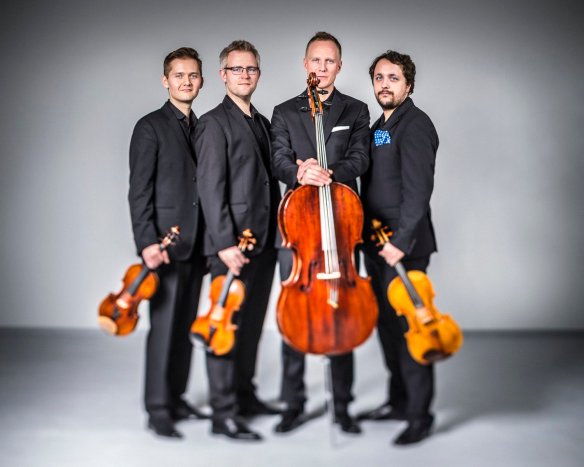
Meccore String Quartet (above – Jarosław Nadrzycki, Wojciech Koprowski (violins), Michał Bryła (viola), Karol Marianowski (cello)

Szymanowski String Quartet no.1 in C major, Op.37 (1917)
Sibelius String Quartet in D minor, Op.56 ‘Voces intimae’ (1909)

Wigmore Hall, London; Monday 20 November 2017

Written by Ben Hogwood

The broadcast can be heard on the BBC iPlayer by clicking here

Szymanowski’s two String Quartets took a while to establish themselves in the string quartet repertory, but certainly not on grounds of quality. The first anticipates the composer’s biggest stage work, King Roger, and has music of great depth with a relatively exotic harmonic language.

Sibelius wrote his only published string quartet – there are three other unpublished works – at his new home of Ainola, where he moved with his wife in 1903. At this point the composer was suffering from the effects of alcoholism and debt, and needed to move away from Helsinki and temptation. Ultimately this did not provide full relief, but he was at least able to move on with composition, and the Symphony no.3, written just before the quartet, offers more optimism. The quartet however is dark and unforgiving.

Follow the music

The times used relate to the broadcast link above.

Szymanowski String Quartet no.1 in C major, Op.37 (from 1:51) (17 minutes)

At 1:51 the quartet begins as though in a time warp, the soft harmonies in a chorale from the four instruments harking back to a much earlier time. Gradually the music establishes its rich harmonies, helped by added notes from the instruments using double stopping (playing more than one note at once), which gives added density to the music.

The added note harmonies are a big part of the composer’s newer style, where he does still on occasion imitate Debussy but where he now has one foot planted relatively firmly in the explorer’s camp. The music goes through some unexpected harmonic shifts towards the end, but then from 9:27 feels on firm grounds once more with the luxurious beginning to the slow movement.

This features soaring melodies from the first violin and higher playing from the rest of the instruments towards the end, where the listener feels suspended in the air.

A different air altogether hangs in the third movement (15:07) where the music is quick, urgent and full of smaller phrases passed between the instruments. At 17:19 a dance section gives cut and thrust, before the quartet wraps up with surprising haste.

Sibelius String Quartet in D minor, Op.56 ‘Voces intimae’ (from 21:24) (28 minutes)

The theme from the violin (21:24), answered by the cello, is the melodic material on which the first movement is based. The phrases are restless, passed between the instruments and often overlapping with little pause for breath. There is a sense of the wide open countryside in which Sibelius now finds himself, but also of the dark days. This comes to a head around 26:48, a sparse cadence played by the quartet, before they move on to the second movement with flitting motifs from each instruments, creating a vision of circling birds.

The slow movement (29:36, marked Adagio di molto) is the centre of the work both emotionally and musically, deeply emotional but also offering resolution. Here the quartet are closely together, and the main theme, which comes back several times, has a deep yearning.

From 39:00 the fourth movement begins, and here the quartet digs in as though searching for strength and resolve. Gradually the individual lines become restless again, the melodies increasingly fractured, and the textures are heavy. Leading on from this is an even faster movement (44:35), where the instruments become even more reckless and desperation sets in (especially from 46:17). There are fleeting glimpses of folk melodies but the momentum carries all before it to a dazzling flurry of semiquavers at the end.

Thoughts on the concert

A powerful concert from the Meccore String Quartet. Their Syzmanowski felt utterly authentic, played with style and feeling, and with the quartet full in voice. They took a standing position for the concert (except the cellist of course) and this suited their freedom of expression.

The quartet tended to take the fast music at daringly fast tempi, especially in the Sibelius, where the second and fifth movements seemed to be gone in a flash of breakneck speed. Despite the technical brilliance this did mean a few musical statements were swept up in the sheer momentum of it all. However the quartet were more measured for the slow movement, where emotion was concentrated and intonation wonderfully secure. There was a feeling throughout that the interpretations from the quartet were singular in voice, and watching them in person made the experience much more meaningful.

As a substantial encore it was nice to hear the second movement (a Romanze) from Grieg‘s String Quartet in G minor, Op.27 (51:00), which the quartet have recently recorded, and which here provided a reminder of the melodic gifts of the Norwegian composer, whose music seems to have fallen off the radar a little bit of late. The cello is particularly beautiful in its melody here.

Further listening and reading

Here is the first movement of the Grieg String Quartet, performed by the Meccore String Quartet live from the Polish Radio in 2015.

For a further taster of their Szymanowski, here is the third movement of the String Quartet no.2, part of a disc of the composer’s quartets recently released on Warner Classics:

Meanwhile for further listening on Spotify, in the absence of the Meccore versions, here are the Emerson String Quartet in a winning combination of the Sibelius and Grieg Quartets, with a little Nielsen for good measure:

Meanwhile both Szymanowski Quartets can be found here, in a version from the Goldner String Quartet: