In concert – Quatuor Danel: Shostakovich & Weinberg @ Wigmore Hall

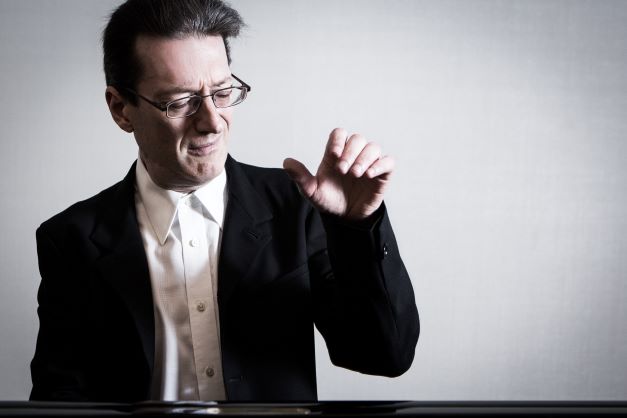
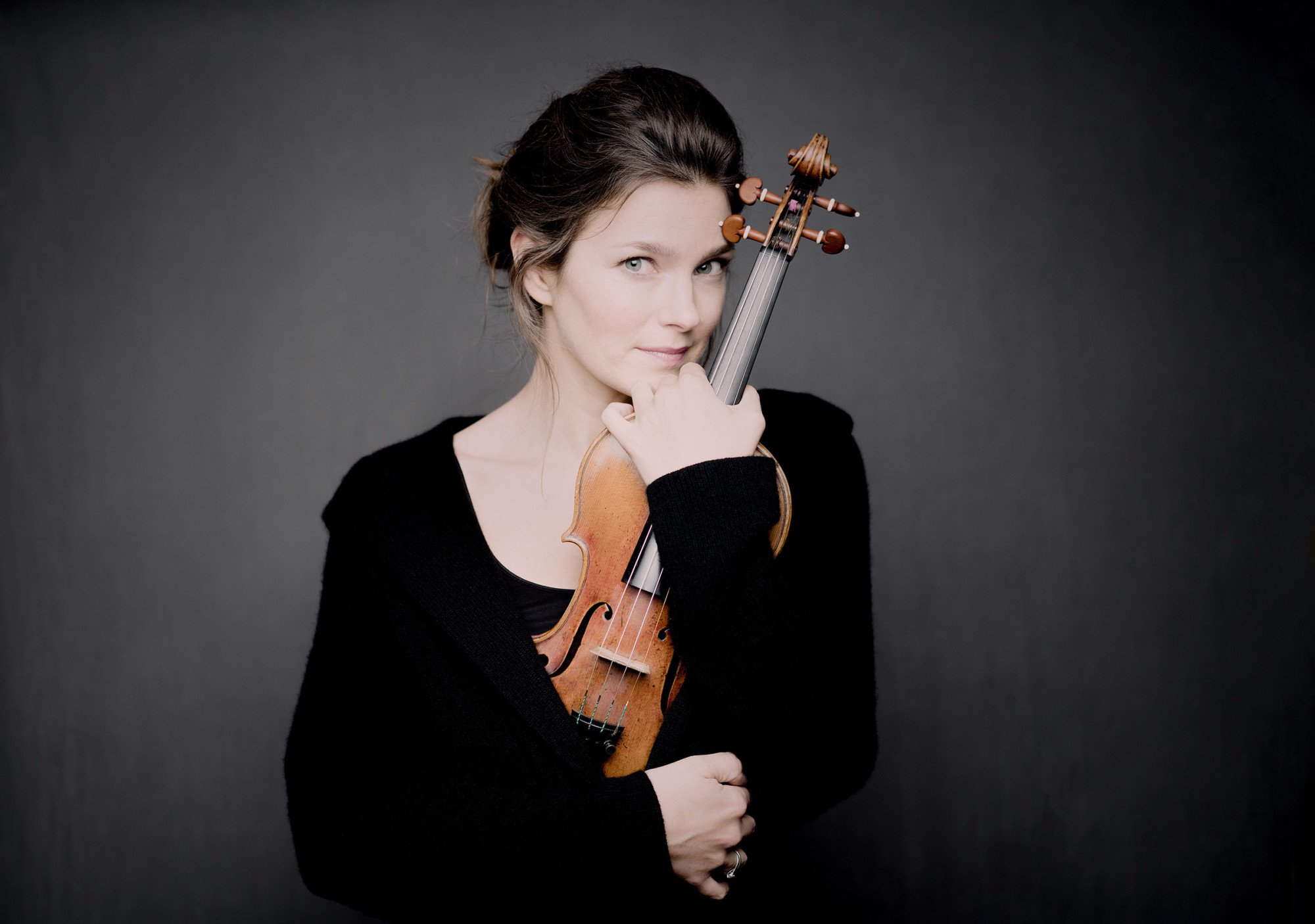
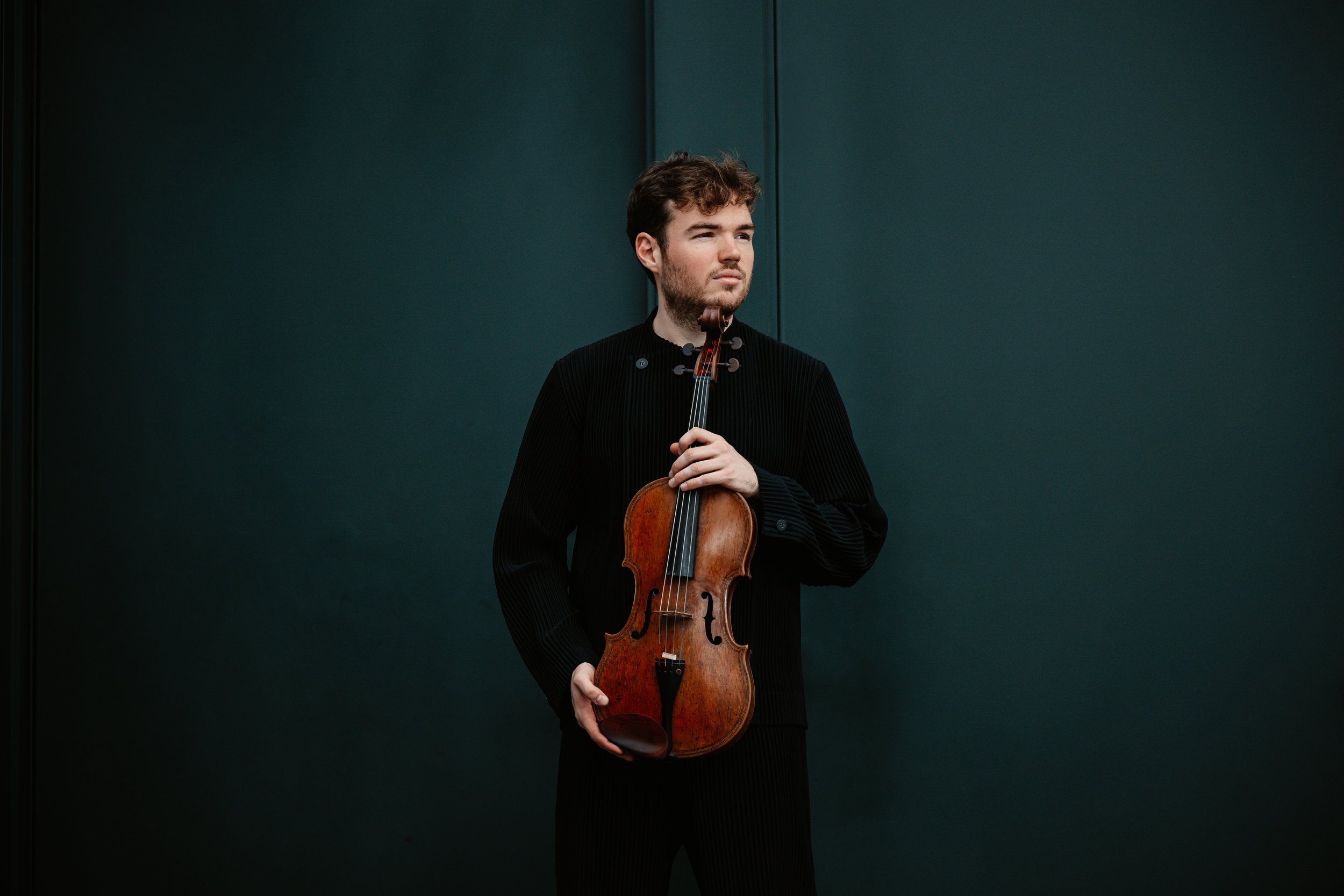
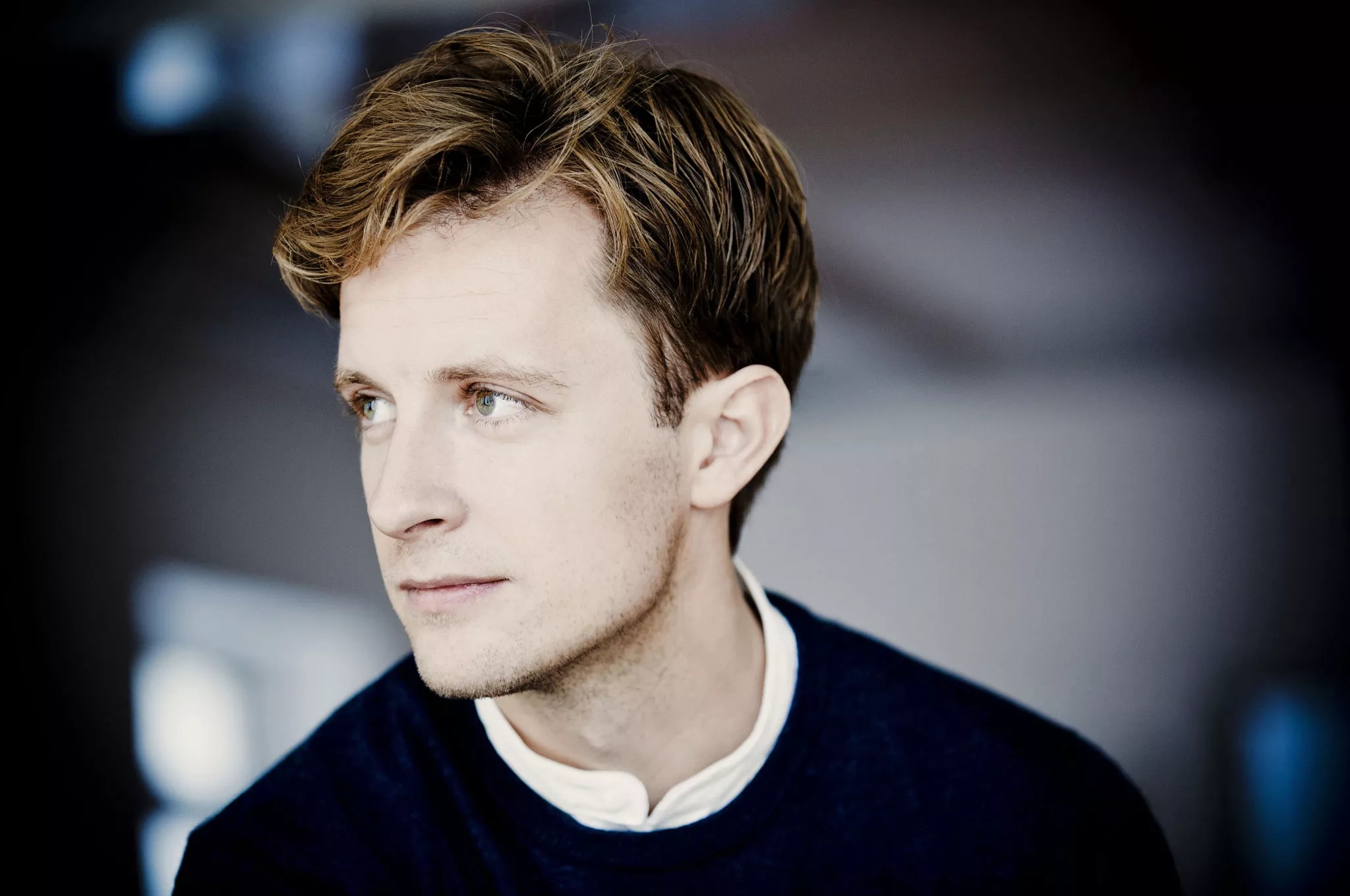
Quatuor Danel [Marc Danel & Gilles Millet (violins), Vlad Bogdanas (viola), Yovan Markovitch (cello)]

Shostakovich String Quartet no.1 in C major Op.49 (1938)
Weinberg String Quartet no.1 in C major Op.2/141 (1937, rev. 1985)
Shostakovich String Quartet no.2 in A major Op.68 (1944)

Wigmore Hall, London
Monday 13 November 2023

Reviewed by Richard Whitehouse. Photo (c) Marco Broggreve

No-one could accuse the Quatuor Danel of bowing to circumstance. Having had to abandon its cycle of the combined Shostakovich and Weinberg string quartets some three-and-a-half years ago owing to the COVID pandemic, the ensemble has commendably started again and from scratch. Tonight accordingly saw the first instalment in this survey of 32 quartets, with an evening such as traced the beginnings of what promises to be an enterprising and, above all, rewarding series of recitals from musicians with a palpable empathy for both composers.

A more unassuming start could scarcely be imagined than with Shostakovich‘s First Quartet. Not only did the composer leave it relatively late until tackling this genre, but the result is as understated a debut as could be imagined. Perhaps in its trying to up the emotional ‘ante’, the Danel sacrificed some of the opening movement’s wistful elegance, but the ensuing variations on a Mussorgskian melody were ideally poised, with the quicksilver scherzo and rumbustious finale reinforcing the infectious charm as well as technical mastery of this ingratiating debut.

The most obvious criticism of Weinberg’s First Quartet is that it bears little resemblance with what was to follow. Yet given its indebtedness to Bartók and Szymanowski, the initial Allegro pursues its doggedly eventful course through some torturous chromatic harmonies and dense textures, while the central Andante evokes a tense and even ominous atmosphere enhanced by its being muted throughout. Only with the final Allegro does the future composer come to the fore, its driving rhythms and folk inflections as Weinbergian as is the teasing evanescence of those closing bars. Now that Daniel Elphick’s reconstruction of the original version has been performed publicly, the revision is more clearly one of ‘less is more’ afforded by hindsight – which does not make this teenage effort, or the Danel’s rendering of it, any less impressive.

As the last in a sequence of large-scale chamber works, Shostakovich’s Second Quartet has tended to be overshadowed by his Piano Quintet and Second Piano Trio, but that it does not want for stature was underlined by the Danel’s reading. The fervent while formally lop-sided Overture responded audibly to this trenchant and forthright approach, its modally inflected plangency carried through to the Recitative and Romance in which Marc Danel‘s impulsive take on those florid first violin solos was ably complemented by the fraught interplay toward its climax. Nor was there any lack of purpose in the Waltz and its ominous revisiting of the composer’s past, before the closing Theme with Variations evinced inexorable momentum on route to an implacable restatement of that theme for a warning pure though hardly simple.

Given such music and music-making it might have been churlish to expect an encore, yet the Danel duly provided an additional few minutes in the guise of an Improvisation and Rondo Weinberg wrote around 1950 but which was only premiered 69 years later. More is the pity, as the former proved as affecting as the latter was appealing in melodic directness. January 12th sees the second instalment, with Shostakovich’s Third preceded by Weinberg’s Second and Third Quartets, of a series which one fervently hopes will now run its intended course.

You can read all about the next concert in the series at the Wigmore Hall website – and click on the name to read more about Quatuor Danel.

Published post no.2,011 – Thursday 16 November 2023

Online Concert: Esther Yoo & Jae Hong Park @ Wigmore Hall – Debussy, Grieg, Rachmaninoff & Vieuxtemps

Esther Yoo (violin), Jae Hong Park (piano)

Debussy Violin Sonata in G minor (1916-7)
Grieg Violin Sonata no.3 in C minor Op. 45 (1886-7)
Rachmaninoff Vocalise Op. 34 no. 14 (1915)
Vieuxtemps Souvenir d’Amérique on ‘Yankee Doodle’ Op.17 (pub. c1845)

Wigmore Hall, Monday 6 November 2023 1pm

by Ben Hogwood

This was the first recital given in the UK by the relatively new team of violinist Esther Yoo and pianist Jae Hong Park – but on this evidence, many more will follow. Yoo has been a regular concert giver for ten years now, having joined the BBC Radio 3 New Generation Artist scheme in 2014, so it is easy to forget she is still just 29. Park, meanwhile, took first prize at the Busoni-Mahler Foundation Competition in 2021 and, at the age of 24, looks set for a fine future as soloist and chamber pianist.

The duo began with a fresh take on Debussy’s oft-heard Violin Sonata, his final completed work. The first movement has meaningful if short melodic cells and quickly changing moods, which both performers characterised to great effect, with Yoo’s intonation and phrasing particularly impressive. The second movement was lighter, before the Finale set off at quite a lick, Yoo’s commanding and very impressive virtuosity giving the music a great deal of energy. This was Debussy with a fresh coat of glossy paint, but with a great deal of feeling and understanding too.

Following the Debussy with Grieg’s third essay in the genre was a particularly smart move, as the two composers have closer parallels than one might think. The Violin Sonata no.3 in C minor is a particularly fine work, closely adhering to sonata principles while allowing the performers plenty of room for flights of fancy and characterisation. Both clearly love this work, for the crisp attack of the first movement was immediately gripping, the turbulent passages given the requisite drama. Yoo was fully invested in the fantastical aspects of Grieg’s writing, the violin dreamily floating at some points while swooping with full tone at others. Park ensured the forthright piano writing was delivered at just the right level, too, offering substantial support when needed. The slow movement had an appealing singing style, responding to Grieg’s marking of Allegretto espressivo alla Romanza, while the harmonic twists and turns of the third movement were high on red-blooded drama.

The pair followed with a set of extended encore pieces, beginning with a tasteful account of Rachmaninoff’s versatile Vocalise, which works particularly well in the Michel Press & Josef Gingold arrangement used here. Yoo’s long phrases were nicely floated, but in the following Souvenir d’Amérique on ‘Yankee Doodle’ by Belgian composer Henri Vieuxtemps she took the opportunity to go for broke. This is a great audience piece, with a brilliant send-up of the familiar theme, allowing for portamento, spiky snaps, quickfire left hand pizzicato and much more. In these hands it was a proper showstopper!

Then we heard a Korean folksong, the poignant Milyang Arirang – which, with its pentatonic melody, was not too far removed from the language of the Rachmaninov. A passionate central section and a free, rhapsodic coda were delightful – as was an extra bonus, an affectionate account of Elgar’s Chanson de matin.

For more livestreamed concerts from the Wigmore Hall, click here

Online Concert recommendation: Nicholas Daniel & Huw Watkins @ Wigmore Hall

Nicholas Daniel (oboe, picture (c) Eric Richmond), Huw Watkins (piano, picture (c) Benjamin Ealovega

by Ben Hogwood

Here is a nudge in the direction of a very fine concert given at the Wigmore Hall yesterday by oboist Nicholas Daniel and pianist Huw Watkins.

They were in the company of three fine living composers – Althea Talbot-Howard, Michael Berkeley and David Matthews – whose music features in the concert, alongside works by Clara and Robert Schumann, and an arrangement for oboe and piano of a Mozart violin sonata.

Talbot-Howard’s contribution is to rework an attractive sonata for flute and harp by Joseph Bologne, Chevalier de Saint-Georges, for oboe and piano, another stage in the concert rehabilitation of this remarkable 18th century composer.

You can watch a lovely, affirmative hour of music on YouTube below:

For more livestreamed concerts from the Wigmore Hall, click here

Published post no.1,995 – Tuesday 31 October 2023

Online Concert: Wayne Marshall @ Wigmore Hall

Wayne Marshall (piano)

Wigmore Hall, Monday 9 October 2023 1pm

by Ben Hogwood

And now for something completely different…presenting Wayne Marshall on the piano at the Wigmore Hall, delivering the latest BBC Radio 3 Lunchtime Concert without a script.

Marshall is renowned for his abilities as an improviser, but even he had not tried this approach before, whereby the whole hour’s music took place at the suggestion of the audience – both in the venue, via submissions placed in a box beforehand, and over X / Twitter, where listeners made their own suggestions.

The results are actually remarkable, a testament to the power of music in the moment. Try watching the concert online without knowing what will come up – but if you want a guide for repeat listening, timings can be found at the bottom.

5:51 – Erroll Garner Misty
11:48 – John Williams Hedwig’s Theme (Harry Potter)
18:34 – Gershwin I Got Plenty O’ Nuttin (Porgy & Bess)
25:06 – J.S. Bach Toccata and Fugue
34:33 – Rachmaninov Rhapsody on a Theme of Paganini – as though played by Art Tatum
40:30 – Stevie Wonder You Are The Sunshine Of My Life
44:25 – Cole Porter Let’s Do It (Let’s Fall In Love)
50:03 – Copland Fanfare for the Common Man
56:00 – Stravinsky The Rite of Spring

For more livestreamed concerts from the Wigmore Hall, click here

In Concert: Louis Lortie @ Wigmore Hall – Schubert & Rachmaninoff Moments Musicaux

Louis Lortie (piano)

Schubert 6 Moments musicaux D780 (1823-28)
Rachmaninoff Moments musicaux Op.16 (1896)

Wigmore Hall, Monday 25 September 2023

by Ben Hogwood

The term ‘moment musical’ has been seldom used in classical music, with only two significant sets of these ambiguously named piano pieces coming to mind. Yet as Canadian pianist Louis Lortie showed us, in this stimulating BBC Radio 3 Lunchtime Concert at the Wigmore Hall, they are far from insignificant works.

Schubert’s publisher was the first to coin the term, describing his set of six ‘easier’ pieces thus when they were published in 1828. In spite of their sporadic composition period – no.3 was the first written five years earlier – they make a satisfying collection when performed in order. As a common factor they find Schubert alternating between major and minor keys, a tension Lortie was keen to bring forward.

He began with a quizzical account of the first piece in C major, played with more pedal than might normally be the case but with persuasive phrasing. The second piece in A flat major was notable for its touching intimacy, in spite of a troubled middle section where a shadow fell over the music. Schubert’s third piece, a Danse Russe, anticipates Tchaikovsky’s Danse des Cygnes from Swan Lake.  Lortie played it beautifully, with a touch of humour, before the Chopin-esque fourth piece contrasted the darker hues of C# minor with an elegant section in the major key. The fifth piece strode forward with a determined gait, ending in a major key but not shaking off its feeling of inner strife, before a lovingly delivered sixth piece (subtitled A troubadou’s lament) returned to A flat major seemingly lost in thought.

Rachmaninoff’s cycle of six Moments Musicaux, published in 1896, prove rather more challenging for the performer, his aim for professional pianists with a similarly wide span across the hands. He would appear to have known about the Schubert set – that much is implied by the title – but the volume is noticeably louder for these passionate pieces. The opening nocturne in B flat minor started simply enough but soon a cold wind swirled about, Lortie mastering the technical demands with impressive control. This was a feature of his Rachmaninov playing, especially in the third piece, the emotional centrepiece of the cycle with strong, yearning characteristics. Around this we rocked to the turbulence of the second piece in E flat minor and the fourth in E minor, both with a steely glint at the edges and the latter with more bluster. Lortie drew back for a soulful fifth piece, saving the most impressive pianism for the final flourish, a brilliantly played peal of bells bringing us full circle to C major.

This was a fascinating and superbly played programme, the inner thoughts of Schubert complemented by Rachmaninoff’s overt passion, both brought into the open by Louis Lortie for us to fully appreciate. As a parting gesture he acknowledged the piano itself, a Bösendorfer instrument whose tone was ideal for this music.

For livestreamed concerts from the Wigmore Hall, click here