Pulse Music – Steve Reich: It’s Gonna Rain (1965)

by Ben Hogwood

“It was, I have to say, one of the three to four really life-changing musical events of my life” – Brian Eno on hearing Steve Reich‘s It’s Gonna Rain for the first time (from Steve Reich: Conversations)

Background

Reich’s recording of preacher Brother Walter was made in Union Square, San Francisco, in 1964. The preacher was referring to Noah’s Flood, and the forty days of continuous rain in the Bible, but the contemporary significance – with the Cuban missile crisis gripping the Western world – gripped the composer.

Once recorded, Reich took to the studio, and with two recordings of the preacher playing side by side, he observed during playback how one tape was slowly going out of phase with the other. The resultant sounds were bringing some extraordinary effects to the speech and its resultant melody and rhythm, which Reich honed in on for the final edited tape piece.

The piece is effectively in two movements – the first hones in on the words “It’s Gonna Rain”, looping them relentlessly, while the second takes on snippets of the scene in the ark: “But Noah couldn’t open the door; it had been sealed by the hand of God!”

Listen

Part 1:

Part 2:

Thoughts

Nothing quite prepares you for your first encounter with Brother Walter. The impassioned message is powerful enough, given extra perspective by the street sounds, but when it starts to go through Reich’s phrasing process all sorts of weird and wonderful musical tricks are created.

The baton is quickly passed to the listener, and the ear zooms in on unexpected micro details, with fragments of words and music taking on new effects and meanings. On headphones the effect is overwhelming; on a home stereo it is still incredibly powerful. My two live encounters with this piece have generated a headache through the overstimulation!

What Reich is also doing here, unexpectedly, is preparing the way for rap music. Brother Walter’s speech is so melodic, and so rhythmic, that it creates a profile all of its own, a dance only enlivened by the phased repetitions.

The stereo picture shifts, an unsettling experience but also a wholly stimulating one. The melodic properties of the speech of “It’s Gonna Rain” hit home in a kind of microtone key, between D and E flat major. When the two tapes reach the maximum distance apart the effect is that of an aural eclipse, with intense kinetic energy generated at the expense of all other noise.

With the second part we know a little more what to expect, but here the effect is that of a sonic whirlpool. As Reich’s process works through the manic intensity grows, the perspective of the voice changing as it gets chewed up by the machine. The vortex takes hold so that halfway through the words inaudible, and then the effect – to this listener at least – becomes that of a sonic plane coming into land, the pitch of the tape sinking towards the ground before disappearing slowly into the distance. A quite extraordinary piece!

Quotes / Legacy

Brian Eno again, from Conversations… “Everything I thought I understood about music needed to be revised. It had a very, very big impact on me. it really set me thinking again about what music could be, and what the act of listening consisted of, because it made me realise that listening was a very creative activity”

Recordings

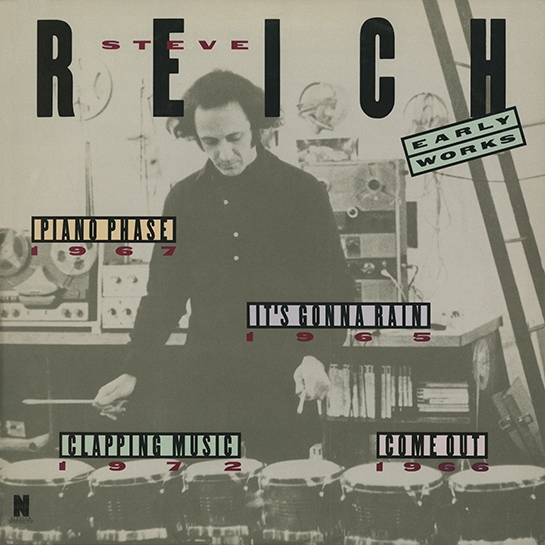
Just the one – part of the 1987 collection Early Works (Nonesuch)

Also written / released in 1965: John Coltrane A Love Supreme; John Barry Thunderball

Next up: Come Out (1966)

Published post no.3,045 – Monday 12 October 2026
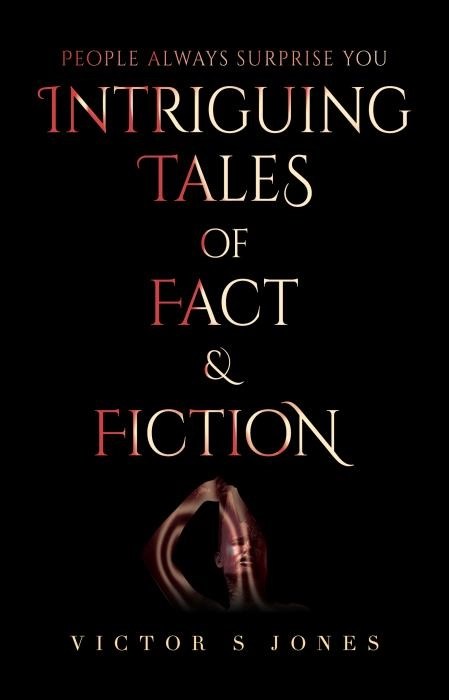
On Paper – People Always Surprise You: Intriguing Tales of Fact and Fiction by Victor S Jones

People Always Surprise You: Intriguing Tales of Fact & Fiction
by Victor S. Jones
Vanguard Press [80pp, softback, illustrated, ISBN 978-1-83671-183-4, £6.99]

by Richard Whitehouse

What’s the story?

Victor Jones here publishes his first book, a collection of short stories whose compactness belie the depth of their observations on and insights into what might reasonably be termed the ‘human condition’, informed by an outlook such as never becomes cynical or negatory.

What are the stories like?

Having worked as advertising copywriter then manager of his own business, Jones is well placed to explore the myriad nooks and crannies of everyday existence that, in reality, are anything but normal – a loaded adjective if ever there was one. The eight stories contained herein underline this tenet to varying degrees, with a common factor being that moment of epiphany which comes about through even the most mundane of circumstances. Several of these stories might well be considered as moralities for what is a decidedly post-moral era.

The shortest if certainly not the lightest of these stories, All that glitters… is an instance of flash fiction at its acutest in that revelation such as emanates from above rather than below. With its scenario of spiritual riches being played off – knowingly – against financial wealth, The Violin equates most directly to those Tales of the Unexpected with which Roald Dahl entertained and provoked earlier generations, notwithstanding the appreciable difference in Jones’s literary manner. Outwardly the most realistic story, A Night at the Opera relates an occasion that almost everyone finds themself in sooner or later. Its snatching hilarity out of the jaws of embarrassment is in pointed contrast with V1 & V2 Nazi Rockets, when Hitler’s weapons of mass destruction facilitated an existential circumstance pertinent to this author.

The longest and most descriptive among these stories, Back From the Dead centres on two children in the ‘Baltic Alps’ whose actions during one severe winter enshrine that fusion of innocence with experience so often envisaged but so rarely encountered. Something rather more humorous is conveyed by Chinese Meals, a situation-comedy where customs culinary and interpersonal are related with tangible authenticity. If hardly the deepest story, Concord is arguably the most subtly realized given its conflating historical overview with that ‘lived through’ immediacy as galvanizes a cautionary tale of technical triumph and human failure. Missing Peaks affords a more ironic perspective, its ‘get rich quick’ message now seeming   as typical of its time as almost any other and hence an ideal way to round off this collection.

Does it all work?

It does, not least for that skill and evident enjoyment with which Jones elides between fact and fiction across the course of what is an expertly crafted while always arresting sequence. Throughout, he evinces an eye for detail and an ear for nuance which are hallmarks of any worthwhile short stories, so making them seem anything but literary exercises. More than that, however, these stories merge into a cohesive and enlightening composite – but whether of the author himself or of an imagined ‘everyman’ needs be left for each reader to decide.

Is it recommended?

It is. Stylishly presented with its scene-setting sketches (by the author?) as frontispiece to each story, this collection is short enough to be read at a single sitting if substantial enough for repeated readings. The follow-up volume is planned and should be worth waiting for.

Buy

Click here to explore purchase options from the author’s website

Published post no.2,790 – Friday 6 February 2026

Introducing…Our Friends Electric!

Today is known as Blue Monday, the day where New Year’s resolutions have traditionally worn off…and people have had enough of January. It happens also to be the name of one of the best electronic music songs ever made…so it seems right to make it the launch day for Our Friends Electric!

This will be Arcana’s celebration of electronic music in all its forms, where I will be listening to and writing about electronic music across the spectrum. It will be an expedition from early ventures in the 1920s to the most recent tracks from present day technology. Along the way there will be interviews, playlists, thoughts and music – so much music.

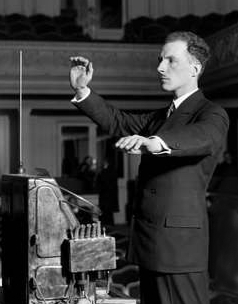
Lev Termen demonstrating the theremin, December 1927 by Bettmann, Corbis

It would be great to think we could cover all the electronic music there is, but that’s clearly impossible – so the focus will be on key works and albums, listening chronologically from early on in the 20th century. We will move from Varèse to Kraftwerk, from Delia Derbyshire to Kelly Lee Owens, taking in classical and pop pioneers side by side. We will also moving off-piste here and there, to take in all manner of successful – and failed – experiments with early computer music. There will be interviews, too!

To start, I plan to take a look at the music of Erik Satie and his influence, a composer who opened his mind to using mechanics and technology in music, and who looked to embrace new inventions. I will try to do the same.

My perspective is a Western one, so viewpoints from across the globe will be especially welcome. Please do contribute as much as you would like, from listening along on the playlists provided, to commenting on the findings and sharing in the delights we uncover. It promises to be a huge amount of fun.

So let’s switch on, power up and get listening!

Ben Hogwood, editor Arcana.fm

P.S.…for those of you following the Beethoven project – thank you! – I can promise you it hasn’t been cancelled but will resume in the composer’s ‘other’ anniversary year, 2027.

Published post no.2,772 – Monday 19 January 2026