Playlist – The Rustle of Spring

Welcome to The Rustle of Spring.

This is a playlist designed to look at the positive, to anticipate our emergence from what has been an incredibly difficult winter for many.

Although we are not out of it yet nature is doing its best, with green shoots making themselves known, birds and animals starting to flex their muscles, the nights drawing out a bit and the weather – hopefully – improving.

This selection offers a range of responses to spring from classical composers. We have the outright optimism of Schumann’s Spring Symphony, his first, alongside more mysterious responses to the season from Lili Boulanger and John Foulds. Spring doesn’t have to mean orchestral music, either – there are intimate thoughts from the piano works of Grieg, Sinding and Tchaikovsky, while rarely heard choral pieces from Holst and Moeran lend an exotic air.

We finish with two very different portrayals of spring, in the form of one of Johann Strauss II’s best-known waltzes, Voices of Spring, and an all too rarely heard tone poem by Frank Bridge, Enter Spring. There isn’t even room for Vivaldi’s Four Seasons!

I hope you find something to enjoy.

Ben Hogwood

Listening to Beethoven #123 – Piano Sonata no.4 in E flat major Op.7


Emilias Kilde by Caspar David Friedrich (c1797)

Piano Sonata no.4 in E flat major Op.7 for piano (1797, Beethoven aged 26)

1 Allegro molto e con brio
2 Largo con gran espressione
3 Allegro
4 Rondo. Poco allegretto e grazioso

Dedication Countess Babette von Keglevics
Duration 28′

Listen

Background and Critical Reception

‘If any proof was needed to show that early Beethoven is not just imitation Haydn or Mozart’, writes Angela Hewitt, ‘then surely the Piano Sonata in E flat major Op.7 would be the best example.’

This is a work of formidable size, lasting nearly half an hour and second only to the Hammerklavier Sonata in Beethoven’s 32 published piano sonatas. Yet it has a common thread running through it, as Daniel Heartz observes. ‘The whole cycle is remarkable for its unified tone, which is both stylistic and motivic. No sonata of the Op.2 trilogy quite succeeded in achieving this feat.’

Hewitt has a special affection for the piece. ‘The colour change to C major for the Largo…startles us but immediately calls our attention to expect something different and exceptional’, she says of the second movement, finding the third ‘full of humour and charm’. The finale, however, works as ‘one of the last examples of his early style’, and ‘the movement ends in the most unassuming way. Perhaps if it ended loudly, she muses, this piece would be performed more often.’

The sonata is dedicated to Countess Babette von Keglevics, one of Beethoven’s most gifted piano pupils of the time.

Thoughts

Op.7 certainly is a substantial piece, but – as agreed above – a unified one. The flowing interaction between right and left hand of its opening pages set the tone. The piano writing is dense for its time, with lots going on, and in the middle (development) section of the first movement Beethoven travels far harmonically before suddenly deciding to go back to the first theme.

This proves to be a feature of the other movements. The slow movement, beautifully simple in its hymn-like theme, enjoys the sound of C major but suddenly takes a darker turn, where it really feels like Beethoven is using the piano as an orchestra. The left hand (lower strings) has an ominous figure which turns the music colder. Then we return to the safety of C major and all is forgotten.

The third movement is initially graceful, with a little stop-start motion in triple time, but its central section is a complete contrast, a turbulent episode in the minor key. The finale looks to resolve this, beginning in serenity, before it too succumbs to a stormy central section. Finally peace is completely restored, and Beethoven ends in quiet peace.

Recordings used and Spotify links

Emil Gilels (Deutsche Grammophon)
Alfred Brendel (Philips)
András Schiff (ECM)
Angela Hewitt (Hyperion)
Paul Badura-Skoda (Arcana)
Stephen Kovacevich (EMI)
Igor Levit (Sony Classical)

Claudio Arrau captures the full drama and exploration of the first movement development section. It takes a little while for the ear to adjust to Paul Badura-Skoda’s instrument but the sonorous tones suit chords that are close together. His is an intimate account if slightly jumpy on occasion, and he achieves considerable turbulence in the stormy trio of the third movement. It’s lovely to hear the piano itself creaking as he plays it. Emil Gilels is superb in the slow movement but perhaps a bit too grand in the outer two, and so it is Alfred Brendel who finds arguably the best combination of expanse and gracefulness.

The playlist below accommodates all the versions described above except that by Angela Hewitt:

You can hear clips of Hewitt’s recording at the Hyperion website

You can chart the Arcana Beethoven playlist as it grows, with one recommended version of each piece we listen to. Catch up here!

Also written in 1797 James Hewitt Piano Sonata in D major ‘The Battle of Trenton’

Next up Piano Sonata no.19 in G minor Op.49/1

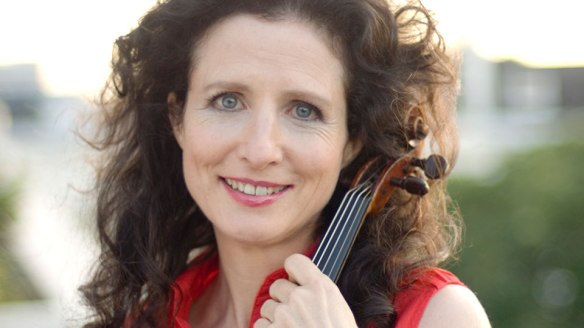
In concert – London Chamber Ensemble & Madeleine Mitchell: A Century of Music by British Women (1921-2021)

London Chamber Ensemble [Madeleine Mitchell (violin, director), Joseph Spooner (cello), Sophia Rahman (piano), David Aspin (viola), Gordon Mackay (violin), Lynda Houghton (double bass), Peter Cigleris (clarinet, bass clarinet), Nancy Ruffer (flute), Alec Harmon (oboe), Bruce Nockles (trumpet), Ian Pace (piano)

Rebecca Clarke Piano Trio (1921)
Judith Weir Atlantic Drift: Sleep Sound ida Mornin’ (1995), Atlantic Drift (2006), Rain and Mist are on the Mountain, I’d Better Buy Some Shoes (Movements I-IV, 2005)
Helen Grime Miniatures (2005)
Judith Weir The Bagpiper’s String Trio (1985)
Cheryl Frances-Hoad Invocation for cello & piano (1999)
Thea Musgrave Colloquy (1960)
Ruth Gipps Prelude for bass clarinet (1958)
Errollyn Wallen Sojourner Truth (2021, world premiere)
Grace Williams Suite for Nine Instruments (1934)

St John’s Smith Square, London
Monday 9 March (review of the online broadcast)

Written by Ben Hogwood

Classical music still has an awfully long way to go before female composers are an integral part of its make-up, but the celebration of International Women’s Day is helping the cause considerably, gaining more traction with each passing year.

One of the highlights of the 2021 celebrations was this concert from St John’s Smith Square, masterminded by Madeleine Mitchell, who led the London Chamber Ensemble in a very satisfying hour-and-a-half of music.

In a concert celebrating eight women composers, the common threads of America and the Royal College of Music were also explored. The latter organisation is where Rebecca Clarke, Grace Williams and Helen Grime all studied, and where Errollyn Wallen and Mitchell herself are now professors. Wallen wrote a new piece, Sojourner Truth, for the occasion.

The concert began however with a terrific performance of Rebecca Clarke’s Piano Trio. Completed in 1921, this substantial piece begins with a passionate outpouring, but it also has its elusive, mysterious moments. The trio of Mitchell, cellist Joseph Spooner and pianist Sophia Rahman caught these elements, getting off to a terrific start but pulling back to allow the enchanting slow movement room to breathe. At times Clarke’s music hints at influences from France – particularly Ravel but also Franck – which Spooner caught in his high intonation in the second movement. The spirit of the dance inhabited the finale, a more obviously English statement, but there was still room for more fervent thoughts when the trio united.

There was a sudden transition on the broadcast to the refreshing open air of Judith Weir’s Atlantic Drift, a compilation of three pieces for two violins proving an invigorating contrast to the denser textures of the Clarke. Weir’s incorporation of folk material into her music is enchanting, especially in the four-part last piece, Rain and mist are on the Moutain, I’d Better Buy Some Shoes. Using a Gaelic song as its inspiration, Weir’s adaptation worked really well in these open air accounts from Mitchell and Gordon Mackay, the empty St John’s providing the ideal acoustic. Weir appeared later with The Bagpiper’s String Trio, a similarly folk-powered work from 1985. Based on a Scottish pipe tune this too lifted the listener away to the great outdoors, with excellent teamwork from Mitchell, Spooner and viola player David Aspin.

Helen Grime’s trio of Miniatures for oboe and piano were next, studies in compressed expression from the pale harmonics of the first to the jagged edges of the second. The third was an effective summation of Grime’s thoughts, panning out for a wider perspective from the piano. Alec Harmon and Sophia Rahman were fully responsive to the virtuoso demands.

Cheryl Frances-Hoad’s Invocation for cello and piano followed, a late teenage piece offering an immediate chance to appreciate the probing line given to Joseph Spooner’s fulsome cello. As the composer’s response to Edvard Munch’s painting Melanchola reached its apex there were clangorous chords from Rahman, capping a compact but powerful utterance.

Thea Musgrave’s Colloquy was next, another model of economy – four short pieces for violin and piano packed with sharp, expressive statements. There were some challenges to performance here – such as the quick interchange between pizzicato and bowing in the second movement – which Mitchell took in her stride. The third piece was a touch more playful but still assertive, but the fourth was the most effective, a private train of thought gracefully prompted by Ian Pace’s piano.

The most striking piece of the evening – for its sound, its soul and its warmth – was Ruth GippsPrelude for bass clarinet. Gipps’ centenary falls this year, and her slightly baleful writing for the instrument was beautifully captured by Peter Cigleris, a model of control. After watching this I was struck by two questions – why do we not hear the music of Gipps more, and why are there not more pieces for solo bass clarinet?

Errollyn Wallen’s Sojourner Truth followed, written not just for Madeline Mitchell but for International Women’s Day – and taking us back to violin and piano. Based on a spiritual, O’er the crossing, it features intense dialogue between the two instruments, but when the melody is heard unaccompanied on the violin the ear is pulled firmly towards the centre of the music, a striking feature of another piece with more traditional inspirations.

To finish, we heard the 75-year-old Suite for Nine Instruments by Grace Williams. Scored for piano quintet, double bass, flute, clarinet and trumpet, it is a vivacious piece, quite modal and with hints of Stravinsky’s Septet for a similar instrumental combination – and equally driven in the outer movements, bringing the interval of a tritone right to the front. The London Chamber Ensemble played with flair, commitment and virtuosity, bringing a very impressive program to a close.

The concert is available to watch until 8 April on the link below – with some spoken introductions by Mitchell herself. On occasion the gaps between pieces are very short, but there are helpful markers to make viewing easier. Do make sure you watch, as some of the best chamber music from British women composers in the last 100 years is right here.

A Century of Music by British Women (1921-2021) on International Women’s Day, directed by Madeleine Mitchell from St John’s Smith Square on Vimeo.

Meanwhile, Madeleine and the London Chamber Ensemble’s album of works by Grace Williams can be heard here:

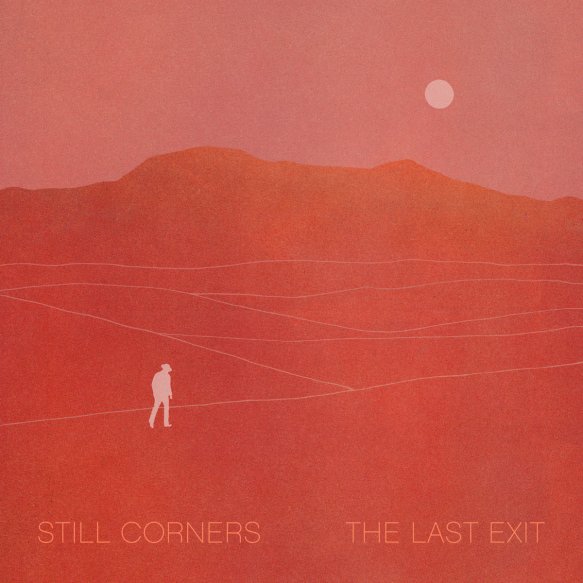
Switched On: Still Corners – The Last Exit (Wrecking Light)

reviewed by Ben Hogwood

What’s the story?

The press release for The Last Exit is particularly promising if you long to escape from the confines of isolation. Described as ‘a sweeping album about the open road’, and a record that ‘evokes the vast space of the desert and rolling unconcerned skies’, it is the fifth long player from Still Corners, the London-based project of Tessa Murray and Greg Hughes.

What’s the music like?

Still Corners have always painted vivid pictures with their music, and The Last Exit is no different – though regular listeners will note the appearance of more dust on the road this time round. It is difficult to pinpoint exactly how that happens, but the instrumentation is definitely a factor, as are the husky tones of Murray.

Her voice immediately inhabits the story, taking the listener to those distant plans in the ghost stories White Sands and It’s Voodoo, where spirits roam the dunes and highways. This has a strong evocative of the dry heat underfoot and shimmering shapes on the horizon, with extra description and shade provided by Hughes’s guitar and the woolly atmospherics.  The same combination provides equally powerful images on Static and Till We Meet Again, which – like Crying – enhances its Wild West themes with distant whistling.

These three songs were written as a direct response to the Coronavirus pandemic, and they act as a manifestation of the great outdoors in whatever confined space you are listening in. Indeed, the band could almost be performing in a Nevada ghost town.

Does it all work?

Mostly. On occasion The Last Exit could do with some more directly melodic material, but it makes up for this through powerful evocations of time and place.

Is it recommended?

Yes. Devotees who have tracked the band for four albums will recognise their calling cards but also their progression to a deeper, more expansive sound, in spite of their numbers remaining at two.

Stream

Buy

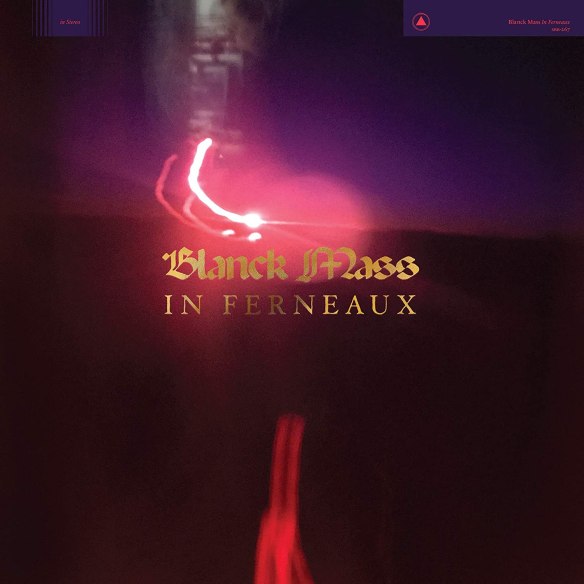
Switched On: Blanck Mass – In Ferneaux (Sacred Bones)

reviewed by Ben Hogwood

What’s the story?

There are just two tracks on In Ferneaux, the new release from Benjamin Power – the man behind Blanck Mass. They are long-form pieces of roughly equal length, drawing on Power’s substantial archive of field recordings from the last decade of travelling. It is in effect his way of continuing to travel in spite of lockdown conditions, with compositions brought about by extended time at home.

What’s the music like?

The output of Blanck Mass has never been short of substance or emotion, and Power confronts his feelings with typically direct musical honesty. In Ferneaux gives the impression of being a piece of work a long time in the making, needing extended time at home to realise its ambition.

The two tracks last just over 40 minutes and work in a single sequence on headphones or with surround sound. Their emotional impact and musical identity are strong, right from the start of Phase I, with its shimmering electronics. It is a powerful depiction (for me at any rate) of the bright, sunny days we experienced at the start of lockdown in the UK this time last year, and the burst of positive energy unleashes a flurry of rhythms. As these depart stage left the scene darkens, and an ominous drone takes over. From this a new regenerative process begins, and the musical camera pans out with big chord shifts – which in turn fade.

Power’s talent for moving between scenes comes from his experience with soundtrack work. Phase II, however, is an immediate jolt to the senses, beginning with a wall of uncompromising, metallic noise. This single blast introduces the most human of the field recordings so far, a personal conversation, on which Power reflects with slowly moving, cool sounds. The metallic blast returns, but just when it all feels too much consolation arrives in the form of big, woolly chords that the listener can dive into.

This is a prelude to the most confrontational music so far, a set of pounding rhythms and primal white noise, a party in a dungeon. Again the response is huge chords but the closing is pure and moving, a piano solo that loops round majestically. Ultimately the music fades away on the wind

Does it all work?

Yes – this is a compelling pair of sonic journeys, a travelogue of Power’s last decade on the road. The only regret is not knowing where some of the scenes were captured – but in turn that fuels the imagination when listening.

Is it recommended?

Very much so. In Ferneaux is a strong indication that Blanck Mass can work with bigger structures, reinforcing Power’s capabilities as a soundtrack composer but also emphasising the potential he has to go on to score longer, more classically-based works. His development promises to be fascinating.

Stream

Buy