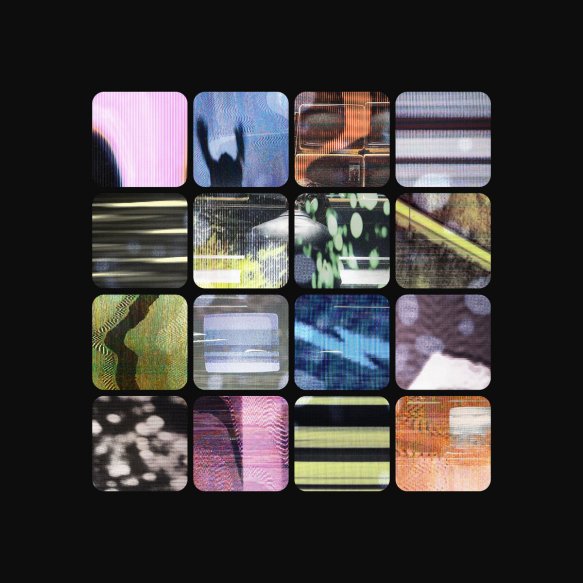
Switched On – Neil Cowley: Hall Of Mirrors – Reflected (Mote)

neil-cowley-remixed

reviewed by Ben Hogwood

What’s the story?

On its release in March, Neil Cowley’s Hall Of Mirrors album made a very strong impression, not least on Arcana – the verdict being ‘a heartfelt and inventive biography of his musical exploits to date’. The album focused on Cowley’s relationship with the piano, but now he hands it over to a carefully chosen set of collaborators for the remix treatment.

What’s the music like?

Cowley’s originals, beautiful and moving in their simplicity, are ripe for the remix treatment – and each of the ten remixers bring a respectful approach to the table, letting the originals speak for themselves, but each of them adding something new. Cowley himself remixes the last track, I Choose The Mountain, by which time the album’s raw material has worked its spell all over again.

Ben Lukas Boysen immerses Prayer in a few ambient clouds, the music floating slowly but surely like a plane crossing the sky. Berlin Nights introduces a few glitchy elements courtesy of Louf, with a dubby beat – a quality replicated by Jacana People for Souls Of The S-Bahn and applied with a bit more force to the bass end and a triple-time beat.

The Kilig remix of Circulation is an intimate, end of day moment, the conversational piano twinned with some quite busy but nicely worked beats. Kate Simko, meanwhile, takes Stand Amid The Roar to the Mediterranean poolside, in a fuzzy remix that Cowley’s old band Fragile State would have been very happy with. The fuzzy feeling continues into Seb Wildblood’s take on Just Above It All, with a lazy guitar, muted trumpet and dappled beats that give a bit more urgency to proceedings.

The Sad City remix of She Lives In Golden Sands has a lovely, windswept start before its amiable electronic chatter, and this moves on to Hector Plimmer’s thoughtful remake of Saudade, with some beautifully rich piano chords.

For the first time we hear a greater emphasis on the percussion in Otzeki’s remix of Tramlines, a dubby deep houser, then it’s back to a wider panorama for The Allegorist’s beatless encounter with Time Interrupted. Finally Cowley’s own work, I Choose The Mountain, takes an urgent beat but gets swept away in the heat haze.

Does it all work?

It does. These alternative versions work really well on their own but also make an album as carefully sequenced as the original Hall Of Mirrors. Cowley’s past as a member of Fragile State makes itself known more clearly in the execution of an album that would work perfectly as an accompaniment to sunset at Café Mambo, but it still keeps the intimacy of the original.

Is it recommended?

It is. The two Halls of Mirrors make ideal companions.

Stream

Buy
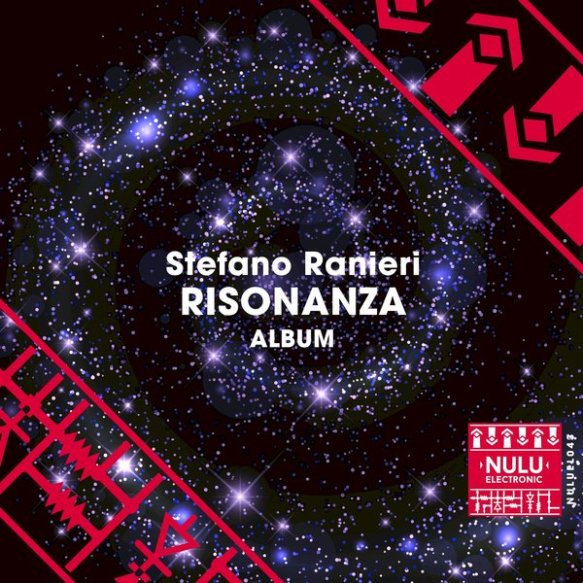
Let’s Dance – Stefano Ranieri: Risonanza (Nulu Electronic)

stefano-ranieri

reviewed by Ben Hogwood

What’s the story?

This is the first album for Italian producer Stefano Ranieri. He has been making and releasing music for around 15 years, and is now ready to dip his toes into the long player format. A list of the DJs supporting Ranieri’s work includes Carl Cox and Masters At Work, says much about his reputation built up in that time, and also the styles of dance music he gravitates towards.

What’s the music like?

Excellent. Ranieri uses all his experience of making dancefloors move to come up with a wide range of tracks that fulfill that brief perfectly. Koncept One has a touch of Lil Louis about it, with a great vocal rant ‘you’re not free, you’re a slave’. It comes after Your Time Is Up has set a smoky scene with a really good loping beat.

1942 has a powerful vocal and a strong piano line. C’est Terrible goes more acidic but counters that with a really good, slightly tribal sample. Saulè punches through a bassy electro riff, while a minimal cut like Karming Deep works really well as it has a good vocal cut to go with its keyboard hook. Die Of Pain has a real gravitas, taking the tail end of a Martin Luther King speech. Of Course is excellent too, rolling along nicely.

Does it all work?

Consistently. Ranieri knows what works on the most basic level, and has the confidence to let his beats do the talking. Each of the fifteen tracks is excellent, really well paced, and does all the right things – without ever being routine.

Is it recommended?

Enthusiastically. Risonanza is a really fine piece of work, whether you approach it from a house, techno or electro direction. Stefano Ranieri can be proud of his achievement.

Stream

Buy

You can listen to clips from the album and purchase Anywhere Here on Traxsource

Let’s Dance – Gavin Boyce: Anywhere Here (Nordic Trax)

COVER_4.7

reviewed by Ben Hogwood

What’s the story?

It has been out for a couple of months, but when you consider the debut album from Irish producer Gavin Boyce has been two decades in the releasing, what’s a few days between friends?! In that 20 years Boyce has been concentrating his endeavours on the single or EP format, with a stream of high quality house, techno and deep disco releases, many of them released on the excellent Canadian label Nordic Trax.

Their relationship goes back to 2012, and includes the much-loved Haboo, but his reputation for quality and positive house goes back a long way before then, with a fine bouncy vocal track called So Obvious getting pride of place on a Sessions mix by Mark Farina in 2006.

Anywhere Here contains a 2021 album mix of Haboo and a new version of Boyce’s 2008 release Face Down, alongside 10 other originals.

What’s the music like?

You don’t have to spend much time at all with Anywhere Here to know that it carries the imprint of an experienced production hand. Yet with Boyce experience has never bred over-familiarity, and he has always had a strong inventive streak running through his house music. Each of the instrumental tracks here on the carries a spark, a spring in its step, with a bit of class too.

Try Be Grand, a really strong nocturnal track that introduces itself with a slightly dubby tread. Haboo is predictably brilliant, an airy version for the album capitalising on its strong reputation, while Radarz has a similar open air feel, powered largely by a two chord progression on the piano.

Boyce’s beats are reassuringly solid throughout, with tracks like Olive Groves ideally paced and structured. Face Down introduces some sharper tones, while the flowing piano on Kitui has an end of day warmth, with the poolside beckoning. Anywhere Here, the last of the dozen, is arguably the best with its probing melody.

Does it all work?

Yes. Boyce stretches his 12 tracks over 80 minutes and structures them like a DJ set, so the peaks and troughs are beautifully managed, with an assured selection of beats and grooves that keep their vitality throughout.

Is it recommended?

It is, provided you bolster your Gavin Boyce collection with a selection of mixes from the singles he’s already released on Nordic Trax. Anywhere Here shows off his prowess as an album artist though, capable of keeping the floor full as the dozen tracks take us on a journey filled with strong, colourful grooves. All Boyce needs to do now is make sure he doesn’t leave it another two decades for the next one!

Stream

Buy

You can listen to clips from the album and purchase Anywhere Here on Beatport

Listening to Beethoven #186 – 6 Variations on an original theme in F major Op.34

Beethoven-op34

Beethoven: Bust en face in oval – ivory miniature, 1802 by Christian Hornemann, courtesy of Beethoven-Haus, Bonn

6 Variations on an original theme in F major Op.34 for piano (1802, Beethoven aged 31)

Dedication unknown
Duration 15′

Listen

What’s the theme like?

The theme is Beethoven’s own, unusually – and is a slow, stately number with an expansive chord in the middle.

Background and Critical Reception

Beethoven’s stay in the village of Heiligenstadt was a turning point in his life. The principal reason for this was the onset of his deafness, and he used the change of location as a time to come to terms with that, hence the Heiligenstadt Testament referred to previously.

Yet his increasingly original approaches to composition were there for all to see, not least in this set of variations from 1802. For the first time in a long while he did not use another composer’s music for the theme, writing one himself – and he proceeded to turn it into a number of very different variations, each one of the six in a different key.

Angela Hewitt has recently recorded the work for Hyperion, and writes a telling quote from the composer. ‘Usually I have to wait for other people to tell me when I have new ideas, because I never know this myself. But this time – I myself can assure you that in both these works the manner is quite new for me.’

The originality is also noted by Harold Truscott, writing about the piano music in The Beethoven Companion. ‘The whole outlook is utterly different from that of any first-period work’, he writes. ‘The Adagio theme has the luxurious sprawl of so many of his first-period slow movements – on the surface; in fact it is as tight as a drum, and there is not a note that does not contribute to the basic theme and harmonic texture essential for the variations.’

Hewitt identifies the penultimate variation as a key component. ‘What really makes this work is…a funeral march in C minor (foreshadowing his Eroica symphony). Nothing could be further from the mood of the original theme.’ She also points out how the sixth and ‘final’ variation actually contains a further two ‘bonus’ variations.

Thoughts

This is not your typical set of Beethoven variations. Right from the start it is clear something will be different, from the expansive theme that stresses the home key of F major – but presents some lavish, added-note chords as it does so. Beethoven then leaves said home key behind as he embarks on a harmonic and melodic adventure, having fun but preserving the musicality.

The appearance of D major for the first variation is a surprise, employing a very similar tactic to the fourth bagatelle of the Op.33 set he was working on at almost the same time. The B flat second variation feels like a piece of early Schumann, a rustic march-like affair, while the third in G major is an airy aside, operating in much longer melodic units.

The fourth variation is a bit more playful, its roots in the dance, while the fifth probes deeper, as Hewitt identifies, with raw emotion and full, red-blooded chords as punctuation. The sixth variation turns out to be a remarkable section showing Beethoven’s fearsome powers of invention. Lasting one third of the work, it starts with a long build-up on a ‘C’ chord before playfully throwing the theme around back in the ‘home’ key. This leads to a section of trills, like an elaborate cadenza in a piano concerto, before a relatively calm, measured finish.

Full of invention and unpredictability, this is without doubt one of Beethoven’s finest variation sets to date – and yet it is still not well known! Something to put right…

Recordings used and Spotify links

Angela Hewitt (Hyperion)
Cécile Ousset
(Eloquence)
Ronald Brautigam
(BIS)
Alfred Brendel
(Philips)
Rudolf Buchbinder
(Teldec)
Glenn Gould
(Sony)

The Spotify playlist below includes all but one of the versions listed above – with the opportunity to hear a clip from Angela Hewitt’s version on the Hyperion website

There are some terrific versions of this piece, led by Angela Hewitt’s new recording for Hyperion, which shows just how much she loves the work with some wonderful characterisations. Cécile Ousset is also outstanding in her flowing account, as is Rudolf Buchbinder, who contributes a steely funeral march. Ronald Brautigam has a great deal of bravura and punch in his account on the fortepiano.

Also written in 1802 Clementi Piano Sonata in G major Op.40/1

Next up 15 Variations on an Original Theme in E flat major Op.35 ‘Eroica’

BBC Proms – Pierre-Laurent Aimard, Mahler Chamber Orchestra / Sir George Benjamin : Knussen, Ravel & Benjamin

george-benjaminPierre-Laurent Aimard (piano), Mahler Chamber Orchestra / Sir George Benjamin

Knussen The Way to Castle Yonder Op.21a (1988-90)
Purcell
(transc. Benjamin) Three Consorts (1680) [World premiere]
Ravel
Piano Concerto in G major (1929-31)
Benjamin
Concerto for Orchestra (2021) [BBC co-commission: World premiere]

Royal Albert Hall, London
Monday 30 August 2021

Written by Richard Whitehouse; pictures BBC / Chris Christodoulou

The cancellation of last year’s Proms meant the loss of several pieces by George Benjamin in recognition of his 60th birthday. Tonight’s concert, featuring the Mahler Chamber Orchestra with whom this composer-conductor has often collaborated, provided something of a redress.

The programme (its hour-long duration not unreasonably given without interval) began with The Way to Castle Yonder, a brief yet potent ‘potpourri’ from Oliver Knussen’s second opera Higglety Pigglety Pop! as amply conveys the aura of winsome yet ominous playfulness that suffuses the larger work. While they enjoyed a 40-year friendship, Benjamin’s own aesthetic is appreciably removed from that of the older composer so that a detachment, even aloofness was evident – without, however, detracting from this music’s always deceptive whimsicality.

Transcriptions of Renaissance and Baroque sources have been a mainstay of post-war British music, Three Consorts following an established pattern with Benjamin’s take on these Purcell miniatures underlining their intricate textures and piquant harmonies. The (to quote Benjamin) ‘‘visionary moment of harmonic stasis near the middle’’ of In nomine 1 went for little, with the ‘‘mesmerising intersection of line and harmony’ in Fantasia 7 effecting a Stravinskian objectivity, but the understated humour of Fantasia upon One Note was tellingly delineated.

Pierre-Laurent Aimard then joined Benjamin and the MCO in a performance of Ravel’s Piano Concerto in G major that, though it had precision and refinement in abundance, was almost entirely lacking in the qualities that define this music’s essential persona. The opening Allegramente evinced a desiccated manner with such as the blues-inflected coyness of its transitions or the heart-stopping stasis prior to the reprise of the second theme going for little, while the central Adagio took on an all-enveloping inertia as it unfolded – the inward rapture of its expressive apex then the pathos of its ensuing cor anglais dialogue all too enervated in their repose. The closing Presto drew an incisive response from pianist and orchestra alike, but here again any sense of this music’s more provocative demeanour was absent from the prevailing stolidity.

Aimard returned for an animated reading of Benjamin’s early Relativity Rag which provided an admirable entree into the world premiere of the latter’s Concerto for Orchestra. Unfolding as a continuous span (a pause just past its mid-point may be structurally meaningful) across a little over 15 minutes, this is typical of Benjamin’s recent music in its systematic – but rarely predictable – formal trajectory and alluring emotional reticence. The various instruments are highlighted singly or in groups in what becomes an intensifying progression, albeit without a tangible momentum, to a climax which brings first violins to the fore, before subsiding into a close of serene equivocation. Superbly realized by the MCO, for whom it was written, this is a thoughtful addition to a genre in which ‘display’ has all too readily become the watchword.

One final thought – at his untimely death, Oliver Knussen had several large-scale orchestral works in progress and maybe even nearing completion. Might it not still be feasible to bring at least one of the pieces to performance? The UK music scene would be all the richer for it.

You can find more information on the BBC Proms at the festival’s homepage. Click on the composer’s names for more information on Sir George Benjamin, and on the performers’ names for more information on Pierre-Laurent Aimard and the Mahler Chamber Orchestra.