On Record: Set Fire To Flames – Sings Reign Rebuilder (21st anniversary reissue) (130701)

by Ben Hogwood

What’s the story?

The collective Set Fire To Flames were destined to release just two albums – but their debut Sings Reign Rebuilder has developed something of a cult following since its release in 2001. In the UK it was released on the Fat Cat imprint 130701 as its first ever release, the reason the whole label was begun – and it sold out within weeks. 21 years later it returns in the form of a remaster, reissued on a heavyweight black vinyl double LP.

Set Fire To Flames were a 14-piece collective set up in Montreal, with links to all manner of post rock or experimental outfits, including Godspeed You! Black Emperor, A Silver Mt Zion, Exhaust, Fly Pan Am and Hangedup. Godspeed’s guitarist David Bryant was effectively the group supervisor, establishing the membership and taking ownership of the recording, which took place in one heavily concentrated improvisation session.

For five days in an old Montreal house, the newly assembled band explored making music in one confined space, in various states of sleep deprivation and intoxication. The many hours resulting from the sessions were heavily edited, with Sings Reign Rebuilder the result.

What’s the music like?

In a word, uneasy! Yet that would be to throw away the obvious amount of effort that went into both the recording and editing processes.

Despite the name of the collective, Sings Reign Rebuilder is seriously dark and often mournful music. It does however have an intensity that is rare in instrumental music, the strength of feeling you would associate with classical music from the likes of Penderecki or Gorecki – even though this is improvised music from Montreal.

The band’s use of stringed instruments is especially gripping. Omaha… begins as a sorrowful duet, while the towering slow burner that is Shit-Heap-Gloria Of The New Town Planning… has a very steady build that culminates with the oscillation of two violins in a dark duet. There is also intense cello interplay on Two Tears In A Bucket.

Elsewhere the outlook tends to be rooted in noise – and a good deal of that is unsettling, with scratchy effects not too far removed from nails down a blackboard, or traffic-based noises that have a more mechanical basis. Vienna Arcweld… behaves like an instrument that refuses to function fully, with a sawing motion in the treble register, while Cote D’Abrahams Room Tone starts with what sounds like roadworks – and yet somehow possesses an ambience of the everyday. Injur: Gutted Two-Track also fidgets with extraneous noise.

Vocals are rare, though those used on Wild Dogs Of The Thunderbolt draw the listener in.

Does it all work?

It does – but the unremitting intensity and darkly shaded processes mean that this is not music for all seasons or moods. When it crackles into life, though, the music of Set Fire To Flames is hypnotic and magnificently brooding with its drones and subtle melodic interplay.

Is it recommended?

It is, as a highly effective project with compelling musical results. In remastered form, Sings Reign Rebuilder is even more gripping than it was in 2001.

Listen & Buy

On Record: Los Angeles Philharmonic / Susanna Mälkki – Steve Reich: Runner / Music for Ensemble and Orchestra (Nonesuch)

Steve Reich
Runner (2016)
Music for Ensemble and Orchestra (2018)

Los Angeles Philharmonic / Susanna Mälkki

Nonesuch 7559791018 [35’25”]

Producer Dmitriy Lipay, Engineer Alexander Lipay

Recorded 1-4 November 2018 (Music for Ensemble and Orchestra), 6-7 November 2021 (Runner), Walt Disney Concert Hall, Los Angeles, CA

reviewed by Ben Hogwood

What’s the story?

It is best to let Steve Reich himself tell the story of these two closely related orchestral pieces. Runner, he says, is ‘for a large ensemble of winds, percussion, pianos, and strings.  While the tempo remains more or less constant, there are five movements, played without pause, that are based on different note durations.  First, even sixteenths, then irregularly accented eighths, then a very slowed-down version of the standard bell pattern from Ghana in quarters, fourth a return to the irregularly accented eighths, and finally a return to the sixteenths but now played as pulses by the winds for as long as a breath will comfortably sustain them.  The title was suggested by the rapid opening and my awareness that, like a runner, I would have to pace the piece to reach a successful conclusion.’

Meanwhile its companion, the Music for Ensemble and Orchestra, is in effect Runner 2. It is described by Reich as ‘an extension of the Baroque concerto grosso where there is more than one soloist. Here there are twenty soloists – all regular members of the orchestra, including the first stand strings and winds, as well as two vibraphones and two pianos.  The piece is in five movements, though the tempo never changes, only the note value of the constant pulse in the pianos.  Thus, an arch form: sixteenths, eighths, quarters, eighths, sixteenths.  Music for Ensemble and Orchestra is modelled on my Runner, which has the same five movement form’.

The recording marks the first foray of both the Los Angeles Philharmonic and conductor Susanna Mälkki into the music of Reich in recorded form.

What’s the music like?

Reich clearly enjoyed writing these pieces, as he tells David Lang in the liner notes for this release. The quick tempo means that as the starting gun fires, Runner is immediately into its stride with brisk music and rich colours. When the tempo marking halves to become Eighths, and then Quarters, the slower music is beautifully managed through sustained notes, pulling out the tension. The piano and vibraphones come through beautifully here, while the harmonies continue to negotiate new corners and scenery as a runner would do. The feeling persists, though, that Reich is at his happiest in the music of Sixteenths, where the busy conversations of the woodwind and the bell tolls of the vibraphones give the music impressive stature. The piece ends quickly, with one of the composer’s trademark ‘fades’.

Music for Ensemble and Orchestra feels weightier in its own Sixteenths section starts, pianos oscillating and strings gathering in hymn-like unison before the pianos create an impressive grandeur with their sustained low notes. Reich’s command of the orchestra is immensely assured, more so than it was in earlier works such as the Variations for wind, strings and keyboards or The Four Sections, but never losing the luminosity of those works, nor their capacity to pan out into larger spaces.

The Eighths section is the most emotionally powerful music yet, with large scale harmonies that move freely between weighted dissonance and brief consonance, the latter appearing like shafts of light in the music. Quarters brings forward the choirs of woodwind, their distinctive motif alternating with the piano, before the percussive instruments drive Eighths to greater heights, pianos chiming with the vibraphones. In typical Reich fashion the acceleration from Eighths to Sixteenths is both seamless and thrilling, the clarinets pushing to the front as the music gathers itself for the finish. Then just as suddenly – and seamlessly – the bottom drops away and the figures float away like birds on the wing, all treble and no bass.

Does it all work?

It does. The performances from the Los Angeles Philharmonic and Susanna Mälkki are of a uniformly high degree, and the writing is subtly complex – meaning that Reich’s workings reward close inspection, but that the overall whole is beautifully realised and works well even in the middle foreground for the listener.

Is it recommended?

Of course. Steve Reich is a composer where nearly every move he makes is captured on record, to our advantage – and this pair of works, representing one of his most recently published chapters, are typically rewarding listening.

Listen

Buy

You can buy this new release at the Presto website. For more on Steve Reich himself, visit the composer’s website

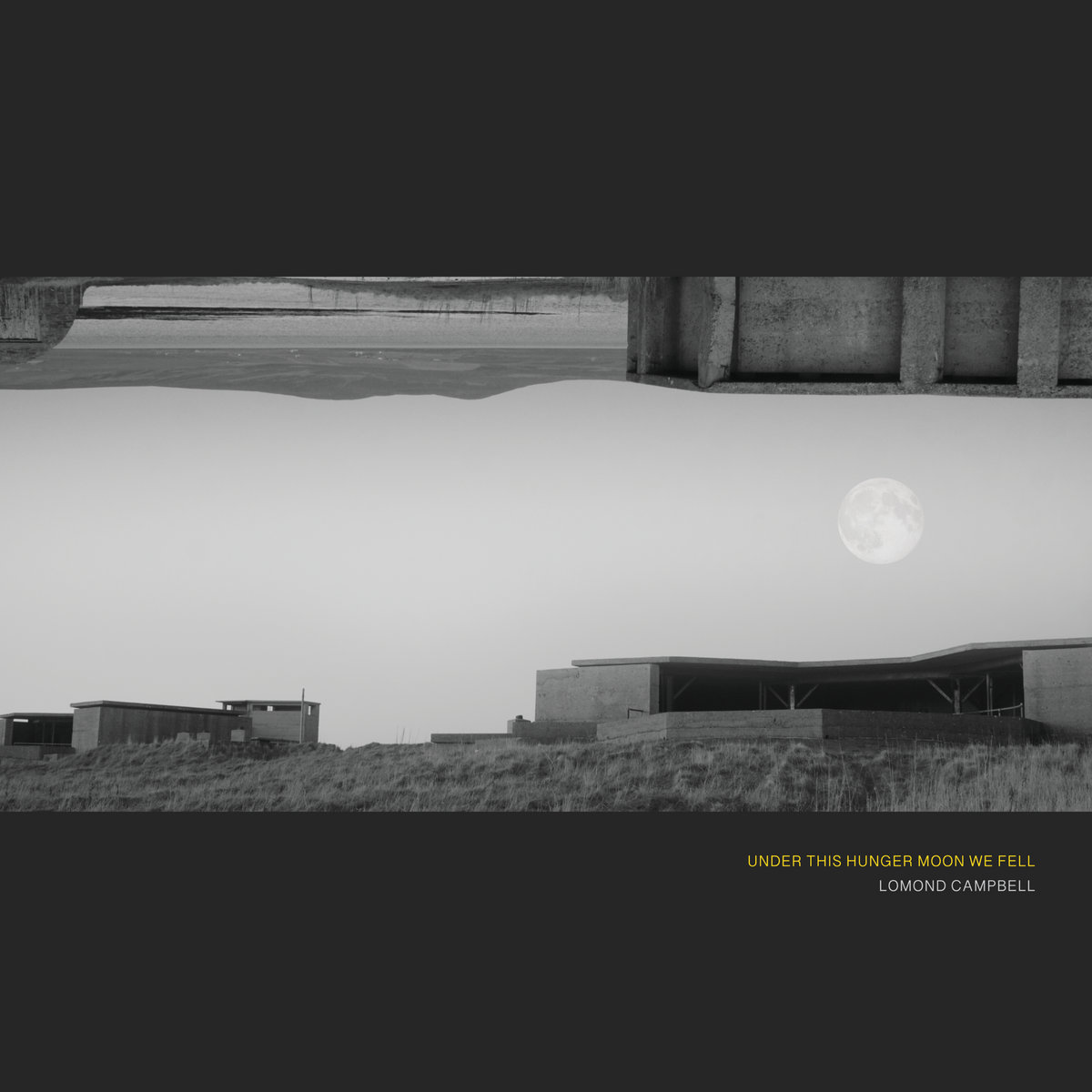
Switched On – Lomond Campbell: Under The Hunger Moon We Fell (One Little Independent)

Reviewed by Ben Hogwood

What’s the story?

The third instalment of Lomond Campbell’s experiments with music based on tape loops is a primal affair. While he was nearing completion of the album there was a dramatic Supermoon phenomenon known as a Hunger Moon, which occurs at the end of winter when predators are at their most desperate.

For his source material Campbell took 140 tape loops, stacked up on top of each other, and gradually whittled them down until, as the press release says, ‘the bare bones of something musical started to show itself’ on each track. The three-part project of music based on tape loops has its origins in a request from King Creosote, who was looking for a custom tape looping machine. Campbell obliged – but in the process created a musical instrument he wanted to get to know.

What’s the music like?

Moody and rather magnificent.

The title and recording process explain the album’s extremes of emotions, from intense and sudden soul searching to unexpected tenderness – but make no mistake, this is not a record that drifts complacently through the middle.

There is often an exploratory feel to this music, from the way a lone synthesizer line winds its way up through the misty textures of Bastard Wing, and the way the violin dominates Phonon For No One, with a busy drum track rather like the steady thrum of horses’ hooves underneath. Yet there is stillness too, best heard through the tolling piano that begins Leave Only Love Behind, an atmospheric tale.

We hear Lomond Campbell the vocalist for the first time, on For The Uncarved – a striking set of timbres providing the backing for his heavily manipulated but distinctive voice, which is eventually swamped by a rush of white noise.

Often the elements are close at hand, such as on the wide open and windswept track The Mountain And The Pendulum, a panorama with vivid outlines and a sweeping backdrop. It is another demonstration of how good Campbell is at setting the scene and allowing the climate to take over.

Does it all work?

Yes. Though often darkly tinged, this is a compelling piece of work – and compressed, too, the seven tracks weighing in at little more than .dfgd

Is it recommended?

Very much so. It will have you – as it did me – working back through Lomond Campbell’s impressive discography to check if there is anything that hasn’t been missed. Highly recommended, both as a trilogy and as this single, searching element.

Listen

Buy

In concert – Alexandra Lowe, Benson Wilson, City of Birmingham Choir, CBSO / Adrian Lucas: Vaughan Williams at 150: A Sea Symphony

Vaughan Williams
Benedicite (1929); Fantasia on Greensleeves (arr. Ralph Greeves) (1934); A Sea Symphony (Symphony No. 1) (1903-09)

Alexandra Lowe (soprano), Benson Wilson (baritone), City of Birmingham Choir, City of Birmingham Symphony Orchestra / Adrian Lucas

Symphony Hall, Birmingham
Sunday 6 November 2022 [3pm]

Reviewed by Richard Whitehouse

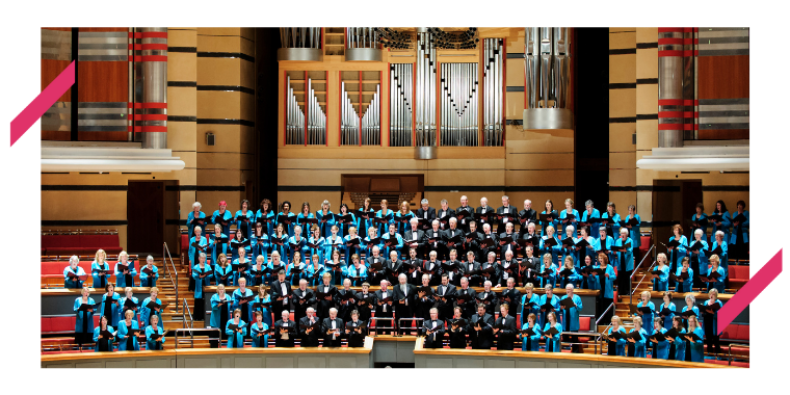
It may have been celebrated a year late, but this concert marking the centenary of the City of Birmingham Choir tied in with the 150th anniversary of the birth of Vaughan Williams and saw this choir joining forces with the City of Birmingham Symphony Orchestra in appropriate fashion.

Even when it had all but fallen out of the concert repertoire, A Sea Symphony yet remained a favourite of choral societies around the country such that the CBC has given its fair share of performances over the decades. On this occasion Adrian Lucas (musical director of the choir these past two decades) presided over an account whose shortcomings (notably an occasional misbalance between choir and orchestra in those more densely scored passages) were more than outweighed by the conviction with which the composer’s essential vision was realized.

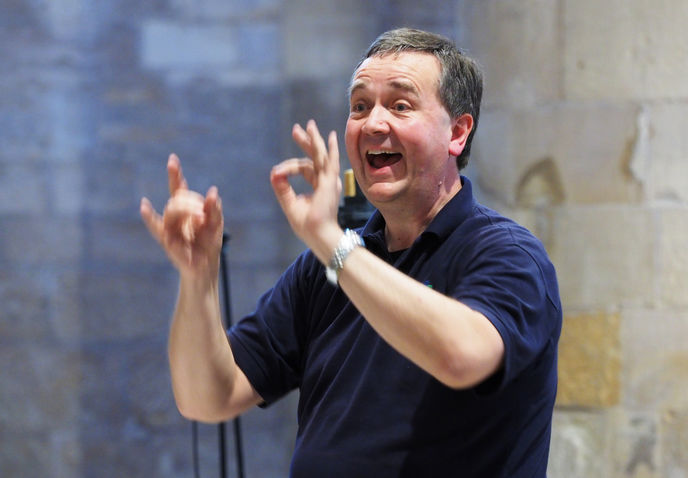
Certainly, the surging choral paragraph which launches A Song for all Seas, all Ships was powerfully conveyed with its subsequent sections introducing the soloists – Benson Wilson’s baritone ardent and mellifluous while just a little strained in its upper register, and Alexandra Lowe’s soprano such as rang out imperiously towards the centre of this opening movement. Momentum can easily falter in the latter stages, but Lucas (below) ensured its apotheosis provided an emotional counterweight to the beginning and never risked outweighing its rapt conclusion. Wilson came into his own with On the Beach at Night, Alone, its ruminative if often uneasy calm notably in evidence and with the more animated central section paced unerringly up to its fervent choral climax – after which, those brooding final pages yielded an evocative poise.

OLYMPUS DIGITAL CAMERA

As the symphony’s scherzo The Waves can feel overly contrived in context, but Lucas duly made the most of its rousing outer sections – the CBC in command of its textural intricacies – and convincingly integrated the Parry-like nobility of its ‘big tune’ into its evolving structure. Everything then came together in The Explorers, a finale which is also this work’s longest movement and features its finest music. By turns serene and speculative, the initial sections built assuredly to a rousing peroration from where the soloists’ impulsive re-emergence was the more telling. Lucas again ensured the culmination had the requisite grandeur without pre-empting the epilogue; at one with some of Walt Whitman’s most affecting lines in conveying that all-encompassing vastness as was a hallmark of Vaughan Williams’s endings henceforth.

The relatively short first half brought a welcome revival for Benedicite – its origins as a test-piece for competition likely telling against the qualities of a piece that, while it may break no new ground in its composer’s output, denotes his maturity in its vigorously wrought opening section, before a limpid setting of the 17th-century poet John Austin that brought an eloquent response from Lowe that itself preceded an energetic close. The once ubiquitous Fantasia on Greensleeves made for an appealing and by no means cloying interlude prior to the interval. All in all, this was a worthy commemoration of the respective anniversaries. The CBC can be heard in Handel’s Messiah early next month, and the CBSO continues its Vaughan Williams at 150 series next week with programmes conducted by Michael Seal and Martyn Brabbins.

You can read all about the 2022/23 season and book tickets at the CBSO website. For more information on the artists, click on the names of Adrian Lucas, Alexandra Lowe, Benson Wilson and the City of Birmingham Choir

Switched On – Dorian Concept: What We Do For Others (Brainfeeder)

Reviewed by Ben Hogwood

What’s the story?

Vienna-based artist Dorian Concept – aka Oliver Johnson – releases his third album through the Ninja Tune family. This one celebrates a less calculated way of working – which is not to mean it is careless, but that Johnson has decided to apply less of an editing process to the results.

What’s the music like?

Colourful and often invigorating. Tracks such as the cheery You’re Untouchable and Friends show Johnson’s prowess as a beat maker, and his instinctive way of working that comes from jazz.

The influences on the record are refreshingly far-reaching, and mean that pigeon holes for Dorian Concept’s music are more or less cast aside. The Other has an Eastern feel, while Let It All Go, Survival Instinct and Turn Away are musical workshops, clicking and whirring their way into life with a host of playful riffs. In these communal moments Johnson’s music recalls another, much earlier Ninja act, the collective Homelife.

On the other hand Johnson has a talent for setting a more reserved and evocative atmosphere, which he does in the nocturnal Fever.

Does it all work?

It does. Johnson’s music has a fresh, instinctive feel about it, as though the paint on his artworks has only just dried.

Is it recommended?

Yes. What We Do For Others is a celebration of creativity, and its many layers reveal something new with each listen.

Listen

Buy