
On Record – Robert Saxton: Portrait (Métier)

Saxton
A Hymn to the Thames (2020)
James Turnbull (oboe), St Paul’s Sinfonia / Andrew Morley
Fantasy Pieces (2020)
Fidelio Trio [Darragh Morgan (violin), Tim Gill (cello), Mary Dullea (piano)]
Time and the Seasons (2013)
Roderick Williams (baritone), Andrew West (piano)
Suite (2019)
Madeleine Mitchell (violin), Clare Hammond (piano)

Métier msv28624 [69’40’’]
Producers / Engineers Adaq Khan, Stewart Smith (Time and the Seasons)

Recorded 12 March 2014 at King’s Hall, Ilkley (Time and the Seasons); 27 January 2020 at St John the Evangelist, Oxford (Suite); 7 November 2021 at Conway Hall, London (Fantasy Pieces); 28 January 2022 at St John the Evangelist, London (A Hymn to the Thames)

Reviewed by Richard Whitehouse

What’s the story?

Having issued several of his works on miscellanies, Métier now issues a release devoted to Robert Saxton – this Portrait comprising four pieces which, written during the past decade, make for a revealing overview of the composer’s musical and wider aesthetic convictions.

What’s the music like?

Earliest among these works is Time and the Seasons – a song-cycle to Saxton’s own poems, in which memories of the composer’s long attraction to the south-eastern Norfolk coast are elided with a seasonal traversal from then back to winter; and itself underpinned by a tonal evolution drawing the six songs into a musical continuity. A piano solo Summer Seascape provides a formal and expressive pivot, the baritone solo Autumn an entrée into the The beach in winter as foregrounds human activity against a backdrop of temporal permanence.

Although they likewise have descriptive titles, the five pieces that comprise Suite for violin and piano seem inherently abstract in their content. Following the cumulative activity then limpid evocation of the first two, the others play without pause – the visceral immediacy of Jacob and the Angel, then the ethereal interplay in Bells of Memory, leading into Quest with (as in the song-cycle) a sense of this music having come full-circle yet simultaneously setting out fresh possibilities – tonal and emotional – to be pursued in future compositions.

The composer himself notes that Fantasy Pieces for piano trio, despite its title and scoring, is not related to Schumann’s eponymous work in any formal or thematic sense. Instead of the latter’s four character-pieces, moreover, Saxton opts for six continuous items whose fluidity of content and intuitive follow-through readily point up the various connotations of the title. That the closing piece seeks to provide a definite resolution while imparting a sense of open-endedness to the sequence overall is merely the most arresting facet of this engaging work.

Closure and un-restrictedness are no less crucial in A Hymn to the Thames, a concertante for oboe and ‘Classical’ forces whose four movements outline the river’s journey from its source in the Cotswolds to its estuary at the North Sea. Allusions to places encountered on route are deftly inferred (notably choral works by Taverner and Tallis), with the soloist a ‘first among equals’ as it leads the orchestra on through these contrasted musical landscapes towards a heightened arrival as the river meets the sea and, in turn, a comparable sense of renewal.

Does it all work?

It does. Saxton observed several years ago his music had become both more serial and tonal in its preoccupations, as is evident from the works recorded here. An incidental fascination is how each section or movement, appealing in itself, yet leaves a sense of open-endedness that is only resolved through the context in which they appear. This will doubtless be evident on a larger scale when Saxton’s Scenes from the Epic of Gilgamesh is premiered by the English Symphony Orchestra in Oxford as part of its 21st Century Symphony Project on March 10th.

Is it recommended?

Very much so. Excellence of performers and performances is matched by sound which gives little indication of any disparity in venues or dates, and the composer provides informative booklet notes. Hopefully further releases of Saxton will be forthcoming from this source.

For purchase information on this album, and to hear sound clips, visit the Divine Art Recordings Group website. For more on the composer, visit Robert Saxton’s dedicated website – and for more on the performers, click on Clare Hammond, Madeleine Mitchell, Andrew Morley, James Turnbull, Andrew West, Roderick Williams, Fidelio Trio and St. Paul’s Sinfonia

In concert – English Symphony Orchestra / Kenneth Woods – American & Canadian Sounds 2

Roman Kosyakov (piano), Rebecca Wood (cor anglais), Stuart Essenhigh (trumpet), English String Orchestra / Kenneth Woods

Barber Adagio for strings Op.11a (1936)
Still (arr. Zur) Dismal Swamp (1935)
Gershwin (arr. Farrington) Rhapsody in Blue (1924)
Copland Quiet City (1941); Appalachian Spring (1945)

Kings Place, London
Sunday 19 February 2022

Reviewed by Richard Whitehouse

London appearances by the English Symphony Orchestra being so infrequent, it was good to see an (understandably) scaled-down orchestra returning to Kings Place for the series American & Canadian Sounds that is taking place under the auspices of London Chamber Music Society.

The ubiquitous Adagio that Samuel Barber arranged from his only string quartet almost had to feature here, but that was no hardship given the excellence of the ESO’s playing – the silence after its climax rightly made the focal-point around which this whole performance revolved.

Although his music never entirely went away, the extent of William Grant Still’s output has barely been explored so all credit to Kenneth Woods for championing Dismal Swamp (heard here in an effective reduction by Noam Zur). Taking its cue from a short yet intense poem by playwright Verna Arvey (Still’s second wife), this 15-minute tone poem evokes the no-man’s land between Virginia and North Carolina across which escaped slaves once fled to freedom. Its concertante role for piano subtly embedded into the orchestral texture, the music charts a progression from sombre desperation to outward elation through a subtly extended tonality (Still having studied with composers as distinct as Chadwick and Varèse) whose apotheosis elides resolve and equivocation with a fervency which was tangibly in evidence.

Roman Kosyakov was the admirable pianist here as in George Gershwin’s Rhapsody in Blue. This also was heard in reduction, Iain Farrington’s arrangement combining the immediacy of Ferde Grofé’s original scoring with the Europeanized grandeur of his later orchestration. Placing the piano rear-centre of the platform likely accounted for any occasional failings of coordination, but Kosyakov’s characterful playing – not least in the lengthy developmental cadenza and ensuing ‘big tune’ – held one’s attention through to the indelible closing bars.

The play by Irwin Shaw for which he wrote incidental music might have passed into history, but Quiet City is among Aaron Copland’s most effective shorter pieces – its halting dialogue between cor anglais (Rebecca Wood) and trumpet (Stuart Essenhigh) given context by the modal plangency of its string writing.

The programme ended with Copland’s Appalachian Spring – heard here in the familiar suite but in the original orchestration with its prominent part for piano, along with solo woodwind contributions that stand out more clearly against the string nonet. Familiar as this music may be, its understated harmonic shadings and keen rhythmic ingenuity are never easily realized in performance, and it was testament to the ESO’s playing that the piece emerged as vividly and as cohesively as it did. In particular, the penultimate sequence of variations on ‘Simple Gifts’ had an unforced eloquence (the last statement of the Shaker hymn eschewing any hint of bathos) which carried through into the coda – its evocation of community no less affecting for being so idealized, and in music such as more than warrants that misused term ‘iconic’.

A rewarding programme and a welcome London appearance by the ESO, which will be back in action next month with (inter alia) a concert at Oxford’s Sheldonian Theatre that features a major new work by Robert Saxton as part of the orchestra’s ‘21st Century Symphony Project’

For more information on the artists in this concert, click on the links to read about Roman Kosyakov, Kenneth Woods and the English Symphony Orchestra. For more on the London Chamber Music Society, click here – and for more on composer William Grant Still, click here

Switched On – bvdub & Netherworld: Equilibrium (Glacial Movements)

by Ben Hogwood

What’s the story?

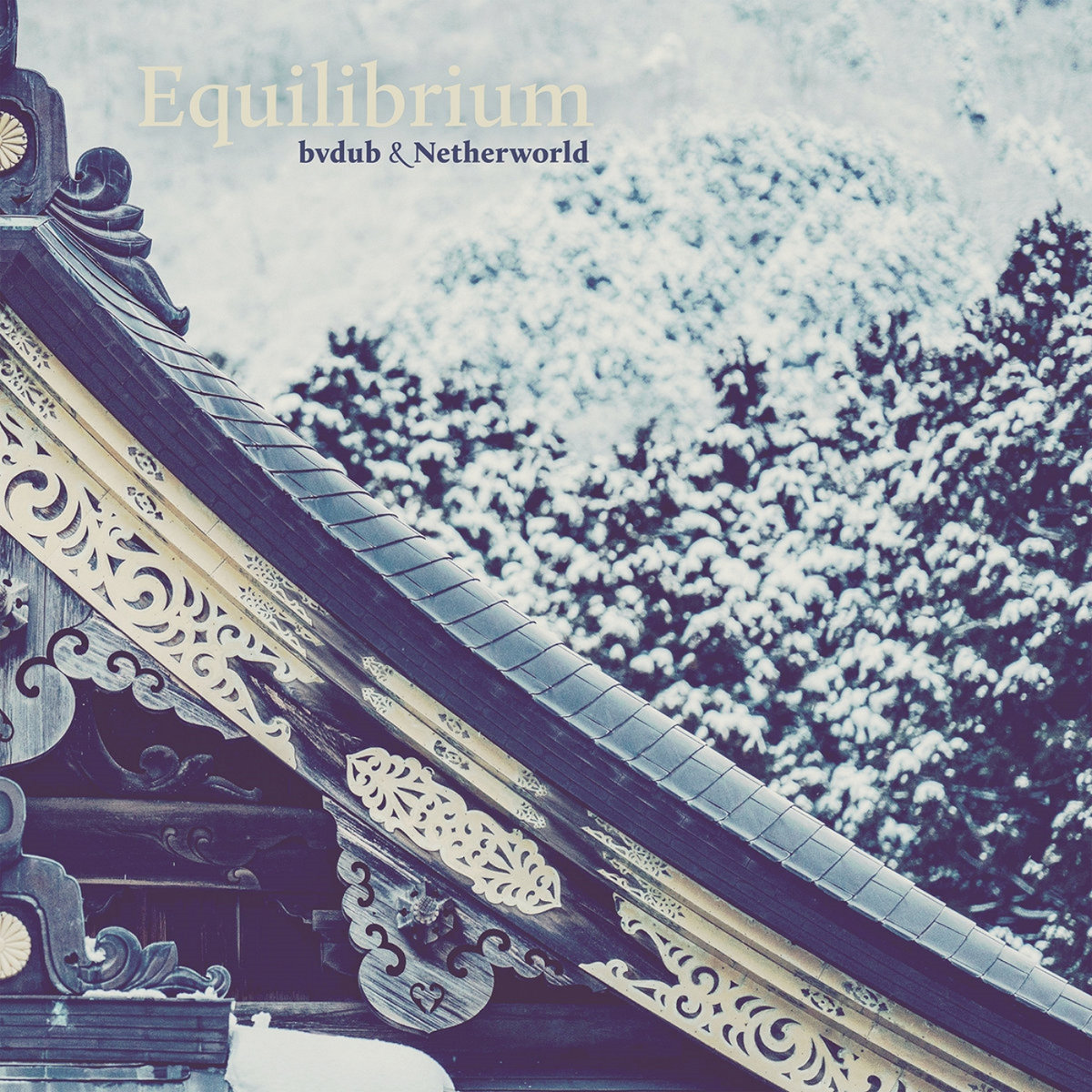
This is the first official collaboration between bvdub (Brock Van Wey) and Netherworld, otherwise known as Glacial Movements founder Alessandro Tedeschi. It is described as ‘a testament to a friendship that has endured and grown for well over a decade’.

The ‘equilibrium’ of the title is used in the context of a glacier, describing the point at which it achieves a perfect balance between the mass of snow and ice that comprises its mass. This means it is never advancing nor retreating, with the gritty warmth (bvdub) above, and the glacial cold (Netherworld) below.

What’s the music like?

It is to be assumed that bvdub and Netherworld stuck to the description above, and that the former took on the more variable elements of the music while the latter stretched out the harmonic outlines beneath. However they did it, Equilibrium works beautifully as a quartet of intense yet deeply ambient compositions.

Each piece is of equivalent length, weighing in around the 20 minute mark, and the music within casts a lasting spell.

The evocatively titled No Trees For Miles establishes the cold climate through its icy textures, and secures a strong home melodic pitch to contain the broad canvas above. The melodic lines, such as they are, move very slowly, like birds circling on the wing, though when the wordless vocals appear there is greater activity, as though zooming in closer to the mass.

Darkness From The Sun works as a gradual crescendo, like a huge keyboard getting itself into gear, before long pauses enable the listener to take in the scene around, with a massive echo giving us an idea of the sheer scale of the glacier, working up to slab of white noise at the end. Seas of Stones and Sand adds an air of mystery, its wordless voices forming weird and ethereal mini-melodies. The slowly evolving scenery takes on a vast scope with a blast of treble from an organ-like instrument, which proves overwhelming for a while before dropping back to distant, calming echoes.

Finally Ice on Fire creates the most movement, underpinned by long notes as the treble arpeggios dance like flames. Again it paints an uncannily vivid picture, one that proves extremely striking on headphones or with surround sound. As with the other pieces, it gradually subsides to silence.

This combination of rapt stillness and subtle movement is ideal for mindful meditation, but along with that the two artists paint a very vivid sound picture of the environment. The scratchy, grainy exterior maps to the hard edges of the glacier, while the stretched-out harmonies places it in stasis rather than outright movement.

Does it all work?

It does. Equilibrium is a highly descriptive quartet of works, intense yet deeply restful at the same time.

Is it recommended?

It is. Both artists have clearly spent a lot of time in getting Equilibrium just right – which in itself makes sense. What they have made is an exquisite, lasting musical stillness to ease the mind.

Listen

Buy

Online Concert: Jean-Efflam Bavouzet plays Haydn @ Wigmore Hall

Jean-Efflam Bavouzet (piano)

Haydn
Piano Sonata in D major Hob.XVI:24 (c1773)
Piano Sonata in A flat major Hob.XVI:46 (c1767-8)
Piano Sonata in E flat major Hob.XVI:49 (1789-90)

Wigmore Hall, Monday 20 February 1pm

by Ben Hogwood

Haydn’s piano sonatas remain an underappreciated corner of his output as a composer. This is understandable on one hand, given the sheer volume and consistency of his output in other forms. The symphonies, string quartets and piano trios all enjoy higher billing, but gradually the sonatas are coming up on the rails.

This is in part due to recent recordings from pianists such as Jean-Efflam Bavouzet, Marc-André Hamelin and Peter Donohoe. Bavouzet, however, has gone further, completing a cycle of the sonatas in eleven instalments for Chandos. If they are all as stylishly played as this BBC Radio 3 Lunchtime Concert, then many treats await.

First of three works in this recital was a D major sonata full of vim and vigour. Bavouzet enjoyed its brightly voiced start, securing a lovely articulation to the right hand while bringing the historical connections through. The energy of Domenico Scarlatti was in evidence, while in the aria-like slow movement there was an operatic air. With an expressive right hand and softly alternating left, Bavouzet found Haydn’s soft centre, before enjoying the florid right hand and the playful nature of in the finale.

In the second work we enjoyed classic, ‘exploratory’ Haydn, the composer experimenting with different forms and far flung keys – such as the D flat major chosen for the slow movement. Here the influence is more C.P.E. Bach, heard in a captivating Allegro, adorned with ornaments in the right hand. Bavouzet once again showed off a bright, clear sound and lightness of touch, with sleights of humour visible at every turn. The slow movement did indeed travel further afield, creating an air of mystery, with exceptional playing in the upper reaches of the right hand. The finale was crisp and clear.

Proof that Haydn sonatas are starting to make themselves better known came with the third work. This was not the E flat sonata placed 52 in Haydn’s output – often chosen as an example sonata in a concert programme. Instead we had a winsome and deeply personal work, written for the composer’s personal friend and confidant, Maria Anna von Genzinger at the turn of 1789 and 1790. As the musicologist Daniel Heartz notes, we know more about the composition of this piece than any other in Haydn’s output, due to the correspondence between the pair, where the composer gives uncharacteristic outpourings of feeling and loneliness.

Bavouzet’s performance immediately took on a conversational air, wit and underlying tenderness lying just beneath the relatively grand gesture of the opening. The intimate, thoroughly enjoyable dialogue between the hands spoke of two people enjoying a one-on-one rapport, before the first movement ended with a flourish and an exclamation mark. The second movement had a lovely disposition to its main theme but then a darker tint to the central section, moving to such ‘un-classical’ keys as B flat minor. The finale also stressed the importance of the silences between the notes, Bavouzet observing these just as closely in the overall phrasing.

This was a wonderful recital, a reminder that Haydn’s importance and influence within the piano sonata medium should not be overlooked. The music had an endearing freshness throughout, communicated with persuasion by a pianist on top of his game.

As an encore, Bavouzet switched styles to Massenet, dedicating his performance of the French composer’s whirlwind Toccata to his dear friend Paul Westcott, a much-missed presence with whom he worked in the beginnings of his career with Chandos, and through to the Haydn itself. Paul would have loved the pizzazz of this version, and Bavouzet’s virtuosity and brilliance would have been appreciated from afar – of that there is no doubt!.

For more livestreamed concerts from the Wigmore Hall, click here. Meanwhile the Spotify playlist below contains recordings made by Jean-Efflam Bavouzet of all the repertoire in this concert:

In concert – Hannah Peel: Fir Wave Live premiere

by Ben Hogwood

How appropriate that Hannah Peel should be placed in Hall One at Kings Place for the live premiere of her 2021 album Fir Wave. The hall is, after all, constructed with the material from a single, 500 year-old German oak tree named Contessa – and here it absorbed music that could have been written in its honour, as part of Peel’s artist residency in the venue’s Sound Unwrapped series.

Fir Wave originated in lockdown, its open air textures providing solace for many – your reviewer included – during several different phases of isolation. Its appeal lies both in the past and the future. Peel based her musical inspiration on the music of Delia Derbyshire and the Radiophonic Workshop, re-sampling and regenerating their work, and absorbing it into her own style and processes. The resultant work is an emotive one, celebrating the environment while fully aware of the issues it faces.

Peel’s deeply felt electronic music is often achieved through a ‘less is more’ approach – as the vocals on first track Wind Shadow demonstrated. With her live accomplice, Hazel Mills, she proceeded to sculpture and layer some beautifully earthy sounds, the melodic motifs coming up from the ground itself but becoming airborne through their expression by voice, synthesizer treble, violin or piano. For Peel is a multitalented artist, her roots nearer to folk music but now fully embracing the electronic idiom.

This included the intricate and sensitively handled beats. These cut through the smokescreen in Hall One with clear precision, drawing back to enable the appreciation of bigger vistas, both in the title track and Emergence In Nature. Peel was an endearing presence, addressing the audience only occasionally as she preferred to let her music do the talking. While understandably nervous at the reaction to music that hadn’t played in public since its release two years ago, the warmth of the reception confirmed she need not have worried. Patterned Formation had an angular beauty to its repeated loop, while Reaction Diffusion packed a heavier punch.

The attentive audience became fully immersed in the music, transported to the natural spaces it was portraying. Fir Wave itself was a treasure, describing a remarkable process found on certain mountains in the world. When the wind hits a mountainside full of trees, it starts to kill off the front arm of the fir trees, allowing the ones at the back to grow. Over years and years, the steady pattern creates a beautiful sound wave across the mountainside that shifts through a long period of time. Peel somehow described this in her music, which left a lasting impression.

With the album ingrained in our thoughts, Peel returned for two charming encores given with the aid of a music box. This gave her the appearance of standing in a cosmic post office, preparing to dispatch a lettercard to a significant other. The music told compelling stories through a charming cover of Cocteau TwinsSugar Hiccup, dating back to 2010, and a revelatory interpretation of New Order’s Blue Monday, turning the music on its head in duet with Mills.

Even these were not the emotional peak of the evening, however, for in a final encore of Unheard Delia Part 1 we heard the voice of Derbyshire herself, caught in an interview in a sunlit room. This detail, imparted by Peel before we heard the music, helped us to capture the moment itself, and the track remained in thrall to a pioneer of electronic music taken too soon. Peel, to her enormous credit, stepped back at this point to ensure Derbyshire’s voice could, at last, be fully heard and appreciated.