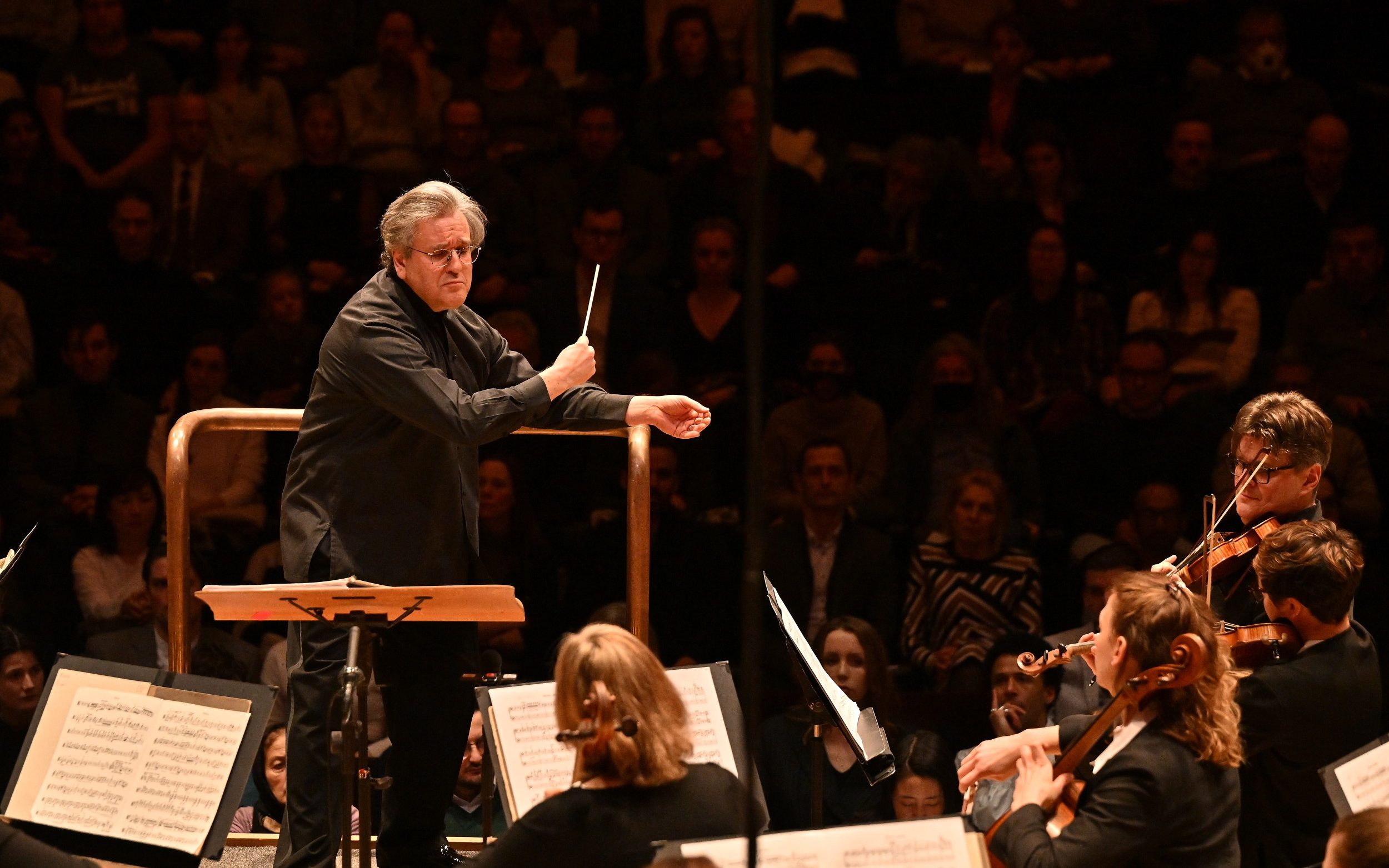
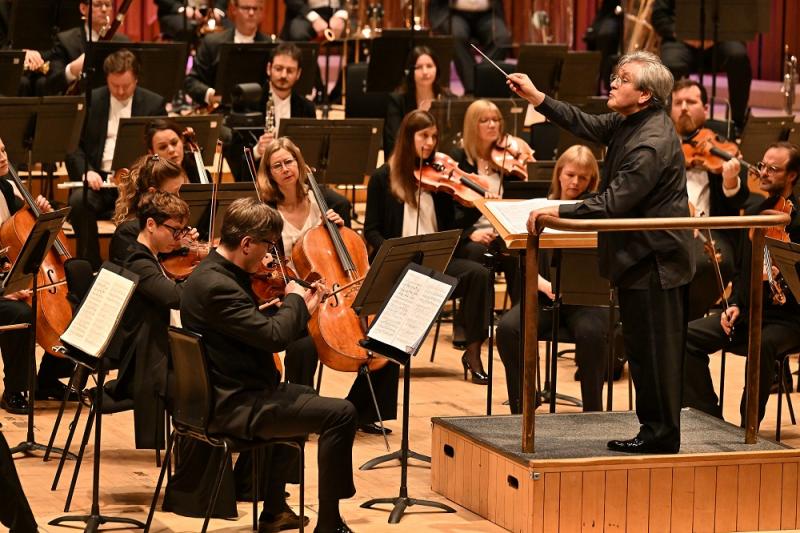
In concert – Alban Gerhardt, CBSO / Roderick Cox: Ravel, Saint-Saëns & Bartók

Alban Gerhardt (cello), City of Birmingham Symphony Orchestra / Roderick Cox

Ravel Ma mère l’Oye – suite (1910, orch. 1911)
Saint-Saëns Cello Concerto no.1 in A minor Op.33 (1872)
Bartók Concerto for Orchestra BB123 (1943, rev. 1945)

Symphony Hall, Birmingham
Thursday 16 February 2023 (2.15pm)

Reviewed by Richard Whitehouse

This afternoon’s concert by the City of Birmingham Symphony Orchestra brought a judicious programme that not only looked effective on paper but worked well in practice, juxtaposing characteristic works by Ravel and Bartók alongside a favourite concerto from Saint-Saëns.

Although the extended ballet was championed by Simon Rattle during his CBSO tenure, the original five items constituting Ravel’s Mother Goose suite (the Prelude was included on the programme but (rightly) not in this performance) constitutes an attractive sequence and one that played to the orchestra’s strengths. Roderick Cox brought out the serene poignancy of Sleeping Beauty’s Pavane as fully as the winsome poise of Hop-o’-My-Thumb, with its delectable playing from woodwind. Neither was the piquant humour in Laideronnette, Empress of the Pagodas undersold, nor the stealthy interplay of gentility and earthiness in Dialogue of Beauty and the Beast. Initially a little muted in its rapture, The Fairy Garden built towards a finely sustained apotheosis whose unforced ecstasy was much in evidence.

Saint-Saëns has long enjoyed a following in Birmingham – not least his First Cello Concerto, which this reviewer first heard played by CBSO with the redoubtable Paul Tortelier almost a half-century ago. Evidently no stranger to this piece, Alban Gerhardt launched into the first of its three continuous movements with due purposefulness; pointing up the formal ingenuity as the composer interposes between what are nominally the exposition and development of a sonata design a ‘minuetto’ where soloist and muted strings render the principal themes at an oblique remove. The relatively extended final section can risk feeling diffuse, but Gerhardt’s focus brought a natural sense of intensification then resolution prior to the decisive close. The soulful opening Dialogo from Ligeti’s early Solo Cello Sonata provided an apposite encore.

A staple of the modern repertoire in almost as short a time as it took to be composed, Bartók’s Concerto for Orchestra is a sure test for any such ensemble and one that the CBSO met with alacrity on this occasion. Setting a steady if never inflexible tempo for the Introduzione, Cox drew its contrasts of musing uncertainty and impulsive dynamism into a tensile and cohesive whole. Hardly less effective was the genial succession of duets in Giuoco delle coppie, set in relief by a brass chorale which makes for one of its composer’s most affecting inspirations.

Its sombreness marginally underplayed in its opening stages, the Elegia lacked nothing in eloquence at its climaxes or in its regretful closing bars, then a juxtaposing of folksong with Léhar and/or Shostakovich in the Intermezzo interrotto made for a heady while meaningful amalgam. It might not have followed-on attacca, but the Finale was otherwise the highlight of the reading – Cox as attentive to the music’s energetic and lyrical elements as to a central fugato whose initial fanfares return to cap the work, and this performance, in joyous abandon.

Born in Macon (Georgia) and currently based in Berlin, Cox is a fluent and assured presence such as helped make this an auspicious debut. The CBSO returns next week for an appealing programme with Ilan Volkov, featuring Isata Kanneh-Mason in Prokofiev’s Third Concerto.

You can read all about the 2022/23 season and book tickets at the CBSO website. Click on the artist names for more on Roderick Cox and Alban Gerhardt.

In concert – Alice Coote, Philharmonia Orchestra / John Eliot Gardiner: The Sea and the Land: Mendelssohn, Elgar & Dvořák

Mendelssohn Hebrides Overture Op.26 ‘Fingal’s Cave’ (1830, rev. 1832)
Elgar Sea Pictures Op.37 (1899)
Dvořák Symphony no.5 in F major Op.75 (1875, rev. 1887)

Alice Coote (mezzo-soprano), Philharmonia Orchestra / John Eliot Gardiner

Royal Festival Hall, London
Thursday 16 February 2023

Reviewed by Ben Hogwood Picture credits – John Eliot Gardiner (c) Sim Canetty-Clarke; Alice Coote (c) Jiyang Chen

This was an ultimately invigorating concert, using a cleverly constructed programme to look at how composers respond to the earth itself.

We began off the west coast of Scotland, the Inner Hebrides to be exact – and the uninhabited island of Staffa. Here it was that Mendelssohn saw Fingal’s Cave (above) in the summer of 1829. His musical response has become one of the composer’s best-loved pieces, an early and remarkably vivid example of the symphonic poem. Under John Eliot Gardiner, the Philharmonia Orchestra recounted the scene with remarkable accuracy, capturing the unusual, organ-like appearance of the landmark as well as the sea spray crashing around it. Gardiner steered a sure-footed and clear course through the water, aided by a wonderful clarinet duet from Mark van de Wiel and Laurent Ben Slimane in the second theme.

Alice Coote (above) then joined the orchestra, transporting us to the rarefied waters of Elgar’s Sea Pictures, the mezzo-soprano bringing to life five carefully chosen gems that took the composer far from his desk in Malvern in 1899. It took a while for singer and orchestra to achieve the optimum balance, so the words on the screen above were helpful as Coote found her feet. She did so quickly, and the somnambulant atmosphere of Sea Slumber-Song was cast, the strings lapping at the edges of Coote’s beautifully placed words. As she grew into the role so the gently rocking In Capri was attractively weighted and subtly intense.

Sabbath Morning At Sea was solemn yet soon reached for the heights, Coote’s innate grasp of the text matched by Gardiner’s control and shaping of the melodic line from the orchestra. The celebrated Where Corals Lie was perhaps inevitably the highlight, but The Swimmer ran it close, running all the way to a richly coloured high register from the singer at the end. Support came from the depths, too, with Alistair Young’s sensitive contribution on the Royal Festival Hall organ one to savour.

We returned to land for Dvořák’s Symphony no.5, the work with which he ‘rebooted’ his career as an orchestral composer in 1887, his publisher having spotted an opportunity to re-promote a piece finished in 1875. In this concert the parallel with the seasons was irresistible, the symphony’s first movement in particular resembling the flourishing of flowers in spring. Fleet footed strings were complemented by fresh faced woodwind, headed by the burbling clarinets who shone once again in the opening theme.

The Fifth is a sunny work, sitting in the shadow of the last three symphonies (nos.7-9) where live performances are concerned. As this concert revealed, however, it is a descendant of Beethoven’s Pastoral symphony, a work with considerable depth of its own and many different orchestral colours in which to revel. After a vivacious first movement, where Dvořák’s themes were given the best possible chance to shine, the cellos took the lead in their burnished opening to the romantic slow movement. This serious, minor key theme – surprisingly similar to the main tune of the Mendelssohn – was supplemented by an attractive, triple-time dance in the major key.

The slow movement segued effortlessly into the Scherzo, where the flurry of violins conjured up a vision of dancers trying to find their feet on the floor. The give and take between orchestral sections was a delight both to hear and to watch, as it was in the finale. The material here turns a little sour initially, Dvořák struggling manfully to regain the positive demeanour of the first movement. In Gardiner’s hands this was a compelling argument, ultimately won with the help of the superb Philharmonia brass, trombones punching out their melodies to thrilling effect. Once the ‘home’ key was reached the winter storms retreated and we basked in glorious musical sunshine, capping a fine evening where spring really did seem within touching distance.

You can read all about the 2022/23 season and book tickets at the Philharmonia Orchestra website.

Listening to Beethoven #218 – Gedenke mein! WoO130

Gedenke mein! WoO130 for voice and piano (1804-5, revised 1819-20. Beethoven aged 33 at time of composition)

Dedication Prince Nikolas Borissovich Galitzin


Text Anonymous
Duration 1’30”

Listen

by Ben Hogwood

Background and Critical Reception

Thoughts

This song has quite a gentle, hymn-like profile – especially when the harmonies. The voice and piano move together, step by step, with a nostalgic tone, until what can only be a regretful closing statement.

Spotify playlist and Recordings used

A seldom-recorded song – but when you have versions from the great baritone Dietrich Fischer-Dieskau and tenor Peter Schreier the song is still amply covered.

The below playlist contains those two recordings:

You can chart the Arcana Beethoven playlist as it grows, with one recommended version of each piece we listen to. Catch up here!

Also written in 1805 Wölfl Piano Sonata in C minor Op.25

Next up Variations for piano trio on ‘Ich bin der Schneider Kakadu’ Op.121a

In concert – London Symphony Orchestra / Sir Antonio Pappano: Richard Strauss, Coleridge-Taylor & Liszt

Roman Simovic (violin), London Symphony Orchestra / Sir Antonio Pappano

Coleridge-Taylor Ballade in A minor Op.33 (1898)
Liszt Die Ideale S106 (1856-7)
Richard Strauss Ein Heldenleben Op. 40 (1898)

Barbican Hall, London
Sunday 12 February 2023

Reviewed by Richard Whitehouse

It may have been his only concert this season with the orchestra of which he becomes Chief Conductor next year, but the rapport between Sir Antonio Pappano and the London Symphony Orchestra was audibly sustained through the whole of what proved a judiciously programmed concert.

Whether or not his Ballade (as commissioned for and premiered at a Three Choirs Festival in Gloucester) was inspired by music from a nearby street organist, Samuel Coleridge-Taylor’s work confirms the melodic fecundity and orchestral panache of his maturity. Its languorous slower episodes, framed by swifter sections of mounting energy, might not generate a more cumulative momentum, but the emotional immediacy of this piece overall is never less than appealing – certainly in a performance as vividly and precisely executed as that given tonight.

Pappano gave a memorable account of Liszt’s Eine Faust Symphonie four seasons ago, and it is good to see him exploring the mostly neglected orchestral output of this still misunderstood figure. The 12th of his symphonic poems, Die Ideale was written for the unveiling of a statue of Goethe and Schiller – a poem by the latter furnishing the conceptual basis of a piece which avoids programmatic or psychological excess for mostly lyrical and understated material; one whose deftly modified sonata design may well have been in Wagner’s mind when envisaging the symphony of the future. Pappano steered a cohesive course, building assuredly towards a triumphal if never bombastic apotheosis whose chordal writing for timpani (picked up on by Bruckner in his First Symphony nine years later) is merely its most striking musical attribute.

This conductor has made a fine recording of Richard Strauss’s Ein Heldenleben with Orchestra dell’ Accademia Nazionale di Santa Cecilia, and a similar combination of formal clarity alongside expressive intensity was evident here. Surging forward without indulgence, The Hero found due contrast in the sniping pettiness of The Hero’s Adversaries – consummately rendered by the LSO woodwind – then leader Roman Simovic took centre-stage for an unusually focussed take on The Hero’s Companion as culminated in rapturous euphony. Pappano’s underlying tempo for The Hero at Battle was a little too headlong, though never to the detriment of its textural density in what emerged as a purposeful development of the work’s myriad motifs; heading into a powerfully wrought climax at the beginning of The Hero’s Works of Peace.

It is in this penultimate section that the work’s pivoting between tone poem and symphony is most finely drawn, and Pappano duly underlined the numerous allusions to Strauss’s earlier pieces with due awareness of their place within the intricately conceived whole. Nor was the fateful transition into The Hero’s Resignation and Fulfilment uncharacterized, making this finale a culmination of the overall design and consummation of its intrinsic content. Whether or not the evocation of domestic bliss, there could be little doubt as to the music’s sincerity.

Contrary to latter-day presumptions, moreover, there was no evidence of the work’s revised ending as somehow tacked-on to what went before – Pappano drawing a Nietzschean ‘oneness’ from those closing bars which set the seal on a persuasive reading, and a memorable concert.

You can find out more about the 2022/23 season and book tickets at the London Symphony Orchestra website. Click on the artist names for more on Sir Antonio Pappano and Roman Simovic, while you can also read more about the Samuel Coleridge-Taylor Foundation

Listening to Beethoven #217 – Bagatelle in C minor, WoO 52

Commemorative medal for Ludwig van Beethoven – Bronze medal from the Hungarian Ministry of Culture based on a design by József Reményi (picture courtesy of the Beethovenhaus, Bonn)

Bagatelle in C minor WoO 52 for piano (c1795-7, Beethoven aged 24-6)

Dedication not known
Duration 3’45”

Listen

written by Ben Hogwood

Background and Critical Reception

A bagatelle that slipped through the net on Arcana’s Beethoven voyage! This one, which appears to have been finished between 1795 and 1797, is one of a series of such works completed in C minor. It was seemingly on the shortlist to be picked for the set of bagatelles Beethoven published as Op.119 in 1823.

Misha Donat, writing in his notes for the recording by Steven Osborne on Hyperion, suggests the movement was intended for inclusion as part of the Piano Sonata no.5 in C minor Op.10/1, but ‘discarded the scherzo-like piece because its tempo was too similar to that of the finale’. The piece was first published in 1888.

Thoughts

It is easy to see how this piece could be an out-take from the C minor sonata. It has the profile of a scherzo, with a repeated note motif that isn’t too dissimilar to that used in the forthcoming Symphony no.5. Although this ‘riff’ starts in the left hand it transfers to the right as well, and Beethoven enjoys playing with the syncopations it generates.

As a ‘trio’ section Beethoven moves into the major key, with a lighter touch and a warmer outlook to the music. It doesn’t last long, however – and we return to the dogged C minor material for a convincing finish.

Not exactly an easy Bagatelle to play, and much more a sonata fragment – but typically well constructed and memorable in its material.

Recordings used and Spotify playlist

Jenő Jandó (Naxos)
Mikhail Pletnev (DG)
Ronald Brautigam (BIS)
John Lill (Chandos)

Ronald Brautigam provides plenty of energy on his account, and there are tasteful versions from the other three pianists on the list – as well as Steven Osborne on Hyperion.

You can chart the Arcana Beethoven playlist as it grows, with one recommended version of each piece we listen to. Catch up here!

Also written in 1797 Eberl 2 Sonatas for Keyboard four hands, Op.7

Next up Gedenke mein!, WoO 130