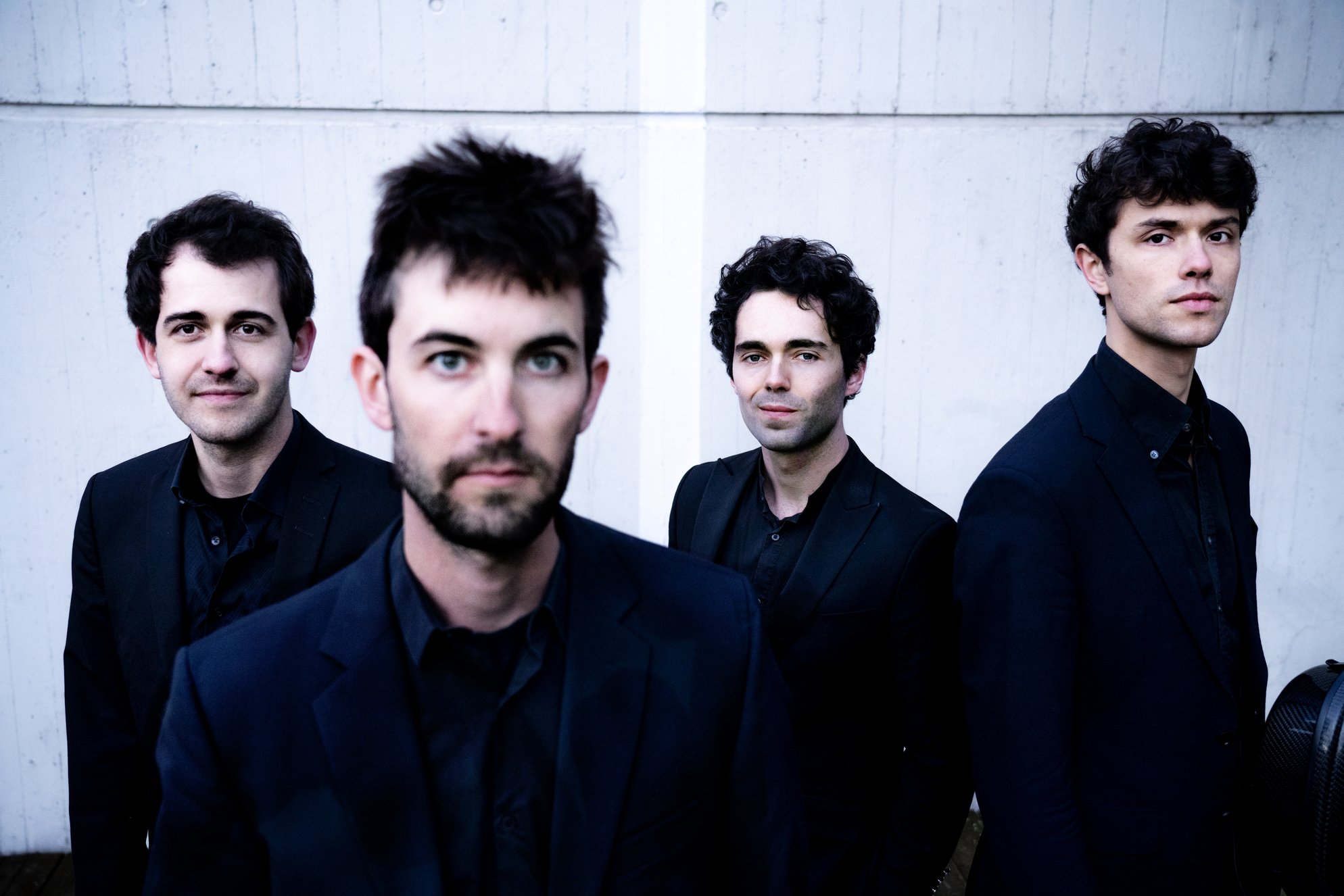
Online Concert: Tine Thing Helseth & Kathryn Stott @ Wigmore Hall

Tine Thing Helseth (trumpet), Kathryn Stott (piano)

Nordheim Den første sommerfugl (1982)
Martinů Sonatina for trumpet and piano (1956)
Shostakovich 4 Romances on Poems by Alexander Pushkin Op. 46 (1936-7)
Piazzolla Café 1930 from Histoire du Tango (1986)
Grieg 6 Songs Op. 48 (1884-8)
Gershwin Prelude No. 2 in C sharp minor (c1923-6); By Strauss (1936)
Weill Youkali (1934)
Kreisler Toy Soldiers March (1917)

Wigmore Hall, Monday 6 March 1pm

by Ben Hogwood

What a joy to see the partnership of trumpeter Tine Thing Helseth and pianist Kathryn Stott renewed at Wigmore Hall, united in an original program of trumpet originals and imaginative arrangements from vocal sources.

Dreamy lines from the piano introduced the concert’s first item, Arne Nordheim’s Den første sommerfugl (The First Butterfly), full of spring promise as the insect’s flight gracefully orbited the hall. Helseth’s trumpet line was a lyrical one, speaking faintly of folk song. From here the pair moved straight into the compact and winsome Sonatina for trumpet and piano, one of the Czech composer Martinů’s miniature gems. Written while experiencing homesickness in New York, the work began with a gruff introduction from the piano, its repeated note figurations taken up by the trumpet in fanfare-like salvos generating a good deal of energy. Gradually this subsided into more poignant thoughts, the composer revealing his softer centre, and by the bittersweet chorale with which the work ends the sense was that of a composer looking for his fortunes to change. Both performers caught that shift of focus.

Next up was an imaginative choice, an arrangement of Shostakovich’s Four Pushkin Songs. The vocal lines transfer to the trumpet with surprising accuracy, both artists playing in such a way that the original spirit of the songs was fully maintained. Regeneration, the first song, was thoughtfully done, held notes on the trumpet carrying above delicate figuration on the piano. Premonition was an easy amble in triple time, but the fourth song, Stanzas, held the cycle’s emotional centre. A substantial song, as long as the other three combined, it began with a stern introduction from Stott before a compelling dialogue unfolded.

Complementing this was a beautifully floated account of Piazzolla’s Café 1930, tastefully augmented by Stott’s rhythmic attention to detail. The melodies really sang from Helseth’s trumpet, any breathing challenges overcome with deceptive ease. As she said at the end, a bit of Piazzolla is never wrong!

Helseth’s announcements between the groups of pieces were nicely done, with an easy charm that also showed how much the two artists were enjoying themselves. This much was clear again in six songs by Grieg, grouped together as Op.48 but once again transcribing with relative ease for the trumpet. Gruss (Greeting) featured a lovely depiction of bells, an outdoor scene, while Lauf der Welt was a rustic march. Helseth’s characterisation of Die verschwiegene Nachtigall (The secretive nightingale) was nicely done. Zur Rosenzeit (Time of roses) presented bright colours, while the final Ein Traum (A dream) was especially full of feeling.

We moved to a stylish Gershwin duo, starting with an account of Prelude no.2 that was especially enjoyable when the main theme returned with the mute in the trumpet. By Strauss was also a highlight, enjoying the Viennese waltz send-up, while Weill’s Youkali was a soave tango. Finally Kreisler’s Toy Soldiers March was a perky account, led off by the piano with crisp fanfares. Topping a highly enjoyable concert was an encore of Piazzolla’s Libertango, led off with a swing by Stott and played with great panache by Helseth, including pitch slides to perfection.

For more livestreamed concerts from the Wigmore Hall, click here

Switched On – Sam Goku: Things We See When We Look Closer (Permanent Vacation)

by Ben Hogwood

What’s the story?

This is a second album for the Munich-based, Chinese-German musician Robin Wang, who records under the name Sam Goku.

Goku is reaching a lot of admirers, his eclectic approach to electronic music reaching the DJ sets of Four Tet and Ben UFO among many others. For this second album he switches to a ‘home’ label, the acclaimed Munich imprint Permanent Vacation.

What’s the music like?

A notch up from the average. Goku’s music continues to use attractive textures and loops with something a little different or distinctive added.

This can be heard in the lush title track, rich in Eastern promise, or the ambience of distracted voices and busy, watery loops on Mangrove Railways. He also works different tempo variations into the mix, with Libellenflug a nippy, percussive track that still retains its ambience, and the busy Orchids. The album evolves gradually, the quiet Yellow River Drone picking up more momentum as Goku moves into Cycles, with its softly resonating melodic nuggets. The momentum builds further, the album progressing as a strongly unified single composition, but also rewarding more fragmented listening.

Does it all work?

It does, convincingly – Goku securing a colourful canvas and plenty of musical interest.

Is it recommended?

Yes. Goku’s beat making skills and ability for creating colourful scenes in his music are a great match, and listening on headphones only opens out the possibilities. A fine sequel to his promising East Dimensional Riddims debut.

Listen

Buy

In concert – Alice Coote, Brenden Gunnell, Ashley Riches, CBSO Chorus and Orchestra / Ryan Wigglesworth – Elgar: The Dream of Gerontius

Alice Coote (mezzo-soprano), Brenden Gunnell (tenor), Ashley Riches (bass-baritone), CBSO Chorus, City of Birmingham Symphony Orchestra / Ryan Wigglesworth

Elgar The Dream of Gerontius Op.38 (1899-1900)

Symphony Hall, Birmingham
Thursday 2 March 2023

Reviewed by Richard Whitehouse

It may have had a disastrous premiere here in October 1900, but Birmingham has more than made amends to The Dream of Gerontius through many subsequent performances by the City of Birmingham Symphony Orchestra with conductors ranging from Vernon Handley to John Eliot Gardiner, two recordings from its previous chief conductors (Simon Rattle and Sakari Oramo), and tonight a reading which more than confirmed that this ground-breaking piece remains a touchstone of the choral repertoire almost 125 years on from that initial failure.

Although the innate Catholicism of John Henry Newman’s text no longer presents obstacles, the work’s technical demands remain considerable. Not least the characterizing of Gerontius himself, in which Brenden Gunnell acquitted himself with conviction – whether his wearied pallor then combative reckoning with Sancta fortis in Part One, or his wonderous musings then anguished acceptance of his purgatorial fate with Take me away in the longer second part. This role was consequently more believable and more empathetic because more human.

Not a little of that impression was abetted by Alice Coote’s contribution as the Angel. Less imperious than many predecessors (or contemporaries), the extent of her involvement only deepened as Part Two unfolded – the restraint, even reticence, of My work is done taking on heightened eloquence during There was a Mortal, before the Softly and gently of her farewell brought with it a transfiguring radiance as carried through to the close. This was a thoughtful and, increasingly, affecting approach to some of this work’s musical highpoints.

Nor should the contribution of Ashley Riches be underestimated, even though this is limited   to two, albeit crucial, appearances in either part. Arresting and suitably proclamatory at the Priest in Proficisere, anima Christiana, he brought unfailing gravity and powerfully wrought rhetoric to Angel of the Agony – the substance of whose musical presentation can be heard in Elgar’s music across the decades to come, whatever the extent to which the composer moved away from accepting those tenets of Catholic orthodoxy that are set out in Newman’s poem.

One of several works to which it has returned regularly over its half-century of existence, the CBSO Chorus brought its wealth of experience to a piece whose difficulties of ensemble and intonation cannot be gainsaid. From the halting appearances of the Assistants, through to the intricate polyphony of the Demons then cumulative grandeur of the Choir of Angelicals and distanced poise of the Souls in Purgatory, the authority of its contribution – prepared on this occasion by Julian Wilkins – added in no small measure to the impact of the performance.

As, of course, did that of the CBSO. Any regret over Andrew Davis’s indisposition was duly tempered by Ryan Wigglesworth’s tangible immersion and belief in this score – to which he brought a composer’s concern for clarity and cohesion, with a sense of pacing and a placing of its emotional climaxes which made appreciate anew the ambition and audacity of Elgar’s overall conception. Birmingham will doubtless hear many more performances of Gerontius over ensuing decades, with this one a marker as to what the work can and should represent.

You can read all about the 2022/23 season and book tickets at the CBSO website. Click on the artist names for more on Alice Coote, Brenden Gunnell, Ashley Riches and the CBSO Chorus. Meanwhile you can read more about Ryan Wigglesworth at two different locations – his composer profile from publisher Schott, and his conductor profile

Online Concert: Vision String Quartet play Shostakovich & Mendelssohn @ Wigmore Hall

Vision String Quartet [(Florian Willeitner, Daniel Stoll (violins), Sander Stuart (viola), Leonard Disselhorst (cello)]

Shostakovich String Quartet No. 8 in C minor Op. 110
Mendelssohn String Quartet No. 2 in A minor Op. 13

Wigmore Hall, Monday 27 February 1pm

by Ben Hogwood

Vision String Quartet are a dynamic young ensemble based in Berlin, who play with great freedom – foregoing printed music and playing standing up (save for the cello of course). Neither of these attributes are gimmicks, for they suit an ensemble who have a charismatic presence and gave two performances of substantial minor key string quartets with passion and attention to detail. The program presented an interesting juxtaposition, the pieces written in very different circumstances but using the string quartet medium to air very private thoughts.

The String Quartet no.8 is the most played in Shostakovich’s canon of 15 string quartets – and arguably receives a disproportionate coverage when compared to the other fine works in the cycle. Yet in a good performance it makes an extremely powerful connection with its audience, as they learn the circumstances in which the composer wrote it.

In 1960 Shostakovich was in fear of his life, and the Eighth Quartet was his unofficial epitaph. An autobiographical work, it contains quotes from some of his most successful and important earlier works, including the Piano Trio no.2, the First and Fifth Symphonies and the recently completed Cello Concerto no.1. It begins with a sombre Largo, which the ensemble played with great sincerity. It is sometimes argued that it takes a Russian quartet to fully understand these works, and certainly the Borodin String Quartet interpretations loom large over whoever dares to take them on, but this performance took the plunge with impressive surety.

Technically the quartet were superb, the lower parts of viola and cello driving the faster passages with obdurate figures. Meanwhile first violinist Florian Willeitner found a suitably plaintive tone over the held drone from the other three instruments when the music almost came to a standstill, a most moving part of the first movement. The torrid second movement gritted its teeth, while in the chilling fourth movement, the rat-a-tat motion (thought to depict gunfire or the Russian authorities knocking on the door) left a lasting impression. The Vision players were keen to emphasise the dissonances throughout, and this approach carried all the way through to the final resolution, which was all the more telling as a result.

After this performance Mendelssohn’s String Quartet no.2 in A minor was warm in comparison, yet this is not one of the composer’s sunniest works, written as it was in the grip of an unrequited love.

Affectionately played, the first movement caught the right tension between major and minor key, with an airy outlook from Willeitner’s first violin, but with the increasing incursion of the minor key something of a shadow fell over the music. The temperature warmed appreciably for the second movement, its figures delicately sung and balanced  with attractive countermelodies from around the quartet.

The third movement was a subtle charmer, its subject responding well to an unfussy presentation and subtle rubato, the Vision happy to manipulate the lilting dance rhythms rather tastefully. A skittish end cut to a vigorous, almost violent set of tremolos ushering in the presto finale, which fizzed with energy and enthusiastic interplay. The Vision Quartet secured a really nicely paced finish, winding down to a seraphic major key coda which was thoughtful and radiant.

As an encore the quartet delved into their new album Spectrum for Copenhagen, a collaborative work penned by the four instrumentalists themselves. A persuasive rhythm took shape over a cello ostinato figure, given out by the quartet with drive and passion. The piece had a rustic air which spoke of the outdoors, offering a promise of spring after two wintry works.

For more livestreamed concerts from the Wigmore Hall, click here – and for more about the artists, visit the Vision String Quartet website
Live review – Royal Philharmonic Society Awards 2023 @ Queen Elizabeth Hall

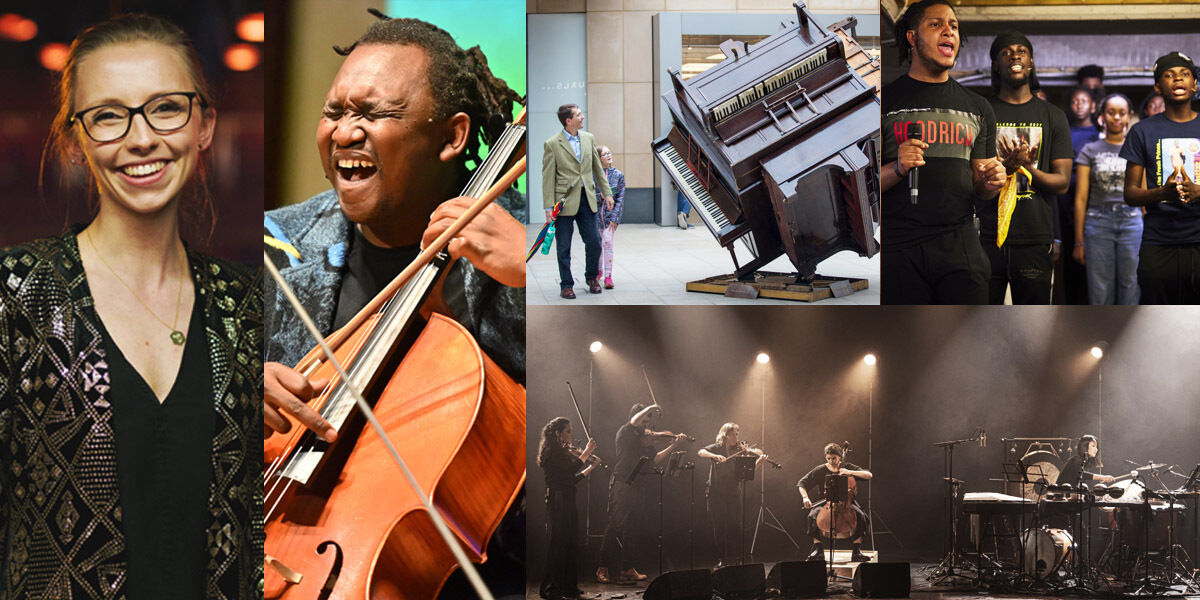
From left: RPS Awards winners Anna Lapwood, Abel Selaocoe, Leeds Piano Trail, The Endz, Manchester Collective

Queen Elizabeth Hall
2 March 2023

by Ben Hogwood

Timing is everything in music – and as the attendees of the Royal Philharmonic Society Awards unanimously agreed, both the show and its message at the Queen Elizabeth Hall were just what classical music needed.

As RPS chairman John Gilhooly emphasised in his no holds barred opening address, times in the industry are hard. Arts Council England have never been less connected with classical music than they are currently, looking past its versatility and potential to make increasingly bizarre funding decisions. All working in music are affected, from those starting out in education and learning their first instrument to those receiving music as therapy and stimulation for dementia and good mental health. Music, it is clear, should not be treated as a ‘nice to have’ extra. Rather, it is a galvanizing force bringing good into the lives of everyone ready to receive it, as we all saw during lockdown and as we experience from day to day.

Gilhooly’s passionate speech threw down a gauntlet to the government and Arts Council but did so in the spirit of collaboration and community. These two words appeared at regular intervals throughout the evening, which captured a wide range of heartwarming and inspirational work taking place around the country, in spite of these restrictions.

Winners included the Torbay Symphony Orchestra, representative of so many life-giving amateur ensembles around the UK in the joy they bring to so many who take part or spectate. Joy, too, is at the heart of Anna Lapwood’s tireless and effervescent work, the organist deservedly collecting the Gamechanger award for her achievements in bringing the instrument to a whole new audience. Put #playlikeagirl into TikTok or Instagram, and you’ll see what I mean!

The awards, stylishly presented by BBC Radio 3 anchors Petroc Trelawny and Hannah French, captured classical music in so many different forms. Timothy Ridout, a shining viola player of the present and future, credited his Luton and Bedfordshire musical roots as key to the Young Artist Award. Abel Selaocoe won the Instrumentalist Award, the cellist expanding the scope of his instrument to encapsulate non-Western musical traditions. How remarkable that an instrument with such a long history continues to develop.

There were even happy pandemic stories. Theatre of Sound won the Opera and Musical Theatre award, their production of Bartók’s Bluebeard’s Castle born during lockdown and executed in Stone Nest, just off Shaftesbury Avenue in London. Martyn Brabbins, music director of English National Opera, deservedly won the Conductor award for his fearless work with the beleaguered company, in which he continues to form strong connections with his musicians, old and new alike.

The Multi-Story Orchestra won the Impact Award for their searing production The Endz, expressing the feelings of a young Peckham group for the death of teenager Malcolm Mide-Madariola, killed while standing up for a friend in a knife fight. Even the brief excerpt we heard conveyed their strength of feeling, and their acceptance speech confirmed how cathartic music had been in expressing their feelings.

One of the most poignant moments of the night came when Manchester Camerata’s film Untold – Keith (above) earned them the Storytelling Award, confirming once again the power of music to help people cope better with dementia. Meanwhile on the streets Leeds Piano Trail won the Series and Events Award for their strategically placed pianos, bringing more than 200,000 aspiring musicians to the city centre, while composer Gavin Higgins took the Large-Scale Composition Award for his Concerto Grosso, a rousing success at the BBC Proms with the Tredegar Town Band and BBC National Orchestra of Wales under Ryan Bancroft.

The live music in the awards was astutely programmed. Sheku Kanneh-Mason gave a striking excerpt from the Cello Sonata no.2 by Leo Brouwer, written for him and fresh off the page in a first performance. Soprano Anna Dennis, winner of the Singer Award, sang a striking song of Elena Langer, Stay O Sweet beautifully weighted with beautifully floated counterpoint from oboist Nicholas Daniel.

The most distinctive musical voice of the night, however, was that of composer Ben Nobuto. Having won the Chamber-Scale Composition Award for the innovative SERENITY 2.0, and somehow achieving an authentic and wholly original balance between Frank Ocean and Caroline Shaw in the process, he joined Ensemble Award winners Manchester Collective for a performance of Danish folk song Old Reinlender. This was cleverly approached from the first movement of Bach’s Violin Concerto in A minor, the join between the two almost imperceptible but negotiated in joyful, songful music.

Sadly no members of Arts Council England were present to witness any of these musical tonics – it is to be hoped they will listen when the awards are aired on BBC Radio 3 on Monday 6 March. You should listen too, for you will find classical music, in spite of all its challenges, is swimming strongly against the tide.

You can watch the Royal Philharmonic Society Awards on the RPS website within the next week – while BBC Radio 3 will broadcast the ceremony, presented by Petroc Trelawny and Hannah French, on Monday 6 March. Click here to listen