
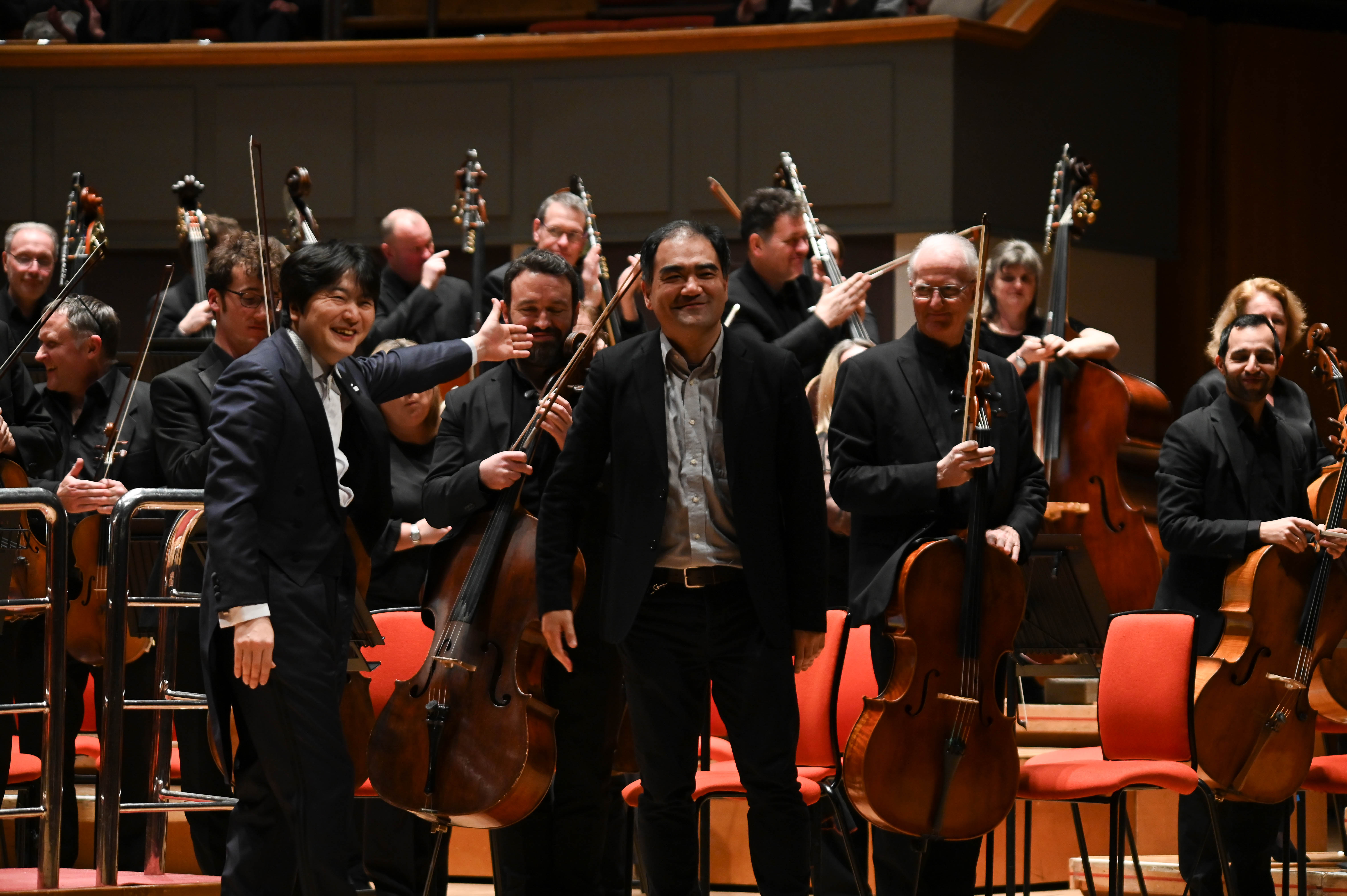
Eugene Tzikindelean (violin), City of Birmingham Symphony Orchestra / Kazuki Yamada
Fujikura Wavering World (2022) [CBSO co-commission: UK premiere]
Walton Violin Concerto in B minor (1938-9, rev. 1943)
Berlioz Symphonie Fantastique, Op. 14 (1830)
Symphony Hall, Birmingham
Wednesday 17th January 2024
Reviewed by Richard Whitehouse. Photos (c) Beki Smith
Tonight’s concert by the City of Birmingham Symphony Orchestra brought a varied trilogy of works, one which started with a first UK hearing (following its premiere in Seattle almost two years ago) of Wavering World by the Japanese-born and British-based composer Dai Fujikura.
In his programme note, Fujikura remarks on how little he knew of his traditional culture until having left Japan, and this piece draws upon the myth surrounding creation for an eventful if always cohesive journey through the emergence of the heavenly world, the human world and the underworld. This is achieved by separating the orchestra into stratified layers that do not succeed each other as merge into diverse and intricate textures where these sizable forces are imaginatively deployed; the music gradually moving away from its earlier austerity toward a luxuriance whose salient motifs are recognizable despite their transformation. Directing with unerring focus, Kazuki Yamada secured a vivid rendition which also served as a reminder that Fujikura is less often heard than might be in his country of residence these past three decades.
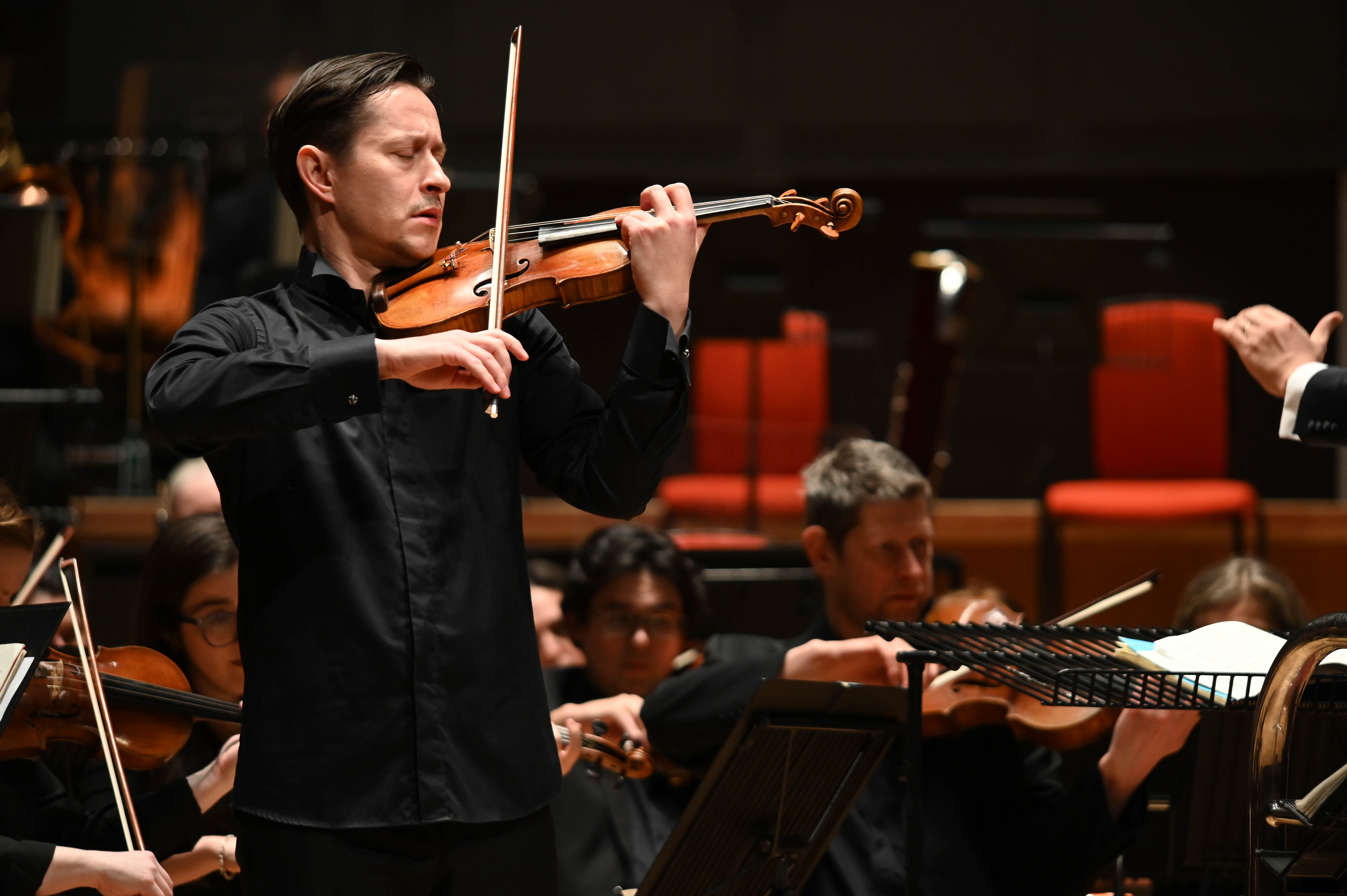
The fortunes of Walton’s Violin Concerto have lessened this past quarter-century, so Eugene Tzikindelean’s advocacy was its own justification. He had the measure of the initial Andante’s alternation between languor and agitation, ingenuity of thematic transformation offsetting any lack of originality in its themes, then gave of his best during a central Presto whose technical fireworks are tellingly balanced by yearning lyricism. If the final Vivace was less convincing, this might have reflected on the actual music – Walton putting his ideas through their audibly Prokofievian paces before evoking Elgar in a lengthy accompanied cadenza then gratuitously affirmative coda. The CBSO gave stalwart support, just over 50 years since it accompanied Yehudi Menuhin and the composer in a performance commemorating Walton’s 70th birthday.
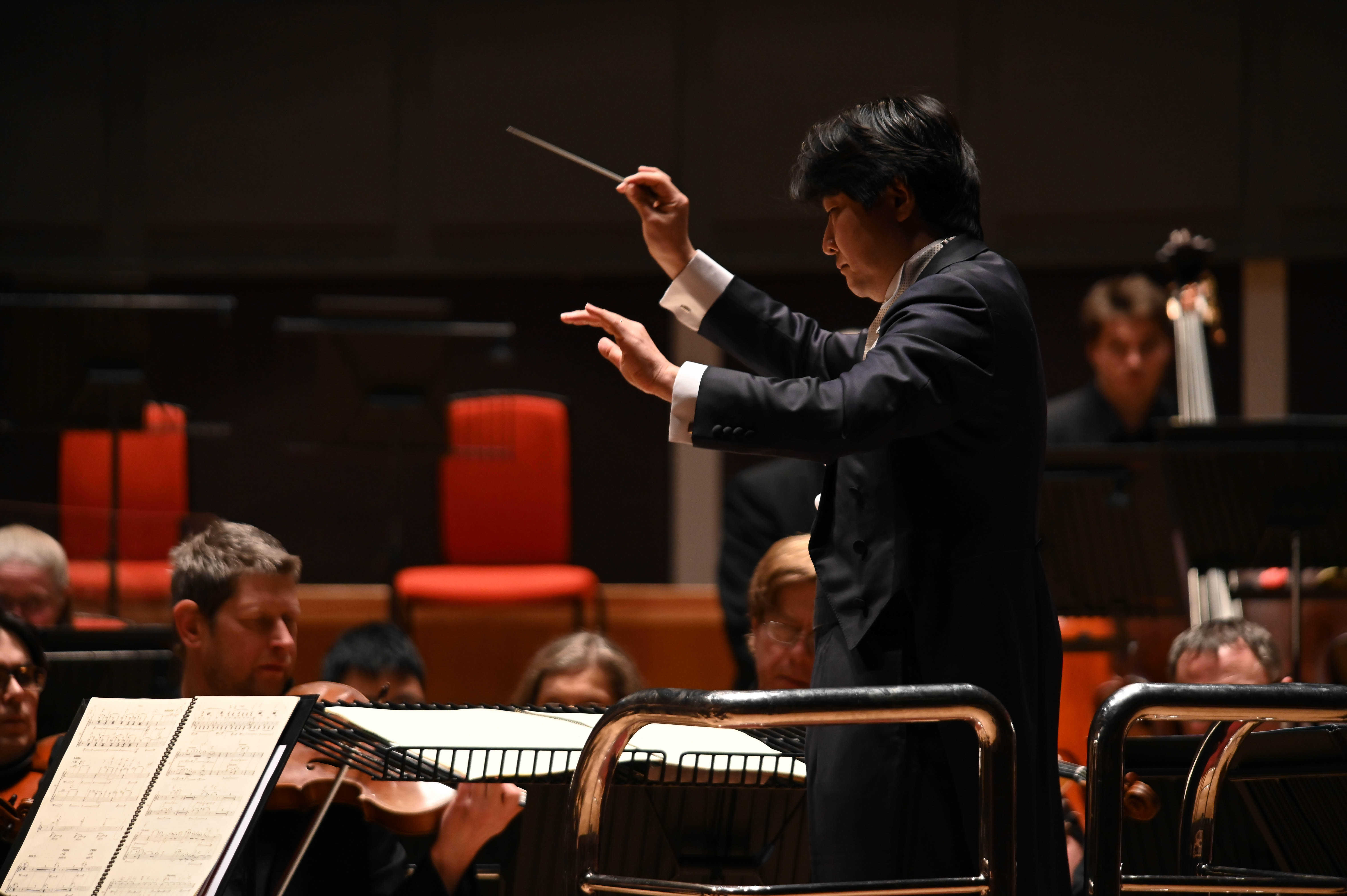
After the interval, Yamada (above) presided over a ‘no holds barred’ reading of Berlioz’s Fantastic Symphony. The latter-day tendency is to stress its symphonic cogency, but there was little of this in a Daydreams and Passions veering impulsively, even recklessly, between despondency and elation. The waltz element of A Ball was nudged out of shape, but its darker undertones were well judged, with the lengthy build-up then lingering subsidence of Scene in the Fields enhanced by Rachael Pankhurst’s plangent cor anglais and ominous timpani toward the close.
This was hardly the first performance to head off seemingly at a tangent, but March to the Scaffold (shorn of its first-half repeat, as had been the opening movement) quickly became a parade-ground romp in which the fateful fall of the guillotine went for relatively little. Nor was Dream of a Witches’ Sabbath without its Disney-like element of overkill, though here Yamada ensured a stealthy accumulation through its reiterations of the Dies irae plainchant and fugal episode to a peroration whose thunderous power seemed nothing if not conclusive.
An Episode in the life of an Artist, indeed, as demonstrably left its mark on the enthusiastic audience. Yamada and the CBSO will be doing it all again on April 10th, but next week sees the more Classical appeal of Mozart and Beethoven in the company of Maxim Emelyanychev.
Click on the link to read more on the current CBSO concert season, and on the names for more on violinist Eugene Tzikindelean, conductor Kazuki Yamada and composer Dai Fujikara
Published post no.2,063 – Sunday 21 January 2024
 Arcana.fm