
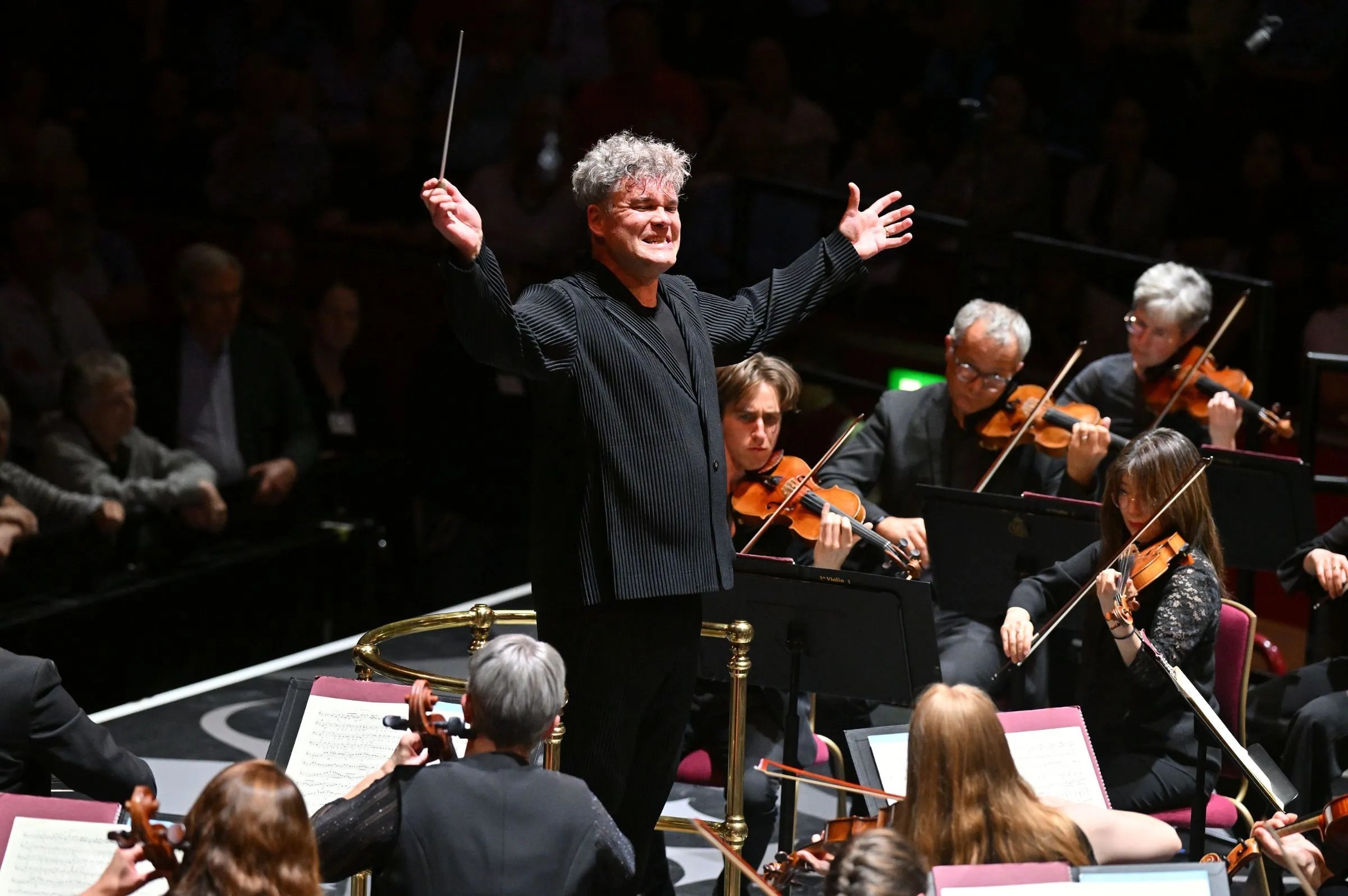
BBC Scottish Symphony Orchestra / Ryan Wigglesworth (above)
Birtwistle Earth Dances (1985-6)
Beethoven Symphony no.3 in E flat major Op.55 ‘Eroica’ (1802-4)
Royal Albert Hall, London
Monday 28 July 2025
Reviewed by Richard Whitehouse Photos (c) BBC / Mark Allan
The emphasis on Ryan Wigglesworth’s activities may have changed during recent years, but this is certainly no hardship when his conducting of so broad a repertoire is as convincing as in his brace of concerts from this year’s Proms with the BBC Scottish Symphony Orchestra.
Performed three times at the Proms during its first decade of existence, Sir Harrison Birtwistle’s Earth Dances tonight reappeared after 31 years. Much may have changed over that time (not least the passing of the composer), though this piece remains a sure highpoint of his output as of British music from the period. Premiered by the late Peter Eötvös before being taken up by Christoph von Dohnányi, Peter Boulez and Simon Rattle, it has now found an ideal advocate in Wigglesworth who surely gets to the heart of this particular matter like no-one before him.
Essentially this is about finding a balance between the facets of its title – those often densely arrayed yet always sharply differentiated strata of the orchestral texture, allied to a rhythmic fluidity which keeps the music moving forward even during its most intricate passages. Not an easy task such as previous exponents have conveyed with varying degrees of success, but Wigglesworth had the work’s measure from the beginning. Rather than a set of more or less complex episodes that follow on sequentially, what came across was a series of interrelated layers fused in an audible process of continual variation – one, moreover, in constant motion to a point at which it did not so much end as disperse into silence. Almost four decades after its premiere, Earth Dances has now emerged as that multi-faceted masterpiece it always was.
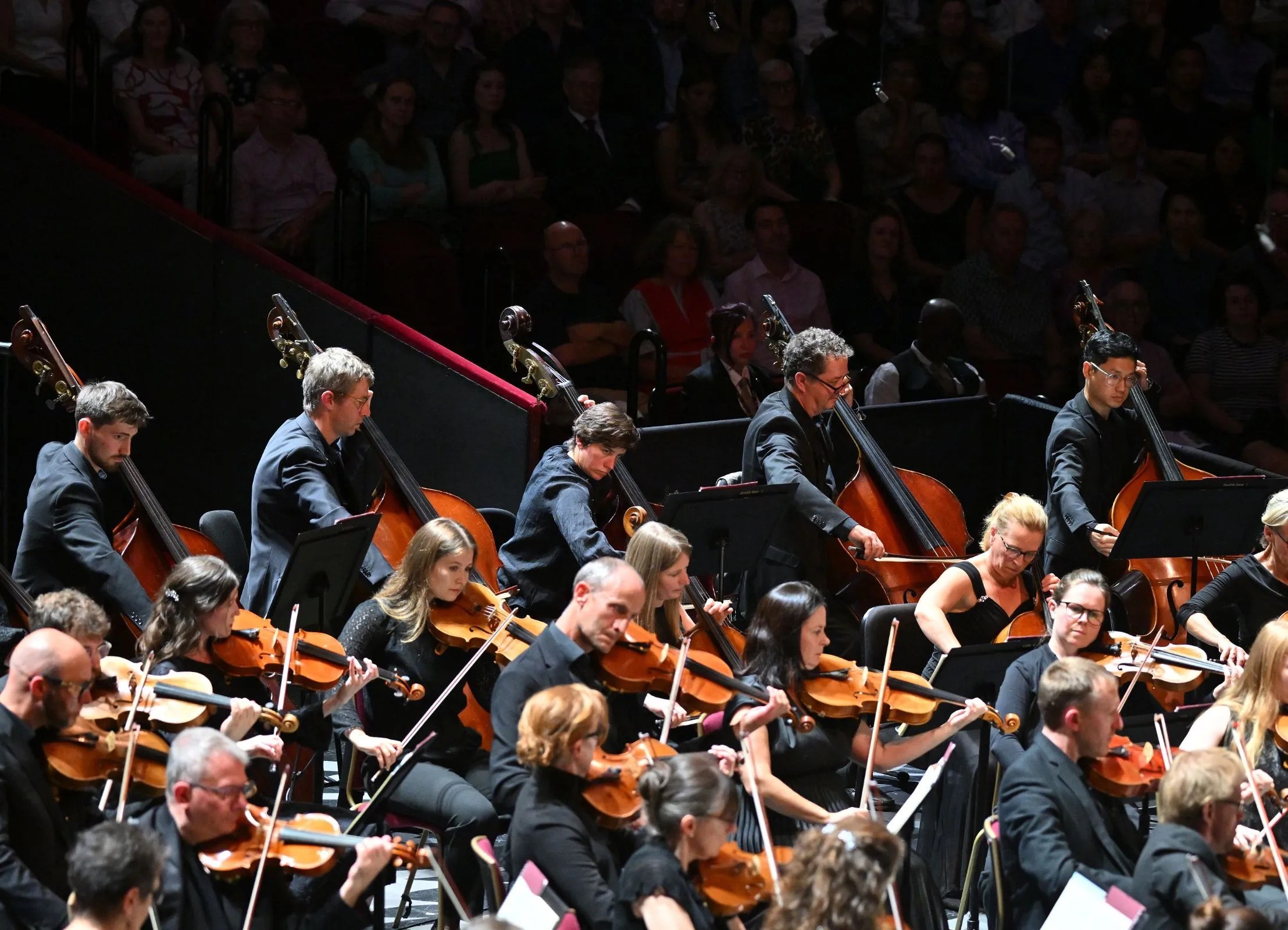
It likely took at least as long for the Eroica to be rendered, rather than merely recognized, as such – which could be a factor with their being juxtaposed in the same concert. Whatever the case, it made for judicious programming with Wigglesworth and the BBCSSO rising to their comparable challenges. First performed at these concerts 129 years ago then subsequently in almost every season, Beethoven’s Third Symphony is a testing assignment conceptually and interpretatively – as was not shirked by this involving though often understated performance.
An understatement evident in the opening Allegro, with its subtly modified exposition repeat, the more involving for rendering this movement as an unbroken while cumulative continuity through to an affirmative if not wantonly triumphal coda. Even finer was the Marcia funèbre, its steady undertow flexible enough to accommodate the lilting counter-theme as well as the intensifying fugato at its centre on route to a conclusion the more affecting for its emotional deftness. Nor was this latter quality absent from a Scherzo whose shimmering outer sections found ideal contrast in the trio, its incisive part-writing for three horns buoyantly articulated. The Finale was all of a piece with what went before, its variations on the ‘Prometheus’ theme enticingly characterized but with a keen underlying momentum toward the joyous apotheosis. While no single account of so trail-blazing a work could possibly convey all the answers, this was impressive in its formal focus and expressive balance as saw the symphony whole. Make no mistake, Ryan Wigglesworth now numbers among the finest conductors of his generation.
You can listen back to this Prom concert on BBC Sounds until Sunday 12 October – or listen to recommended recordings of the two works from the Cleveland Orchestra on Tidal here
Click on the artist names to read more about the BBC Scottish Symphony Orchestra and their chief conductor Ryan Wigglesworth. Click also for more on the BBC Proms
Published post no.2,613 – Friday 1 August 2025
 Arcana.fm