
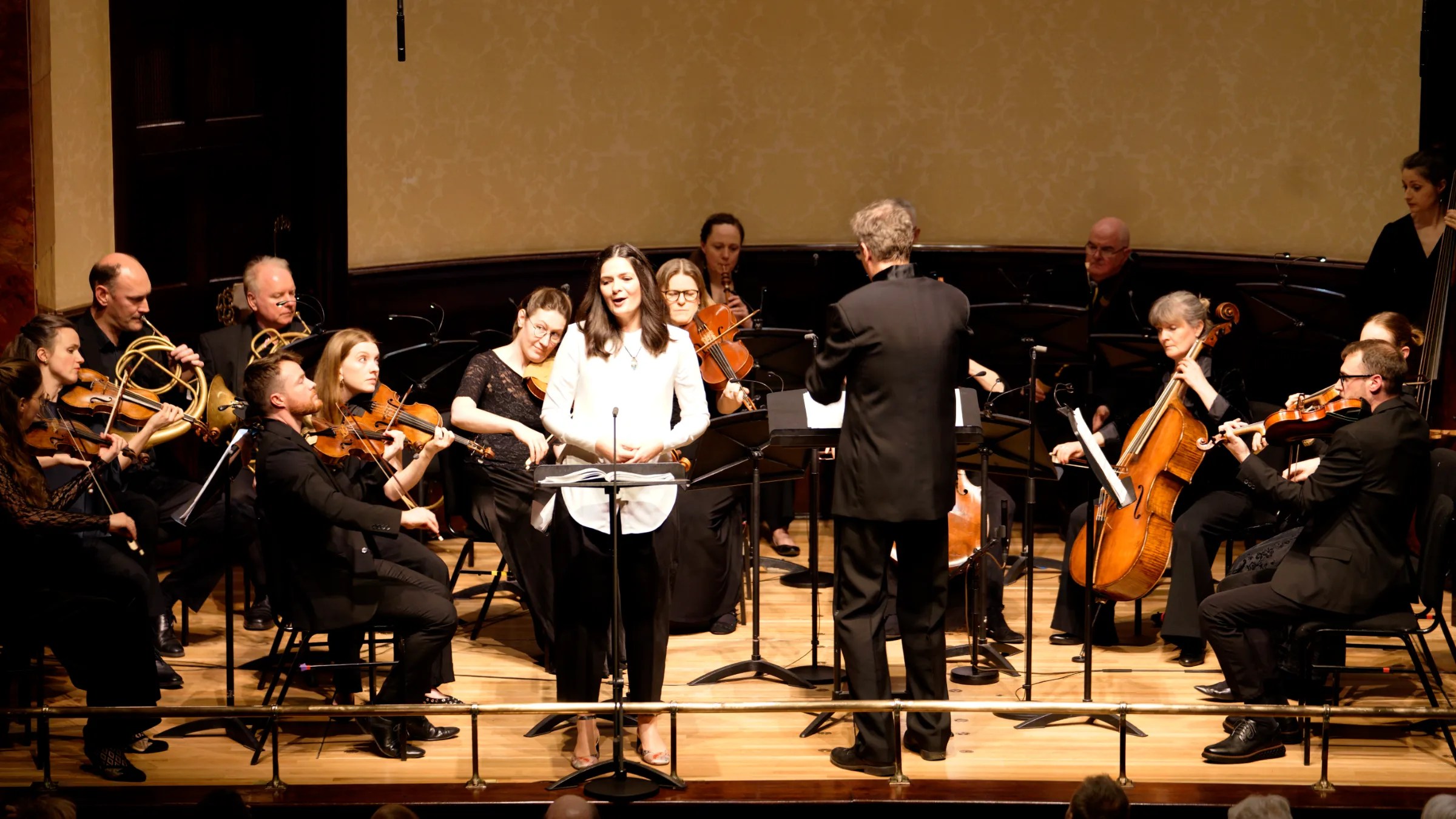
Marianna Crebassa (mezzo-soprano), The Mozartists / Ian Page
Mozart Lucio Silla K135 (1772): Dunque sperar poss’io…Il tenero momento
Haydn Symphony no.34 in D minor Hob.I:34 (1765)
Mozart Idomeneo K366 (1781): Ah! qual gelido orror; La clemenza di Tito K621 (1791): Parto, parto; Lucio Silla K135: Ah! se morir mi chiama; Le nozze di Figaro K492 (1786): Voi che sapete che cosa e amor
Haydn Symphony no.26 in D minor ‘Lamentatione’ (1768)
Mozart La clemenza di Tito K621: Deh, per questo istante solo
Wigmore Hall, London
Thursday 26 February
Reviewed by Ben Hogwood Photo (c) The Mozartists
It was a matter of time before Marianne Crebassa and Ian Page appeared together on the same stage. Indeed, as Page confided in the pre-concert talk, the French mezzo-soprano was top of his ‘wanted’ list for performing with his band, The Mozartists. With dates aligned, the pair constructed a typically stimulating programme.
Page’s eye for historical and orchestral detail proved the ideal foil for Crebassa’s characterisation of four operatic characters from early, middle and late in Mozart’s career, with each role written for castrato singers. Supporting these operatic excerpts were two symphonic examples from Haydn’s ‘Sturm und Drang’ period.
Diving straight in at the deep end, Crebassa embraced the many twists and turns of the 10-minute epic Dunque sperar poss’io…Il tenero momento, from Mozart’s teenage opera Lucio Silla. Her lower range notes were sumptuously delivered with impeccable poise, while Crebassa’s upper range was thrilling in the exposed virtuoso passages, delivered with a flash of the eye and a smile.
‘Enjoyment’ was a key word for this concert, as players, conductor and singer alike shared musical asides with obvious pleasure – not always the case in the concert hall! Some of the biggest smiles were reserved for Crebassa’s coy account of Voi che sapete, from Le Nozze di Figaro, subtle but winsome. Meanwhile the tragic Ah! qual gelido orror, from Idomeneo, had the appropriate gravitas and a weighty orchestral tone to match. A second aria from Lucio Silla, Ah! se morir mi chiama, was given with exceptional voice control and attention to detail from Page, including tasteful harpsichord continuo from Steven Devine.
Crebassa also triumphed in two arias from Mozart’s final opera La clemenza di Tito, hailed by Page as a long-underrated masterpiece. In Parto, parto her accomplice was basset clarinettist Emily Worthington, taking the part of Mozart’s friend (and Clarinet Quintet dedicatee) Anton Stadler. Player and singer engaged in a compelling sequence of musical cat and mouse, Worthington projecting well from the back of the stage. Meanwhile Deh, per questo istante solo found Crebassa drawing the audience in with its dynamic contrasts, high on drama. As a considerable bonus she gave a serene account of Qui d’amor from Handel’s Ariodante as an encore.
Complementing the Mozart selection were two examples of Haydn’s invention from early on in his tenure as Director of Music at Esterházy. Both D minor works share a weighty tone, and the earlier work, Symphony no.34, began with a heavy heart. The sparse tone of the orchestra was a stark contrast to the Mozart, only briefly relenting as the first movement developed its ideas. Even when D major appeared as the key of the resulting Allegro the music still bristled with anxiety, expressed through the violin tremolos. The Minuet and Trio – with lovely tone from oboists James Eastaway and Rachel Chaplin – eased the strain with brighter tones, as did the finale, in spite of its brief minor key recollections.
One of few Haydn symphonies to receive a nickname from the composer himself, Symphony no.26, the ‘Lamentatione’, took us to church in an interpretation reaching profound emotional depths. Page and the Mozartists moved from the brio of the lean first movement to rapt concentration in the second, where the music has a similar gait to the chorale of J.S. Bach’s famous cantata Wachet auf, ruft uns die Stimme. Page gave the phrasing appropriate room for contemplation. Haydn’s wit and invention made a welcome reappearance beneath the surface tension of the Minuet and was expressly felt in the syncopated trio, where oboes and horns excelled.
This was a memorable evening of music making, captured by microphones – presumably for broadcast on BBC Radio 3 or recording. Either way, a memento is well worth seeking out!
You can listen to the music from this concert in a Tidal playlist, including some of Marianne Crebassa’s own Mozart recordings made for the Erato label.
Published post no.2,811 – Friday 27 February 2026
 Arcana.fm