Breath is the ambitious new album from Ocoeur, aka Franck Zaragoza, the Bordeaux-based producer. On this record Zaragoza looks to reawaken an appreciation for the world around us, and connect with the landscapes that are for most of us within easy reach.
As well as looking at elemental connections, Breath is a call for peace in troubled times.
What’s the music like?
This is an album that works on two levels. On one hand there is a blissful ambience running throughout Breath, meaning it is easy to connect with especially at either end of the day. Yet listening closely is even more rewarding, with Zaragoza’s clever internal workings revealed as tightly knit melodic loops spread their wonders far and wide.
The album grows from small beginnings to reach an early apex with Life, which has real gravitas and orchestral dimensions. The music repairs for the softer piano musings of To Love, Ocoeur exploring deep and primitive emotions, before Calling For Peace makes an understated impact. Here a steady drum tread proves immediately reassuring, pairing up with a rather beautiful chime-like figure.
Everything Moves, as its title suggests, is more active, the music dancing like ripples on a lake, before the coda Our Home finds a softly-voiced calm.
Does it all work?
It does, beautifully. Best heard in one sitting, Breath is a work that may be mostly electronic but could easily transpose for full orchestra.
Is it recommended?
Very much so. This is an album of poise and presence, one of a minimalist beauty but with emotional heft, too. With his Ocoeur pseudonym, Franck Zaragoza is creating a deeply impressive body of work.
For fans of… Harold Budd, Gas, Howard Skempton, Biosphere
Listen & Buy
Published post no.2,348 – Thursday 31 October 2024
words from the press release, adapted for publication by Ben Hogwood
The Piatti Quartet releases a new album of Quartets Nos. 2-4 by British composer Joseph Phibbs, “one of the most successful composers of his generation” (BBC Music Magazine).
The Quartet and Phibbs have maintained a close relationship that stretches back several years. Since its joint second prize and Sydney Griller Award at the 2015 Wigmore Hall International String Quartet Competition, the Piatti Quartet has established a high reputation, particularly in the contemporary repertoire. They have recorded and performed Phibbs’ String Quartet no.1 almost 50 times.
Joseph (above) says:
“Having studied the cello as a child, I have always felt a special affinity with string music. My introduction at the age of 14 to the music of Britten was through his first string quartet, the opening of which still fills me with awe, and his works – especially those for strings – have remained a lifelong inspiration. After the first commission, the Piatti’s enthusiasm encouraged me to continue exploring the genre, and – a decade later – it has been both a privilege and a huge pleasure to have another opportunity to write for them (String Quartet No.4). Much of my music is inspired by light and landscapes (as well as cityscapes). When considering which images would best sum up the overall feel of the album, light – both natural and artificial – as seen within a landscape, seemed the most fitting choice.”
As a composer, Phibbs’ main influences are Lutoslawski, Britten and his former teacher Steven Stucky. Over recent years, he has been primarily exploring melody, forging his way using modal, diatonic and triadic harmonies.
Phibbs’s opera Juliana premiered in 2018 showed “a strong sense of continuity with the past – not least in the markedly post-Britten soundworld” (BBC Music Magazine). The Guardian added, “Juliana is that rare thing nowadays, a genuinely well-made, effective new opera that achieves exactly what it sets out to do.”
You can listen to excerpts from this album at the Presto website
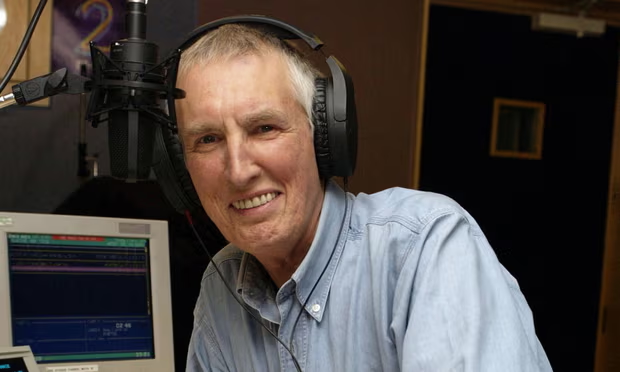
Sunday 27 October was a pretty momentous day on BBC Radio 2, for it marked the last broadcast in the 58-year career of DJ Johnnie Walker.
Walker was a Sunday afternoon companion to many, myself included, over the last 15 years. His two-hour programme Sounds of the 70s was a national institution, a place where people could forget about the forthcoming week and enjoy some quality music along with their chores, car journeys or dinner preparations.
It was the last in a long line of broadcasting assignments for Walker, who also fronted Radio 2’s Rock Show – a natural move for a figure steeped in rock music ever since he arrived on the scene on one of the pirate ships in the 1960s.
By way of a small ‘thank you’, here is a playlist in tribute to Johnnie, with many thanks for the music he introduced me to, and also recognition of the music he played that I already loved. It’s a small portrait of a broadcasting legend, but – like his programmes – is put together with a great deal of affection for his craft.
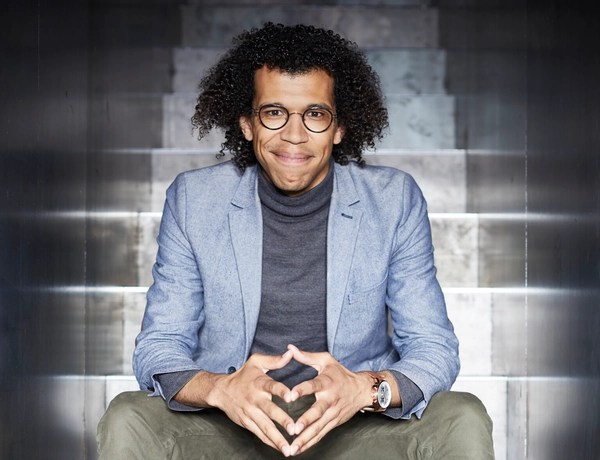
Yeol Eum Son (piano, below), City of Birmingham Symphony Orchestra / Jonathon Heyward (above)
Still Threnody: In Memory of Jean Sibelius (1965) Prokofiev Piano Concerto no.2 in G minor Op.16 (1912-13, rev. 1923) Sibelius Symphony no.5 in E flat major Op.82 (1914-19)
Symphony Hall, Birmingham Thursday 24 October 2024
Reviewed by Richard Whitehouse Pictures (c) Laura Tiesbrummel (Jonathon Heyward), Marco Borggreve (Yeol Eum Son)
American by nationality, and currently music director of the Baltimore Symphony Orchestra, Jonathon Heyward is no stranger to orchestras in the UK and this afternoon’s appearance with the City of Birmingham Symphony Orchestra confirmed a rapport that will hopefully continue in future seasons.
His symphonic output may now be well covered by recordings, but performances of William Grant Still remain infrequent such that his Threnody came as a welcome novelty. Dedicated to Sibelius in the anniversary year of his birth, this finds its composer in understandably sombre mood (akin to that of his masterly concertante piece Dismal Swamp from two decades earlier) and, while there is little about its content that recalls the Finnish master, the interplay between elegy and processional is effectively handled through to its subdued yet highly affecting close.
It might not have enjoyed the popularity of its successor, but the CBSO has given memorable accounts of Prokofiev’s Second Piano Concerto over the decades and the present reading with Yeol Eum Son (above) was as good as it gets in a piece that does not make things easy technically or interpretatively. Starting reticently, the opening movement duly hit its stride in the capricious second theme before the orchestra made way for Son’s electrifying take on a cadenza which encompasses development and reprise; the orchestra’s climactic return being no less visceral.
Wresting coherence out of the unlikely formal design of this work is hardly an easier task but, here again, there was no doubting Son’s insight as she fairly tore through its Scherzo without loss of clarity; she and Heyward then drawing abrasive irony out of an intermezzo which can easily descend into caricature. Nor was there any lack of focus with a Finale whose headlong outer sections frame one of folk-tinged pathos – afforded a cumulative intensity only outdone by the propulsive closing stage where soloist, orchestra and conductor were thrillingly as one.
If the reading of Sibelius’s Fifth Symphony after the interval did not quite maintain this level of excellence, it was no also-ran as a performance. Heyward might have observed the Tempo molto moderato of its initial movement more literally, as his swift underlying pace made for too precipitate a climax into its scherzo-like second half. The accelerating transition between them was adeptly managed, but there was little room left for manoeuvre during the approach to a coda where not even the CBSO’s unfazed commitment could gain the necessary velocity.
Neither did the second movement lack forward motion, though here Heyward found a viable balance between the andante and allegretto elements – its (mostly) ingratiating poise abetted by felicitous playing from CBSO woodwind. Setting off impulsively, the finale rather lacked eloquence in its ‘swan theme’ but the resourceful evolution of its material was never in doubt. Other performances have conveyed greater emotional breadth thereafter yet, as those indelible six closing chords unfolded, there could be no doubting their decisiveness as parting gestures. Overall, then, this was impressive music-making with Heyward evidently a conductor on a mission. Next Wednesday brings a programme of Spanish evergreens conducted by Kazuki Yamada, with Miloš Karadaglić taking centre-stage in a certain guitar concerto by Rodrigo.
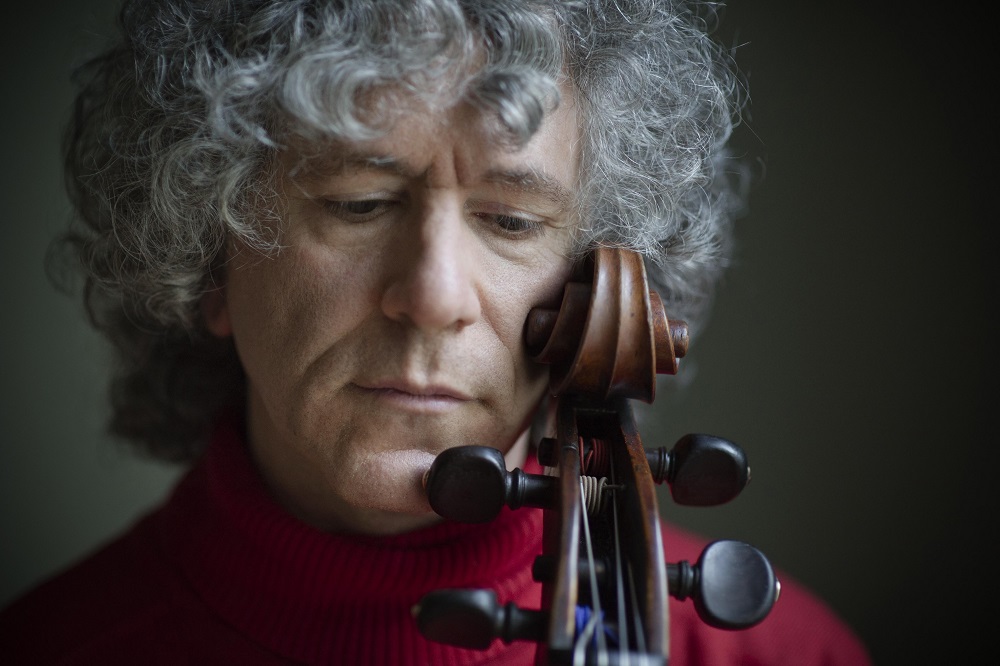
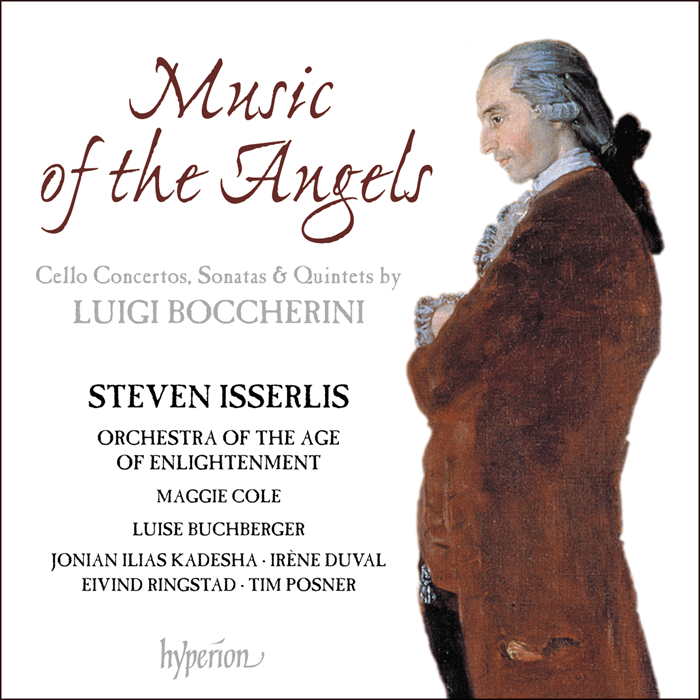
The cellist talks to The cellist talks to Ben Hogwood about his Wigmore Hall residency, celebrating the music of Fauré, and his new Boccherini album Music of the Angels.
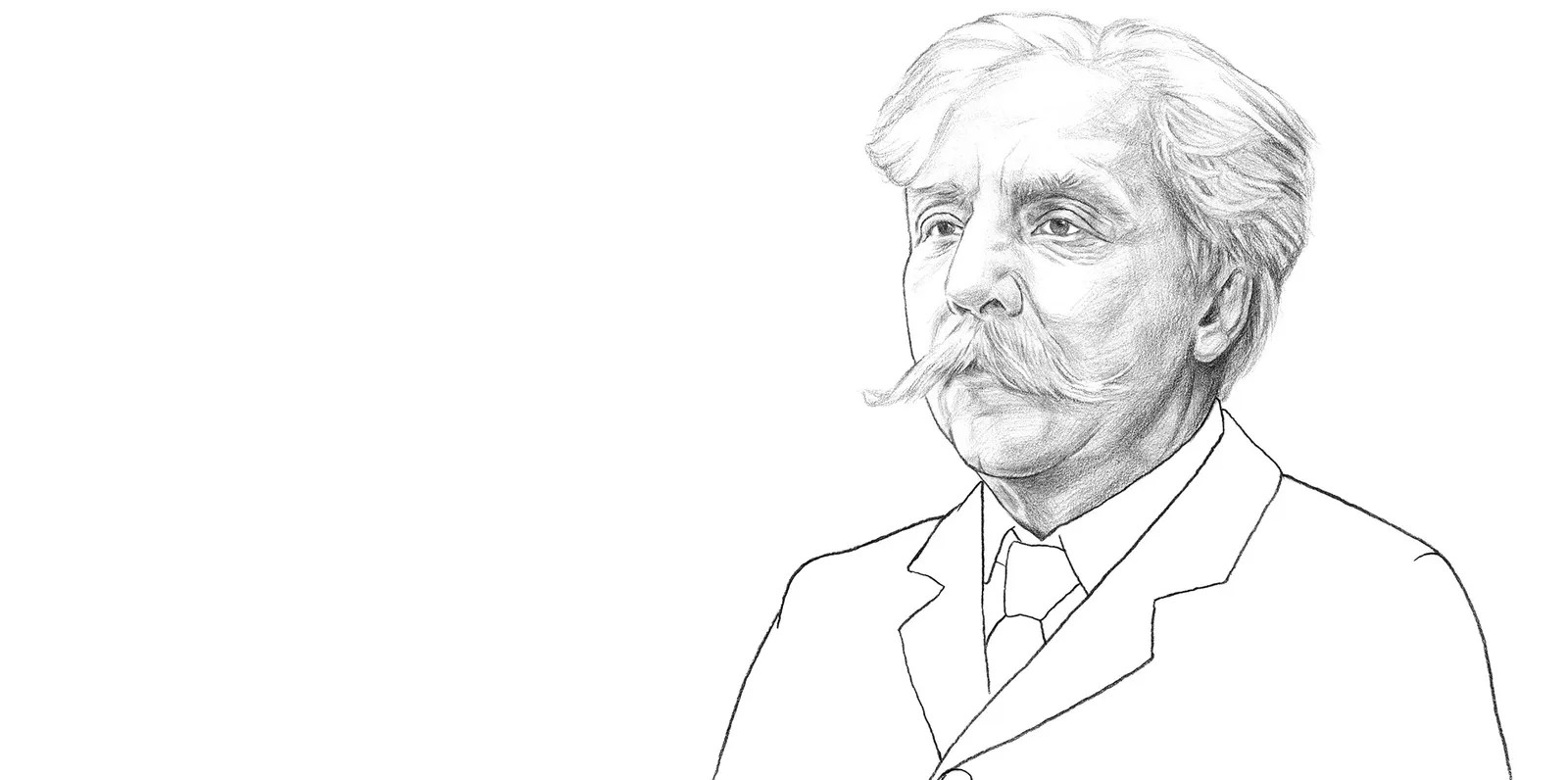
For cellist Steven Isserlis, November 2024 is all about two composers. From the first day of the month he is taking up residence at London’s Wigmore Hall for a five-day exploration of the late chamber music of Gabriel Fauré, who died on 4 November 1924. He has given a valuable insight into his thoughts on the composer in an article just published for the Guardian newspaper, but was generous to spend some time answering specific questions about Fauré’s late music for Arcana.
Arcana: The Wigmore Hall concerts put Fauré (above) in context with his contemporaries – how did you plan them? It’s especially good to see the music of Nadia Boulanger, Saint-Saëns and Koechlin included.
Steven: Well, first came the idea of doing the complete (major) chamber music of Fauré for the centenary; then everything else had to be worked out around that. It took some time for the programmes to fall into place – and then I was amazed that the Wigmore said yes to all five of them!
How does Fauré’s writing for the cello develop through his works?
I don’t think of his cello writing as such developing – it’s more the musical content. His first work for cello was the Élégie, which is of course wonderful; but if you compare it to the most similar subsequent piece of his, the slow movement of the second sonata, you see how much more profound his music has become. Which is not to put down the Élégie – any more than saying that Beethoven’s last piano sonata in C minor, op 111, is on a higher level than the Pathétique sonata op 13, also in C minor, is a criticism of the Pathétique.
What are the challenges and ‘do nots’ of performing his music in an ensemble such as a piano quartet or quintet?
We just have to agree on our approach – but we do! I call our team – Joshua Bell, Irène Duval, Blythe Teh Engstroem, myself, Jeremy Denk, Connie Shih – Team Fauré. We’re all in love with his music!
Fauré’s late period has some similarities with that of Brahms. Would you say there is anything in common between their approach, late in life?
I suppose, in that there is a ‘new simplicity’; but I think there’s much more in common between late Fauré and late Beethoven. And not just because both men were profoundly deaf!
There is something very special about Fauré’s melodic writing, and the chromatic harmonies he uses. It must be a joy to play!
It is! So long as one understands the chromatic harmonies – one has to be absolutely sensitive to each change of tonal colour.
Would you say Fauré is a composer where repeated listening brings ever greater rewards?
Well – yes, of course; but I’d say that of any great composer! But perhaps with Fauré’s late works in particular, familiarity with the style is especially helpful.
The other composer occupying Steven’s uppermost thoughts in the next month is Luigi Boccherini, with Hyperion releasing Music of the Angels, a generous anthology of the composer’s works for cello with members of the Orchestra of the Age of Enlightenment and harpsichordist Maggie Cole. The album explores the very different forms of Cello Concerto, Cello Sonata and String Quintet – where the composer adds an extra cello to the traditional string quartet line-up. Boccherini is a lesser-known light from the 18th century, and his cause has been close to Steven’s heart right through his recording career.
It’s great to see your Boccherini album. Was it most important for you to present the different types of work – concerto, quintet, sonata – in context?
Thank you! Again, the programme just worked out that way; but yes, I was happy to show different facets of Boccherini’s unique world.
You’ve been playing and recording the music of Boccherini for a good while – what was it that first attracted you to his music?
Well, my teacher Jane Cowan was a great Boccherini fan, which I’m sure influenced me. (She was also a great Fauré fan!) But I’ve always loved his elegance, the otherworldly beauty of his music, his gentle, kind musical soul.
At a guess, I think it might have been the Orchestra of the Age of Enlightenment’s first exposure to Boccherini. Did they enjoy it as much as you?
I think they MIGHT have done some of the symphonies; but I’m not sure. They were certainly lovely to work with – committed, enthusiastic and supportive.
You talk in your notes about the virtuosity Boccherini requires from his soloist – he must have been quite a player. Is it quite intimidating using such a high register of the cello to start with?
Yes! He’s among the most demanding composers for cello, because there’s nowhere one can hide. One can’t just add mounds of vibrato to mask the intonation, for instance. And one has to be able to shape the delicate curves of the music in a way that is naturally graceful; a challenge indeed.
Would you say his music is an ideal ‘next step’ for lovers of Haydn and Mozart?
I think that he’s very different from either Mozart or Haydn – roughly contemporaneous, yes, but another personality entirely. In a way, I think he’s more analogous to Domenico Scarlatti – not because they’re that similar, but because they were both Italians who spent much of their lives in Spain where, relatively cut off from the centre of European musical life, they created their entirely individual compositional worlds.
How does Boccherini’s cello writing contrast with that of Haydn?
Very different! Both can make the cello sing, true; but Haydn uses virtuosity for purposes of excitement, whereas Boccherini uses it much more subtly – usually for lightness and delicacy, frequently evoking birdsong.
With your Boccherini album set for release, are you inclined to record the Fauré trio, quartets and quintets?
Actually, yes; we were originally set to record straight after the festival; but we decided that that would be just too much. So nowthe plan is to record at least the late chamber works (which is the Fauré most in need of advocacy, I feel) next summer in the US. We hope…”
You can book the last remaining tickets for Steven Isserlis and friends’ Fauré residency at the Wigmore Hall website, and explore purchase options for the new Boccherini album Music of the Angels at the Hyperion website. The Wigmore Hall are streaming the Fauré concerts live from their YouTube site




 Arcana.fm