Unknown's avatar

About Arcana

My name is Ben Hogwood, editor of the Arcana music site (arcana.fm)

In concert – Sheku Kanneh-Mason, Sinfonia of London / John Wilson: Hesketh, Shostakovich & Rachmaninov @ Barbican Hall

Sheku Kanneh-Mason (cello), Sinfonia of London / John Wilson

Hesketh PatterSongs (2008)
Shostakovich Cello Concerto no.2 in G major Op.126 (1966)
Rachmaninov Symphony no.1 in D minor Op.13 (1895-7)

Barbican Hall, London
Tuesday 15 October 2024

Reviewed by Ben Hogwood Picture (c) Mark Allan

This memorable concert enhanced the Sinfonia of London’s status as orchestral game changers. Conductor John Wilson re-established the ensemble in 2018 as a group taking on special projects, both in the studio for Chandos and in the concert hall. To date these have included early musicals, with Oklahoma! and Carousel in the bag, alongside top drawer recordings of orchestral works by Korngold, Ravel and Rachmaninov. The latter’s Symphony no.1, set down the previous week, completes a cycle of his symphonies.

Before that, we heard an orchestral tour de force from Kenneth Hesketh, fully established as a striking voice in British contemporary music. PatterSongs is a dense orchestral collage of music drawn from his opera The Overcoat, after Gogol. Its colourful score is decorated and ultimately dominated by the woodblock, part of a vibrant percussion section whose contributions bring the piece to theatrical life. They were brilliantly played here, as Wilson kept a tight grip on proceedings. With moods ranging from exuberant to grotesque, the sonics panned between slithering trombones, luscious strings and smoky, jazzy interludes with a slow drumkit. All contributed to the spirit of the dance in an ideal modern concert opener.

The Cello Concerto no.2 by Shostakovich offered a marked contrast. Sheku Kanneh-Mason has a special affinity with the composer’s music, having won the BBC Young Musician of the Year in 2016 with a performance of his first cello concerto. Since then he has also played the scarcely heard Cello Concerto by his contemporary and close friend Weinberg. The second concerto is a very different animal to the first, a private and often worrisome affair whose attempts at jollity and light-heartedness are compromised by music of latent menace. The personality of the concerto’s dedicatee, Mstislav Rostropovich, is never far from the music’s mind.

Kanneh-Mason and Wilson found the work’s qualities, if not its beating heart. This was down to a desire to push for faster tempi, their account not always pausing for breath where it might, as though the silence between notes might give something away. The first movement Largo was ideally pitched, questioning and with the occasional hint of a smile. Ultimately it succumbed to the brooding, omnipresent lower strings, who often finished the soloist’s sentences. The Allegro released this tension with impressive solo cadenzas from Kanneh-Mason, who inhabited the outbursts of energy but received the ideal complement in similar phrases from the outstanding horns (Chris Parkes and Jonathan Quaintrell-Evans), bassoons (Todd Gibson-Cornish and Angharad Thomas), timpani (Antoine Bedewi) and percussion (the superb quintet of Alex Neal, Owen Gunnell, Paul Stoneman, Fiona Ritchie and Elsa Bradley).

The transfer to the finale, while Allegretto as marked, felt breathless, the cello’s recurring sweep up to a top ‘B’ robbed of the room it needed for maximum impact. Similarly the macabre ticking of the percussion was clipped. In spite of this, however, Shostakovich’s feverish statement – direct from the sanatorium where he spent his sixtieth birthday – still made a profound impact. As a side note, how gratifying it was to see Kanneh-Mason, a gracious soloist, acknowledge the orchestral contributions mentioned above, before a well-chosen encore of Weinberg, the 18th of his 24 Preludes for solo cello.

Rachmaninov’s Symphony no.1 received a famously disastrous premiere in 1897, one that would affect its composer’s mental health for many years. Indeed he did not hear the work again in his life, the memory of its ragged and disrupted performance under an intoxicated Glazunov fuelling monumental bouts of self doubt. This account could hardly have been more different, John Wilson presiding over a performance of feverish intensity and white hot rhythmic precision. The Sinfonia of London were simply outstanding, led by a first violin section so fully invested in the music they were practically burning a hole in their musical scores!

Wilson clearly loves this piece, and as they set out the immediate drama of the first movement fugue the Sinfonia added clarity to their list of qualities. The silvery strings and rolling timpani of the Intermezzo were beautifully turned, Wilson heightening the connections with Tchaikovsky, whose Pathétique symphony predated this piece by just one year. It was possible to sense a passing of the baton between the two, such was the strength of feeling generated in this performance.

The slow movement had heavenly strings, its central section with increasingly fractious brass that dissolved with the return of the main theme, Wilson crouching towards the floor as he cajoled the strings to greater heights, with hints again of Tchaikovsky’s Romeo and Juliet.

Everything cut loose in the finale, a thrilling drive to the finish from the jubilant main theme to the crash of the gong at the end – where the percussion section were once again on top form, the full force of Rachmaninov’s orchestra laid bare. In these hands it was difficult to see how the first symphony could be perceived as anything other than a masterpiece, its lean structure supporting powerful emotions and meaningful tunes. Wilson and the Sinfonia of London had them all in spades, finishing a concert that will live long in the memory. My ears are still ringing!

You can find more information on further 2024 concerts of this program at the Sinfonia of London website

Published post no.2,333 – Wednesday 16 October 2024

New music – Sasha: Da Vinci Genius (Night Time Stories)

published by Ben Hogwood, using the press release.

Sasha returns to Night Time Stories with his latest project – Da Vinci Genius – an immersive exhibition celebrating the work of Leonardo Da Vinci, the great Italian Renaissance polymath.

His 2016 release Scene Delete’ on the same label, an imaginary movie score, saw an adventurous but logical left-turn for the veteran DJ/producer. Now he is fully embracing the world and structure of classical music, combined with the deep sonics for which he’s renowned. He used his experience as an electronic music producer – and movie buff – to re-frame his work, enlisting Scene Delete veterans Dennis White, Dave Gardner and Barry Jamieson to assist in this complex task.

“I’ve never written music for a project like this before, so it was really exciting and interesting to work with the show’s designers Flora and Fauna Visions (FFV) on this incredible brief. 

The show is a past-present-future peek into Da Vinci’s mind, presenting a lot of his iconic work, using computers to play around with it, and creating a stunning visual experience. We needed the music to support and enhance that.

We wanted to capture some of the atmosphere of those incredible film scores we love, and the modern electronic composers we were inspired by. People like Nils Frahm, Jon Hopkins, Steve Reich, even Vangelis and Jean Michel Jarre. We were inspired by Kubrick’s approach to using classical music in his films, but also the modern film composers like Hans Zimmer, who use classical movements with amazing electronic sounds around them.

We also managed to find some beautiful medieval choral music of LDV’s era from a Renaissance composer Josquin des Pres, which inspired some of the more ambient sections. When we started the score we hadn’t seen any of the visual, so had to be guided by FFV’s mood boards. It was a different, challenging way of working.” Sasha

A dream-like journey from start to finish, the nuances, atmosphere and melodic layers of compositions such as Mosiac, Equality and Clouds are woven into soft melodies and emotive timbres, and are perfectly presented. It’s only with compositions such as the beatific Super Hero (with Sentre) and Into The Metaverse where Sasha reverts to more familiar sounds. Listen to the trailer below for an idea of how effective Sasha’s blend of his own language and newer influences can sound:

With Da Vinci Genius, it feels like Sasha is very much at home in unfamiliar territory – revelling in the simply beautiful and undeniably moving music he has created. He recounts, “I really wanted to take something classical but flip it on its head, make it modern. Although the show focuses on Leonardo’s original art, in most points of the show it’s getting messed with electronically. For instance, the Mona Lisa appears out of thousands of digital fragments, and some of his other famous portraits melt into electronic visual glitches. I wanted to frame the show with a classical mood, but then allow electronics to pulse behind it. It was a wonderful collaboration with FFV and I’ve loved doing this.”

Da Vinci Genius debuted in Berlin in 2021 and then transferred a year later to Amsterdam. The show is set to wow audiences in Florida, USA and India at the end of this year, with more details to be announced.

You can pre-order Sasha’s album here:

Published post no.2,332 – 15 October 2024

In concert – Leila Josefowicz, CBSO / Thomas Søndergård: Richard Strauss, Adès & Brahms

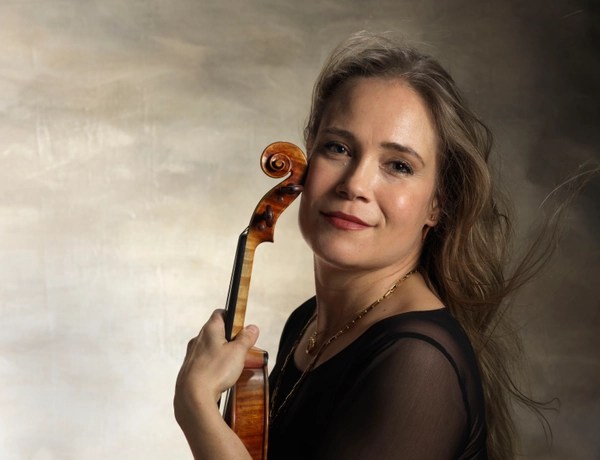
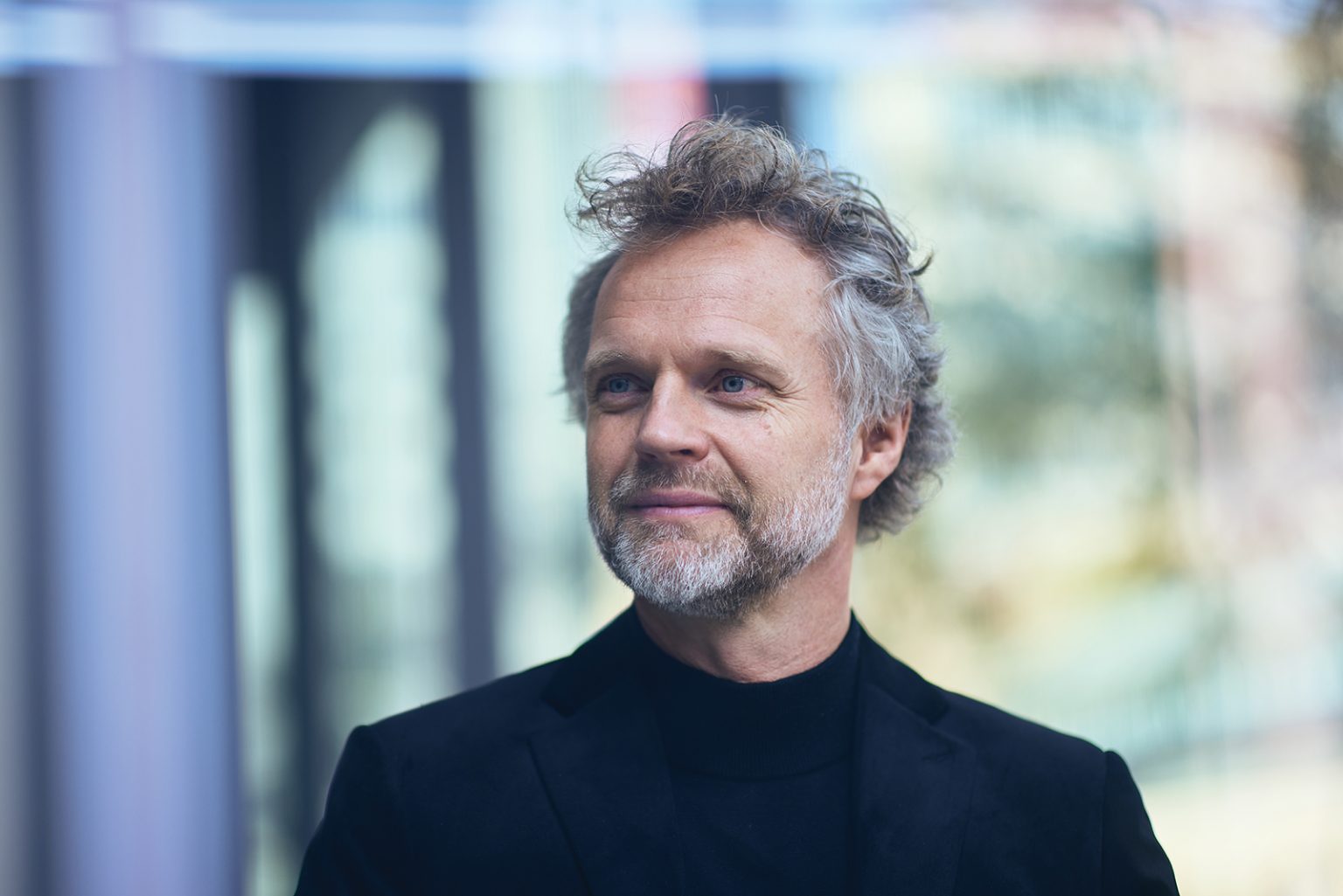
Leila Josefowicz (violin, above), City of Birmingham Symphony Orchestra / Thomas Søndergård (below)

Richard Strauss Don Juan Op.20 (1888)
Adès Violin Concerto, Op.24 ‘Concentric Paths’ (2004)
Brahms Symphony no.2 in D major Op.73 (1877)

Symphony Hall, Birmingham
Thursday 10 October 2024

Reviewed by Richard Whitehouse Pictures (c) Tom Zimberoff (Leila Josefowicz), Chris McDuffie (Thomas Søndergård)

He may be spending more time in the US than in the UK these days, but Thomas Søndergård tonight made a timely reappearance with the City of Birmingham Symphony Orchestra in a programme such as placed a highpoint among recent concertos between two established German classics.

Richard Strauss‘s Don Juan poses few technical issues for an orchestra these days – the only proviso about this performance being its almost too easy unfolding, the initial stages seeming suave rather than impetuous and emotional contrasts following on almost too seamlessly. Yet the central ‘love’ episode featured a melting contribution from oboist Lucie Sprague, with horns duly firing on all cylinders in a unison theme ultimately capped by a silence of tangible anticipation then a postlude of hushed resignation – heroic aspiration submerged in an aura of starkest fatalism.

If much of Thomas Adès’ music the past two decades has been of a conceptual brilliance that outweighs its intrinsic content, the Violin Concerto is destined to endure and rightly so given these Concentric Paths complement each other in a finely balanced totality. One, moreover, with which Leila Josefowicz identifies wholeheartedly: despatching its brief outer movements with an energy and a panache so that Rings conveyed a volatility channelled towards greater affirmation in Rounds; between them, the relatively expansive Paths proved a chaconne as methodical in evolution as it was affecting in its suffused intensity. Assured in her handling of the solo part, Josefowicz dovetailed it unerringly into orchestral writing as resourceful as any the composer has written. Those in the audience unfamiliar with it were most likely won over.

Many of those present were no doubt looking forward to BrahmsSecond Symphony after the interval, where Søndergård (above) and the CBSO did not disappoint. Outwardly its composer’s most equable such piece, this yields more than its share of ambiguities and equivocations that were rarely absent here. Not least in the opening movement, its unforced progress duly taking in an eventful development whose granitic culmination set its easeful themes at a notably uncertain remove, then with a coda whose restive horn solo was eloquently rendered by Elspeth Dutch. Søndergård was no less probing in the Adagio, flexibly paced so its autumnal main theme did not override the more whimsical and anxious elements which inform its longer-term progress. Certainly, the closing reflection on that theme cast a potent shadow on what had gone before.

The other two movements are usually thought to present few if any interpretative problems, so credit to Søndergård for finding no mean pathos in those reiterations of the Intermezzo’s main theme – not least when it returns as a winsome coda. Nor was the final Allegro lacking in incident, such as that spellbinding transition into the reprise whose epiphanic aspect was not lost on Mahler. Given its head without sounding at all rushed, the coda then emerged as the ebullient though never grandstanding peroration which Brahms himself surely intended.

A resounding close to an impressive performance, and there should be more music-making on this level next week when the CBSO is joined for the first time in many years by former chief guest conductor Mark Elder for an enticing programme of Brahms, Janáček and Shostakovich.

For details on the 2024-25 season A Season of Joy, head to the City of Birmingham Symphony Orchestra website. Click on the names to read more about violinist Leila Josefowicz, conductor Thomas Søndergård and composer Thomas Adès.

Published post no.2,331 – Monday 14 October 2024

Switched On – Trentemøller: Dreamweaver (In My Room)

by Ben Hogwood

What’s the story?

Andreas Trentemøller follows up his 2022 album Memoria with a new long player, presented with Icelandic vocalist Misa, who has been a regular collaborator since that time.

What’s the music like?

Dark in hue but wonderfully spacious. Trentemøller is a versatile producer and gets the ebb and flow of the music just right here, so that we move between uptempo energy and downtempo musing.

The voice of Misa is key to that, her cool tones the ideal complement to the starry eyed, wide screen productions.

The impression given by these airy tracks is atmospheric and moody, but Trentemøller ensures that tracks like Nightfall work on two levels, as an intimate song and also as a wider panorama.

The stately progression of the title track brings Beach House to mind, while In A Storm packs an impressive punch. Meanwhile Winter’s Ghost is appropriately shadowy.

Does it all work?

It does – and with evidence that Trentemøller’s songwriting prowess is becoming more evident with every new release.

Is it recommended?

It is – another compelling piece of work from the Copenhagen maestro.

Listen & Buy

Published post no.2,330 – Sunday 13 October 2024

Switched On – Ben Böhmer: Bloom (Ninja Tune)

by Ben Hogwood

What’s the story?

Ben Böhmer’s first album in three years came after an intense period of touring, playing more than 200 shows in 2022. The title, Bloom, reflects the time he spent reconnecting with making music, as he put it in a social media post, “a journey through change, self-discovery, and finding the right moment to ‘bloom’.”

His experiences are reflected in the lyrics, with the lead single Best Life finding a reflection from guest vocalist JONAH that ‘life is short and fast’. The guest roster also includes Lykke Li, Oh Wonder, Enfant Sauvage (of French duo The Blaze), Malou, Erin LeCount and Max Milner.

What’s the music like?

Slick, melodic and very listenable. Böhmer brings studio polish and class to his productions, which have elements of pop, trance and house but crucially make an emotional connection to the listener.

He is a flexible writer, too, capable of writing a floor filling anthem and following it with a down tempo treasure, as he does here. Martin is a great way to start, a piano-led beauty taking its inspiration from the piano of Martin Kohlstedt, whose intimate but bright loop powers the track.

The vocalists acquit themselves well – Lykke Li on the smoky Hiding, Malou on Beautiful, with its rolling bass, and on the slower side of things Erin LeCount’s Faithless is excellent, as is the closing instrumental Blossoms. Rust is coolly delivered, while arguably the biggest rush comes from Evermore, a brilliant song taken to the next level by Enfant Sauvage. Böhmer creates a heat-soaked atmosphere, encapsulated by Oh Wonder’s dreamy contribution The Sun.

Does it all work?

Yes. Böhmer writes fluently and the album is well structured, responding well to repeated listening.

Is it recommended?

It is. Bloom is a real pick-me-up, a force for good in the face of tough times.

Listen & Buy

Published post no.2,329 – Saturday 12 October 2024