Tier3 Trio [Joseph Wolfe (violin), Jonathan Ayling (cello), Daniel Grimwood (piano)]
Liszt arr. Saint-Saëns Orpheus Tchaikovsky arr. Grimwood Andante non troppo (second movement of Piano Concerto no.2 in G major Op.44) (1880) Arensky Piano Trio no.1 in D minor Op.32 (1894)
St Giles Cripplegate, London Thursday 13 June 2024, 1pm
Reviewed by Ben Hogwood
‘Love’s Labours’ is the title of this year’s Summer Music in City Churches festival, based opposite the Barbican Hall in St Giles Cripplegate. The ten day-long enterprise is proving ample consolation for the much-missed City of London Festival, which once captivated audiences in the Square Mile for three weeks and offers music of equal range and imagination.
For the second year in succession the Tier3 Trio visited for a lunchtime recital, following up last year’s tempestuous Tchaikovsky Piano Trio with an attractive programme subtitled From Russia with Love. They began with a curiosity, playing Saint-Saëns’ little-known arrangement of Liszt’s symphonic poem Orpheus for piano trio. A highly effective transcription, it retained its dramatic thread in this fine performance, notable for its attention to detail and well-balanced lines when reproducing Liszt’s slow-burning music. Pianist Daniel Grimwood successfully evoked Orpheus’ lyre, while Jonathan Ayling’s burnished cello sound probed in counterpoint to Joseph Wolfe’s violin.
Tier3 was formed during lockdown, and in the same period when he was performing Tchaikovsky’s Piano Concerto no.2 in Germany, Grimwood realised the suitability of the work’s slow movement for trio. He rightly complemented ‘the extent to which Tchaikovsky was an experimenter in form’, a trait found in many works but at its inventive peak in the second concerto, whose slow movement is in effect a piano trio with orchestra. Here the arrangement was just right – balanced, elegant and fiercely dramatic towards the end. Clarity of line was secured through sensitive pedalling from Grimwood, the trio using the resonant acoustic to their advantage, while the individual cadenzas were brilliantly played.
These two notable curiosities linked beautifully into one of the best-known works of Anton Arensky, his Piano Trio no.1 in D minor. Arensky is not a well-known composer, fulfilling in part an unkind prophecy from his teacher, Rimsky-Korsakov. However that does not mean his music is without merit – far from it, as in his brief life of 45 years he wrote two symphonies, four orchestral suites, a substantial output of piano and high quality chamber music, of which the first piano trio is the pick.
Dedicated to the cellist Karl Davidov, it is equal parts elegy, drama and ballet – with a powerful first movement setting the tone. The balletic second movement Scherzo demands much of the piano, but Grimwood was its equal, sparkling passagework from the right hand dressed with twinkling figures for cello and piano. The emotional centre of the trio was in the slow movement, with a heartfelt tribute to Davidov in Ayling’s first solo, while the finale rounded everything up in a highly satisfying payoff, a return to the first movement’s profound theme capped with an emphatic closing section.
These were very fine performances from a trio at the top of their game, navigating the resonant acoustic of St Giles with power and precision. On this evidence, Rimsky-Korsakov would have had to eat his words!
You can read more about Summer Music in City Churches at the festival website – and you can listen to a Spotify playlist below, containing the music heard in this concert – with the original version of the Tchaikovsky:
This is the first album from Andi Haberl, long-time member of The Notwist, who specialises on drums but is a gifted multi-instrumentalist.
The charming title of his debut masks a darker subplot, Haberl dedicating the record to the house he grew up in – but had to move out of when his parents split up.
Making the album was something of an epiphany, as he fell under the spell of sampling but also mastered a number of different and complementary instruments.
What’s the music like?
Colourful and multilayered – and rather charming. Haberl builds fascinating and compelling textures, rather like the album cover art, and takes the ear this way and that with persuasive melodic loops and bright textures.
There is a homemade feel to his writing, but a deep set emotion too, meaning that tracks like Sun, while initially revealing their charm, have a more substantial impact when listening back. The elegant Low, too, reveals a great deal with its softly moving piano line, before the softly chugging heart comes through.
Influences on Haberl’s music range from Krautrock to Steve Reich but are never too explicit, and there are winsome harmonic twists that are very much his own. His creative way with instrumentation adds to the appeal, with the doleful piano of Rain On Me countered by mandolin.
Best of all is the title track, where urgent minimal riffs compete and build to a thrilling finish.
Does it all work?
It does. Haberl has great musical instincts, constructing his melodic sentences with instinct and dressing the music with rich harmony.
Is it recommended?
Yes, with great enthusiasm – Andi Haberl has made a colourful instrumental album with unexpected meaning to be found in its musical corridors. This particular house is full of character and charm.
For fans of… Haiku Salut, The Notwist, Public Service Broadcasting, Lemon Jelly
Paul Wee is a true one-off. An in-demand commercial barrister by day, he is also an extraordinary pianist, capable of taking on some of the most demanding pieces in the repertoire. The combination of a passion for his art and thirst for a challenge has led to award-winning recordings of the music of Thalberg and of Beethoven arranged by Liszt, both for the BIS label.
Yet arguably his greatest recording achievement to date concerns the music of Charles-Valentin Alkan, the 19th-century French composer who was one of the great virtuosos of his day. Wee has mastered two massive works by the composer – his Symphony for Solo Piano and the Concerto for Solo Piano. The latter will form an entire lunchtime concert with which he will make his eagerly anticipated Wigmore Hall debut, on Saturday 15 June. A tempestuous hour of music lies ahead – so while he flexes his muscles in preparation, Arcana managed to get some time with him to explore not just Alkan but a number of other irons he has in the fire.
Firstly, Paul recalls vividly his first encounter with Alkan’s music. “It was when I was in high school, in New York City”, he says. “I heard a live recording of Marc-André Hamelin playing the Symphony for Solo Piano, and I was awestruck immediately!”
His decision to take on the concerto was inspired by similar feelings. “I was immediately taken by the Concerto for Solo Piano when hearing it for the first time: it’s an astonishing musical construction, which makes an extraordinary and unforgettable impact. I didn’t know of any other work like it in the repertoire and knew that I had to give it a go myself.”
The piece is notorious for the demands Alkan makes on the performer, but as Wee confirms the rewards are greater still. “The technical challenges are reasonably self-evident; in the numerous passages where Alkan is displaying the ‘virtuosity’ of the (virtual) ‘soloist’, the writing – whilst always remaining very idiomatic and practical, characteristically for Alkan – can sometimes approach the limits of conventional pianism”, he says. “The emotional (or musical) challenges are mainly twofold: first, bringing to life the (extraordinarily theatrical) drama and rhetoric in the second movement Adagio; and second, maintaining the intensity of the Concerto’s narrative arc across its 50-minute wingspan. But when these challenges are met, it makes for one of the most incredible experiences that the piano repertoire has to offer.”
Wee has recorded the concerto for BIS, an album released in 2019. Has his view of the piece changed since then? “Yes – in relation to both the Concerto’s sound world, and also its pacing, especially in the Allegro assai. As ever it’s difficult to explain this in words, so the best thing for anybody interested is to come and hear it live!”
Alkan is a composer who inspires great dedication among his fans, and Wee considers the elements of his music that lead to these feverish reactions. “I think it is the sheer power and quality of his finest works, which offer extraordinary experiences quite unlike anything else that the 19th century has to offer. The fact that Alkan and these works are not as widely known as they should be can often lead to fans of Alkan’s music to (rightly!) encourage others to discover this music for themselves. That’s exactly what I hope to be doing myself when bringing the Concerto to Wigmore Hall.”
Anyone approaching Alkan’s music for the first time is in for a treat. “It depends on what work they are hearing. If the Concerto, they should prepare themselves for an epic, but nevertheless very accessible, musical narrative; a very wide variety of pianistic experiences, from some of the greatest heights of 19th-century virtuoso piano writing, through to tender intimacy and lyricism, with much quasi-operatic dramatic intensity and rhetoric along the way. Overall, the listener should prepare themselves for the extraordinary cumulative impact of the work, which builds across all three movements and which in a good performance can be utterly overwhelming.”
Presenting this work in the Wigmore Hall is something of a dream for Wee, who recalls his most memorable musical experiences in the venue. “Wigmore Hall is probably my most visited concert venue, and my own personal highlights reel would be too long to list in full! But some illustrative examples would have to include recitals by Marc-André Hamelin playing Haydn, Mozart, Liszt, Fauré, and Alkan in November 2009; Benjamin Grosvenor playing Mendelssohn, Chopin, Ravel, and Liszt in June 2016; and Mark Padmore and Paul Lewis in Schubert’s Winterreise in June 2022.”
Expanding from Alkan, Wee has somehow found time to discover and record concertos by two names unfamiliar to many devotees of classical music – Adolph von Henselt and Hans von Bronsart (above). It is another addition to his small but formidably constructed discography for BIS – and not a recent discovery, either. “I discovered the Henselt in my teens,”, he says, “after reading about it in books by Harold Schonberg and David Dubal, and seeking out recordings by Raymond Lewenthal and Marc-André Hamelin. I came to the Bronsart later, after being captivated by Michael Ponti’s recording of the slow movement.”
The recordings Wee mentions were made with a symphony orchestra, but for the new album he is paired with the Swedish Chamber Orchestra, under Michael Collins. “One of the greatest difficulties of the Henselt lies in making the piano part, with all of its detailing and intricacies, audible over the sound of the orchestra”, he explains. “In nearly all cases, large swathes of the passagework (especially in the finale) are simply swallowed and inaudible beneath the weight of a modern symphony orchestra. In teaming up with the Swedish Chamber Orchestra for this recording, I think we have been able to present a different view of the Henselt in particular, which presents Henselt’s (quasi-Mendelssohnian) piano writing with a new immediacy and clarity, whilst maintaining power and heft where needed. Of course, the Swedish Chamber Orchestra is not just any old chamber orchestra; it has a particular reputation for being “the chamber orchestra that can sound like a symphony orchestra”, and I think that anybody hearing (say) the opening tutti of the Bronsart Concerto will be astounded by the vigour and intensity that the Swedish Chamber Orchestra brings to the proceedings. I think they have been the perfect partner for this recording.”
He continues to move forward with recording plans…“but as there are still a few moving pieces here and there, all I will say for now is to watch this space. But my future recording plans with BIS are very exciting, and I’m looking forward to sharing them when I can say more…”
Looking further afield, what other music would he like to explore? “The list is far too long: the piano literature is so wide and so rich, and I find many things to love in nearly every one of its corners. In addition to that, the music that I might want to play and enjoy for myself will not necessarily be the same as the music that might be thought to sell well if I were to record it. So there are many dimensions to this question, which do not necessarily interrelate. Again, I think that all I can say is that there are some very interesting projects in the pipeline, so watch this space!”
In the meantime he will continue with his two complementary disciplines. “Absolutely: I have no desire to give up my legal career and become a full-time musician. I enjoy my work as a commercial barrister; it’s challenging, constantly stimulating, and ultimately very satisfying. On the musical side, I wouldn’t be averse to playing a few more concerts here and there, but probably nothing more than that. I wouldn’t ever want for the piano to become my day-to-day life. I am much happier with the piano being my escape from everyday life, which (for me) is my career at the Bar.”
He expands on how the two very different elements of his life are complementary. “The most important factor is that each presents an escape from the other. When my legal practice is especially demanding (which, as any lawyer will tell you, can frequently be the case), I can take a quick 5- or 10-minute time-out at the piano, and for that window, I am completely disconnected from the strains and stresses of the law: I return to my desk refreshed. In the other direction, my legal career has helped me hugely as a pianist by (perhaps paradoxically) ensuring that the piano is not my day-to-day life, as I mentioned above. Whenever I sit down at the piano, it’s never out of obligation, but out of joy. These days I have a completely different relationship with the instrument than what I used to have when I thought (as a teenager) that I wanted to be a concert pianist. I think the freedom that underpins my relationship with the piano these days has been essential in making me the pianist that I have become.”
Finally, he considers the music he anticipates seeing as a concertgoer this year – when time allows. “As it happens, this year I am going to far fewer concerts than usual, given the demands of family life (our second daughter was born in December and is just six months old). So I’m often going to concerts at shorter notice than usual. That said, I’m hoping to see Benjamin Grosvenor in the BusoniConcerto at the Proms, and I have Igor Levit’s September 2024 recital in my diary, where he’ll be playing the Liszt transcription of Beethoven’s Seventh Symphony: these are fabulous transcriptions that should be played in concert far more frequently, so I’m delighted to see him bringing this to London. I’m also planning to see Nikolai Lugansky at Wigmore Hall in December 2024, where he’ll be playing (among other things) his own stunning transcription of scenes from Götterdämmerung. I’m sure there will be many other concerts along the way!”
For information on Paul’s Wigmore Hall debut, on Saturday 15 June at 1pm, click on this link. You can read more about Paul at his website, and explore his discography at the Presto website
Twittering Machines is an audiovisual performance by Kathy Hinde that won an Ivor Novello award in 2020. This recorded version presents a single composition, split over two sides of vinyl, marking the centenary of Beatrice Harrison’s famous BBC broadcast, where the cellist duetted with a nightingale, drawing attention to the bird’s perilous plight.
Her study looks at the disrupted environmental cycles that may threaten its future, in a direct and confrontational way, drawing attention to unsettling interactions of humanity and nature. She uses John Keats’ Ode to a Nightingale in a morse code translation, used as ‘a metaphor for humanity’s existential struggle with the climate crisis.” The poem has a counterpoint of music boxes, bird imitation toys, singing bowls, gongs, synths and field recordings, along with the voices of British ornithologist Peter Holden MBE and Bavarian bird imitator Helmut Wolfertstetter, which Hinde has cut onto dubplate.
Thus Twittering Machines profiles not just birds but social media outlets of the same name, its name gaining double meaning as the album becomes a ‘lament for our fast-dying planet.’
What’s the music like?
Both enlightening and unsettling – and affecting, too. The Morse code at the start is an arresting combination when paired with the birdsong, but as it dulls and the birds take over the sense of unrest is real, in spite of the ambience of the natural sounds.
Side B features a spoken description of the chaffinch from Peter Holden, and as it proceeds the monologue becomes detached from the sounds around it, which take on more reverb. Soon the bells take over, resonant to the point of overpowering the listener with their rounded profile, and the piece, having reached an apex, subsides back to the messages of the Morse code.
Does it all work?
It certainly achieves Kathy Hinde’s objectives and presents a powerful case in defence of the birds’ welfare. This is a musical message that proves difficult to ignore.
Is it recommended?
It is – but with caution, for this is certainly not music or sounds for all moods and can prove uncomfortable on headphones. Yet that is the point, for Twittering Machines is a powerful wake-up call, a reminder that nature – and birds in particular – are not to be taken for granted.
For fans of… Erland Cooper, Rautavaara, Cabaret Voltaire
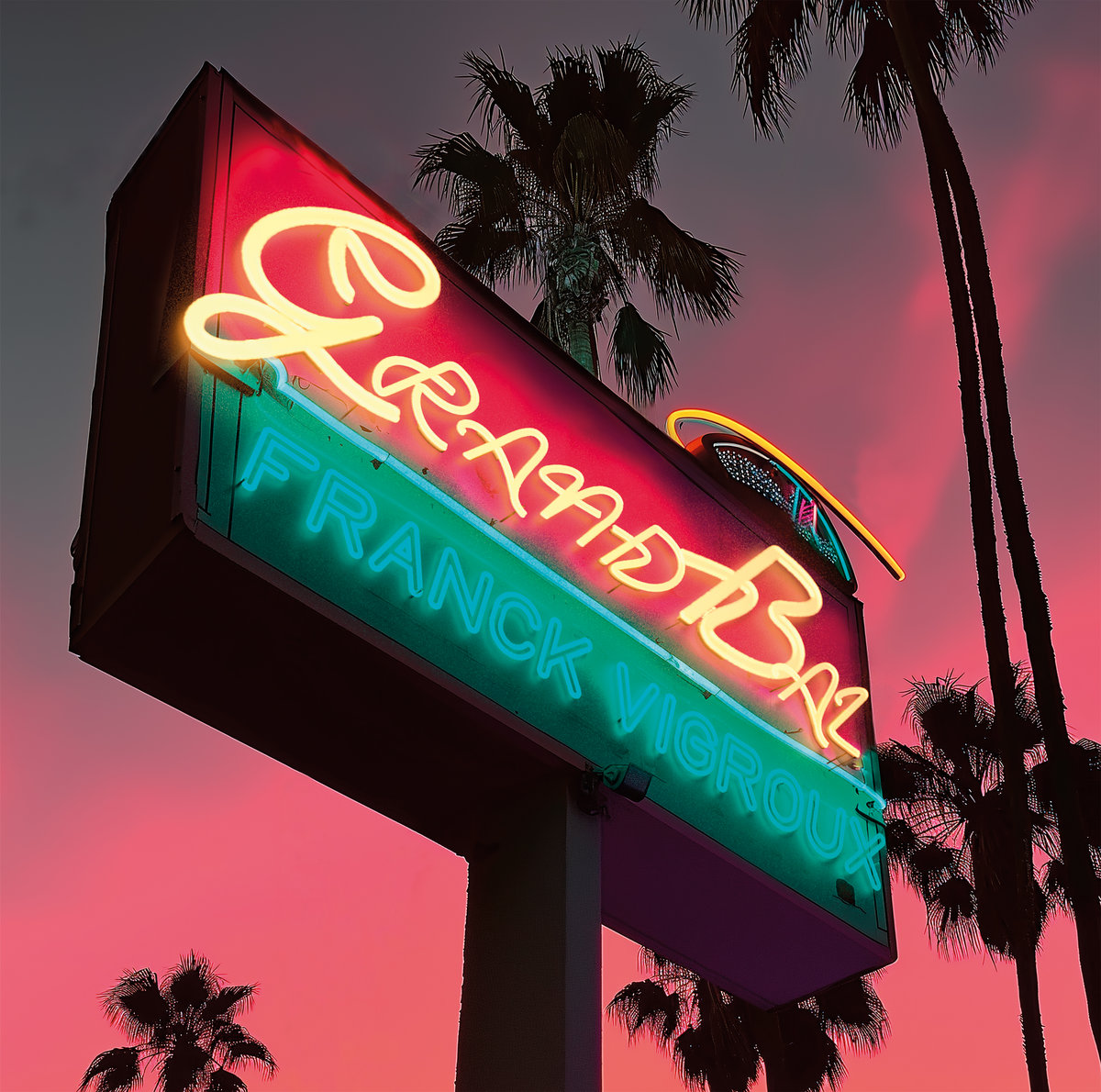
Released back at the end of March, Grand Bal is the latest musical essay from producer Franck Vigroux, an artist who tends to like his music doing the talking.
The small paragraph he did allow into the ether confirms it. “I am not very talkative about my music unless I am specifically questioned,” he says, “the immaterial dimension of music partly spares us from the major questions which are the prerogative of theatrical forms for which I am also very active, in this sense for me music is a real outlet where things are done intuitively, for pleasure.”
What’s the music like?
Bold – and in some cases, brash. Vigroux is no shrinking violet on Grand Bal, and the chunky sounds are primary musical colours, with big bass sounds, long treble notes and plenty of white noise-based euphoria.
There is definitely a sense of being ‘off the leash’, allowing the music to forge its own white hot path, which it does unerringly. On headphones it can make you physically jump, the sheer power of the music pinning the listener up against an imaginary wall.
Yet on occasion it does go quiet, which only increases the foreboding. Le Bal does this brilliantly, turning the screw with exquisite tension and moving from sonorous calm to a blast of sonic energy, in the manner of a more aggressive Jean-Michel Jarre piece. Meanwhile the longer Lightnin’ builds over a cavernous structure, whereas the following 68 goes for the jugular straight away. The likes of Loïc and Vice add distinctive riffs or rhythmic profiles to give the music its momentum, while Outsider makes for a brooding, cinematic coda to the album.
Does it all work?
It does – but you certainly have to be in the right mood for Vigroux’s more aggressive assaults on the senses!
Is it recommended?
It is. Vigroux is a consistently interesting musical source to follow – and this latest shows off his capabilities as an impressive composer.



 Arcana.fm