This is the launch of a new moniker for Brazilian producer Renato Ratier, the man behind Sao Paulo’s D-Edge and Surreal Park clubs.
He already has two albums under his belt, but with Ritual he makes a conscious reboot.
What’s the music like?
There is some excellent, vibrant house music in the course of Ratier’s album, made by a producer who keeps things moving, doesn’t overstay his welcome with any of the tracks, and keeps a really strong concentration on the dancefloor throughout.
Aura is a brilliant deeper house cut with vocal hits, taking influence from Chicago in its execution. Bamboo really hits the spot too, a bouncy track with a woozy chord pattern that leans towards trance. There are a couple of powerful spiritual tracks, with Mantra featuring a guest vocal from L_cio that talks emotively about divisions, ultimately pleading to ‘teach us how to pray’. Profeta is of a similar ilk, with a great low bass underpinning the vocal. Meanwhile Ritual is a winning cultural blend, and you can feel the heat shimmering over the house beats as the indigenous chants play out.
Does it all work?
It does. Ratier works his crowd to excellent effect.
Is it recommended?
Heartily. One the house music heads will certainly enjoy, especially if they are of a Chicago or Detroit persuasion!
For fans of… Floorplan, Carl Craig, Marshall Jefferson
Listen
Buy
Published post no.2,067 – Thursday 25 January 2024
Breathtaking music-making for an attentive audience including a sparkling Petrushka.
Marcus Roberts Trio [Marcus Roberts, Martin Jaffe, and Jason Marsalis] Philadelphia Orchestra / Yannick Nézet-Séguin
Stravinsky Petrushka (1910-11 rev.1947) Weill Symphony No. 2 (1933-34) Gershwin Rhapsody in Blue (1924)
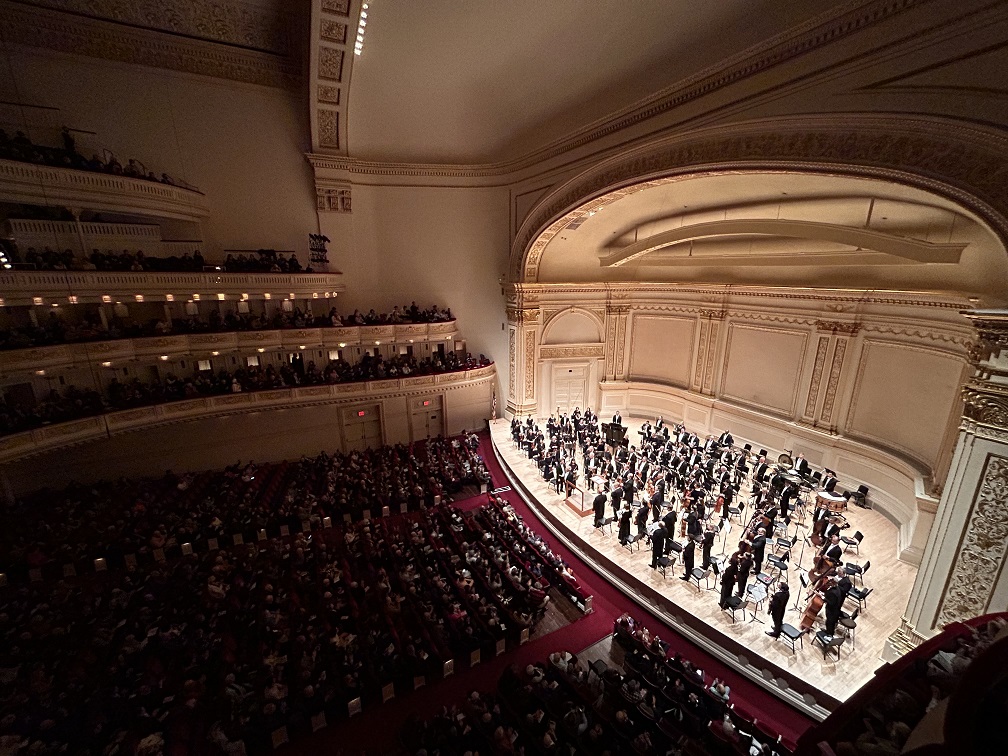
Carnegie Hall, United States Tuesday 23 January 2024
Reviewed by Jon Jacob. Photo (c) Jon Jacob
For those of us from the UK more accustomed to perfunctory applause, the enthusiastic response from the audience welcomed conductor Yannick Nézet-Séguin to the stage ahead of Stravinsky‘s ballet Petrushka came as a bit of a surprise. The sound of the applause crinkled in the acoustics in a way I don’t remember hearing at the Cleveland concert. The capacity crowd was already psyched. Uplifting stuff before a single note was heard.
The Philadelphia Orchestra’s sound is incredible, generated by a powerful, carefully controlled machine that delivers both weight and delicacy. The band feels incredibly responsive, meaning the smallest of gestures can bring about a range of different colours and textures that illicit all manner of emotional responses. This receptiveness demands players at the top of their game. They are the elite.
There’s also a perceptible self-assurance in the sounds they produce. That promotes a sense of confidence in the listener, in turn elevating listening experience. Put simply if the first sounds you hear aren’t like anything you’ve heard before you’re going to listen more attentively, in the same way you’ll drive an expensive BMW differently simply because of the feel of the steering wheel and the smoothness of the ride.
In Petrushka the principal flute had a bright sweet sound, flanked by a delicate and precise piccolo. There were beautifully burbling and babbling clarinets. Trumpets sparkled with rapid articulation that was clear but avoided fussy-ness. A virtuosic piano line highlights that the material was originally conceived as a concert piece for piano – the demands Stravinsky makes on the pianist remain high and it’s a dazzling contribution from pianist Kiyoko Takeuti.
Elsewhere, the big string section brings phenomenal weight given the heft (no great surprises perhaps – 17 first violins, 14 seconds, 12 violas, 10 cellos and 8 basses). When the basses underpinned a sequence, it felt as though we were digging down into the foundations, great jabs slicing into the ground with a sharp-edged spade.
The WeillSecond Symphony opened the second half. A smaller number of players on stage but still the same detail, responsiveness and jaw-dropping spirit that elevates this band above so many others. At three movements it is a concise work, packed full of evocative tunes, inventive treatments, and tantalising textures. It undoubtedly entertains but does it move? I’m not entirely convinced, although age has mellowed me, so my conclusions are not as severe as those reported by Weill to a friend after the 1934 premiere who said the work had been dismissed as ‘banal, ‘disjointed’, and ‘empty’.
There were plenty of entertaining thrills and spills conjuring up nail-biting peril and jeopardy in the first movement. The Mahlerian second movement funeral march had some respite from the powerful grandeur on display in the sweet flute and trombone solos. It was a much prompter reading compared to some of the recordings I’ve listened to after the concert. Weill’s trademark melodies are evident in the final raucous movement.
Running to half an hour, Weill’s second symphony isn’t a long work, but given the stage move necessary to bring the piano and drum kit on for the final Rhapsody in Blue, the evening was feeling long. But the payoff was undoubtedly worth it. Hearing the music of New York, written in New York, here in New York was special. So too hearing the Marcus Roberts Trio with Philadelphia Orchestra.
Pianist Marcus Roberts treats the work’s piano sequences with far more improvisational zeal than the more familiar ‘straight’ recordings (you can get a sense of the material from this performance filmed in Geneva’s Victoria Hall
The familiar signpost orchestral sequences remain, but the energy is upped tenfold by the seeming flights of creative fancy the trio embarked upon. Excited applause rippled around the auditorium accordingly. The effect of this ‘directors cut’ was for competition to emerge between orchestra and trio. When the improvisations concluded and the orchestra kicked in, the well-known orchestral score sounded dull in comparison to the spectacle we had been treated to before. Was the kind of ‘Experiment in Modern Music’ Gershwin had in mind when the work was first premiered at the Aoliean Hall down the road a hundred years before?
The energy in the auditorium unexpectedly seemed to come with me as I made a ‘dash’ up the steep balcony steps for the exit. After I’d run for a subway train (conveniently located outside the concert hall), I sat down and immediately yawned. Heads turned.
“It was a long evening, wasn’t it?” said the man sat next to me. “It was. But I loved every single minute of it.” “The Weill was fantastic. I do think they packed in more than they needed to. And I’m sure the ensemble was off in the Petrushka.” He looked across the aisle to a couple who were listening to our exchange. “I thought so too,” said the woman. Then a man stood in the aisle, “No. It was the Weill that was the problem. I can’t stand Weill.”
I gently protested, jokingly telling them they were all wrong and they should take a long hard look at themselves and listen back to the broadcast when they got home. A surprisingly in-depth conversation ensued amongst the five of us. I missed my stop as a result.
“You know, you’d never have this kind of post-kind of conversation on the Tube in London”, I explained. “Oh we know,” replied the woman, “That’s what we do here.” It’s a lovely thing too.
Jon Jacob is a writer, digital content producer and strategist, authors the Thoroughly Good Classical Music Blog, and produces the Thoroughly Good Podcast.
Published post no.2,066 – Wednesday 24 January 2024
Beethoven’s Leonore as designed for the Wiener Staatsoper, 2020
Leonore, opera in three acts (1804-05, Beethoven aged 34)
Libretto Jean Nicolas Bouilly, trans. Joseph Sonnleithner
Duration 138′
by Ben Hogwood
Background, Synopsis and Critical Reception
“Probably nothing has caused Beethoven so much grief as this work, whose value will be fully appreciated only in the future”.
The words of Stephan von Breuning to Franz Wegeler in Bonn, talking about Beethoven’s first opera Leonore, which did indeed bring a great deal of strife for its composer in the lead-up to the premiere in November 1805.
The libretto was relatively new, written in the late 1790s by Jean Nicolas Bouilly, the administrator of a French department near Tours during the Reign of Terror. Lewis Lockwood gives an excellent back story to Leonore’s construction. He writes that ‘it was widely accepted that during Bouilly’s governance an episode resembling that of the opera plot had actually taken place’…where ‘a woman disguised as a young man had worked her way into her husband’s prison and freed him from his unjust captivity. Thus, if the take were true, Bouilly himself would have been the minister who liberated the prisoner, and so the libretto seemed to commemorate not only actual heroism but the author’s own benevolence amid the frightening atmosphere of France in those years.’
The opera is set in the prison. The first act is conducted at ground level, where the prisoners take in the rarified air on their rare visits above ground, and where Leonore, disguised as Fidelio, has arrived to try and rescue her beloved Florestan. Immediately she becomes the object of Marcellina’s affections, which she eventually repels. In this process we are introduced to Rocco, a peasant voiced by a fulsome baritone who helps Leonore greatly.
The two levels below ground are reserved for the prisoners, The second act brings them to the fore, as Leonore gets closer to freeing her beloved, with memorable moments including the quartet Mir ist so wunderbar and the Prisoners’ Chorus. The third and final act begins in the dungeon where Florestan has been chained to the wall for two years, freezing and starving. He takes centre stage at the start, his pain all too evident for the audience in the aria Gott, welch Dunkel hier. Liberation is at hand, however – Florestan seeing Leonore as an angel sent to rescue him. The finale celebrates her bravery.
Rather confusingly, Beethoven wrote four overtures for Leonore / Fidelio. The first one to be used was Leonore no.2, which was used for this version of Leonore. The subsequent three versions work in different introductions for Florestan’s aria, while the Fidelio overture itself – written for the 1814 staging – is wholly different.
Two composers had already set the libretto to music. The second, Ferdinando Paer, aroused Beethoven’s interest and competitive edge. Because Paer had already named his version Leonore, Beethoven titled his Fidelio, or Conjugal Love. He hooked up with Joseph Sonnleithner, a prominent musical figure in Vienna, who translated the libretto – on which Beethoven began work in January 1804. At that point he only wanted the ‘poetical part’ of the libretto to be translated, and an exchange between the two reveals that his plans were already in place to stage the work in June 1804. leading up to the premiere in November 1805, which took place under the shadow of Napoleon’s anticipated invasion of Vienna – and was indeed attended by a large number of French army officers. Further attempts at staging in Berlin and Prague were unsuccessful, before Beethoven revised the opera for a production in Vienna in 1814, renaming it Fidelio.
As Jan Swafford explains in an absorbing biography chapter about Leonore, writing vocal music could be a struggle for Beethoven. “He always had more trouble writing vocal music than instrumental”, Swafford writes, referring to the sketchbook for Leonore where there are 18 different beginnings to Florestan’s aria In des Lebens Frühlingstagen and a mere ten for the chorus Wer ein holdes Weib. That didn’t mean Beethoven wasn’t any good at it, but the process of getting the right notes on the page was a painful experience.
The results, however, have been revelatory. Lewis Lockwood describes a work that “has resonated through two centuries as a celebration of female heroism”. In a candid booklet note for his recording of Leonore on Deutsche Grammophon, John Eliot Gardiner notes how “for sheer simplicity and directness of utterance, and for the way he imbues his orchestral set-pieces and accompaniments with dramatic life and emotional intensity, Beethoven has no peer. His single opera has a unique appeal, and a magic very much of its own – especially in its first version, the Leonore of 1804-05, where his ideas, while sometimes crude, are at their most radical.” Later, he declares that “while as a musician I can easily succumb to the sheer beauty of the new music written for Fidelio, nothing, I find, can compare with Beethoven’s original response to his material in 1805.”
Thoughts
In spite of Beethoven’s difficulties, and a compositional practice where he had to grind out many of the results, Leonore is a thoroughly absorbing drama from start to finish. Right from the call to arms of the overture the listener is gripped, the stark outlines immediately setting a tense atmosphere which only occasionally lets up when more tender love is expressed.
The use of a narrator between scenes does not check the flow of the drama – if anything it provides helpful points of context. Without the information provided by Beethoven scholars, would we have known of the difficulties he experienced in composing? As John Eliot Gardiner says, the ‘dramatic life and emotional intensity’ are always there, with relatively little padding in the plot.
What helps, too, is how easily Beethoven moves between solo arias, duets, trios and quartets – and even in the latter the use of many voices does not stop him from getting clarity. The first quartet in Act 1, Mir ist so wunderbar, is beautifully woven in together – while on the solo front, Ha! Welch is a brisk aria, led from the front by Pizarro who is in jubilant mood. Beethoven is certainly not afraid of putting his foot on the accelerator when needed.
Interestingly the operatic influences – to this ear at least – are less from his vocal training with Salieri but more from study of Handel. This is the case especially where recitatives and arias are paired, as in the finale to Act 2.
There are some genuinely thrilling moments in Leonore. The flurry of activity through the Act 2 duet between Pizarro and Rocco (Jetzt, Alter, hat es Eile!) shows the urgency of which Beethoven is capable. Auf Euch nur will ich bauen, led by Pizarro is an exhilarating trio, punchy and red blooded with a shiny brass coating. Countering this is the bleak, vivid word painting at the start of Gott! Welch dunkel, the extended scene where Florestan is down in the dungeon. It is a stark piece of writing and incredibly affecting with orchestra and emotion stripped bare, Florestan’s pain revealed for all to hear in F minor, one of Beethoven’s ‘tragic’ keys. Consolation, however, is found in the love for Leonora, expressed in a tender theme whose radiance is all the more revealing in this setting. High drama follows in the quartet, the exclamations brilliantly managed, and the top ‘C’ soprano near end of Ich Kann mich noch nicht fassen carries maximum impact.
The opera flows very naturally from one section to the next. Although this is an opera with a female hero there are a lot of steely lines for men at the start of Act 2 – none more so than the explosive arrival of Pizarro with his declamation that Ha! Welch ein Augenblück (Ha, the moment has come when I can wreak my vengeance!) Marcellina and Leonora arrive to redress the balance in a brightly cast C major. Ach brich noch is a standout aria, with sonorous horns for company, written in a higher register that looks forward to Weber and beyond. While Act 1 is described as more ‘domestic’ is it nonetheless a satisfying experience, with the arias for Marcellina and Rocco hardly throwaway. The latter’s first aria, where “if you haven’t gold as well, happiness is hard to find” is memorable.
Yet while these moments are high points, nothing quite carries the impact of The Prisoners’ Chorus. This is the dramatic apex of the work, wide-eyed wonder spreading from the jailed forces as their strength comes to the fore. Then, as Leonore learns of the likelihood of marriage, there is a breathless joy. The other many high points are the prisoners, ‘filled with loyalty and courage’ at the rousing end to Act 2, and the reveal of Leonore to Florestan, with the oboe’s involvement especially poignant. The finale is full of incident, the music eventually shifting to a pumped-up C major for a triumphant finish.
Beethoven experienced a great deal of bad fortune in the realisation of Leonore, and the opera has since proceeded under a cloud. In fact, it is only in the last 30 years or so that it has regained anything of its stature, thanks to notable recordings from John Eliot Gardiner and René Jacobs. Both these esteemed conductors have seen the qualities in the music, and how Beethoven – contrary to the opinion of some – has proved to be a great opera composer.
Recordings used
Hillevi Martinpelto (Leonore), Kim Begley (Florestan), Franz Hawlata (Rocco), Matthew Best (Don Pizarro), Christian Oelze (Marzelline), The Monteverdi Choir, Orchestre Révolutionnaire et Romantique / John Eliot Gardiner (DG Archiv)
Marlis Petersen (Leonore), Maximilian Schmitt (Florestan), Dimitry Ivashchenko (Rocco), Johannes Weisser (Pizarro), Robin Johannsen (Marzelline), Freiburg Baroque Orchestra / René Jacobs (Harmonia Mundi)
Those two recordings I mentioned are both cut and thrust experiences. René Jacobs provides a leaner orchestra and much faster tempo choices, which plays to the speed of Beethoven’s creativity. For John Eliot Gardiner Matthew Best is a superbly malevolent Pizarro. Both have superb soloists – and rather than choose a favourite I would merely opt for both! You can listen on the links below:
Prokofiev’s trademark technicolour orchestration contrasted with Webern’s sparse score for his Symphony Op.21 performed by the Cleveland Orchestra with Franz Welser-Möst.
Cleveland Orchestra / Franz Welser-Möst
Prokofiev Symphony No. 2 in D Minor Op. 40 (1924-1925) Webern Symphony, Op. 21 (1927-1928) Prokofiev Symphony No. 5 in B-flat Major, Op. 100 (1944)
Carnegie Hall, United States Sunday 21 January 2024
Reviewed by Jon Jacob. Photo (c) Jon Jacob
Most concerts start with some kind of concert opener. An overture, for example, gives the band on stage the opportunity to get accustomed to the acoustic with an audience in it, while giving the audience a chance to settle down before the main event. That the Cleveland Orchestra got underway so deftly with the epic industrial landscape of Prokofiev’s Second Symphony immediately hinted at the kind of concert this would turn out to be.
Conducted by their music director, Austrian conductor Franz Welser-Most, the Cleveland Orchestra presented three works as part of Carnegie Hall’s ongoing series examining the fall of the Weimar Republic: two symphonies by Russian composer Prokofiev, contrasted with Webern’s Symphony for chamber ensemble.
Prokofiev’s Second Symphony, written in 1924 and premiered in Paris in 1925, is an epic work brimming with fiendish detail and tantalising textures. The first movement’s brutal industrial landscape is depicted with a gargantuan, lumbering brass section, piercing brass top lines, and occasionally shrill woodwind. The combination did at times cause the person sat next to me at Carnegie Hall to put her fingers in her ears. This was contrasted by a tender oboe solo at the beginning of the short second movement theme, followed by a series of short variations which saw a remarkable range of colours and textures from the strings and woodwind. This was a polished, confident and assertive performance throughout, right from the start.
In contrast, the material in the Prokofiev’s Fifth Symphony, written in 1944 when the composer had returned to the Soviet Union, is lighter and the treatment of it far more playful, energetic and in places vigorous. In the performance, the orchestra sometimes sounded underpowered meaning things felt overly romantic. The second movement Allegro had spirit and bounce, moving through multiple personalities and moods, cheerful, cheeky and, from to time, just a hint of macabre too, though, like the final movement, it did feel like it lacked a bit of grit. After Franz Welser-Most paused for a police siren to disappear out of earshot down 7th Avenue, the third movement opened with tantalizingly papery strings over which the solo was passed effortlessly between different combinations of woodwind instruments whilst still making everything feel whole. Later we heard rich, warm, heart-tugging string sounds (the leaps in the upper strings got me every single time).
Webern’s ‘miniature’ ten-minute, two-movement Symphony, written three years after Prokofiev’s Second Symphony, could have sounded like an academic curiosity in comparison to the Russian composer’s technicolour orchestration. Yet in this concert, Webern’s Op. 21 acted as a palette cleanser, pivoting us from the epic Second to the more box-office appealing Fifth of Prokofiev’s symphonies.
Special praise to Cleveland’s principal clarinet Afendi Yusuf, whose rounded burgundy tone was simply to die for. A gorgeous sound throughout. Excitable applause also for some fruity queues from bass clarinetist Amy Zoloto and contrabasoonist Jonathan Sherwin.
Further listening
Some recommended recordings to listen to are based simply on the final movement allegro which in the case of Herbert von Karajan’s Berlin Philharmonic recording is a tour-de-force. On the other hand, in Valery Gergiev and the London Symphony’s performance, there’s a crazed sense of menace. In concert, Franz Welser-Most seemed to pull out a more playful character in the final movement and this is also reflected in the Cleveland’s 2023 recording under his direction. I’m always going to prefer the unhinged characterisation, but that probably says more about my character than it does about the performance.
Jon Jacob is a writer, digital content producer and strategist, authors the Thoroughly Good Classical Music Blog, and produces the Thoroughly Good Podcast.
Eugene Tzikindelean (violin), City of Birmingham Symphony Orchestra / Kazuki Yamada
Fujikura Wavering World (2022) [CBSO co-commission: UK premiere] Walton Violin Concerto in B minor (1938-9, rev. 1943) Berlioz Symphonie Fantastique, Op. 14 (1830)
Symphony Hall, Birmingham Wednesday 17th January 2024
Reviewed by Richard Whitehouse. Photos (c) Beki Smith
Tonight’s concert by the City of Birmingham Symphony Orchestra brought a varied trilogy of works, one which started with a first UK hearing (following its premiere in Seattle almost two years ago) of Wavering World by the Japanese-born and British-based composer Dai Fujikura.
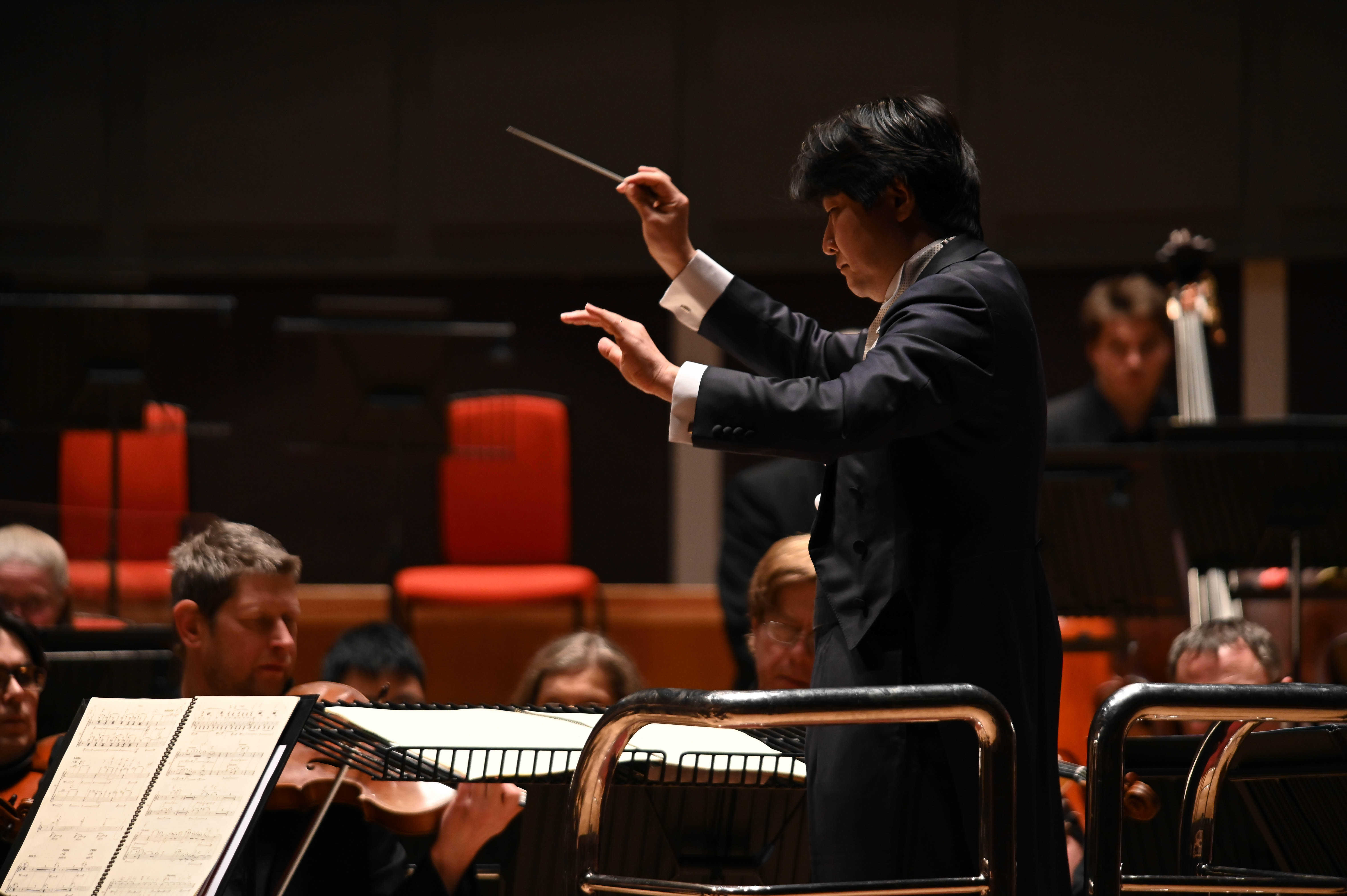
In his programme note, Fujikura remarks on how little he knew of his traditional culture until having left Japan, and this piece draws upon the myth surrounding creation for an eventful if always cohesive journey through the emergence of the heavenly world, the human world and the underworld. This is achieved by separating the orchestra into stratified layers that do not succeed each other as merge into diverse and intricate textures where these sizable forces are imaginatively deployed; the music gradually moving away from its earlier austerity toward a luxuriance whose salient motifs are recognizable despite their transformation. Directing with unerring focus, Kazuki Yamada secured a vivid rendition which also served as a reminder that Fujikura is less often heard than might be in his country of residence these past three decades.
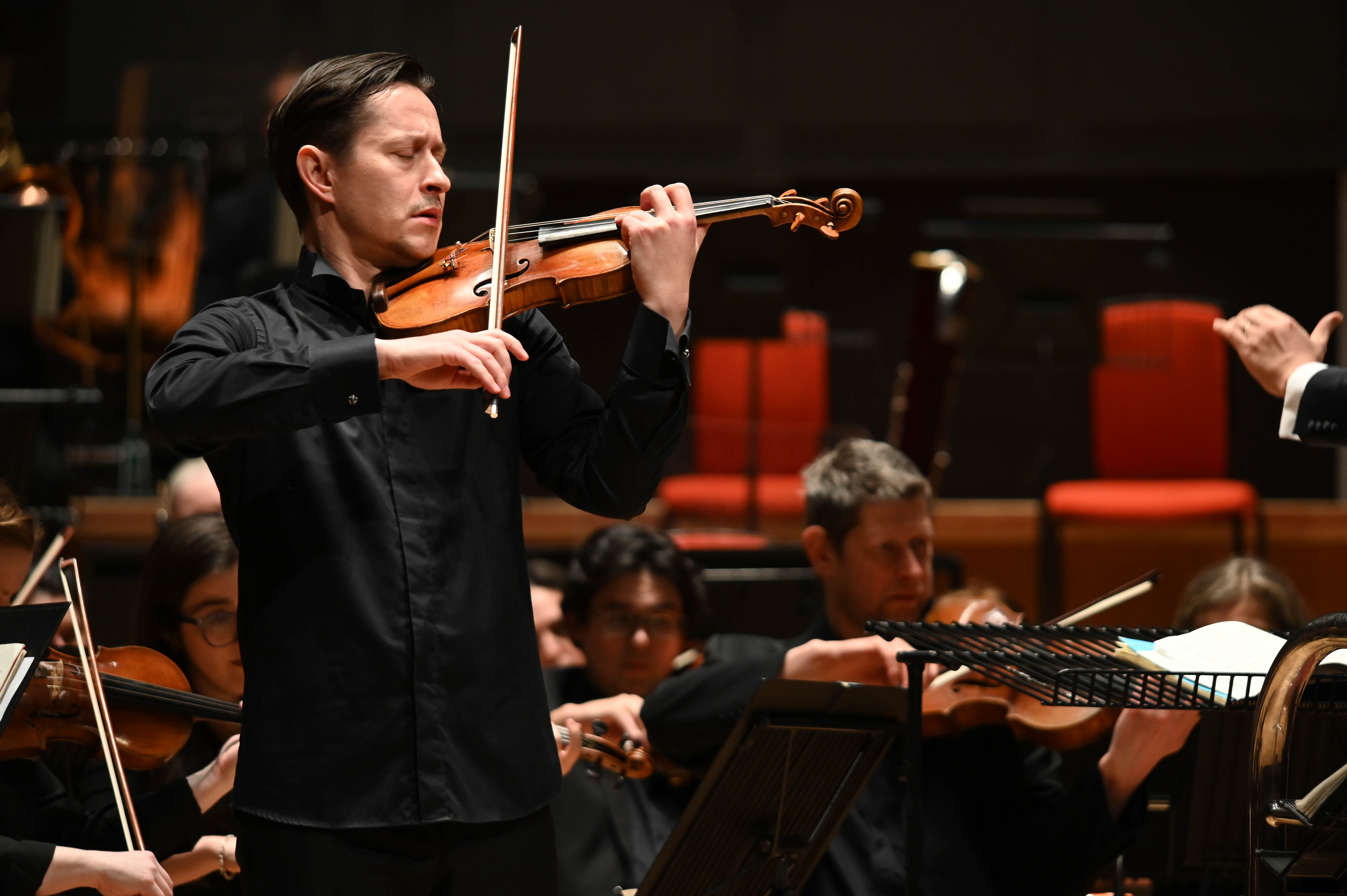
The fortunes of Walton’s Violin Concerto have lessened this past quarter-century, so Eugene Tzikindelean’s advocacy was its own justification. He had the measure of the initial Andante’s alternation between languor and agitation, ingenuity of thematic transformation offsetting any lack of originality in its themes, then gave of his best during a central Presto whose technical fireworks are tellingly balanced by yearning lyricism. If the final Vivace was less convincing, this might have reflected on the actual music – Walton putting his ideas through their audibly Prokofievian paces before evoking Elgar in a lengthy accompanied cadenza then gratuitously affirmative coda. The CBSO gave stalwart support, just over 50 years since it accompanied Yehudi Menuhin and the composer in a performance commemorating Walton’s 70th birthday.
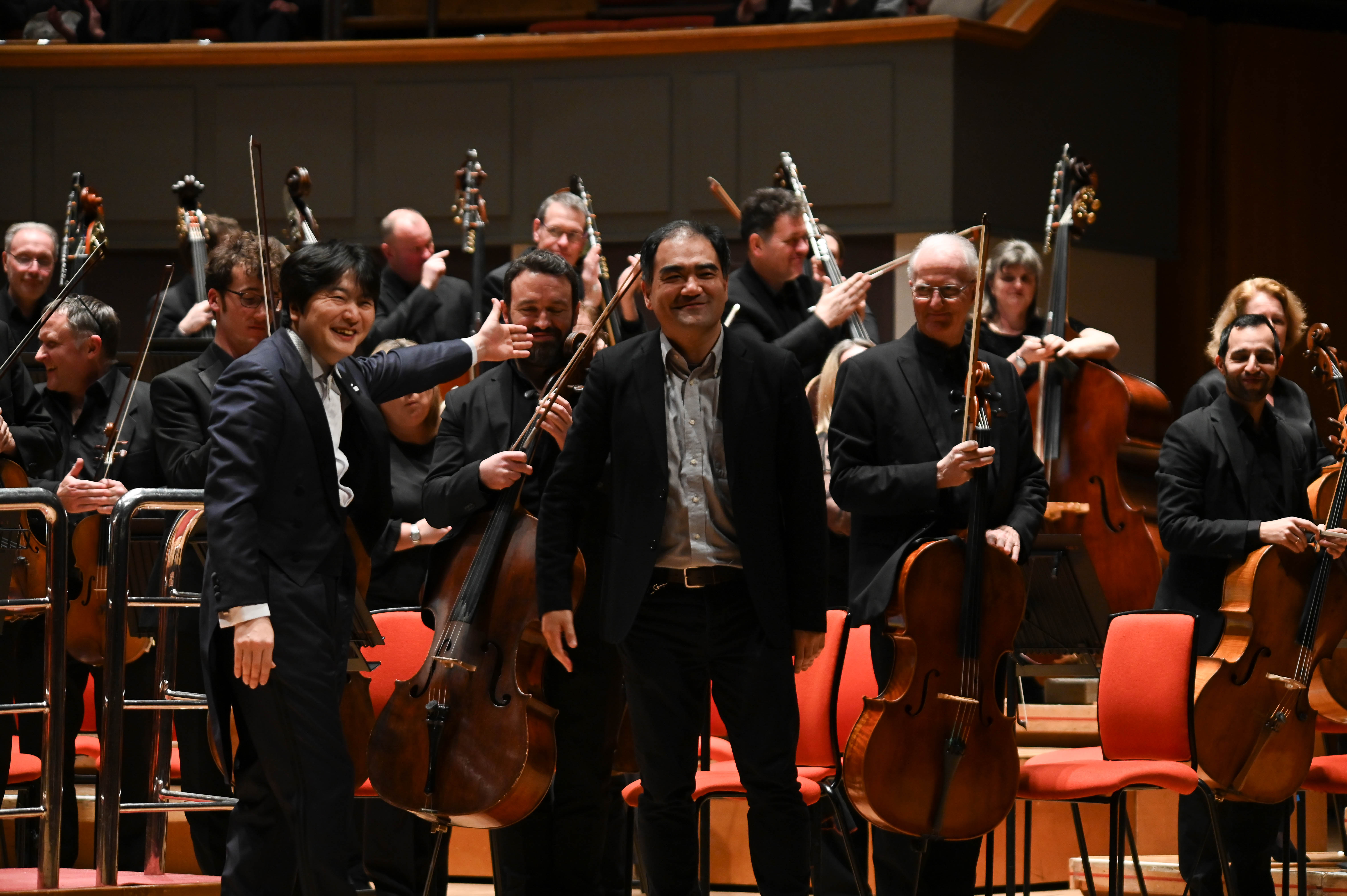
After the interval, Yamada (above) presided over a ‘no holds barred’ reading of Berlioz’s Fantastic Symphony. The latter-day tendency is to stress its symphonic cogency, but there was little of this in a Daydreams and Passions veering impulsively, even recklessly, between despondency and elation. The waltz element of A Ball was nudged out of shape, but its darker undertones were well judged, with the lengthy build-up then lingering subsidence of Scene in the Fields enhanced by Rachael Pankhurst’s plangent cor anglais and ominous timpani toward the close.
This was hardly the first performance to head off seemingly at a tangent, but March to the Scaffold (shorn of its first-half repeat, as had been the opening movement) quickly became a parade-ground romp in which the fateful fall of the guillotine went for relatively little. Nor was Dream of a Witches’ Sabbath without its Disney-like element of overkill, though here Yamada ensured a stealthy accumulation through its reiterations of the Dies irae plainchant and fugal episode to a peroration whose thunderous power seemed nothing if not conclusive.





 Arcana.fm