Brahms Violin Sonata no.2 in A major Op.100 (1886) Viola Sonata no.2 in E flat major Op.120/2 (1894) Piano Quartet no.3 in C minor Op.60 (1855-75)
Wigmore Hall, London Thursday 21 December 2023
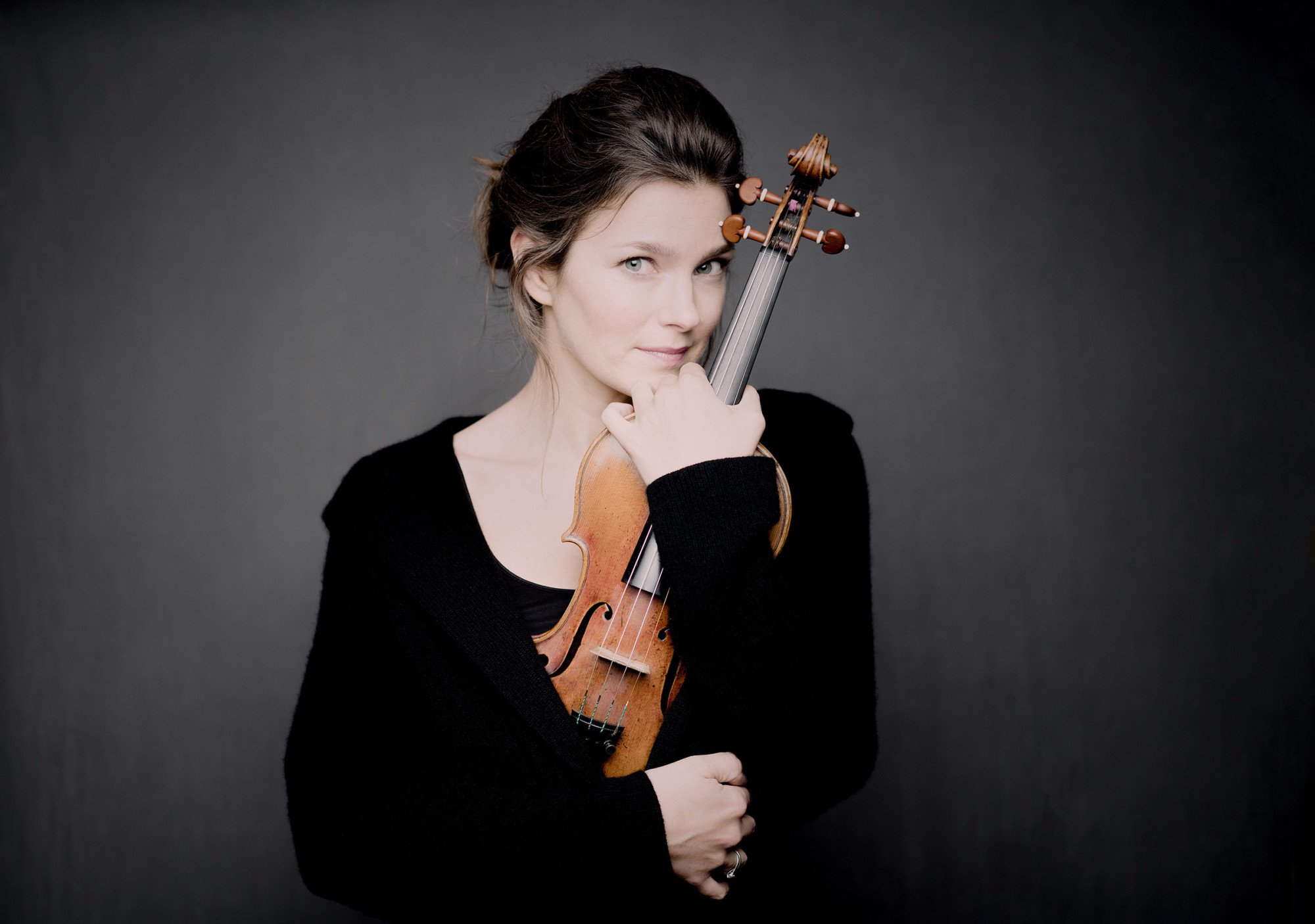
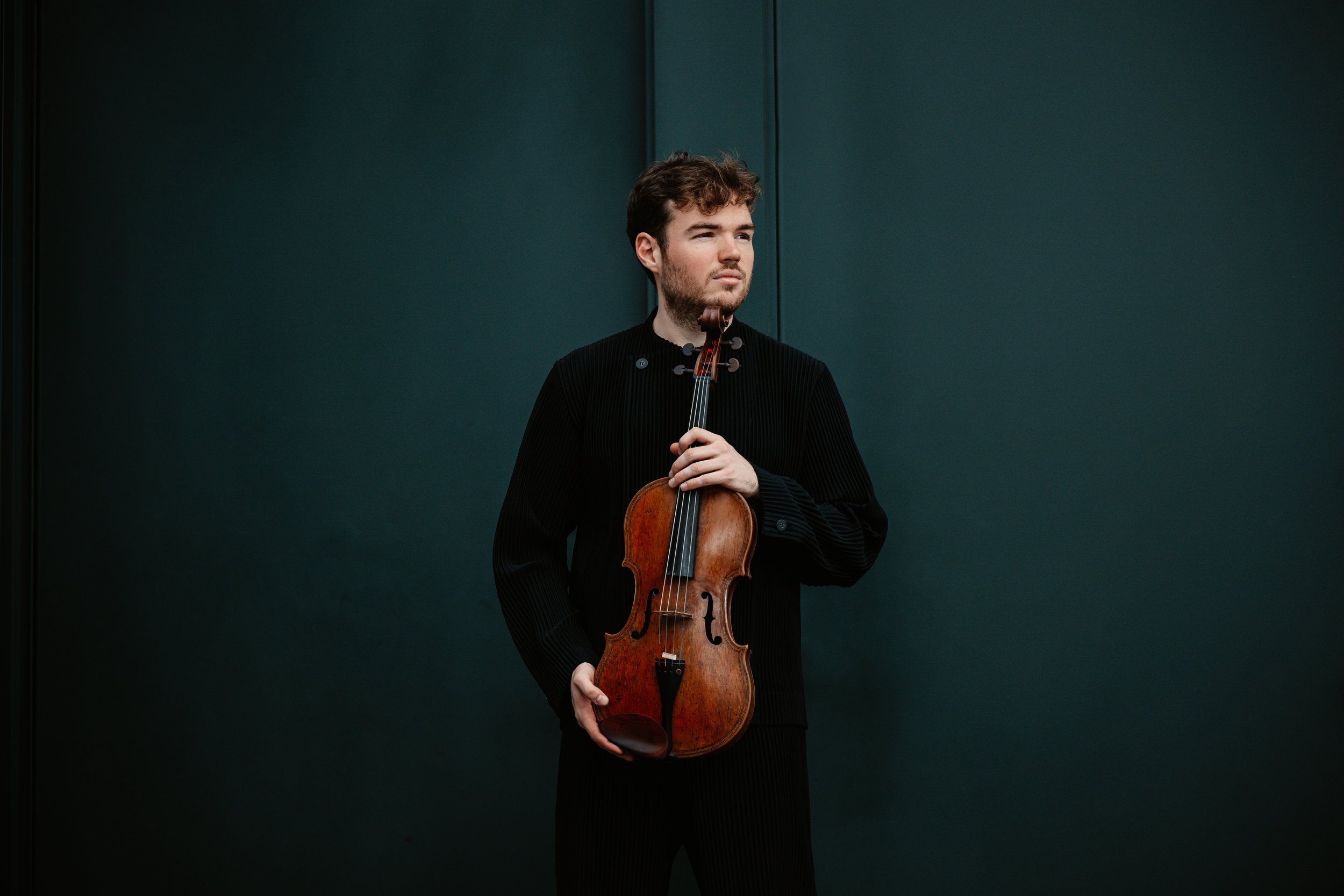
Reviewed by Ben Hogwood. Photos of Janine Jansen & Timothy Ridout (c) Marco Borggreve
After the unfortunate cancellation of a concert in her series the previous week, violinist Janine Jansen and friends returned to health and to a Christmassy Wigmore Hall for another all-Brahms programme.
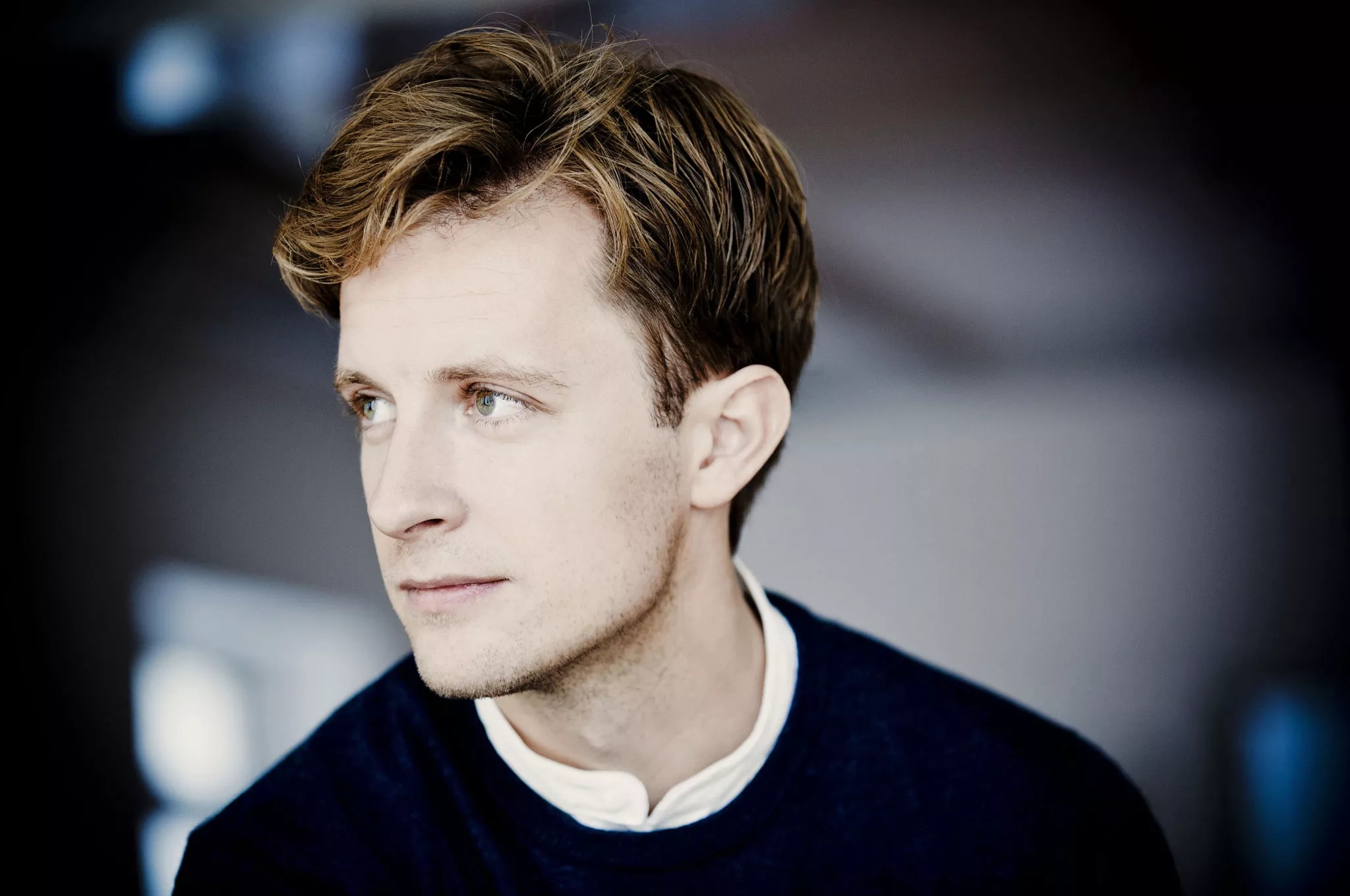
Jansen (above) and pianist Denis Kozhukhin (below) began with the Violin Sonata no.2, a late substitution for the first sonata but a breath of fresh air on a winter evening. One of Brahms’s best-loved chamber piece, its charming first theme has enough to weaken the hardest heart. So it was here, with Jansen’s affectionate playing. Her creamy tone was complemented by the incisive piano playing of Kozhukhin, who was deceptively relaxed in his body language but very much in tune with Brahms’s intricate rhythms and phrasing. The two excelled in the central section of the second movement, which tripped along with admirable definition of those rhythms, and in the finale, where the two enjoyed a more assertive musical dialogue.
Brahms’s last completed chamber work followed, Kozhukhin joined by violist Timothy Ridout (below) for a performance of the Viola Sonata no.2, arranged by Brahms from the clarinet original. This account exhibited elegance, poise and no little power. Ridout’s burnished tone was ideal for the music, capturing the shadowy outlines of music from a composer in his twilight years, but putting down suitably firm markers in the second movement. Ridout’s high register playing was a treat throughout, his tuning exemplary, and as the two players navigated the theme and five variations of the finale there was an ideal give and take between the part-writing. Particularly memorable was the plaintive stillness of the fourth variation, its mystery dispelled by the affirmative ending.
After the interval we heard the Piano Quartet no.3, competed in 1875 when Brahms was working on the completion of his first symphony. The two works have a good deal in common, beyond sharing the same tonality, for Brahms brings an orchestral dimension to his writing for the four instruments. This grouping needed no invitation to take up the mantle, powering through the first movement with relish, their dramatic account notable for strength of tone and unity of ensemble playing. Jansen and Ridout in particular stood out, their unisons absolutely as one, yet the real hero of the performance was Kozhukhin, elevating the heroic elements of a score closely associated with Goethe’s Werther while keeping the nervousness emanating from Brahms’s syncopated rhythms.
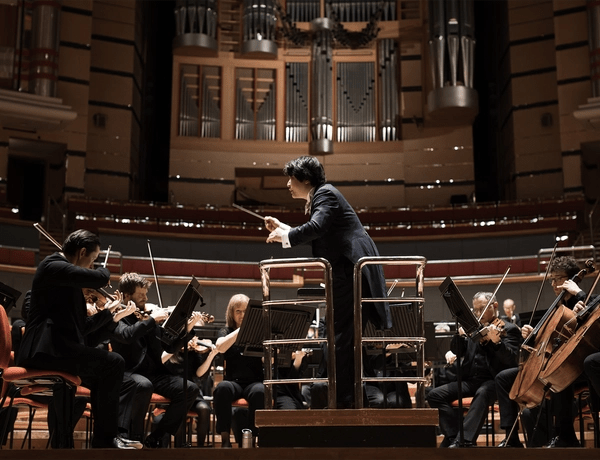
Lest he be forgotten, cellist Daniel Blendulf (above) delivered an understated solo of considerable beauty to begin the Andante, providing respite from the high voltage drama elsewhere but getting to the heart of Brahms’s soulful writing for the instrument. The quartet regrouped for the finale, another show of breathtaking power but with room for reverence in the chorale themes and their development. For all the bravura the air of uneasiness remained as an undercurrent, Brahms never quite at rest even when the quartet reached its emphatic conclusion. This was a truly memorable performance, capping an outstanding evening of music making for which all involved should be immensely proud.
To read the full story behind Eno Piano, you can read Arcana’s recently published interview with Bruce Brubaker. In it he sets out his quest to recreate Brian Eno’s ambient masterpiece Music For Airports, made through tape loops and studio techniques, for a living and breathing musician to play on the piano.
To get the necessary sustain Brubaker has employed a number of intriguing techniques, not least the use of electro-magnetic bows over the piano, enabled by Florent Colautti.
While Music For Airports is the main act, Brubaker places it in the context of shorter works by Eno that have a more descriptive edge – The Chill Air, a collaboration with the late Harold Budd, By This River, co-written with Dieter Moebius and Hans-Joachim Rodelius, and Emerald and Stone, where his collaborators are Jon Hopkins and Leo Abrahams, with whom he still works a great deal.
What’sthemusiclike?
Incredibly restful – which of course is a description you could level at the original Music For Airports. Job done, you would think, but the reproduction of this music in human hands does reveal a slight and unexpected intensity, the performer having to maintain a very high degree of concentration and control to get close to honouring Eno’s original music.
Brubaker certainly does that, and the electro-magnetic bows help the sustain very subtly at the start of Music For Airports 2/1. The whole thing is so carefully thought through that each note feels researched but also instinctive, especially in 2/2 where the angular lines create an extraordinary sense of space.
While Music For Airports is indoors, the other three pieces are very much outside, and have a refreshing clarity. The Chill Air and By This River are bracing, wintry piano music.
Does it all work?
It does. When Bang On A Can released their chamber ensemble version of Music For Airports in 1998 it gave a new dimension to Brian Eno’s thinking. This piano work will have a similar effect, and is even more intimate in its confines.
Is it recommended?
Yes. Any Eno fan will want to hear this, and Bruce Brubaker shows just how imaginatively and thoughtfully he can attend to the music of others. This is a quiet revelation.
Listen & Buy
Published post no.2,046 – Thursday 21 December 2023
Gavin Bryars Ensemble; David Wordsworth (conductor); Sarah Gabriel (soprano); David James (countertenor); Mahan Esfahani (harpsichord); The Addison Chamber Choir
Barbican Hall, London, 19 December 2023
Gavin Bryars Ensemble; The Choir with No Name; Streetwise Opera
St Martin-in-the-Fields, London, 9 November 2023
by John Earls. Photo credit (c) John Earls
To see Gavin Bryars’ classic Jesus’ Blood Never Failed Me Yetperformed twice in the space of six weeks is quite special. But this is the composer and double bassist’s 80th birthday year, and both concerts were celebrations of that milestone.
Jesus’ Blood Never Failed Me Yet is something of a signature composition for Bryars. Many will be familiar with the story of how he was working on a film documentary about people living rough in London in 1971 and was left with an unused tape of a homeless man singing this religious song. He put the 26-second clip on a loop and composed a slowly evolving and haunting orchestral accompaniment that respected the man’s – to use Bryars’ own words – ‘nobility and faith’.
So it was particularly touching to be at a performance on 9th November at London’s St Martin-in-the-Fields church where the Gavin Bryars Ensemble were accompanied by the Choir With No Name, the choir charity for homeless and marginalised people. Starting with the tape of the unnamed man, the ensemble slowly built its accompaniment around it and the choir joined in the refrain to powerful and moving effect.
I should confess that my 1975 Obscure Records version of Jesus’ Blood Never Failed Me Yet has been a long-cherished part of my record collection. It is coupled with The Sinking of the Titanic, a work inspired by the story that the band on the ‘unsinkable’ liner continued to play as it sank in 1912, and was given an absorbing performance in the first half of this concert along with The Open Road, where the ensemble was joined by Streetwise Opera who work with people who have experienced homelessness.
Jesus’ Blood Never Failed Me Yet was also at the centre of another concert by a larger GB Ensemble (extra cello and violas plus piano and percussion) at London’s Barbican Hall on 19th December, where they were joined by the Addison Chamber Choir. Here, the choir were somewhat more refined and restrained in harmonic accompaniment but no less affecting. It was a truly beautiful performance which received a deserved standing ovation.
The Barbican concert also featured Duets from Doctor Ox’s Experiment, five revised duets from Bryars’ 1998 opera sung by soprano Sarah Gabriel and countertenor David James. Whilst musically engaging (particularly the fifth duet) it suffered from the all too familiar issue of not being able to hear Blake Morrison’s libretto clearly enough (the words were printed in the digital programme). There was also a lovely Ramble on Cortona and a dramatic After Handel’s Vesper, a solo harpsichord piece played by Mahan Esfahani. Special mention should be made of James Woodrow on electric guitar whose playing throughout was atmospheric and never obtrusive. Both the concerts concluded joyously with Epilogue from Wonderlawn.
In introducing Jesus’ Blood Never Failed Me Yet at the St Martin-in-the-Fields concert Bryars spoke sincerely about how much the piece still means to him after all these years. These two performances amply demonstrated not only how that unknown man’s voice can still touch one’s heart, but why the piece of music that came from it remains so relevant and powerful today.
John Earls is Director of Research at Unite the Union and tweets / updates his ‘X’ content at @john_earls
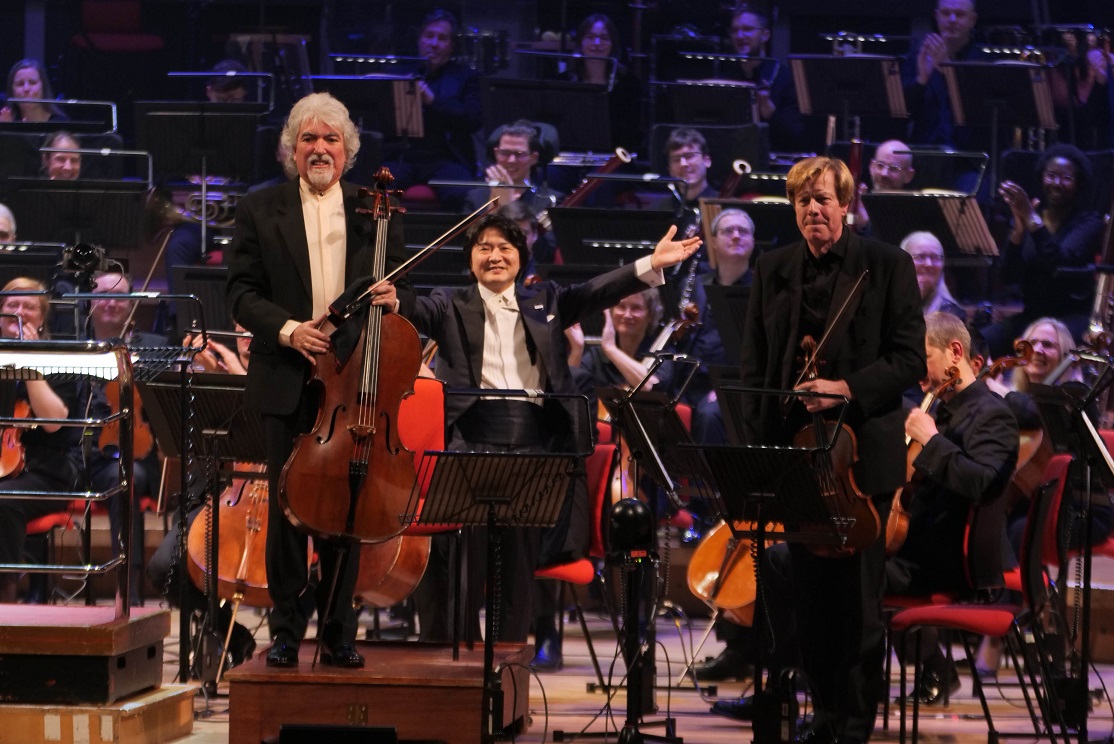
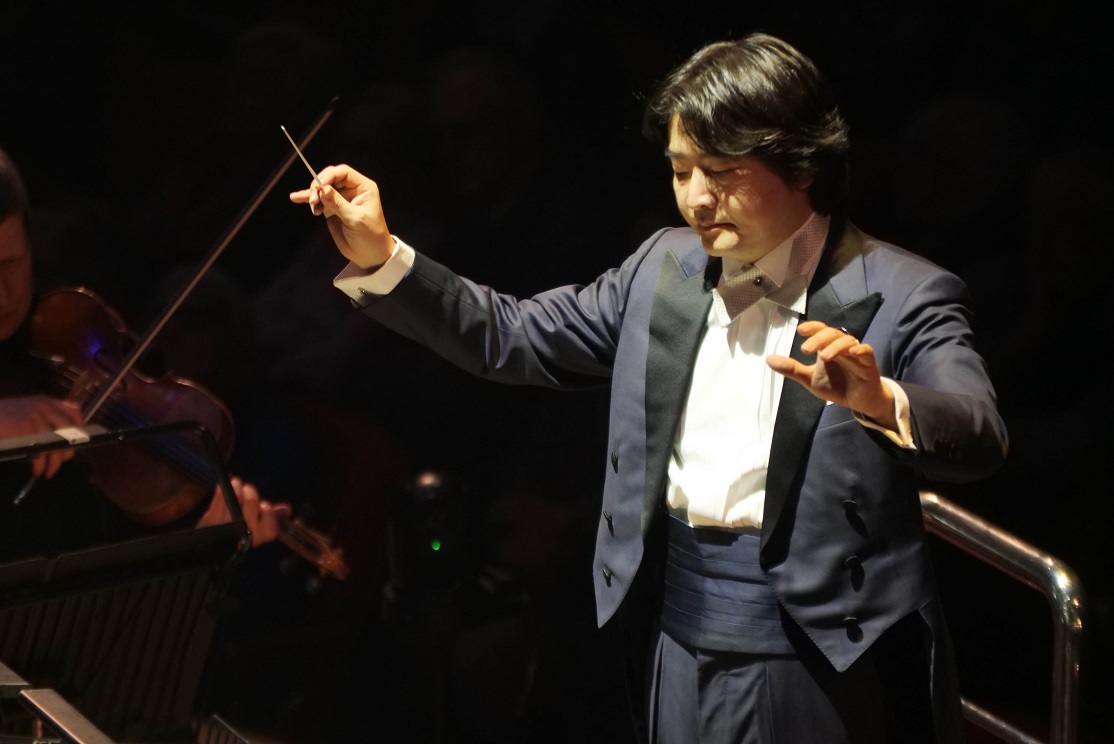
Eduardo Vassallo (cello), Chris Yates (viola), City of Birmingham Symphony Orchestra / Kazuki Yamada
Richard Strauss Don Quixote Op.35 (1897) Beethoven Symphony no.3 in E flat major Op.55 ‘Eroica’ (1803-4)
Kazuki Yamada and Tom Morris (concept), Rod Maclachlan (video design), Zeynep Kepekli, lighting design), Gustave Doré (illustrations)
Symphony Hall, Birmingham Wednesday 13 December 2023
Reviewed by Richard Whitehouse. Photos (c) Hannah Fathers
Tonight’s concert from the City of Birmingham Symphony Orchestra was not only the orchestra’s final concert before its Christmas season, but also the first to feature a new concept of presentation with a view to reimagining just what the concertgoing experience might be like in the future.
Not that this concept was uniformly applied to the pair of works in question. In the first half, Richard Strauss’s Don Quixote was accompanied by rehearsal and live footage relayed via screens as placed to the left, above and to the right of the platform. They gave passing insight into cellist Eduardo Vassallo’s preparing to take the stage, then kept a close watch on his interaction with violist Chris Yates – their musical repartee informing much of what follows. Less convincing was the selection from Gustave Doré who, while he died over a decade before Strauss’s work, still anticipated its concerns in his illustrations for an 1863 edition of Cervantes. These were rather generally applied over the work’s course with few references to Dulcinea who, while she does not appear in the novel, is yet a pervasive influence on the latter stages of the score.
The performance was a notable one in terms of Kazuki Yamada’s surveying this piece as a cumulatively unfolding whole – its 10 variations, each keenly characterized, framed by an increasingly ominous introduction and warmly resigned epilogue. Vassallo had the measure of what, for all its virtuosity, is essentially a concertante rather than solo part and, for which reason, tends to come off best when taken by a section-leader. Not all those frequently dense textures emerged with ideal clarity and motivic unity, which ensures formal and expressive focus as the work proceeds, could have been clearer in its climactic stages, but an essential humanity was always to the fore as Yamada perceived it. Those hearing it for the first time could hardly have failed to be impressed with Strauss’s ambition or moved by his response.
Less so, perhaps, by Beethoven’s Eroica Symphony after the interval. Here the visual element centred largely on the musicians as the account took place – except during the first movement, when a photographic roll-call of the CBSO’s ‘heroes’ (musical and otherwise) was laminated onto the music – thus robbing it of the means to transcend time and place as surely as had the composer those of revolution or Bonaparte. Elsewhere, the standing-up of individual players and sections to highlight salient aspects of the piece was rather inconsistently applied – why, for instance, did the horns not do so with their unison statement of the ‘Prometheus’ theme in the finale (Thomas Beecham did this decades ago) – while the emerging photos of orchestral members mid-way through that movement risked seeming an awkwardly sentimental gesture.
All of this might have mattered less had the reading carried consistent conviction. As it was, the opening Allegro stuck doggedly to a tempo that felt more than a little stolid – its climactic moments undermined by pauses that impeded the musical flow, though the coda yielded the right emotional frisson. The highlight was a Funeral March whose fatalism was leavened by acute pathos at its climax, with a coda whose disintegration audibly left its mark. If the outer sections of the Scherzo seemed just a little deadpan, its trio was rousingly despatched by the three horns, and the initial stages of the finale had a welcome spontaneity as the ‘Prometheus’ theme is put through its paces. A pity Yamada slowed right down for its restatement midway through, resulting in a serious loss of momentum that not even an incisive coda could regain.
Tonight’s concert was a concerted and not unsuccessful attempt to confront the issue of how to attract a younger and more inclusive audience to classical music. Where it foundered was on a misguided premise that bombarding those present with images somehow makes them listen more intently. For this to come about, they need to be encouraged to focus collective attention aurally rather than just visually – a challenge such as Symphony Hall, with its all-round excellence and its many acoustical resources, would seem ideally equipped to fulfil.
This is evidently an experimental phase for the CBSO, as various possibilities are tried out, but an emphasis on sonic enhancement, allied to the subtle if pervasive presence of lighting, is arguably one way forward and could ultimately blaze a trail for the concert of the future.
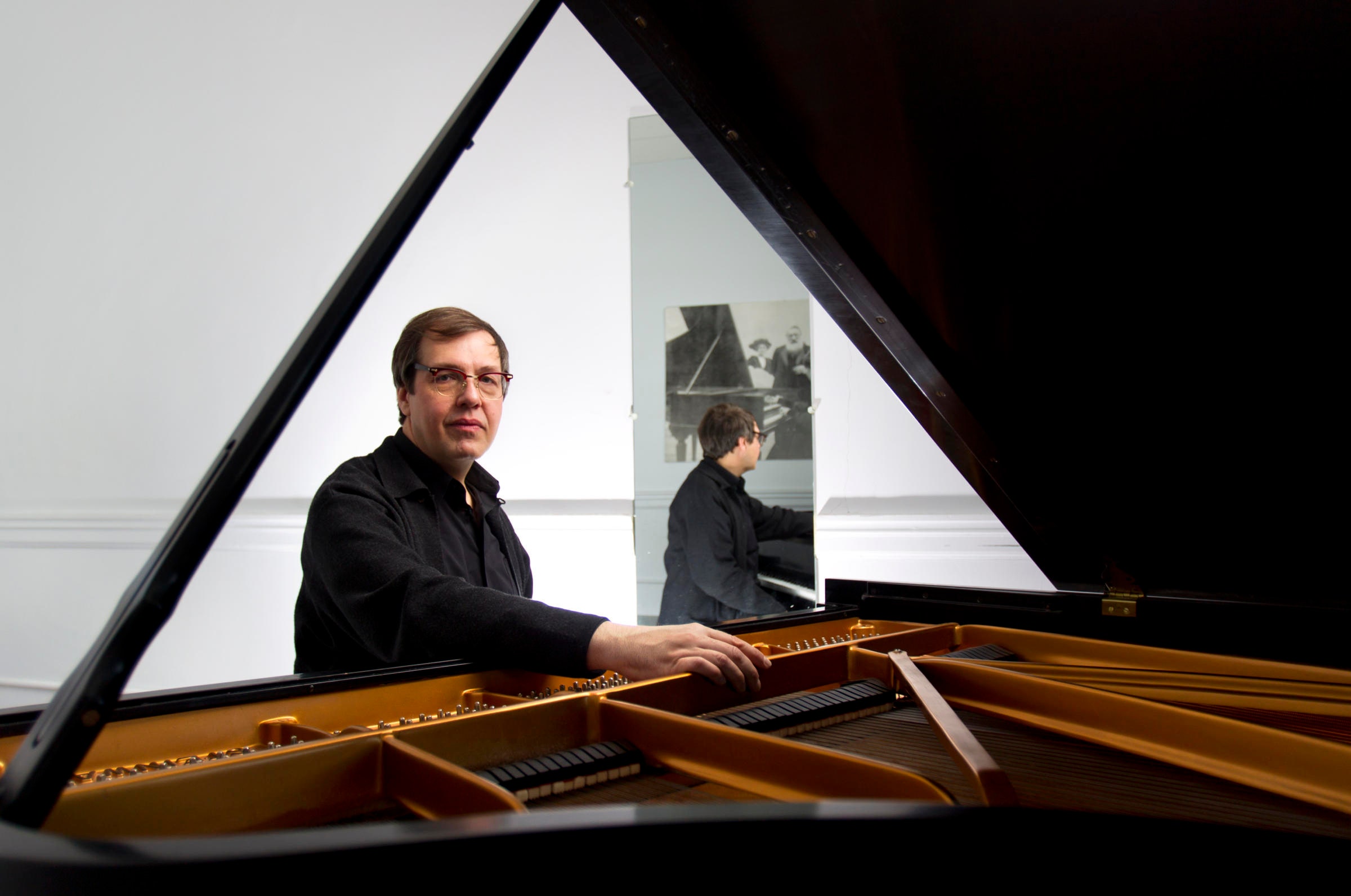
Pianist Bruce Brubaker is a man who likes a challenge. A prolific and highly respected performer of music by Philip Glass, Steve Reich and Meredith Monk – and recent collaborator with Max Cooper, Brubaker has in recent times turned his attention to the music of Brian Eno. In November he released an album of piano interpretations taken from the former Roxy Music keyboard player’s solo work – including a complete account of the seminal Music For Airports. The album, Eno Piano, has been released on the InFiné label, Arcana sat down with him to discuss the project, gleaning some fascinating insights into Brubaker’s world of contemporary and classical piano playing.
Given his impressive CV up until now, the music of Brian Eno appeared a logical step – albeit not an easy one. The genial pianist takes up the story. “No, because as you know, Music For Airports and almost all of Brian’s earlier work in this ambient area was studio music and he made it without really any kind of reference to live performing. There were no scores, no plan even! On Music For Airports he provides these little drawings showing you about the patterns involved, but the idea of playing it live was really very far away.
The prospect of recording Eno on the piano had great appeal. “I’m fascinated by the idea of using the wrong tools to make this music. In the original they are physical tape loops that have been used to make the sounds of Music For Airports, so when you hear a particular pattern of notes, and it’s repeated, you are literally hearing the same thing – the exact micro timings the exact balances are the same. In our version I’m playing those things by hand each time, so they’re not the same thing. It’s an interesting problem, and I kind of like it!”
It also resonates with Eno’s methods of composition. “You know Brian did that thing with Peter Schmidt called Oblique Strategies, with the deck of cards – one of my very favourite Oblique Strategies is “Repetition is a form of change”. That’s really a big part of this, so even when you use a tape loop, and play the same notes exactly in the same rhythm, exactly the same way, the effect to the listener / human is not exactly the same. We’re impinging on that, in a slightly different way, because now things are not identically the same. Perhaps the listener perceives this, perhaps they don’t. I think all that ambiguity is right in the neighbourhood of what he was doing in the first place.”
Certainly in music of this kind, the fifth instance – for example – of a melodic phrase is very different from the first, because of the listener being more ‘in the zone’. Brubaker agrees. “Absolutely. I think that as each person hears a piece of music, because of all the things you’ve heard before, the place you live, the sound environment you’re in, every single person – as they hear musical sounds – makes a new piece of music by listening. For everybody sitting in a room, at a concert or hearing a recording there’s a somewhat different piece of music being completed as they listen. That appeals very much to me and our sense of our own time, where people’s participation in the process of music is, I think, much greater. It’s not a passive thing. When you’re hearing something like Music For Airports, you really are invited or allowed to be inside and to make those connections yourself. It’s infinitely variable. Then when you come back and hear it again, it will also vary, so if you hear it for the tenth time, you probably don’t hear the same thing as you did in the beginning. I’m thinking of If on a Winter’s Night a Traveler by Italo Calvino, where he says something like, “I returned to the books that I read when I was a young man, and I find that they have changed”. Of course, he knows that they haven’t, the physical printed book is exactly the same – but different when he reads it. I think that that’s where we were trying to be with this.” The question also arises that if Brian Eno sat down to write Music For Airports today, we would end up with something very different. “Definitely”, he agrees.
In spite of its ambience, Music For Airports has a number of interpretative issues and is an intense experience for the performer. “One of the challenges was to figure out how much to allow these repetitions of the same material to vary, or how much to try to make them the same. As a human being, if repeat something over and over again, each one will be different. Do you intentionally push them to be different or not? It’s actually not that much different than playing other minimalist or repetitive music like Glass because I think it’s the same thing. I always found in Glass that if you intentionally varied something, it usually seemed like too much. The better way to do it was to be more like an observer and not really a participant. If you can get yourself into a state of being where you’re listening to the sound as it happens, but to be outside and hearing it happen, and then responding to whatever is unequal but not really making it happen. That is true here too, as it goes by, you monitor and notice the things that vary, but you’re not really making them happen. If you try to do that, then it almost always seems like a heavy hand too much.”
Brubaker’s detail is fascinating, as he moves on to consider his topic further. “I guess it’s true of a lot of kinds of art. One of the strange things about music that’s improvised versus music which is planned beforehand is that a lot of the music that we like, which is planned in advance, aspires to a quality of improvisation. Even if you’re listening to a Beethoven symphony, probably the best performance is the one that seems like it’s not written down, the one that seems like it just happened – even though we know that’s not true. If you map that on to the world of movies or theatre, that’s exactly the same, right? In a movie, for the most part, you understand the actors have learned their lines and rehearsed them many times, but if you’re lucky, you forget all about them. You have the sense that whatever the action is, in the scene you’re watching, it’s really happening. The same thing is true in music, you want to be engaged in what’s happening so that it seems like it’s just a spontaneous event.”
Although he cannot remember his first encounter with Eno’s music, Brubaker admits to a connection with the minimalism of the 1960s and 1970s. “I did get this idea of trying to play Music For Airports on the piano quite a while ago, but then there always seemed to be this big problem, which was how we can make very long sustained notes, because that’s such a feature of the piece – and some parts of the music actually have human singing. Then I heard this jazz pianist in America play a concert where he had modified one of these devices that electric guitar players use, the E-bow – and cut it down to put on one string inside a piano. He did an improvisation around this long droning note. I started to think maybe you could do that with the piano and use a bunch of E-bows to make long notes. Then almost by chance I was talking to one of the people at my record company who happen to know of an inventor in France, who had started working on a system like this, specifically for the piano. We met and started talking about it, and that is what we used for this album.”
He explains the methodology. “There are these electromagnets suspended over a piano string, and the string is allowed to vibrate either by putting down the pedal on the piano or in some other way where you can raise the damper. The electromagnet creates a signal that causes this vibration in the spring, which can be controlled very specifically with frequency. You can also produce overtones. Then we found with the lower strings, if you continually excite one of those strings, which are wrapped with another kind of metal, you actually get a pulse. This also fascinates me because we’ve never heard a piano string that was vibrating continuously! When you’re hearing piano sounds in a normal piece of music, you’re always just hearing the decay of that sound, you’re not really hearing the impulse and you’re the impulse for just a little tiny bit of time. What we’re doing now is we’re actually making the string vibrate for a long period of time, like you would on a violin. And so, you know, the nature of the tone, in some cases was really surprising because we’ve never heard it before.”
A new instrument, even! “I was joking about this, but I think it’s true. Eno Piano is not just the title of the album, it’s also an instrument. A long time ago Brian said that the studio is a musical instrument, so it is turning it around and showing that an instrument can also be a studio! The way we’re using it is something that really couldn’t have happened very, very long ago.” The emphasis falls on the string part of the piano rather than its percussive element. “There are other examples of course, in John Cage, and the American composer C. Curtis Smith, who wrote a whole bunch of music for pieces of string or fishing line were used inside the piano. I also played a Cage piece where you had to thread the strings through, and we were able to make a long tone that way.”
Brubaker had the pleasure of meeting Cage on several occasions. “I actually played with him a couple of times. I played Radio Music with him once, and a new chamber music piece he had written. I always found his effect was really very powerful and a spark towards something more. This chamber music piece, called Seven, he had notated using a heavy Japanese brush with ink, and so a lot of it was very difficult to read. The brush was irregular and some of the notes were very thick and some of them were very thin and scrappy and you couldn’t really tell what the notes were. I remember saying, “Mr Cage, can you tell me what the notes are in this chord?” He probably gave the ultimate advice that you could give to any musician in any situation. He said, “Just listen, and you’ll know what to do”, which I thought was pretty good. At the time I just wanted him to tell me what the notes were, but he wouldn’t do that!”
He also recalls a musical example. “I played a little solo piece called Dream, with a long meandering melody, a pretty piece like a lot of his music from the 1940s and early 1950s. I played a concert where he was giving a commentary and had played it from memory. One of the audience asked Cage, “What would happen in the performance if the pianist got lost?” Right away Cage said, “That would be wonderful!” That was good – and that touches this illusion of spontaneity, the illusion of something that isn’t planned. By getting lost, you might be found again. Even in the 19th century, it’s pretty well documented that pianists giving concerts from memory was a kind of substitution for people who didn’t improvise. When Liszt played his own music in public, he always held up the score so that people would know he was not improvising. That back and forth between what the music is and how it sounds is something very interesting, especially with the recent importance of sound artists. A lot of these people come from the visual art world, using sound not as music but as something that they can manipulate and sculpt. I think that actually connects back to Brian Eno. You could say he wasn’t really making music but more creating this sound environment, this space to be inside. That boundary between written music and the world of sound has got much closer, and that will probably continue to be the case.”
One of Eno’s more recent compositions, the single-track album Reflection from 2017, comes to mind. “I think that’s the greatest achievement, being on the cusp of paying attention, or not paying attention”. Some of the pieces chosen on Brubaker’s album – By This River and The Chill Air – sound as written. In the live show we are using those two short pieces in the middle of Music For Airports which I was very sceptical about at first, but I think it does help and is good for the audience.”
Though Brubaker’s recent recorded output is more minimal, his background is steeped in classical music. “I trained as a classical pianist, and I taught at Juilliard for a long time. Even now the students I teach really are primarily interested in Beethoven and Liszt, not even going very far into the 20th century. Sometimes I feel like I almost have a double life! When I go out and do my own artistic work it tends to focus on much more recent things, but when I go back to teaching it’s Beethoven all the time. On the other side I still feel there’s a long connection, and that some of the things we’re talking about with non-directional music, which is to be completed by the listener, connect to what was happening in European music, maybe in the 10th and 11th century. If you go back long before the Classical period, before the composer identity was so formed, there were many other ways of making music, and in other musical cultures outside of European music. One of the things that happened, say with minimalism in the 1960s, is that some of that authority of the composer was lessened. It’s not so much a kind of top-down hierarchical format, and instead the listener, the performer are much more included in the complete art. I think that’s a good thing.
We always seem to blame Beethoven, but he really created a kind of art where the composer really was operating as a kind of God and, and making this musical experience where you weren’t really invited to be a participant. I’m probably overstating it a little bit because I think these different ways of using music exist in lots of kinds of music, so you can approach almost any piece with various ways of participating. But I think Glass actually is the one who said that he found that when you listen to a symphony by Beethoven, the climax generally happens at the same place every night and the organisation of the overall peace really remains the same. His contrast was going to see a play by Samuel Beckett, where the play seemed like a different experience each time he saw it. It was much more of a of a network of relationships rather than this narrative of beginning and development and progression to some kind of goal. It was less teleological if you want to go that way! A lot of European art of the 18th and 19th centuries was directed towards a goal, which could be very satisfying, and then there’s some kind of conclusion. On the other side, with a lot of minimalist music and repetitive music, you can argue that there is no ending – and no beginning either. You’re just in the middle. And of course, isn’t that the experience of life? You don’t remember being born and you haven’t died? So here we are, and I think that’s a very appealing art for our time.”
Finally we move on to discuss Brubaker’s work with Max Cooper, where the pair reinterpreted the music of Glass. “That was a really good project for me, I enjoyed it a lot. It was quite unpredictable, because there was this algorithm in use in the software that translated the signals from my piano playing. Every time we did the performance, those signals would vary slightly, depending on the precise touch, the dynamics, everything about the pedalling, and then those signals were controlling Max’s computers and his synthesizers. Every time we did the performance, that information that he received was really quite different, so what I would hear from him was really varying every day. So it was quite unpredictable, and sometimes it was a little confusing because it could be quite chaotic. What you hear on that album is actually a live show from Paris, and he did a little bit of changing because he didn’t like the quality of the sound. It was quite a voyage!”
Brubaker hasn’t spoken to Eno about his new project – yet – but the pair have conversed previously. “He’s working on the rehearsals for The Ship live show, which are using up all his time, as well as a bunch of other things. I started talking to him about this a long time ago, and I think he’s very open to the idea now of other people taking his music. I always wonder about that with very iconic pieces. I did some piano transcriptions of music by Meredith Monk, and that was a very interesting project where she was really very involved. It was complicated for her because she liked the idea that it was going to be her music heard in a different way, but at the same time she really wanted to be sure it was what she wanted. And I think Brian is not like that and has a very different attitude. In that sense, he is probably much open to other possibilities.”
Eno Piano rewards focussed listening – as well as giving the listener the option to draw back and observe from afar. Typically Brubaker, before he goes, is able to introduce another point of reference. “You probably know this piece that Erik Satie wrote at the beginning of the 20th century, called Furniture Music. My understanding is that he wrote it for some kind of art gallery, some kind of show that was being given. He had the musicians in the room, and he told the audience not to pay attention to them – but he got unhappy because when the musicians started to play the audience got quiet! They were listening intently, and Satie was unhappy because he wanted them to ignore it. I rather liked that.”