We last encountered Captain Mustache two years ago, as part of the excellentQuattro Artists collectionreleased by Bedrock. His contribution was Indigo Memories, where the intersection between techno and electro functioned particularly well.
Now we find him returning to the Kompakt label with an imagined an imagined ‘whole day for party people’, with a raft of guests in tow.
What’sthemusiclike?
The captain delivers a captivating blend of darkness and light in the course of the day. The darker stuff is the four to the floor electro and techno workouts, some really well produced numbers that hit the floor without any nonsense. These include the instrumental cuts Laser Me, Clair-Obscur and Galaxian Symbiosis, the last two of which would be more than half Detroit-based if you cut them open. Acapulco Citron has a chunky bass profile, as does Pulsions Organiques, which pans out a bit to softer electro up top.
Then we have the more humourous tracks such as the vocal playful Gimme Your Mustache or Shifting Basslines, where Chicks on Speed work particularly well. The Arnaud Rebotini collaboration I Love Watching U is excellent, too.
Does it all work?
It does – the album has a really satisfying ebb and flow.
Is it recommended?
Indeed it is, another fine opus from the man with immaculate facial hair.
Boris Giltburg (piano, above), City of Birmingham Symphony Orchestra / Michael Seal (below)
Rachmaninoff Rhapsody on a Theme of Paganini Op.43 (1934) Shostakovich Symphony no.8 in C minor Op.65 (1943)
Symphony Hall, Birmingham Thursday 28 September 2023
Reviewed by Richard Whitehouse. Pictures (c) Sasha-Gusov (Boris Giltburg), Eric Richmond (Michael Seal)
Now into his 12th season as its associate conductor, Michael Seal appeared this evening with the City of Birmingham Symphony Orchestra in works written before the Second World War and during the middle of a conflict whose consequences seem very far from being played out.
Although present-day ubiquity had rather dulled its more innovative aspects, Rachmaninoff’s Rhapsody on a Theme of Paganini remains a game-changer through the integration of piano with orchestra and conception of just what a piano concerto might be. Taking Paganini’s 24th Caprice for violin as the basis for a continuous sequence of 24 variations barely disguises the three-movement format of an archetypal concerto. Boris Giltburg responded with no lack of flair or panache, while recognizing the formal divisions of 15, three and six variations across which the theme is reconstituted in ever more ingenious and unexpected ways. The evergreen 18th variation saw a heartfelt response from CBSO strings, with the closing sequence finding this theme in pointed conflict with the ‘Dies irae’ chant right up to a perfectly judged pay-off.
An impressive performance and Giltburg (who in appearance and approach bears more than passing resemblance to a young Vladimir Ashkenazy) gave the second from Rachmaninoff’s second set of Études-Tableaux (aka The Sea and the Seagulls) as a limpidly affecting encore.
It may have had several fine performances from the CBSO over the decades (Rudolf Barshai, Maxim Shostakovich and Cristian Măcelaru immediately come to mind), but Shostakovich’s Eighth Symphony remains a testing assignment both for players and listeners – not least in an opening movement whose underlying Adagio tempo and almost unrelieved sombreness seem to override its constant evolving toward a violent then wrathful culmination. Seal (above) paced it all superbly and the CBSO responded with like dedication, but it was Rachel Pankhurst’s take on the plangent cor anglais soliloquy during the reprise that set the seal on a memorable account. Nor did Seal skimp on the satire of the Allegretto, a response to the inanity and idiocy of war where those climactic overlapping woodwind and brass entries emerged with fearsome acuity.
The inevitability with which the final three movements segued one into the other did not belie their disjunctive contrasts. With its overtones of mechanized warfare and martial rallying, the second scherzo powered to a climax as fairly exploded into the ensuing Largo – a passacaglia whose numbed unfolding on strings is offset by solos from horn and clarinet, deftly rendered by Elspeth Dutch and Oliver Janes. Out of such desolation the finale’s seeming promise of a return to innocence cannot be sustained beyond a return of the first movement’s culmination, and if the present account faltered momentarily on its way there, the closing pages – as earlier themes gradually subside into the most resigned of resolutions – were ideally judged. That one could have heard a pin drop in the final minutes says much for their effect on those listening.
An enthusiastic reception could not disguise the less than full house for a piece that is never easy or enjoyable listening, and it would be a tragedy were encroachment of ‘lifestyle’ issues to offset future hearings. This eloquent and insightful reading provided its own justification.
You can read all about the 2023/24 season and book tickets at the CBSO website. Click on the artist names for more information on pianist Boris Giltburg and conductor Michael Seal
Here is some wonderful weekend music from Brooklyn trio Say She She, with their second album Silver.
Having made a strong impact at Glastonbury with their live set, which included one of the singles of the year in C’est Si Bon, they have given us a long player guaranteed to brighten up any day. A homage to the disco music of the late 1970s, it is more than mere pastiche – a brilliant collection of original compositions, packed with good feelings and funky basslines.
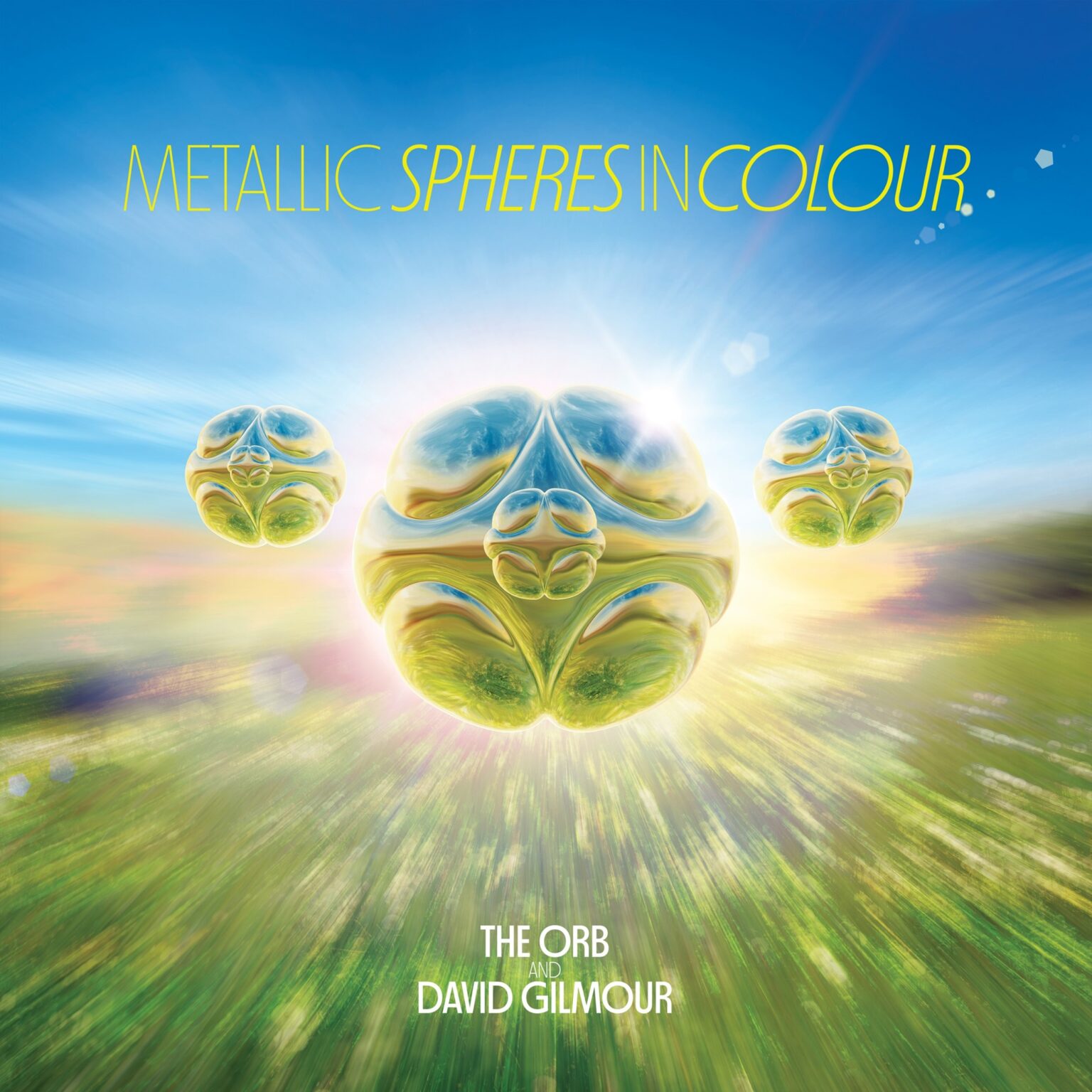
Described as a ‘remixed collaborative album’, this is an update for the 2010 release made by The Orb and David Gilmour, Metallic Spheres.
You may remember that the original has just two tracks, which sit either side of the vinyl release. Producer Youth recently revealed that “The idea for Metallic Spheres In Colour was that Alex Paterson could have done more on the first version, and he didn’t really have the opportunity because we had a philosophy of making the music like the Blade Runner soundtrack meets Wish You Were Here. So, I asked him why don’t we remix it and make it like an Orb classic? And in doing that, it’s almost like a completely different album.”
Have a listen to an excerpt below and see what you think:
The tale of Michael Gold is a compelling one. The singer-songwriter, who records as Mirror Tree, is a pilot, flying a 737 for a major airline out of Los Angeles. Yet he also belongs to a musical family tree of impressive lineage, his mother being Grammy-winning singer-songwriter Sharon Robinson and his godfather a certain Leonard Cohen.
For a while his route into music looked unlikely, with pilot duties taking him into remote Alaska – but it was while flying across the remote American wilderness that he began to hear music afresh, and in particular bands such as Stereolab and Broadcast.
Returning to L.A., Gold began writing and recording, working with former Poolside bandmate Filip Nikolic. The two dragged Gold’s Farfisa organ out of storage, and it became an integral part of the album’s sound.
What’sthemusiclike?
The Farfisa makes all the difference. With clever use of reverb and perspective, Gold and Nikolic use it to add perspective but to add a layer of musical dust to each track, the listener almost shaking sand off their shoes. This feels like outdoor music as a result, and with a lovely sheen and hints of psychedelia added to the production, the sound is an extremely pleasant one.
The clincher, however, is Gold’s voice, an easy-going instrument that is slightly husky and delivers the lyrics with warmth and a little charm. Another Day is a beauty, dappled sunlight sneaking through the trees as a backdrop to the vocal, while Echoes Competing is similarly sunny, its coda a singalong moment. The hooks Gold uses can pass the listener by on the first one or two listens, but give it time and the album really starts to make its mark.
Let It Go looks up at the moon and stars with tired eyes and an old piano for company, while during the carefree Tuesday it’s easy to imagine Gold soaring above the clouds. Similarly with Along For The Ride, which takes to the wing on vocals that could have been crafted as part of late-1960s psychedelia. The Stereolab and Broadcast influence can be heard in a good way, and the Farfisa creates a series of musical mirages.
Elsewhere layers of guitar create a warm musical bed for songs such as In A Day, where the organ is manipulated to sound like a flute ensemble. Meanwhile 300 Miles bends the sound off pitch slightly, creating a distinctly Eastern feel.
Does it all work?
Largely, yes. This is charming pop music with pastoral and psychedelic overtones. The album threads its themes together nicely, and while occasionally it’s a bit too woozy – and maybe a song or two long – Gold spreads the warmth of his music a long way.
Is it recommended?
It is. Mirror Tree uses a combination of thoughtful and often blissful songwriting with imaginative instrumentation, and it proves difficult to resist.





 Arcana.fm