
Unknown's avatar

About Arcana

My name is Ben Hogwood, editor of the Arcana music site (arcana.fm)

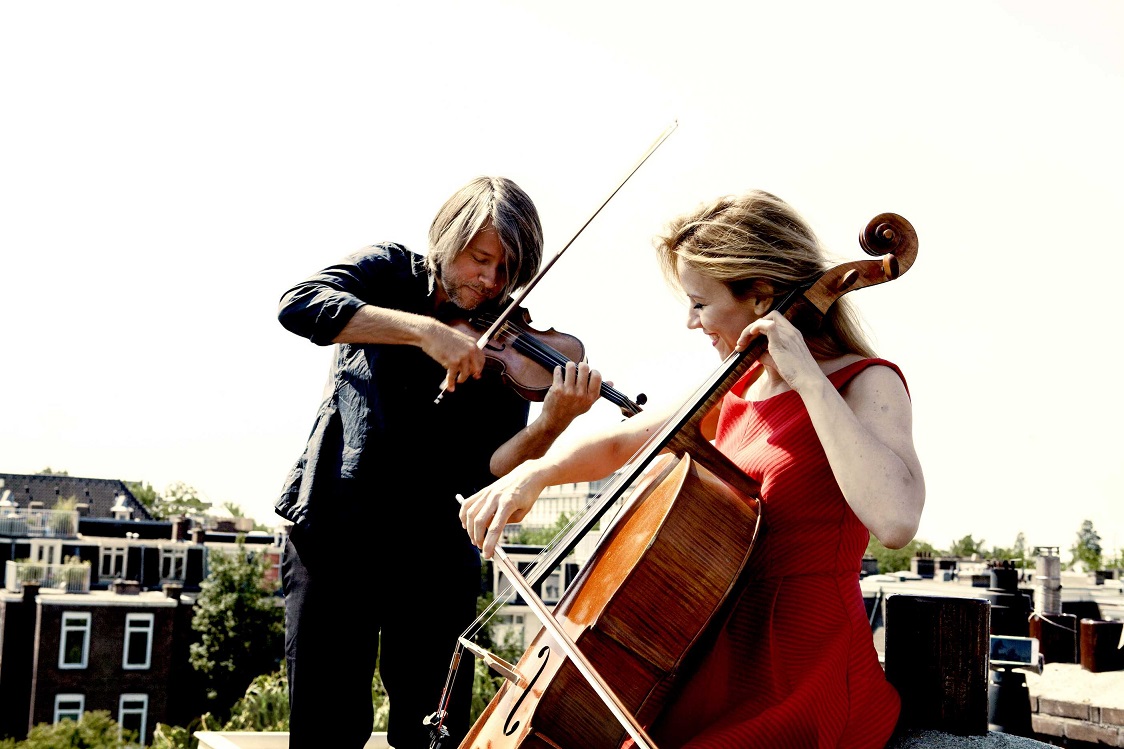
In concert – Daniel Rowland, Maja Bogdanović, English Symphony Orchestra / Kenneth Woods: Philip Sawyers Double Concerto, Haydn & Mozart

rowland-bogdanovic

Haydn Symphony No. 96 in D major Hob.1/96 ‘The Miracle’ (1791)
Sawyers Concerto for Violin and Cello (2020) [World Premiere]
Mozart Symphony No. 41 in C major K551 ‘Jupiter’ (1788)

Daniel Rowland (violin), Maja Bogdanović (cello), English Symphony Orchestra / Kenneth Woods

St Peter’s Church, Hereford
Friday 4 March 2022

Written by Richard Whitehouse

The English Symphony Orchestra continued its season with this first in a pair of concerts that featured two recent concertos from its current Composer Laureate, heard alongside symphonic works which have long been – or, in one instance, should be – a part of the standard repertoire.

If not the most often heard of his ‘London Symphonies’, Haydn’s 96th is typical in its formal precision and expressive richness. Not least the opening movement, its ominous introduction the perfect foil to an energetic and often impetuous Allegro, then an Andante whose variations deftly alternate wit with pathos. The ESO’s playing was at its most felicitous both here and in a robust Menuetto, the piquant oboe melody of whose trio was elegantly rendered by Rebecca Wood. Nor was there any lack of incisiveness in the finale’s good-humoured dash to its finish.

Concertos for violin and cello have hardly been numerous, composers doubtless inhibited by Brahms’s example, so credit to Philip Sawyers for rising to the challenge in this piece for the compelling partnership of Daniel Rowland and Maja Bogdanović. As in Sawyers’s previous concertos (for cello, trumpet, and violin), there are three compact movements – the opening Allegro moderato conveying something of a preludial feel through its speculative progress and blurring of formal boundaries such that the music tails away uncertainly toward its close.

It is in the central Andante that this work came into its own, Sawyers’s own experience as a string player evident in the emotional raptness of the soloists’ dialogue and underpinned by eddying orchestral textures which did much to sustain the ongoing eloquence. If the Allegro Vivo, its main idea redolent of Poulenc (or, perhaps, Malcolm Arnold at his wittiest) risked seeming lightweight, the tensile interplay of the soloists along with a sense of the thematic elements coming audibly full circle made for an effervescent and ultimately decisive finale.

An impressive debut, then, for a piece which ought to find favour in this still limited medium. The soloists duly returned for Castillo Interior (2013) by Pēteris Vasks, inspired by the mystic St Teresa of Avila and creating a suitably fervent impression even when abbreviated as here.

Mozart’s final three symphonies will all be heard, in reverse order, over the remainder of the ESO’s current season. This evening brought the 41st whose Jupiter subtitle may have been a posthumous addition, but aptly evokes the work’s essence – not least with an initial Allegro both forthright and impulse as Kenneth Woods heard it. The ensuing Andante felt a little too swift for its ‘cantabile’ fully to register, but its confiding intimacy was fully in evidence – as was the lilting swing then pert elegance of the Menuetto. Woods favoured a rapid tempo for the final Allegro, and it was a tribute to these players that this music’s textural intricacy and underlying momentum were maintained across a lengthy traversal (with all repeats observed) through to a coda whose contrapuntal ingenuity and rhythmic elan were tangibly in evidence. Overall, a persuasive reading of a masterpiece which, as with its predecessor, is all too easily taken for granted. So, too, the assumption that peace will prevail in Europe – reason enough for this evening’s concert to have started with a rendition of the Ukrainian national anthem.

For further information on the ESO’s 2021/22 season click here, and for more on composer Philip Sawyers click here Meanwhile for more information on the artists, click on the names to access the websites of Maja Bogdanović, Daniel Rowland and Kenneth Woods. Meanwhile for more on musical events at St. Peter’s, Hereford, click here
Listening to Beethoven #206 – Christus am Ölberge (Christ on the Mount of Olives), Op.85

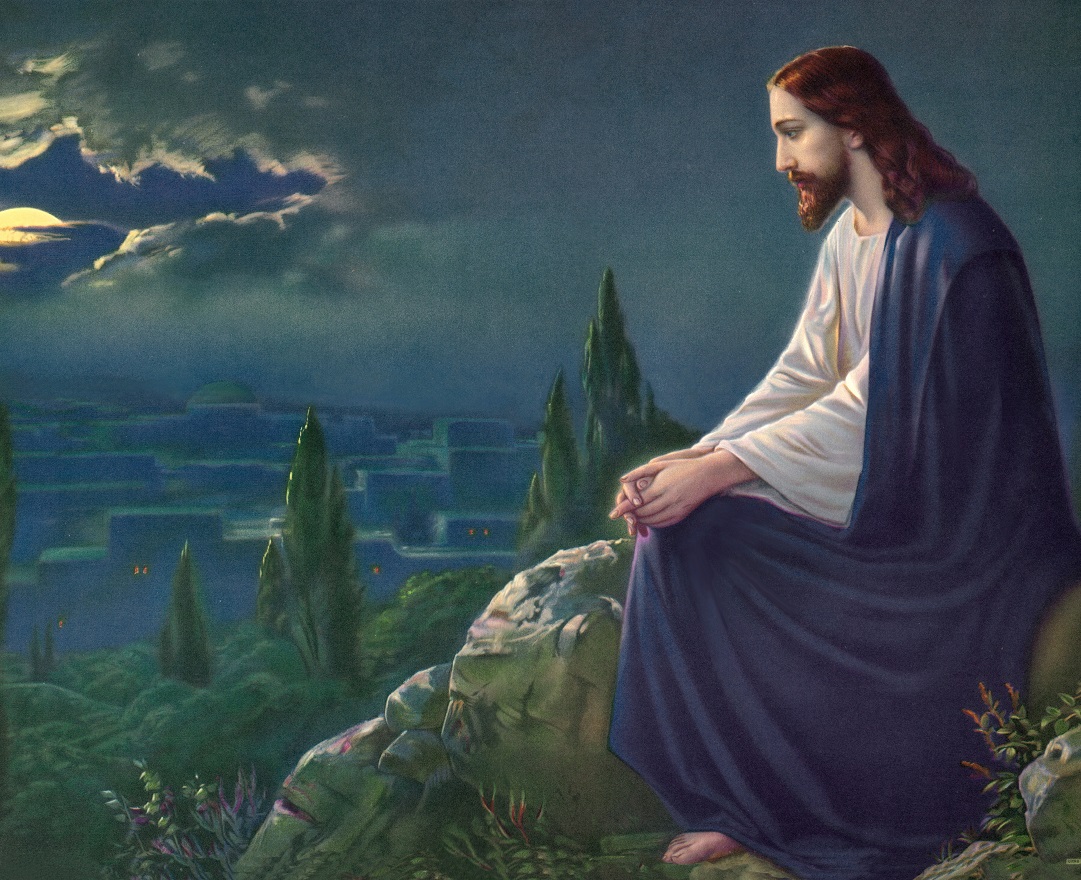
Jesus prays

Christ on the Mount of Olives by Giovanni (aka Josef Untersberger) Date unknown

Christus am Ölberge (Christ on the Mount of Olives) Op.85 for soprano, tenor, baritone, chorus and orchestra (1803, revised 1811, Beethoven aged 32)

Dedication not known
Text Franz Xaver Huber

Duration 45′

Listen

Background and Critical Reception

For the first time since the Joseph cantata of 1790, Beethoven was ready to write another large work for chorus and orchestra. This one was to be biblical, focusing in on a specific part of Christ’s Passion, where in the moment of greatest trial on the Mount of Olives, he begs God to relieve him of his suffering.

Lewis Lockwood tells how Beethoven wrote the work in two weeks, in close collaboration with Franz Xaver Huber, editor of the Wiener Zeitung and occasional librettist. He then writes how ‘Haste is evident in the inconsistent quality of the work, which ranges from routine recitatives and reasonably effective arias for Jesus and the Seraph, to bombastic choral writing for the warriors and youths. Revising it for publication at long last eight years later, he described it defensively and apologetically to Breitkopf & Härtel as ‘my first work of that kind’ (a sacred oratorio) and, moreover, an early work…written in a fortnight in all kinds of disturbances and other unpleasant and distressing events in my life (my brother happened to be suffering from a mortal disease).”

Jan Swafford writes engagingly on the premiere of Christus, the original form given on 5 April 1803 in Vienna, in the company of the first two symphonies and the Piano Concerto no.3. There were ‘tales of long rehearsals, players already fatigued by the other works in the program’…but ‘there was still a full house.’

Early reviews were relatively positive – but although the work ‘was good and contains a few first-rate passages…a number of ideas from Haydn’s Creation seem to have found their way into the final chorus’. Perhaps unexpectedly, Beethoven’s teacher Albrechtsberger was targeted by Gustav Nottebohm for Beethoven’s ‘failure to receive thorough training in the form of the fugue’  – a statement that flies in the face of the Eroica Variations.

Swafford notes the likelihood that ‘after his Heiligenstadt crisis of the precious Autumn, Beethoven felt a personal relationship to the suffering he was depicting. His final verdict, however, is damning. ‘Though Christus has its striking moments and is nothing but skillful, it was then and would remain one of the most misconceived, inauthentic, undigested large works Beethoven ever wrote.’

Thoughts

From the outset of Christus, Beethoven’s intentions are very clear. This is to be a serious and dramatic work, showing its composer’s abilities at writing for large forces and showing off his operatic credentials. Its impact, however, is a little more patchy. The solemn, slow introduction sets the scene and holds the tension, maintained with the arrival of the tenor, who pleads for the ‘cup of suffering’ to be taken from him in an extended solo detailing his pain in long notes.

The arrival of the seraph raises the stakes still higher, and the soprano role really hits the heights in its first aria. By this point Beethoven is in the key of A flat major, a familiar centre for profound solo movements such as that written for the Pathétique sonata, with prominent parts for the wind in counterpoint. The two duet, though the operatic style is relatively jaunty for music depicting intense suffering

The intervention of Christ’s faithful disciple Peter is a dramatic statement of allegiance, and the baritone role adds real gravitas to the piece. We lead to an exultant final chorus is especially Handelian, with strong parallels to Zadok the Priest in its hymn of praise.

Beethoven’s frame of mind when writing Christus would surely have been uneven, his illnesses and deafness at the forefront. The work is a powerful reaction, and feels like a composition Beethoven needed to get out of his system. In spite of its perceived imbalances and flaws it has some powerful music, the composer searching for – and increasingly pinpointing – his voice as a ‘big work’ composer.

Recordings used

Hanna-Leena Haapamäki, Jussi Myllys, Niklas Spångberg, Turku Philharmonic Orchestra, Chorus Cathedralis Aboensis, Leif Segerstam (Naxos)
Elsa Dreisig (soprano), Pavol Breslik (tenor), David Soar (bass-baritone), London Symphony Chorus and Orchestra / Sir Simon Rattle (LSO Live)
Luba Orgonasova (Seraph), Plácido Domingo (Jesus) & Andreas Schmidt (Petrus), Deutsches Symphonie-Orchester Berlin & Rundfunkchor Berlin, Kent Nagano (Harmonia Mundi)
James King (tenor), Elizabeth Harwood (soprano), Franz Crass (bass (vocal)), Helmut Froschauer (chorus master), Wiener Symphoniker, Wiener Singverein, Wiener Symphoniker / Bernhard Klee

Recordings of Christus are thin on the ground, and in spite of some spirited accounts it perhaps needs the attention of an established ‘period’ conductor like John Eliot Gardiner. The soloists elevate Kent Nagano’s version, while the recent live account from Sir Simon Rattle and LSO forces is a dramatic one.

Also written in 1803 Salieri Gesù al limbo

Next up Andante favori in F major, WoO 57

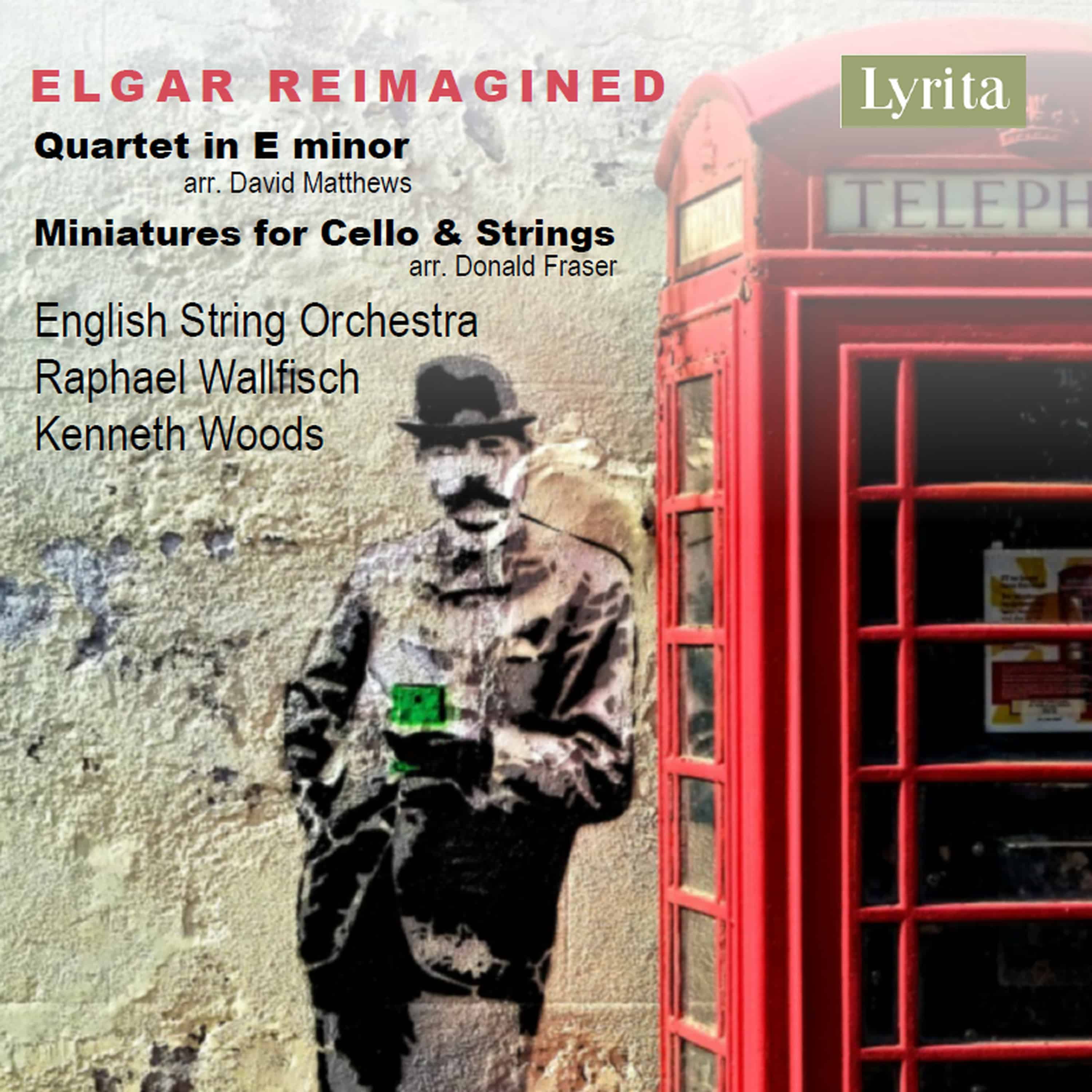
On record – Elgar Reimagined (Raphael Wallfisch, English String Orchestra / Kenneth Woods (Lyrita)

elgar-reimagined-disc

Elgar arr. Matthews String Quartet in E minor Op. 83 (1918)
Elgar arr. Fraser Miniatures for Cello and Strings: Chanson de Matin, Op.15 No. 2 (1899). Chanson de Nuit, Op.15 No. 1 (1899). The Wild Bears, Op. 1b No. 6 (1908). Nimrod, Op.36 No. 9 (1899). Romance in D minor, Op.62 (1910). Sospiri, Op.70 (1914). Mazurka, Op.10 No.1 (1899). Pleading, Op.48 (1908). In Moonlight (1904). Salut d’Amour, Op.12 (1888). Adieu (1933)

Raphael Wallfisch (cello), English Symphony Orchestra / Kenneth Woods

Producer Phil Rowlands Engineer Tim Burton

Lyrita SRCD 394 [69’27”]

Recorded 22 September and 9 October 2020 at Wyastone Concert Hall, Monmouth

Written by Richard Whitehouse

What’s the story?

This new release by the English String Orchestra focuses on Elgar, a composer championed by this ensemble throughout its 44 years of existence, whose music is given an appealing and (for the most part) instructive appraisal across the programme of arrangements featured here.

What’s the music like?

The principal work is the String Quartet in E minor, arranged by David Matthews. Second in a wartime triptych of chamber pieces, it is less introspective than the Violin Sonata preceding it but less emotionally charged than the Piano Quintet which came after, while arguably the most finely proportioned – not least in terms of the subtle transformation of thematic elements across and between its movements. In this guise, it follows on from the Serenade then Introduction and Allegro as the hitherto missing large-scale work for string orchestra of Elgar’s high maturity.

Matthews has been mindful to equate the soloistic with the ensemble potential of this music, so the result is neither straightforward transcription nor radical re-conception. The opening Allegro discreetly evokes an autumnal rumination as sets the tone for much of what follows; even finer is the central Piacevole, its main theme suffused with an intensity whose extent is only revealed at the close. If the emotional acuity of the final Allegro is marginally diffused, there is no absence of purposeful intent as the music proceeds to a coda of terse decisiveness.

The remainder of this programme comprises a sequence of Miniatures, arranged for cello and strings by Donald Fraser and played by Raphael Wallfisch. Ostensibly an 11-movement suite, its efficacy in terms of smaller groupings and even individual encores should be self-evident.

Chanson de Matin launches proceedings in mellifluous fashion, and if the cello’s assumption of the melodic line is slightly to the detriment of the original scoring, that could hardly be said of Chanson de Nuit whose sombre contours and inward character are unerringly realized. Nor does The Wild Bears lose out on vivacity, and if the arrangement conjures up Saint-Saëns, this only serves to underline the importance of ‘Second Empire’ French music on Elgar’s thinking. The cello’s dominance in Nimrod rather detracts from the subtlety of this Enigma Variation’s instrumentation – conversely, the Romance brings soloist and strings into even closer accord than the composer’s version with orchestra. The highlight here is Sospiri, which presents one of Elgar’s finest inspirations in a striking new light. Lighter fare comes in the robust tread of the Mazurka, followed by an eloquent take on the song Pleading. In Moonlight (adapted from In the South) responds well to such limpid treatment, as does Salut d’Amour in conveying its essence without cloying. A wistful take on the piano piece Adieu provides an affecting close.

Does it all work?

Very largely. The idiomatic nature of the String Quartet is enhanced by the ESO’s committed playing under Kenneth Woods, a follow-up to their recording of the Piano Quintet in Fraser’s orchestration (Avie), while Raphael Wallfisch’s conviction in the Miniatures is undoubted.

Is it recommended?

Indeed, not least as the quality of the playing is abetted by the naturalness of the sound and informativeness of annotations by Matthews and Woods. Heard together, these two parts of Elgar Reimagined make for desirable listening in this 165th year since the composer’s birth.

Listen

Buy

You can discover more about this release and make a purchase at the Lyrita website.  For more information on the artists, click on the names for Raphael Wallfisch, Kenneth Woods and the English String Orchestra – and for the arrangers, David Matthews and Donald Fraser 

In concert – City of London Sinfonia @ Southwark Cathedral: Origin: This is CLS

cls

Monteverdi arr. Wick Toccata from ‘L’Orfeo’ (1607)
Vaughan Williams
Fantasia on a theme by Thomas Tallis (1910)
Tabakova
Frozen River Flows (2005)
Finnis
The Centre is Everywhere (2019)
Vasks
Music for the fleeting birds (1977)
Tabakova
Origin (2022) (world premiere)
Carter
A Fantasy about Purcell’s ‘Fantasia on one note’ (1975)
Tavener
The Hidden Face (1996)

Hugh Cutting (countertenor), Dan Bates (oboe), City of London Sinfonia / Alexandra Wood (violin)

Southwark Cathedral, London
Thursday 3 March 2022

Written by Ben Hogwood

When the young Richard Hickox assembled a performing group in 1971, his vision was an extended family of talented musicians coming together to project the enjoyment of their art onto their audience.

Just over 50 years on, Hickox may sadly no longer be with us but his vision, realised by the City of London Sinfonia, burns with an ever brighter flame. This celebration in Southwark Cathedral may have been a year late, due to the consequences of the pandemic, but it brought everything together in a programme blending the old with the new.

Great credit should go to the orchestra’s creative director and leader, Alexandra Wood, for choosing music that looked simultaneously forwards and backwards, while utilising the vast spaces offered by the cathedral in inspiring and imaginative ways.

The audience were free to roam around during the concert, which was a considerable plus, for acoustic hotspots could be found and exploited, while it was also possible to stand to one side in contemplation. The mood was relaxed but focused, with audience members chosing a mixture of both options. The only danger of this was unexpectedly finding yourself in front of a group of instrumentalists when they were about to play, meaning the focus would suddenly shift in your direction! This was a risk well worth taking, for the rewards were many.

Before the concert, the Dean of Southwark Cathedral, Andrew Nunn, spoke warmly of the power of music to soothe the fevered mind, giving the pertinent Biblical example of David’s harp curing Saul’s war-torn temper, illustrated vividly by a stained-glass window depiction at the back of the church. The parallels with Russia and Ukraine were unmistakeable, and before the programme started everyone stood for the Ukraine national anthem.

The programme itself began under that very window, with Stephen Wick’s excellent arrangement of the Toccata from Monteverdi’s L’Orfeo, the brass filling the cathedral from back to front with sonorous colours.

The baton then passed to the strings for an unforgettable account of Vaughan WilliamsFantasia on a Theme of Thomas Tallis. This work was written for performance in Gloucester Cathedral in 1910, utilising the space in imaginative ways – and the City of London Sinfonia responded in kind, with the work’s solo group in the round in the nave, and the main body of the strings in the centre of the church. This was a deeply emotive performance, finding the intersection between the old of Tallis and Vaughan Williams’ own sweeping melodies and added-note harmonies. In doing so a composition that is often overplayed gained fresh insight, and, for your reviewer standing at the back of the church, a magical experience.

British-Bulgarian composer Dobrinka Tabakova has a close association with the Sinfonia. Frozen River Flows, an earlier work from 2005, appeared here in an arrangement for clarinet and percussion which was played in the south transept. This brightly coloured piece found Katherine Spencer’s clarinet evoking graceful lines not dissimilar to Poulenc, complemented by the richness of the vibraphone and crotales (antique cymbals), expertly managed by Chris Blundell.

We also heard Tabakova’s music in the world premiere of Origin, written for this concert. It was a brief but meaningful celebration placing violin soloist Alexandra Wood in the nave, with the accompanying musicians under the tower. Wood’s role was that of virtuoso, but she managed it carefully so that slower contributions from the strings and vibraphone were ideally balanced. Tabakova has a talent for the immediate creation of an atmosphere, and this may have been a relatively minimal piece but it left a lasting impression.

Complementing this was another work in the round of the nave, as 12 string players assembled for Edmund Finnis’s The Centre is Everywhere. This was a wholly appropriate choice, the soloists creating unusual and original sounds. On occasion the music swelled like the bellows of an accordion, then subsided to a barely audible whisper, then appeared to be reaching beyond the cathedral for the skies above. Finnis has an unusual and remarkable habit of writing music that becomes an out of body experience, and The Centre is Everywhere shows there is still so much more to achieve when writing for stringed instruments.

The programme turned to wind instruments for a timely reference to the troubles in Ukraine. Latvian composer Pēteris Vasks wrote Fleeting Birds in 1977 as an expression of his need for freedom. Restricted from travelling by the Soviet authorities, he made his feelings known through music. The City of London Sinfonia winds walked the length of the cathedral as they played, turning from joyous expressions of freedom and release to statements soured by compression, reflecting the composer’s earthbound plight.

Freedom lay in Elliott Carter’s Purcell Fantasy, richly expressed by the brass around a persistent middle C, before cutting without a break to John Tavener’s Hidden Face for a final contemplation. The stillness of this work is deceptive, achieved through great virtuosity from solo oboe and a countertenor, singing text written by Mother Maria. Oboist Dan Bates and singer Hugh Cutting were superb throughout, the latter floating his words effortlessly above the prayerful strings, whose sonorous tones were the ideal match for Bates’s keening oboe, which also scaled unfathomable heights with impressive ease.

It was a fitting way to finish a deeply felt concert and celebration, that of a performing group who continue to do their founder proud. Like their musical choices, the City of London Sinfonia look to the future, embracing new advances as well as nurturing past achievements while they do so. They deserve to continue as a treasured feature of the capital’s music making.

To read more about the City of London Sinfonia, visit their website – and for more on composers Dobrinka Tabakova and Edmund Finnis, click on their names

In concert – Patricia Kopatchinskaja, CBSO / Mirga Gražinytė-Tyla: Tchaikovsky & Stravinsky

CBSO-mirga-patricia

Tchaikovsky Romeo and Juliet (1869, rev. 1880)
Stravinsky
Violin Concerto in D (1931)
Tchaikovsky
Symphony No. 4 in F minor Op. 36 (1877-8)

Patricia Kopatchinskaja (violin), City of Birmingham Symphony Orchestra / Mirga Gražinytė-Tyla

Symphony Hall, Birmingham
Wednesday 2 March 2022

Written by Richard Whitehouse

Coming toward the end of her tenure as music director of the City of Birmingham Symphony Orchestra, Mirga Gražinytė-Tyla presided over this orthodox programme of Tchaikovsky and Stravinsky given additional resonance by the geopolitical context against which it was heard.

At its centre was the Violin Concerto which Stravinsky wrote for his then duo partner Samuel Dushkin, whose four succinct movements nominally correspond to what is frequently thought a typical work from his neo-classical years, but with Patricia Kopatchinskaja involved this was anything but a straightforward rendering. From the start, a theatrical burlesque undercut any notions of Classical or even Baroque poise – those acerbic contrasts of its opening Toccata complemented by the speculative ambivalence of its First Aria or plangent eloquence of its Second Aria; the final Capriccio no less provocative in its constantly changing harmonic and rhythmic emphases. Regretting the absence of a cadenza, Kopatchinskaja instead gave Ligeti’s early Ballad and Dance – the latter in partnership with leader Eugene Tzikindelean.

Ambivalence in Tchaikovsky’s Romeo and Juliet is more to do with what sort of piece it is – the composer taking over a decade to get the formal balance of this ‘fantasy overture’ right. While there was no lack of evocative immediacy, MG-T was more concerned with bringing out its symphonic logic; not least in a sombre introduction and notably circumspect take on the ‘love theme’. For all the ensuing cumulative impetus, it was the woodwind chorale near the end – Tchaikovsky’s empathy with his subjects made explicit – as proved most affecting.

It was with Tchaikovsky’s Fourth Symphony that MG-T concluded her first concert in charge of the CBSO at the 2016 Proms, which memory recalls as similar in approach to that heard this afternoon. The complex formal trajectory of the first movement (tempo markings given inadvertently in the programme as being those for the whole piece) was adroitly negotiated – audibly intensifying when the pervasive ‘fate’ motto emerges at the start of the development and reprise, then a coda whose ultimate implacability never descended into mere histrionics.

Its oboe melody limpidly rendered by Steve Hudson, the Andantino unfolded audibly as ‘in modo di canzona’ – the emotional surge of its central section (rightly) held in check and the closing pages suffused with pathos. Neither was the Scherzo treated as an excuse for empty virtuosity – strings articulating its ‘pizzicato ostinato’ outer sections with delectable humour, and woodwind relishing the ‘harmonien’ writing of its Allegro trio. Following on apace, the Allegro con fuoco found viable balance between untrammelled exuberance and a methodical progress such as makes the climactic return of the ‘motto’ structurally as well as emotionally inevitable. If MG-T (purposely?) underplayed this crucial episode, then there was no lack of resolve in her handling of a peroration which brought a defiant rather than triumphal close. Ukrainian flags on and above the platform were ample evidence of just where the thoughts of musicians and audience alike were directed. As postscript to this concert, MGT’s choice of a soulful Melody in A minor by the late Myroslav Skoryk could hardly have been more apposite.

This concert is repeated on Thursday 3 March at 7.30pm. For details and tickets click here

Meanwhile for more information on the artists, click on the names to access the websites of Patricia Kopatchinskaja and Mirga Gražinytė-Tyla – and for more information on Myroslav Skoryk, click here