
Unknown's avatar

About Arcana

My name is Ben Hogwood, editor of the Arcana music site (arcana.fm)

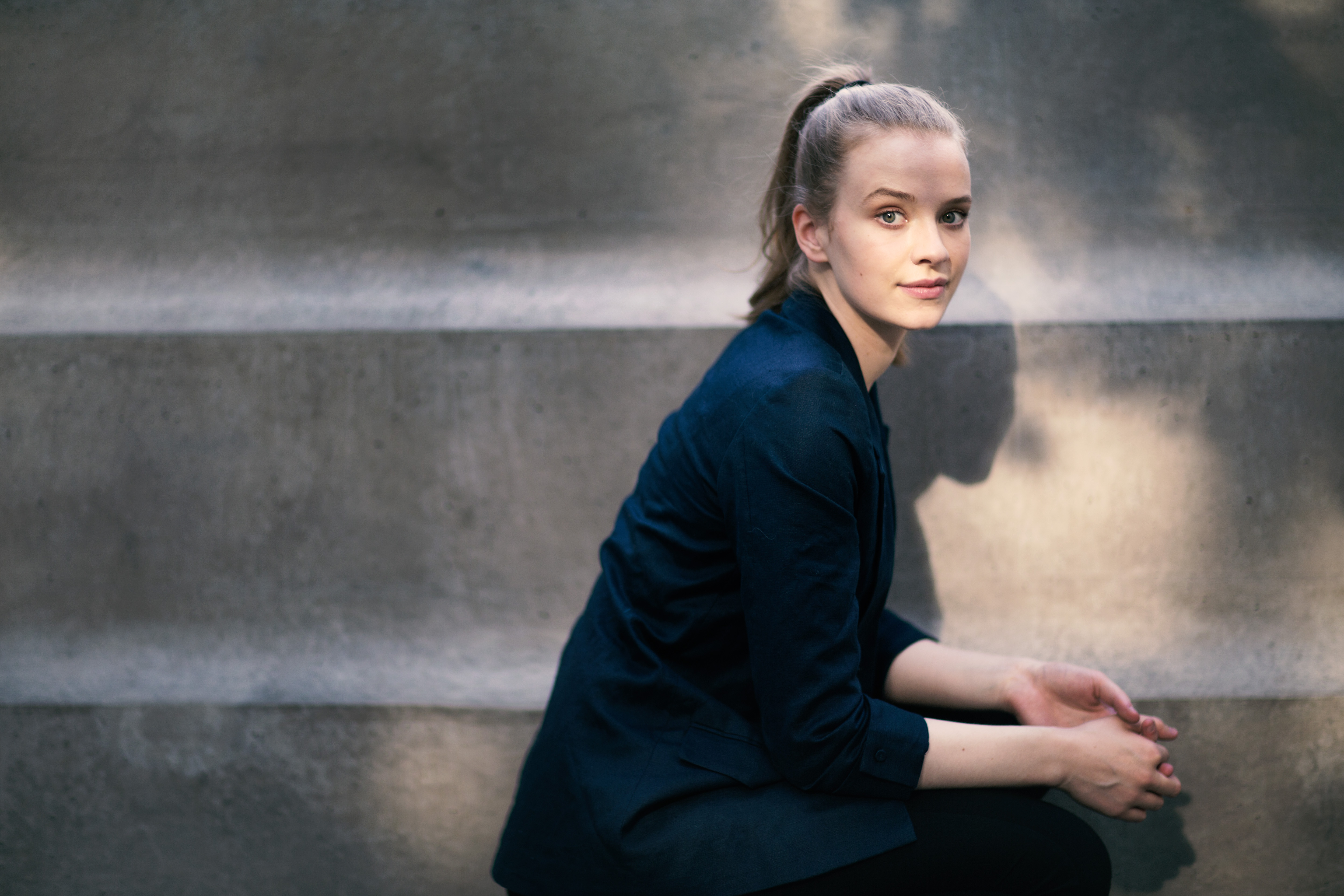
In concert – Elisabeth Brauß @ Wigmore Hall – Domenico Scarlatti, Mozart, Ravel & Prokofiev

Elisabeth Brauß (piano)

Domenico Scarlatti Sonata in C minor Kk56; Sonata in C Kk159 ‘La caccia’; Sonata in B minor Kk27; Sonata in B minor Kk87; Sonata in G Kk427 (exact dates unknown)
Mozart Piano Sonata in A minor K310 (1778)
Ravel Sonatine (1903-05)
Prokofiev Piano Sonata no.3 in A minor Op.28 (1917)

Wigmore Hall, London, 24 January 2022

reviewed by Ben Hogwood from the online broadcast

Seven sonatas and a sonatine in the space of an hour represents good value for a lunchtime concert – and even more so when the works in question span nearly two centuries. This was down to the clever programming of German pianist Elisabeth Brauß, a member of the BBC New Generations Scheme. She presented a potted history of the development of the sonata, moving as it did to the very centre of the concert platform by the twentieth century.

Brauß began her imaginatively thought-out hour with five sonatas by Domenico Scarlatti, just under 1% of the composer’s remarkable output in the form. Within his 550 or so published works there is an inexhaustible variety, and Brauß gave us some fine examples. Her crisp delivery of the C minor work was complemented by the playful ‘Caccia’ sonata, Scarlatti’s writing of parallel thirds tastefully ornamented in the right hand. Slipping into B minor, there was a more obvious Bach influence in an elegant performance of the Kk27 sonata, before a more reflective example in the same key, given plenty of room with ideally weighted inside parts. This thoughtful and emotive account was swept to one side by the showy G major sonata, chasing the clouds away.

Mozart‘s A minor sonata followed, a profound work written in the wake of the sudden illness and death of the composer’s mother Anna Maria in Paris, 1778. The principal phrase of the first movement is conspicuous for a ‘wrong’ note, an E flat played at the same time as an A minor chord, which can throw the listener. Brauß did well to give it the surprise factor, resulting in quite an unnerving and uncertain mood.

The second movement was initially calm, bringing out the singing style of Mozart’s marking of Andante cantabile con espressione rather beautifully. There was a refreshing lack of weight to this performance, the melodies floating on air, in contrast to a heavy-set middle section. The Presto finale, initially serious, brightened as the tonality moved into the major key, Brauß sensing hope in Mozart’s writing.

There was clarity in her Ravel, too, which found the right combination of technical flair and intimacy. Brauß portrayed the questioning nature of the first movement, just before its main theme returns and resolves. A limpid second movement was followed by a finale notable for its virtuosity – following the Animé marking – but which kept its conversational qualities.

Prokofiev’s Piano Sonata no.3 is a compressed firecracker, a work with plenty to say in its eight minutes. This performance was very impressive if holding back a little in the more raucous moments. Brauß was a more than capable guide to this impetuous piece, however, finding the heart of the adventurous coda, which sounds a lot newer than its 1917 composition date would suggest.

She clearly loves Prokofiev, as the Prelude in C major Op.12/7 made an ideal encore, bringing out the composer’s balletic side. There was less percussiveness in this lyrical account, notable for some lovely melodic phrasing.

Watch and listen

You can listen to the repertoire from this concert in choice recordings on the Spotify playlist below (Elisabeth has not yet recorded any of the pieces):

Online concert – English String Orchestra / Kenneth Woods: Tchaikovsky: String Quartet no.3

eso-tchaikovsky

English String Orchestra / Kenneth Woods

Tchaikovsky arr. Woods String Quartet No. 3 in E flat minor, Op. 30 (1876)

Wyastone Concert Hall, Monmouth
12-13 July 2021

Written by Richard Whitehouse

The English String Orchestra launched its schedule for 2022 with another premiere – that of Tchaikovsky’s Third Quartet in an arrangement by Kenneth Woods, continuing a line of such rethinking which has previously included Brahms’s Second Piano Quartet (Nimbus NI6364).

Completed early in 1876, this work came about through the premature demise of Ferdinand Laub who led those premieres of Tchaikovsky’s previous quartets and whom the composer held in highest regard. Its tonic-key is unexpected yet influential (notably on Shostakovich), not least in an opening movement where the Andante introduction leads to an Allegro whose fervent striving never quite breaks free of the fatalism from which it emerges and to which it returns. Woods might have made more of that Allegro’s undulating emotions, but his take on its introduction and coda duly enhanced their sombre intensity. Nor was there any lack of wit or urbanity in the next movement, poised unerringly between scherzo and intermezzo, which could become almost as popular as the waltz of the Serenade for Strings in this incarnation.

Interesting that Tchaikovsky belatedly reversed the order of the middle movements, given the Andante funebre is the undoubted highpoint of this work and its impact would be diminished if heard earlier in the overall design. Moreover, Woods’ arrangement was at its finest here in terms of the interplay between solo and ensemble strings – those soliloquys for violin, viola and cello given added pathos by the greater textural depth; not least as the movement reaches its anguished climax then subsides into the chant-inflected elegy of its closing stages. Maybe the finale would have conveyed even more a sense of release at a swifter tempo, but Woods was scrupulous as regards its ‘non troppo’ marking; nor was there any lack of resolve as this movement headed on its impetuous course towards a decisive and life-affirming conclusion.

A convincing new guise, then, for arguably the finest of Tchaikovsky’s chamber works (not least compared to the over-inflated arrangements of Souvenir de Florence), and a welcome reminder of the ESO’s collective prowess whether heard in original pieces or transcriptions.

You can view this concert from 21-25 January at the ESO website, and thereafter for ESO digital supporters here. Meanwhile for information on the ESO’s latest release of the music of Steven R. Gerber, click here

In concert – CBSO Centre Stage: Poulenc Chamber music

cbso-centre-stage

Poulenc Sonata for Clarinet and Bassoon, FP32 (1922); Trio for Oboe, Bassoon and Piano, FP43 (1924-6); Sextet for Wind Quintet and Piano, FP100 (1931-2, rev. 1939-40)

City of Birmingham Symphony Orchestra Members: Marie-Christine Zupancic (flute),Emmet Byrne (oboe), Oliver Janes (clarinet), Nikolaj Henriques (bassoon), Elspeth Dutch (horn), Robert Markham (piano)

CBSO Centre, Birmingham
Friday 21 January 2022 2pm

Written by Richard Whitehouse

It made sense to devote a programme in the Centre Stage series – put on by musicians of the City of Birmingham Symphony Orchestra – to the chamber music of Poulenc, which is hardly less representative than those vocal and choral pieces that likewise run throughout his output.

Increasing in size and substance, the three works this afternoon were also a viable overview of the composer’s evolution during the interwar period. The Sonata for Clarinet and Bassoon finds Poulenc teasing out the expressive potential of Stravinsky’s often inscrutable chamber music from the previous decade; its Allegro and Final movements pursuing an agile dialogue whose harmonic astringency is offset by the wistful insouciance of its central ‘Romance’, in which the interplay between Oliver Janes and Nikolaj Henriques was at its most persuasive.

Stravinsky evidently had a direct output into the composition of the Trio for Oboe, Bassoon and Piano which, cut from similar stylistic cloth to the earlier piece, reveals greater emotional range. Not least in the opening movement’s pointed contrast between its wistful introduction and headlong Presto, or the Andante’s haunted charm – here emphasized by plaintive oboe playing from Emmet Byrne – whose ‘vulnerability behind the façade’ is duly swept away by a finale in which the breezy humour of the ballet Les biches comes unmistakably to the fore.

The Sextet cost Poulenc fair effort before reaching definitive form at the start of the Second World War but is arguably his most representative work at that stage. Not least in the way its animated opening Allegro makes a virtue of any imbalance between piano and wind quintet – Robert Markham keeping matters securely grounded – or sheer timbral and textural variety of the Divertissement with piquant contributions from flautist Marie-Christine Zupancic and horn player Elspeth Dutch. Nor was there any lack of verve in a Finale whose recollection of the work’s opening, now suffused with greater pathos, must surely be a comment on the times.

Eloquently realized, it brought to an end an admirable showcase for both music and musicians. Next week sees a no less engaging programme of Kodály and Korngold by the CBSO strings.

Further information on future CBSO Stage concerts can be found here

Switched On – Quattro Artists: albums from Quivver, Captain Mustache, Satoshi Fumi & Lopezhouse

quattro-artists

4 Albums – Captain Mustache Indigo Memories; Quivver Revelate; Satoshi Fumi Mysterious Phenomenon; Lopezhouse Apollo

reviewed by Ben Hogwood

What’s the story?

This is a novel idea from John Digweed’s Bedrock label. The Quattro project presents four new albums from Bedrock artists, put together in typically chic packaging. The four producers in question range from the new to the experienced, namely Quivver, Captain Mustache, Lopezhouse and Satoshi Fumi.

The care and attention to detail with the release gives it a prestigious air, but also shows the depth of investment Bedrock are prepared to make in their artist roster.

What’s the music like?

There is a wealth of electronic music goodness here.

First up is Quivver’s Revelate album, released separately in November and given a bright green light on this very site. As Arcana said at the time, the structure of John Graham’s album is impeccably cast and tells its own story, acting like a DJ mix. There is a really rewarding mix of deep, warm house tracks but also those laced with a bit of attitude, all geared squarely towards the dancefloor.

Altered and Funkfly are two great examples of just how strong Quivver’s groove can be, while Crystals offers enticing warmth. What really impresses though is Graham’s mastery of his tools, never using too many or too few notes, and generating impressive momentum through his rhythm tracks.

The music of Satoshi Fumi offers the ideal contrast, generally operating at a slower tempo. There are some lovely, warm soundscapes here, proving well suited for a poolside session but also more immersive home listening. That’s because Fumi’s compositions have rich, melodic layers, such as the cellos in A Ray Of Sunlight, or the warm pads used in Dawn And The Moon. Star Gazer is appropriately awestruck as it heads outside with busy pianos and heady strings, while Bamboo Forest presents an intimate set of loops. Fumi has great control over his music at all times, but that doesn’t stop him from expanding his thoughts on occasion, using music made by instinct as well as process. His works are descriptive too – Out To Sea and Air Castle paint vivid pictures as their loops unfold.

Contrast this with the work of Lopezhouse, the Spanish duo adding darker colours to their work in a very effective set of brooding instrumentals. Apollo is a fine debut after 3 EP releases, sporting some dark and tense numbers in Clouds and Soyuz II, while Burning gets just the right balance between poolside chill and a gritty, urban undercurrent. Love On A Spacecraft goes widescreen with pulsing electronics and big boned drums, while the title track is slightly dreamy. Someday, meanwhile, is prime end credits material.

The tempo increases again for Captain Mustache, whose Indigo Memories album gives the double benefit of sounding like home-produced techno while producing grooves destined for a far bigger room. Bleu Ciel, previously released on Bedrock, gets the album off to a pulsating start, sounds flitting above an electro beat that could be imported from the 1990s. Catch Me has a cinematic air, and Andromeda works up a head of steam, while Paola proves to be a compelling electro / techno loop fest.  Midnight Man is a great futuristic track with a touch of Jean-Michel Jarre about it, while Shapes & Oddity also reaches back into the vaults to create a Tron-style thriller.

Does it all work?

It does. Each of the albums will stand well on their own, but given as part of a package they complement each other extremely well. Although John Digweed might not have contributed a musical note here, his influence runs through each of the releases, as you could expect any of these tracks to crop up in a DJ mix under his guidance.

By that you will gather production standards are high, each track is impeccably structured, and the attention to detail is reflected in the artwork adorning this handsome box. There is an album for each mood, too – Quivver and Captain Mustache tending towards moments of dancefloor-based hedonism, Lopezhouse getting the moody end of day lead up to the big night, and Satoshi Fumi floating between the start and the end of the night.

Is it recommended?

With great enthusiasm. Quattro feels like a bit of an indulgence on the part of the buyer, but in the best possible way as this is a labour of love from Digweed’s label. If you plump for the physical version the rewards are many, since not only do you get the music but you get the clever, minimalistic packaging. For those of a certain age – yours truly, for instance, who bought the package just before Christmas – this middle-aged electronica fan means something, at least!

Stream

Buy

You can buy the Quattro CD set from the Bedrock shop here


Switched On – Bonobo: Fragments (Ninja Tune)

bonobo

reviewed by Ben Hogwood

What’s the story?

Perhaps surprisingly, this is the first album from Bonobo in five years. Simon Green – whose pseudonym this is – describes his new record as the most emotionally intense record that he has ever had to make. As with previous releases he takes a number of guest vocalists with him on the journey, dovetailing those tracks with instrumentals.

What’s the music like?

Familiar. If you have heard Bonobo’s music before, the manner of its construction on Fragments will tick a number of boxes. Beautifully orchestrated, the instrumentals work well with the broken beats that Green employs, which have more power and depth this time.

The vocal guests complement his sensitive work with some meaningful lyrics. There are strong contributions from Joji, Kadhja Bonet, Jamila Woods and O’Flynn, but pick of the turns is from Jordan Rakei, who lends a powerful tug to the heartstrings on Shadows.

The thicker set grooves may be welcome, but does the familiarity of Bonobo’s sound breed contempt? Certainly the chopped up vocals on Age Of Phase feel familiar, very much a continuation of what Bonobo does best. Rosewood is also a characteristically moody instrumental with vocal snippets, though Otomo is more acidic, dropping a heavy set beat. On the calmer side the shuffling beats of the comforting Closer work well, while the silvery strings to close out Tides are reminiscent of Ravel. Elysian also has alluring strings, especially when teamed with a harp.

Does it all work?

It does, but the feeling persists that this is music we have heard before – and possibly in more meaningful colours. In spite of the emotion invested by Green the music does feel grey at times. That may seem harsh on Bonobo, for the music is beautifully constructed and executed, but it is more than a little downbeat in a way we have experienced before.

Is it recommended?

It is for Bonobo devotees, as there are some good moments here – and especially the Jordan Rakei contribution – but for those new to his sound an album from earlier in his output, such as Black Sands, is arguably the best place to start.

Stream

Buy