Unknown's avatar

About Arcana

My name is Ben Hogwood, editor of the Arcana music site (arcana.fm)

Switched On: Blank Gloss: Melt (Kompakt)

blank-gloss

reviewed by Ben Hogwood

What’s the story?

Sacramento duo Blank Gloss met through a shared love of punk and experimental music, but their output is the polar opposite – a blissful musical ambience which has drawn the attention of Kompakt. Their track Of A Vessel was used on the Cologne label’s Pop Ambient 2021 compilation, and it features towards the end of Melt, their debut album.

What’s the music like?

Weightless and blissful, but also subtly animated. At no point does Melt feel like musical wallpaper – instead, it takes the listener outside and places them under the stars of the night sky. It is easy to imagine a wide open vista with the music they make, the scene immediately set from the first track Those Who PlantOf A Vessel makes the same understated and soothing impression as it did first time around, but sounds even better in this context.

There are some nice guitar fragments on Virga, and on Speaking Quietly too, where a dialogue emerges between soft piano and a thoughtful line on steel guitar. Almost Home shimmers in the half light, before Stained Glass reaches the album’s restful destination.

Does it all work?

Yes. If you liked Of A Vessel then you will certainly enjoy Melt, with its very gradual and enjoyable twists and turns. Blank Gloss never restrict themselves to one formula or musical language, and the subtle inventiveness at work here keeps the music in the foreground.

Is it recommended?

It is indeed. If you are in any way acquainted with the output of Kompakt’s ambient stable, you will be glad to know that Blank Gloss have seamlessly become a part of it. Melt is a soft-hued antidote to the pace and stress of modern life.

Stream & Buy

In concert – Karen Cargill, CBSO / Mirga Gražinytė-Tyla: Mirga conducts Weinberg

Mirga

Karen Cargill (mezzo-soprano, below), City of Birmingham Symphony Orchestra / Mirga Gražinytė-Tyla (above)

Weinberg Rhapsody on Moldavian Themes Op.47/1 (1949)
Mahler Rückert-Lieder (1901-02)
Weinberg Symphony no.3 in B minor Op.45 (1949-50, rev. 1960)

Symphony Hall, Birmingham
Wednesday 23 June 2021 (6.30pm)

Written by Richard Whitehouse Photo of Karen Cargill courtesy of Nadine Boyd Photography

The music of Mieczysław Weinberg has been a prominent feature in the City of Birmingham Symphony Orchestra’s programmes with its music director Mirga Gražinytė-Tyla, and the Rhapsody on Moldavian Themes duly started this latest of the orchestra’s concerts in impressive fashion.

Written when Soviet composers were under intense pressure to create music of a populist – or rather, nationalistic – nature, its recourse to melodies emanating from the region of Bessarabia (from where the composer’s parents hailed) draws directly on a lineage from Liszt to Bartók and Kodály. Weinberg’s handling of these, in its subtle take on a slow-fast trajectory, is never less than assured. MGT undoubtedly had its measure, whether in the ruminative opening with its plangent woodwind or the boisterous later stages when brass comes irresistibly to the fore.

Itself a revival (having been played at Symphony Hall in 2019 then at that year’s Proms), the Third Symphony is a more considered response to the anti-formalist campaign spearheaded by Andrei Zhdanov with the intention of making Soviet music more accountable to its public. Hence the inclusion of Belorussian and Polish folksong, though Weinberg is mindful to offset these with a formal rigour as, in the initial Allegro, ensures an emotionally restless unfolding to a coda shot-through with foreboding – one of several passages likely made more explicit in the subsequent revision. Here, as in the wistful second theme (akin to what Malcolm Arnold was writing around this time) then a climactic transition heading into the reprise, the CBSO’s playing underlined its ongoing affinity with this music which held good through to the close.

Hardly less idiomatic was the scherzo’s interplay of capricious with a more sardonic humour, then the Adagio’s sustained yet cumulative progress towards a climax of stark tragedy – only slightly pacified in the inward closing phase. If the animated finale strives to secure an overly affirmative ending, it was a measure of this account that any such optimism was held in check until the peremptory last bars. Weinberg could scarcely have hoped to hear a more perceptive performance: good to hear both this and the Rhapsody were being recorded for future release.

Between these pieces, Karen Cargill joined the CBSO for Mahler’s Rückert-Lieder (evidently the first time the orchestra has given them since baritone Olaf Bär with Simon Rattle in 1992). She drew a keen irony from Blicke mir nicht in die Lieder, then rendered Ich atmet’ einen linden Duft with appealing deftness. With its fugitive writing for woodwind and brass, and a fervent climax capped by garish arabesques from piano, Um Mitternacht is a difficult song to bring off but was notably effective, and the only disappointment was a rather inert take on Liebst du um Schönheit – Max Puttmann’s sub-Léhar orchestration at least partly to blame. Nor was Ich bin der Welt abhanden gekommen ideally transcendent, yet the eloquence of Cargill’s response left no doubt concerning its status as arguably the greatest orchestral Lied.

A judiciously planned concert, then, in which the rapport between orchestra and conductor came through these past 15 months unscathed. The CBSO returns next Wednesday with its principal guest conductor Kazuki Yamada in a programme of Julian Anderson and Dvorák.

You can find information on the CBSO’s next concert at their website

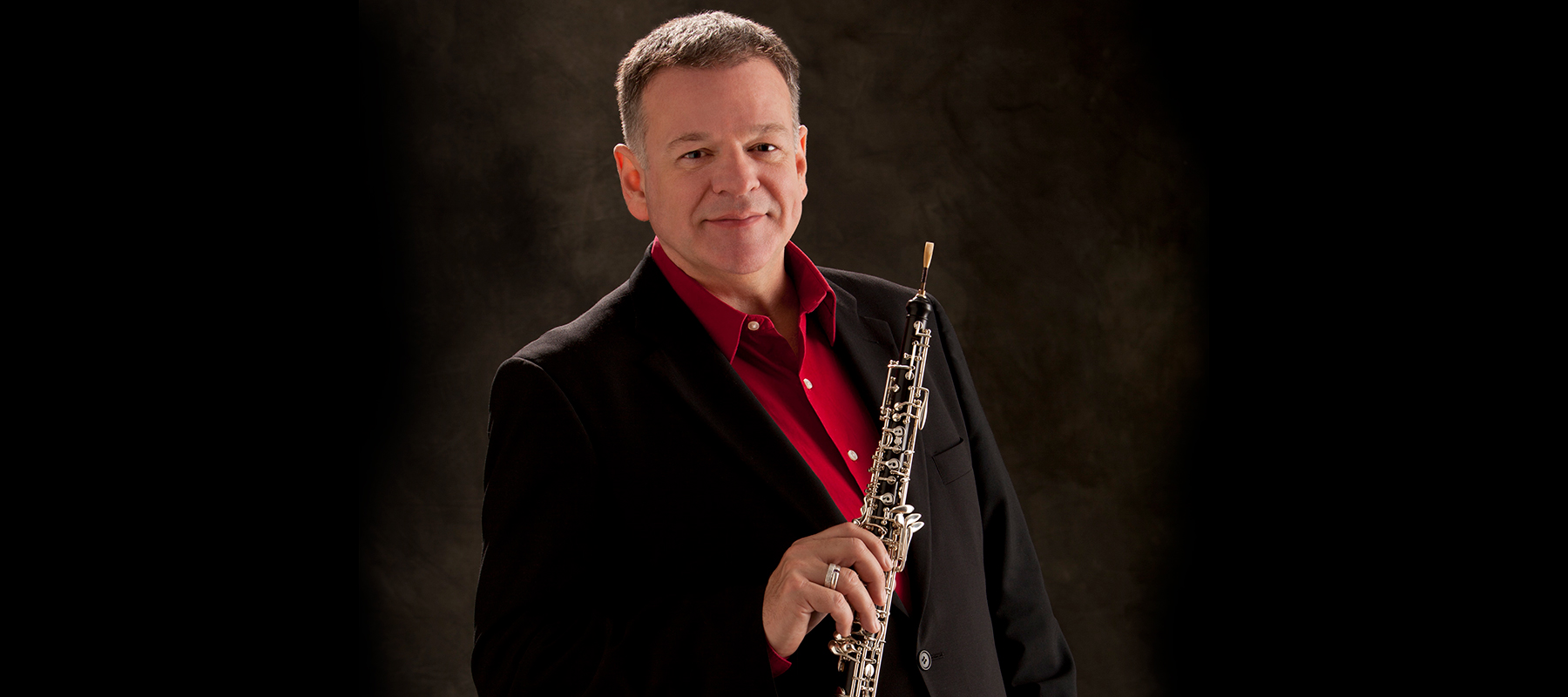
Talking Heads: Nicholas Daniel

nicholas-daniel

Interview by Ben Hogwood

As part of the inspiring Summer At Snape season, the counter-tenor Andrew Watts and oboist Nicholas Daniel, are giving world premiere performances of Sir John Tavener’s La Noche Oscura, with the Britten Sinfonia conducted by Sian Edwards. Arcana took the chance to talk with Daniel, who received an OBE for his dedication to music in October 2020, about his lasting friendship with Sir John, as well as his hopes for live music in such a difficult time.

To begin, we look back to Daniel’s first musical meeting with the composer. “I remember hearing The Whale and thinking it was fabulous and risqué,” he says. “It became a piece people talked about more than heard when I was at the Royal Academy. I first met him through Richard Hickox, who I persuaded to ask John to write for me as a thank you for playing at his and Pamela’s wedding.”

While writing La Noche Oscura, Tavener did not consult with his dedicatees. “He never consulted with me about writing”, says Daniel. “I don’t know whether he did with other artists, but for me his pieces seemed to have arrived as a newborn but sitting up and asking for food. Even with Kaleidoscopes we only vaguely discussed the idea of wearing Indian clothes to play it and lighting it really well, months before he wrote it.”

The piece itself is an intriguing balancing act “Noche has inside it a major contradiction in terms. The words are absolutely agonising: “Where have you hidden, beloved, and left me moaning?” “Tell him I suffer, grieve and die” “but thou hast utterly rejected us: thou art very wroth against us,” but the music is not. He says “shining, intense, with majesty and grandeur”, and from my preparation I see the music as flowing through the words to a place where the music is in control. It’s as though the grinding agony of the words are not ignored, but swept away by the beauty of the harmony. It seems a little like Niobe, Britten’s D flat Major tribute to the Queen whose 14 children died (from the 6 Metamorphoses after Ovid for solo oboe), or maybe Gluck’s Che faro senza Euridice, which has nobility in the face of death. Interestingly both those pieces take their lead from Greek Myth.”

Written for oboe and countertenor, La Noche Oscura blends a relatively unusual combination of soloists, though Daniel refutes my initial suggestion the combination would be hard to balance. “In what way would it be difficult? Because Andrew Watts has the biggest counter tenor voice on the planet and therefore the oboe would be drowned? Possibly. Or that the oboe in the high register might drown the counter tenor in the middle? Well, John knew my playing very well and my high register is something I’ve worked very much to develop over years, partly through composers writing death defyingly quiet music for me up there. Listen to the cadenza of John Woolrich’s Oboe Concerto for instance. Noche is a whole major third lower in my part than the highest parts of Kaleidoscopes and I know how to balance to the gentler parts of a counter tenor voice anyway.”
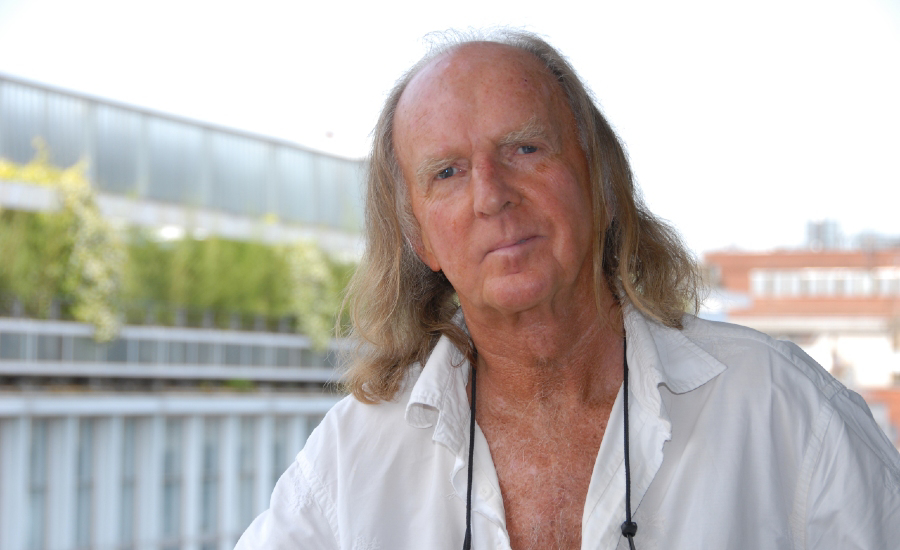
tavener

He speaks with great warmth of Tavener (above), both as a friend and as a composer. “I adored him. He was completely unique, and although he maybe lived in other realms as well as ours he was completely able to exist in a very charming and entertaining way in the here and now. I think that he probably felt quite relaxed with me because he was very free in what he said, possibly sensing in me the very non-judgemental and open nature of my soul. His health must have been such a burden to him, and I was always slightly aware of his frailty – the main time I knew him was towards the end of his life. I will never forget the sound he made on the piano and ‘singing’ the music he’d written for me. It was like a seance.”

Is his music particularly appropriate for the times we are living through? “I believe that John’s music is appropriate for any time and any space. He can turn a bike shed into a cathedral with his music. I would love to think that as we have entered the very promising Age of Aquarius we might find it has uses for meditation, for finding stillness, and for connecting ourselves with the planet and with each other.”

daniel-drake

Talk turns to the pandemic, and a particularly special concert Daniel and long-time recital partner Julius Drake gave at the Wigmore Hall in 2020 (above), part of a special season of lunchtime concerts marking the hall’s reopening in June. It was a meaningful concert for those watching online – and for the two performers. “Oh my goodness, thank you. Well, it was a fantastic moment to be able to play to the world, yes. We chose the programme to entertain, and to touch people’s hearts. It was very moving how the artists in that first week all supported each other by text messages!  It was so special to play two new pieces there, by Michael Berkeley and Huw Watkins, and also to play Madaleine Dring’s music, which I adore. As it happened it was two days after the murder of George Floyd, and I decided to dedicate the Bach encore to his memory. It proved harder than I thought to speak about it. The reality is the piece I played (basically in one breath using circular breathing) was shorter than the time he was prevented from breathing. The connection was obvious and absolutely shattering.”

The current situation with Government restrictions from the Coronavirus pandemic means plans for future concerts are sadly up in the air. The reality is stark, and Daniel’s diary has a small number of entries. “A few. Incredibly few. 2023 is looking a little better than the rest of 2021 and 2022 put together. This is all going to take some time. It’s also going to take some fearless programming and risk taking to make concerts irresistibly inviting. New music, new presentation, fresh diverse repertoire; young, diverse artists, a fresh dawn for true diversity and the certain knowledge that we will never take an audience for granted ever again.”

There is a little consolation on the recording front, where Daniel has been busy. “Haha! I’ve been very lucky to have some recordings released over the last while, music by Eleanor Alberga, Roxanna Panufnik and Mark Simpson with Mozart, the latter recorded in lockdown. I had the huge joy of recording a disc for my new label Chandos with the exquisite Doric Quartet of British music which will be out later in the year. On that disc I recorded the Delius Two Interludes on Leon Goossens’ 1911 Lorée Oboe. It was a huge privilege to be allowed to play this massively historic and important instrument.”

Will his approach to making music be any different after the pandemic? “Yes”, he says emphatically. “I’m saying to my students that it has to BURN. No prisoners can be taken, risk taking is everything and make it HIT the audience like your life depends on it. Now is the time to make music COMPLETELY relevant to people’s lives, especially to our children, each one of whom deserves to play an instrument and learn the language of music. Scotland is giving this to their children but England and the rest of the U.K.? Not yet.”

The effects of restrictions imposed in the pandemic are clear to see, and Daniel addresses this head on. “I would love audiences to spare a moment of thought for the artists right now, let alone the effect on our incomes. Not being on stage for more than a year plays havoc with your mind, and just getting to the concert hall seems to involve rules and regulations and risks we have never known before. Personally I’m very grateful that people are taking some of the same risks coming to hear concerts, but it feels weirdly exposing to walk on stage to the smell of hand sanitiser having just ripped off your mask, metres apart from your colleagues. We do it despite these things because we want to and because we have to, and because most of us are addicted to music and concerts.”

Andrew Watts and Nicholas Daniel will give two performances of Sir John Tavener’s La Noche Oscura with the Britten Sinfonia conducted by Sian Edwards at Snape Maltings on Friday 25 June. Their program, part of the ongoing Summer at Snape festival, includes music by Handel, Tansy Davies and two works by Britten, including the Temporal Variations orchestrated by Colin Matthews – who spoke with Arcana earlier in the season here. For details and tickets click here

Summer at Snape runs from Friday 4 June until Saturday 11 July. For full details on all the live events, visit the Snape Maltings website.
.

Listening to Beethoven #165 – Sonata for piano and violin no.5 in F major Op.24 ‘Spring’

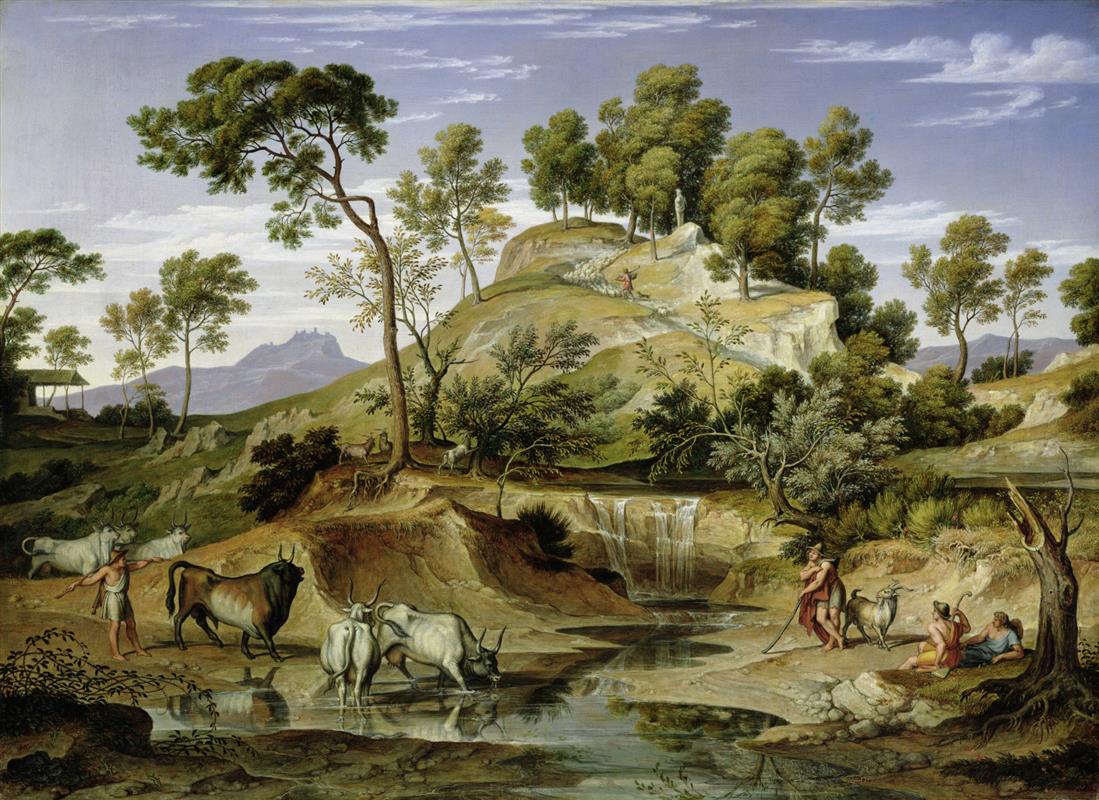
joseph-anton-koch-serpentaralandschaft-mit-hirten-und-rindern-an-der-quelle.jpg!HalfHD

Serpentine landscape with shepherd and cattle at a spring (1832-4) by Joseph Anton Koch

Sonata no.5 for piano and violin in F major Op.24 (1801, Beethoven aged 30)

1. Allegro
2. Adagio molto espressivo
3. Scherzo: Allegro molto
4. Rondo: Allegro ma non troppo

Dedication Count Moritz von Fries
Duration 23′

Listen

by Ben Hogwood

Background and Critical Reception

The so-called Spring sonata for violin and piano appears to have acquired its nickname quickly after composition. It is easy to hear why from the very start of the piece, the violin brimming with ideas and a fertile invention that it can barely contain, while the piano burbles its approval.

Simon Nicholls, writing booklet notes to accompany a fine recording from violinist Paul Barritt and pianist James Lisney, notes that the Spring was a partner for the recently-heard Sonata in A minor Op.23, and that its warm F major would ‘highlight the delicious relaxation of tension’ from the ‘winter’ of the earlier piece.

Commentators agree that the work is probably the best known of all Classical violin sonatas, though they note a subtle but telling shift towards the future. It is the first of Beethoven’s sonatas for piano and violin to adopt the four-movement framework, and it gives a noticeably more dominant part to the violin, taking the lead when a lot of the main tunes are heard for the first time.

Beethoven’s contemporary Carl Czerny described the work as ‘holy peace’, while Denis Matthews notes an identical relation between the tonality (F major) of this work and the much later Pastoral symphony. The slow movements, too, share the same key (B flat major), described by Nicholls as a ‘rapt nocturne’. Beethoven then introduces ‘possibly the briefest of scherzi’ before ‘an unfailing flow of melodic invention in the finale’.

All these elements have combined to make the sonata one of the most performed in concert halls today, audiences enjoying its frequent and often dazzling rays of sunshine.

Thoughts

Beethoven’s invention feels as fresh as a daisy when the Spring sonata begins. The violin sings like a bird with both the tunes given to it in the first movement, the first descending from high up, the second ready to take to the air from its perch. The open air calls loudly to the listener, and for the first time in these sonatas there is that shift towards the violin taking the lead, the piano depending on its every move.

The slow movement is indeed rather special, and in a good performance radiates pure musical enjoyment, the two protagonists enjoying spending time together. Soft piano arpeggios complement a hushed melody from the violin, after which Beethoven enjoys moving to keys farther afield. A few shadows reveal themselves in the process but are dissipated by the return to the first theme.

You will blink and miss the scherzo if you are not careful, which would be a shame as it is rather beautifully woven together, with a spring in its step if you pardon the pun! Meanwhile the finale has a lovely theme too, the violin still in songful mood and the rippling piano providing a flowing accompaniment. Some spiky interaction between the two instruments in the develop leads to a return of the theme with pizzicato violin, almost absentmindedly strumming before normal service is resumed. Beethoven can’t resist a few more unusual modulations to far-flung keys before returning to the familiarity of these particularly green pastures.

Recordings used and Spotify playlist

Midori Seiler (violin), Jos van Immerseel (fortepiano) (Zig Zag Classics)
Yehudi Menuhin (violin), Wilhelm Kempff (Deutsche Grammophon)
Josef Suk (violin), Jan Panenka (piano) (Supraphon)
Alina Ibragimova (violin), Cédric Tiberghien (Wigmore Hall Live)
Tasmin Little (violin), Martin Roscoe (piano) (Chandos)
Frank Peter Zimmermann (violin), Martin Helmchen (BIS)
Paul Barritt (violin), James Lisney (piano) (Woodhouse Editions)
Arthur Grumiaux (violin), Clara Haskil (piano) (Philips)

Both Josef Suk and Arthur Grumiaux are notable for the full tone of their interpretations, which suits the Spring sonata rather nicely – as does the florid input of their pianists, Josef Hala and Clara Haskil respectively. Midori Seiler and Jos Van Immerseel give a lovely account of the piece, enjoying the open textures but with the mottled sound of the fortepiano an attractive complement to Seiler’s bright tone. Also of great note in a crowded field is an excellent new version from Frank Peter Zimmermann and Martin Helmchen, bubbling over with enthusiasm.

The Spotify playlist below does not contain the Barritt / Lisney version, but does include a highly powered account by Gidon Kremer and Martha Argerich, recorded for Deutsche Grammophon:

You can chart the Arcana Beethoven playlist as it grows, with one recommended version of each piece we listen to. Catch up here!

Also written in 1801 John Marsh – Symphony no.30 in E minor

Next up Serenade in D major Op.25

In concert – NEXT and Birmingham Contemporary Music Group: Past the Stars

bcmg-past-the-stars

NEXT [Joe Howson & Mikaela Livadiotis (pianos), Gavin Stewart (bass flute), Olivia Jago (violin)

Adams Hallelujah Junction (1996)
Saunders Bite (2016)
Mason When Joy Became Mixed with Grief (2007)

Patricia Auchterlonie (soprano), Ulrich Heinen (cello), Birmingham Contemporary Music Group / Geoffrey Paterson

Birtwistle Cantus Iambeus (2004)
Vir Wheeling Past the Stars (2007) – Songs 3 and 4; Hayagriva (2005) [UK premiere]

Town Hall, Birmingham
Sunday 20 June 2021

Written by Richard Whitehouse

It might have taken 15 months plus a couple of false alarms, but Birmingham Contemporary Music Group (above) finally resumed live performances en masse this afternoon and with this wide-raging concert typical of its programming across more than three decades of music-making.

Not least with its throwing the spotlight onto players of the next generation, the opening half featuring NEXT musicians as mentored by their senior colleagues. Things got underway with Hallelujah Junction, John Adams’ alternately incisive and soulful evoking of a truck-stop on the California-Nevada border; along with a tribute to orchestra manager Ernest Fleischmann, which doubtless explains its heightened peroration. Nor, despite some occasional vagaries of coordination, was there any doubting the conviction of Joe Howson and Mikaela Livadiotis.

From two pianists situated amid tables in the stalls to a bass flautist just in front of the organ console: Gavin Stewart made the most of this unlikely context with a committed reading of Rebecca SaundersBite, less a setting than paraphrase of the thirteenth from Samuel Beckett’s Texts for Nothing in which words or syllables are variously sounded in anticipation, or as consequence of the flute’s contribution. It certainly left a fragmented, even rebarbative impression compared to the seamlessness of When Joy Became Mixed with GriefChristian Mason’s contemplation of a sixth-century Jainist account over several ages of declining natural and human wonder; in which violinist Olivia Jago rendered the music’s gently enveloping pathos with unfailing poise, as well as a sure sense of where this deceptively understated music might be headed.

BCMG accordingly took to the stage for Cantus Iambeus, among the more recent of Harrison Birtwistle’s curtain-raisers for ensemble and arguably his most approachable in the unfolding of expressive contours and its frequently diaphanous textures; all underpinned by the role of iambic rhythm in promoting continuity through to an almost inviting final cadence. Nor was there a lack of that intensive interplay as has been a hallmark of this composer’s music from the outset, and to which these musicians responded with their customary precision and verve.

The other pieces (both included on a new NMC release) were by Param Vir, whose music has been a welcome if undervalued presence over four decades. Firstly, the latter two items from his song-cycle Wheeling Past the Stars after Rabindranath Tagore – the charm and vivacity of Grandfather’s Holiday then musing inwardness of New Birth, both eloquently rendered by Patricia Auchterlonie with Ulrich Heinen. Finally, to Hayagriva – the horse-headed being and mythological archetype behind a work whose headlong rhythmic energy suddenly moves, via an intricately detailed transition, to a final section whose subdued manner does not preclude music of fastidious textural variety emerging. The analogous sequence ‘red-green-blue’ was reinforced by overhead lighting, even if Vir’s musical trajectory is appreciably more subtle.

BCMG responded to Geoffrey Paterson’s direction with alacrity, not unreasonably pleased to be back performing for a live audience in an impressive indication of what can be expected from this ensemble during the 2021-22 season and barring, one hopes, no more false alarms!

You can find information on further BCMG activities here, while further information on Wheeling Past the Stars by Param Vir can be found at the NMC website