
Unknown's avatar

About Arcana

My name is Ben Hogwood, editor of the Arcana music site (arcana.fm)

In concert – Lawrence Power, CBSO / Nicholas Collon: Stravinsky, Britten & Shostakovich

nicholas-collon

Lawrence Power (viola), City of Birmingham Symphony Orchestra / Nicholas Collon (above)

Stravinsky Symphonies of Wind Instruments (1920, revised 1947)
Britten Lachrymae Op.48a (1950, orch. 1976)
Shostakovich Symphony no.5 in D minor Op.47 (1937)

Symphony Hall, Birmingham
Wednesday 26 May 2pm

Written by Richard Whitehouse

This second in the City of Birmingham Symphony Orchestra’s live concerts, heading out of lockdown, featured works from the first half of the last century – focussing on wind then strings, before bringing the whole orchestra into play for one of the defining symphonies from this period.

It was an astute move to open with Stravinsky’s Symphonies of Wind Instruments as, 14 days short of the centenary of its premiere to a bemused London public, the extent of its innovation and influence was there for all to hear. The performance was attuned to its bracing alternation of diverse musical types, and while the elongated platform layout might have caused passing uncertainties, Nicholas Collon made a virtue of its fluid continuity right through to the final chorale which ‘remembers’ Debussy with an emotion the more acute for its hieratic restraint.

It may have entered the repertoire but slowly, Britten’s Lachrymae is now well to the fore of the viola’s still limited concertante output and Lawrence Power gave a potent rendering of a piece conceived for William Primrose then orchestrated for Cecil Aronowitz. The evocative if sparse writing for strings is a reminder this was Britten’s final creative act, bringing out the ambiguous shadings of these variations on Dowland’s Flow my tears (played and sung at the outset by Power) which culminate with a rendering of the full song in all its grave elegance.

Speaking beforehand, Collon (who gave a perceptive account of the Ninth Symphony with the CBSO some years back) spoke of his pleasure in utilizing the extent of Symphony Hall’s platform to programme a work on the scale of Shostakovich’s Fifth Symphony. Accordingly, this was a performance whose impact and intensity were evident from the outset; the opening movement unfolding gradually but with keen underlying intensity though its searching, then wistful main themes, to a surging development and climactic reprise before subsiding into a fateful coda. If the scherzo was less capricious than it often is, Collon’s trenchant handling   of its outer sections exuded an acerbic charm – offset by the trio’s deadpan humour (with an airily whimsical solo from leader Jonathan Martindale), before a pay-off of ominous import.

The ensuing Largo is the work’s emotional heart in every sense, and this afternoon’s reading made the most of its fraught eloquence with some limpidly unforced string playing then, in the mesmeric central episode, woodwind soliloquys of a spectral remoteness. Nor was there any lack of gravitas as the movement reached a baleful culmination, and from where Collon oversaw a faultless transition through to those consoling final bars. Always difficult to bring off, the finale had the virtue of almost seamless progression through its high-octane opening stages then the musing introspection at its centre – Collon making light of some tricky tempo changes on the way to an apotheosis of unremitting focus. The tonal ambivalence between triumph and tragedy might have been more acute, but its inevitability was never in doubt.

An impressive way to conclude what was almost a full-length concert (and one these players had to repeat just three hours later). The CBSO returns next Wednesday with a less strenuous programme which will include a welcome outing for Mendelssohn’s Reformation Symphony.

For further information about the CBSO’s current series of concerts, head to the orchestra’s website

For further information about the next concert on Wednesday 2 June, click here

Listening to Beethoven #156 – String Quartet in C minor Op.18/4

op184-Friedrich_-_Morning_mist_in_the_mountainsMorning Mist In The Mountains, by Caspar David Friedrich (1808)

String Quartet in C minor Op.18/4 (1798-1800, Beethoven aged 29)

Dedication Count Johann Georg von Browne
Duration 25′

1. Allegro ma non tanto
2. Andante scherzoso quasi allegretto
3. Menuetto: Allegro
4. Allegro – Prestissimo

Listen

written by Ben Hogwood

Background and Critical Reception

The roots for the fourth published quartet in the Op.18 set are thought to go back as far as Beethoven’s time in Bonn, where sketches for this piece could well have been made. It was, however, the fifth completed work in this group of six, and sits after two relatively sunny works in G and D major respectively.

Robert Simpson, writing about the quartet, identifies ‘a direct shortness of address, a certain impatience with the finesse of transition, and a clear simplicity of texture, with instantly assimilable melodic invention. For all this, there is no lack of subtlety in the proportions, and the sense of movement is as perfect as a cat’s.’ He identifies the Minuet as the most serious movement of the four, ‘having the urgency of some of Beethoven’s later scherzo movements’. The finale is ‘one of Beethoven’s rare excursions into the Hungarian style of which Haydn was fond’.

Ludwig Finscher is more critical, going as far as to identify this piece as ‘undoubtedly the most problematical of the set’, suggesting influence from Mannheim and a semi-orchestral approach.

Thoughts

It almost wouldn’t be a set of early Beethoven works without a work in C minor, as the composer revisits one of his darker keys. Yet there is not quite so much edge of the seat drama as the early Piano Trio Op.1/3, nor the Pathétique sonata.

Yet there is a good deal to enjoy, serious though the approach is. Each of the four movements shares the tonality of C, though the slow movement gives us a little respite from the minor key tonality. There are shafts of light here, as there are in the ‘trio’ section of the third movement, after its resolute start.

Beethoven again uses the third movement as one of his more modern sounding sections, following as it does after a straight faced but relatively conventional first movement and a thoughtful second. It is the finale where the fireworks occur, especially if the quartet performing the work take the theme a bit faster each time it comes back. It can be witty and more than a bit outrageous, a great piece to see in concert – and a final tune that keeps you whistling as you head for the door!

Recordings used and Spotify links

Quatuor Mosaïques (Andrea Bischof, Erich Höbarth (violins), Anita Mitterer (viola), Christophe Coin (cello)
Melos Quartet (Wilhelm Melcher and Gerhard Voss (violins), Hermann Voss (viola), Peter Buck (cello) (Deutsche Grammophon)
Borodin String Quartet (Ruben Aharonian, Andrei Abramenkov (violins), Igor Naidin (viola), Valentin Berlinsky (cello) (Chandos)
Takács Quartet (Edward Dusinberre, Károly Schranz (violins), Roger Tapping (viola), Andras Fejér (Decca)
Jerusalem Quartet (Alexander Pavlovsky, Sergei Bresler (violins), Ori Kam (viola), Kyril Zlotnikov (cello) (Harmonia Mundi)
Tokyo String Quartet (Peter Oundjian, Kikuei Ikeda (violins), Kazuhide Isomura (viola), Sadao Harada (cello) (BMG)
Végh Quartet (Sándor Végh, Sándor Zöldy (violins), Georges Janzer (viola) & Paul Szabo (cello) (Valois)

The Melos Quartet are excellent in this piece, with a quickfire fourth movement – while the Jerusalem Quartet also give a very fine account. The Quatuor Mosaïques once again have a lovely sound, their slightly reduced vibrato helping bring out the links to Haydn and Mozart, while keeping the music pointing firmly forward in its direction.

You can chart the Arcana Beethoven playlist as it grows, with one recommended version of each piece we listen to. Catch up here!

Also written in 1800 Dussek Piano Sonata no.8 in E flat major Op.44

Next up String Quartet in A major Op.18/5

Listening to Beethoven #155 – String Quartet in D major Op.18/3

op183-woman-before-rising-sunWoman before the Rising Sun, by Caspar David Friedrich (c1818)
String Quartet in D major Op.18/3 (1798-1800, Beethoven aged 29)

Dedication Count Johann Georg von Browne
Duration 25′

1. Allegro
2. Andante con moto
3. Allegro
4. Presto

Listen

written by Ben Hogwood

Background and Critical Reception

This, the third piece in Beethoven’s Op.18 set of six string quartets, was the first in order of composition – yet it fits snugly into the middle of the sequence. For Robert Winter and Robert Martin in their edition of The Beethoven Quartet Companion, this is ‘the gentlest, most consistently lyrical work in the set. Daniel Heartz notes this early on, as the quartet ‘announces its lyric nature from the start by having the violin sing a long-breathed melody’.

Ludwig Finscher is not quite so sure. ‘The D major quartet, the earliest of the six, is a curiously reticent, pensive piece, especially when compared to the G major. It has a simplicity, the final effect of which, in the light of its emphatic dismissal in the finale, is thoroughly stylized, but the stylization works in exactly the opposite direction to the G major quartet. The finale makes up generously at last for what has hitherto been missing’, he says, going on to detail its ‘instrumental brilliance in a rapid perpetuum-mobile manner, dynamic, thematic and harmonic surprises, witty motivic and contrapuntal working.’

Thoughts

It takes a while for this quartet to find its bearings, partly because the opening melody is deliberately ambiguous. As several commentators have noted, it is as though Beethoven starts writing in the middle of a sentence – but after a while we get to see his opening thought in a bigger context. The initially timid mood becomes more settled, the ideas attractive and the quartet texture kept light.

The slow movement is also relaxed and nicely poised, but there are hints of cheekier moments around the edges, Beethoven channeling his inner Haydn. The harmonic writing, too, has an impatient edge as the key often strays away from the home of B flat major.

The scherzo movements of these quartets are where the music feels most modern, and once again with Beethoven’s seemingly throwaway writing a lot happens in a short space of time. This irregular dance, with sparse textures and short lines for each instrument, is balanced by a trio section that slips into the minor key with some edgy, trill-like figures.

The finale, as Finscher notes, really trips along, barely stopping for breath as each of the instruments have their say at high speed. Beethoven enjoys moving the music off the beat, and the switches between quiet and loud keep the listener on their toes, before a surge to the finishing line. For a supposedly gentle piece, it is quite a tempestuous finish – until the very end, where Beethoven is content for the music to come to a quiet standstill.

Recordings used and Spotify links

Quatuor Mosaïques (Andrea Bischof, Erich Höbarth (violins), Anita Mitterer (viola), Christophe Coin (cello)
Melos Quartet (Wilhelm Melcher and Gerhard Voss (violins), Hermann Voss (viola), Peter Buck (cello) (Deutsche Grammophon)
Borodin String Quartet (Ruben Aharonian, Andrei Abramenkov (violins), Igor Naidin (viola), Valentin Berlinsky (cello) (Chandos)
Takács Quartet (Edward Dusinberre, Károly Schranz (violins), Roger Tapping (viola), Andras Fejér (Decca)
Jerusalem Quartet (Alexander Pavlovsky, Sergei Bresler (violins), Ori Kam (viola), Kyril Zlotnikov (cello) (Harmonia Mundi)
Tokyo String Quartet (Peter Oundjian, Kikuei Ikeda (violins), Kazuhide Isomura (viola), Sadao Harada (cello) (BMG)
Végh Quartet (Sándor Végh, Sándor Zöldy (violins), Georges Janzer (viola) & Paul Szabo (cello) (Valois)

There is a range of approaches here. The Tokyo Quartet could be seen to be quite aggressive in their first movement, which while lyrical does not often show the gentle side of Beethoven’s writing. The Jerusalem Quartet are softer, perhaps even a little suave, but the Quatuor Mosaïques get the balance just right. Again the Végh Quartet are sublime in this music.

You can chart the Arcana Beethoven playlist as it grows, with one recommended version of each piece we listen to. Catch up here!

Also written in 1800 Krommer String Quartet in E flat major Op.18/3

Next up String Quartet in C minor Op.18/4

Listening to Beethoven #154 – String Quartet in G major Op.18/2

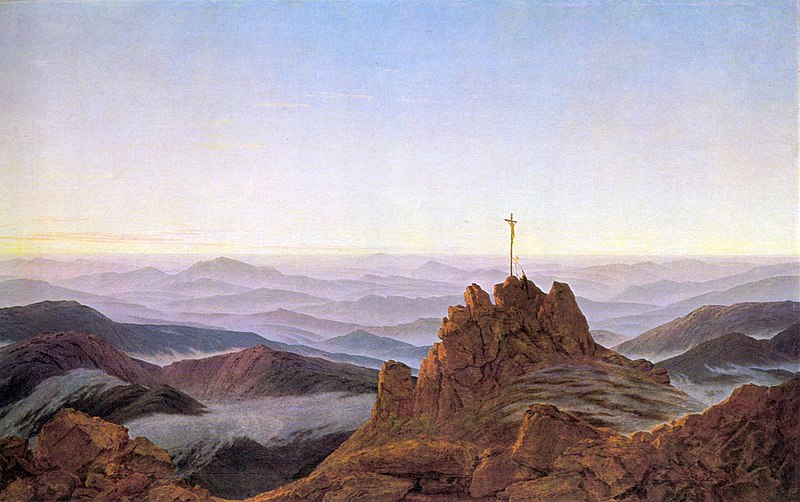
Op182-Friedrich,_Morgen_im_RiesengebirgeMorning on the Riesengebringe, by Caspar David Friedrich (1810)

String Quartet in G major Op.18/2 (1798-1800, Beethoven aged 29)

Dedication Count Johann Georg von Browne
Duration 25′

1. Allegro
2. Adagio cantabile – Allegro – Tempo I
3. Scherzo: Allegro
4. Allegro molto, quasi presto

Listen

written by Ben Hogwood

Background and Critical Reception

‘The jester of the set’, says Daniel Heartz of the second of Beethoven’s first published string quartets. Op.18/2 was actually written third, but is carefully placed by the composer to keep a satisfactory flow between the works. In Germany it acquired the occasional nickname ‘Komplientierquartett’, for what Ludwig Finscher calls the ‘graceful principal theme’. The nickname reflects on the quartet too, ‘not merely to compliment but to greet with formal respect and ceremony’.

Commentators identify more links with the past in this work than the forward looking first – yet the links do not mean the work itself is unadventurous. Finscher writes of how the first movement ‘reaches back beyond Haydn to the preclassical realm, but technically, in its almost parodic succession of two-bar groups and tiny, conventional motives, it is a dazzling tour de force, building on the achievements of the Haydn quartet style and simultaneously providing an ironic comment on them’.

Heartz draws close links with Haydn’s String Quartet Op.33/2, also in G major – and gives several examples on how the first and second movements draw on Haydnesque qualities. Finscher extends his observations, concluding that ‘in artistic skill of that order the work is also a celebration of the level of musical culture in Vienna around 1800’.

Thoughts

It is true that the second of Op.18 is very different from the first – but in a complementary way. The mood is amiable and often comedic, the first violin taking the lead in a cheery second theme, where it ascends to the heights like a bird. Some of the harmonic movements are adventurous in the development, showing that if Beethoven is influenced by Haydn he is channelling the composer’s inventive powers too. The viola and cello take the lead in a striking build to a recap of the main theme.

There are more powers of invention in the slow movement, where tender moments give way to an unexpected, capricious section in the middle. The scherzo third movement is another advance on the traditional minuet, light in mood before cutting to an elusive trio section.

At this point it suddenly feels like the work is finishing, but then Beethoven surges forward with an assertive finale, led off by the cello and featuring busy interactions between the four instruments.

Beethoven has fun with this piece, and given the right performance the listener will do too. The Haydn influences are welcome and well-managed, because the quartet never sounds derivative, and its frequent but subtle inventions keep the listener on their toes. A joy from start to finish.

Recordings used and Spotify links

Quatuor Mosaïques (Andrea Bischof, Erich Höbarth (violins), Anita Mitterer (viola), Christophe Coin (cello)
Melos Quartet (Wilhelm Melcher and Gerhard Voss (violins), Hermann Voss (viola), Peter Buck (cello) (Deutsche Grammophon)
Borodin String Quartet (Ruben Aharonian, Andrei Abramenkov (violins), Igor Naidin (viola), Valentin Berlinsky (cello) (Chandos)
Takács Quartet (Edward Dusinberre, Károly Schranz (violins), Roger Tapping (viola), Andras Fejér (Decca)
Jerusalem Quartet (Alexander Pavlovsky, Sergei Bresler (violins), Ori Kam (viola), Kyril Zlotnikov (cello) (Harmonia Mundi)
Tokyo String Quartet (Peter Oundjian, Kikuei Ikeda (violins), Kazuhide Isomura (viola), Sadao Harada (cello) (BMG)
Végh Quartet (Sándor Végh, Sándor Zöldy (violins), Georges Janzer (viola) & Paul Szabo (cello) (Valois)

The Végh Quartet give a delightful account of this piece, light on their feet and pretty quick, but still with plenty of room for their phrasing. The Tákacs Quartet are often brisk, but similarly enjoyable, while the Quatuor Mosaïques are slower and emphasise the graceful interplay between the quartet. Finally the Tokyo String Quartet are nicely poised and enjoy Beethoven’s flights.

You can chart the Arcana Beethoven playlist as it grows, with one recommended version of each piece we listen to. Catch up here!

Also written in 1800 Krommer String Quartet in A major Op.18/2

Next up String Quartet in D major Op.18/3

Switched On – Sunroof: Electronic Improvisations Vol. 1 (Mute)

sunroof

reviewed by Ben Hogwood

What’s the story?

Sunroof is surely the longest running collaboration in electronic music yet to have released an album….until now. The duo, Daniel Miller and Gareth Jones, have long traded Improvisations in private using modular synths, a practice dating back to 1982 when the pair worked together on Depeche Mode’s Construction Time Again.

Miller, who has run the Mute label for four decades, and Jones, a prolific producer, engineer and artist, used Sunroof as a remix project from the 1990s onwards but now, with their friendship about to begin its fifth decade, we finally hear the fruits of their original electronic labours.

What’s the music like?

Timeless – in the sense that this is music borne of the 1980s but feels like it was only made yesterday. The easy style in which the two composers work leads to music that unfolds naturally but still has a keen structure.

Each title is marked by the date of its inception, and the eight tracks vary between deep, moody drones (1.1 – 7.5.19 and 1.3 – 30.5.19) to flickering lights of treble, which we get in 1.2 – 30.5.19 and 1.6  – 7.5.19.

The drones have a little interference around them with white noise, but the harmony is generally consonant. The lighter tracks have more wandering melodies and move on a whim, 1.6 with a motorised movement that becomes more probing and then vanishes into thin air. 1.7 – 30.5.19 a Star Trek like noise on a loop, burning a trace on headphones, then.
1.4 – 18.6.19 is really excellent and could develop into a powerful club track twice its length, while 1.8 – 2.3.19 is the closest we get to a drum beat, a squelchy thud beating moments in time, underneath a bubbling bass and busy treble.

Does it all work?

Yes – and the more you listen, especially on headphones, the more you appreciate the expert layering of parts and intersection of the musical motifs.

Is it recommended?

Yes, enthusiastically. It is great to have Miller and Jones committing their friendship to record in this way, and the musical chemistry between them is clear. Hopefully this will lead to further installments!

Stream

Buy