Unknown's avatar

About Arcana

My name is Ben Hogwood, editor of the Arcana music site (arcana.fm)

Switched On – Georgia Anne Muldrow: VWETO III (Foreseen Entertainment / Epistrophik Peach Sound)

georgia-anne-muldrow-3

reviewed by Ben Hogwood

What’s the story?

“VWETO III is intended for movement”, writes Georgia Anne Muldrow on her Bandcamp page. “It’s to be played when you birth yourself back outside after a long introspective period to get the things you need.”

‘Vweto’ is a word in the Congolese Kikongo language meaning ‘gravity’ – and it suits Muldrow’s grounded approach, as she draws on hip hop, jazz, funk and soul for her inspirations.

Most of the album’s 17 tracks are instrumental, but space is allowed for vocals, “like DIY songs that people can have for themselves”, she writes. “I want to see the sisters rapping up a storm.”

What’s the music like?

Very much ‘alive’. Muldrow’s refusal to process her music too much leads right to the human heart of the music, with irregularities welcome in both pitch and rhythm. Just a few seconds of Old Jack Swings are what’s required, the low slung beats and grubby bass line combining in an earthy sound.

Georgia’s music is spaced out but with a firm sense of direction too, so the lovely wide-screen synth trappings and psychedelic loops are given solid, bassbin-bothering beats. Slave Revoltalleyway Boom has a great combination of squelchy bass, cool keyboard and a rhythm purposefully dragging its feet, while throwback baps gets its winding piano into a circular loop.

Meanwhile Slow Drag gives musical signposts towards one of Georgia’s mentors, Alice Coltrane, with its spiritually rich organ sound. Alternatively Grungepiece shreds its guitar against a sprinkling of piano dust.

The vocals are good, too – Love Call Groove has a sultry air, while the rapping on Ayun Vegas Session 1 matches Georgia’s rich alto


It is difficult to know where the analogue stops and the digital starts on VWETO III – proof of Muldrow’s successful fusion of past, present and future.

Does it all work?

Yes. As she did in the previous two volumes of this series, Georgia operates an extremely open musical policy, and the fresh improvisation on a lot of these tracks gives them a freshly minted feel.

Is it recommended?

It is. VWETO III achieves its aim of looking outwards and upwards, celebrating the likely return to the outdoors and positive living. Its freedom is at odds with the closed environments of the last year and a half, and its stylistic blends and inventions are invigorating. More power to her elbows!

Stream & Buy
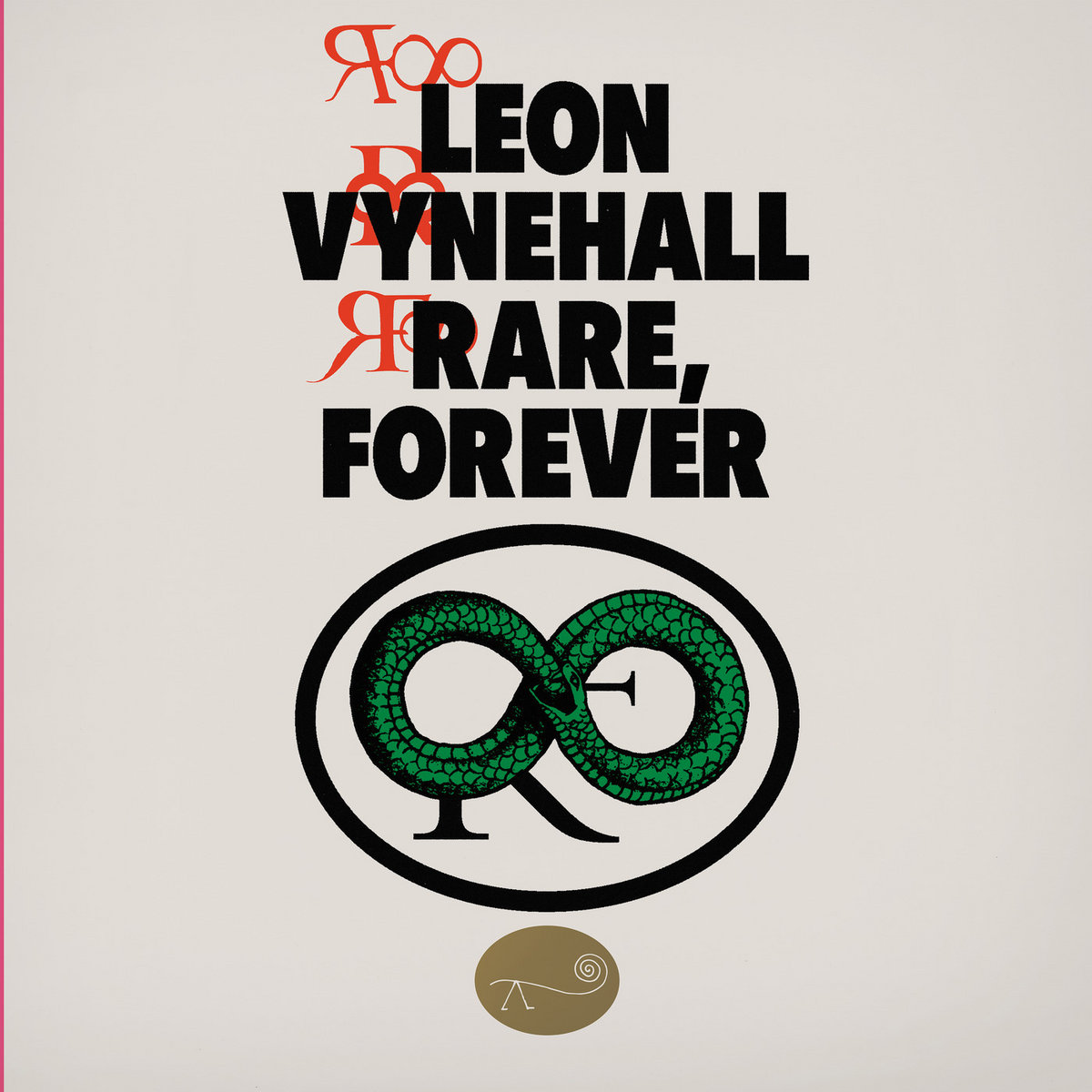
 

Switched On – Leon Vynehall: Rare, Forever (Ninja Tune)

leon-vynehall

reviewed by Ben Hogwood

What’s the story?

Thus is the first album of Leon Vynehall‘s thirties, a response to the nagging inner voice asking where he was going artistically. The response is predictably varied, a creative line in the sand showing off what a versatile producer he has become.

What’s the music like?

Because of the variety of music here, Rare, Forever hangs together extremely well as an album. There are strong undercurrents running through it too- Vynehall’s ear for richly coloured sounds is always apparent, as is a strong affinity with elements of rave from the late 1980s. These are revealed in the quicker tracks, but the atmospheric slower material is equally effective.

From the off, a strong melody winds upwards before cutting to loping beats as Ecce! Ego! takes shape. Mothra features probing electronic riffs, flickering against a white foamy backdrop. Alichea Vella Amor takes a thoughtful tenor sax solo and winds it around a metronomic backing, while on Snakeskin ∞ Has-Been the beats cut loose.

The ambitious beats and chopped up rhythms are a strong feature of the album as it gets into its stride. Worm (& Closer & Closer) is a particularly good track, with a dislocated vocal and big, wide open loops. An Exhale has splashes of colour over the bumpy beats, while Dumbo also hits a jagged groove, the rave elements up top. The air hangs thick and heavy for the elegiac Farewell! Magnus Gabbro, while All I See Is You, Velvet Brown gives us an atmospheric close.

Does it all work?

Yes. A very different album to his previous acclaimed long player Nothing Is Still, but one that shows Leon Vynehall has capacity to master a number of different styles and speeds. Nothing Is Still was achingly cinematic at times, but Rare, Forever has a wide range of approaches, and hits a powerful set of grooves as it progresses.

Is it recommended?

Very much so. Rare, Forever is a portrait of an artist at a fascinating point in his career. The multi-talented Leon Vynehall still has enormous potential, and it will be fascinating to see where it takes him next.

Stream

Buy


On Record – Sarah Neufeld: Detritus (One Little Independent)

sarah-neufeld

reviewed by Ben Hogwood

What’s the story?

Violinist Sarah Neufeld adds to her solo canon with Detritus, her third album. It is a substantial piece of work dating back to 2015, when Neufeld met and collaborated with choreographer Peggy Baker. The two struck up an intense understanding, but the short time working together was ultimately unfulfilling. This led to a reunion in 2019, where Arcade Fire member and Bell Orchestre co-founder Neufeld effectively faced off in improvisation with Baker, and the seeds of Detritus were sown.

What’s the music like?

As striking as the cover art. This is a powerfully affecting piece of work in which the violin is only a part of the story. Although it is a lead character, Neufeld has plenty going on around the loops and cells of the stringed instrument, with wide open effects and textures and a substantial body of percussion, inspired and executed by Arcade Fire bandmate Jeremy Gara. Bell Orchestre‘s Pietro Amato brings rich horn textures, while flautist Stuart Bogie adds deep woodwind colour.

The violin is played with the poise of a dancer, with an airborne feeling to the instrument’s commentary on Stories. With Love And Blindness has impressive depth and again a tension between the slow moving vocals and the urgency of Neufeld’s melodic cells. The Top is propulsive, flickering figures dancing up and down. Tumble Down The Undecided is a very impressive piece of work, the violin dancing across the strings as long, noble notes go across the music like tracers, all to the accompaniment of rolling percussion and the swell of cymbals. Shed Your Dear Heart is also a substantial structure, with the violin looping constantly while rolling drums march forward, more than a little ominously.

Does it all work?

Yes – and the more you listen, especially on headphones, the more you appreciate the expert layering of parts and intersection of the musical motifs.

Is it recommended?

Yes, enthusiastically. It is great to have Miller and Jones committing their friendship to record in this way, and the musical chemistry between them is clear. Hopefully this will lead to further installments!

Stream

Buy


Listening to Beethoven #158 – String Quartet in B flat major Op.18/6

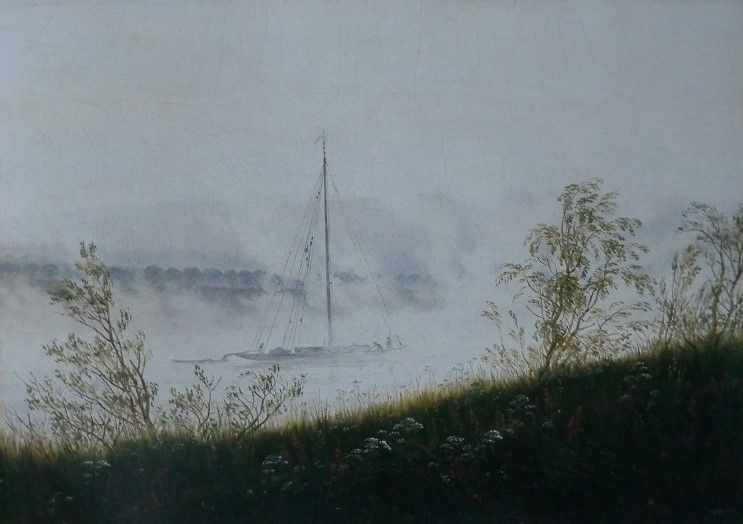
op186-ship on the elbe early morningShip on the River Elbe in the Early Morning Mist, by Caspar David Friedrich (c1821)

String Quartet in B flat major Op.18/6 (1798-1800, Beethoven aged 29)

Dedication Count Johann Georg von Browne
Duration 28′

1. Allegro con brio
2. Adagio ma non troppo
3. Scherzo: Allegro
4. La Malinconia: Adagio – Allegretto quasi Allegro

Listen

written by Ben Hogwood

Background and Critical Reception

The sixth and final quartet of Op.18/6 set was also the last to be finished. Many Beethoven writers see this as the most emotive work of the six, and also the one with most pointers towards future developments in the composer’s music.

Ludwig Finscher again, in his booklet notes for the Melos Quartet recordings on Deutsche Grammophon: ‘This quartet is without doubt the most mature and the most profound of the six in every conceivable respect: in its formal assurance, in the balance and contrast of the movements, and in the individual characterization of them.’

He describes the first movement as ‘relaxed yet disciplines, and the second as achieving a ‘sweet melancholy’, in contrast to the ‘black melancholy’ of the last. After a ‘tour de force’ scherzo comes the finale, ‘spirituality and intellectually the most demanding movement in the whole of Op.18’.

This movement has the heading La Malincolia, with the specific direction Questo pezzo si deve trattare colla più gran delicatezza (This piece is to be played with the greatest delicacy’)

Thoughts

Once again Beethoven starts a quartet with the music in a good mood. There is a slightly cheeky aspect to the first movement of this quartet as the first violin and cello enjoy sharing the catchy tune. The music chugs along with a smile on its face but there is a lot going on behind the scenes, each idea tautly argued and shared.

The slow movement is profound, Beethoven filling out the texture of the four movements, the string quartet sounding more ‘romantic’ as the thoughtful ideas take hold. The scherzo shows Beethoven’s desire to move away from the basic Minuet to employ rhythmic invention, with cross rhythms and syncopations at every turn, as well as the clever use of silence.

However it is with the last movement that Beethoven employs his most dramatic turn, and it is in music of quiet solitude rather than through any fireworks. The cold opening strains are unexpected, the mood of desolation and at complete odds with the conversational first movement. Now the quartet are in unison, as though the instruments dare not stray from the quartet line.

Then, suddenly, that mood is swept under the carpet as a resolute Allegretto asserts itself. Yet it proves difficult to forget the impact of what has gone before, and sure enough the Malincolia music returns. Eventually the two strains are directly at odds, and although the quartet ends vigorously, the impression it leaves is rather different.

Finscher has a theory for this. ‘Nor should the possibility be excluded that this depiction of melancholia, which brings Op.18 to its conclusion and can hardly be a mere whim, has something to do with the fact that at the very time of its composition Beethoven was being made aware of the first symptoms of deafness.’

Recordings used and Spotify links

Quatuor Mosaïques (Andrea Bischof, Erich Höbarth (violins), Anita Mitterer (viola), Christophe Coin (cello)
Melos Quartet (Wilhelm Melcher and Gerhard Voss (violins), Hermann Voss (viola), Peter Buck (cello) (Deutsche Grammophon)
Borodin String Quartet (Ruben Aharonian, Andrei Abramenkov (violins), Igor Naidin (viola), Valentin Berlinsky (cello) (Chandos)
Takács Quartet (Edward Dusinberre, Károly Schranz (violins), Roger Tapping (viola), Andras Fejér (Decca)
Jerusalem Quartet (Alexander Pavlovsky, Sergei Bresler (violins), Ori Kam (viola), Kyril Zlotnikov (cello) (Harmonia Mundi)
Tokyo String Quartet (Peter Oundjian, Kikuei Ikeda (violins), Kazuhide Isomura (viola), Sadao Harada (cello) (BMG)
Végh Quartet (Sándor Végh, Sándor Zöldy (violins), Georges Janzer (viola) & Paul Szabo (cello) (Valois)

You can chart the Arcana Beethoven playlist as it grows, with one recommended version of each piece we listen to. Catch up here!

Also written in 1800 Salieri Cesare in Farmacusa

Next up tbc

Listening to Beethoven #157 – String Quartet in A major Op.18/5

op184-Friedrich_-_Morning_mist_in_the_mountainsMorning Mist In The Mountains, by Caspar David Friedrich (1808)

String Quartet in C minor Op.18/4 (1798-1800, Beethoven aged 29)

Dedication Count Johann Georg von Browne
Duration 29′

1. Allegro ma non tanto
2. Andante scherzoso quasi allegretto
3. Menuetto: Allegro
4. Allegro – Prestissimo

Listen

written by Ben Hogwood

Background and Critical Reception

As part of his preparation for entering into the world of the string quartet, Beethoven copied put two of Mozart’s quartets by hand. Both were part of the six works dedicated to Haydn in 1785 – in G major, K387, and in A major, K464.

This piece became the stimulus for Beethoven’s own A major quartet, published fifth in the Op.18 set. Each commentary explores the relationship between the two pieces, examining the influences and similarities.

Yet, as Ludwig Finscher writes, this is no dutiful homage. Beethoven creates his own inspiration, while also respecting tradition. ‘The thematic material and processes, the 6/8 time signature, and the relaxed, playful tone of the first movement are all typical of the ‘lighter’ works traditionally placed at the end of a quartet opus.’

He describes the A major quartet as being ‘in a different class’ to the previously published work in C minor. It places the Minuet second and the Andante third, for Finscher ‘a demanding slow movement, whose quality is especially evident in the glorious coda’. He also identifies a shift in emphasis towards the last movement in Beethoven’s writing, with ‘a thoroughly densely and imaginatively crafted sonata-form finale.’

Thoughts

This is a ‘sunny side up’ piece of music right from the start, the first violin irrepressible as it breaks into song. The mood prevails throughout the piece but especially in the first movement, where a bright outlook is achieved in spite of some dense part writing.

The Minuet is attractive too, with more of an emphasis on the dance, and an attractive contrasting trio section where the composer uses a drone. The sunny approach continued into the third movement, Beethoven resorting to a theme and variations format for the only time in the Op.18 set. His practice efforts for the piano really bear fruit here, in the winsome written-out trills of the third variation and the slow, hymn like fourth especially.

The finale is indeed dense and eventful, but again the mood is wholly positive. The quartet are busy throughout, Beethoven treating the four protagonists on an equal footing as they exchange ideas and thoughts. The end is softly voiced, the conversation coming to a natural rest.

Recordings used and Spotify links

Quatuor Mosaïques (Andrea Bischof, Erich Höbarth (violins), Anita Mitterer (viola), Christophe Coin (cello)
Melos Quartet (Wilhelm Melcher and Gerhard Voss (violins), Hermann Voss (viola), Peter Buck (cello) (Deutsche Grammophon)
Borodin String Quartet (Ruben Aharonian, Andrei Abramenkov (violins), Igor Naidin (viola), Valentin Berlinsky (cello) (Chandos)
Takács Quartet (Edward Dusinberre, Károly Schranz (violins), Roger Tapping (viola), Andras Fejér (Decca)
Jerusalem Quartet (Alexander Pavlovsky, Sergei Bresler (violins), Ori Kam (viola), Kyril Zlotnikov (cello) (Harmonia Mundi)
Tokyo String Quartet (Peter Oundjian, Kikuei Ikeda (violins), Kazuhide Isomura (viola), Sadao Harada (cello) (BMG)
Végh Quartet (Sándor Végh, Sándor Zöldy (violins), Georges Janzer (viola) & Paul Szabo (cello) (Valois)

There are some highly enjoyable versions here. The two I returned to most were from the Jerusalem and Tokyo quartets, each one bringing out the sunny nature of the work with its many and varied inventions.

You can chart the Arcana Beethoven playlist as it grows, with one recommended version of each piece we listen to. Catch up here!

Also written in 1800 Gyrowetz Divertissement Op.50

Next up String Quartet in B flat major Op.18/6