Unknown's avatar

About Arcana

My name is Ben Hogwood, editor of the Arcana music site (arcana.fm)

Listening to Beethoven #85 – 6 Minuets for string trio

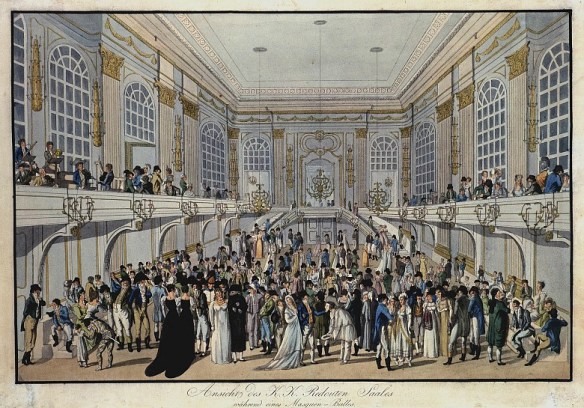
The Grosse Redoutensaal (Grand Ballroom) of the Hofburg Imperial Palace in Vienna by Joseph Schütz

6 Minuets, WoO 9 for two violins and cello (1795, Beethoven aged 24)

no.1 in E flat major
no.2 in G major
no.3 in C major
no.4 in F major
no.5 in D major
no.6 in G major

Dedication not known
Duration 12′

Listen

Background and Critical Reception

Here we have some more of Beethoven’s music for dancing – another set of six minuets that showed the young composer was really getting into the spirit of Vienna’s social culture. With Haydn looking further afield to London, there was definitely room for him to grow – and as we will see, the mid 1790s were Beethoven’s time to provide these social soundtracks.

Beethoven appears to have had small scale dancing in mind with these six dances, originally scoring them for two violins and cello. There is an unnamed version of them for full orchestra too.

Thoughts

Once again these are attractive pieces with easy melodies and amiable rhythms that make them ideal for communal merrymaking. Beethoven continues writing in ‘safe’ major keys, and the dances all last for around two minutes with a slightly contrasting ‘trio’ section in the middle.

This set begins with a stately and genial E flat major minuet, which moves on to a more legato dance in G major.

The third minuet has some more vigorous steps in a style that sounds almost Schubertian in the orchestral version, and it has a lovely central ‘trio’ section with pizzicato from the violins. We move to F major for some regal gliding across the floor, then to D for a jaunty and quite spiky number, a faster minuet.

The sixth minuet channels the spirit of Mozart with its deceptively simple phrases and interplay between instruments.

Recordings used and Spotify links

Lukas Hagen, Alois Posch, Rainer Schmidt


Tristan Segal, Noa Sarid, Isabel Kwon

Philharmonia Hungarica / Hans Ludwig Hirsch

Three attractive versions here, though naturally the ones for string trio sound much more intimate and homely. The orchestral versions have more weight but are nicely scored.

You can chart the Arcana Beethoven playlist as it grows, with one recommended version of each piece we listen to. Catch up here!


Also written in 1795 Gyrowetz – Three Flute Quartets Op.11

Next up 12 German Dances WoO8
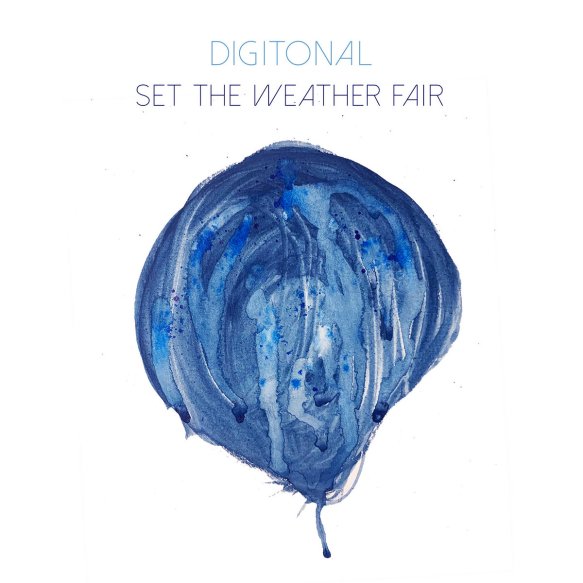
Switched On – Digitonal: Set The Weather Fair (Just Music)

reviewed by Ben Hogwood

What’s the story?

For Digitonal’s fourth studio album, Andrew Dobson is joined by producer Dom Graveson for a fusion of analogue and digital setting natural scenes to vivid music. Set The Weather Fair will be a comforting reassurance to those who have already enjoyed Dobson’s first three albums under the Digitonal moniker, but this one offers greater depths of texture and musicianship.

What’s the music like?

Blissful – but also wholly immersive. This is music that paints vivid pictures but in the same breath possesses a great deal of emotion. One of the biggest pluses here is the way Dobson uses his clarinet and cello to colour the textures and to make the melodies more distinctive. He also knows his way around small and expansive structures – the ten-minute Gold Of The Azure is every bit as captivating as The End Is Just The Beginning that follows it.

Those two tracks are notable for their use of the clarinet, which comes to the fore on Gold Of The Azure, and then the cello on The End Is Just The Beginning, which features a slowly tolling piano. The Dance’s Pattern, too, is ideally paced.

On his Bandcamp page Dobson sets out the story behind the album and its sonic images, citing a number of influences in a modest tribute to the music he listens to. The truth of the matter is however that this music, instrumental thought it is in his make-up, is all used to make a wholly original piece of work, a recognisably British affair where both restraint and bold colours are used to great effect.

Does it all work?

Yes. The colours are captivating, the use of beats and beatless music is just right, and the proportions feel right too. Dobson has a winning way with melody, and Graveson’s production nouse is the icing on the cake.

Is it recommended?

It is. Set The Weather Fair can easily be divided into the nine elements that make up the whole, but it is best experienced in a single sitting, a seamless flow of musical ambience that settles the mind and gently moves the soul. It is right up there with Digitonal’s best work.

Stream

Let’s Dance – Detroit Love 4 mixed by Mirko Loko (Detroit Love / !K7)

by Ben Hogwood

What’s the story?

Carl Craig’s Detroit Love mix series moves onto a fourth instalment under the watchful eye of Mirko Loko, who Craig recruited for the Detroit Electronic Music Festival back in 2001. With such a longstanding attachment to the city and its techno heritage, the Swiss DJ is a natural choice and takes the chance to say thank you to Detroit and its cultural legacy. He does so in the form of a 22-track mix including homegrown talent but also casting an eye further afield to show off the influence of the city.

What’s the music like?

This is a really fine set, mixed with impressive fluidity by Mirko Loko. From the start he creates a good deal of space, Fred P’s Vision In Osaka setting the scene beautifully before Loko’s own excellent Detroit Love Mix of It’s Like, with persuasive vocals from Ursula Rucker. As the mix proceeds Loko moves between quite minimal tracks and bigger, expansive moments like Chaos In The CBD’s Comfort Zone, or the blissful Aos Si of Takuya Yamashita.

However the real high point comes with Derrick May’s appearance on Loko’s Mentors Heritage, a mix made especially for the compilation. The booming voice and percussion are an ideal match, especially when segueing into the bare bones of the piano in Laurent Garnier’s mix of Gilb’R’s Pressure.

From then the mix rolls on, taking in the propulsive Madness of Temo Howard before an excellent finish from Mirko Loko and Stacey Pullen with Tronic Illusion – another exclusive mix – and Lady B’s Cruising Around Motor City.

Does it all work?

It does indeed. Well paced, structured and full of subtly euphoric moments uniting past and present in an effortless blend.

Is it recommended?

Yes – a very strong addition to what is proving to be an extremely collectable series.

Stream

Buy

Listening to Beethoven #84 – Im Arm der Liebe ruht sich’s wohl WoO 159


Beethoven’s Eyeglass. Photo (c) Beethoven-Haus, Bonn

Im Arm der Liebe ruht sich’s wohl WoO 159, canon for three voices (1795, Beethoven aged 24)

Dedication not known
Text Hermann Wilhelm Franz Ueltzen
Duration 1’20”

Listen

Background and Critical Reception

First, a reminder that a canon is a melody assigned to more than one part / singer – and the melody of that part / singer follows the original at a set distance. Beethoven used the technique for a number of short pieces, both for instruments and for voices, honing his craft from his early twenties in Vienna.

This example for three voices, setting a text by Hermann Wilhelm Franz Ueltzen, is only just over a minute but works several repetitions of what proves to be a catchy melody. The text, interpreted by the Unheard Beethoven website, translates as the following:

In the arm of love one rests well,
In the bowels of the earth one rests well,
Wherever it may be, for the tired it is all the same

Thoughts

These short pieces are fascinating when set against Beethoven’s longer works. They feel like small building blocks of a much bigger construction, illustrating the composer’s ability to quickly establish a tune and even its development in the shortest space of time. As a result even a piece this short is not entirely throwaway, and is quite profound.

Recordings used and Spotify links

Kammerchor der Berliner Singakademie / Dietrich Knothe (Brilliant)

Ensemble Tamanial (Naxos)

Ensemble Tamanial state the whole theme first, then proceed with Beethoven’s working into a canon. Meanwhile the Kammerchor der Berliner Singakademie under Dietrich Knothe add a generous helping of vibrato.

Also written in 1795 Haydn 150 Scottish Songs, Hob.XXXIa:1–150

Next up 6 Minuets WoO9

Listening to Beethoven #83 – Canon in C major

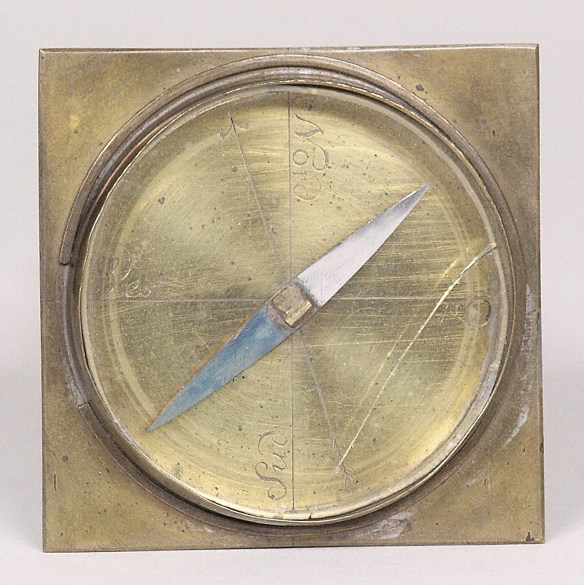
Beethoven’s compass © Beethoven-Haus Bonn

Canon in C major Hess 248 for four voices (1795, Beethoven aged 24)

Dedication not known
Duration 1’10”

Listen

Background and Critical Reception

This short canon is for four ‘voices’ – as in four separate parts. It is the second canon of Beethoven’s we have heard to date, but as we listen to more of his music this aspect of his output will be more fully revealed.

Thoughts

A bold, confidently written piece – with a motif whose repetitions become a little trying after a while! It is however a good example of Beethoven’s rigorous training and ability to work with an ever-increasing number of techniques.

Recording used and Spotify link

Benjamin Lichtenegger, Lara Kusztrich, Luka Kusztrich, Dominik Hellsberg (violins) (Naxos)

An attractively performed and brightly lit version.

You can chart the Arcana Beethoven playlist as it grows, with one recommended version of each piece we listen to. Catch up here!

Also written in 1795 Hyacinthe Jadin – 3 String Quartets Op.1

Next up Im Arm der Liebe ruht sich’s wohl