Unknown's avatar

About Arcana

My name is Ben Hogwood, editor of the Arcana music site (arcana.fm)

Sound of Mind 10 – May Blossoms

As we move halfway through the eighth week of lockdown here in the UK, I thought it a good time to round up some of the best sounds I’ve been enjoying in the last week or two.

The arrival of spring is hopefully in full swing, and there are good signs of creativity throughout the electronic music community.

This playlist begins with the first track of the Conference Of Trees album from Pantha du Prince, before enjoying some rather wonderful pictures brought to us by Peter Broderick, Erland Cooper, Kaitlyn Aurelia Smith and brothers Brian and Roger Eno.

There is brand new music from Bibio, one of the standout tracks from Nathan Fake‘s Blizzards album and to wrap things up a remix of Philip Glass‘s Two Pages by none other than Max Cooper.

Enjoy an hour of escapism!

Ben Hogwood

Routes to Beethoven – 1770: Music in the year of Beethoven’s birth

by Ben Hogwood

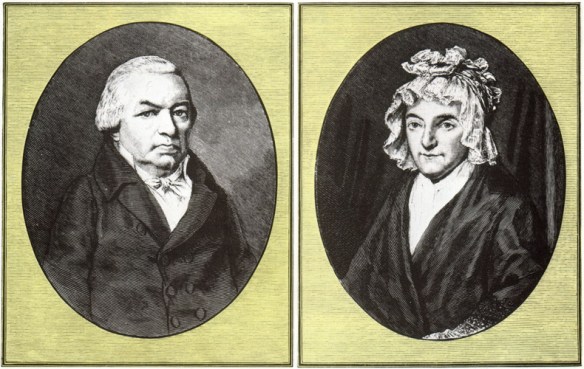
Picture: Beethoven’s parents, Johann van Beethoven and Maria Magdalena Keverich

The last listening exercise before diving into the music of Beethoven is to explore the music being made in the year of his birth, to try and get an idea of the temperature in Western classical music.

For Mozart, opera was key – even at the age of 14. His year began with a trip to Italy, organised by father Leopold with the aim of securing a big stage commission. That was duly achieved in Milan, at the flagship Teatro Regio Ducal (below). In December this prestigious venue became the setting for the premiere of Mozart’s first opera, Mitridate, re di Ponto. An ambitious three-act work, it has some eyecatching arias for the leading cast, virtuoso writing that established Mozart as a composer of real intent and secured a number of standing ovations at the premiere.

With the commission for Mitridate secured in January the Mozarts toured Italy for much of 1770, where Wolfgang found the time to take his symphonic canon into double figures. Don’t forget, he was still barely a teenager!

Haydn, meanwhile, an established composer in his late thirties, was beginning to flex his symphonic muscles. His Sturm und Drang period was just under way, and the innovations he would make in nearly every musical genre were beginning to take shape. 1770 was a relatively quiet year for his output, however. The symphony he completed, no.43 in E flat major, is known as the Mercure for no obvious reason. It is perhaps a more ‘polite’ piece than the minor key examples around it, but that should not be seen as a derogatory observation – it has the typical Haydn poise, guile and wit.

In London, Johann Christian Bach (Bach’s eleventh and youngest son) was impressing with his symphonies and piano concertos, and Hummel published a set of six as Op.6 in 1770. Daniel Heartz writes of how no.5 was a favourite with the public, to judge by the number of reprinting, but that the sixth in the series is impressive, with a ‘fiery middle movement’.

Meanwhile the fifth Bach son, Carl Philipp Emanuel, was adding to his enormous output too. Exact dates are harder to find for his works, though the first version of the Passion According to St Mark can definitely be said to have been completed in 1770.

Meanwhile Gluck, one of the most prominent operatic composers of the day, was occupied with the Viennese premiere of Paride ed Elena. When compared with his stage successes Orfeo ed Euridice or Iphigenie en Tauride, it has not performed well historically. Little is written about its premiere or reception, save for the relative lack of a convincing plot in the opera itself, but listening to it reveals some beautiful writing for soprano and castrato, and a Chaconne that becomes increasingly daring as it proceeds. It has been cited in a number of articles such as this one that Paride ed Elena marks a change in opera from singing to storytelling.

Elsewhere Boccherini was making a name as a prolific composer of works for strings, the most since Vivaldi – and secured for himself a prestigious role as cellist and composer to the royal court in Madrid. He would write more than 15 cello concertos and much chamber music besides.

What of the music of Bonn, where Beethoven was born in 1770? Well not much is known – or at least, not within easy reach in books or on the internet! It would be intriguing to know what was played at his baptism in St. Remigius on 17 December. Listen to the playlist below though and you will get an idea of the music circulating in what appears to have been a transitional year in European music. In many ways it was the calm before the storm.

Listen

The music of 1770 is collected in a Spotify playlist below:


On record – Adès Conducts Adès: Piano Concerto & Totentanz (Deutsche Grammophon)

Kirill Gerstein (piano), Christianne Stotijn (mezzo), Mark Stone (baritone), Boston Symphony Orchestra / Thomas Adès

Thomas Adès
Concerto for Piano and Orchestra (2018)
Totentanz (2013)

Deutsche Grammophon 4837998 [55’58”]

Producer Nick Squire
Engineer Joel Watts

Live performances, recorded November 2016 (Totentanz) & March 2019 (Piano Concerto) at Symphony Hall, Boston

Written by Richard Whitehouse

What’s the story?

Thomas Adès has latterly been enjoying a productive association with the Boston Symphony Orchestra. They appear here in two recent and pointedly contrasted pieces which, between them, make for a viable overview of a compositional ethos as absorbing as it is frustrating.

What’s the music like?

From the outset Adès evidently had in mind a ‘proper’ piano concerto, and the Concerto for Piano and Orchestra is precisely that: three movements, of virtually equal length, unfolding along archetypal designs – sonata, ternary and rondo forms – even if their angle of approach is not what it might have been. The first movement abounds in jazzy inferences, albeit with a more relaxed ‘second subject’ to provide a modicum of contrast, while the central Andante is overlaid with intriguing symmetries that offset what might otherwise seem unremarkable material. The final Allegro duly renews the animated dialogue between soloist and orchestra in what could be termed an equable meeting between Gershwin and Ligeti, with Prokofiev putting-in an unexpected appearance toward the decisive and effervescent close. This is not the radical departure from Adès’s previous concertante pieces as might be supposed, though neither is this merely a triumph of concept over content. Whether it manages to revitalize a genre which has had precious few additions during the past half-century remains to be seen.

Certainly, the Concerto makes a telling foil to Totentanz. This is a setting of an anonymous 15th-century commentary to a frieze (destroyed in wartime) where Death visits a succession of those representing the medieval social strata and their responses thereof. Despite utilising male and female voices, it is not a song-cycle so much as a dramatic scena in which loss is considered in the context of a ‘dance of death’ that motivates the greater discourse. Each of those visited is allotted a specific musical expression, though the initial call-and-response is gradually blurred as vocal parts are overlaid in an intensifying activity towards the seismic orchestral culmination.

Characterisation of the remaining protagonists risk losing focus, yet there could be no mistaking the plaintive sensuousness of the encounter with the Maiden or the disarming naïveté of that with the Child as the music wends a weary Mahlerian way to its close. Each encounter is interpretable from different and even competing perspectives which extend the range of expression, while making it ambivalent to the point of disingenuousness.

Does it all work?

Yes, given that both performances meet the challenges of each work head on. Kirill Gerstein sounds unfazed in this world premiere of the Concerto, aligning himself to the orchestra with well-nigh perfect synchronization. The composer secures a truly virtuosic response from the Boston Symphony here and in Totentanz, during which Christianne Stotijn brings a decidedly fraught pathos while Mark Stone responds with burnished intensity. Adès has been lucky in the exponents of his music throughout his career and both these occasions were no exception.

Is it recommended?

It is – not least because these works, markedly different in themselves, suggest a continued desire to bring the flippant and the earnest into unlikely though productive accord. Whether they constitute a surrender to, or a critique of, the zeitgeist remains part of their fascination.

Listen

Buy

You can listen to clips from the recording and purchase, either in physical or digital form, at the Presto website

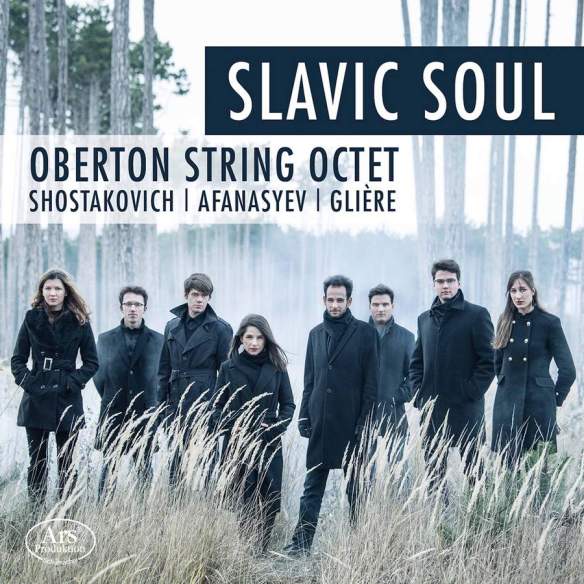
On record – Oberton String Octet – Slavic Soul (ARS Produktion)

Oberton String Octet [Jevgēnijs Čepoveckis, Veronika Brecelj, Andrii Uhrak and Alberto Stiffoni (violins), Serhii Zhuravlov and Hanga Fehér (violas) Floris Fortin and Dorottya Standi (cellos)]

Shostakovich Two Pieces for String Octet Op.11 (1924/5)
Afanasyev Double Quartet in D major ‘Housewarming ‘(1872)
Glière String Octet in D major Op.5 (1902)

Ars ProduktionARS38305 [59’26”]

Producer Anette Schumacher
Engineer Daniel Comploi

Recorded 19-21 December 2019, Florentinersaal, University of Arts, Graz

Written by Richard Whitehouse

What’s the story?

The debut release from this ‘purpose built’ string ensemble which intends to encompass the repertoire for octet and double quartet, examples of both being featured here together with music by a composer whose ‘enfant terrible’ phase proved as reckless as it was short-lived.

What’s the music like?

Long since a footnote in musical history, Nikolay Afanasyev (1821-98) became a pioneer in Russian opera and chamber music, likely composing this Double Quartet for the inauguration of the St Petersburg Society for Chamber Music. Taking his cue from those four pieces with which Spohr had intended to launch a new medium, it follows an outwardly classical format while being permeated by aspects of Russian folk music. Best are an animated Scherzo with its stately trio, then an Andante of suffused pathos. Both outer movements betray a degree of formal uncertainty, a reminder that Afanasyev (as with Glinka before him) was essentially an autodidact, yet their energy and charm override such failings. Certainly, the Oberton sounds captivated by the qualities of this ‘Housewarming’ which it is (rightly) intent on championing.

Whereas Afanasyev writes for four parts, Glière writes for eight voices in his Octet. One of several works for string ensembles from the outset of his career, this follows audibly in the lineage of Mendelssohn with its emphasis on intensive dialogue and textural richness, even if both its formal layout and tempo indications indicate knowledge of his Russian forebear. Here, too, the middle movements – the second poised between scherzo and intermezzo, and the third an eloquent ‘song without words’ – are highlights, though the initial Allegro yields telling understatement while the finale builds a cumulative momentum that carries all before it. The Oberton are unfailingly alive to its contrapuntal energy and often orchestral sonority, adding another piece to the roster of Octets such as marked their composers ‘coming of age’.

As curtain-raiser, Shostakovich’s Two Pieces duly launches the programme in unequivocal fashion. Written either side of his seminal First Symphony, the ‘Prelude’ fairly abounds in volatile emotion while the ‘Scherzo’ evinces a coursing energy and caustic dissonance that points unerringly to those works immediately following it. What a pity the intended fugue never progressed beyond the sketch stage, though the work as stands remains testament to the ‘confidence of youth’ and the Oberton’s charged reading assuredly takes no prisoners.

Does it all work?

As a programme, undoubtedly. The repertoire for string octet and double string quartet is a select yet significant one, and the Oberton is evidently on a mission to convey this in both performance and recording. Hopefully, this release will be the start of a project as could do worse than to couple each double quartet by Spohr with those octets of Mendelssohn, Gade, Svendsen and Enescu. Moreover, the logistics involved in bringing together eight musicians based around Western and Central Europe will hopefully not limit their live music-making.

Is it recommended?

Very much so. The SACD sound has exemplary definition if almost too great an immediacy in more demonstrative passages, while the booklet notes are succinctly informative. Strongly recommended, with the hope further releases from this ensemble will not be long in coming.

Listen

Buy

You can listen to clips from the recording and purchase, either in physical or digital form, at the Presto website

Read

You can read more about the Oberton String Quartet at their website

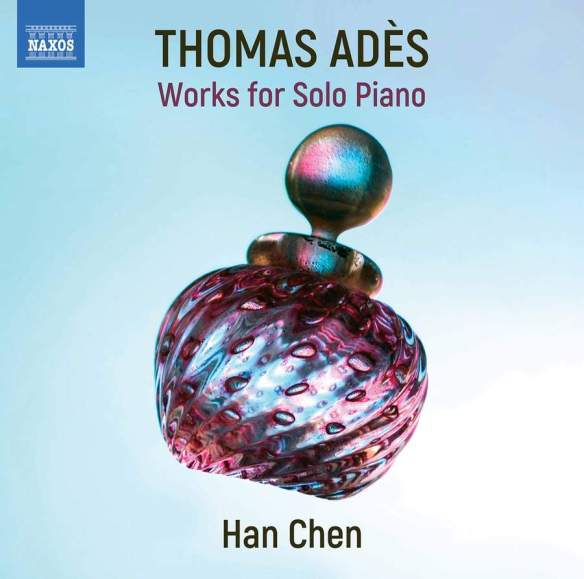
On record – Han Chen plays Thomas Adès: Piano Works (Naxos)

Han Chen (piano)

Thomas Adès
Concert Paraphrase on Powder Her Face (2009)
Still Sorrowing (1992)
Darknesse Visible (1992)
Blanca Variations (2015)
Traced Overhead (1996)
Three Mazurkas (2009)
Souvenir (2018)

Naxos 8.574109 [69’43”]

Producer Han Chen
Engineer Ryan Streber

Recorded 5-7 April 2019, Oktaven Audio, Mount Vernon, New York

Written by Richard Whitehouse

What’s the story?

Taiwanese-born and American-based pianist Han Chen releases his third album for Naxos, bringing together almost all the works for solo piano by Thomas Adès (b1971) in readings that depart – sometimes markedly – from earlier practice and are the more impressive for it.

What’s the music like?

Adès’s piano music falls into three well defined phases. Premiered at the London recital that launched his wider career, Still Sorrowing draws on Dowland in a sustained rumination with ingenious use of the keyboard (is Blue-Tack still being used to dampen the middle register?). Darknesse Visible is more directly a Dowland paraphrase, its pianism highly demonstrative in its range of textures and dynamics. An early culmination is marked by Traced Overhead – its three (progressively longer) sections heading from the spiralling upward motion of Sursum, via the animation of Aetheria, to the gradual ascent of Chori whose heightened eloquence is fatefully undermined by its plunging descent near the close. Understandable that Adès then eschewed the piano medium (and largely avoided public performance) for more than a decade.

His return came from a typically unexpected angle. Among the most significant operas this past quarter-century, Powder Her Face might not have obvious pianistic potential, but Adès proved otherwise with a Concert Paraphrase which realigns several musical highlights into a four-part sequence given continuity by the ingenuity with which underlying dance measures merge into and out of each other. Those for whom its theatricality is all may be nonplussed, yet the essentially tragic essence behind the opera’s glittering façade is conveyed even more keenly through such abstract terms. No less ingenious, the Three Mazurkas refashion a genre most associated with Chopin and Szymanowski into music that recalls the études of Ligeti in their technical finesse and those expressive slights of hand capricious and affecting by turns.

Equally modest in their formal dimensions, the most recent two pieces could hardly be more contrasted in content. A test-piece for the 2016 Clara Haskill Competition, Blanca Variations takes a brief piece from Adès’s opera The Exterminating Angel as basis for a study in highly intricate and dextrous pianism. Taken from his score for the film Colette, where it provides a haunting backdrop to the end-credits, Souvenir emerges as a discreet if potent homage to the tradition of French piano music through its slow waltz motion where inference becomes all.

Does it all work?

Yes, even though there are occasions when Adès’s consummate technique risks becoming its own justification. All credit, then to Han Chen (already with excellent releases of Liszt and Rubenstein on Naxos) for ensuring that surface allure is always at the service of an engaged and engaging musical expression. Most of these works have been recorded by the composer, several by numerous other pianists, but Chen clearly has an approach which enables him to render the music very much his own way – extending and enriching its potential accordingly.

Is it recommended?

Indeed. Sound has clarity and definition without seeming clinical, and there are informative booklet notes by Paul Conway. One recent short piece (Berceuse from The Exterminating Angel) has not been included, but it hardly detracts from the qualities of this release overall.

Listen

Buy

You can listen to clips from the recording and purchase, either in physical or digital form, at the Naxos website

Read

For further information on Thomas Adès visit the composer’s website