
Unknown's avatar

About Arcana

My name is Ben Hogwood, editor of the Arcana music site (arcana.fm)

On record – Penderecki: Horn Concerto, Adagio, Violin Concerto no.1, Threnody (LPO)

Radovan Vlatković (horn); Barnabás Kelemen (violin), London Philharmonic Orchestra / Krzysztof Penderecki (Horn Concerto, Adagio, Threnody), Michał Dworzyński (Violin Concerto no.1)

Penderecki
Horn Concerto ‘Winterreise’ (2008)
Adagio for Strings (1995/2013)
Violin Concerto no.1 (1977)
Threnody for the Victims of Hiroshima (1960)c)

London Philharmonic Orchestra LPO0116 [78’32”]

Producers Nicholas Parker(Horn Concerto, Adagio, Threnody), Matthew Dilley (Violin Concerto no.1)
Engineer Mike Hatch (Horn Concerto, Adagio, Threnody), Richard Bland (Violin Concerto no.1)

Recorded 27 November 2013 (Horn COncerto, Adagio, Threnody), 14 October 2015 (Violin Concerto no.1), Royal Festival Hall, Southbank Centre, London

Written by Richard Whitehouse

What’s the story?

Although this release on the London Philharmonic Orchestra’s in-house label was clearly not intended as a commemorative issue, the death of Krzysztof Penderecki on 29th March (at the age of 87) makes it such – not least as its content ranges across almost 50 years of his output.

What’s the music like?

The Horn Concerto is wholly representative of Penderecki’s latter-day music, with its subtitle Winterreise indicative of the evocative soundscape through which the soloist ventures. The composer has said that Schubert’s eponymous masterwork had no influence on his piece, yet its presence often feels hard to ignore – not least at the very opening when, over glacial lower strings, brass then woodwind set up an arresting backdrop for the soloist’s initial appearance. From this point on the music alternates between animated dialogue, frequently with a martial undertow from wind and percussion, and sombre soliloquy with strings to the fore. The terse coda wraps up matters in fatefully decisive terms. As might be expected of one who gave the premiere, Radovan Vlatković is finely attuned to this work’s often disjunctive mood-swings.

Of the shorter pieces, the Adagio is a transcription for strings of the central (third) movement from Penderecki’s Third Symphony – so giving a new lease of life to music whose pathos is accentuated by evocative soloistic writing. It was Threnody to the Victims of Hiroshima that brought Penderecki to international attention and if its claims to embody emotional extremis have been exaggerated (not least by the composer), the calculated impact of those dynamic and textural contrasts still brooks no compromise – at least when assessed on its own terms.

In concert, these pieces were heard either side of the Horn Concerto; here, they frame a rather more significant piece. When it appeared, the First Violin Concerto felt intent on confirming Penderecki’s renouncing of avant-garde credentials in favour of the neo-Romantic idiom that, with modifications, he pursued thereafter. Rehearing the work points up just how much of his earlier language was retained. The concerto unfolds as a single movement in which a sonata-form outline is expanded by interpolating slow movement and scherzo, for all that the overall tempo is predominantly slow. Barnabás Kelemen integrates the solo part into the orchestra to a degree that is formally and expressively cohesive, the finesse and eloquence of his playing confirmed by a lengthy cadenza that encapsulate thematic content prior to the sombre coda.

Does it all work?

Yes, so long as one accepts that Penderecki is a composer liable to repeat himself within and between works. His conducting is dependable without being overly insightful, while Michał Dworzyński draws a tensile and alert response from the London Philharmonic as to reinforce the sense that the First Violin Concerto is ready for re-evaluation. That Penderecki arguably spent the intervening decades trying and largely failing to achieve a comparable formal and expressive synthesis has not lessened its importance in the context of music from this period.

Is it recommended?

Yes, given the (relative) stylistic range of the works featured and, moreover, the excellence of the LPO’s playing. Those interested should acquire it primarily for the First Violin Concerto which, among Penderecki’s larger orchestral works, seems likely to prove the most enduring.

Listen

Buy
You can listen to clips from the recording and purchase, either in physical or digital form, at the London Philharmonic Orchestra website
‘Devs’ and the power of music

by Ben Hogwood

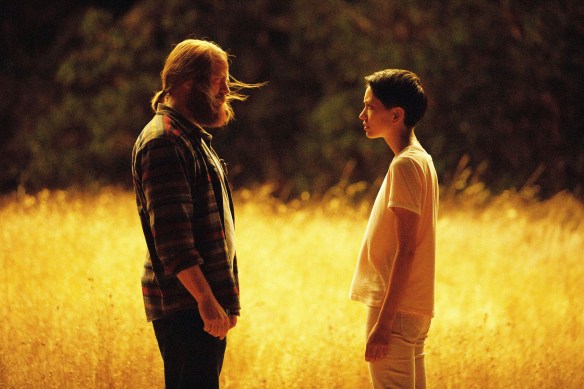
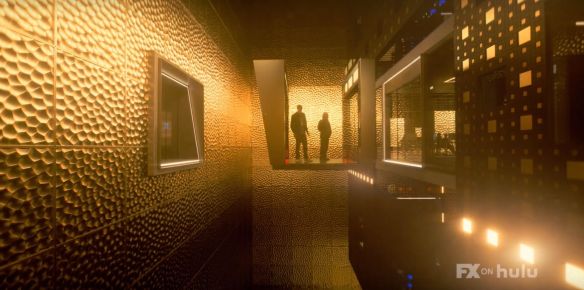
I have just finished watching Alex Garland’s new TV series Devs, a mind-bending look at the placement of humankind in history. I won’t say any more so that no spoilers are revealed, but I wanted to note the remarkable music that appears at important points in each episode.

The main ‘soundtrack’ is composed by Geoff Barrow (of Portishead fame) and Ben Salisbury, two regular collaborators with whom Garland has worked before on Ex Machina and Annihilation. If you watched and enjoyed those films then you will have to see this:

Barrow and Salisbury write music that ranges from deep, almost comforting ambience to sudden, sharp shocks that are heavily laden with menace. Around them sits a remarkable variety of music, which like the theme of the series travels between the deep and distant and recordings made just a year ago. Not many soundtracks can claim to use ancient chant, Free and Billie Eilish in the same breath!

The most striking appearance comes in the first episode from a groundbreaking album of 1994 which, like Devs, transcends time. The Hilliard Ensemble sing the ancient chant Regnantem sempiterna, which is remarkable enough, were it not for the saxophone of Jan Garbarek, soaring over the top. Garbarek improvises with pinpoint accuracy and incredible intensity. When heard with the clarity and visual craft of the pictures, the effect is almost overwhelming:

Meanwhile the music of Steve Reich comes to the fore at the beginning of the seventh episode, and not in the way you might expect. This is Come Out, the composer’s first published work from 1966. Based entirely on a four-second tape loop, it was recorded as part of a benefit event for the Harlem Six, and has one of the boys involved in the riot demonstrating how he worked to convince police he had been beaten while in jail. When Reich has finished with it, a rather disturbing work remains:

While Garland’s musical choices in Devs are key, the use of silence is also hugely important, either heightening the tension or giving the viewer room for context. In this way he makes the reappearance of music all the more meaningful. Far too many Hollywood directors feel the need to use music at every turn, but the likes of Alien have proved in the past how silence can be an asset too.

This means that when a song appears in Devs the instinct on the listener’s part is to seek it out immediately. When Guinnevere by Crosby Stills and Nash is used in the sixth episode, it works exquisitely at just the right point in the plot, heightened by the fact it was written in the same state – California – in which Devs is set:
Fifty years on, and the music of Billie Eilish carries the same understated impact. Her song ocean eyes has a remote beauty completely in keeping with some of Devs’ more clinical moments. The same illustrations can be made for contributions from Broken Bells, Patrick Cowley and especially Low, whose Congregation makes a standout appearance in the first episode.

Devs, then, comes with the strongest possible recommendation. It is thought provoking to a level that actually warps your mind, and I have to confess to some incredibly vivid dreams after watching it. Yet it is the clever and thoughtful use of music at every turn that elevates it to an even higher level.

Spotify

This playlist, created by Simon Berthel, collects the music used so effectively in Devs. The score written by Barrow and Salisbury does not appear to be available yet, but I will be snapping it up when it is!

Lynn Harrell – A Tribute

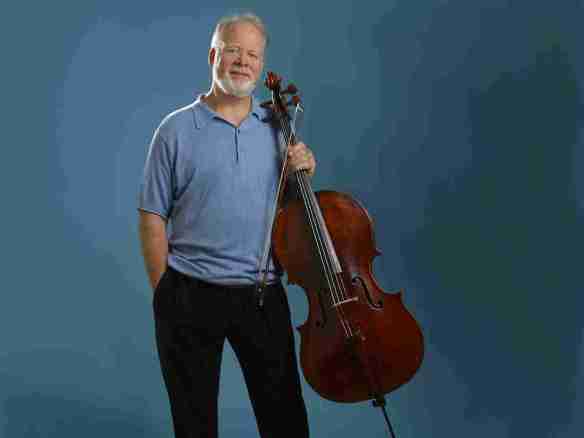
Last night we learned the sad news that the great American cellist Lynn Harrell has died at the age of 76.

This article from Washington’s NPR gives a good overview of his career, which began with a stint leading the cellos of the Cleveland Orchestra under George Szell in the 1960s and 1970s.

This gave him the springboard to become a solo artist, and he made many live appearances with leading conductors and orchestras, as well as forming a formidable partnership to play piano trios with violinist Itzhak Perlman and pianist Vladimir Ashkenazy.

Harrell’s discography is defined largely by his recordings made for Decca, with whom he had a close relationship, but outside of these he recorded Beethoven and Tchakovsky as part of his trio, a disc of the latter’s Piano Trio in A minor winning a Grammy in 1981.

My own personal interactions with Harrell’s work centre around Bach’s Solo Cello Suites, which he recorded for Decca between 1982 and 1984, and where his excellent recordings opened the door to a lifetime’s supply of musical treasures.

The playlist below offers a glimpse into Harrell’s career, headed by Bach’s Solo Cello Suite no.3 and concluding with the tumultuous Tchaikovsky disc mentioned above. In between we get recordings of Rachmaninov and Dutilleux’s wonderful Cello Concerto Tout un monde lontain, recorded with Charles Dutoit and the Orchestre National de France. There is a Ravel duo with Nigel Kennedy and a rarity, Harrell championing the cause of fellow American Victor Herbert with his Cello Concerto no.2. You also have the chance to hear the cellist in his previous role as section leader in the Cleveland Orchestra, joining Robert Casadesus in a solo role as part of Liszt‘s Piano Concerto no.2.

With thanks for some wonderful music making…

Switched on – Fabric presents Maribou State (Fabric)

What’s the story?

Fabric may have called time on their two long-running compilation series, each of which declared on 100 not out, but they are still producing anthologies centering on a particular artist. Some, like this one from the duo Maribou State, are still concerned with reproducing the feel of a night out to the club.

There’s a subtle difference this time around, however, as the mix hones in on the sweet spot where the feelings build, Maribou State heading out on the journey to their own set with spirits and expectations high. This most pleasant of states is enhanced by field recordings from previous journeys into the club, complementing the choice of 21 tracks.

What’s the music like?

Dreamy. There is pure escapism at work here, right from the moment the strains of Stelvio Cipriani’s Mary’s Theme ease the listener into the evening. Over the next few tracks Maribou State establish a relaxed tempo and a penchant for a catchy hook or two, the relatively short excerpts blending together and fed through a warm fuzz. That slightly out of focus sound peaks through the heady sounds of Kutiman’s Line 5 and carries us through a soft-hearted cover of Ain’t No Stopping Us Now from Risco Connection, nicely done.

This is a junction point in the mix, after which it gets more percussive while retaining the fuzzy sheen round the outside. This works especially well when tracks like Oriyin’s Roll The Dice, with its nagging vocal hook, and Botany’s excellent Wednesday Night Oct 28 2015 are involved. The latter, a Western Vinyl release, pans out nicely, losing its beats as disjointed choral voices circle the listener in a heady cocktail.

Two-thirds of the way through the mix the tracks get longer, and we arrive at the squelchy funk of Shire Tea’s Hackney Birdwatch, as English as it sounds. This is the cue for two new tracks from Maribou State themselves, the urgent Mother and the skittish beats of Strange Habits, featuring Yussef Dayes. These frame another exclusive, their pulsing remix of Radiohead’s Reckoner, with some squiggly synthesizers to complement Thom Yorke’s floated vocal. Earlier on in the mix we get the duo channelled through the pseudonym North Downs, the easy and rather lovely Settle Down.

The mix wraps up with another Shire Tea track, the quick stepping Gentleman’s Whistle Club, which steps into the cooled down piano vibes of Hailu Mergia, and the improvisatory Yefkir Engurguro. This disappears into the middle distance.

Does it all work?

Most of the time. The mix drifts a little towards the middle, in danger of settling too far into the background, but thankfully the duo have an ace or a hook up their sleeves to bring it forward again. It’s good to hear a quirk or two in the productions, and refreshing to note the relative absence of big names.

Is it recommended?

Yes. For much of this warming hour and a quarter there is a strong sunshine vibe, and although Maribou State are be recreating a night at Fabric they could just as easily be providing the soundtrack for a particularly warm poolside scene in the Mediterranean. How we could do with that now!

Listen

Buy

Switched on – Jacaszek: Music for Film (Ghostly International)

What’s the story?

Polish composer Michal Jacaszek has pulled together excerpts from a number of different cinematic projects into a single work that runs for 45 minutes. It includes music from Rainer Sarnet’s black and white film November, a fantasy drama from 2017, where the brief was to create music ‘full of dark magic, strange beliefs, poverty, grit and natural beauty’, all around a story of love in old Estonian pagan times. Also included is music from He Dreams of Giants (2019) and Golgota wrocławska (2008).

What’s the music like?

As you might expect, Music For Film offers vivid imagery, often with cold and dark undertones. Jacaszek’s music unfolds with a measured tread throughout, a slow but determined walk forward that often leads into places of darkness. There is a close link to the music of Penderecki and Górecki here, more in mood than in explicit style, for Jacaszek is individual enough to hold his own comfortably.

The sparse textures of 49 are an ominous introduction, with a particularly cold piano sound, and this leads into the unsettling scene described by The Iron Bridge. Dance, too, has an underlying dread, the metallic and macabre sounds shuffling above a steadily moving bass line, eked out on a pizzicato bass instrument. Liina has a similarly bleak profile, with a cold vocal taking the lead.

There is white light in and around this music however, carefully and often beautifully shaded. Christ Blood Theme makes slow and stately progress while Encounter Me In The Orchard stops the listener in their tracks with a rich choral texture, like an imported piece from the Renaissance suspended in time.

November Early is particularly striking, painting the natural beauty required by the Estonian picture while reminding us of the bitter cold. Soft pianos toll, distant strings offer icy tremolos, but the steady foundations of pizzicato strings are what holds this music together, Jacaszek recreating the figurations of an old baroque-style Chaconne. By contrast the remove November Late builds from sparse beginnings to a full blooded orchestral climax.

Does it all work?

Yes, though Jacaszek’s work should come with the caveat that the listener needs to be in the right frame of mind to fully appreciate it! There are some very cold scenes here, achieved through masterly orchestration and the intriguing and often lingering glances towards older musical forms. Again this is in common with fellow Polish composers, but Jacaszek has plenty of original touches himself.

Is it recommended?

Yes. Jacaszek writes with powerful emotion, often through restraint. His music is often headed for dark places but it is well worth encountering if you haven’t previously heard it.

Listen and Buy