Unknown's avatar

About Arcana

My name is Ben Hogwood, editor of the Arcana music site (arcana.fm)

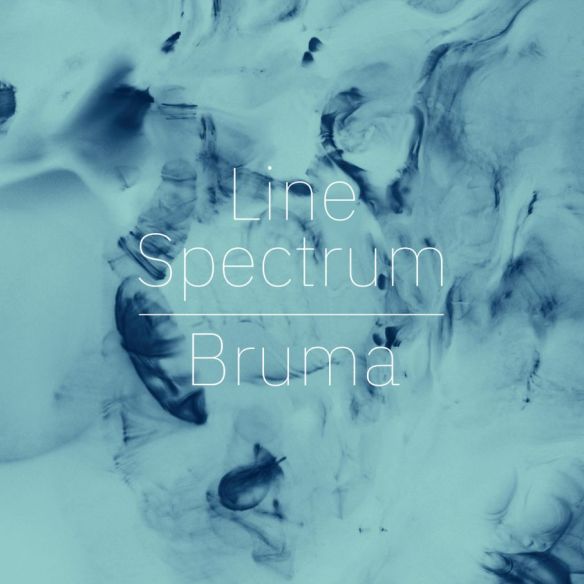
Switched On – Line Spectrum: Bruma (Glacial Movements)

What’s the story?

On their website Glacial Movements describe Bruma as ‘an album of exploration. Somewhere cold and safe’. It is the work of Ukrainian artist Oleg Puzan, whose approach is less obviously musical, building sound pictures through a massive array of small figures and bigger, weather-like effects.

What’s the music like?

Atmospheric. You will not find much in the way of obvious melody or harmony, but that is not a criticism, more an observation of the way Puzan works. The development of each of the five tracks on the album is strangely compelling, though each are closely linked together, the change between tracks coming at very definite time divisions. Although Bruma – which appears to mean a kind of sleep or hibernation – seems set to function as background music its very different textures and panoramas mean it has to be listened to in the foreground, dominating the headphones as it moves from comforting sounds to more ominous drones that approach from the distance.

A Set Of Events At The Shore, evocatively titled, is the first track, and as outlined above it is all about atmosphere and noise, creating a space with running water and natural noises – but compromising it with a not altogether pleasant drone that makes itself known quite high up the spectrum.

An intense experience on headphones, with some thick ambience but also what feels like white noise and interference as Fabric Merge progresses. No melodies as such but concentrated atmospheres. Ways gets thicker still, but the ambience and cold acoustic is more reassuring, and one that as a listener you want to dive into, with a rich chord growing to encompass the whole audible picture. The fourth track, Fluidity, has the flow of cold water in a regular pattern to sooth the mind, leading to the 15-minute final track Quietness. This is comforting but only to a point,with a disquieting sense of danger around the edge, as though you’re in a place you don’t want to get marooned in.

Does it all work?

Yes, providing you’re in the right mood. Some of the more high pitched sounds do actually become challenging after a while, but are essential to the whole experience.

Is it recommended?

Yes, because of the intensity of its ambience, though the manipulation of the many sounds on Bruma will not be to every listener’s taste.

Stream

Buy

Switched On – Albrecht La’Brooy: Healesville (Apollo)

What’s the story?

Albrecht La’Brooy – the Melbourne duo of Sean La’Brooy and Alex Albrecht – bring this 40-minute album of improvised ambience to calm our nerves. Their Spotify biography tells the real story, describing an approach looking to ‘modernise the classic jazz format while walking ambient music through the rainforest and down to the shore. Absorbing Australia’s landscape to craft enlightened, on the fly performances that are never to be missed and never to be repeated’.

What’s the music like?

‘Natural ambience’ is the most appropriate description, for the music is rooted in field recordings made by the pair. On Healesville these include noises associated with tending the land – a tractor is especially prominent – but also a wider sound scape which includes bird noises, indistinct voices and other sounds caught on the breeze. Above this are long, held notes, a slightly shrill bird-like sound and softly intoned piano unisons or chords with plenty of sustain, which unfold like an improvised chorale. The held notes behind can range from one single pitch to thicker clumps but always feel consonant in their make-up.

The fact that two of the five tracks on this album bear the word ‘lullaby’ tells a lot of the mood and tempo at which Albrecht La’Brooy operate, but as well as relaxation there is positive energy to be found in abundance, especially in the piano playing. Sean’s Lullaby may have a good deal of reverb, but its stream of consciousness respectfully echoes Satie and Debussy.

Does it all work?

Healesville is a supremely calming listen, experienced at its best on the morning commute but equally effective in a quiet room. It sets an incredibly restful outdoor scene, making the listener feel as though they are lying on their back in a field with no reason to get up any time soon.

Is it recommended?

Yes, and especially to every commuter whose fevered brow needs soothing!

Stream

Buy

Proms at … Cadogan Hall 4: Aris Quartet play Schubert, Sirmen & Haydn

Aris Quartet [Anna Katharina Wildermuth, Noémi Zipperling (violins), Caspar Vinzens (viola), Lukas Sieber (cello)]

Schubert String Quartet no.1 in G minor / B flat major D18 (1810/11) (2:03 – 18:14 on the broadcast link below)
Maddalena Laura Sirmen String Quartet No. 5 in F minor (publ. 1769) (20:20 – 31:43)
Haydn String Quartet in B flat major Op.76/4 ‘Sunrise’ (1796-7) (33:04 – 54:33)

Cadogan Hall, Monday 12 August 2019

Reviewed by Ben Hogwood

You can listen to this Prom on BBC Sounds here

The BBC Proms are charting 800 years of history in their Proms At…Cadogan Hall concerts this season, and the fourth instalment brought an examination of the string quartet towards the start of its existence. It was great to see Haydn – the acknowledged father of the form – given top billing for once, with one of the six masterpieces published as his Op.76, the mature peak of his chamber music output.

Before that, the youthful Aris Quartet brought us music by an even younger composer. Schubert was only just into his teens when he delivered the first of fifteen published string quartets, and even at this point – with a work given its first performance by the family quartet in their home – he was finding a distinctive and adventurous voice. Schubert played viola in his own piece – and it was published when he turned 15.

The String Quartet no.1 inhabits two keys, G minor and its major key ‘relative’, B flat. The first movement (from 2:03 on the broadcast link above) has a tender slow introduction but becomes surprisingly stern as its main theme kicks in (3:47), with brisk tremolo figurations. This is complemented by a less stern, major key theme later on (5:24). The Aris Quartet gave it the appropriate depth, before moving on to the silvery elegance of the Menuetto (7:56), where the quartet are instructed to use mutes. This had a nice rise and fall to its dance steps in the Aris performance. A warm Andante followed (11:30), now in the sunnier climbs of B flat major, before a bright and breezy finale (14:31) in the same key confirmed the young composer’s progress not just with writing for strings, but in his already enviable grasp of form.

Very little has been heard to date of Maddalena Laura Sirmen, but thanks to the BBC Proms we had confirmation that women composers were indeed alive and well in the 18th century. Thankfully performances of their work are starting to break through, and to hear Sirmen’s String Quartet no.5, published alongside Mozart’s early works, was to hear a voice rooted in Venetian Baroque traditions but very much looking forward.
Sirmen’s work opens with a short but quite austere Largo (20:20), which the quartet played with a bit less vibrato, gradually using more as the music became warmer. Then at 21:30 they gave a nice, full sound to the first Allegro, an attractive movement and a busy affair where the parts are closely intertwined. Sirmen’s style is free of padding and the players enjoyed its conversational style. The Largo returned at 26:26, casting a shadow before the Minuetto (27:40) drew us back to music of optimism and charm.

Haydn wrote a great many string quartets – thought to be 68 in all – but the six published as Op.76 are among his finest achievements in the field. He somehow manages to find a fresh approach with each of his works, and in the case of the ‘Sunrise’ it is through a musical portrayal of the very beginning of the day (from 33:04). He had already successfully tried this approach in a symphony (the introduction of Symphony no.6 (Le Matin) the best example) but this is a more intimate affair.
The performance here was beautifully shaded to catch the first light, with a sensitive and beautiful solo from Anna Katharina Wildermuth, but the ensuing busy passages – the players following the composer’s directions – were much more forceful, as though the sun had woken a gale force wind too.

This was a very fine performance, enjoying Haydn’s invention and wit, but giving each return to the ‘Sunrise’ material the magic of the first hearing. The second movement, marked Adagio, was expansive but also softly voiced (41:18), an example of one of the composer’s later, radiant slow movements. There was still plenty of room given to the first violin part, and Wildermuth took full advantage with excellent intonation.

A typically lively Minuet followed, with a smile and the odd knowing glance through its chromatic melodies (45:59). With it came a contrasting Trio section which had something of the march about it (57:35), over a steady drone from cellist Lukas Sieber, with the Minuet repeated at 49:01. The fourth movement (50:02) was elegant, light on its feet and with fine ensemble playing, the quartet enjoying Haydn’s presentation of the theme and its variations right up to the brisk finish.

Once off air the quartet gave an encore of the last movement of Dvořák’s American string quartet, disrupting the progression through 800 years for the live audience rather, but again playing with plenty of energy and virtuosity.

Listen

The music in this concert can be heard on Spotify below:

The six Surmen quartets can be heard on Spotify in this collection from the Allegri Quartet:

Meanwhile Haydn’s collection of Op.76 quartets can be heard here in a fine set of recordings from the Takacs Quartet:

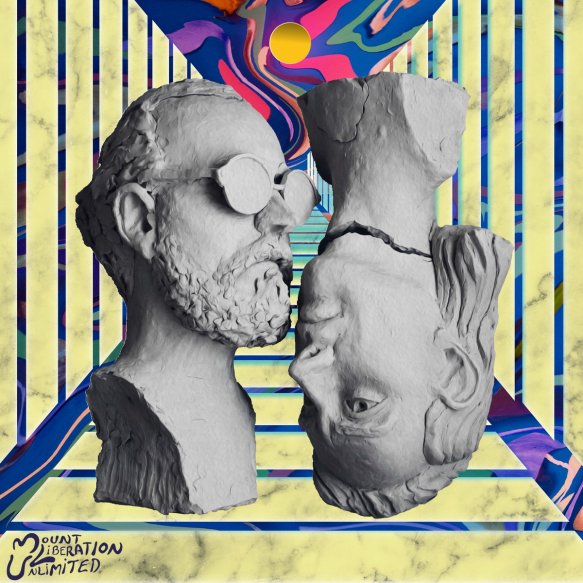
Switched On – Mount Liberation Unlimited: Mount Liberation Unlimited (Studio Barnhus)

What’s the story?

Mount Liberation are from Stockholm, Sweden, and they make music best described with the words ‘space’, ‘funk’ and ‘percussion’ in the same sentence. Tom Lagerman and Niklas Janzon used to be in a band together but found they were enjoying themselves too much in their new project, signing to Axel Boman’s Studio Banhus label. This is their self-titled debut album.

What’s the music like?

Mount Liberation Unlimited is a thrilling ride. Bolstered by heaps of live percussion, their take on space disco is packed with riffs, quirky harmonic asides and a strong rhythmic base. Welcome To Organic is a great illustration of their approach, with a breezy hook, cut up vocal, beefed up percussion and a feelgood vibe – yet if anything it is eclipsed by Gospel (Makes My Body Move In Sinful Ways), a particularly funky number with filtering and drum fills to work an absolute treat on the dancefloor.

Prozac is similarly full of upward looking sentiments, ‘Krauten’ has a driving bass and solid drum track that would do the likes of Justice proud, while later on Techno Thrills and Ecstasy Pills ends in a lush, Balearic warmth giving the effect of a sonic bath to the headphone listener.

Does it all work?

It’s irresistible. Any album that has the ability to put a smile on its listener’s face within five minutes has to be admired, and not only do the pair manage that but they maintain the feeling even in tracks like the seven minute Climb Me Up, with its twinkling xylophones.

Is it recommended?

This is an excellent piece of work that repays multiple listens. Its organic approach, hook-laden and cunningly developed with a healthy sense of humour, is to be admired. Most of all it’s a heap of fun!

Stream

Buy

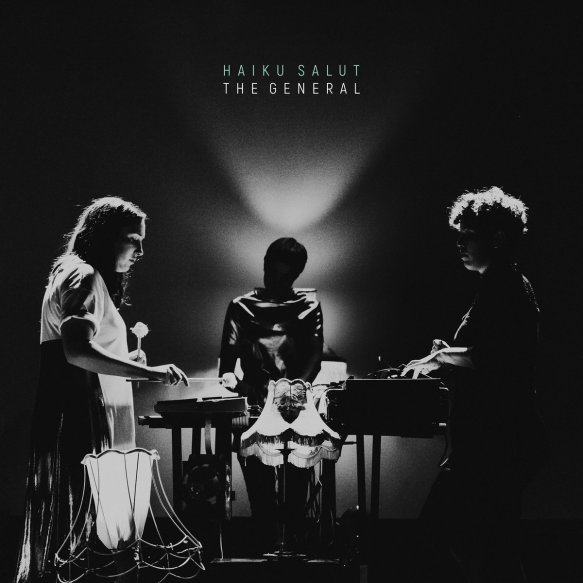
Switched On – Haiku Salut: The General (Secret Name)

What’s the story?

This is a really intriguing proposition, in which instrumental trio Haiku Salut are invited to score The General, the silent Buster Keaton film of 1926. The group have until now built their reputation with three intricate and intimate instrumental albums, all containing music that translates well to a memorable live experience of subtle imagination. This would seem to be an ideal opportunity for expansion, for the band to show their talent for the bigger screen. The soundtrack runs for the whole film, clocking in at an ambitious 79 minutes.

What’s the music like?

Much more varied than regular listeners might expect. That’s not a criticism of previous albums, more an observation that it is easy to mistakenly pigeon hole a band! If like me you had them down as pedalling intricate electronica, building on small melodic loops to more expansive effect, you would be pleased to note the number of different styles Haiku Salut naturally work in to the fibre of this record.

Initially the pairing of graceful piano and subtle electronics is familiar, and is typically effective, but the sighing motif in the main theme of Start has a sinister undertone and is unsettling. In the centre of the soundtrack, Cannon plays some brilliant sonic tricks with its massive reverb and a held drone chord, expanding the band’s sound considerably, while Train Steal produces big beats to go with the depiction of the crime itself.

This wide range of moods continues to Chopping Wood, where solemn keyboard chords intone like thoughtful brass, or Hide, where a four to the floor beat gives softly voiced energy. ‘Reunited’ conveys its emotion simply through piano, with a watery accompaniment, Firewood crackles with an energetic if subtle beat, while Obstructions has the friendly chatter of loops. The final number of the 23, Finish, returns us to the same outlook as the opening – but that slightly sinister undertone has still not gone away.

Does it all work?

Yes, and without the moving pictures there is still a strong narrative thread running through this music, which leaves a lasting impression. While the subtleties are still on show, Haiku Salut show really impressive ambition and a taste for bigger and more imaginative sounds. The potential is clearly there for the trio to score a lot more films in the future, given the thought and imagination applied here. Their style will continue to win a lot of friends through its melodic approach and interesting textures.

Is it recommended?

Yes. The General continues to impress in subsequent hearings, either in fragments or in a listen to the whole picture.

Stream

Buy