
Unknown's avatar

About Arcana

My name is Ben Hogwood, editor of the Arcana music site (arcana.fm)

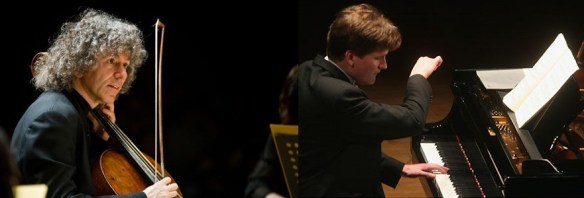
Wigmore Mondays – Steven Isserlis & Olli Mustonen in Prokofiev, Schumann and Mustonen

steven-isserlis-olli-mustonen

Steven Isserlis (cello), Olli Mustonen (piano) (both above)

Schumann 3 Romances, Op 94 (1849) (11 minutes); 3 pieces from Album für die Jugend, Op 68: Sheherazade; Winterszeit I & II (1848) (9 minutes)

Olli Mustonen Frei, aber einsam (UK premiere) (2014) (4 minutes)

Schumann arr. Isserlis Intermezzo from F.A.E sonata (1853) (3 minutes)

Prokofiev Cello Sonata in C, Op 119 (1949) (23 minutes)

Listen to the BBC Radio 3 broadcast here, until 2 November

Arcana’s commentary

Schumann is arguably Steven Isserlis‘ favourite composer. The clues are there in the enthusiasm with which the cellist talks about his music, the affection he gives to each of the melodic lines, and in this concert the construction of an imaginative suite of works for cello and piano, where his natural and extremely intimate lyrical side was to the fore.

Schumann did not write a fully-fledged sonata for cello and piano, but he did complete a number of pieces either directly for the combination or in a form that could be naturally arranged. Such is the case with the 3 Romances, published for oboe and piano as Schumann’s Op.94 but making a seamless transition to the cello.

In this performance the first Romance (from 1:47 on the BBC iPlayer) is a little doleful, the second (from 5:22) is notable for a relatively stormy central section, while the third (9:13) brings the instruments together in thoughtful unison.

After this Isserlis sat head bowed, listening intently as Olli Mustonen performed pieces from Album for the Young as though he and the listener were the only two people in the room. The first piece is Sheherazade (from 13:19), finding the level of intimacy that Schumann’s pieces for the young so consistently achieve, then from 17:10 we hear Winterszeit I and then the changing moods of Winterszeit II (19:01)

Mustonen himself then turns composer, with Frei, aber einsam (from 22:06), a piece for Isserlis alone written with the grace and intimacy of Schumann. It also has a bit of his childlike mischief when it gathers confidence – rather like a bird emerging from the nest – and starts flying along.

Mustonen uses the notes F-A-E as his starting point – which offers a strong like to the next work, heard from 26:46 we hear a tender performance of an arrangement of Schumann’s Romance for the collaborative FAE Sonata, a work written in tandem with Brahms (who contributed the famous Scherzo) and Albert Dietrich. It uses the notes ‘F-A-E’ in the simplest possible way – but also the most personal.

Following this attractive suite is the Cello Sonata of Prokofiev. Typically for the Russian composer this is full of good tunes, and in this performance (from 32:26) Isserlis and Mustonen bring them all to life in a vivacious performance. Isserlis had his way with the audience in the hall, too, with a few glances that sent up the more humourous moments of the second movement perfectly (from 42:46). There is music of romantic power, too, whether in the powerful climax of the first movement (at 41:11) or in the big finale (from 47:27) which sweeps impressively through its return to the main tune at 51:47.

A wonderfully affirming concert ends on a sad note with a tribute to the late conductor and violinist Sir Neville Marriner, the face of the Academy of St Martin-in-the-Fields, who passed away the day before at the age of 92. Isserlis chose the second of Schumann’s Five Pieces in Folk Style (from 56:42), and with Mustonen proceeded to give a touching and affectionate encore.

Further listening

For more music related to this concert, try the Schumann and the FAE playlist on Spotify below. This includes the whole of the collaborative FAE Sonata, the oboe and piano version of the 3 Fantasy Pieces in a wonderful recording from Heinz Holliger and Alfred Brendel and, to finish with, a rare recording of the Cello Sonata no.1 by Myaskovsky. He was the composer who raved about Prokofiev‘s Cello Sonata after its early performances – so here is his own moment in the sun:

by Ben Hogwood

The Brussels Philharmonic Orchestra and Stéphane Denève in Beethoven, Guillaume Connesson and Respighi

brussels-philharmonicBrussels Philharmonic Orchestra (above, picture courtesy of Samsung)
Richard Whitehouse on a visit from the Brussels Philharmonic Orchestra and their chief conductor to the Cadogan Hall, offering a rare chance to hear the music of Guillaume Connesson.

Cadogan Hall, Thursday 29 September 2016

Beethoven Symphony No. 6 ‘Pastoral’ (1808)

Connesson Flammenschrift (Letters of Fire) (2012); E chiaro nella valle il fiume appare (And clear in the valley the river appears) (2015)

Respighi Pini di Roma (1924)

Brussels Philharmonic Orchestra / Stéphane Denève

This evening’s concert brought a welcome visit from the Brussels Philharmonic and current music director Stéphane Denève, his advocacy of new music evident in the inclusion of two recent pieces by Guillaume Connesson which were performed on either side of the interval.

Now in his mid-40s, this French composer conjures a wide range of influences from François Couperin, via Wagner and Strauss, to Dutilleux and the film music of Bernard Herrmann and John Williams (a pity the programme book included no biography either of Connesson or the orchestra – while being dominated by an absorbing if, in context, overly detailed note on the Beethoven).

These pieces are the first two parts of a symphonic trilogy, with Flammenschrift both an evocation of Beethoven and a tribute to the ‘golden age’ of Germanic music. Strauss does indeed make a fleeting appearance during the more lyrical central episode; otherwise, it is the incisive neo-classicism of Honegger that comes most readily to mind, with the relentless rhythmic drive generating an impetus maintained right through to the effervescent final pages.

Taking its title from lines by the early nineteenth-century poet Giacomo Leopardi, E chiaro nelle valle il fiume appare is ostensibly the slow movement of this sequence – its alternately ethereal and passionate manner recalling the later music of Roussel (notably the Adagio from the Third Symphony), with Connesson proving hardly less adept in controlling the expressive momentum of music such as borders on without quite spilling over into overkill. Presumably the questioning tone on which it ends is answered by Maslenitsa, the final part of this trilogy.

Make no mistake, Connesson is a composer in which formal security is allied to an orchestral sense of considerable flamboyance. Interesting that, along with older contemporaries such as Nicolas Bacri, he should draw inspiration from an earlier era of French music – bypassing the serial complexity of Boulez or the harmonic intricacy of Grisey or Murail. Accessible without being facile, his music may yet gain regular hearings here, and there could be no doubting the conviction with which orchestra and conductor presented it to tonight’s appreciative audience.

Nor was the Brussels orchestra found wanting in the familiar works which opened and closed proceedings. A viable first half in itself, Beethoven’s ‘Pastoral’ Symphony did not fit into its present context: Denève secured a fluent if rarely insightful reading, as its best in an animated take on the first movement and appealingly jaunty scherzo, but there was a lack of inwardness and repose elsewhere; while an almost complete absence of vibrato from the strings gave their playing an unyielding quality emphasized by the forward ambience of the Cadogan acoustic.

More successful overall was Respighi’s Pines of Rome, the second and most enduring part of a ‘Roman triptych’ by which he remains best known to posterity. Denève found humour amid the frenzy of the ‘Villa borghese’ then drama in the sombre musings ‘near a Catacomb’. The sensuousness of the ‘Janiculum’ saw an amusing cameo from the percussionist operating the gramophone record of a nightingale, whereas the crescendo of the ‘Appian Way’ brought a frisson of excitement abetted by offstage brass and organ that fairly brought the house down.

The Brussels Philharmonic performs the final part of Connesson’s trilogy on 9 April, 2017. Further details at the Cadogan Hall website

Meanwhile further information on the Brussels Philharmonic Orchestra can be found from their website

Mariinsky Orchestra with Valery Gergiev – Prokofiev Symphonies (3)

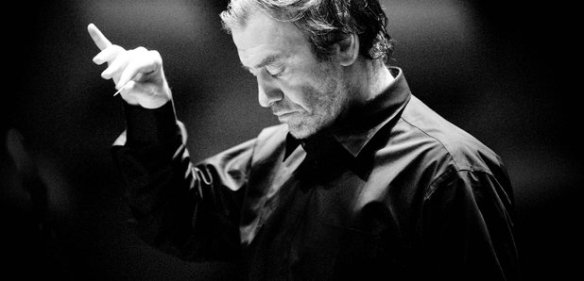
valery-gergiev-3

The final instalment of Valery Gergiev’s Prokofiev symphony cycle with the Mariinsky Orchestra shed light on the composer’s late works, and was as illuminating as the previous two concerts in the series.

Late in life Prokofiev’s works took a darker turn, and while his characteristic humour is still present there are more threats in the shadows, particularly where the Symphony no.6 is concerned. This is increasingly regarded as the masterpiece of the seven, and in the right performance it carries a shattering impact.

This was the right performance emotionally, if not always in terms of ensemble. Gergiev has been unfairly criticised this week for fielding unrehearsed performances – there was absolutely no evidence to these ears in the first two concerts of that! – but in the first movement of the Sixth a few things went awry, particularly with extraneous noise from a violin and a number of flat horn solos.

The emotional content, however, was not affected, and as the symphony wore on so did the feeling of impending dread. Brief consolation was offered by the lovely, chant-like theme given to flute and oboe, but the lower end of the orchestra worked hard in punching their rhythms to the front of the performance, the sound of a machine going wrong. As the final movement started its jolly approach soon emptied, and after the brief reappearance of the consoling theme some shattering chords signalled the descent into absolute darkness. It was an incredibly powerful moment from both conductor and orchestra, and no wonder there was a pause before the applause began.

Watch a performance from 2012 of Gergiev conducting the Mariinsky Orchestra in the Symphony no.6.

The Symphony no.7 has a similarly awkward ending, though here the composer is more resigned to his fate, for illness was now taking over Prokofiev’s life. The lovely unison tune that is the symphony’s calling card was beautifully sung by much of the orchestra, while the quick step theme for the last movement was impishly done, but again the sense of emptiness came through, the ticks and tocks of the final page leaving a sour taste. Prior to this the second and third movements felt like barely finished sketches, but Gergiev characterised them as he would a ballet score. It was a performance notable for its beauty – much of the ensemble problems had been restored – and also its thoughtfulness.

Watch a performance from 2012 of Gergiev conducting the Mariinsky Orchestra in the Symphony no.7.

Between the two symphonies there was an extraordinary performance of the Sinfonia concertante for cello and orchestra. This marked the UK debut of the Russian cellist Alexander Ramm, and on this evidence he will be back very soon. His intonation was incredibly secure and his virtuosity almost beyond question, even in the most demanding passages where the cello sits at the very top of its register.
alexander-rammPower, pace and passion were the features of the fast music, but when this briefly relented there was a real depth of feeling to the soaring, chant-like melody of the second movement. Gergiev and the orchestra gave crisp accompaniment, but Ramm was the star for this incredibly assured and most musical performance, redolent of Steven Isserlis in his youth!

Gergiev and the Mariinsky Orchestra have given us a Prokofiev season to relish here, reminding us of the composer’s melodic gifts, his flair when writing for orchestra and his good humour. The darker undercurrent beneath these pieces has also been fully explored, revealing Prokofiev in all his guises – occasionally rash, but often deeply profound. It has been a pleasure to be part of the experience.

Ben Hogwood

Wigmore Mondays – Doric String Quartet play Debussy and Bartók

doric-string-quartet

Doric String Quartet [Alex Redington & Jonathan Stone (violins), Hélène Clément (viola), John Myerscough (cello)]

Bartók String Quartet no.4 (1928) (26 minutes)

Debussy String Quartet in G minor (1893) (27 minutes)

Wigmore Hall, London; Monday 26 September

Listen to the BBC Radio 3 broadcast here, until 26 October

Arcana’s commentary

An intriguing clash of two of the twentieth century’s biggest composers, glimpsed at very different stages in their development. It was perhaps a surprise that the Doric Quartet chose to begin with the Bartók, with its more abrasive tones, rhythms and harmonic language, but it received an extremely fine performance here.

Bartók wrote the piece at a point where his use of ‘cyclical’ and ‘arch’ forms was prevalent in his work. The String Quartet no.4 works as an arch, its first and fifth movements big-boned compositions, while the second and fourth are flighty and elusive. The third is a typical example of the composer’s night music, supremely evocative and more than a little wary of the shadows.

If not perhaps as ‘rustic’ as some of the Hungarian quartets in performance, it was played with precision accuracy, the rhythms making themselves clear with plenty of cut and thrust. The rocking motion of the second idea in the first movement (from 3:50 on the broadcast) offered a nice contrast.

It was perhaps in the middle movements however where the Doric were strongest. The second movement, played with mutes (from 8:11) offered shadowy contours and elusive, silvery sounds – not forgetting the odd outburst – while the third, a slow movement (from 12:02), has lovely shady contours at the end (from 17:28). Best of all was the fourth movement (17:58), played pizzicato (plucked) and with some especially good snappy effects.

Bartók’s moments of simplicity were surprisingly moving, while the gritty determination on show elsewhere was very convincing – nowhere more so than the start of the last movement, a big ensemble section of terrific drive (21:08).

Debussy’s only String Quartet comes towards the start of his composing career, just as he was shaking off the overbearing influence of Wagner. It signals a conscious move towards the more ‘impressionist’ language he started using with orchestral works such as Prélude à l’apres-midi d’un faune, but remains packed with extremely catchy tunes, enjoyable humour and rich textures.

The Doric performance was a very good one but did on occasion lapse towards a bit of fussiness with tempo variations. It certainly started rather smoothly (30:31), blunting the edges of Debussy’s humour a bit, but lovingly played. The less witty approach could also be felt in the second movement (from 37:10) – which, incidentally, is receiving a lot of exposure at the moment thanks to the Apple advertisement below:

The slow movement (from 41:21) was a beauty, notable for some lovely, elegiac sounds from the viola of Hélène Clément (at 44:22) and a beautifully judged climax. The finale felt a bit episodic, and it was difficult to always hear Alex Redington’s line at the very top of the texture where I was sat at the end of the hall. That said, its exuberance (from 49:47) could hardly be faulted.

Further listening

If you like the music in this concert, Ravel’s only String Quartet is a logical piece to hear next. It bears many similarities to the Debussy but is if anything even more exquisitely formed. For something a bit fuller for strings from Bartók, the Music for strings, percussion and celesta is a terrific orchestral piece, full of atmosphere and drama – so much so that Stanley Kubrick turned to it as part of his horror film The Shining. The playlist can be found here on Spotify, together with the music from this concert:

The Oberon Symphony Orchestra play Sibelius, Liszt and the Saint-Saëns ‘Organ’ Symphony

oberon-orchestraOberon Symphony Orchestra and Samuel Draper

Richard Whitehouse on the Oberon Symphony Orchestra‘s latest concert of Sibelius, Liszt and Saint-Saëns, given at their home of St James’s, Sussex Gardens, London on Saturday 17 September

Sibelius The Swan of Tuonela Op.22/2 (1895)

Liszt Les préludes (1854)

Sibelius Valse triste Op.44/1 (1903)

Saint-Saëns Symphony No. 3 in C minor, Op. 78, ‘Organ’ (1886)

Andrew Furniss (organ), Oberon Symphony Orchestra / Samuel Draper

Tonight’s concert (the fourteenth) from the Oberon Symphony had a strong element of Liszt running through it – not least a welcome revival of the symphonic poem Les préludes which, while its historical importance is undeniable, retains only a marginal place in the repertoire.

Although it started out as the autonomous overture to settings of Joseph Autran’s Les quatre éléments (the connection with Alphonse de Lamartine’s Nouvelles méditations poétiques was made later and its reasoning remains unclear), Les préludes is essentially an abstract reflection on the passage of life from aspiration to fulfilment, and Samuel Draper rightly emphasized the cyclical evolution of its themes as these outline a viable sonata design whose introduction and coda confirm the emotional distance travelled. The secondary themes are among Liszt’s most appealing and were eloquently rendered; if the stormy central development seemed inhibited, a convincing momentum was maintained from the ethereal interlude through the reprise then on to an apotheosis whose grandeur was shorn of bombast or unnecessary grandiloquence.

These latter qualities, wholly extraneous to Liszt’s thinking, had by the mid-twentieth century reduced this piece to little more than caricature: harmlessly in the case of its soundtrack to the adventure series Flash Gordon, but offensively so when the final bars were used to announce Nazi bombing successes during the Blitz. In stressing purely musical virtues, a performance such as this can only abet the work’s and the composer’s cause; hopefully Draper will have an opportunity to include another of Liszt’ s symphonic poems in these concerts before long.

When Saint-Saëns (retrospectively) dedicated his Third Symphony to the memory of Liszt, the latter’s reputation was still intact – not least in terms of its cyclical form, making this work the harbinger of an intrinsically French take on the genre that prospered over the next century.

Draper assuredly had the measure of this stealthy evolution across two parts. After a plaintive introduction, the Allegro took time to intensify towards the climactic reprise of its first theme, but the transition to the Adagio had the right expectancy and the latter movement was almost ideal in blending seraphic poise with a lucidly unfolding variation. Andrew Furniss ensured that the organ timbre was fully integrated into that of the orchestra – the Oberon being heard at its best in a scintillating account of the scherzo; after which, the finale was taken firmly in hand so that its big tune (did those smiles among the audience betray knowledge of its use as the 1977 hit ‘If I Had Words’?) emerged unhackneyed, while the fugal and pastoral episodes were drawn into a tight-knit and cumulative progression towards the resplendent peroration.

Prefacing each of these pieces in either half was music by Sibelius. For all its popularity, The Swan of Tuonela is among its composer’s most introspective statements. Draper brought out a sustained anguish in the strings, ideally complemented by plangent cor anglais playing from Bruno Bower. If the fraught climax of Valse triste was a little diffuse, the elegiac opening and close were tellingly rendered – underlining why this miniature rapidly became a worldwide success, and thus making the composer’s signing away of its copyright the more regrettable.

The next concert by the Oberon Symphony Orchestra, with a selection of Mozart’s arias and Mahler’s Fourth Symphony (soprano Anousheh Bromfield) is on Saturday 21st January 2017

Watch the previous concert from the Oberon Symphony Orchestra, with Cosima Yu as soloist in Copland‘s Clarinet Concerto:

Further information can be found at the orchestra’s website