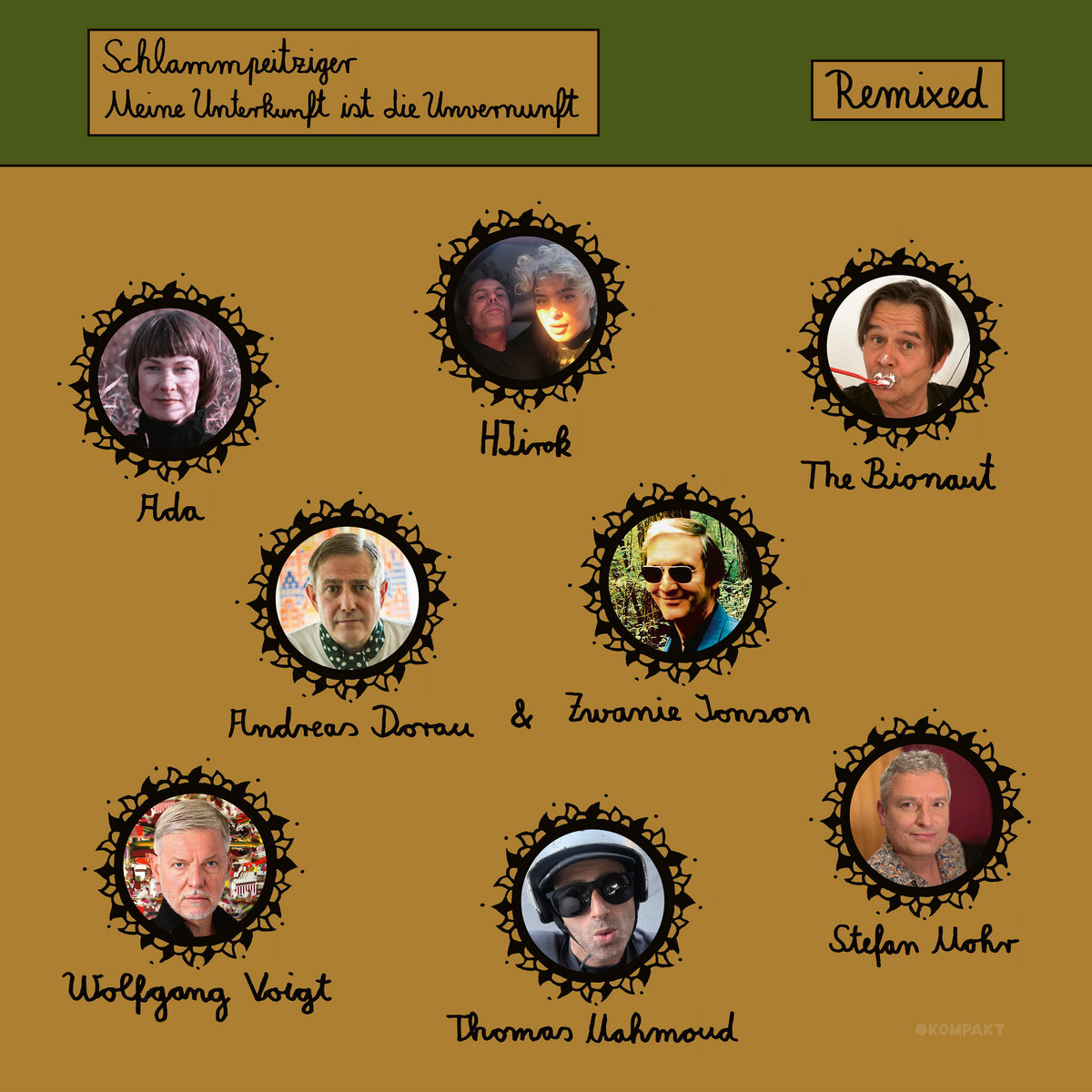
At the end of last year, Jo ‘Schlammpeitziger’ Zimmermann released new album Meine Unterkunft ist die Unvernunft to mark his 60th birthday. Now Kompakt add a celebration of their own, presenting the album in remix form, with a well chosen group of long-time companions brought together to pay tribute. Schlammpeitziger adds a tribute of his own in the form of a photograph of each on the hand-decorated album cover.
What’s the music like?
Hugely enjoyable. From the opening beats of Ada’s remix of Loch ohne Licht, it’s clear this will be a fun set of remixes, with the chunky beats supporting a fine slab of disco house.
The bass driven Schlammpeitziger goes deeper, branching out musically to good effect in the company of Wolfgang Voigt, while Selten Gesehnes gets a steely edge to its piano from Stefan Mohr. Finally Parzipan, redone by Andreas Dorau and Zwanie Jonson, takes on a generous helping of Joy Division as it heads to the electro disco.
Does it all work?
Yes – none of the remixes outstay their welcome, and there is a really good variety of styles on show.
Is it recommended?
Enthusiastically. If you’re a Kompakt fan, look no further – this sort of package shows how fun a good remix album can be!
Listen / Buy
Published post no.2,419 – Wednesday 22 January 2025
Juilliard String Quartet [Areta Zhulla, Ronald Copes (violins), Molly Carr (viola), Astrid Schween (cello)]
Beethoven String Quartet no.13 in B flat major Op.130 (1825-6) Widmann String Quartet no.8 ‘Beethoven Study III’ (2020)
Wigmore Hall, London Monday 20 January 2025 (1pm)
by Ben Hogwood
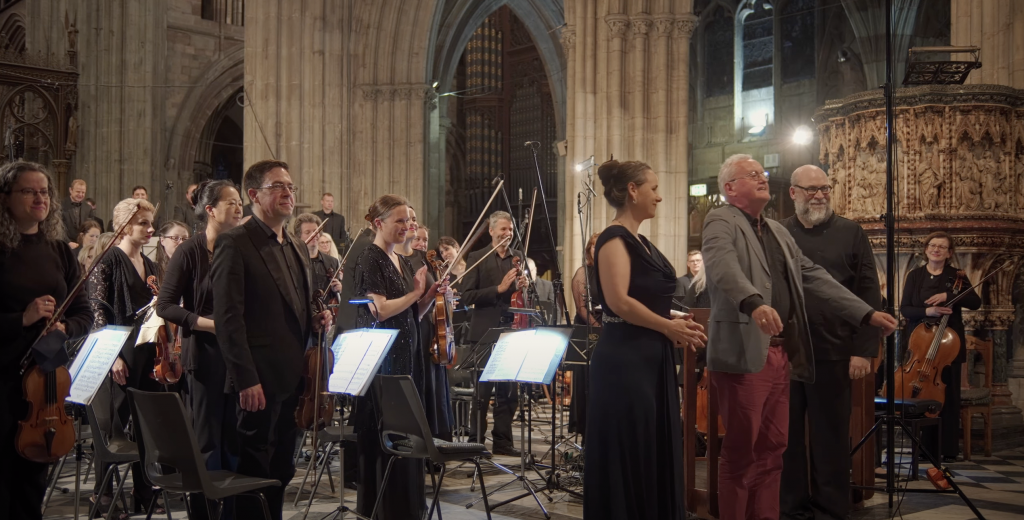
Since its formation in 1946, the Juilliard String Quartet has not surprisingly undergone a number of iterations. Its present line-up, nearly 80 years on, has brought new impetus to carry the group far into the 21st century. For this Wigmore Hall visit, a BBC Radio 3 Lunchtime Concert, the quartet paired late Beethoven with relatively late Jörg Widmann – a piece he wrote in the last five years.
More of that below, but the quartet’s decision to begin with the longer Beethoven was vindicated on account of the musical material. The String Quartet no.13 was the second of Beethoven’s five ‘late’ quartets to be published, and the third in order of composition – with its sixth and final movement known as the Grosse Fuge. A highly unusual and forward-looking piece, this movement was initially shunned by audiences, described by a critic as ‘incomprehensible, like Chinese’. Ultimately it has been recognised as a masterpiece of counterpoint and structure.
In light of its reception Beethoven completed an alternative finale for the quartet in November 1826, four months before his death – in fact the last music he wrote. The Juilliard chose this path, changing the balance of the work to place extra emphasis on the penultimate Cavatina, a movement of special grace. Indeed much of this performance found the quartet taking on serenade-like qualities, the Juilliard preferring to stress the sunlit melodies and textures, while emphasising the dance rhythms.
The first movement’s Adagio and Allegro sections had vivid colours and phrasing, brilliantly played but needing more contrast between the sections. The following Prestissimo was over in the blink of an eye, forceful when needed, and providing a contrast with the attractively voiced Andante, with tasteful melodic phrasing. The attractive Alla danza tedesca brought a serenity to Beethoven’s late writing, as opposed to the restrained beauty of the Cavatina, where first violinist Areta Zhulla’s playing was especially fine. The finale introduced a playful approach, especially welcome as the music approached its final bars, which were authoritative while lacking the outright drama the Grosse Fuge would have brought.
The connection between Beethoven and Jörg Widmann is unusually strong, the German clarinettist and composer completing a clutch of works (to date) drawing on his predecessor’s inspiration. Five of those works are his string quartets nos.6-10, a series titled Study on Beethoven, of which this quartet is the third instalment. Taking the fourth movement Alla danza tedesca from the Beethoven we had just heard, Widmann worked the second movement of this quartet into eight striking variations on its theme, explaining the placement of this work in the concert running order.
It was played with commendable virtuosity, and often enjoyable in its knowing use of Beethoven’s themes. The BBC Radio 3 announcer Fiona Talkington said the quartet had confided how Widmann now felt Beethoven was a ‘close friend…someone you can poke fun at!’, and he certainly took the opportunity for high jinks in the finale, where references to the Emperor piano concerto were rather heavily signposted.
The second movement was the most inventive, a fever dream refracting Beethoven’s theme through instrumental prisms of wildly varying shades. Ultimately you had to admire Widmann’s craft, and Beethoven’s initial invention, forgiving the occasional tendency to play more obviously to the audience. On this occasion it proved a most successful tactic, finishing a concert packed with positive energy. The only slight blot on the landscape came via some low frequency drilling which could be heard in quiet passages, no doubt emanating from one of the many building sites currently adorning Central London. Thankfully the music of Beethoven transcends such things!
The latest addition to ESO Digital, the online concert arm of the English Symphony Orchestra, is the world premiere performance of Wreck, the orchestral piece by Steve Elcock.
This is the concert Arcana’s Richard Whitehouse saw at the 2022 Elgar Festival, at the Malvern Theatres in Great Malvern. You can read his review here.
Described by its composer as ‘‘a message of salvation beyond despair, of consolation beyond grief’’, Wreck is performed by mezzo-soprano Kathryn Rudge, with the English Symphony Orchestra conducted by Kenneth Woods. Click here to go to the ESO website and watch the performance.
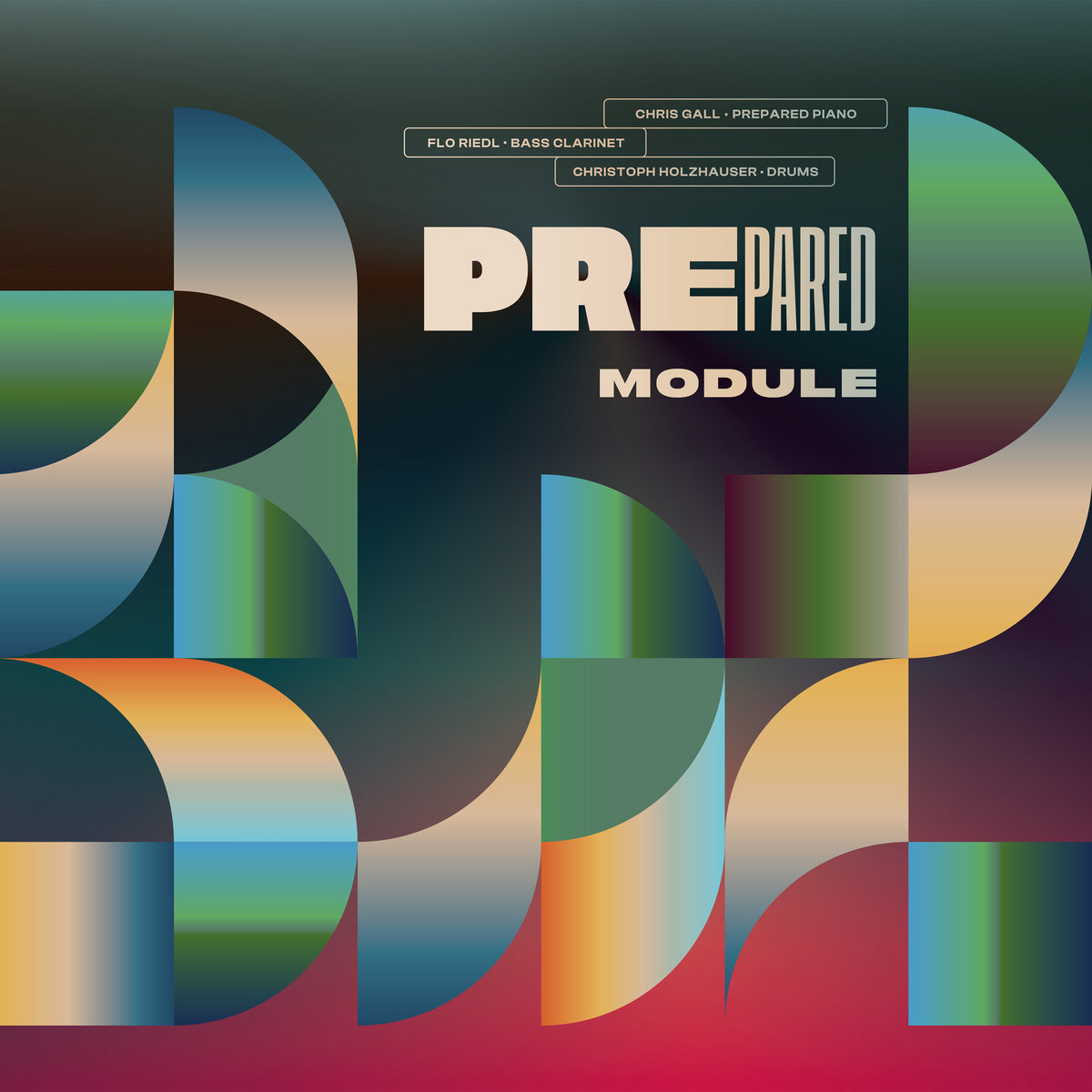
Prepared are a trio of jazz musicians from Munich, with pianist Chris Gall, bass clarinettist Flo Riedl and drummer Christoph Holzhauser. Gall plays Argentinian tango with Quadro Nuevo, Riedl plays what is described as ‘folklore-free folk music’ with Dreiviertelblut and Holzhauser is part of German hip hop ensemble Moop Mama.
As Prepared they take short musical motifs and build them into more substantial pieces, in the manner that minimalists such as Steve Reich might work but with several leanings towards jazz, especially in their syncopated rhythms.
What’s the music like?
Engrossing and a lot of fun. Gall’s piano is subtly modified in performance, and the wide range of colours he can secure from the instrument are made through hammering, tapping and plucking, bringing out its more percussive elements. Riedl’s bass clarinet is versatile, too, adding a really pleasing rasp to the texture, whether in bass part or melodic content. It often provides the essential syncopations that keep the music in the air. Holzhauser, meanwhile, is a virtuoso who plays with an improvisatory air but can switch between swinging disco beats and more complicated rhythmic exchanges.
When things cut loose and get into the groove on Modul Vier IV the trio resemble fellow dance enthusiasts Brandt Brauer Frick, but are more obviously jazz-bound in their thinking on Modul Eins II, which enjoys a persuasive sequence of crossrhythms, cutting effectively to the dampened piano. Modul Vier II is made of an attractive, rippling piano figure from Holzhauser, while the invigorating syncopations of Modul Zwei II are prompted by the clarinet.
Does it all work?
Pretty much – the trio have a very clear musical chemistry, and the fluid working out of their ideas is compelling to listen to. The colour combinations made by their instruments are ideal.
Is it recommended?
It certainly is. There is a good deal of enjoyment to be had from a trio who like to push the rhythmic envelope, bringing elements of jazz and disco into close correlation and having a lot of fun as they do so.
For fans of… Brandt Brauer Frick, Christian Prommer, Bugge Wesseltoft, Henrik Schwarz
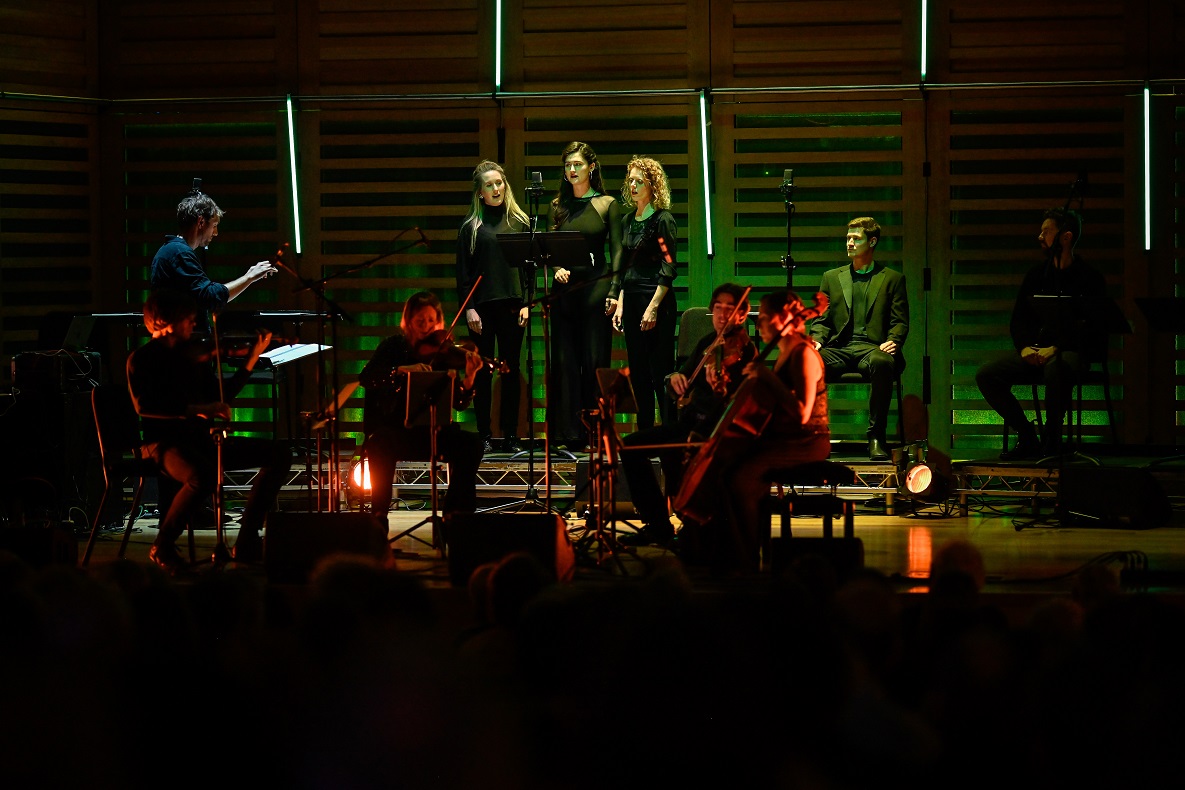
Sacconi Quartet [Ben Hancox, Hannah Dawson (violins), Robin Ashwell (viola), Cara Berridge (cello]; Festival Voices [Lucy Cronin, Ana Beard Fernández, Lucy Goddard, Sam Jenkins, Michael Craddock, Oskar McCarthy] / Greg Batsleer; Brett Cox (electronics)
Riley Sun Rings (2002)
Hall One, Kings Place, London Thursday 16 January 2025
by Ben Hogwood Pictures courtesy of Monika S Jakubowska / Kings Place
A sobering thought: in the course of this concert, the NASA spacecraft Voyager 1 travelled another 60,000 miles away from the Solar System.
Quite how far it will travel in the course of the Kings Place festival Earth Unwrapped remains to be seen, but by that time audiences will have enjoyed a wide array of musical and visual treats, all designed to heighten awareness of the plight in which we find ourselves here on planet Earth.
Such thoughts were close to the surface throughout Sun Rings, an ambitious start to the festival. The substantial work was completed by Terry Riley in 2002, the result of an approach made by NASA to the Kronos Quartet. They wanted to create a work based on recordings of ‘space sounds’ (plasma waves) from Voyager 1 made by Professor Donald Gurnett. Riley had these transferred to audible audio frequencies in order to mark 25 years since the spacecraft was launched, at the same time contemplating the place of humanity in the universe. Since SunRings was completed, Voyager I has passed from the Solar System to interstellar space.
The Kronos Quartet released their recording of Sun Rings in 2019 (reviewed by Arcana here), and until now were the only ensemble to have played the piece in public. This UK premiere from the Sacconi Quartet and Festival Voices changed that, an illustration of the ever-growing reach of ‘minimalist’ music. The twelve assembled on stage performed heroically, the unbroken span of ten movements lasting 90 minutes yet delivered with flair, poise and no little emotion.
The music was prefaced by words from Riley himself, a stamp of authenticity and gratitude from the 90-year-old composer. It was the first of many audio clips carefully managed by Brett Cox, whose contributions were crucial to the success of the performance. Chief among these were the audio translations of the Voyager craft itself, converted by Riley from spectrographs. They provided an industrial edge to the sound – reminiscent of Voyager contemporaries Cabaret Voltaire – and were alternately eerie and consoling in their different sound worlds. As the audience sat in the dark the notion of being on our own journey was inescapable, a reminder that our own planet moves even quicker than Voyager 1 itself.
The quartet made a strong start, bolstered by colourful percussion. The Overture, Hero Danger and Beebopterismo sections had rhythmic vitality, complemented by the electronics and samples. Towards the halfway mark however the momentum and intensity flagged, the notion of deep space now all around us but feeling more oppressive. Time stood relatively still in the eerie Earth / Jupiter Kiss section, though Riley’s musical intensity flagged before being re-energised by the Festival Voices. The excellent singers brought expression and impetus to Earth Whistlers and Prayer Central, but on occasion it was difficult to hear some of the words, the singers’ pitch aligned with the frequency of the audio recordings.
The most powerful music, ironically, was the slowest and the most restrained. The coda, One Earth, One People, One Love, became a deeply felt meditation, the singers whispering under their breath as they moved slowly to the exit in an inspired piece of choreography. The pensive strings remained, adding their commentary to recorded spoken word, whose statements could not have been more apt.
As I write this, the news of alarming carbon dioxide levels in the Earth’s atmosphere serves as a reminder of our changing world, hurtling towards the environmental precipice. This stark reality check confirms Earth Unwrapped to be arguably the most important arts festival in London this year – and this was an auspicious start.





 Arcana.fm