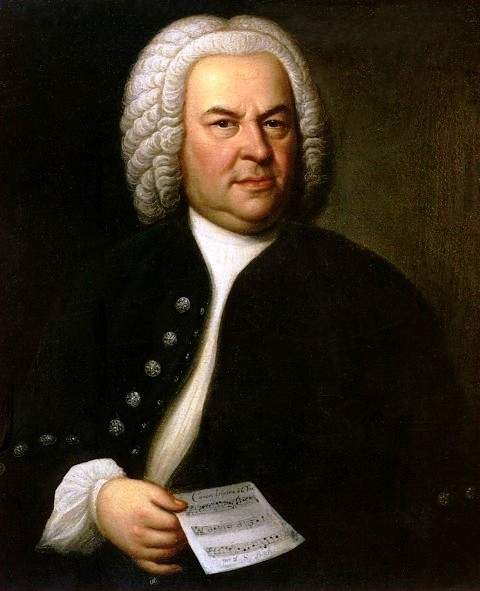
Over this long Easter weekend, and with it recently being the anniversary of Johann Sebastian Bach‘s birthday, it feels appropriate to share four favourite pieces with you.
The first is the Cello Suite no.2 in D minor, BWV1008. The deeply profound Prelude to this suite is often associated with Good Friday and the Crucifixion, and is followed by the traditional sequence of dances where Bach’s masterful writing can be fully appreciated. Having been fortunate to play this piece, I can confirm the music gives as much satisfaction to the performer as it does to the listener!
You can enjoy a performance from Yo-Yo Ma, live at the BBC Proms in 2015, below:
Recorded 17-19 April 2024 at St Silas’ Church, Kentish Town, London
Reviewed by Richard Whitehouse
What’s the story?
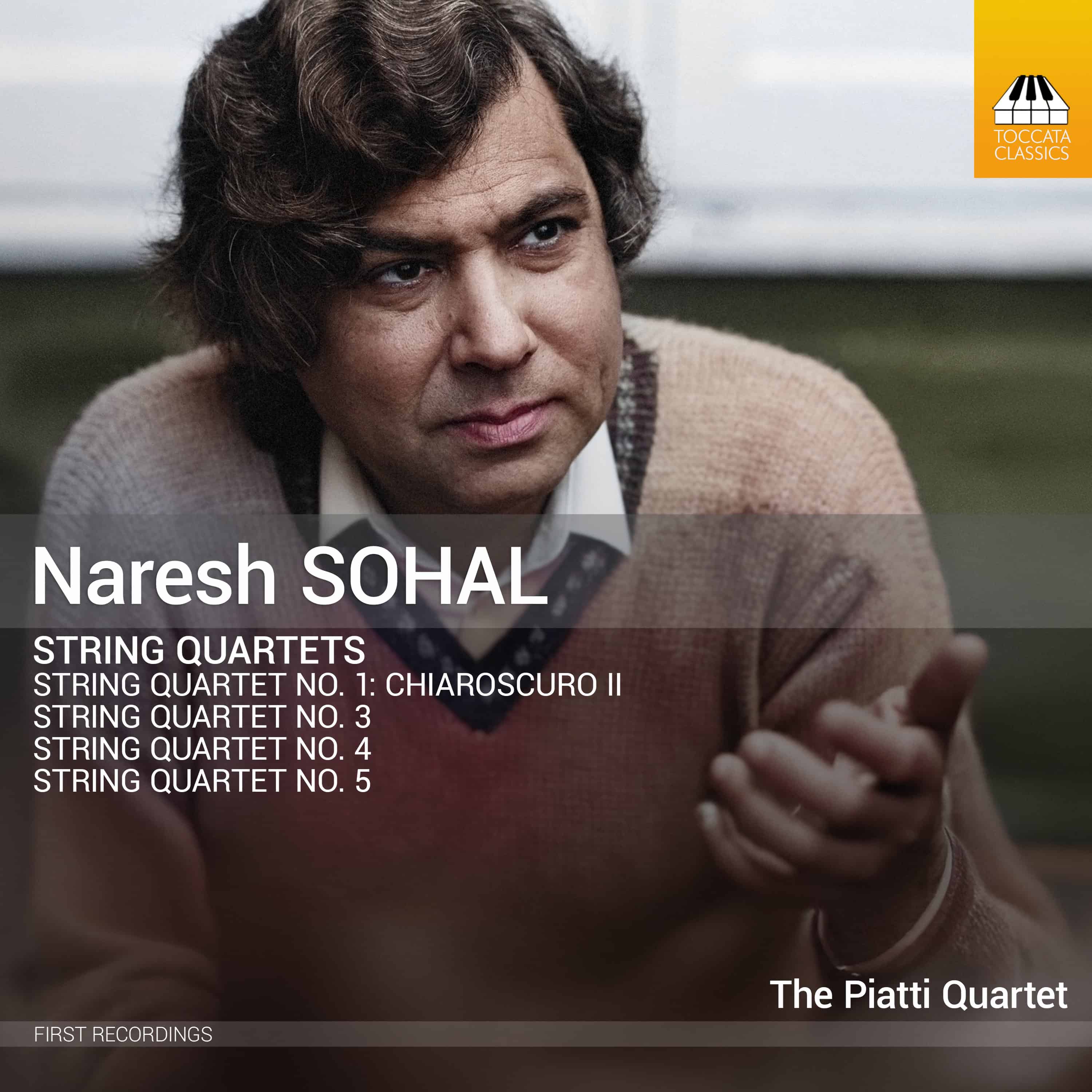
Toccata Classics continues its exploration of Naresh Sohal (1939-2018) with this release of four of his string quartets, admirably rendered by the Piatti Quartet to make an illuminating overview of Sohal’s musical language from across the greater part of his composing career.
What’s the music like?
Although he attracted most attention in his lifetime for his often expansive orchestral works, Sohal wrote widely for chamber media and not least string quartet. This medium brought his intended amalgam of Indian and European facets into acute focus though, typical of one who from the start approached the Western Tradition head on, there is nothing anecdotal let alone tokenistic about Sohal’s idiom which, as these quartets amply confirm, is unified stylistically and remains consistent as it heads toward the formal and expressive clarity of his final pieces.
At the time of his first quartet, Chiaroscuro II (its predecessor for brass quintet is on Heritage HTGCD122-3 – review to follow), Sohal was exploring an overtly avant-garde idiom evident through diverse and starkly contrasted techniques given focus by climactic cadenzas on cello then first violin – prior to its final evanescing into silence. Likewise in a single movement of 15 minutes, the Third Quartet could not be more different in aesthetic. Initially heard against an insistent drone from second violin and viola, its ideas emerge as demonstrable variants on what went before such that its animated central section then its inward continuation are made part of an indivisible process. This only makes those over-emphatic closing chords the more jarring, as though the work’s ultimate resolution had to be stated rather than just insinuated.
The remaining works, both with three movements and each lasting around 20 minutes, might be thought even closer to tradition yet, as so often with Sohal, matters are never this concrete. Thus the Fourth Quartet’s initial movement alternates its impetuous and ruminative themes to purposeful effect, then its central Moderato balances eloquence and introspection with a poise as makes this the likely highlight of the album; the final Allegro channelling motifs previously heard towards its satisfying denouement. The Fifth Quartet manipulates form and expression even more deftly, the Allegretto’s incisive yet never unyielding rhythmic verve duly matched by the Adagio’s melodic richness or the final Allegro’s contrapuntal dexterity on the way to a decisive close. Both of these pieces abound in quartet writing as unaffected as it is masterful.
Does it all work?
Indeed it does. Whether conceived as a single span or separate movements, the musical range of these pieces is a constant source of fascination. Even more surprising is that the Fourth and Fifth Quartets are only now receiving their first hearing, but it would be hard to imagine more committed advocacy than from the Piatti Quartet, which has taken this music to its collective heart. Hopefully these pieces will now find greater exposure in recital, as the importance of Sohal’s legacy becomes evident and its relevance to the present more widely acknowledged.
Is it recommended?
Indeed it is. Sound is almost ideal, while Utsyo Charraborty’s overview is complemented by a biographical note from Suddhaseel Sen and Janet Swinney. Hopefully the Second Quartet and the brief Awakening (soprano and string quartet) feature on a further release from this source.
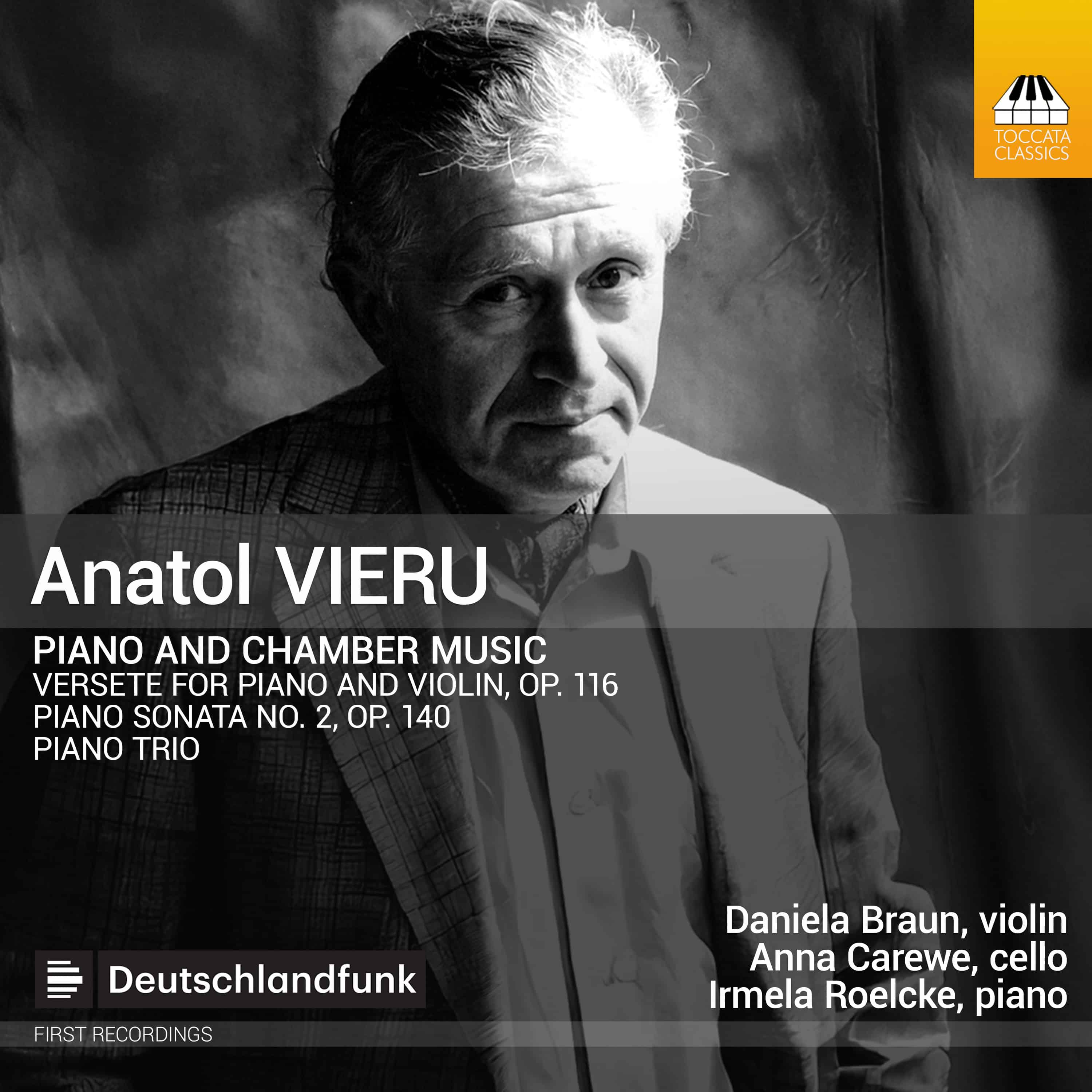
Daniela Braun (violin), Anna Carewe (cello), Irmela Roelcke (piano)
Anatol Vieru Versete Op.116 (1989) Piano Sonata no.2 Op.140 (1994) Piano Trio (1997)
Toccata Classics TOCC0762 [65’09”] Producer Justus Beyer Engineers Philipp Wisser, Oliver Dannert
Recorded 14-17 June 2024 at Deutschlandfunk Kammermusiksaal, Cologne
Reviewed by Richard Whitehouse
What’s the story?
Toccata Classics issues a volume of late chamber works by Romanian composer Anatol Vieru (1926-98), authoritatively realized by three Berlin-based musicians and so confirming him as a major figure during what was a period of intensive creativity for Romanian musical culture.
What’s the music like?
Along with contemporaries Pascal Bentoiu and Stefan Nicolescu, Vieru was a leading light in the post-war era. A successful academic and administrative career went hand in hand with an increasingly forward-looking approach to composition, making for a substantial and diverse output of almost 150 opuses. Only a fraction has been recorded, but performances of various works (including nearly all his seven symphonies) have been released while other pieces can be accessed via YouTube. This album duly collates three chamber works from his last years.
Most substantial is a Piano Trio from the year before his death. As in all three of these works, Vieru eschews tempo indications for metronome markings (something his older contemporary Mieczysław Weinberg favoured in numerous late chamber pieces), while the hybrid nature of its four movements blurs formal divisions so that a motivic continuity audibly extends across the whole entity. Its expressive ambit likewise projects qualities drawn from Classical or even Baroque models decisively into the present, thus offsetting any possibility of this being music with ‘neo-’ connotations. Trenchant and incisive over much of its course, a more yielding and inward aspect increasingly comes to the fore such that the finale concludes in a mood of keen understatement – not so much avoiding a decisive close as rendering one entirely superfluous.
If the other pieces seem less unequivocal in outlook, they are hardly less refractory in content. Indeed, Versete evidently consists of two-dozen ‘‘microstructures’’ as might equally be called vignettes in their brevity and starkness of gesture; any merging toward a cumulative structure effectively determined by the interpreters. Its three movements may suggest the Second Piano Sonata as favouring a more Classical conception, but this is belied by its opening movement’s formal fluidity, its interlude-like successor’s tensile expression, then a finale which pointedly deconstructs its main motifs as to result in the most distilled of resolutions. Many composers adopt a ‘less is more’ strategy in their later music, but Vieru remains unusual in carrying this through to a logical outcome from where any further development cannot easily be imagined.
Does it all work?
Indeed it does. Vieru’s later music derives from an intricate yet never abstruse compositional strategy – succinctly outlined here by Dan Dediu – which ensures formal unity as surely as it promotes expressive variety. If the Piano Trio is the most absorbing work, the remaining two pieces are never less than distinctive and likewise benefit from the unstinting commitment of these players – Irmela Roelchea writing about her involvement with this music in the booklet. Musicians everywhere should hopefully be encouraged to explore such pieces for themselves.
Is it recommended?
Yes it is. The sound has no lack of clarity and definition, if seeming a shade brittle in louder passages, while the booklet also features an overview of the composer by Martin Anderson. Hitherto unrecorded, Vieru’s eight string quartets would seem to be a worthwhile next step.
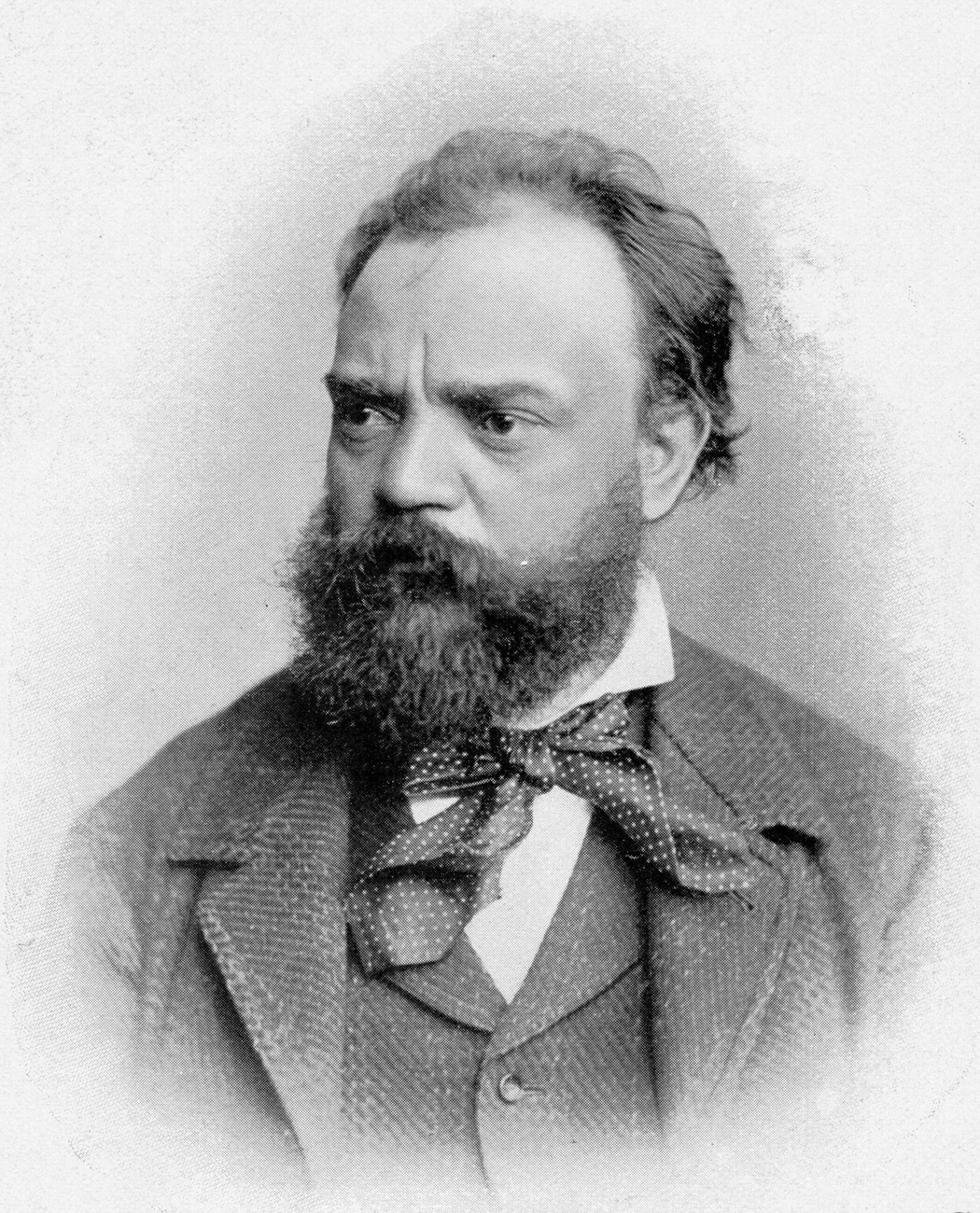
On this day in 1876, 150 years ago, the premiere took place of Dvořák’s String Quartet in G major.
As with many of the Czech composer’s works, it has a complicated history. Dvořák marked it as Op.18, but when it was revised in 1888 his publisher Simrock decided to label it as Op.77. Although the original work was scored in five movements, Dvořák later withdrew the Intermezzo second movement, which was reworked and became the Nocturne for strings in B major, a popular work published as Op.40
This enormously likeable work was made more unique by the scoring, with Dvořák writing for a conventional string quartet bolstered by a double bass. This gives a wonderful depth to the sound, and the ample bass writing supports a plethora of typically wonderful melodic material. You can watch the four-movement revised version below, with a starry ensemble of Baiba Skride and Andrés Gabetta (violins), Veronika Hagen (viola), Sol Gabetta (cello) and double bassist Roberto Di Ronza:
Meanwhile here too is the Intermezzo included from an early recording made by the Boston Symphony Chamber Players:
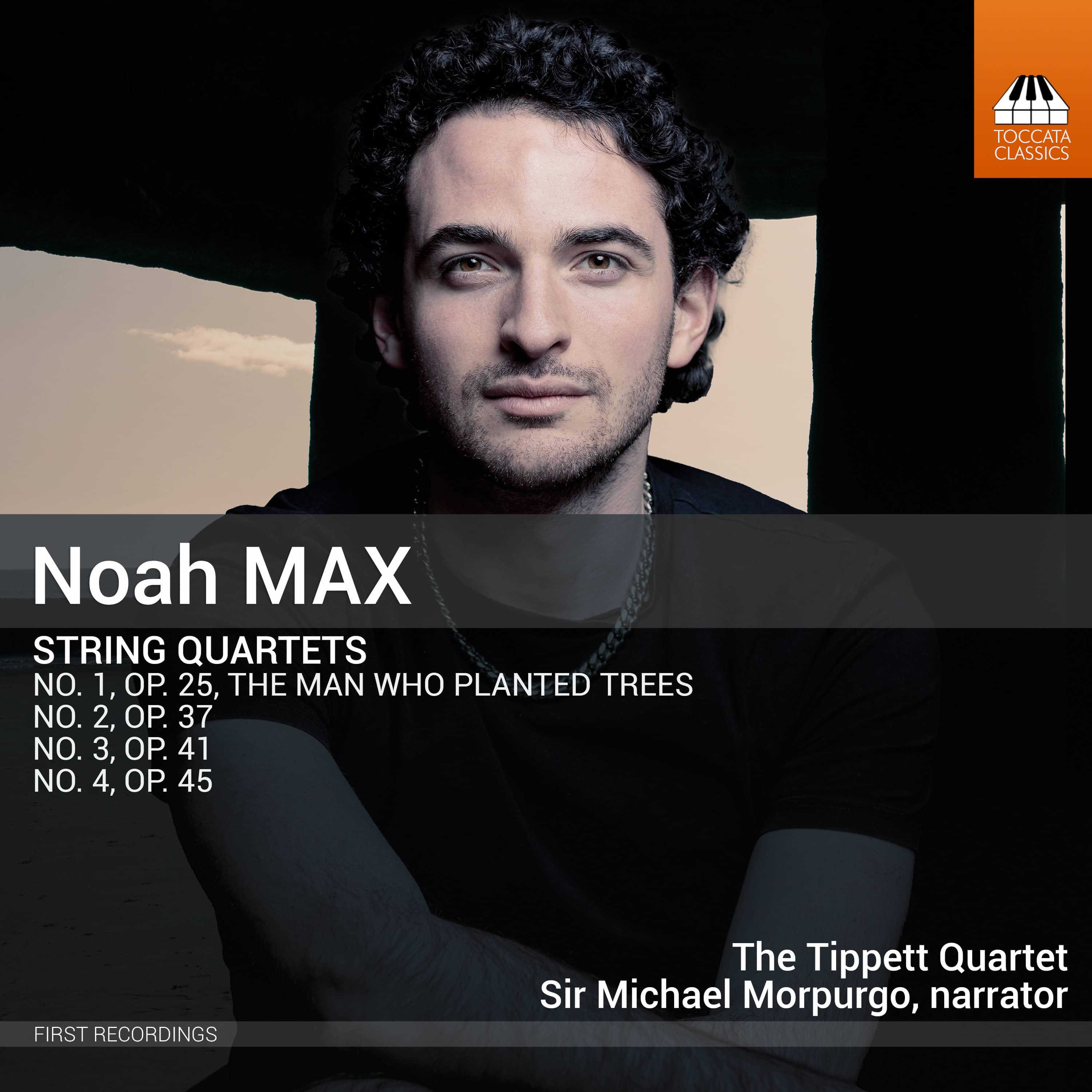
Tippett Quartet [John Mills, Jeremy Isaac (violins), Lydia Lowndes-Northcott (viola), Božidar Vukotić (cello)], Michael Morpurgo, narrator (‘The Man Who Planted Trees)
Noah Max String Quartet no.1 Op.25 ‘The Man Who Planted Trees’ (2020) String Quartet no.2 Op.37 (2021-22) String Quartet no.3 Op.41 (2022) String Quartet no.4 Op. 45 (2022-23)
Toccata Classics TOCC0749 [68’46”] Producer Andrew Keener Engineer Oscar Torres
Recorded 16 August 2023 at St Silas Church, Kentish Town, London (‘The Man Who Planyed Trees’), 29-31 January 2024 at SJE Arts, Oxford
Reviewed by Richard Whitehouse
What’s the story?
Toccata Classics issues a second volume of music by Noah Max – devoted to his four string quartets which emerged at pace during the early years of this decade, and rendered here with conviction by the Tippett Quartet as part of its ongoing commitment to contemporary music.
What’s the music like?
As is emphasized in Martin Anderson’s introductory note, Max is nothing if not versatile for a creative figure still in his late twenties. Other than composition, he has been equally active as a cellist and conductor while also being a poet, film-maker and visual artist. Listeners are most likely to have encountered his music via the chamber opera A Child in Striped Pyjamas, after the novel by John Boyne, which premiered to considerable acclaim in London just over three years back and is an acknowledged influence on what he has composed subsequently.
Not just inspired by Jean Giono’s fable The Man Who Planted Trees, Max’s First Quartet also incorporates this text – eloquently narrated by Michael Morpurgo – across its three movements that chart a course from speculative uncertainty, via rapt inwardness, to dynamic resolution. It may also have three movements, but the Second Quartet is otherwise its antithesis. The initial subtitle, ‘The Ladder of Escape’ (after Joan Miró), affords real insight into its unfolding from fractured and sometimes fractious indecision, via an impulsiveness which ultimately turns in on itself, to a gradual accumulation of sound that yet leaves its overall formal and expressive trajectory in abeyance. One reason, perhaps, why this piece has been placed out of sequence at the close of the programme, as if in anticipation of a response which has yet to be written.
As the composer himself notes, the Third Quartet is designed around the number ‘three’ that imparts instability to almost every aspect; not least a volatile interplay between its harmonic density and a clearly defined chorale as comes into focus in a visceral if (almost inevitably) self-destructive climax – made the more plangent by down-tuning the lowest string on each instrument such that darkness overcomes the ensemble. Likewise cast in a single movement, the Fourth Quartet draws on aspects of Max’s aforementioned opera – but this is only made concrete by the emergence of Jewish liturgical chant during its anguished final stages. Max further draws attention to a conclusion whose demonstrably provisional manner makes the writing of a ‘fifth quartet’ to conclude this putative trilogy a likely and intriguing prospect.
Does it all work?
Pretty much throughout. What becomes evident, above all, is the ease with which Max moves between differing styles and aesthetics so as to result in an approach beholden to none. While this may seem relevant to the work at hand rather than establishing consistency across these quartets as a whole, it should not be taken as failure of intent but rather as an indication that he is still in the formative stages of a composing career which will doubtless throw up more than its fair share of surprises and circuities before one can speak of a definable ‘Max idiom’.
Is it recommended?
Yes it is – not least as these readings have a conviction expected from the always enterprising Tippett Quartet, along with an almost ideal ‘quartet sound’. Those who have Toccata’s earlier anthology of Max’s chamber music (TOCC0638) need not hesitate to acquire this follow-up.