
On Record: Don Banks: Vocal and Chamber Music (Toccata Classics)

Don Banks
Horn Trio (1962) a
Five North Country Folk Songs (1953) b
Prologue, Night Piece and Blues (1968) c
Three Studies (1954) d
Piano Sonatina in C sharp minor (1948) e
Violin Sonata (1953) f
Tirade (1968) g

(bg) Jenny Duck-Chong (mezzo-soprano), (c) Francesco Celata (clarinet), (a) Robert Johnson (horn), (af) Ole Böhn (violin), (d) Geoffrey Gartner (cello), (g): Rowan Phemister (harp), David Kim-Boyle (siren), Alison Pratt, Daryl Pratt, Joshua Hill (percussion), Daniel Herscovitch (piano)

Toccata Classics TOCC0591 [81’34″]

Producer David Kim-Boyle Engineer David Kinney

Recorded (cdf) 21 September (ag) 24 September and (be) 5 November 2020 at Recital Hall West, Conservatorium of Music, Sydney

Reviewed by Richard Whitehouse

What’s the story?

Toccata Classics provides a strong case for the greater recognition of Don Banks (1923-80) with this release of a representative cross-section of vocal and chamber works, performed by Australian and Australia-based musicians who are never less than empathetic with his music.

What’s the music like?

Wholly neglected following his untimely death, Banks was a senior figure in the generation of Australian composers – featuring such as Malcolm Williamson, David Lumsdaine and Nigel Butterley – who posited a decisive if hardly uniform course for the country’s music during the post-war era. Based in London for two decades, he made a living through teaching (notably at Goldsmith’s College) or writing music for horror films (notably Hammer productions), while evolving an increasingly personal language which can be heard in those works included here.

Earliest is the Piano Sonatina whose three movements – an agile Allegro, pensive Largo that nimbly amalgamates elements of fugue and chorale, then an impulsive Risoluto – constitute no mean statement of intent. It was the Violin Sonata which Banks considered his Op. 1, its pithy if contrasted ideas drawn into intensive development that effortlessly sustains a single movement whose 15 minutes seem never less than eventful. More unexpected is his identity with traditional sources in Five North Country Folk Songs (written for Sophie Wyss no less), whose piano accompaniments enhance the sentiment of each text with deadpan humour and audible affection. Reflecting his time spent with Dallapiccola (and, by extension, Webern), Three Studies for cello and piano applies its serial thinking both deftly and resourcefully.

By the 1960s, Banks had fashioned an idiom that was demonstrably but never slavishly of its time. One of the finest instances is the Horn Trio that, for all its inherent abstraction, pursues a tangible emotional trajectory from its forceful opening Allegro, via an Adagio of no mean eloquence, to a final Moderato in which the work’s arresting slow introduction is transformed through hunt-like gestures. Conversely, Prologue, Night Piece and Blues for Two underlines his love for jazz and its deployment within a ‘third stream’ context; here, the music’s restraint affords a sultriness alluring and ominous. Tirade could hardly be more different – its setting of Peter Porter’s impassioned poem on the increasing commercialization of Australian culture notable for a virtuoso vocal part and its imaginative writing for a sizable array of percussion.

Does it all work?

Almost always. Banks took a compositional path that assuredly takes no prisoners, yet which is rarely less than engrossing and, on occasion, affecting. Almost all these pieces would stand up well in recital today, not least for the opportunities they provide to enterprising performers. Other than the concertos for horn and violin (Lyrita), few of his major works are available in modern accounts, and if Toccata could undertake or even licence recordings of his orchestral Divisions or such cross-genre conceptions as Nexus and Meeting Place, so much the better.

Is it recommended?

Very much so. These performances, rarely less than authoritative, are heard to advantage in a spacious but never diffuse ambience. Daniel Herscovitch contributes detailed and informative annotations, and this release hopefully marks a first stage in the rediscovery of a major figure.

Listen & Buy

For buying options, and to listen to clips from the album, visit the Toccata Classics website. For more information on Don Banks, click here

On Record: Sherban Lupu – The Unknown Enescu Vol. 2 (Toccata Classics)

Enescu
Romanian Rhapsody no.1 in A major Op.11/1 (1901, arr. 1957)
Impressions roumaines (1925, arr, 2008)
Sonata Torso in A minor (1911)
Impromptu concertant in G flat major (1903)
Regrets in G flat major (1898, compl. 2018)
Adagio in B flat major Op.3/3 (1897, arr. 1929)
Valse lente ‘L’Enjôleuse’ (1902)
Caprice Roumain (1925-49, compl. 1994-6)

Sherban Lupu (violin) with Viorela Ciucur (piano); Sinfonia da Camera / Ian Hobson (Caprice Roumain), Ian Hobson (piano, Romanian Rhapsody)

Toccata Classics TOCC0647 [72’52″]

Producers / Engineers Florentina Herghelegiu, Christopher Ericson (Romanian Rhapsody), Jon Schoenoff (Caprice Roumain)

Recorded 7-8 April 2022 at George Enescu Auditorium, University of Music, Bucharest, 2 February 2001 at Krannert Center for Performing Arts, Urbana, Illinois (Caprice Roumain), 15 March 2004 at Krannert Art Museum, Champagne Illinois (Romanian Rhapsody)

Reviewed by Richard Whitehouse

What’s the story?

The expansion and enrichment of George Enescu’s catalogue has been in progress for several decades. Toccata Classics now issues a follow-up of works realized by others, posthumously published or performed in unfamiliar arrangements, all featuring the violinist Sherban Lupu.

What’s the music like?

Enescu’s early output charts a steady incline from precociousness to mastery, evidenced by the melodic poise of the Adagio from his First Piano Suite arranged by violinist Sandu Albu, or a fragmentary transcription of the bittersweet piano waltz Regrets as completed by Lupu. L’Enjouleuse might well have been a hit had its composer chosen not to publish it under the pseudonym ‘Camille Grozza’, its smouldering pathos in contrast to the objectified elegance of Impromptu concertant which was intended as a test-piece for the Paris Conservatoire.

Much the most significant among these earlier items, Sonata Torso belongs to a sequence of unfinished or unpublished pieces from between the First and Second Symphonies (1905-12) that find Enescu reassessing and extending his musical idiom. For all its prolixity, as would have made further movements unfeasible, this yields a wealth of tonal and harmonic incident within its rarefied ambit. Realized by Lupu from extensive sketches, Impressions roumaines makes for an invigorating entrée into the Third Violin Sonata for which this was preparation.

Lupu was also the catalyst behind Caprice Roumain on which Enescu intermittently worked for almost a quarter-century and the nearest he came to a violin concerto in his maturity. As completed by Cornel Țăranu, its compact design takes in a sombre and often ominous initial Moderato, a lightly sardonic scherzo modelled on the hora, a Lento of understated eloquence then a final Allegro whose synthesis of folk and art elements resembles Bartók in procedure if not aesthetic. Happily, this realization is increasingly being taken up by younger violinists.

Opening the collection with the First Romanian Rhapsody might seem unnecessary given its popularity over more than 120 years, yet this arrangement by composer and violinist Marcel Stern remains little known despite being published 65 years ago. The initial stages faithfully recreate the instrument interplay of Enescu’s original, and though the heady continuation can only hint at its scintillating orchestration, what results is a bravura concert-piece in its own right. Duo partnerships everywhere could do worse than try out this version in their recitals.

Does it all work?

Pretty much. This is a collection which, drawn from various sources and recorded at several locations, is given focus by the commanding presence and unstinting advocacy of Lupu. His playing may not be technically immaculate, though it does convey the essence of Enescu’s increasingly personal language; not least in Caprice Roumain, which he previously recorded with Cristian Mandeal (Electrecord) and to which this is a more than worthy successor. Ian Hobson’s credentials in Enescu hardly need restating, and neither do those of Viorela Ciucur.

Is it recommended?

Yes. Those who are primarily interested in the Caprice should investigate David Grimal’s superb account with Les Dissonances (La Dolce Vita) but this release, enhanced by detailed notes from Valentina Sandu-Dediu, makes a valuable addition to the Enescu discography.

Listen & Buy

For buying options, and to listen to clips from the album, visit the Toccata Classics website. For information on the artists, click on the names of Sherban Lupu and Ian Hobson

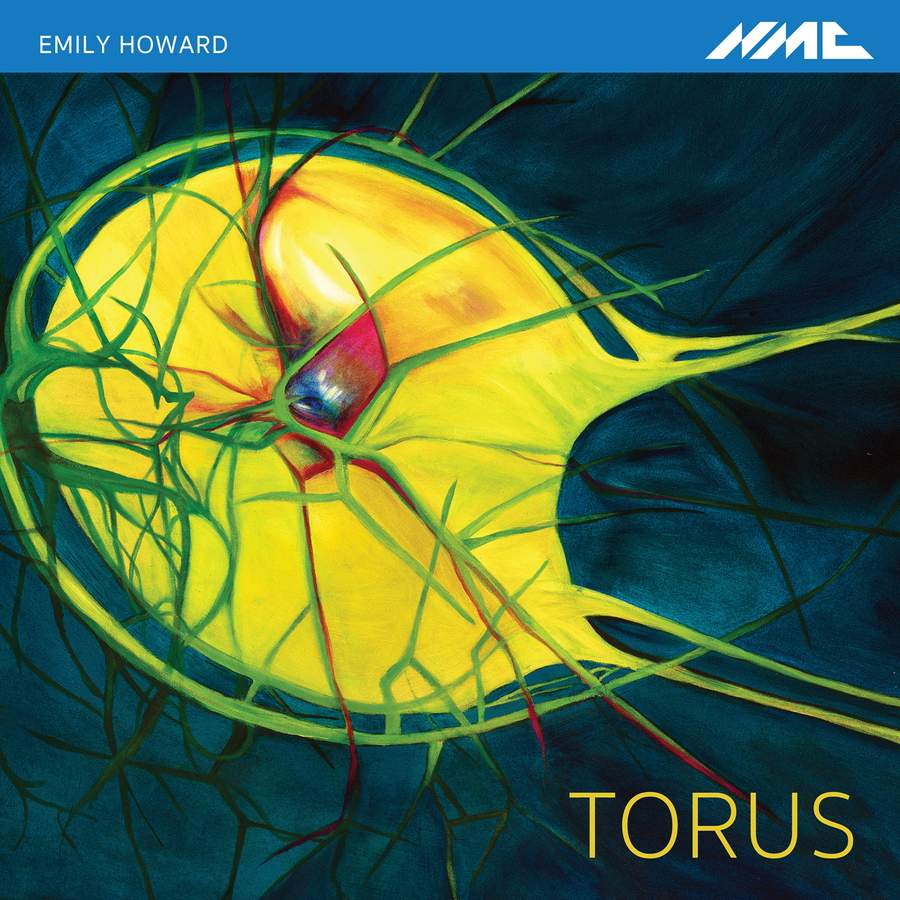
On Record: Emily Howard: Torus (NMC Recordings)

Emily Howard

Antisphere (BBC Philharmonic Orchestra / Vimbayi Kaziboni)
Producer Matthew Bennett, Engineer Stephen Rinker
Recorded 29 November 2022, Bridgewater Hall, Manchester

sphere (BBC National Orchestra of Wales / Mark Wigglesworth)
Producer Dean Craven, Engineer Stephen Rinker
Recorded at the Aldeburgh Festival, 23 June 2018, The Maltings, Snape

Compass (Julian Warburton (percussion), Birmingham Contemporary Music Group / Gabrielle Taychenné)
Producer & Engineer David Lefeber
Recorded 4 December 2022, Royal Northern College of Music, Manchester

Torus (BBC Symphony Orchestra / Martyn Brabbins)
Producer Ann McKay, Engineer Christopher Rouse
Recorded 11 November 2019, Barbican Hall, London

NMC Recordings D274 [68’58″]

Reviewed by Richard Whitehouse

What’s the story?

NMC releases a second collection of music by Emily Howard – now in her early forties and established among the most distinctive while forward-looking composers of her generation, heard in scrupulous performances by a notable line-up of British orchestras and ensembles.

What’s the music like?

Few world premieres from recent years have left an impression comparable to that of Taurus at the Proms in 2016. Its appearance, moreover, marked a further stage in an evolution which had commenced just over a decade earlier and has continued apace, with major commissions from British and European organizations. This has been paralleled by Howard’s commitment into researching the intrinsic properties of sound, most recently via the Centre for Practice & Research in Science and Music (PRiSM) at Manchester’s Royal Northern College of Music.

As it now stands, Torus is the first part in an informal trilogy of pieces collectively entitled Orchestral Geometries. It evolves along the perceived trajectory of a doughnut-shaped ball whose central void is crucial to music evoking absence as much as presence. Not that a work subtitled Concerto for Orchestra could be found lacking in either immediacy of content or virtuosity of gesture, which qualities come demonstrably to the fore as it unfolds and make for a composition involving in its expressive profile and fascinating in its formal process.

By contrast, Sphere is a succinct yet eventful journey through and around the global shape in question and which, in this context, might reasonably be thought an extra-terrestrial interlude – its ideas pithy while exuding enough potential for their development in subsequent pieces.

This is what happens in Antisphere which forms its conceptual opposite though also its aural continuation, the piece gradually encompassing the ‘sound-space’ through an engrossing and imaginative demonstration of orchestral prowess. Evident too is an increased focus upon the visceral nature of the musical content, likely reflecting a form which can precisely be defined in mathematical terms but remains all but intangible as regards human perception. Fortunate, then, that Howard has been able to render this concept as an emotional and affective whole.

Hardly less absorbing is Compass, the most recent of these pieces. This takes the spatial and nautical connotations of its title as the basis for music which unfolds as a cohesive dialogue between string septet and percussion that complements it and offers contrasts at every turn.

Does it all work?

It does, not least for providing an arresting take on that interplay of ‘heart and brain’ that has been a mainstay of Western music. The cerebral basis of all these pieces may be undeniable, though equally so is the precision of their forms and, above all, the allure of their expression judged intrinsically as sound. Much the same could be said of the music of Iannis Xenakis, the centenary of whose birth was commemorated last year, and whose thinking is continued by Howard from a vantage that is inherently personal while being decisively of the present.

Is it recommended?

It is, not least for its excellent performances by three of the BBC orchestras and Birmingham Contemporary Music Group, with booklet notes by Paul Griffiths and mathematician Marcus du Sautoy. This impressive release reinforces Howard’s significance in no uncertain terms.

Listen & Buy

Torus is released on Friday 28 April. You can explore buying options at the NMC Recordings website, and listen to clips from the album at the Presto Music site. You can read Arcana’s interview with Emily Howard by clicking on the link, and click on the names for more on the composer Emily Howard, plus performers Vimbayi Kaziboni, Mark Wigglesworth, Julian Warburton, Gabrielle Teychenné and Martyn Brabbins

Online Concert: Steven Isserlis and friends @ Wigmore Hall – Boccherini

Steven Isserlis (cello), Jonian Ilias Kadesha (violin), Irène Duval (violin), Eivind Ringstad (viola), Tim Posner (cello), Lucy Shaw (double bass), Maggie Cole (harpsichord)

Boccherini
String Quintet in D minor Op.13/4 (1772)
Cello Sonata no.2 in C minor (pub. 1772)
Cello Concerto no.7 in G major (pub. 1770)

Wigmore Hall, Monday 20 March 1pm

by Ben Hogwood

Steven Isserlis has been a passionate advocate of the music of Luigi Boccherini for a number of years. One of his very first recordings, made for Virgin Classics, brought together a selection of the prolific composer’s works for cello, two of which were heard in this Wigmore Hall lunchtime concert.

Boccherini was born in Italy in 1743, but made his name and much of his living in Spain, where he lived from 1768 until his death. A prodigious cellist, he joined the string quartet in the court of Don Luis in Madrid and wrote himself into the musical equation, making an unusually weighted quintet with two cellos, a combination that became his calling card with over 100 works. While Mozart would go on to write for a string quintet with two violas in the late 1780s, Boccherini achieved a very different balance. His works may be functional in origin but they show fresh invention, distinctive colours and generous melodic appeal. Unfortunately that appeal has not regularly transferred to the concert hall, at least not in the UK – but on this evidence, where Boccherini’s music brightened a spring lunchtime, they should be available on the NHS!

We heard the String Quintet in D minor Op.13/4 from 1772, from early in the Madrid vocation – but clearly Boccherini was already at home in the two-cello idiom. A rich D minor setting found Tim Posner’s cello initially leading with a sonorous tune, before a genial second section in F major assigned plenty of melodic interest to each of the five players. With a relatively congested texture there was nonetheless a beautiful combination of melodies, though the development clouded over in outlook a little.

The second movement Andante gave first violinist Jonian Ilias Kadesha greater prominence, the other four instruments accompanying at walking pace. Soon the texture thinned to three for an extended cello solo, Isserlis’ wonderful tone rising to a high trill with graceful elegance. Boccherini didn’t leave his second cellist out, either, with Posner also enjoying a rich solo rising to the heights. The finale was a quickly executed fugue, with plenty of counterpoint to enjoy and a distinctive sighing chromatic motif passed between the instruments.

Boccherini wrote frequently and fluently for his principal instrument, including many sonatas with harpsichord. Isserlis and Maggie Cole gave a stylish performance of the Sonata in C minor, a work they have enjoyed since recording it in 1988. The assertive beginning established the home key with a strong theme, leading to more lyrical and ornamented melodic content. Isserlis proved very secure in the upper register, especially with a rising motif towards the end of the first movement. A soulful Largo followed, increasing florid and with a lovely resolution at the end. The economical piece soon cut to a triple time third movement, mixing chirpy motifs with longer, flowing passages with chords from the cello.

It is thought Boccherini wrote 12 concertos, of which the Cello Concerto no.7 in G major is one of the most popular. For this performance the group took an authentic figuration, all seven players on stage with Isserlis in the centre, flanked by first violin (Irène Duval) and viola (Eivind Ringstad). They were his foils in the solo passages, Isserlis revelling in the cello’s free spirit while they enjoyed busy counterpoint of their own. The bright figurations had a spring in their step, like a march Isserlis showing impeccable high register intonation. A grand cadenza sealed the deal in the first movement, while the perky finale had violins bright as a button and both cellos in their high reaches. In between was a radiant Adagio, set in B flat major and featuring some particularly beautiful and longer-phrased, ornamented melodies. This was one of those pieces where music making was a pleasure, pure and simple, with music suited to the rustic outdoors.

Perhaps inevitably – as Isserlis joked to the audience – there was an encore in the form of a popular snippet. Boccherini’s Minuet, itself from a string quintet, is his best-known movement and is often played separately on the radio. This concert proved there is a whole lot more where that came from.

You can listen to recordings of the works in this program on the Spotify playlist below, including Isserlis’ own versions of the sonata and concerto:

For more livestreamed concerts from the Wigmore Hall, click here

On Record: Mark Bebbington, Duncan Riddell, RPO – Vaughan Williams: Fantasia, Piano Quintet, The Lark Ascending, Romance (Resonus Classics)

Vaughan Williams
Piano Quintet in C minor (1903, rev. 1905)
The Lark Ascending (1914, rev, 1919)
Romance (c1914)
Fantasia (quasi variazioni) on the ‘Old 104th’ Psalm Tune (1949)

Mark Bebbington (piano), Duncan Riddell (violin, Piano Quintet, Lark), Abigail Fenna (viola, Piano Quintet, Romance), Richard Harwood (cello, Piano Quintet), Benjamin Cunningham (double bass, Piano Quintet), City of London Choir, Royal Philharmonic Orchestra / Hilary Davon Wetton (Fantasia)

Resonus RES10311 [64’53’’]

Producer Adam Binks
Engineers Dave Rowell (Piano Quintet, Fantasia), Adam Binks (The Lark Ascending, Romance)

Recorded 8, 9 June, 25 July 2022 at St John’s Smith Square, London

Reviewed by Richard Whitehouse

What’s the story?

Mark Bebbington assumes centre-stage for this diverse collection of pieces by Ralph Vaughan Williams, ranging across almost a half-century of his output as well as providing an effective showcase for his (unjustly criticized) piano writing heard here within three different contexts.

Does it all work?

One from a number of early chamber works as have only been revived and published in recent years, the Piano Quintet finds its composer seeking an accommodation between the Germanic and French models. The opening Allegro drives its fiery and wistful main themes through an intense development and curtailed reprise to an uneasy close, while the Andante contrasts the hymnic eloquence of its outer sections with the agitation at its centre. Most distinctive is the closing Fantasia, whose five variations on a plaintive theme shared between piano and strings evince no mean motivic ingenuity or expressive variety as they build to a fervent conclusion. Bebbington and the RPO players make a persuasive case for this uneven yet absorbing piece.

The two duo works make for a telling contrast in themselves. Although now ubiquitous in its orchestral incarnation, The Lark Ascending as originally conceived with piano is appealing and evocative in its own right – not least given with unforced pathos by Duncan Riddell and accompanied by Bebbington with sensitive understatement. Probably dating from the same time, the Romance seemingly went unheard in the composer’s lifetime (one of several pieces intended for but never played by Lionel Tertis) and received its first public hearing in 1962. Its build-up to an impassioned climax and return to its initial serenity is a familiar trajectory though one which is flawlessly carried through here, as least as rendered by Abigail Fenna.

Forward some 35 years to the Fantasia (quasi variazioni) on the ‘Old 104th’ Psalm Tune – a piece whose infrequent performance is explained by the unlikely scoring for piano, chorus and strings but also the hybrid nature of its conception; the forthright nature of its four choral settings duly offset by the formal and expressive freedom of its alternating piano ‘cadenzas’ on route to a powerfully, even starkly drawn coda. Bebbington acquits himself with aplomb in the latter, while the City of London Choir and Royal Philharmonic Orchestra respond with confidence to Hilary Davon Wetton, though perhaps this might have been the ideal occasion to revive the piece with accompaniment for string quartet as heard at its first private hearing.

Does it all work?

Almost. The follow-through of this selection is unusual to say the least, but its distinctiveness of content is undoubted – as, too, the quality of these performances. This is now the seventh version of the Piano Quintet and arguably the finest yet, the duos can stand comparison with any predecessor while that of the Fantasia has greater cohesion than the benchmark account by Adrian Boult with Peter Katin (EMI/Warner). Those familiar with Bebbington’s previous discs of VW’s piano music or early Fantasy (both Somm) will find comparable insights here.

Is it recommended?

Indeed. The recalcitrant acoustic of St John’s, Smith Square here yields the requisite warmth and no little clarity, while Nigel Simeone’s notes are informative if (purposely?) contentious on occasion. Anyone who is wanting to acquire some or all of these works need not hesitate.

For purchase information on this album, and to hear sound clips, visit the Resonus Classics website. For more on the artists, click on the names for information on Mark Bebbington, Hilary Davan Watton, City of London Choir and Royal Philharmonic Orchestra