
Ask the Audience at the BBC Proms – Dean Francis on Bartok and Dvořák

Ask The Audience Arcana at the Proms
dean-francisThis is the first in a new series where Arcana invites a friend to a Prom who does not normally listen to classical music. In an interview after the concert each will share their musical upbringing and their thoughts on the concert – whether good or bad! Here, Dean Francis (above) gives his thoughts on Prom 25.

Alban Gerhardt (cello); Ildikó Komlósi (mezzo-soprano), John Relyea (bass), Royal Philharmonic Orchestra / Charles Dutoit

Dvořák Cello Concerto in B minor (1895)
Bartók Duke Bluebeard’s Castle (1911)

You can listen on the BBC iPlayer here

Arcana: Dean, what was your musical upbringing?

It was really wide and varied. I grew up with my great grandparents, and they came over from Jamaica in the 1960s. I was heavily influenced by that, and was listening to blue beat and ska. In Jamaica the musical influences are really wide, so they’ll listen to a lot of country like Kenny Rogers or church-influenced stuff, Jamaican gospel and American gospel. I used to hear tapes with church services and things.

My grandparents listened to more reggae – Bob Marley, John Holt, Gregory Isaacs – but my mum was born here and went to school in West London, and she listened to stuff like Boy George and punk, Prince, The Cure, literally everything! My auntie was only a couple of years older than me and she would be listening to Bros and Mariah Carey!

My own personal influences were hip hop early on. I think my first concert was either Cypress Hill or The Beastie Boys, and the first record I bought was a Barrington Levy record, so I was all over the place really! Nowadays I think kids have a watered down view of music, it’s made specially for them. We used to listen to what our parents listened to, in my house at least – not the latest kiddie sound. There was no jumping about to stuff like Miley Cyrus, the stuff I’d listen to would be at family parties, dancing with adults.

Could you name three musical acts you love, and why you love them?

Ice Cube. His music was descriptive of what was going on at the time in America, and it’s almost the polar opposite of the lyrical content of mainstream hip hop now. I guess his life is quite inspiring, starting in NWA and going on film. I grew up with the Predator and Lethal Injection albums at the time.

Going back to reggae I would say someone like Buju Banton, I listened to him a lot, and met him, before he went to prison. Another reason for liking him is his music is good, but if you listen to him talk about what was going on in the world, the politics of the time – living in the West you get a very different view of the politics because of the media.

Even in Jamaica, although it’s The West, you realise that people have got a lot more common sense than you might expect in relation to places perceived as ‘more learned’. They are closer to nature, doing more practical jobs and living off the land, so they have a different view of the world. You don’t get people getting bullshitted, people are smart and on the ball – and so he was telling me stuff about life and wisdom, and he was inspiring in his mindset and how driven and aware he was of whats going on politically.

More recently I would say Loco Dice, because I’ve had some good moments out with him DJing with good friends. His music has energy that brings people together, and that transmits itself in the music he plays. So that’s my three – but you could ask another time and I’d give you a different answer!

I think I tend to like music that has an energy and makes a connection with people. I get bogged down by dirge! I would always listen to something like the Arctic Monkeys over Katie Melua, say!

What has been your experience of classical music so far?

The school I went to had a lot of classical music. It was quite funny and we had a teacher who drank whisky at the primary school I went to! He would play the piano, and I think he used to like Holst. It was quite good, even though we didn’t appreciate it at the time. I think everybody at some point should be exposed to the music of the world, it helps, you know?

With real electronic music and some of the music they play now, it can dumb you down because you’re not exposed to real instruments.

Really I’ve taken it upon myself to go to things, I’m not really averse to any kind of music. If people have invested their time and craft, it will be worth seeing. It’s like sport, you know, you watch it at the Olympics because you know it’s the best of its kind. There is so much classical music in films you don’t realise it’s happening as well!

How did you rate your first Proms experience?

I thought it would be more stuffy, but because it’s classical I would say you get an older demographic. That’s good in one way but it would be good for younger people to think it’s accessible. I think it’s a perception thing, and a shame really – it’s just music at the end of the day! There shouldn’t be that perceived snootiness. It was a really good experience though.

What did you like about it?

I like the emotion of the music. Some of the descriptive parts of moods and nature, like water and fire in the Bartók, that’s really good if a good composer can capture those moments.

What might you improve about the experience?

Not much really, but more how they can engage younger people so that it doesn’t become too stuffy.

What did you think of the Dvořák?

I liked that, especially the first movement. The second movement, it felt less interesting to my ear, but it was all really good. It reminded me a bit of a 1930s or 1940s Western, I can’t remember what. It wasn’t quite as good as the second piece!

What did you think of that, the Bartók?

I really liked the bits of impending doom, but it was also contrasted with light moments. When you’ve got a night where you’re reading the words it makes it very obvious what the composer is trying to do. It’s a like a piece of art with the audio describing the tour.

Would you go again?

Yeah, definitely. It would be a great place to take a date!

Verdict: SUCCESS

You can read Arcana’s review of the whole Prom here – and you can listen to it on the BBC iPlayer
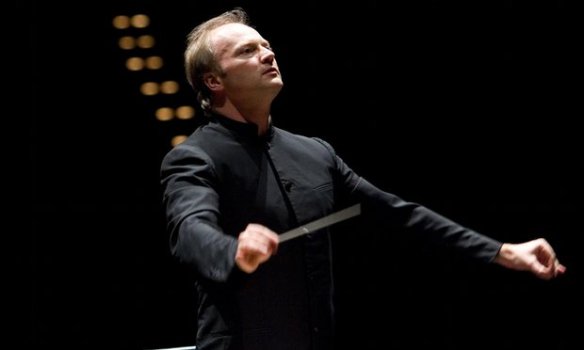
Friendly Fire – Shakespeare 400: London Symphony Orchestra / Gianandrea Noseda

gianandrea-nosedaFriendly Fire – Simon Trpčeski, London Symphony Orchestra / Gianandrea Noseda (above)
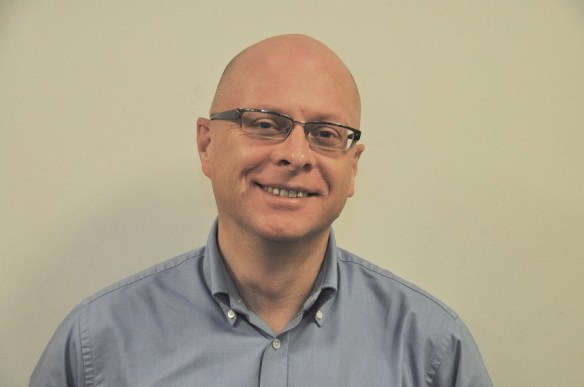
Barbican Hall, London; Thursday 25 February 2016

Welcome to Arcana’s new ‘alternative’ reviews slot! It is an ‘ask the audience’ feature – where I (Ben Hogwood) take a friend / colleague to a classical concert and get them to review it in the bar afterwards. Our second ‘reviewer’ in the series is John Earls, a family man from Harrow & Wealdstone who works as Head of Research at Unite. He shares his thoughts on a program of music inspired by ‘Shakespeare 400’ – with works by Smetana (Richard III), Tchaikovsky (Romeo and Juliet), Richard Strauss (Macbeth) and the seemingly unconnected Piano Concerto no.2 by Liszt. The artists are pianist Simon Trpceski and the London Symphony Orchestra under newly announced guest conductor Gianandrea Noseda.

john-earls

Arcana: How did you prepare for this concert?

John: I didn’t do that much in the way of preparation, other than see what the four pieces in the concert were, and whether I was familiar with them. At the time the only one I thought I was familiar with was the Tchaikovsky, but you reminded me I had heard the Liszt before.

What was your musical upbringing?

As a young child, pretty limited. Most of the music I heard from my parents would have been Irish music, then as I went through school I was more exposed to bits of classical music, as I learned the clarinet. In my teens I got more into contemporary music, rock music, new wave – I played in my own band – and became more interested in jazz and classical music as I got older and attended more concerts and read more about those particular types of music. Jazz and classical are the forms of music I listen to most now.

Name three musical acts you love and why:

(almost without hesitation): Miles Davis was a trailblazer and an innovator who has done some very different things throughout his career. He also struck me as a great leader of bands and ensembles, because he was a great talent spotter who pulled some phenomenal musicians together, and it always struck me that anybody who played with him was better for the experience. They tended to be either better musicians or composersafter having gone through the Miles Davis experience, and also his ensembles tended to be greater than the sum of their parts.

I would also go for Christy Moore, who in many ways would be the soundtrack to my development and my life. I think he has a huge amount of integrity, and if you listen to him sing he comes across as somebody who really means it. If you see him performing live you see a gifted songwriter but also somebody who has a mission to transmit the songs he knows. He has a great deal of songs he hasn’t written but he is able to communicate and pass them on.

I should pick a band really…Wire. I saw them last year for the first time in around 30 years, at the Lexington near Kings Cross. They were influential in my formative days in the late 1970s / early 1980s. They were innovative and straddled the artistic side with the punk sensibility, but had the credibility of doing what they wanted to do. To release an album like they did last year nearly 40 years after they first started, and to think they can still do it, was a phenomenal achievement. They are still great live and the songs incredibly well crafted.

Have you been to classical music concerts before, and if so what has been your experience?

I’m not sure I fit your criteria of ‘someone who doesn’t normally attend a classical concert’. I’m actually a regular classical concert goer – all forms and types. Living in London I’ve been able to see some of the finest musicians and orchestras in the world. Many of my most treasured musical moments have been at ‘classical music’ concerts – Mitsuko Uchida playing Schubert’s late piano sonatas, Rattle and the Berlin Phil doing Mahler’s Resurrection Symphony, Steve Reich’s Music for 18 Musicians with Reich himself playing. I also think some pieces are best experienced live – Messiaen’s Turangalila, for example. Had a few disappointments too! But live music is really important to me. 

What did you think of the Smetana?

I thought it was OK – I could see why they had used it as a piece with which to start. Would I have got the Shakespeare connection? Probably not, but having known it I could see there were bits that sounded regal. Some bits reminded me of a royal hunt, with lots of trumpet. Some of it was like a fanfare but there was solo trumpet that was quite ‘angsty’ and personal. I suppose the trumpet has royal connections. Those things came into my mind while I was listening but I’m not sure, as a piece of music, I would be in a huge hurry to listen to it again.

What about the Liszt?

I hadn’t remembered that I had heard it before. I quite enjoyed it, but there were parts where the pianist seemed a bit stroppy and belligerent, reminiscent of Jerry Lee Lewis! I enjoyed it a bit less than I thought I was going to but the thing that did stick out for me was the cello (Rebecca Gilliver’s solo in the third movement – ed). The sound was absolutely beautiful.

What about the Tchaikovsky?

I was more familiar and knew what to expect. I wasn’t used to being that close to the orchestra! If you heard those four pieces of music and was told there was a Shakespeare link to be honest I probably couldn’t have noticed it, but the one that would be most likely would be that one – and you would probably think Romeo and Juliet because of the tragedy, the romance and the action. You almost feel like you’re in a Bond movie! It’s got everything in it, around 16 minutes, it packs it all in, and it’s Tchaikovsky, who I love.

Finally, what about the Richard Strauss?

I thought that was a good piece to finish on. It had a range of things. I don’t think I would have thought Shakespeare but it was more personal in that it was not necessarily a narrative story – you’re inside somebody’s head. I’ve got ‘magisterial’ written down here, and I felt there was a real tension in it. The offstage snare drum was great, I always like that use of the space, and I’ve not heard the percussion played like that before (the tam tam I think! – ed)

It was more psychological I think, and it was only in that piece that I noticed Noseda’s score was tiny, I’ve never seen one so small! I enjoyed the music, and would go back to listen to it again. I didn’t realise Strauss was 24, that’s quite a phenomenal achievement – not only to put all the instrumentation together but to get the psychological elements at that stage, you would think only an older composer would manage that.

What about the environment and setting of the concert, and how it was promoted?

The only PR I’ve seen was the Shakespeare-related things, and I couldn’t see the link with the Liszt, but I like the idea of linking things in. Sometimes it can be a bit contrived but I think if it’s used as a technique to expose you to different bits of music then that’s fine – like Romeo and Juliet – and it worked for me in the case of the Strauss but not the Smetana.

I think they got the range and order of the pieces right. I’ve been to the Barbican as a venue, and I do like the way it works with an instrument offstage, like they did with the Strauss. I’ve seen that done with vocal and choral pieces and it can work. I think the conductor was quite energetic, not necessarily in a flowing way – quite staccato would be your terminology! There seemed a good rapport between him and the orchestra, the sense they really respect him.

If you could give it a mark out of 10 what would you give?

Probably a 7, but that would be an average. The Tchaikovsky and the Strauss would be an 8 or 9, and the Smetana would drag it down a bit. But it was certainly worth going to!

Arcana’s brief thoughts on the concert:

The connections between classical music and Shakespeare are many, but the London Symphony Orchestra did really well to present a variety of nineteenth century settings. All fall into the ‘Romantic’ period, where composers were getting to grips with the idea of the orchestra being a storyteller in what was known the ‘symphonic poem’.

Smetana’s Richard III was an ideal curtain opener, though like its subject it had an uneven walk – brilliantly portrayed but still with a sense of a portrait not quite fully fledged.

Tchaikovsky’s Romeo and Juliet was different. This was the London Symphony Orchestra on white hot form, Gianandrea Noseda conducting like a man wholly affected by the tragedy. This music surged forward with passion and drama in equal measure, and the hair stood up with the volley of brass and percussion, and the intensity of the love theme on the strings.

Richard Strauss’s Macbeth was equally intense, though even more effective in exploring the minds of the two main protagonists of the story. The lower strings had a steely effectiveness, the double basses brilliantly marshalled, while the drama above unfolded in compelling fashion.

Though Liszt’s Piano Concerto no.2 had no Shakespearian connection it was a relatively sound choice, for he is a composer unable to resist the temptation of telling a story! This one had its moments of drama, albeit fleeting in comparison to the warhorses of the second half.

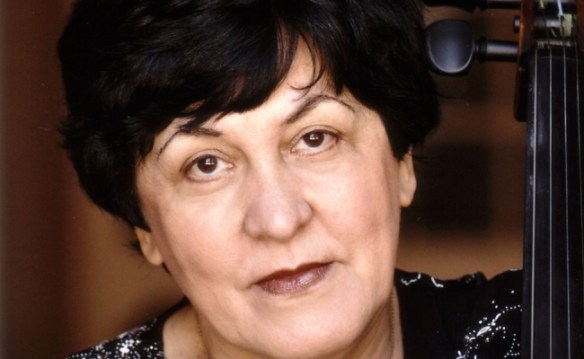
Friendly Fire – Natalia Gutman, London Philharmonic Orchestra / Vladimir Jurowski

natalia-gutmanFriendly Fire – Natalia Gutman (above), London Philharmonic Orchestra / Vladimir Jurowski

Royal Festival Hall, London; Wednesday 27 January 2016

Welcome to Arcana’s new ‘alternative’ reviews slot! It is an ‘ask the audience’ feature – where I (Ben Hogwood) take a friend / colleague who doesn’t normally attend a classical concert and get them to review it in the bar afterwards. First up is Tony Winter, a young-at-heart 50-something from Watford, who shares his thoughts on a program of Schnittke (Pianissimo), Shostakovich (Cello Concerto no.2) and Bruckner (Symphony no.3 – original version)

tw

Arcana: How did you prepare for this concert?

Tony: Well I had a shave (d’oh! – Ed) No, I’ve been playing some recordings of the Shostakovich and a little bit of the Bruckner. Not the Schnittke, which was a bit of a surprise! I haven’t done an enormous amount of preparation.

What was your musical upbringing?

I had a brief encounter with the violin which I never really got on with – I didn’t get on with the teacher – and then when I was about 13 the guitar, but that was rock music. I played the guitar for years. When I retire it’s going to come out again! I played in a band called The Committee, but to be fair by the time they’d risen to fame they’d chucked me out!

Name three musical acts you love and why:

I love Bach, just because of the melodies. I think you can look at other people and say the orchestration is great but for me the genius is the melody. James Rhodes says ‘the immortal Bach’, which sums it up.

I’ve been playing a lot of David Bowie recently with his demise, I was a big fan of Bowie up to about the Let’s Dance era, and now suddenly I’ve been playing some of the later albums as I’ve been guilty of overlooking some of them. I don’t like it when it gets too commercial! But I think later on he was saying that he didn’t give a shit, which is an approach I’ve always liked.

The Outside album was described as ‘difficult and industrial’ but I think it’s great. I wonder in 200 years if people will be playing Bowie? He died at the same age as Shostakovich but who knows? Only time will tell. How many people were on stage tonight, over 100? I’m sure everyone would be using that if there weren’t cost implications to it!

I don’t know whether to say the Rolling Stones or Mozart for the third!

Have you been to classical music concerts before, and if so what has been your experience?

I’ve been to a few over the years – I’ve even started going to a few operas! Living close to the Watford Colosseum I’ve been going to concerts there as I’m a bit of a lazy bugger. I tend to go to any classical concerts they put on there. I’ve seen Beethoven’s 9th at Westminster Abbey, but that was a bit echoey!

James Rhodes sticks in the mind for his more modern presentation which particularly appealed to my kids. They’re learning the piano so that helped but it helped that he stood up and made a few jokes. I’m not saying everyone has to turn into a variety act but he judged it right. I like sitting at the front in an intimate gig, but coming here tonight though I think I should drag my sorry arse into London more as I don’t think you could fit that orchestra on the stage in Watford!

What did you think of the Schnittke?

I think I’d have to give it a few more listens. It did somewhat sound like they were tuning up for a while, and I’m not sure I liked the screeching of the flute over the top. Parts of it were interesting though, and when the violins came in quietly and slowly it almost sounded like a Jimi Hendrix track where he’s playing the guitar backwards. There were elements of it that appealed to me, and I will definitely investigate more. It didn’t grab me by the throat.

What about the Shostakovich?

I enjoyed that for a variety of reasons. Because I had prepared by having a few versions on in the background it had sunk in a bit, and then when you’re actually watching it live you’ve got to concentrate on it, and I thought Natalia Gutman was obviously really fantastic. It was an interesting piece and I really enjoyed it.

What about the Bruckner?

I did enjoy it but it was a different version to the one I’d been playing. It felt like it was building up to the end for a while! When I was listening to it at home I thought there were echoes of Beethoven in it, but listening to it tonight he was heavily influenced by Wagner and I could hear that. It wasn’t as melodic as some of the Beethoven symphonies, and I wasn’t overwhelmed by it.

I don’t think Bruckner will be one of my favourites, but then again, maybe I need to go back and listen to it! It was fantastic seeing an orchestra of that size, with ten double basses. As a bit of a hi-fi geek, you think that’s what it should sound like!

What about the environment and setting of the concert, and how it was promoted?

Well they didn’t get me down here, you did! I do feel strongly about this though because at the Watford Colosseum you go down there, and they’re absolutely fantastic, and the place is quarter full. You think why is this, as it’s fantastic value for money and there are as many people on stage as in the audience!

The Royal Festival Hall is very nice though and before the concert the youth musicians of the London Philharmonic Orchestra, The Foyle Future Firsts, were great. They were playing Shostakovich’s incidental music to Hamlet, and Vladimir Jurowski got up and talked about the piece and gave us loads of facts about it for ten minutes before they played. I was hugely impressed by that, it was really nice to see and the musicians were great. It was well worth the effort getting down here early!

Arcana’s brief thoughts on the concert:

A really rewarding evening which represented great value with a concert that lasted two and a half hours. The Schnittke, as Tony says, sounded a bit like an excerpt from a horror movie.

The Shostakovich was deeply considered by Natalia Gutman, who did not play with great volume but who managed to project her thoughts to a spellbound audience. She is one of the great surviving musicians from Shostakovich’s era, and it was a humbling experience to see her play – she may have missed one particularly crucial entry in the finale but her thoughts elsewhere were extremely profound.

Finally the Bruckner, a real tour de force – and a superb account from the orchestra and the brass in particular. This is one of Bruckner’s wildest symphonies, full of ideas that are not always controlled, and Jurowski projected the tension between instinct and adhering to symphonic form. The triumphant end was well-earned.