In concert – Britten Sinfonia / Thomas Gould & Agata Zając @ Milton Court: Musical Everests – The Year 1953

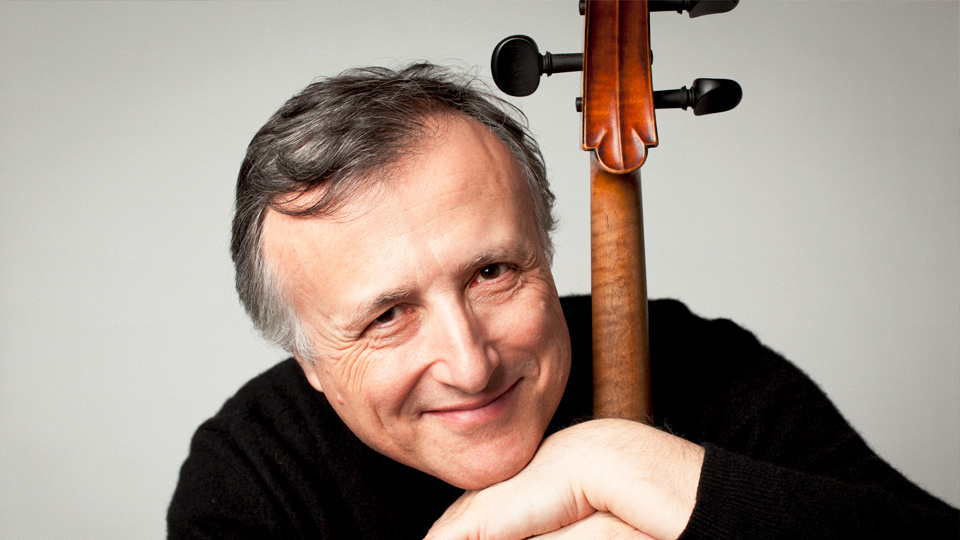
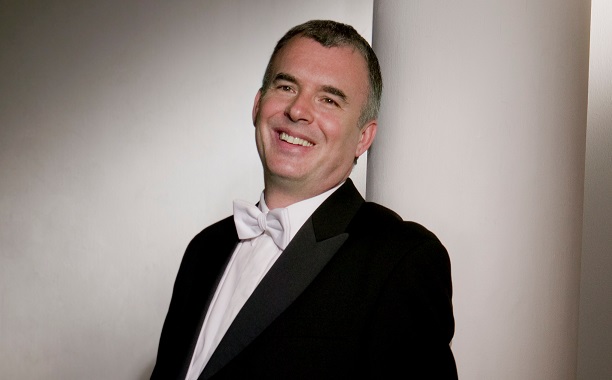
Thomas Gould (violin/director), Miranda Dale (violin), Caroline Dearnley (cello), Britten Sinfonia / Agata Zając (Maconchy)

Corelli Concerto Grosso in F major Op.6/2 (publ. 1714)
Tippett Fantasia Concertante on a theme of Corelli (1953)
Maconchy Symphony for Double String Orchestra (1953)
Phibbs Flame and Shadow (2023)
Walton Finale from Variations on an Elizabethan Theme (1953)

Milton Court, London
Wednesday 24 May 2023

Reviewed by Ben Hogwood Pictures (c) Ben Hogwood

This typically imaginative concert devised by the Britten Sinfonia took as its starting point the events of 1953, where the United Kingdom shifted on its axis. It was of course the year in which Britain witnessed a Coronation, and in which Everest was scaled, but other than Walton’s jubilant finale to the collaborative composer project Variations on an Elizabethan Theme, no explicit musical links were made.

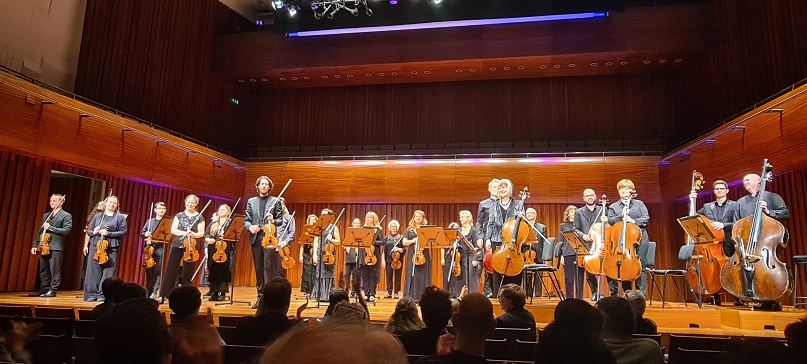
Instead, the Britten Sinfonia concentrated on two major works written for string orchestra in that year – one now well-known and one barely performed. The underdog, Elizabeth Maconchy’s Symphony for Double String Orchestra, made a very strong impression in this performance, brilliantly played by string players using a handwritten manuscript from 1953. The difficulty of this task necessitated a conductor, with Agata Zając joining at short notice. Hers was a dynamic presence, helping emphasise the rhythmic flair and dramatic impetus of the piece.

Maconchy’s music has often been critically coveted but is rarely heard in the concert hall – sadly an all-too familiar plight for a female composer innovating in the 20th century. Where many British composers wrote to include the countryside around them she wrote in a continental style, her music powered by fertile melodic imagination and rhythmic vitality. At times there are elements of Stravinsky and Bartók in her music but the closest parallel is Frank Bridge, with whom she shared an ability to explore the outer reaches of tonality without selling listeners short on melody.

The first movement of the Symphony grips the listener immediately, its powerful forward momentum complemented by soaring violin solos, which Thomas Gould played to perfection here. The febrile main motif bore close resemblance to Stravinsky’s Symphony in Three Movements, and Maconchy’s treatment of it was economical and engaging. Emotionally, however, the heart of the piece lay in the second movement Lento, where an eerie figure crept slowly upwards from cellos and basses, refusing to give way to the sweeter intimate melodies above. A rustic Scherzo, laden with syncopation, was followed by an equally captivating finale, initially pensive but with gathering intensity and drive. Just before the end the music broke out into a joyous country dance before returning to its more angular outlines.

The Britten Sinfonia were at the top of their game, subtly and superbly drilled by leader Gould. Each player was fully engaged, with smiles and nods of encouragement frequently passing between the team. When these qualities are natural, as they were here, a performance is elevated for the audience – and that was certainly the case for Corelli’s Concerto Grosso in F major, second in his set of twelve published as Op.6 in 1714. This opened the concert, dovetailing neatly into the work of Sir Michael Tippett, which it inspired.

Elegance and style were to the fore in the Corelli, with clean melodic lines given just a hint of vibrato for expression, and the interplay and balance between the three soloists and orchestra ideally judged. The work’s sunny countenance spilled over into the Tippett, though here the sun’s rays took on a more ecstatic quality.

The Fantasia Concertante on a theme of Corelli, also dating from 1953, is a compelling study in time travel. Tippett presents the original 18th century material unadorned, but adds his own unique musical language incrementally, so the piece becomes awash with bright colour and reaches a feverish intensity. Gould led a performance to savour, with fulsome support from fellow soloists Miranda Dale (violin) and Caroline Dearnley (cello). Together with the enhanced Sinfonia they rendered the golden textures beautifully, enhancing the elegance of the original material.

With the Tippett and Maconchy works a formidable pair either side of the interval, it says much for the London premiere of Joseph Phibbs’ new work that it was not in any way overshadowed. Though Flame and Shadow looked beyond events of 1953 for its stimulus it nonetheless bore a resemblance to the new coronation, its fresh take on music for strings revealing a busy contemporary approach.

Phibbs has an original and imaginative way with writing for strings, using audience-friendly melodic figurations but allowing them to roam harmonically, changing their perspective. The punchy rhythms of the Dance section here were a thrill, as were the combination of rapid fire and sustained open string pizzicato heard throughout the Interlude. Flame and Shadow, taking its title from a collection of verse by Sara Teasdale, was an edge of the seat piece, even to its closing Vocalise section, where a melody closely related to that found at the opening of Sibelius Symphony no.4 had a sobering effect. The contrasts of darkness and light were vivid and left a lasting impression – as indeed did the whole concert.

In twenty years of covering Britten Sinfonia concerts, and marvelling at their programming and technical prowess, this Milton Court evening confirmed their musical health to be stronger than ever. If only the same could be said for their long-term financial prospects, thrown into doubt by the withdrawal of funding in the latest Arts Council England cuts. Without the immediate publicity of similar actions levelled at English National Opera and the BBC Singers, the Britten Sinfonia have just launched their Play On fundraising campaign. The initial response has been encouraging, but it needs to raise more to secure the organisation’s future. Please do consider giving – I certainly will. This is the only way their imaginative concerts and a wealth of community-based outreach across East Anglia – where they are the only full time orchestra – can continue.

You can read all about future concerts from the ensemble at the Britten Sinfonia website. Click on the composer names to read more about Joseph Phibbs, Elizabeth Maconchy and Sir Michael Tippett – and for more details on concerts at the venue, visit the Milton Court website

In concert – Josephine Lappin, Salomon Orchestra / Edmon Colomer – Gerhard’s Soirées de Barcelone, Falla & Turina

Josephine Lappin (piano), Salomon Orchestra / Edmon Colomer

Turina Ritmos Op.43 (1927)
De Falla Noches en los jardines de España G49 (1915)
Gerhard (ed. MacDonald) Soirées de Barcelone (1936-9, comp. 1995-6)

St. John’s, Smith Square, London
Sunday 21 May 2023

Reviewed by Richard Whitehouse

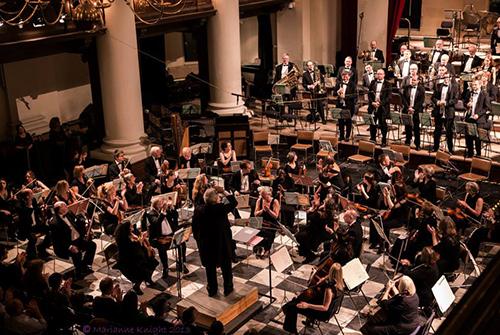
The Salomon Orchestra celebrates its 60th anniversary this season with three concerts of real ambition. The second saw a collaboration with Edmon Colomer, whose advocacy of Spanish music in general – and Roberto Gerhard especially – was evident throughout this programme.

His second ballet, Soirées de Barcelone was also Gerhard’s largest project before the collapse of Spain’s republican government forced him into exile. A piano suite from the 1950s was the only realized portion of a work otherwise known through an orchestral suite made soon after the composer’s death. At least until 1996, when musicologist Malcolm MacDonald finished the orchestration of the whole ballet and so enabled its broadcast during Gerhard’s centenary. MacDonald’s edition was duly receiving its first public performance in the UK this afternoon.

Set in the Pyrenees at the St John’s Eve festivities, with rituals of fire purification and fertility as its scenario, Soirées… falls into three substantial tableaux where the prevalence of Catalan folk songs and dances is imbued with a motivic density and orchestral virtuosity anticipating Gerhard’s maturity. The first of these, The Crowd, features three of the items from the suite and finds this score at its most immediate; the second, Eros contains the deepest and most imaginative music – notably the sombre initial Notturno and vividly evocative Apparition of Eros. Emotional intensity falters slightly in the third tableau, The Weddings, but there is no want of impetus as the work builds to its culmination in an eloquent Sardana that resolves scenic and musical issues, then a Coda which sees the piece through to its effervescent close.

At just over 50 minutes, Soirées… is a tough assignment for any orchestra, so all credit to the Salomon for rendering its many intricacies with unfailing commitment and no little panache. It helped to have Colomer at the helm, his understanding and empathy being evident through the care over phrasing and frequent textural finesse. Only on occasion were tempi marginally under-speed to accommodate the exacting rhythmic syncopation though, as he steered a fine reading to its close, there was little doubt as to the sheer power and imagination of this music.

A dependable pianist in the Gerhard, Josephine Lappin impressed as soloist with Manuel de Falla’s Nights in the Gardens of Spain, whose pervasive concertante writing often benefitted when heard from the rear of the platform. A steady yet flexible tempo for In the Generalife brought out some mysterious and even ominous undertones, while the alluring lilt of Distant Dance ensured this headed seamlessly into In the Gardens of the Sierra de Cordóba with its interplay of energy and eloquence before the performance ended in a mood of gentle rapture.

Few of Joaquín Turina’s orchestral works are revived these days, which seems more the pity as this composer was arguably the deftest Spanish orchestrator of his generation. Subtitled a ‘Choreographic Fantasy’, Ritmos made for a scintillating curtain-raiser – its six continuous sections demonstrating unforced musical logic as well as an appealing overall atmosphere. The Salomon players rendered it with infectious enjoyment, reminding one that such pieces – indeed, those in this concert as a whole – are all too infrequently heard in UK concert halls. Colomer provided an extensive spoken introduction to the Gerhard, hopefully a work he will yet record in its entirety. He rounded off this memorable concert with a breezy medley from the Zarazuela, notable for principal flautist Roy Bell taking the solo spot with his castanets.

You can read all about the 60th anniversary season and book tickets at the Salomon Orchestra website Click on the names for more on conductor Edmon Colomer and composer Roberto Gerhard – and for an article on this concert visit the composer’s publisher Boosey

In concert – CBSO / Robert Treviño – Mahler’s 10th symphony

City of Birmingham Symphony Orchestra / Robert Treviño

Mahler, ed. Cooke Symphony no.10 in F sharp major (1910)

Symphony Hall, Birmingham
Thursday 18 May 2023

Reviewed by Richard Whitehouse

The City of Birmingham Symphony Orchestra has a notable association with Mahler’s Tenth Symphony – realized by Deryck Cooke – having given memorable performances with Simon Rattle and more recently with Sakari Oramo. This evening’s account was to have been taken by Mirga Gražinytė-Tyla, but her indisposition brought American conductor Robert Treviño to the helm for what was a memorable performance that vindicated (if such were needed) this ‘performing edition’ and hinted at what might develop into a notable partnership in the future.

The quality of string playing these days means the initial viola melody no longer poses quite the risks it once did. Treviño went on to shape this opening Adagio with a sure sense of how its contrasting themes are drawn into an evolution whose unpredictability is informed by an emotional candour, heard at its most explicit in the climactic dissonance (evidently added at a late stage) such as makes the beatific coda the more affecting. Nor did he fail to tease out the underlying continuity of music shot through with the knowledge of its own dissolution.

Such an issue is more graphically present in the first Scherzo, its contrapuntal texture fitfully realized in the score but here achieved with a deftness making the trade-off between its polka- and ländler-like ideas the more potent. Not least during the later stages of a movement where these themes alternate with ever increasing frequency, as if in a stretto of activity, on the way to the most decisive and even affirmative conclusion found in Mahler’s late music. Treviño’s opting not to tone down those more unlikely percussive touches proved its own justification.

Almost Mahler’s shortest symphonic movement, the Purgatorio is yet crucial to the overall design – the ‘treadmill’ motion of its outer sections exuding acute irony, with the histrionics at its centre firmly held in check so their implications were made more than usually evident.

Performances of this work most often founder in the second Scherzo, but not here – Treviño launching it with anguished intent, while maintaining a persuasive balance between this and the more consoling element which informs its progress. The brief central interlude conveyed exquisite pathos, tension barely receding as the expression gradually and inevitably subsides into crepuscular activity with its fleeting intimations of what went before and what is still to come. Just one bass-drum stroke, surely, is needed to separate this movement from the finale.

That said, the unfolding of this latter left nothing to chance – whether in the sepulchral gloom of its initial bars, the poise of its indelible melody for flute, or a central phase of activity that here emerged as the natural consequence of what went before. Treviño (rightly) retained the additional percussion necessary to make the return of the first movement’s climax the more shattering – the sheer eloquence of what followed building to a rapturous culmination which, as with the closing emotional wrench, drew an unfaltering response from the CBSO strings.

A memorable performance, and one that met with an enthusiastic response. Treviño brought the soloists and sections to their feet, but might have started with trumpeter Jason Lewis and flautist Marie-Christine Zupancic – their contributions typifying the excellence of the whole.

You can read all about the 2022/23 season and book tickets at the CBSO website. For more on Robert Trevino, visit his website

In concert – Jörg Widmann, CBSO – Weber, Widmann & Beethoven 7th symphony

City of Birmingham Symphony Orchestra / Jörg Widmann (clarinet)

Weber (arr. Widmann) Clarinet Quintet in E flat major J182 (1815, arr. 2018)
Widmann Con Brio (2008); Drei Schattentänze (2013)
Beethoven Symphony no.7 in A major Op. 92 (1812)

Symphony Hall, Birmingham
Wednesday 10 May 2023

Reviewed by Richard Whitehouse

Jörg Widmann has enjoyed a productive association with the City of Birmingham Symphony Orchestra, having been Artist in Residence during the 2018/19 season, and tonight’s concert was typical with its playing to his strengths as composer, clarinettist and (by no means least) conductor.

Arranger, too, given this programme commenced with his take on Weber’s Clarinet Quintet. Most ambitious of its composer’s works for Heinrich Baermann, it demonstrably gains from receiving a concertante treatment. The interplay between clarinet and strings pointed up the acute contrasts of mood and motion in the initial Allegro, then transformed the Fantasia into an operatic ‘scena’ of sustained plangency. With its ‘capriccio presto’ marking and teasingly playful manner, no movement could be less like a Menuetto than the scherzo which follows; here and in the final Rondo, Widmann summoned a tensile virtuosity paying dividends in the latter’s impetuous course to a thrilling denouement. Having given us Weber’s ‘Third Clarinet Concerto’, maybe Widmann could add a Fourth by transforming the Grand Duo Concertant?

The stage was reset for Con Brio, most often played of Widmann’s orchestral works and (in other contexts) a curtain-raiser bar none. Commissioned to accompany Beethoven’s Seventh and Eighth Symphonies in a cycle by Mariss Jansons with the Bavarian Radio Symphony Orchestra, it alludes to both pieces while casting an ear – sometimes facetious, always provocative – over two centuries of European art-music. Whether Widmann hears this as running on borrowed time, the closing bars do not so much resolve as atrophy via a break-down of graphic intent.

A darkened stage greeted listeners after the interval, across which was placed the music for each of Widmann’s Three Shadow Dances. These combine extended clarinet techniques with engaging, often playful virtuosity – moving (right to left) from the deadpan jazz gestures of ‘Echo-Tanz’, through the submerged remoteness (with no electronic treatment) of ‘(Under) Water Dance’, to the uproarious routines of ‘Danse africaine’ where the instrument becomes its own percussion outfit as it bounds towards the ‘elephant calls’ that signify its conclusion.

It made sense to round off the evening with Beethoven’s Seventh Symphony, having already been anticipated in the first half. In his opening remarks, Widmann spoke of the life-changing effect this work had at first hearing, and he duly threw caution to the wind with a reading that brimmed over with the excitement of new discovery. Surprisingly, he chose not to divide the violins right and left, as this would have emphasized their dizzying antiphonal exchanges in the outer movements. Having set a challengingly fast tempo for the scherzo, which the CBSO met with assurance, he might profitably have held back marginally for the greater part of the finale – enabling the coda to ‘take off’ with a frisson as could only be inferred here. This was otherwise a performance that conveyed the music’s visceral essence with thrilling immediacy.

It set the seal on an impressive showing for Widmann and this orchestra, who will hopefully be working together again in a future season. Next week sees the CBSO reunited with Mirga Gražinytė-Tyla for a performance of Mahler’s decidedly non-valedictory Tenth Symphony.

You can read all about the 2022/23 season and book tickets at the CBSO website – and for specific information on Mirga conducting Mahler, click here. There are several sites to visit for more info on Jörg Widmann – click here for his official site, here for his profile at publisher Schott Music, and here for information from his management at HarrisonParrott

In concert – Jennifer Johnston, Royal Liverpool Philharmonic Orchestra / Vasily Petrenko – The Divine Poem

Jennifer Johnston (soprano, above), Royal Liverpool Philharmonic Orchestra / Vasily Petrenko (below)

Deutsch Phantasma (2022) [RLPO co-commission: UK premiere]
Mahler Lieder eines fahrenden Gesellen (1884-5)
Scriabin Symphony no.3 in C minor Op.43 ‘The Divine Poem’ (1902-4)

Philharmonic Hall, London
Thursday 4 May 2023

Reviewed by Richard Whitehouse

He may now be the orchestra’s conductor laureate, but the 15-year partnership between Vasily Petrenko and the Royal Liverpool Philharmonic Orchestra was always tangible in this evening’s concert – its refreshingly different programme summoning the best from both orchestra and conductor.

Co-commissioning music by Bernd Richard Deutsch was an astute move – the Vienna-based composer now in his mid-40s and among the leading composers of his generation. Taking its cue from the Beethoven Frieze which Gustav Klimt devised for the 14th Vienna Secessionist Exhibition in 1902, this 15-minute piece takes a pointedly dialectical route as it evolves from the fractured uncertainty of yearning and suffering, via the cumulative intensity of a struggle against hostile forces, to the attainment of happiness through poetic creation. To what degree this might be a commentary on Beethoven’s Ninth Symphony (as embodied in the three parts of Klimt’s opus) is uncertain, but the motivic ingenuity and orchestral virtuosity of Deutsch’s response can hardly be doubted – not least in a performance as assured and committed as this.

If the indisposition of Adela Zaharia meant the regrettable omission of Strauss’s rarely heard Brentano-Lieder from tonight’s concert (though Petrenko has scheduled them with the Royal Philharmonic next season), hearing Jennifer Johnston in Mahler’s Gesellen-Lieder was by no means a hardship. The four songs, to the composer’s own texts, comprise an overview of his preoccupations (creative and otherwise) in his mid-20s with numerous anticipations of what became his First Symphony. Outlining a delicate interplay of pensiveness and wistfulness in the initial song, Johnston was no less attentive to its successor’s mingling of innocence with experience, and if the surging histrionics of the third song bordered on the melodramatic, the fatalistic procession of the final number felt the more affecting for its restrained eloquence.

Petrenko (above) set down a highly regarded cycle of Scriabin Symphonies over his tenure with the Oslo Philharmonic, and if the RLPO lacked any of that orchestra’s fastidious poise, the sheer verve and energy of its playing more then compensated. Not least in an opening movement whose unfolding can seem longer on ambition than attainment, but which was held together with unforced conviction – the most often prolix development duly emerging with a tautness to make it more than usually emblematic of this work’s metaphysical Struggles as a whole.

Outwardly more compact, the remaining movements require astute and cumulative handling such as these received here. The alternately enchanting and ominous Delights melded into an enfolding yet never amorphous entity, out of which the more animated motion of Divine Play gradually brought together earlier ideas on its way to an apotheosis whose amalgam of the work’s principal themes yielded grandiloquence without undue bathos. Scriabin’s cosmic aspirations thereby seemed the more ‘real’ for being the expression of purely musical forces. An expanded RLPO (its nine horns arrayed across the upper tier of the platform) was heard to advantage in the ambience of Philharmonic Hall, contributions by trumpeter Richard Cowen and leader Thelma Handy enhancing what was an authoritative and memorable performance.

You can read all about the 2022/23 season and book tickets at the Royal Liverpool Philharmonic Orchestra website. Click on the artist names for more on Jennifer Johnston and conductor Vasily Petrenko, and for more on composer Bernd Richard Deutsch – who also has a dedicated page at his publisher Boosey