In concert – Roderick Williams, CBSO Chorus, CBSO / Michael Seal: Vaughan Williams at 150: 5 Mystical Songs, Symphony no.5

Vaughan Williams
The Wasps – Overture (1909); Towards the Unknown Region (1906-07); Five Mystical Songs (1906-11); Symphony no.5 in D major (1938-43)

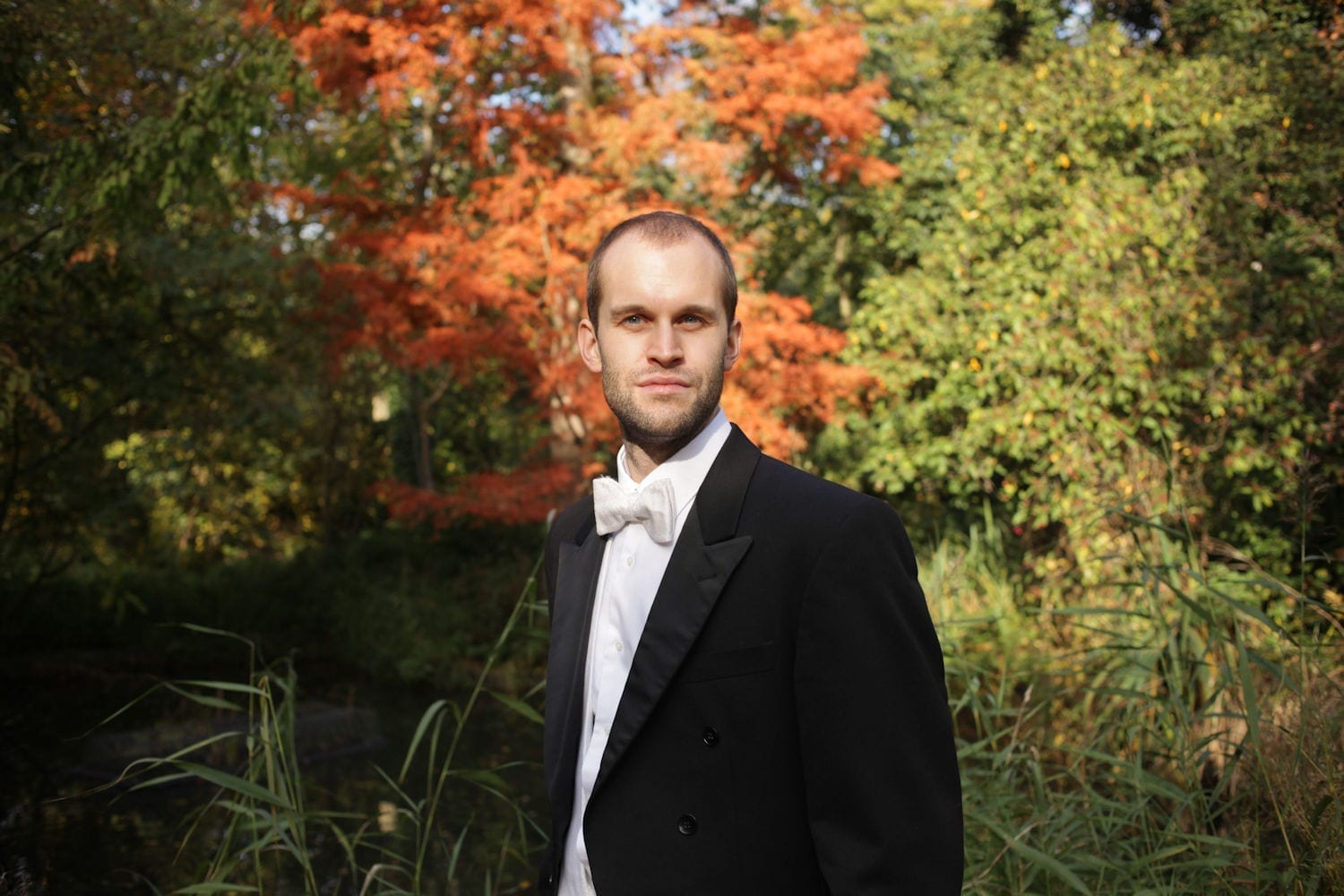
Roderick Williams (baritone, above), CBSO Chorus, City of Birmingham Symphony Orchestra / Michael Seal

Symphony Hall, Birmingham
Thursday 10 November 2022

Reviewed by Richard Whitehouse

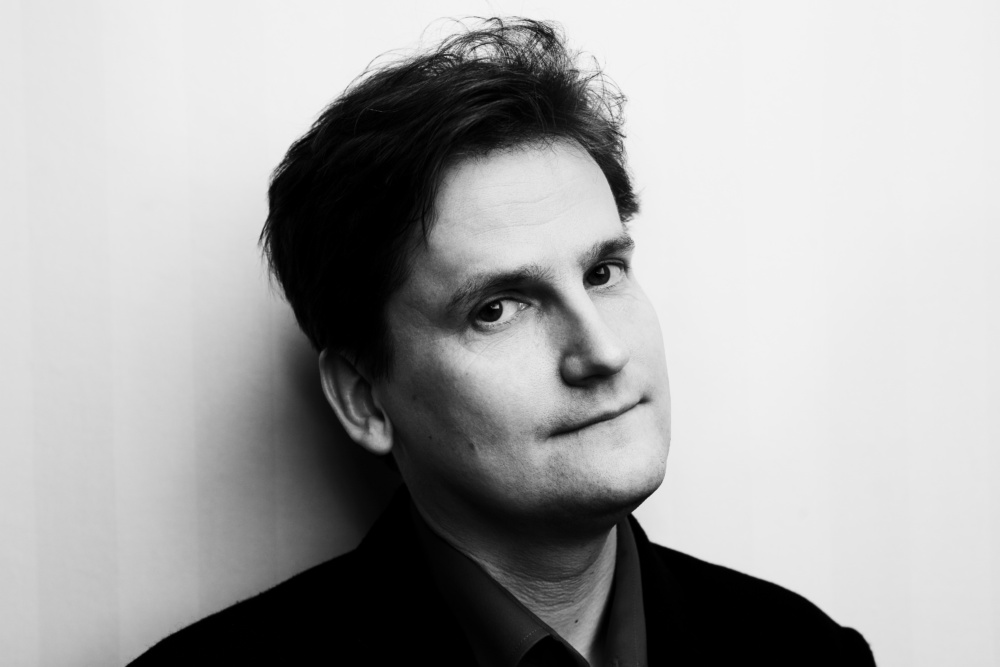
The City of Birmingham Symphony Orchestra’s mini-series devoted to Vaughan Williams continued this evening with the overture from his music to Aristophenes’ satire The Wasps, paced by Michael Seal (below) so its animated and soulful themes complemented each other perfectly.

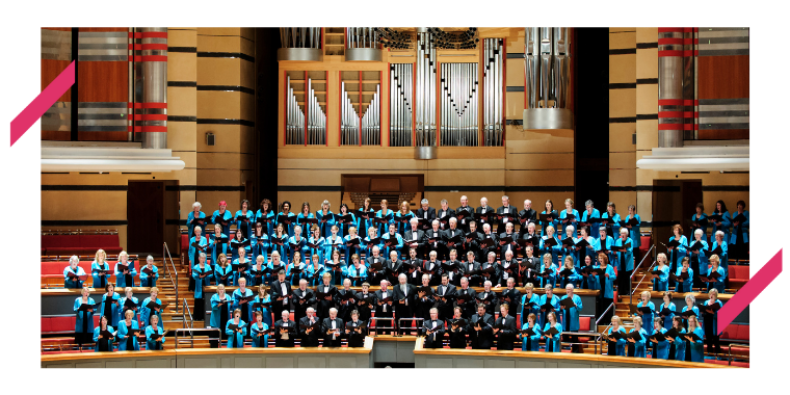
Judicious was no less true of this first half with its overview of the composer’s music across the first decade of the last century. Its premiere at the Leeds Festival bringing a first taste of national acclaim, his ‘song for chorus and orchestra’ Toward the Unknown Region sets Walt Whitman with assurance and imagination in its evocative opening section, and if the ensuing peroration feels a little contrived – the journey proving more memorable than the destination – that was no fault of the CBSO Chorus whose contribution was sensitively attuned throughout.

As it was with those Five Mystical Songs in which the composer gave full vent to his love for the Metaphysical poets and George Herbert in particular. A curiously hybrid conception, the chorus is very much secondary to the baritone soloist throughout much of the first three songs – a congregational presence in the processional Easter and then underpinning the emotional intimacy of I Got Me Flowers or confiding profundity of Love Bade Me Welcome, before falling silent in The Call. Roderick Williams was eloquence itself in this latter setting and a forthright presence in the preceding, before sitting out the Antiphon with its pealing bells and mounting exultation. Williams has recently given the rarely heard version of these songs with piano but hearing them with such burnished splendour as here was its own justification.
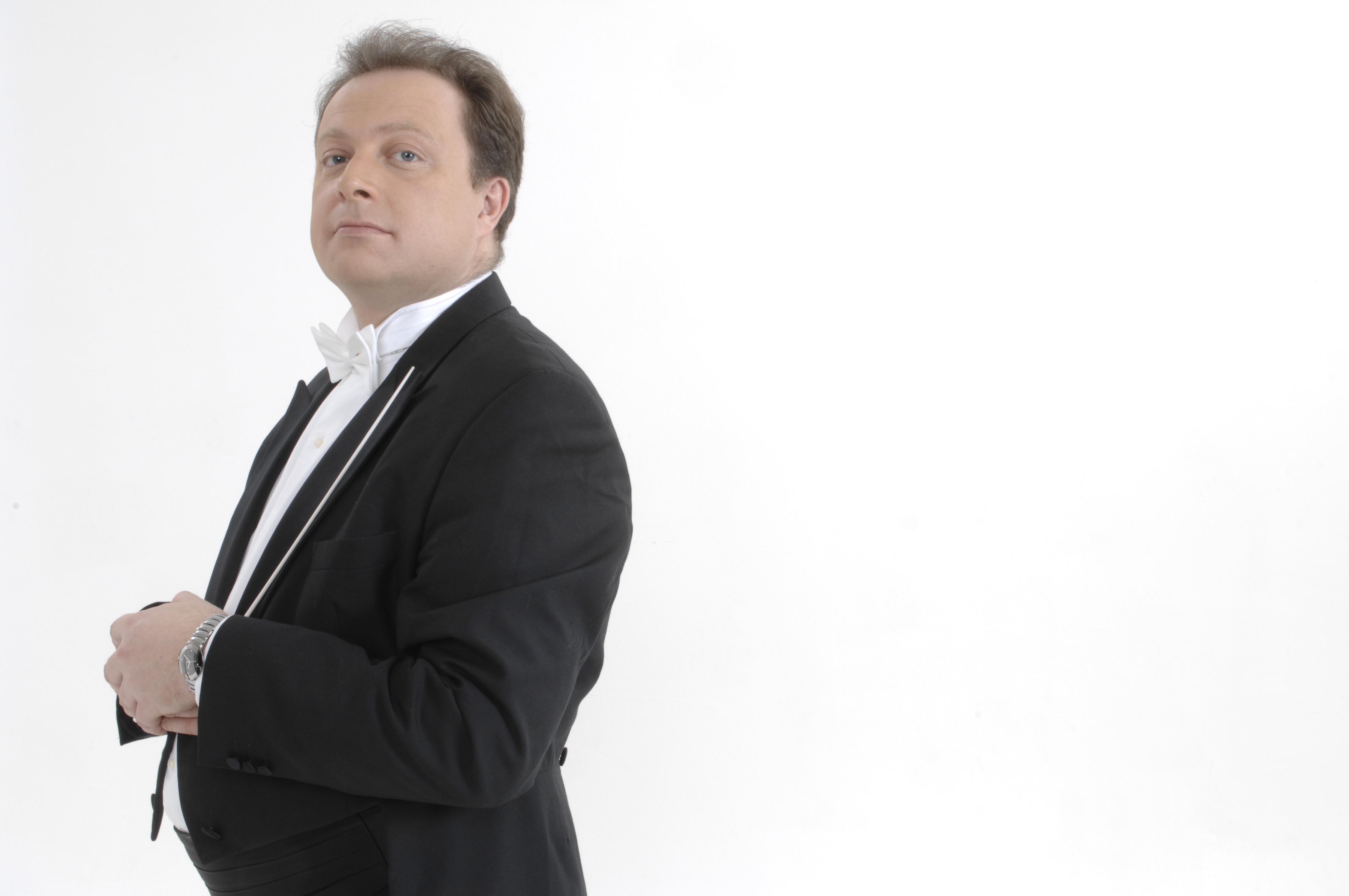
Is the Fifth Symphony unduly exposed nowadays? The composer’s most characteristic and culturally significant such piece might risk palling with too much repetition, but there was no chance of that here. Seal (above) set a flowing if not too swift tempo for the Preludio, pointing up the radiant tonal contrast between its themes – the second of them capping the movement to thrilling effect towards its close. Its rhythmic pitfalls ably negotiated, the Scherzo had the requisite deftness and mystery while taking on a degree of malevolence over its later stages. The Romanza then emerged surely yet unforcedly through glowing chorales and plaintive soliloquy (CBSO woodwind at its most felicitous) to a heartfelt culmination before subsiding into a hardly less enveloping serenity – its inspiration in John Bunyan tacitly acknowledged.

Enough had wisely been kept in reserve for the final Passacaglia – its initial stages evincing an almost nonchalant gaiety as only clouded towards its centre with the recollection of earlier ideas. By making it the work’s emotional highpoint, moreover, Seal ensured that the epilogue capped not just this movement but the work overall – its transcendence (hopefully) speaking as directly to listeners today as those at the premiere almost 80 years ago. Certainly, it would be a real misfortune were this music ever to be viewed solely from the perspective of the past.

An absorbing performance, then, that reaffirmed the greatness of this music to an enthusiastic audience. Vaughan Williams at 50 concludes tomorrow evening with the CBSO providing a live soundtrack to the composer’s most ambitious cinematic project – Scott of the Antarctic.

You can read all about the 2022/23 season and book tickets at the CBSO website. For more information on Scott of the Antarctic, click here – and click on the artist names for more on Roderick Williams, the CBSO Chorus and Michael Seal

In Concert – Soloists, City of London Choir, Royal Philharmonic Orchestra – Hilary Davan Wetton: Vaughan Williams & Ravel

Anita Watson (soprano), Maya Colwell (mezzo-soprano), John Cuthbert (tenor), Ashley Riches (bass-baritone), City of London Choir, Royal Philharmonic Orchestra / Hilary Davan Wetton

Ravel Menuet antique (1895, orch. 1929)
Vaughan Williams Serenade to Music (1938)
Ravel Le Tombeau de Couperin (1914-17, orch. 1919)
Vaughan Williams Dona nobis pacem (1936)

Cadogan Hall, London
Thursday 10 November 2022

Reviewed by Ben Hogwood

This concert deftly assembled a number of threads to bring the Royal Philharmonic Orchestra’s celebration of RWV150 – the handy abbreviation for Vaughan Williams‘ birth anniversary year – to a close.

Vaughan Williams studied with Ravel in Paris in 1908. Just over a decade later, the lives of both men had been altered forever by the First World War. It affected both of them deeply – Ravel in a brief stint as a lorry driver and Vaughan Williams as an ambulance driver and artillery officer in France.

Both Le Tombeau de Couperin and Donna nobis pacem are affected by their experiences, but first we heard another act of musical remembrance in Ravel’s charming Menuet antique. Written in memory of Chabrier, this bittersweet work presents a winsome smile while it dances, but darker thoughts lurk in the middle ground, expressed through the gruff voices of lower woodwind. Hilary Davan Wetton conducted a sprightly reading, though it took a little while for the RPO to settle. After a soft-centred middle section, the second reading of the Menuet itself was on much firmer ground.

Le Tombeau de Couperin is both a commemoration and celebration of French baroque music, but its deeply personal connections mark the passing of Ravel’s mother in 1917 as well as close friends lost to the First World War. Originally written for piano, the suite comprises six movements, four of which the composer arranged for orchestra, his painterly touch evident at every turn.

This was a touching performance, led by a fine contribution from RPO oboist Timothy Watts, who led off the Prélude with beautifully flowing phrases. The orchestra responded with silvery strings and harp, the music shimmering but shivering too. The personal reverberations were close to hand in the underlying sadness of the Forlane, which nonetheless danced with poise and grace. The Menuet, taken relatively quickly, found time to express its innermost feelings in the thoughtful trio section, while the Rigaudon gained a spring in its step, bouncing along but soon checked by the sparse textures of its central section. This was a fine performance, earning the RPO woodwind a deserved curtain call of their own.

Vaughan Williams’ Serenade to Music is a softly voiced tribute to Sir Henry Wood’s Golden Jubilee as a conductor. In recognition, the composer sets the scene between Lorenzo and Jessica from Act Five of Shakespeare’s The Merchant of Venice. It is a versatile piece, written initially for 16 selected soloists but performed here by four singers and the sensitively controlled voices of the City of London Choir, who revelled in the cushioned carpet of sound Vaughan Williams creates. This was established by an affectionate solo from orchestra leader Duncan Riddell, establishing the serenity of D major under Davan Wetton’s watchful eye.

The balance between choir and orchestra, tricky to achieve in the Cadogan Hall, felt just right – as did the poise of soprano Anita Watson (above), floating up to the high ‘A’s with impressive control. She was aided by fine contributions from Maya Colwell, John Cuthbert and Ashley Riches, whose bass-baritone had a particularly attractive, rounded quality.

Two years prior to the Serenade, Vaughan Williams completed Dona nobis pacem, whose very different outlook reflects the worrisome mood in Britain and Europe in the mid-1930s. The composer’s dread of war, heightened by his experiences 20 years hence, was palpable in the central setting of Dirge For Two Veterans, using part of Walt Whitman’s poem Drum Taps in music that ironically dates from 1911.

Dona nobis pacem brings together texts from both sacred and secular sources, anticipating Benjamin Britten’s War Requiem some 26 years later, which used a similar tactic to startling effect. Here Vaughan Williams’ ‘catharsis’ – as Hilary Davan Wetton eloquently referred to it – received a heartfelt performance, anchored by Anita Watson’s recurring pleas for peace as the soprano soloist. The choir echoed these sentiments, but in a more fretful manner as they reflected on previous losses through Whitman’s poetry.

The music was remarkably prescient for our times, and the cautionary snare drum strokes bringing in the Dirge held a Mahlerian tension that stayed long in the memory. So, too, did the setting of Beat! Beat! Drums! (from the same Whitman poem), which was reached through a dramatic turn of the page from the full Agnus Dei plea. There was exultation from the choir, but also a constant ache beneath the surface.

Watson and Ashley Riches (above) were surefooted and expressive soloists, while Davan Wetton ensured the combination of choir and orchestra captured that wonderful sheen that Vaughan Williams can achieve when writing for the combined forces. The percussion, awkwardly hidden beneath the Cadogan Hall balcony with the organ, made a telling contribution as the dreaded ammunition, which was finally silenced as the peace for which we all surely strive came to pass at the end. The rapt closing bars were pure in their sincerity, soprano and acapella choir achieving an ideal balance and fade.

Before the Dona nobis pacem, Hilary Davan Wetton spoke briefly to the audience on the importance of the arts in the wake of a slew of funding cuts and falling attendances. As he so subtly reminded us, how lucky we are that in times of war in Europe and further afield we can still attend and enjoy concerts in person. It is a privilege never to be taken for granted, particularly on nights of Remembrance such as this.

In concert – Alexandra Lowe, Benson Wilson, City of Birmingham Choir, CBSO / Adrian Lucas: Vaughan Williams at 150: A Sea Symphony

Vaughan Williams
Benedicite (1929); Fantasia on Greensleeves (arr. Ralph Greeves) (1934); A Sea Symphony (Symphony No. 1) (1903-09)

Alexandra Lowe (soprano), Benson Wilson (baritone), City of Birmingham Choir, City of Birmingham Symphony Orchestra / Adrian Lucas

Symphony Hall, Birmingham
Sunday 6 November 2022 [3pm]

Reviewed by Richard Whitehouse

It may have been celebrated a year late, but this concert marking the centenary of the City of Birmingham Choir tied in with the 150th anniversary of the birth of Vaughan Williams and saw this choir joining forces with the City of Birmingham Symphony Orchestra in appropriate fashion.

Even when it had all but fallen out of the concert repertoire, A Sea Symphony yet remained a favourite of choral societies around the country such that the CBC has given its fair share of performances over the decades. On this occasion Adrian Lucas (musical director of the choir these past two decades) presided over an account whose shortcomings (notably an occasional misbalance between choir and orchestra in those more densely scored passages) were more than outweighed by the conviction with which the composer’s essential vision was realized.

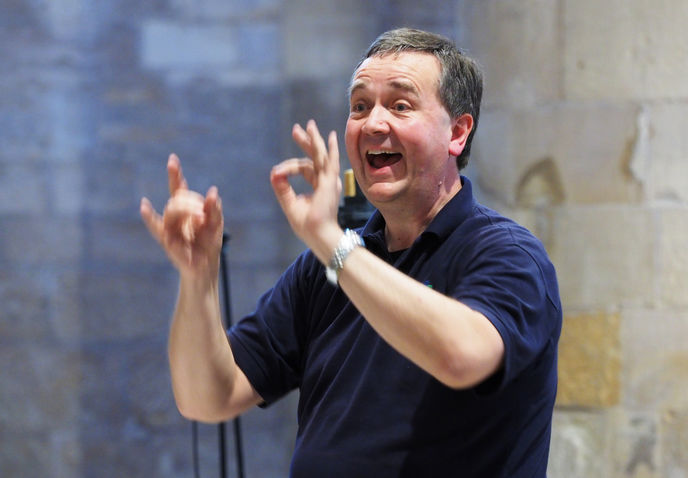
Certainly, the surging choral paragraph which launches A Song for all Seas, all Ships was powerfully conveyed with its subsequent sections introducing the soloists – Benson Wilson’s baritone ardent and mellifluous while just a little strained in its upper register, and Alexandra Lowe’s soprano such as rang out imperiously towards the centre of this opening movement. Momentum can easily falter in the latter stages, but Lucas (below) ensured its apotheosis provided an emotional counterweight to the beginning and never risked outweighing its rapt conclusion. Wilson came into his own with On the Beach at Night, Alone, its ruminative if often uneasy calm notably in evidence and with the more animated central section paced unerringly up to its fervent choral climax – after which, those brooding final pages yielded an evocative poise.

OLYMPUS DIGITAL CAMERA

As the symphony’s scherzo The Waves can feel overly contrived in context, but Lucas duly made the most of its rousing outer sections – the CBC in command of its textural intricacies – and convincingly integrated the Parry-like nobility of its ‘big tune’ into its evolving structure. Everything then came together in The Explorers, a finale which is also this work’s longest movement and features its finest music. By turns serene and speculative, the initial sections built assuredly to a rousing peroration from where the soloists’ impulsive re-emergence was the more telling. Lucas again ensured the culmination had the requisite grandeur without pre-empting the epilogue; at one with some of Walt Whitman’s most affecting lines in conveying that all-encompassing vastness as was a hallmark of Vaughan Williams’s endings henceforth.

The relatively short first half brought a welcome revival for Benedicite – its origins as a test-piece for competition likely telling against the qualities of a piece that, while it may break no new ground in its composer’s output, denotes his maturity in its vigorously wrought opening section, before a limpid setting of the 17th-century poet John Austin that brought an eloquent response from Lowe that itself preceded an energetic close. The once ubiquitous Fantasia on Greensleeves made for an appealing and by no means cloying interlude prior to the interval. All in all, this was a worthy commemoration of the respective anniversaries. The CBC can be heard in Handel’s Messiah early next month, and the CBSO continues its Vaughan Williams at 150 series next week with programmes conducted by Michael Seal and Martyn Brabbins.

You can read all about the 2022/23 season and book tickets at the CBSO website. For more information on the artists, click on the names of Adrian Lucas, Alexandra Lowe, Benson Wilson and the City of Birmingham Choir

In concert – Oliver Janes, CBSO / Ryan Bancroft: Adams, Mozart & Rachmaninoff

Adams The Chairman Dances (1985)
Mozart Clarinet Concerto in A major K622 (1791)
Rachmaninoff Symphonic Dances Op.45 (1940)

Oliver Janes (clarinet), City of Birmingham Symphony Orchestra / Ryan Bancroft

Symphony Hall, Birmingham
Wednesday 2 November 2022 [2.15pm]

Reviewed by Richard Whitehouse

Back from its successful US tour (the first such in almost a quarter of a century), the City of Birmingham Symphony Orchestra this afternoon returned to Symphony Hall for what was a programme of contrasts in which an element of dance seldom lurked far beneath the surface.

Although it is often considered emblematic of his opera Nixon in China, John Adams wrote The Chairman Dances well before completing the larger work – this ‘Foxtrot for Orchestra’ encapsulating much of its atmosphere without being intrinsic to its content. Capricious while shot through with a tellingly distanced nostalgia, this remains among Adams’s most effective concert pieces and Ryan Bancroft secured a fine account whose meticulous attention to detail was not without corresponding panache – down to its percussive ‘winding down’ at the close.

It is (nearly) always welcome when an orchestra’s section leader takes the platform as soloist, as was proven with Oliver Janes in Mozart’s Clarinet Concerto – easily the most popular such piece in its repertoire yet one that can easily seem bland or even characterless in performance. There was little chance of that here – not least with a swift and purposeful take on the opening Allegro that left relatively little room for lingering over incidental detail, even if something of its underlying elegance was sacrificed with Janes’s powers of articulation pressed to the limit.

This approach paid dividends in the remaining movements, not least an Adagio whose limpid eloquence was conveyed without trace of indulgence or wanton sentiment. The final Allegro, too, had a winning buoyancy – Janes evincing a deftness and spontaneity to which the CBSO responded in kind, and with a surge of energy towards the closing chords. It set the seal on an appealing rendition which, perhaps surprisingly, Janes will not repeat at tomorrow evening’s concert from Warwick Arts Centre – when that by Gerald Finzi will be the concerto on offer.

Soon to take the reins at the Royal Stockholm Philharmonic, Bancroft is evidently a conductor on a roll as was confirmed by his take on Rachmaninoff’s Symphonic Dances. A triptych that abounds in felicitous detail (as is often belied, if not actually concealed, by the score’s lack of expression markings), it needs flexible direction for each movement to cohere, and Bancroft had their measure. The first exuded a suspenseful energy that, in its central section, took on a winsome pathos embodied by its alto saxophone melody (affectingly played by Kyle Horch).

Even more persuasive was the sardonic central dance, its waltz motion underpinning some of the composer’s most astringent harmonies as were pointedly emphasized here. If the charged outer sections of the final dance lacked the ultimate in exhilaration, the quality of the CBSO’s response was never in doubt. In the slower middle episode, moreover, Bancroft’s deliberation ideally clarified those frequently dense textures whose expressive poise is achieved, uniquely for Rachmaninoff, without recourse to an actual melody. A sign of things to come, perhaps?

Bancroft will hopefully be returning next season, but the present one continues with events to mark the 150th anniversary of Vaughan Williams’s birth – including two of his symphonies and the film Scott of the Antarctic, for which the CBSO is contributing live accompaniment.

You can read all about the 2022/23 season and book tickets at the CBSO website. For more information on the artists, click on the names of Ryan Bancroft and Oliver Janes

Olli Mustonen plays Prokofiev

This week, Arcana will be visiting the Wigmore Hall to hear the complete piano sonatas of Prokofiev, played over two nights by Olli Mustonen.

The Finnish pianist is a specialist in the Ukrainian-born composer’s music, and it looks set to be a fascinating pair of concerts, offering a rare chance to appraise the complete works in this area of Prokofiev’s output. As a taster to illustrate his natural rapport with Prokofiev’s writing for the keyboard, here is Mustonen performing the Piano Concerto no.2 in G minor with the Singapore Symphony Orchestra and Hannu Lintu:

Olli Mustonen plays the complete sonatas at the Wigmore Hall, over two nights – for information click on the links for Monday 31 October and Tuesday 1 November:

Mustonen has also recorded the five piano concertos for Ondine, with Lintu and the Finnish Radio Symphony Orchestra. You can hear these dynamic accounts below: