In concert – Mitsuko Uchida, London Philharmonic Orchestra / Vladimir Jurowski: Lachenmann, Beethoven & Bruckner

Mitsuko Uchida Justin Pumfrey

Lachenmann Marche fatale (2018) [UK premiere]
Beethoven
Piano Concerto No. 4 in G major Op. 58 (1805-06)
Bruckner Symphony No. 6 in A major (1879-81) [ed. Benjamin-Gunnar Cohrs]

Mitsuko Uchida (piano), London Philharmonic Orchestra / Vladimir Jurowski

Royal Festival Hall, London
Saturday 9 April 2022

Written by Richard Whitehouse. Photos (c) Justin Pumfrey (Mitsuko Uchida), Thomas Kurek (Vladimir Jurowski)

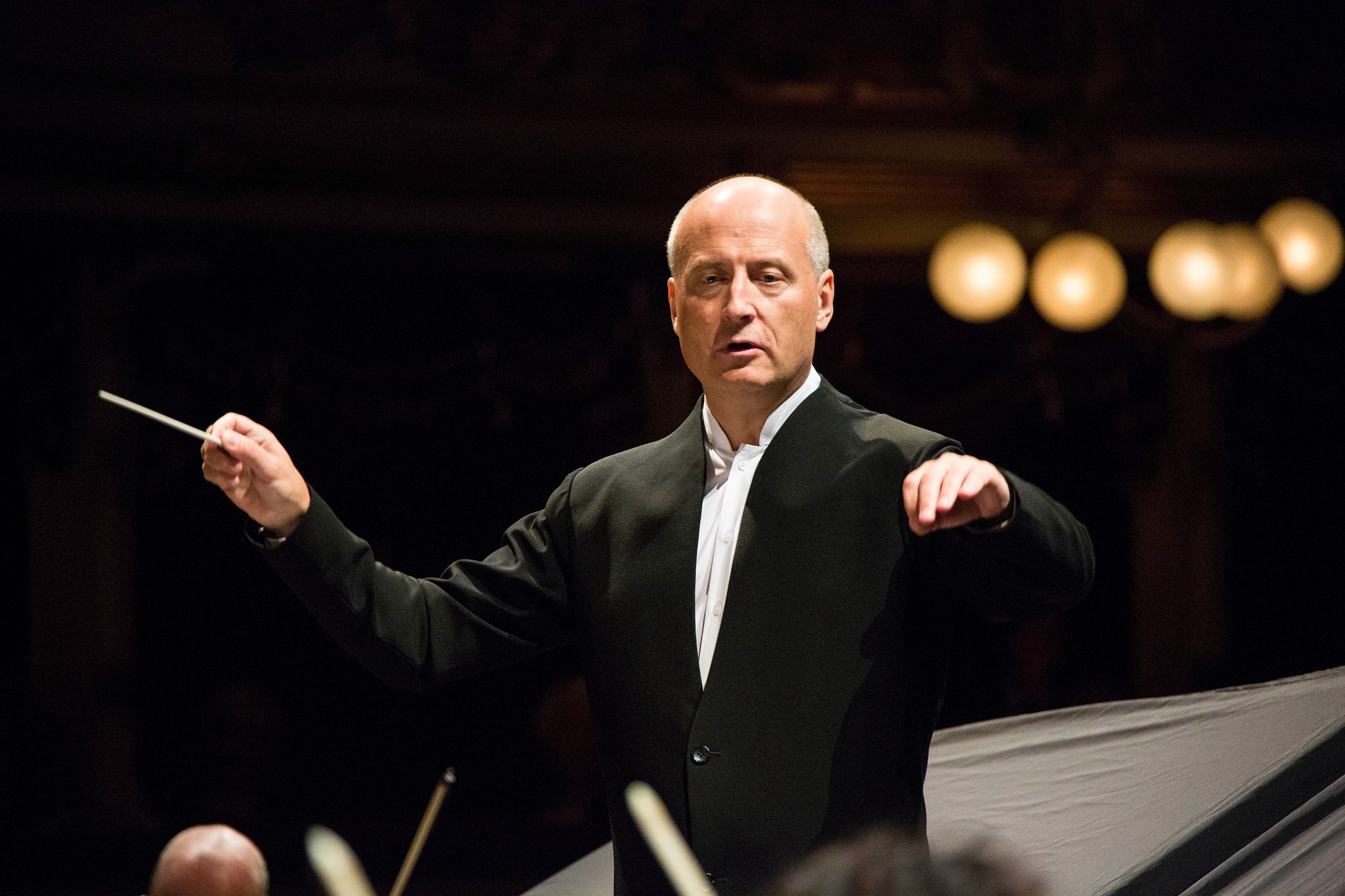
He might now be its Conductor Emeritus, but Vladimir Jurowski (below) clearly has no intention of curtailing his association with the London Philharmonic Orchestra – tonight’s concert being a distinctive take on what might have seemed a straightforward Austro-German programme.
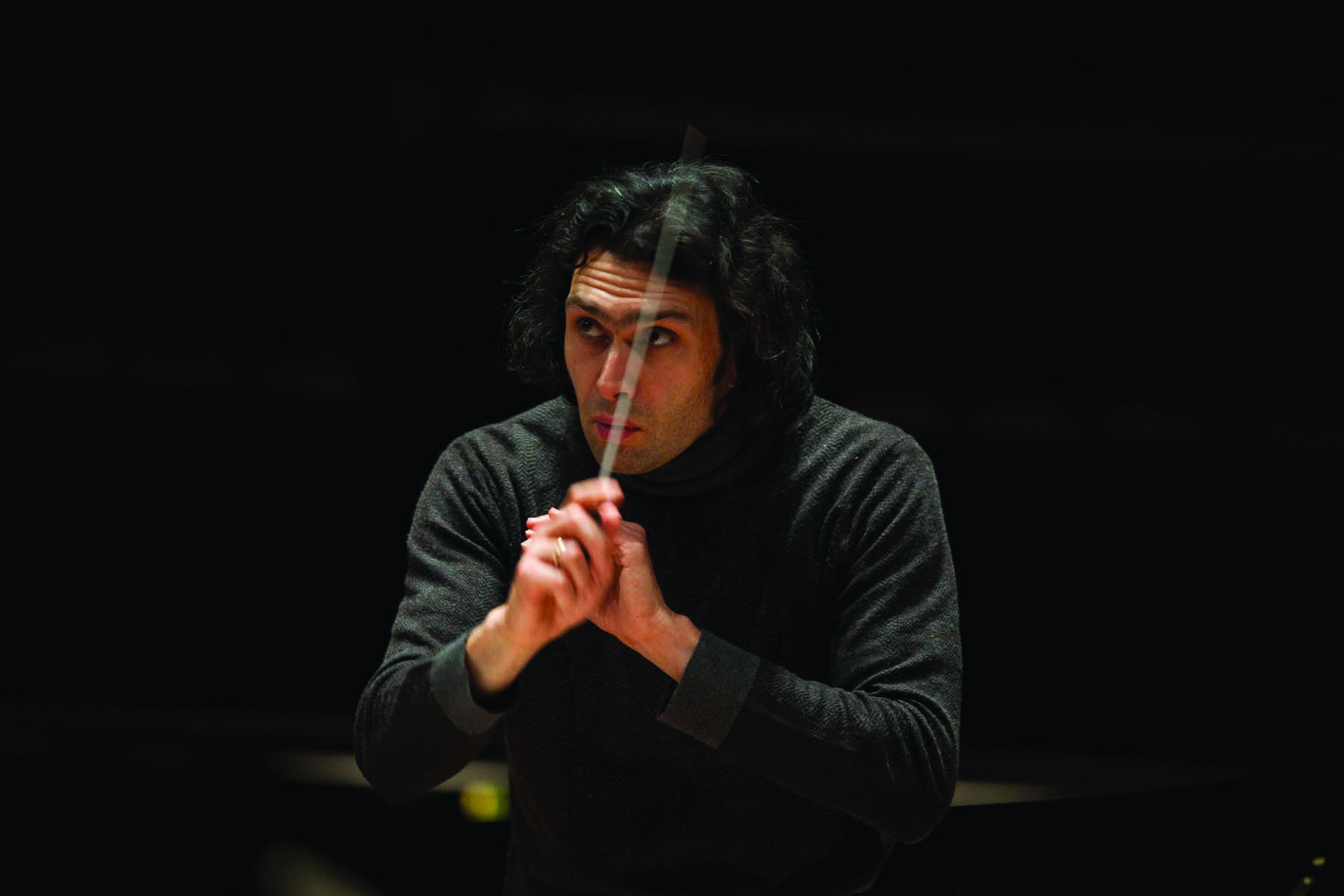
Jurowski’s leisurely traversal through Bruckner’s symphonies (taking in various editions) has now reached the Sixth, long underestimated in the context of its composer’s maturity but now recognized among his most distinctive and resourceful works. Not least for the way Bruckner integrates those two markedly different tempos of the opening Majestoso so it unfolded here as a seamless span – with the heightened cross-rhythmic transition into the reprise thrillingly effected, then the tonal follow-through of the coda rendered for the mesmeric inspiration it is.

The Adagio is often treated as a forerunner of those from Bruckner’s final three symphonies, but Jurowski rightly placed emphasis on its flowing phrases and eloquent paragraphs as they merge into each other across its expansive yet never overly emotive course. The LPO strings, responding with a burnished richness, were no less attentive to the syncopated impetus of the Scherzo – its outer sections pointing up those martial traits in which this piece abounds, with the trio’s teasing ensemble interplay deftly caught. Never an easy movement to bring off, the Finale undeniably succeeded as to its quixotic traversal – the outwardly fragmented contours of its development endowed with a cumulative dynamism; before its coda stealthily drew the almost antagonistic thematic elements together into a striding march-past towards the close.

Whereas Bruckner was writing at a time of relative European stability, Beethoven composed his Fourth Piano Concerto just before France lay siege to Vienna in a marked intensification of the Napoleonic Wars. This may explain the pathos behind the poetry of its first movement, certainly as Mitsuko Uchida (top) now hears it in a reading whose thoughtful understatement was underpinned by a tension such as came to the fore in the stark contrasts of its (more familiar) cadenza before the fatalistic resolve of its coda. Confrontation between piano and strings in the Andante were similarly elided by the former’s improvisatory solo, while the final Rondo stole in with mischievous intent – the wistfulness of its second theme and its transitions not neglected through to an ending where any lingering equivocation was decisively overcome.

As Jurowski emphasized in his introductory remarks, those who equate Helmut Lachenmann with the ‘musique concrète instrumentale’ of his most (in)famous works may be taken aback by the idiom of his recent Marche fatale. Yet what might sound akin to the anarchic take-off of a cartoon score is essentially a parodistic denunciation of Western civilisation as it careers towards a point of no return, the disjunct and increasingly fractured course of this six-minute piece culminating in a percussive onslaught with gong left resounding ominously at its close.

Seeking to open-out the context, Jurowski prefaced this with the fourth then first of Mauricio Kagel’s Zehn Marsche um den Sieg zu verfehlen (1978-9) – the collisions of woodwind, brass and percussion ‘missing the victory’ in ways a near-capacity audience evidently appreciated.

For further information on the London Philharmonic Orchestra’s 2021/22 season, click here Click on the composer names to read more about Helmut Lachenmann and Mauricio Kagel, and click on the artist names for more information on Mitsuko Uchida and Vladimir Jurowski

In concert – Nicola Benedetti, BBC Symphony Orchestra / Sakari Oramo: Romantics in Exile – Korngold & Langgaard

BBC SO/Oramo & Benedetti - Romantics in Exile

Korngold Violin Concerto in D major Op.35 (1945)
Langgaard
Symphony no.1 in B minor BVN32, ‘Mountain Pastorals’ (1908-11)

Nicola Benedetti (violin, below), BBC Symphony Orchestra / Sakari Oramo

Barbican Hall, London
Friday 8 April 2022

Written by Richard Whitehouse. Concert photos by James Watkins / BBC

Sakari Oramo has certainly blazed a trail for tackling little-known symphonic works during his tenure at the BBC Symphony Orchestra – witness his recent revival of the Symphony by Dora Pejačević and now that of the First Symphony from Danish anti-hero Rued Langgaard.

One who frequently snatched defeat from the jaws of victory, Langgaard (below) could not have had a better start to his career than its premiere with the Berlin Philharmonic and Max Fiedler on 10th April 1913, just before his 20th birthday. Its enthusiastic reception was never repeated in his remaining four decades, the composer traversing various stylistic phases while fighting a psychological battle with the Danish musical establishment. With its inspiration in Sweden’s Kullaberg peninsula, this work remains testament to the vaunting ambition of his younger self.

Steering a cohesive course across this almost hour-long piece whose sizable forces (not least four Wagner tubas) is no easy task, but Oramo succeeded more convincingly than on any of the three commercial recordings. Not least in a first movement, Surf and Glimpses of Sun, whose elongated sonata design and increasingly histrionic climaxes could so easily veer into overkill, rather than yielding a recklessly if purposefully cumulative momentum. Mountain Flowers is a slow movement of no mean eloquence, not least with Oramo encouraging the strings to relish the limelight over its opening and closing stages then towards its expressive apex. The undoubted highlight is Legend, less an intermezzo than a dark-hued formal crux whose ominous atmosphere looks on toward those anguished confessionals which lay ahead.

More conventional is Mountain Ascent, a lively and often playful scherzo whose impetus finds ready contrast with the wistful trio at its centre. Rendered here with suitable deftness, this made an admirable foil to Courage – an expansive finale not without its longueurs yet whose development affords some strikingly evocative orchestration, then an apotheosis for which Oramo not only prepared judiciously, but that the BBCSO kept within focus even as the addition of off-stage brass threatened to send those closing pages spinning out of orbit.

An experience, then, such as only a live performance can provide, and which demonstrably played to the strengths of this partnership. Might one hope that Oramo and the BBCSO give Langgaard’s Sixth, arguably his symphonic masterpiece, at a Proms concert in due course?

A thought occurred that had the Danish film industry maintained its promise prior to the First World War, Langgaard might have found as productive an outlet for his abilities as Korngold had for his during the golden age of Hollywood. The latter’s Violin Concerto was not always the familiar item it has now become, and Nicola Benedetti’s rendering assuredly conveyed its essence. Pointing up the discreet contrast between the themes of its opening Moderato, with a trenchant account of its cadenza, she gave a finely shaped if overly generalized account of its central Romance, then projected the final Allegro’s incisiveness and high-flown melodrama with relish. Nor did she undersell the suavity of Jacob Gade’s tango Jalousie – a piece which, 97 years on, confirms what is possible if a composer does not entirely eschew popular appeal.

For further information on the BBC Symphony Orchestra’s 2021/22 season, click here For more on Erich Korngold and Rued Langgaard, click on the composer names – and click on the artist names for more information on Nicola Benedetti and Sakari Oramo

Online concert – English Symphony Orchestra / Kenneth Woods: Elgar Festival Highlights

eso-woods

Smyth The Wreckers – Overture (1906)
Elgar Variations on an Original Theme, Op. 36 ‘Enigma’ (1898-9)

English Symphony Orchestra / Kenneth Woods

Live performances at Worcester Cathedral, Saturday 30 October 2021

One of 2021’s welcome returns to the musical calendar, following its cessation in ‘lockdown year’, was the Elgar Festival – highlights from the final concert held at Worcester Cathedral last October comprising this latest in the English Symphony Orchestra’s digital online series.

The new production at this year’s Glyndebourne Festival should provide Ethel Smyth’s opera The Wreckers with a suitable reassessment. Never having entirely fallen out of the repertoire, the overture affords a decent overview of the emotional impulses found therein and makes for a forceful curtain-raiser. If its headlong opening pages and plangent ensuing melody – shared between cor anglais and oboe – set up a promise not entirely fulfilled, the hymnic fervour of its climax and the impetuous final surge were keenly projected in this forthright performance.

Elgar’s Enigma Variations has been a staple of British music since its premiere 123 years ago and, by definition, a regular feature of this festival. Neither time nor familiarity has (or should have) detracted from the originality of both its underlying conception and its musical content – attributes to the fore with this engrossing account. Kenneth Woods pointed up those formal divisions into which the 14 variations fall, prefaced by the hushed rendering of a theme whose mingled wistfulness and pathos set the tone not just of this work but also for Elgar’s maturity.

On to the first stage with the searching emotion of ‘C.A.E’ – followed by the quick succession of capriciousness in ‘H.D.S-P.’, insouciance in ‘R.B.T.’, then impetus in ‘W.M.B.’. The next three variations opened-out the expressive range accordingly – hence the alternation between the earnest and playful in ‘R.P.A.’, gentle whimsy of ‘Ysobel’ with its teasing viola part, and headlong energy of ‘Troyte’. The next two variations contrast genial elegance in ‘W.N.’ with rapt eloquence in ‘Nimrod’, here rightly conveying ardent passion instead of nostalgic regret.

The following two variations yield studies of a more complementary nature – thus the halting piquancy of ‘Dorabella’ during what becomes a relatively extended intermezzo, to which the swift animation of ‘G.R.S.’ (more probably his bull-dog Dan) functions as a decidedly terse scherzo. Especially persuasive was the next brace of variations – the thoughtful undulations of ‘B.G.N.’ as framed by its haunting cello solos, then the imaginative ‘***’ which romanza takes in easy affability and aching rumination over its unpredictable and speculative course.

Its considerable expanse (though how right Elgar was to extend those concluding stages from the perfunctory end he first envisaged) makes equating the final ‘E.D.U.’ variation with what went before a test of interpretive skill. Suffice to add this performance met its challenge head on – Woods gauging that initial crescendo as a basis from which the ensuing festivities could take off, allowing necessary breathing-space for the inward central interlude to leave its mark prior to resuming the earlier extroversion, then upping momentum for the opulent peroration.

Needless to add, the organ of Worcester Cathedral made its presence felt with those weighty pedals in the work’s closing bars – setting the seal on a memorable reading which benefitted from as spacious and well-balanced sound as has been achieved with this venerable acoustic.

You can watch this concert on the English Symphony Orchestra website, with free public viewing from 8-12 April 2022. The concert is available thereafter only to ESO Digital supporters.

For further information on the 2022 Elgar Festival click here, and for more on composer Dame Ethel Smyth click here Meanwhile for more on Kenneth Woods, click here

In concert – Tonhalle Orchester Zürich & Paavo Järvi: Sibelius Symphony no.2

paavo-jarvi-tonhalle

Sibelius Symphony no.2 in D major Op.43 (1901-2)

Tonhalle-Orchester Zürich / Paavo Järvi

Grosser Saal, Tonhalle, Zürich
Tuesday 5 April 2022

Written by (and photos below) Ben Hogwood

Sometimes a single work in a classical concert is enough – especially if that work has the lasting power of Sibelius’s Second Symphony.

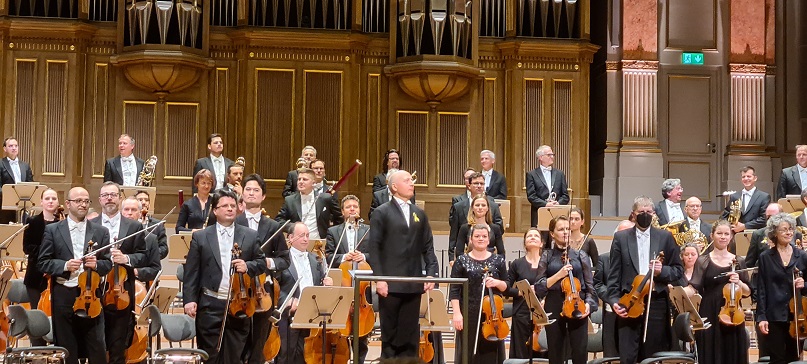
Paavo Järvi certainly thought so, programming the 45-minute work as part of a concert celebrating the visit of the annual IAMA conference. IAMA – International Artist Managers’ Association – is a vital industry body representing the interests not just of artist managers but of artists themselves, liaising with creative spaces such as the resplendent, refurbished Zürich Tonhalle. Their conference moves around Europe, so a visit from them is a great opportunity for the ‘host’ city to exhibit their creative wares.

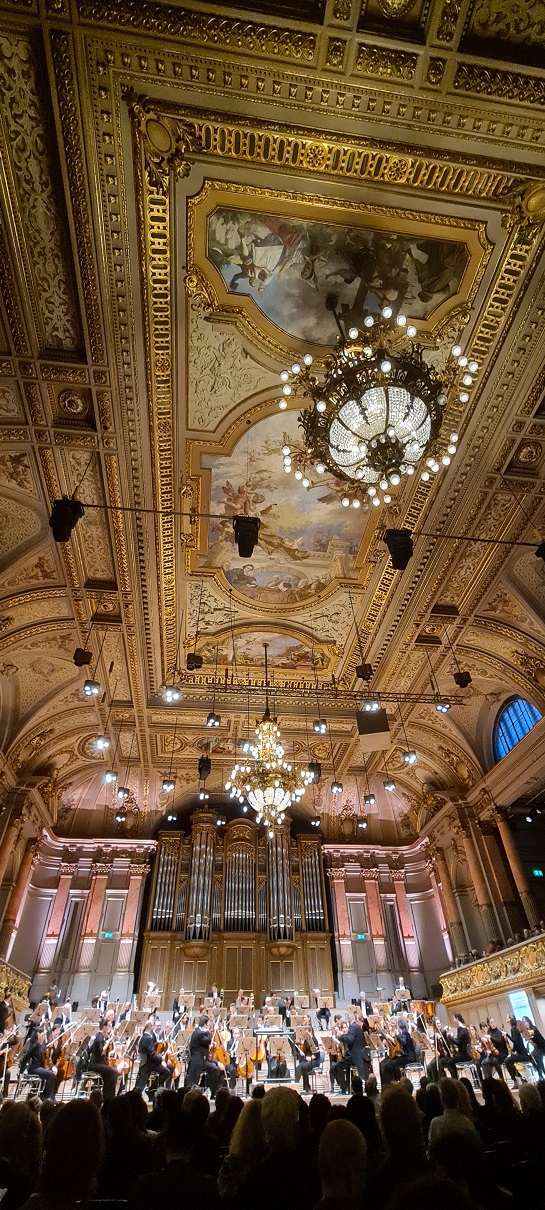
The Tonhalle-Orchester did that in this concert with some aplomb, performing as they were in a venue opened by Brahms himself in 1895. The composer appears as part of a mural (partially visible in the photograph above) on the ceiling in the resplendent company of Haydn, Mozart, Beethoven and Gluck. Sibelius was too late for inclusion, of course.

In their company, his Second Symphony received a performance of poise and power, the music on occasion appearing to issue from the very earth beneath our feet. This was most notable in the second movement, whose sequence of tempo changes and shifts of mood was the defining feature of this performance. The Tonhalle-Orchester wind shone out, especially the bassoon’s main theme, while the double basses and cellos used their wonderful grainy sound to provide the most solid undercarriage for the white-hot exchanges above.

The orchestra are a technical powerhouse, their ensemble well-nigh perfect, as was demonstrated in the unity of the strings’ pizzicato in the second movement, and the cushioned, velvety tones with which the work began, a similar effect to waves lapping the shore of a lake.

After the emotional tumult of the second movement the third sprang forward almost in alarm, scurrying figures nervously bouncing off each other until the gradual crescendo to the start of the finale itself. This was carefully managed, and although you could argue Järvi and his charges peaked too soon they just kept getting louder and ever more exultant, aiming always at the end goal. The orchestra forged a fiery path, propelled by the lower strings but with searing contributions from brass and wind, not to mention rumbling timpani, all these elements once again tracing back to the earth itself.

Järvi led his charges with clear, largely cool direction, though his love of the music was clear in more animated sections, driving the orchestra on. They responded with clear and obvious enjoyment to his direction, the team reflecting Sibelius’ ultimately victorious charge to the finish in that glorious final cadence. A special performance with which to mark an auspicious occasion, as in that night conducted by Brahms 127 years ago.

Online concert – English Symphony Orchestra / Kenneth Woods: Adrian Williams: Symphony no.1

English Symphony Orchestra / Kenneth Woods

Adrian Williams Symphony no.1 (2018-19, rev. 2021)

Wyastone Concert Hall, Monmouth
Studio recording 1-2 December 2021

Written by Richard Whitehouse

The 21st Symphony Project, launched five years ago by the English Symphony Orchestra and Kenneth Woods, has seen several impressive premieres – with this First Symphony by Adrian Williams its most ambitious yet, whether in terms of underlying conception or overall impact.

Now in his mid-60s, Williams has been a notable presence – albeit on the periphery – of music in the UK for several decades (more information can be found via the web references below); his advocates including Raphael Wallfisch and the Amsterdam Sinfonietta. Regular listeners to the ESO’s digital concerts will have encountered his striking Chamber Concerto ‘Portraits of Ned Kelly’ and intricately wrought eloquence of Migrations for strings; aspects from both resurfacing here, if on a considerably larger scale and exuding correspondingly greater force.

Playing almost 50 minutes and scored for a sizable orchestra including triple woodwind, five horns, four trumpets and four percussionists with harp, piano and celesta, the present work is evidently a summation of where its composer has reached over the course of his musical (and likely extra-musical) odyssey. Not that there is anything gratuitous or self-indulgent about the outcome; indeed, for all its formal complexity and emotional reach, this is music created out of inherently basic motifs – its initial three notes and their rearrangement generating the first movement’s main themes as well as outlining a long-term tonal trajectory which, though not pursued as systematically as in the earlier symphonies of Robert Simpson, remains as a focus throughout the intervening activity and the focal-point toward which such activity is directed.

From its imposing Maestoso epigraph, the opening Stridente unfolds against the background of, without thereby adhering to, sonata-form principles – its motivic components drawn into a continuous and frequently combative evolution necessarily left unresolved at the close. There follows a Scherzando that eschews ternary design for a through-composed format proceeding by tension and release to its decisive ending. To say the ensuing Lento is the expressive crux of this work might detract from the plangent, desolate tone of music whose frequently sparse textures and elliptical harmonies re-affirm that ‘less is more’. Despite its Energico marking, the finale unfolds with slow-burning momentum made cumulative by channelling its motivic evolution towards a Dolente apotheosis whose outcome is as inevitable as it is transcendent.

An impressive piece in terms not only of ambition but also realization. There are considerable technical challenges on route, but these are met with conviction and no little resourcefulness by an expanded ESO often tested while never fazed during its eventful course. Woods directs with his customary discretion and an attention to detail that goes a long way toward clarifying music which feels ‘complex and luminous’ as much in spirit as by design. Whether or not the outer movements might yield greater panache could only be determined under live conditions.

It might also be noted the designation is no idle boast, Williams having been commissioned to write a successor the ESO will schedule at a future date. Even were it to pursue a wholly different course, the achievement of this First Symphony is one not likely to be diminished.

You can view this concert from 25-29 March at the ESO website, and thereafter for ESO digital supporters here. For more information on Adrian Williams, head to his website or an extensive biography on the MusicWeb International site