BBC Proms – Dame Sarah Connolly, BBC SO / Brabbins: Berlioz, Payne & Beethoven

sarah-connolly

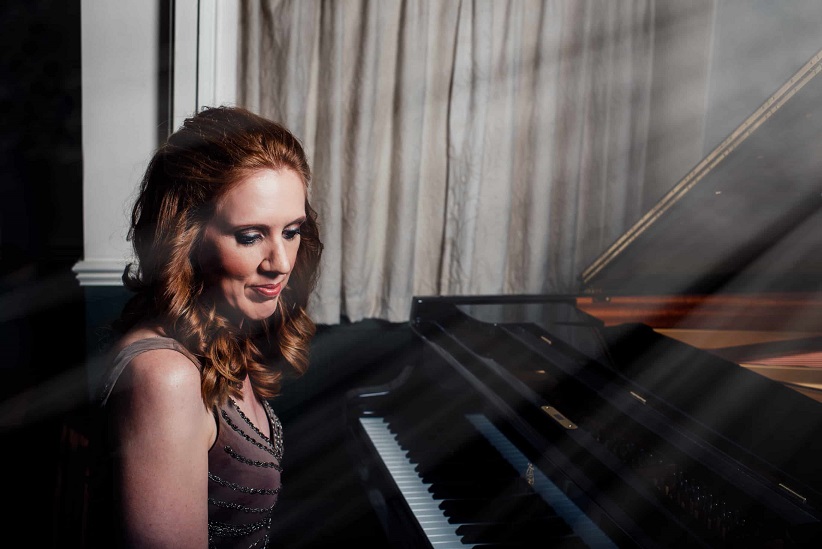
Dame Sarah Connolly (mezzo-soprano, above), BBC Symphony Orchestra / Martyn Brabbins (below)

Payne Spring’s Shining Wake (1980-81) (Proms premiere)
Berlioz Les nuits d’été Op.7 (1840-41, orch. 1856)
Beethoven
Symphony no.6 in F major Op.68 ‘Pastoral’ (1808)

Royal Albert Hall, London
Friday 13 August 2021

Written by Richard Whitehouse

A family bereavement meant that Sir Andrew Davis was unable to conduct this Prom, the baton having been taken up by Martyn Brabbins – whose currently in-demand status is a reflection not least of his broad range of musical sympathies and an inherent ability to ‘get things done’.

Not too many conductors would have taken on at relatively short notice a long-unheard piece by the late lamented Anthony Payne then render it with the familiarity of a repertoire staple. Seemingly unheard for 15 years, Spring’s Shining Wake was a breakthrough piece in several respects: the composer fashioning a ‘contemporary’ yet never esoteric idiom, unencumbered by stylistic precedent, as reflected his love of an earlier generation of English music. Delius’s In a Summer Garden is a focal-point in several respects, but what comes over most strongly in its modest scoring (seven wind, one percussionist and strings) is a sense of organic growth from the overtly static formal framework; textures diversifying and intensifying, yet without changing as to their essential features, in music exemplifying the ‘same yet different’ maxim.

From there to the limpid Romanticism of Berlioz’s song-cycle Les nuits d’été is nearer than might be imagined, this latter being notable for its range of expressive nuance despite (even because of) its pervasive restraint. Certainly, there was no uniformity of response from Dame Sarah Connolly – whose whimsical response to Villanelle contrasting with the wide-eyed fantasy of Le spectre de la rose, and becalmed rapture of Sur les lagunes thrown into relief by the fervent heartache of Absence then the spectral imaginings of Au cimetière; itself finding purposeful response in the animated L’île inconnue with its vouchsafing new imaginative realms. Coordination between soloist and orchestra is paramount throughout, and there was no lack of that in a reading as conveyed this music’s potent sensibilities with acute insight.

Nor was there anything routine about Beethoven’s Pastoral after the interval. Readers may remember a cycle of all nine symphonies which Brabbins (above) gave with the Salomon Orchestra just over a decade ago, and his purposeful if never inflexible take on the opening movement left room for its reflective asides and heady flights of fancy. This was no less evident in the Scene by the brook, with its emphasis on seamlessness of transition and unity of content – not least in the way those bird-calls of the coda were integrated into their textural context.

Unfolding with consistency of pulse, the remaining three movements yielded few surprises but no failings. A touch of blandness in the scherzo was duly countered with the immediacy   of the Thunderstorm and its nexus of accrued emotion whose dispersal makes possible the Shepherd’s Song – less cumulative in its eloquence than others have made it, perhaps, but whose inevitability of progress was sustained through to a close of serene poise; underlining the degree to which any trace of ego has been sublimated in the enveloping cosmic dance.

Some elegant and characterful playing from the woodwind of the BBC Symphony Orchestra was a highlight of this performance, a reminder that even a work with a Proms tally running to several dozen never need sound routine when approached with such unaffected reverence.

For further information on the music of Anthony Payne, visit the composer’s website. You can find more information on the BBC Proms at the festival’s homepage

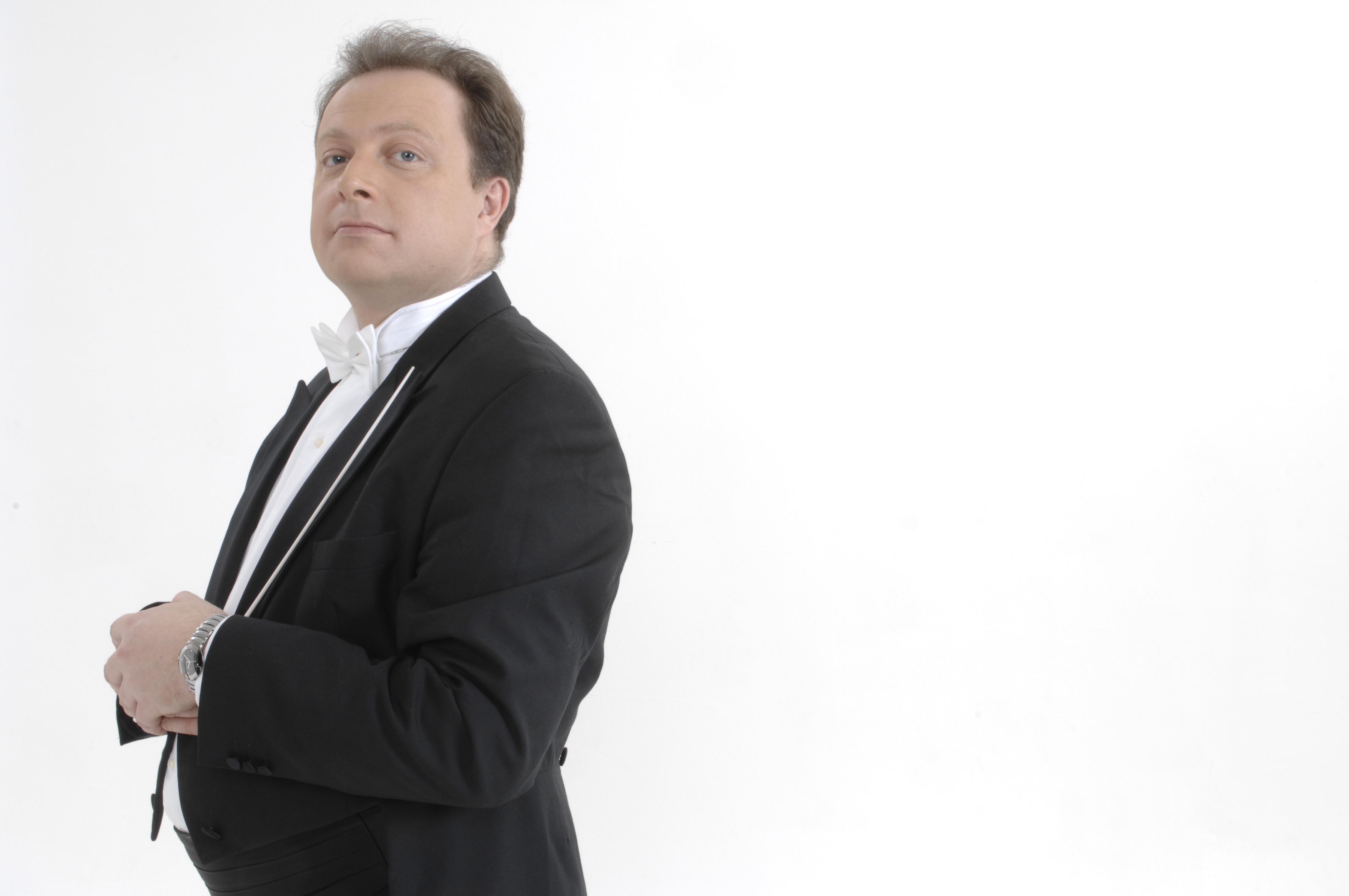
BBC Proms – Steven Isserlis, LPO / Jurowski: Stravinsky, Bach, Walton & Hindemith

jurowski-proms

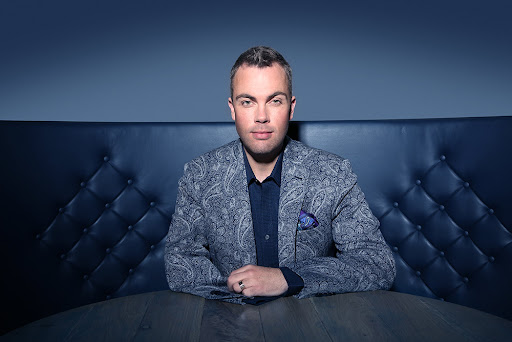
Steven Isserlis (cello, below), London Philharmonic Orchestra / Vladimir Jurowski (above)

Stravinsky Jeu de cartes (1935-6)
Walton
Cello Concerto (1955-6)
Bach (arr. Goldmann)
14 ‘Goldberg’ Canons BWV1087 (1742-4 arr. 1977)
Hindemith
Symphony ‘Mathis der Maler’ (1933-4)

Royal Albert Hall, London
Thursday 12 August 2021

Written by Richard Whitehouse; pictures (c) Chris Christodoulou

Vladimir Jurowski this evening concluded his highly impressive 14-year tenure as Principal Conductor of the London Philharmonic Orchestra with a thoughtfully conceived and well-proportioned programme; one which typically played to this orchestra’s strengths as much as to his own.

Although it can seem something of an ‘also-ran’ in the context of his compositions from the period, Stravinsky’s Jeu de cartes lacks for little in terms of that rhythmic effervescence as was engagingly evident in this performance – Jurowski pointing up the humour and even occasional glimmers of pathos that inform what can easily seem music written on autopilot. The LPO responded with a trenchancy and alacrity as held good throughout this ‘ballet in three deals’, the tonal punning of whose culmination at least ensures a humorous outcome.

Walton’s Cello Concerto used to be regarded with even less favour than Stravinsky’s ballet, but this piece (written by its composer at much the same age) is now seen as more than the enervated recycling of past success. Steven Isserlis (above) has long advocated its cause, and there was little doubting his commitment in a reading of perceptiveness and finesse. At times his spare and even fragile tone tended to recede into even so restrained and transparent as this, Jurowski mindful to rein in those brief climactic moments of the outer movements, but the artful interplay of the central scherzo did not lack for incisiveness or irony. Nor, after the second of the solo variations in the finale, was there any absence of rapture as soloist and orchestra are reconciled in drawing the music through to its close of fatalistic acceptance.

After the interval, a novelty in an arrangement by composer-conductor Friedrich Goldmann (1941-2009) of the 14 canons latterly identified from Bach’s printed copy of his Goldberg Variations. Arranged for a Stravinskian post-classical orchestra, these intricate and arcane studies in canonic dexterity emerge from gentle aridity to luminous elaboration with spare, methodical elegance such as intrigues and disengages in equal measure. Hardly something one expected to hear at such an occasion or this venue, though worth hearing all the same.

In its reiterating the values of Enlightenment humanism, moreover, this prepared admirably for Hindemith’s Symphony ‘Mathis der Maler’; premiered on the cusp of Germany’s descent into barbarous self-destruction, and a plea from the committed – however reluctantly – artist for a rational response as might be worth emulating today. The alternately radiant and tensile unfolding of Concert of Angels was perfectly judged, as too the plaintive resignation of the brief if affecting Entombment. The Temptation of St Anthony then made for an elaborate finale, but Jurowski paced it superbly – the plangent central interlude thrown into relief by the impassioned episodes on either side, then its anguished introduction by an apotheosis whose ultimate wresting of triumph from adversity remains thrilling as a statement of artistic intent.

A performance to savour, then, not least as John Gilhooly presented Jurowski with the Gold Medal of the Royal Philharmonic Society in recognition of services to music – an accolade with an illustrious history, which can rarely have been more deserved than on this occasion.

You can find more information on the BBC Proms at the festival’s homepage

In concert – CBSO / Mirga Gražinytė-Tyla: Ruth Gipps, Adès & Brahms

City of Birmingham Symphony Orchestra / Mirga Gražinytė-Tyla

Gipps Symphony no.2 Op.30 (1945)
Adès
: The Exterminating Angel Symphony (2020) [CBSO Centenary Commission: World premiere]

Brahms Symphony no.3 in F major Op.90 (1883)

Symphony Hall, Birmingham
Wednesday 4 August 2021

Written by Richard Whitehouse

This unexpected yet worthwhile addition to the City of Birmingham Symphony Orchestra’s season saw the revival of two works recently heard along with a belated premiere – twice postponed – for one of the most notable among the orchestra’s impressive roster of Centenary Commissions.

Its UK premiere guardedly received four years ago, Thomas Adès’s third opera felt limited as to provocative intent by the difficulty of transferring its theme of Spanish religious fascism to a different era. What was undeniable is the suitability of its numerous orchestral passages to being rendered in a more abstract context, hence The Exterminating Angel Symphony heard tonight. Its four sections arguably amount to a symphonic suite rather than symphony per se, yet their formal follow-through undoubtedly makes for a cohesive and finely balanced entity.

Mirga Gražinytė-Tyla evidently thought so – obtaining an incisive response in the ‘Entrances’ music whose expressive ambivalence intensifies second time around, then a virtuosic one in ‘March’; its malevolence building over a remorseless side-drum tattoo in a vivid foretaste of what lies ahead. Although it draws on one of the opera’s love-duets, ‘Berceuse’ seems a little unyielding in its emotional content despite the allure of scoring as was always apparent here.  It remains for ‘Waltzes’ (following without pause) to provide a suitable finale and, while this extended and ingeniously organized sequence of fragments from across the opera undeniably evokes a notable precedent in terms of its inexorable motion toward ultimate catastrophe, the animation and sheer panache of the CBSO’s playing brought about a suitably emphatic close.

Before this MGT again made a persuasive case for the Second Symphony by the orchestra’s one-time oboist Ruth Gipps, the contrasted sections of its single movement – a martial scherzo and eloquent Adagio framed by an ambivalent Moderato and cumulatively energetic Allegro – audibly unfolding as variations on an evocative theme heard at the start. An autobiographical aspect, concerning personal aspirations near the end of war, explains this piece’s confessional nature. Whether or not it will undergo several further decades of neglect remains to be seen.

After the interval came Brahms’s Third Symphony, which orchestra and conductor had given before the lockdown last December. Tonight, however, the first movement (exposition repeat taken) was purposefully controlled with real cumulative thrust, a less than decisive transition into the reprise affording the only lapse in momentum prior to a coda of unfettered eloquence. The Andante was once again unerringly shaped in terms of its ruminative contrasts, and if the third movement had now become a little torpid, this hardly affected its unforced pathos. MGT rightly made the finale the culmination in every sense, her tautening of tension at the apex of its development yielding as tangible an expressive frisson as did the coda – where the work’s main motif descends as if from afar to secure the most transfigured of emotional touchdowns.

A memorable addition to an inevitably truncated yet memorable (and for all the right reasons) season, which the CBSO repeated at the Proms the following night. Beyond that, the autumn portion of its 2021/22 season has just been announced.

You can find information on the CBSO’s new season here.

BBC Proms – Sayaka Shoji, RPO / Petrenko: Vaughan Williams, Respighi & Mendelssohn

vasily-petrenko

Sayaka Shoji (violin, below), Royal Philharmonic Orchestra / Vasily Petrenko (above)

Vaughan Williams Fantasia on a Theme by Thomas Tallis (1910)
Respighi
Concerto gregoriano (1921)
Mendelssohn
Symphony no.5 in D minor Op.107 (1830)

Royal Albert Hall, London
Wednesday 4 August 2021

Written by Ben Hogwood

A fascinating concert, notable on several counts. It marked the first Prom for Vasily Petrenko, recently transferred from Liverpool, in his new role as the Royal Philharmonic Orchestra’s music director. It featured three works paying tribute to a distant musical past – Vaughan Williams, Respighi and Mendelssohn expressing their admiration in very different ways. By way of an aside, it was your correspondent’s first live music in 17 months. A happy experience indeed!

In a sense my ears were in alignment with those who would have been at Gloucester Cathedral on 6 September 1910, for the world premiere of Vaughan WilliamsFantasia on a theme by Thomas Tallis. The Royal Albert Hall, in its current reduced capacity, offered a similar acoustic, suitable for a performance where the quietest statements could be clearly heard. In the wake of a pandemic, this was wholly appropriate music to be listening to.

The Fantasia is written for two string orchestras, the second of which, nine players strong, might normally be distributed high in the gallery. Here they were positioned on stage, upper left from the conductor’s viewpoint, and projected beautifully to the back of the arena. Petrenko did not linger over the serenity of the opening, but allowed Vaughan Williams’ invention plenty of space to breathe as the Fantasia formed. A sensitive audience ensured every little nuance could be heard, and the RPO strings – in particular the solo quartet within the main orchestra – played beautifully. Petrenko has recorded a good deal of Elgar with the Royal Liverpool Philharmonic, so it will be interesting to see if he decides to look at Vaughan Williams in equivalent detail.

There followed a Proms premiere of a work written 100 years ago. As David Gutman’s excellent programme footnotes pointed out, Respighi has not enjoyed good representation at the festival over the years, and in general his music still languishes in the repertoire. This first account of the Concerto gregoriano could hardly have been more persuasive, with a passionate advocate in violin soloist Sayaka Shoji, who quarantined on her arrival in the UK prior to this performance. Respighi was a violinist, writing with skill for the instrument, but chose not to use this concerto as a display piece. Rather he paid homage to the Gregorian chants with which he had had been preoccupied in recent years, and he used these as the basis for a piece containing some particularly lush harmonies and idiosyncratic rhythms.

This was a compelling performance, Shoji soon into her groove and leading with faultless intonation in the high passages of the slow movement, carrying beautifully into the wide open spaces of the hall. She was aided by the horns and trombones of the RPO, positioned along the back of the orchestra, the punctuation of harp and celesta adding glitter to the edge of the sound.

The first movement found nicely judged contributions from oboe (John Roberts) and cor anglais (Patrick Flanaghan), with a sheen from the strings not unlike that of the Vaughan Williams. The third movement presented faster music and a greater sense of drama from its main theme, the brass again involved. This pulled back to peaceful climes, and a recap of the second movement material. Concerto gregoriano was certainly a work benefiting from a live performance, deserving of a higher profile.

Shoji was a sensitive performer, allowing Respighi’s music star billing, a sign of her maturity as a soloist. She also chose a wholly appropriate encore, the soft pizzicato beginning the Sarabande from Ysaÿe’s Sonata for solo violin no.4 (À Fritz Kreisler) the only audible noise in a rapt hall.

Mendelssohn wrote his Reformation symphony in 1830, making it the second in his output chronologically, but it was not published until long after his death. He appears not to have been wholly satisfied with it, leaving it unperformed. It carries a powerful impact, anticipating Schumann’s own D minor symphony (no.4) while including the Lutheran chorale Ein feste Burg ist unser Gott (A mighty fortress is our God). In this the composer, perhaps inevitably, was including Bach in his homage.

Petrenko had the work’s measure, leading us straight into the ‘sturm und drang’ of the first movement with its grim, D minor struggles. They were captivating, especially at the end of the introduction when rapt strings introduced the ‘Dresden Amen’, a striking alternative to the flurry of activity around them. The second movement had an attractive lilt, the third a nicely poised subject, before flautist Emer McDonough gave an impeccable solo to lead us into the finale. It fell to her to present the chorale theme, taken up with greater number and power by the rest of the orchestra. The mood turned from struggle to victory. Petrenko’s pacing was ideal, as was the phrasing, while the final reverberations of the chorale were more than sufficient in lieu of an encore.

This was a very fine if slightly understated first Prom for the RPO conductor in his new role, bringing the ideal combination of new and familiar. The orchestra appear to be in very good hands.

You can listen to a playlist of the works featured in this concert, including the violin encore, on Spotify below:

You can find more information on the BBC Proms at the festival’s homepage

In concert – English Symphony Orchestra / Kenneth Woods: New Notes

3choirs festival

English Symphony Orchestra / Kenneth Woods

Doolittle Woodwings (2018, arr. 2020) [Version premiere]
Elcock
Symphony no.8 Op.37 (2019-20) [World premiere]
Beethoven
Symphony no.7 in A major Op.92 (1811-12)

Town Hall, Kidderminster
Wednesday 28 July 2021 (2pm)

Written by Richard Whitehouse

It may have taken over 15 months, but the English Symphony Orchestra this afternoon gave its first concert with audience, as part of the Three Choirs Festival, in what was essentially an event rescheduled from last year that continued its estimable 21st Century Symphony Project.

The premiere was that of the Eighth Symphony by Steve Elcock (above), born in Chesterfield in 1957 and resident in central France, whose music has only recently come to prominence via releases on the Toccata Classics label fronted by the redoubtable Martin Anderson. Symphonic writing has dominated Elcock’s output this past quarter-century, and if his latest piece has antecedents in a string quartet composed back in the early 1980s, there can be no doubt it continues those processes of organic evolution and integration central to the seven works that came before it.

The present piece reflects the impact of having heard the Sixth Symphony of Allan Pettersson (awaiting its UK premiere after 55 years), but whereas that hour-long epic centres on fateful arrival, Elcock’s 20-minute entity is more about striving towards a destination which remains tantalizingly beyond reach. Various pithy motifs are sounded in the opening pages, the earlier stages pursuing a productive interplay between relative stasis and dynamism as is thrown into relief by the emergence (10 minutes in) of a trumpet melody which crystallizes the course of this piece as it builds inexorably to a powerful climax then subsides into a searching postlude that recedes beyond earshot. Overt resolution may be avoided, yet the sense of cohesion and inevitability audible throughout its course makes for an engrossing and rewarding experience.

That was certainly the impression left by this well prepared and finely realized performance, notable for the way in which Elcock’s idiomatic while demanding string writing was realized with manifest conviction. A 10-strong wind ensemble (along with cello and double-bass) had opened the concert with Emily Doolittle’s Woodwings, the songs and calls of nine Canadian birds rendered over five characterful movements somewhere between Poulenc and Messiaen, with a finale whose relatively freeform structure made for an intriguing and enticing payoff.

After the interval, Beethoven‘s Seventh Symphony received a performance as uninhibited and exhilarating as the piece itself. That all repeats in the first, third and fourth movements is no longer the surprise it might once have been: more startling was Kenneth Woods’s decision – entirely justified – to proceed without a pause into the second movement, so underlining the A-A minor pivot which uncannily anticipates that of Mahler’s Sixth almost a century later. Other highlights were the bracing cross-rhythms of the transition into the first movement’s reprise, the flexible pacing of the scherzo’s trio melody– poised ideally between hymn and dance, then a finale whose coda threatened to breach the confines of Kidderminster’s Town Hall but whose ultimate elation clearly left its mark on the audience’s enthusiastic response.

An impressive return to live performance from the ESO (above) and a harbinger of just what can be expected in its 2021/22 season. Before that comes another in this orchestra’s series of online concerts with a fascinating chamber realization of Bartók’s opera Duke Bluebeard’s Castle.

You can find information on the ESO’s next concert at their website, and more on their latest recording, ‘Fables’, here. For more on the composer Steve Elcock, head to his website – and for the recordings on Toccata Classics, click here