
Live review – Henry Goodman, English Symphony Orchestra / Kenneth Woods: The Art of Storytelling – Lubin from Chelm

David Yang (above, music), Alisa Snyder (illustrations) Henry Goodman (narrator), English Symphony Orchestra / Kenneth Woods

Wyastone Concert Hall, Monmouth
Friday 4 December 2020 (online)

Written by Richard Whitehouse

Following on last week’s arresting version of The Ugly Ducking, the English Symphony Orchestra continues its series of pieces for virtual storytelling in the guise of an old English tale here given an inimitably Jewish twist to result in the ‘morality’ fable Lubin from Chelm.

While the tale of Lazy Jack might hardly have seemed other than an English story, it works well when relocated within Ukrainian Jewish environs then decked out with Yiddish turns of phrase and Klezmer stylings. The anti-hero Lubin – put to work only at the prompting of his aging mother, who is incapable of holding on to his wages, but who enchants the daughter of Chelm’s wealthiest family – could be interpreted in various ways; that of fortune smiling on those who least expect it, yet are by no means the least deserving, is the most straightforward.

Henry Goodman certainly makes the most of this barbed whimsy, relating the narrative with audible enjoyment as he assumes the role of Yiddish storyteller with aplomb. He is abetted by David Yang’s direct and characterful score, engagingly conducted by Kenneth Woods (who undertook the expert orchestrations) and illustrated by Alisa Snyder with a true appreciation of what line drawings are capable of conveying in this context. A few linguistic ‘curve-balls’ are thrown in, without detracting from the self-effacing directness of the unfolding narrative.

The ESO musicians (shots of whom alternate with the illustrations) play with their customary skill and sensitivity, and the whole production ought to amuse as well as provoke children and adults alike. As usual with ESO, a range of supporting material enhances the total experience.

You can watch the concert on the English Symphony Orchestra website here

For more information on the English Symphony Orchestra you can visit their website here

For information about Auricolae, visit Kenneth Woods’ website here

Live review – Hugh Bonneville, English Symphony Orchestra / Kenneth Woods: The Art of Storytelling – The Ugly Duckling

Hugh Bonneville (narrator), Wanda Sobieska (illustrations, above), English Symphony Orchestra / Kenneth Woods
Wyastone Concert Hall, Monmouth
Thursday 19 November 2020 (online)

Kenneth Woods The Ugly Duckling (after H.C. Andersen)

Written by Richard Whitehouse

The English Symphony Orchestra has demonstrated its versatility over these past few months with studio concerts of themed programmes. This latest offering takes up a line of pieces for storytelling that its conductor Kenneth Woods has pursued so ingeniously on past occasions.

Although The Ugly Duckling has retained its prominence as a children’s tale ever since Hans Christian Andersen first published it in 1843, its message has tended to be watered down with repetition. While it departs in numerous details, this retelling certainly restores those qualities of fear and anger, mixed with indignation, which remain central to the original’s conception. It helps when the bare bones of the story are conveyed so directly, with no attempt to soften or sentimentalize a narrative in which the notion of social acceptance should be paramount.

In this respect, there could hardly be a more sympathetic narrator than Hugh Bonneville, who relates the story with thoughtfulness and compassion. He is aided in this by illustrations from Wanda Sobieska as (rightly) suggest a setting far removed from comfortable domesticity; one emphasizing that harshness and struggle for survival pertinent to the natural world. Woods’s score ably sustains itself over the 18-minute whole, evoking Copland in innocent wonder but also Shostakovich in its sense of vastness and alienation – prior to a headily affirmative close.

The ESO musicians (shots of whom alternate with the illustrations) play with their customary verve and finesse, and this whole production should prove congenial for children and adults alike. As usual with ESO, a range of supporting material helps enhance the total experience.

You can watch the concert on the English Symphony Orchestra website here

For more information on the English Symphony Orchestra you can visit their website here

For information about Auricolae, visit Kenneth Woods’ website here

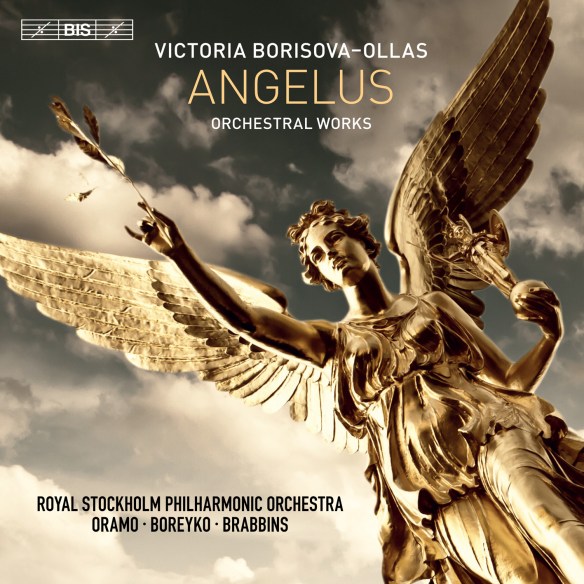
On record – Victoria Borisova-Ollas: Angelus (BIS)

Victoria Borisova-Ollas
Angelus (2008)
The Kingdom of Silence (2003)
Before the Mountains Were Born (2005)
Creation of the Hymn (2013)
Open Ground (2006)

Royal Stockholm Philharmonic Orchestra / Andrey Boreyko (Angelus), Martyn Brabbins (The Kingdom of Silence, Before the Mountains Were Born), Sakari Oramo (Open Ground)

BIS BIS2288 SACD [82’08”]

Producers Thore Brinkmann, Ingo Petry
Engineers Marion Schwebel, Matthias Spitzbarth

Recorded August 2016 (Open Ground), November 2017 (Angelus), August 2019 (The Kingdom of Silence, Before the Mountains Were Born) in Stockholm Concert Hall

Written by Richard Whitehouse

What’s the story?

BIS issues what is only the second release dedicated to the music of Victoria Borisova-Ollas (b1969), Vladivostok-born and resident in Sweden for almost three decades, superbly played by the Royal Stockholm Philharmonic Orchestra and sumptuously recorded in Stockholm Concert Hall.

What’s the music like?

UK audiences have had few opportunities to hear Borisova-Ollas, but her piece Wings of the Wind was second at the Masterprize International Music Competition in 1998, and her multi-media drama The Ground Beneath Her Feet was premiered at the Manchester International Festival in 2007. Her orchestral writing is confident and assured – drawing on a lineage that takes in such as Rimsky, Glière and Respighi in music which is never less than evocative or atmospheric, but lacks greater expressive focus so as to convey a more arresting personality.

An in memoriam to her teacher Nikolai Korndorf, The Kingdom of Silence duly proceeds as the ‘journey of a life’ from beatific stasis, through episodes of angst and decisiveness, and on to a serene if underwhelming catharsis. More distinctive is Before the Mountains Were Born, the third of this composer’s works to draw inspiration from the Psalms (here No. 94 – ‘Lord, you have been our dwelling place’) and whose supplicatory yearning informs a cadenza-like passage for the four principal woodwind prior to a decidedly unexpected close.

The nearest thing here to a showpiece, Open Ground picks up on American minimalist traits in its swift and unrelenting while highly eventful progress to a tellingly evanescent conclusion: a tale of reality and stability which could yet find favour with orchestras on both sides of the Atlantic.

Most expansive is Angelus, inspired by a visit to Munich and the sheer range of bell-sounds to be heard there – the result being a ‘morning to evening’ evolution where elements of chant and tintinnabulation are prominent within a texture of lingering and iridescent sonority such as enfolds the senses without engaging the intellect. Moreover, the accumulation of incident toward its centre lacks underlying emotional intensification, or the organ-capped climax any semblance of tension and release. More substantial is Creation of the Hymn – a sequence of variations, on an original theme of some trenchancy, originally written for string quartet and reworked for 15 strings. A range of stylistic associations is evoked, but the astute dovetailing of expressive contrasts and purposeful follow-through to a fervent ending holds the attention.

Does it all work?

Whatever else, this music is certainly good as regards first impressions. Dig deeper, however, and lack of substance in the actual ideas and way by which these generate the larger content is hard to deny – for all that the aural enticement of the orchestration cannot be gainsaid. Nor is there any lack of commitment from the Royal Stockholm Philharmonic, guided by Messrs Boreyko, Brabbins and Oramo to performances of real virtuosity. Those who already have the earlier disc of Borisova-Ollas’s orchestral music on Phono Suecia will certainly want this too.

Is it recommended?

Yes, with reservations. Wide-ranging sound is on a par with BIS’s customary high standards, while the composer’s annotations are quirky but informative. Hopefully releases of Borisova-Ollas’s chamber and instrumental work will emerge to open-out the perspective on her music.

Listen & Buy

You can listen to clips from the recording and purchase, either in physical or digital form, at the BIS website

Spotify

Live review – Raphael Wallfisch, English Symphony Orchestra / Kenneth Woods: Meditations for Armistice Day
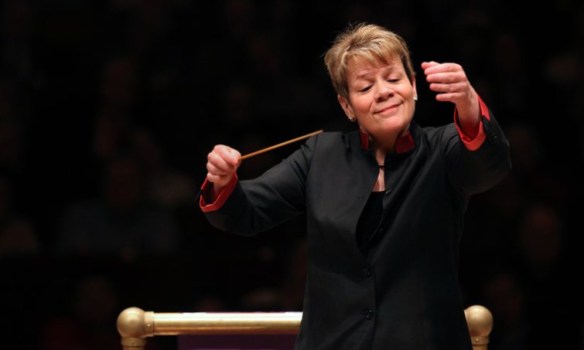
Raphael Wallfisch (cello, above), English Symphony Orchestra / Kenneth Woods

Wyastone Concert Hall, Monmouth
Sunday 8 November 2020 (online)

Adrian Williams Russells’ Elegy (2009/11)
Elgar arr. Fraser Variations on an Original Theme, Op. 36 (1899) – Variation IX, ‘Nimrod’ (1899)

Written by Richard Whitehouse

Remembering the Armistice – and just what it represents in human terms – is a regular fixture on the English Symphony Orchestra’s schedule. This year featured two pieces for strings that complemented each other well, whether in terms of their overall mood or underlying aesthetic.

Adrian Williams is contributing several works as the ESO’s current John McCabe Composer-in-Association, with Russells’ Elegy apposite in its ‘remembrance’ context as well as being a commemoration of pianist-conductor John Russell and director Ken Russell (hence the plural of the title). Audibly in a long lineage of British works for strings, the 10-minute piece moves between passages for ensemble and those where solo strings dominate with no mean subtlety and finesse, culminating in a sustained tutti that fades thoughtfully yet inevitably into silence.

Those encountering Williams’s music for the first time will hopefully have been encouraged to investigate further, and they will doubtless have responded to Elgar’s Nimrod as arranged for cello and strings by Donald Fraser (who has previously orchestrated the composer’s Piano Quintet and Sea Pictures). The result is comparable to the version of Tchaikovsky’s Andante cantabile from his String Quartet no.1 in the cellist’s discreet elaboration of a melodic line without detriment to the existing instrumental texture, and it would certainly make for an ideal encore.

This arrangement was eloquently rendered by Raphael Wallfisch, whose advocacy of British music over the years cannot be gainsaid, and the performances given added resonance by the photographs of soldiers and images from the Great War as accompanied this touching tribute.

You can watch the concert on YouTube here:

For more information on the English Symphony Orchestra you can visit their website here

In concert – ORF Vienna Radio SO / Marin Alsop: Musikprotokoll 2020 – Hidden Sounds

Joonas Ahonen (piano), ORF Vienna Radio Symphony Orchestra / Marin Alsop

Saariaho Chimera (2019) Austrian premiere
Maintz Piano Concerto (2014) Austrian premiere
López Disparates (2004-06) Austrian premiere

Helmut List Halle, Graz
Friday 9 October (review of the online broadcast)

Written by Richard Whitehouse

Now into its 53rd season, the Musikprotokoll festival in Graz has long been synonymous with some of Austria’s most innovative music-making, with this evening’s concert from the ORF Vienna Radio Symphony Orchestra and its current chief conductor Marin Alsop being no exception. Notable too was the sizable audience – notwithstanding the needs of social distancing – and its enthusiasm for a programme, as concise as it was uncompromising, which contained music by a younger Austrian composer and one who has been resident in that country over the past three decades.

First, though, a curtain-raiser by Kaija Saariaho – the Finnish composer who has long resided in Paris, whose output features harmonic subtlety and timbral finesse as its hallmarks. Both of these were present in Chimera – an oblique homage to Beethoven in the 250th anniversary of his birth, in which material from her earlier orchestral piece Orion was (almost) book-ended by the beginning and ending of that composer’s Second Symphony. The result was diverting if insubstantial, redolent of Berio’s re-imaginings while assuredly not outstaying its welcome.

Among the leading Austrian composers of his generation, Philipp Maintz (b1977) evidently wrote or at least began several piano concertos prior to completing the one heard tonight. He has spoken of admiration for the Ligeti and Lutosławski concertos, as well as his nonplussed regard for the Schoenberg; yet this latter soon came to mind in a piece whose four continuous movements take in a gradual accumulation of energy, followed by two contrasting intermezzi then a further and more rapid gathering of momentum toward the emphatic close. Connecting the whole are brief recitative-like passages as cede the foreground to a soloist whose dextrous pianism is otherwise embedded into the overall texture. Joonas Ahonen was an alert and agile soloist in music that requires, and received, acute coordination with orchestra and conductor.

Championed by such conductors as Michael Gielen, Peter Eötvös and Ilan Volkov, Jorge E. López (above) eschews both the gnomic intricacies of new-complexity and ironic self-regard of post-modernism in drawing resourcefully on the past for a provocative challenge to the future; not least those symphonic works as dominate his recent output. Leading into them is Disparates, described as a ‘Goya / Beethoven homage’ that draws parallels between the artist’s desolate late sketches with the composer’s equally gnomic Six Bagatelles from much the same time.

The sequence is no mere orchestration or paraphrase of piano originals. Its sepulchral textures thrown into relief by glassy asides from Stroh violin, the first piece merges reluctantly into the militaristic march-past of its successor, then on to those stark pathos and disjunctive contrasts of the two that follow. Fusing aspects of the final two bagatelles, the fifth piece veers between fraught eloquence and glowering recessional as it lurches on to an ending bereft of meaningful closure: Goya’s ominous imagery and Beethoven’s flights of fancy united in unwitting accord.

An engrossing and disquieting sequence, which yet offers a direct way into López’s singular musical ethos. The VRSO responded with verve and no little virtuosity to Alsop’s animated prompting, so rounding off what was an intriguing fixture in this always enterprising festival.

This concert can be seen and heard at the Musikprotokoll website