In concert – Benjamin Baker and Daniel Lebhardt @ St James’s Piccadilly, London

benjamin-baker

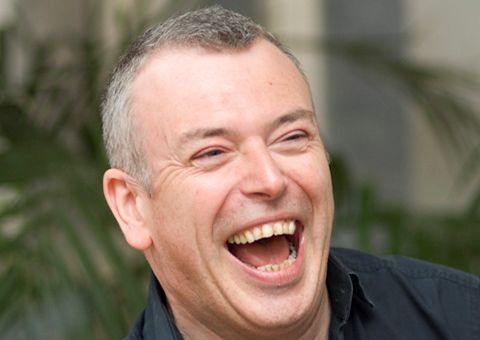
Benjamin Baker (violin, above), Daniel Lebhardt (piano), St James’s Church, Piccadilly, 18 January 2016

Reviewed by Ben Hogwood

Britten – Suite for violin and piano, Op.6 (1934-35)

Elgar – Sonata for violin and piano in E minor, Op.82 (1918)

Violinist Benjamin Baker and pianist Daniel Lebhardt are both promising musicians in their twenties, and here they performed an attractive pairing of the young Britten and the ageing Elgar. This was part of the Richard Carne Trust Series, a lunchtime concert given in the generously lit, spacious surrounds of St James’s Piccadilly, a fine Christopher Wren church.

Britten was a relatively serious child, and although the Suite for violin and piano is an early work, completed in his early twenties, it has the mark of a composer already sure of himself in form, melody and writing for the violin. Britten still has fun through a number of dance forms, though, and after a bold as brass introduction Baker and Lebhardt strode confidently through a March, well balanced and intuitively finding the flexibility in Britten’s rhythms.

This togetherness was even more apparent in a dramatic Moto perpetuo, a nervy piece of writing, but this fraught mood dissipated in the bell-like chords with which Lebhardt began the Lullaby. Finally the Waltz, a brazen but very enjoyable affair where the performers could perhaps have been more exuberant, but where they took some very tasteful liberties with the rhythm, as Britten instructs in the score.

Elgar’s Violin Sonata was a different story, darkly passionate in the intial outpouring of feeling in its first movement but contrasted with a ghostly quieter section that even on a cold January lunchtime sent a shiver down the spine. Elgar is fiercely lyrical in the outer movements of this work, and Baker did well to project this over an equally active piano part. The two found the grace of the Romance, where it felt as though they were dancers in hold, charming with slow steps but occasionally drifting apart.

Elgar’s determination returned in the finale, the tune consistently putting its head above that of the piano and achieving a well-won victory by the end. The two showed great understanding of the older man’s music, a fine interpretation that reminded me this piece was one of Nigel Kennedy’s earliest recordings. Baker and Lebhardt, then, have followed in illustrious footsteps!

Wigmore Mondays – Pavel Kolesnikov plays Debussy

pavel-kolesnikov

Pavel Kolesnikov (piano) plays Debussy’s first book of Préludes

Wigmore Hall, London

Monday, 11 January 2016

written by Ben Hogwood

Audio (open in a new window)

http://www.bbc.co.uk/programmes/b06tx85v

Available until 10 February

What’s the music?

Debussy (1862-1918): Préludes, Book 1 (1909-1910); L’isle joyeuse (1904)

Spotify

Pavel Kolesnikov has not yet recorded any of this repertoire, but a reproduction of his program using available versions can be accessed below, for listeners who cannot hear the BBC broadcast:

About the music

Debussy wrote 24 Préludes for piano, collected in two books but did not approach them in the same way as Chopin, who wrote one in each key. Instead he looked for character pieces, and the first book of Préludes are a fine example of what is often called the composer’s ‘impressionist’ style. By that we mean Debussy would often shade his music in a form that matches the paintings of artists such as Monet and Renoir, leaving them less defined.

impression-sunrise

Impression: Sunrise by Claude Monet (1872)

Perhaps because he wanted the listener to form their own pictures in their mind’s eye, Debussy left the title of each Prélude until the end of the piece – and even then was not at all conclusive in his naming. La cathédrale engloutie (The submerged cathedral), Ce qu’a vu le vent d’ouest (What the West Wind has seen), Danseuses de Delphes (Dancers of Delphi) – all are subject matters that need an active imagination to complete the picture.

L’isle joyeuse is a little more defined but not much, being a homage to Jersey, where Debussy holidayed with his new love in the summer of 1904.

These pieces make great technical demands on the pianist but also allow freedom of interpretation, both for player and listener.

Performance verdict

Having already established a reputation as a Debussy interpreter in his Wigmore Hall debut in 2014, BBC New Generation artist Pavel Kolesnikov returned to dazzle with more of the composer’s music.

Yet his approach was not obviously virtuosic, and he often took sensitive liberties with his tempo choices in the Préludes, drawing out the slow pieces especially effectively. These approaches were shown to be completely valid, setting an atmosphere of quiet intensity where I found myself subconsciously leaning forward on several occasions, literally hanging on Kolesnikov’s next note.

Les collines d’Anacapri (The Hills of Anacapri) was especially convincing, as was a totally unhurried Des pas sur la neige (Footsteps in the Snow). La danze de Puck was brilliantly done, an irresistible glint in the jester’s eye, while the stumbling rhythm of Minstrels was expertly controlled. Kolesnikov opened up the detail of Debussy’s inner part writing but never at the expense of his overall impression of each piece, and in L’isle joyeuse this led to painstakingly produced trills, part of an incredibly secure performance that still created a vivid picture of the island.

Full marks to the pianist, too, for overcoming the considerable distraction of latecomers arriving directly in his eye line after a poised account of Danseuses de Delphes. All that was required was a pertinent pause, and he was back in the zone.

What should I listen out for?

1:35 – Danseuses de Delphes (Dancers of Delphi) – immediately a sultry atmosphere is cast, the slow moving music rather mysterious but at the same time oddly enchanting. The block chords create an essence of calm.

There is then a pause while the latecomers are admitted…before…

5:41 – Voiles (Veils) – if anything the heady atmosphere is heightened by this deeply intimate impression, with suggestively chromatic lines in the right hand over a sustained held note in the left. The boundaries are blurred here, the ‘impressionism’ all too evident.

9:31 – Le vent dans la plaine (The Wind in the Plain) – a blustery outlook is set by the left hand oscillations, though this piece proves just as elusive as the wind. Debussy once again uses melodies in a ‘pentatonic’ form (if you played C-Eb-F-G-Bb ascending on the piano those are the notes of the pentatonic scale). Sudden gusts of wind threaten to knock the music off course but it stays true to form, just.

11:47 – Les sons et les parfums tournent dans l’air du soir (The sounds and fragrances swirl through the evening air) This is an enchanted piece, and indeed is heavily perfumed, as though at the end of a very hot summer’s day. The sustain on the piano means notes can blur together in the listeners’ mind, but there is still a distinct four note theme heard at the start. Kolesnikov really draws out the tension at the end of this piece.

16:20 – Les collines d’Anacapri (The Hills of Anacapri) After a short, nervy start this piece bursts from its cover, with melodies exchanged between the top and bottom of the piano, with sustained but energetic chords in the middle. Then the music gradually ascends to a thrilling end which seems to be in mid-air, with a massive set of five notes high up on the piano at 19:09.

19:21 – Des pas sur la neige (Footsteps in the Snow) Debussy paints some incredibly vivid images on the piano, and the depiction of snow here is cold in the extreme! The quiet dynamic aids this, and the very slow tempo, though the melody does have a forlorn nature, as though in memorial or loss.

24:36 – Ce qu’a vu le vent d’ouest (What the West Wind has seen) – again Debussy mobilises the piano to portray the unpredictable gusts of the West Wind, through suddenly loud figures in the right hand and rumblings in the bass. Soon we hear crashing octaves high in the right hand, then a rush of notes, leading to a snappy end at 28:21.

28:23 – La fille aux cheveux de lin (The Girl with the Flaxen Hair) – one of Debussy’s best-loved pieces, this charming portrait uses the pentatonic scale as a basis for its melody (see above) – which sounds rather folk-like in nature. It is an affectionate picture.

30:38 – La sérénade interrompue (Interrupted Serenade) – from simplicity it’s back to a stop-start affair, as though Debussy were portraying the wind again. The whole piece seems to have a short attention span, moving through its thoughts very quickly as though on edge, but ends quietly.

33:13 – La cathédrale engloutie (The Submerged Cathedral) – one of the most famous Préludes, and certainly one of the most mysterious, with blurred imagery in the sustained left hand notes of the piano and a clear melody in the right hand. It is based on an ancient Breton myth in which a cathedral, submerged underwater off the coast of the Island of Ys, rises up from the sea on clear mornings when the water is transparent. Debussy catches the shimmering water as well as the ghostly outlines of the building – and there are suggestions of plainchant too. Eventually a massive toll of bells is reached (35:38) There is some magical quiet playing when this music reappears at 38:26.

39:49 – La danse de Puck (Puck’s Dance) – pure impudence in this piece of music, darting about elusively and never sitting still anywhere. There are some cheeky melodies but also some brief and profound asides.

42:31 – Minstrels – another stop start piece, but one where the melody is very clearly defined. It is as though the performers are slightly drunk and moving from side to side! After several runs at getting a long-lasting theme, the piece ends crisply and emphatically at 44:52.

45:34 – L’isle joyeuse – this character piece starts with extended trills in the right hand, creating a watery atmosphere but also one with latent energy. By 47:26 the open-air mood has been set and we hear another distinctive melody at 47:32. From 49:44 the music takes on the character of a march, becoming faster and louder until a final joyous theme at 50:15. The piece ends on the lowest end of the piano at 50:56.

Encore

52:08 For an encore Pavel Kolesnikov goes back two centuries to give Debussy’s compatriot – and one of his greatest influences – Jean-Philippe Rameau. The piece in question is L’Egyptienne, from the Nouvelles suites de pièces de clavecin (New Suites of Harpsichord Pieces) Suite in G major.

Further listening

A natural next port of call for listening is the second book of the Préludes, for they follow on naturally from the first. On this album the French pianist Pierre-Laurent Aimard plays both books:

Review – James Ehnes and Andrew Armstrong play Bartók at the Wigmore Hall

bela-bartok

Arcana begins its coverage of Béla Bartók (above) for 2016 with Richard Whitehouse reviewing a concert of the composer’s works for violin and piano, part of the Chamber Music series taking place at Wigmore Hall this year.

Wigmore Hall, Sunday 10 January 2016

Bartók: Rhapsody No.2 (1928); Solo Violin Sonata (1944), Sonatina (1925) (arr. Gertler); Violin Sonata No.1 (1921)

ehnes-armstrongJames Ehnes and Andrew Armstrong © BBC

Bartók’s chamber music with violin fits neatly into two recitals, James Ehnes returning to Wigmore Hall tonight for the second of these. He and pianist Andrew Armstrong began with the Second Rhapsody, in which they found persuasive accommodation between the music’s folk-derived essence; its combative alternation of mood and pacing, or its notably subtle thematic interplay: these aspects being governed by the player, Zoltán Székely, for which it was written and which here complemented each other perfectly in aim and intent.

While it has never been short of advocates since Yehudi Menuhin blazed a trail, the Sonata for Solo Violin is still undervalued in the context of Bartók’s later output. In part this is through its idiosyncratic handling of procedures deriving from the Baroque in general and Bach in particular. This can be observed in the first movement’s interweaving of chaconne and sonata elements, the second movement’s opening-out of its initial fugue to incorporate disparate processes, then the interplay of dynamism and reflection in the closing Presto. Such qualities were brought out in an interpretation audibly acknowledging this work as a harbinger of music to come, though the absence of quarter-tones in the finale underplayed the movement’s astringency.

The second half began with a transcription of the Sonatina by Endre Gertler, resulting in a brief yet perfectly poised piece whose three movements emerge with marginally greater presence than in the piano original, while not any the less characteristic of its composer.

The two violin sonatas (written for Jelly d’Arányi, though neither was in fact premiered by her) are significant in marking off decisive periods within their composer’s output. The First Sonata, its three movements cast on an imposing and even heroic scale, brings to a head those expressionist tendencies of the previous decade yet, for all its leanings towards atonality, is centred on chromatic and whole-tone harmonies. Ehnes had the measure of the fractured design of the opening Allegro appassionato, the stark thematic elements pulled apart rather than being brought together over its course, and found anxious introspection in the Adagio – not least the funereal overtones of its central section. The final Allegro tempered its headlong rush with lyrical asides, re-establishing a sense of tonal ‘destination’ prior to the brutally decisive coda. Armstrong tackled the cruelly exacting piano part with notable lack of inhibition and matched Ehnes’ headlong tempo for the finale through to those coruscating climactic bars.

A fine showing for a work which has only latterly come into its own in terms of performance. Ehnes and Armstrong returned for the Romanian Folk Dances (1926), Székely’s transcription of which stays relatively close to the piano original without sacrificing the slightest degree of virtuosity or panache. That would describe this evening overall, confirming Bartók as master of his craft and a reminder of his stature in the context of earlier twentieth century music: a stature that is happily being accorded its due at the Wigmore this season.

You can listen to the works in this concert on the Spotify playlist below, using versions by Yehudo Menuhin where possible:

Wigmore Mondays – Benjamin Appl & Graham Johnson

benjamin-appl-graham-johnson

Benjamin Appl (baritone) and Graham Johnson (piano) perform settings of the poetry of Joseph von Eichendorff

Wigmore Hall, London

Monday, 4 January 2016

Audio (open in a new window)

http://www.bbc.co.uk/programmes/b06tkp3w

Available until 3 February

What’s the music?

Schumann (1810-1856): Frühlingsfahrt Op.45/2 (1840); Der Einsiedler Op.83/3 (1850; Der frohe Wandersmann Op.77/1 (1840)

Mendelssohn (1809-1847): Pagenlied (1832); Nachtlied Op.71/6 (1847); Wanderlied Op.57/6 (1841)

Brahms (1833-1897): In der Fremde Op.3/5; Mondnacht; Parole Op.7/2; Anklänge Op.7/3 (all 1852-1853)

Pfitzner (1869-1949): In Danzig Op.22/1 (1907); Der Gärtner Op.9/1 (1888-9); Zum Abschied meiner Tochter Op.10/3 (1901)

Wolf (1860-1903): Nachruf (1880); Das Ständchen; Der Musikant; Der Scholar; Der Freund (all 1888)

Spotify

Benjamin Appl has not yet recorded any of this repertoire, but a reproduction of his program using available versions can be accessed below, for listeners who cannot hear the BBC broadcast. Where possible I have used recordings made by Appl’s mentor, Dietrich Fischer-Dieskau:

About the music

Joseph_Eichendorff

Joseph von Eichendorff (picture used courtesy of Wikipedia)

With around 5,000 song settings of Joseph von Eichendorff’s poetry from the 19th century alone – with thanks to BBC Radio 3 announcer Sara Mohr-Pietsch for the info! – Benjamin Appl and Graham Johnson had no trouble making up a concert of 18 ‘lieder’ for the first Wigmore Hall lunchtime concert of the year.

Their choice gives an intriguing insight into different approaches to the poet. Broadly speaking, Schumann ranges from love-laden to thoughtful and a little morose (though his selection comprises three prayers), Mendelssohn is either forthright or reflective in his three songs; the youthful Brahms is surprisingly relaxed, while Pfitzner emerges as an inventive painter. Perhaps the most striking examples here come from Hugo Wolf, who wanted to focus on the ‘comparatively unknown humourously and robustly sensual side’ of von Eichendorff’s poetry.

Performance verdict

A slightly downbeat return for the WIgmore Hall in 2016, but a concert that was beautifully performed. The pairing of an incredibly experienced pair of hands in Graham Johnson and a singer starting out on his artistic voyage in Benjamin Appl was a good match and yielded many rewards.

Several songs left lasting impressions from the program, among them two from Brahms, with Appl’s control throughout Mondnacht and the picture painting from Johnson in Parole especially notable.

It was good to hear some rarely-sung lieder of Hans Pfitzner, whose use of the piano’s lowest end brought a wholly new texture to In Danzig, while the Wolf selection reminded us how original he could be in his song settings, the piano cast in a prominent role of scene setting, one that Johnson relished and used to his great advantage.

What should I listen out for?

Schumann

2:06 – Frühlingsfahrt (A spring journey) – the initial optimism of this march is quite bracing, but it soon subsides as the poet thinks of old age.

5:31 – Der Einsiedler (The hermit) – quite a sad song, solemn and lost in thought. Again old age is a preoccupation, the piano supporting the vocal melody as a walking stick might support the physical frame.

9:02 – Der frohe Wandersmann (The happy wanderer) – a much more positive, open-air march that talks of streams ‘rushing down the mountains’ and larks that ‘soar heavenwards’. More spring than winter!

Mendelssohn

11:03 – Pagenlied (Page’s song) – a tentative detached figure in the piano part adds to the tension of this song, which is relatively subdued and distracted.

13:11 – Nachtlied (Night song) – there is a withdrawn feel to this song also, until the Nightingale is encouraged to sing out at 14:39.

16:12 – Wanderlied (Song of travel) – a typically busy piano part from Mendelssohn gives the impression of rapid movement, the traveller set on his way with the minimum of fuss – and happily so!

Brahms

20:49 – In der Fremde (In a foreign land) – a rather downcast setting in a minor key, the poet in reflective mood. The piano hints at a major key near the end but such thoughts are quickly forgotten.

22:12 – Mondnacht (Moonlight) – dappled piano lines suggest moonlight in the branches, and there is a more romantic mood, with yearning vocal lines.

25:03 – Parole (Password) – again Brahms thinks privately, using vivid picture painting from the piano that depicts the huntsman through distant calls but also the ‘one last shot’ (26:44), where Johnson adds extra emphasis.

28:02 – Anklänge (Echoes) – a short but evocative song of two halves, the first depicting a lonely house in a forest, the second greeting the maiden inside.

Pfitzner

30:07 – In Danzig – the mood changes dramatically in this darkly coloured song exploiting the lower range of both piano and singer. The mysterious and faintly menacing mood is aided by elusive harmonic movements.

34:38 – Der Gärtner (The Gardener)­ – this song is more conventional in its language, looking back to Schumann and Brahms. The mood is positive and quite dreamy, but reaches a very impressive climax at the end with the words ‘Viel schöne, hohe Fraue, Grüss ich dich tausendmal’ (‘I, lovely gracious lady, greet you a thousand times’)

38:08 – Zum Abschied meiner Tochter (Farewell to my daughter) – a positive farewell, and an expansive setting that reaches another impressive climax at 40:07.

Wolf

42:58 – Nachruf (In memoriam) – the piano imitates the lute in this song as Appl sings a gentle lament

47:06 Das Ständchen (The serenade) – a watery piano introduces an adventurous setting that contains the tune of a serenade but some unconventional dissonances between voice and piano. There is a great deal of sadness in this song.

50:27 – Der Musikant (The minstrel) – the choice of music over marriage is made here by the singer! As if to emphasise his decision there is a rather lovely piano introduction that proves to be the bedrock of the song.

52:14 – Der Scholar (The scholar) – there are a number of examples of picture painting in the piano part for this song, depicting the ‘little birds’ and the rain that ‘rattles on the leaves’. Again the singer extols the virtues of making music but occasionally with a few too many wines! (53:40)

54:55 – Der Freund (The friend) – The joy of friendship is celebrated here, though not without travelling through a storm or two (55:30) where the crushing piano and loud voice descend into brief turmoil before emerging triumphant.

Encore (not heard on the broadcast)

Verschwiegene Liebe (Silent Love) The twinkling piano introduction was followed here by a sensitive and grateful rendition from Appl.

Further listening

As a complement to the concert, how about a recital based on poems by Heinrich Heine? Anothre great influence on 19th century vocal music, Heine’s music was set by a number of composers – and here the great tenor Christoph Prégardien and fortepianist Andreas Staier look at songs by Schubert, Schumann and Mendelssohn:

Calin Huma – ‘Carpatica’ Symphony World Premiere

philharmonic-orchestra-london

Richard Whitehouse on the London premiere of a new work from Romanian composer Calin Huma from the Philharmonic Chamber Orchestra of London under Christopher Petrie, with Leslie Howard joining them for Rachmaninov’s Second Piano Concerto

Cadogan Hall, London on Thursday 17 December

Rachmaninov: Piano Concerto no.2 (1901)

Enescu: Romanian Rhapsody no.2 (1901)

Calin Huma: Symphony, ‘Carpatica’ (London premiere) (2015)

Leslie Howard (piano), Philharmonic Chamber Orchestra of London / Christopher Petrie

The Philharmonic Chamber Orchestra of London has demonstrably established itself on the London calendar over its two years of existence, with tonight’s programme surely the most enterprising yet. Leslie Howard was on hand for Rachmaninov’s Second Piano Concerto – and a reading which, while offering little in the way of a fresh perspective, was for the most part finely articulated and well-coordinated. The opening Moderato was a touch stolid in its earlier stages, though the second theme was raptly conveyed on its return, then the central Adagio had pathos and, in its scherzo section, deftness to spare. The twin themes of the final Allegro were pointedly contrasted, the PCO nimbly negotiating the fugato at its centre, and the return of the ‘big tune’ capping the whole in a generous yet not over-bearing peroration.

Music by Romanian composers followed in the second half, which began with the welcome revival of Enescu’s Second Romanian Rhapsody. While its predecessor has latterly regained much of its former popularity, this piece is heard but seldom – its melodic eloquence at one with its largely ruminative persona. Christopher Petrie assuredly had its measure – whether in the soulful expression of its initial pages (Enescu’s deployment of traditional melodies at its most alluring), cumulative build-up to its fervent central climax, then the gradual ebbing away of emotion towards its close; a sense of place fleetingly if tangibly evoked. Hopefully this orchestra will go on to perform other works by Enescu – not least the First Orchestral Suite, whose mesmerising unison ‘Prelude’ would doubtless be relished by the PCO strings.

For now, listeners were treated to the London premiere (and only the second performance)   of the ‘Carpatica’ Symphony by Calin Huma (b 1965), the Romanian entrepreneur who has been based in Hampshire these past two decades. Huma has professed himself an avowed neo-Romantic in terms of aesthetic, and the present piece looks back beyond Enescu to the Romantic nationalism of Eduard Caudella (1841-1924) while evincing the melodic directness of more recent figures as Nicolae Kirculescu (1903-85), whose Moment Muzical (or at least its main theme) was well known to Romanian listeners in the 1960s and ‘70s. Huma’s work shared something of its unabashed nostalgia, yet whether the three movements of this half-hour piece amounted to anything which approaches a cohesive conception is open to doubt.

That it failed to do so was hardly the fault of the PCO, whose strings played with lustre, or of Petrie – who directed with sure conviction of where this rhapsodic music ought to be headed. Not that this prevented the lengthy first movement from losing focus before its final climax, while its successor – more a slow intermezzo than a slow movement – would have benefitted from a more flowing tempo. The finale brought a welcome degree of energy, its main theme capping the whole with a decisiveness in which the ends came closest to justifying the means.

A section from Petrie’s own Fantasia on Christmas Carols made for a winsome and appealing encore. More Romanian music from this source would be most welcome: the 90th birthday of Pascal Bentoiu, doyen of post-war composers, in April 2017 provides just such an opportunity.

You can listen to more music from the Philharmonic Chamber Orchestra of London on their website