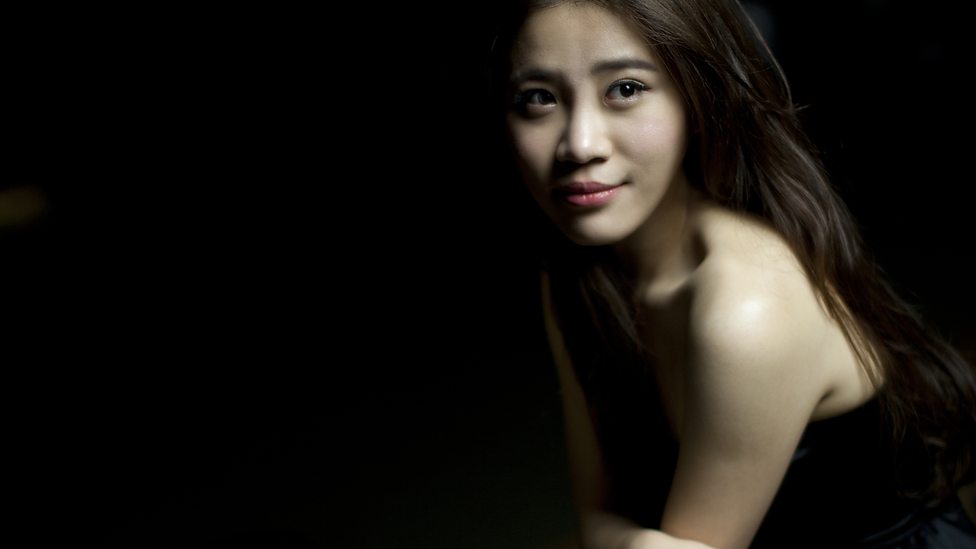
Zhang Zuo plays contrasting piano works by Schumann and Schubert at the Wigmore Hall
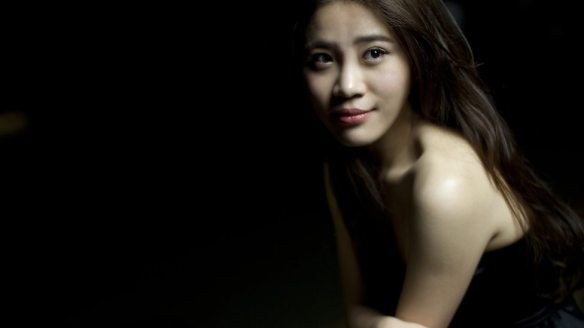
Zhang Zuo (piano) – Wigmore Hall, live on BBC Radio 3, 30 March 2015.
Listening link (opens in a new window):
http://www.bbc.co.uk/programmes/b05nsbm7
on the iPlayer until 29 April
Spotify
Zhang Zuo has not recorded either of these works, so this Spotify playlist – for those unable to hear the radio broadcast – includes the Schumann played by Daniel Barenboim and the Schubert by Romanian pianist Radu Lupu.
What’s the music?
Schumann – Faschingsschwank aus Wien, Op.26 (Carnival pranks in Vienna) (1839) (19 minutes)
Schubert – Piano Sonata in C minor D958 (1828) (28 minutes)
What about the music?
Both Schumann and Schubert could proclaim the piano to be their first discipline, and both wrote masterfully for the instrument. These two pieces form a nice contrast in concert, for we hear Schumann at his most exuberant, in the throes of a love affair that was soon to culminate in marriage and the so-called ‘Year of Song’. Written in a brief stay in Vienna, the mischievous ‘carnival pranks’ include a quotation of the ‘Marseillaise’ in the first of the five pieces. This was especially daring as the French national anthem was banned in the Austrian capital at that time.
Schubert, on the other hand, was in the last year of his life and in the knowledge that death was increasingly to hand. His late trio of piano sonatas are remarkable works, reaching an intensity of emotion and accomplishment you can barely comprehend for a composer only just in his thirties. The C minor, the first sonata of the three, is perhaps the most tortured, and is complemented by two even bigger works in the form of the A major and B flat major sonatas, each weighing in around the 40 minute mark.
Yet all three are compelling works in the right performances, for Schubert finds ways of making the music reflect the depths of his thoughts, vividly so in the sudden lightning bolts of anxiety that strike at unexpected points. Time stands still in the slow music, while in faster passages there are almost not enough notes for Schubert to describe his thinking.
Performance verdict
Zhang Zuo – Zee Zee – is a brilliant pianist, of that there is no doubt. Technically assured and very clear in her communication of the notes, she made the music fairly rush out of the Steinway like an endless stream. Yet there were times in this recital where I longed for the music to have a bit more breathing space, because she showed in the slower moments that she has a tender side to her playing.
In some of the Schubert the sonata came across as rather brash. It must be difficult for a pianist in her early twenties to fully probe music written by a composer who knew he was dying. And although at times Zuo communicated some of the anguish Schubert must have been experiencing, the fast music was brittle and at times simply too fast. The finale was certainly thrilling but it raced away, pausing only occasionally for breath.
The Schumann was fun – especially the first of the six pieces – and there were some nice, intimate asides such as the second piece, which felt like a confidential letter between loved ones. But here too the music cut to the bone a little too quickly, especially in the closing piece. It isn’t entirely fair to compare Zuo, a pianist at the start of her career, with the old masters Lupu and Barenboim, who you can hear on the Spotify playlist above, but it is instructive to learn that Lupu spends nearly two minutes longer on the Schubert than Zuo.
I don’t want to be unduly critical – there was an awful lot to admire here after all – but I longed for a bit more light and shade from a pianist who clearly has the technical ability.
What should I listen out for?
Schumann
1:04 – We hear Schumann at his most exuberant as the carnival pranks get underway. This piece takes up half the duration of the collection, returning to its catchy main theme with great gusto each time, but also wandering off into distracted thoughts. The most enjoyable and extravert of these is the march beginning at 5:17 – which ushers in the ‘Marsellaise’ quotation. See if you can spot it!
10:07 – a short and tender romance, in complete contrast to the bluster of the opening piece. A confidential aside in the minor key.
12:36 – the third piece is quicker and flighty, and Schumann surprises his listener by moving to a distant key briefly, before coming back ‘home’.
14:36 – Zee Zee moves straight into the turbulent fourth piece, a torrent of notes that subsides at the end, before almost crashing straight into the fifth…
16:37 – the fifth piece starts with similar vigour and leads to an emphatic conclusion.
Schubert
22:16 – although the first movement is not one of unremitting darkness, the torture of Schubert’s final years is immediately clear to the untrained ear. There is edginess and anxiety here, and you can hear it in Zuo’s right hand right from the off.
There is respite, however, in the form of a second theme that melts under the fingers, especially when Zuo plays it for the second time at 27:10. The music seems set to move into calmer waters but Schubert muddies the textures by introducing a coda with low rumblings in the left hand, bringing the movement to an uncertain close.
30:09 – a soft, thoughtful slow movement with similar contours to the slow movement of Beethoven’s Pathétique sonata. Like Beethoven’s late period, Schubert’s last sonatas are known for their ability to hang suspended in time, but Zuo’s performance is just a bit too quick to capture that consistently – apart from 37:03, where the music reaches new levels of intimacy. A darker strand of music makes itself known at 31:34, and this comes to dominate the louder parts of the movement.
38:21 – an awkward attempt from Schubert to pick up the mood that ultimately ends in darkness. Although a minuet, the main theme does not feel like a piece for dancing – and especially when the stop-start episodes take over. The ‘trio’ section (from 39:31) has a more obvious lilt to its triple time, but is incredibly brief – and the opening returns at 40:40.
41:13 – the last movement, a Tarantelle, begins quickly and urgently, but disruption sets in when Schubert insists on moving to new and distant keys, trying hard it seems to assert some positive music but generally ending up with darker, stormy episodes. An exception to this can be found in a brief excursion to B major for more poetic thoughts at 44:10, while the final two chords – wrapping up at 50:16 – tell of resolution and grit but not release from the darkness.
Encore – J.S. Bach – the Minuet from his Partita for keyboard no.1 in B flat major
51:31 – an attractive, light touch to this encore, nicely detailed. There are two Minuets, the second appearing at 52:17 before the first is repeated at 53:00.
Want to hear more?
The second Schubert sonata has perhaps even more drama, and can be heard on Spotify played by Maurizio Pollini from track 5 of this album
To complement the Schumann, try his set of character pieces Carnaval, which can be heard here, played by Jorge Bolet.
For more concerts click here