In concert – Matthew Taylor 60th birthday concert @ Smith Square Hall

Poppy Beddoe (clarinet), Mira Marton, Viviane Plekhotkine (violins), Sinfonia Perdita / Daniel Hogan

Arnold Serenade Op.26 (1950)
Taylor Clarinet Concertino Op.63 (2021)
Taylor Violin Concertino Op.52 (2016)
Arnold Double Violin Concerto Op.77 (1962)
Arnold Clarinet Concerto no.2 Op.115 (1974)
Taylor Symphony No. 6 Op.62 (2021)

Smith Square Hall, London
Friday 22 November 2024

Reviewed by Richard Whitehouse

It was good to see that not a few of those in the audience for Matthew Taylor’s 60th Birthday Concert had been at such events 10, 20 and even 30 years before – deserved recognition, if such were needed, of this composer’s contribution to new music across recent decades.

Malcolm Arnold has been a notable influence on Taylor’s latter-day work, so that hearing his music in this context seemed more than apposite – not least with a sparkling account of Arnold’s airily ambivalent Serenade to set proceedings in motion.

The first half featured two of Taylor’s recent concertante pieces, a genre where he is always at home. As was Poppy Beddoe in the Clarinet Concertino written for her – whether its pensive but not necessarily serene Andante, its unsettling intermezzo, or its genial Allegretto that rounds off a work demonstrably more than the sum of its parts. Mira Marton then took the stage for the Violin Concertino, less unpredictable while always engaging – whether in the not undue deliberation of its opening Hornpipe, the poetic delicacy of its central Aria or the heady syncopation of its energetic Finale. Once again, there could be no mistaking Taylor’s identity with the instrument at hand, nor that judicious marshalling of his ideas into a format the more communicative for its brevity and understatement.

Arnold came into focus with two comparable works either side of the interval. Marton was partnered by Viviane Plekhotkine for the Double Violin Concerto from his more settled years which finds due outlet in the methodical incisiveness of its opening movement and unbridled panache of its finale: the central Andantino yet leaves the most enduring impression, a ‘duet without words’ whose melting pathos never feels overly emotive. This could hardly be said of the Second Clarinet Concerto, a product of Arnold’s troubled Dublin period, though Beddoe found cohesion in its Allegro through the ingenuity of her cadenza, while its ominously unsettled Lento had soloist and conductor in enviable accord, before she threw caution to the wind with a Pre-Goodman Rag finale that enthused her admirers even more second-time around.

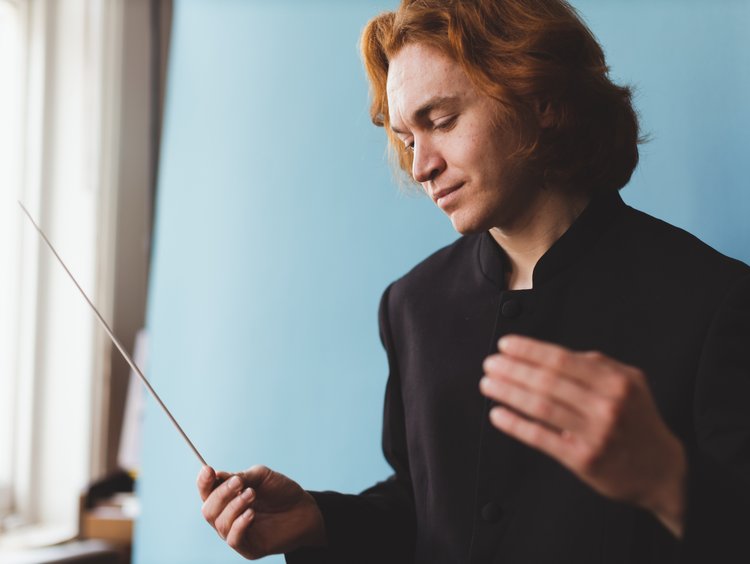
Astute in support, Daniel Hogan (above), came into his own with Taylor’s Sixth Symphony that ended this concert. Commissioned by the Malcolm Arnold Trust and dedicated to Arnold’s daughter Katherine, it complements its celebratory and fatalistic predecessors via an affirmation kept in check until the very last. Premiered by Martyn Brabbins then recorded by the composer, this was arguably its finest performance yet – Hogan unfolding the first movement’s introduction as a cumulative arc of intensity, before infusing the main Allegro with an impetus abetted by its translucency of scoring. This is even more apparent in the Andante, its writing for harp and piano just the most arresting aspect of its calmly fugal textures, before the final Vivo evoked an authentic Arnoldian spirit with its capricious humour and its deftly sardonic payoff.

Music that provokes as surely as it pleases is an ability shared by few composers of Taylor’s generation, and Sinfonia Perdita did it proud as the climax of an evening that reaffirmed this composer at its forefront. One looks forward to further symphonies…and future anniversaries.

For details on the 2024-25 season, head to the Sinfonia Smith Square website. Click on the names to read more about composers Matthew Taylor and Malcolm Arnold, conductor Daniel Hogan and soloists Poppy Bedoe, Mira Marton and Viviane Plekhotkine

Published post no.2,373 – Monday 25 November 2024

In concert – Dame Sarah Connolly, CBSO Choruses, CBSO / Sofi Jeannin: The Music Makers

Dame Sarah Connolly (mezzo-soprano), CBSO Children’s Chorus, CBSO Youth Chorus, CBSO Chorus, City of Birmingham Symphony Orchestra / Sofi Jeannin

Weir Music, Untangled (1992)
Muhly Friday Afternoons (2015, orch. 2019) [UK Premiere]
Britten The Young Person’s Guide to the Orchestra Op.34 (1945)
Elgar The Music Makers Op.69 (1912)

Symphony Hall, Birmingham
Wednesday 20 November 2024

Reviewed by Richard Whitehouse Pictures (c) Andrew Crowley (Dame Sarah Connolly), (c) Radio France / Christophe Abramowitz (Sofi Jeannin)

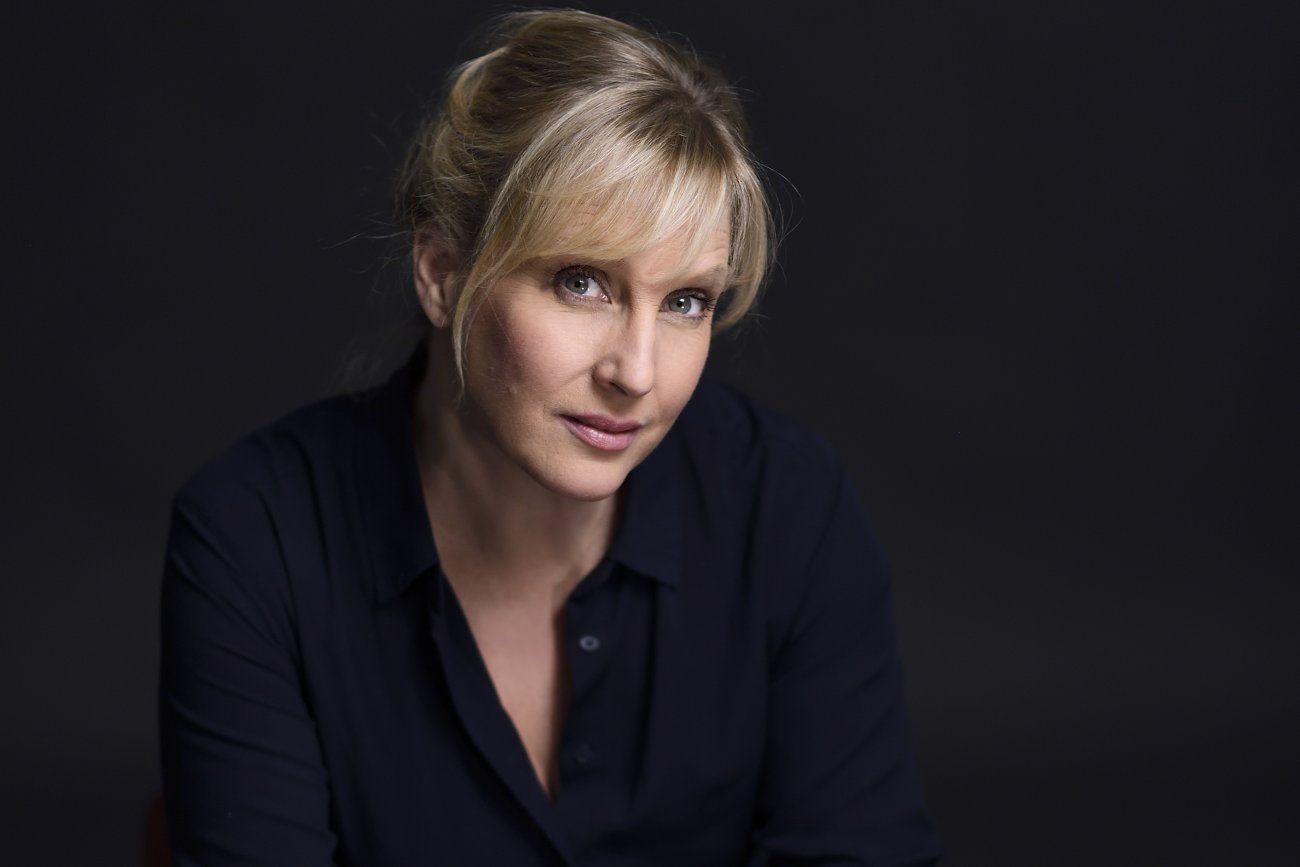
Under the capable direction of Swedish-born Sofi Jeannin (below), the City of Birmingham Symphony Orchestra tonight took on a varied if cohesive programme featuring two composers with direct links to the city, one of whose works had been performed for the first time here 112 years ago.

Although he might not be so associated with Birmingham, Nico Muhly is hardly an unknown quantity. Friday Afternoons proved a diverting and enjoyable traversal across eight traditional poems – directly yet unaffectedly recalling Britten in their simplicity of choral writing with, in this instance, a resourceful and often evocative orchestration that brought out subtle and quite unexpected nuances from these texts. Qualities that the combined CBSO Youth and Children’s Choruses responded to with alacrity, doubtless owing to the astute guidance of Julian Wilkins.

Beforehand, the orchestra made no less favourable a response in Music, Untangled by Judith Weir, former Master of the Queen’s Music and composer-in-association to the CBSO during 1995-98. Written for the Boston Symphony, this not unreasonably American-sounding piece takes extracts from melodies emanating from the Western isles of Weir’s native Scotland as the basis for a compact if eventful piece where said melodies are gradually fined down from sonic diversity to a single strand through a process of ‘less is more’ typical of this composer.

Closing the first half, what had started out as Britten’s ‘Variations and Fugue on a Theme of Purcell’ received an engaging performance at its best in those variations highlighting specific instruments – in the course of which the excellence of the individual CBSO sections came to the fore. Presentation of the theme itself was a little on the portentous side, a quality which re -surfaced in a fugue whose clarity of texture seemed at the expense of that exuberance when Britten puts his orchestra back-together. An enjoyable take on a timeless masterpiece even so.

Despite its high-profile launch at the 1912 Triennial Festival, Elgar’s The Music Makers has struggled to find general favour – his setting of Arthur O’Shaughnessy’s Ode intensifying the text’s ambivalence and introspection via a wealth of self-quotation such as renders several of his most acclaimed pieces from an unlikely or even disturbing perspective. Together with its near-contemporary work, the symphonic study Falstaff, this is Elgar at his most searching as well as confessional – qualities such as the encroaching ‘Great War’ would duly exacerbate.

Despite its modest (35-minute) duration, The Music Makers is a difficult work to pace and to make cohere and, while Jeannin (an experienced choral conductor) did not wholly succeed in these respects, there was no doubt as to her insight into its content or defining of its emotions. Prepared by Simon Halsey (who first ‘gave’ this work with Simon Rattle some 40 years ago), the CBSO Chorus lacked little in conviction or finesse – and, if Dame Sarah Connolly was not quite at her most assured, the sheer eloquence and conviction of her singing could never be denied.

A fine account, then, of a work still in need of such advocacy for its inherent greatness to be acknowledged. Interesting also that audience response was warm if undeniably muted – as if to confirm, on this occasion at least, the music’s ‘message’ had got through to those listening.

For details on the 2024-25 season A Season of Joy, head to the City of Birmingham Symphony Orchestra website. Click on the names to read more about soloist Dame Sarah Connolly, conductor Sofi Jeannin and composers Nico Muhly and Dame Judith Weir

Published post no.2,372 – Sunday 24 November 2024

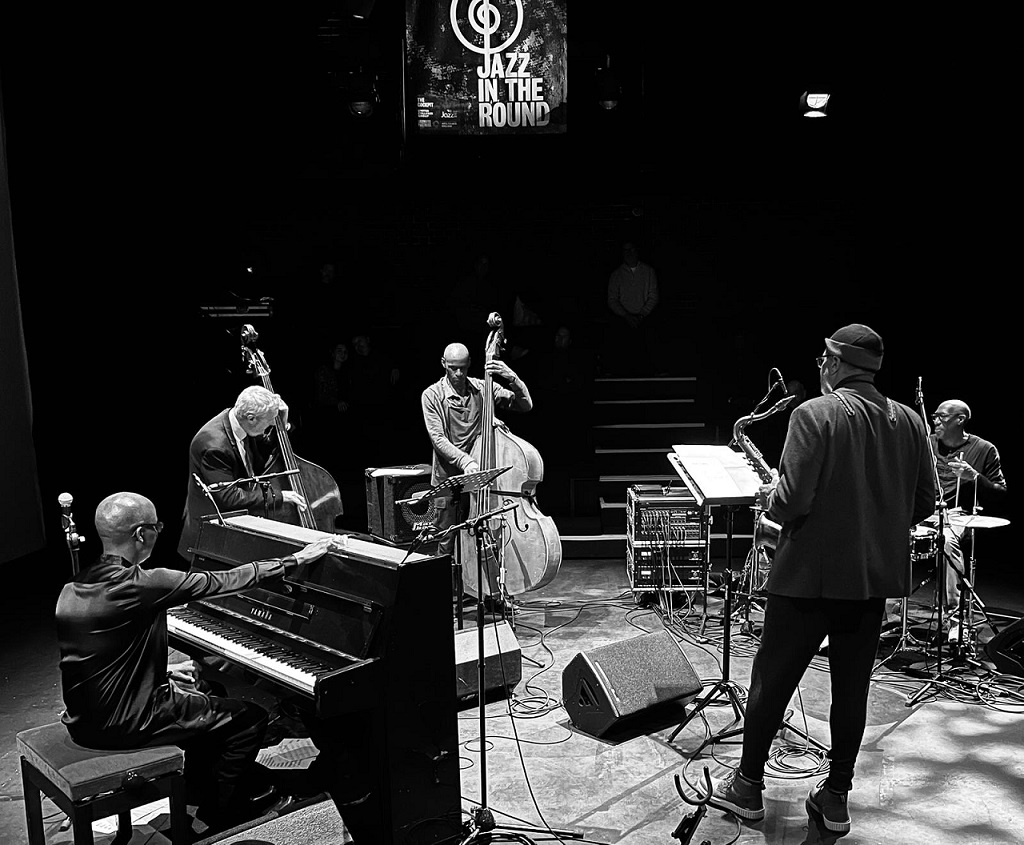
In concert – Jazz On The Box: A Tribute To The BBC’s Jazz 625 @ The Cockpit, London

Robert Mitchell (piano), Jean Toussaint (tenor saxophone), Larry Bartley (double bass), Rod Youngs (drums) and Dave Green (double bass)

The Cockpit, London, 20 November 2024

by John Earls. Photo credit (c) John Earls

Jazz 625 was a BBC television jazz programme which ran for two years between 1964 and 1966.The show was first broadcast on BBC2 on 21 April 1964 (on what turned out to be the channel’s opening night). It is revered because in that period it brought into UK living rooms live performances by American jazz legends such as Dizzy Gillespie, Oscar Peterson, Thelonious Monk, Art Blakey, Dave Brubeck and Duke Ellington (who appeared in a gala presentation in the first show). It also showcased UK jazz musicians such as Tubby Hayes, Ronnie Scott and John Dankworth.

In May 2019, Jazz 625 returned to the BBC as a 90-minute live show on BBC Four called Jazz 625 Live: For One Night Only. The house band for that broadcast featured Robert Mitchell (piano), Jean Toussaint (tenor saxophone), Larry Bartley (double bass) and Rod Youngs (drums).

In celebration of Jazz 625’s sixtieth birthday this year, the band were reunited under Robert Mitchell at London’s The Cockpit as part of the London Jazz Festival for a performance also featuring the legendary UK bass player Dave Green. Green is one of only two people still alive who appeared on the show (the other being singer Cleo Laine, one of only eight women to have appeared on the show throughout those two years).

Green opened proceedings with a solo bass piece that highlighted his musicality, understanding, tradition, inventiveness and preparedness to take risks. It was a captivating and spirited performance.

The re-convened For One Night Only band fittingly started their set with a lovely Along Came Betty (written by Benny Golson and most famously recorded by Art Blakey), a tune they performed on the 2019 programme. The programme also saw Thelonious Monk’s Criss Cross, heard here with some excellent solos on sax (Joshua Redman did sax duties for this tune on the broadcast), piano and bass and classy drum intervals from Rod Youngs.

Youngs’ drumming style gives the appearance of him shrugging his shoulders and it was fascinating to watch his smooth brush strokes on the next tune, Ben Webster’s Body and Soul (which featured some soft and expressive piano playing by Mitchell) and some more energetic and hefty drum work on the next tune, an original whose title I didn’t quite catch (Mood Board?).

There then followed a Jean Toussaint-penned tune Calypso (also new?),a nice nod to the influence of oft-neglected Jamaican jazz musician and composer Joe Harriott (the tapes of his Jazz 625 performance were recorded over). It’s a sunny piece on which both saxophone and piano shone. It is also worth noting here Toussaint’s (and indeed Mitchell’s) role in supporting new UK jazz talent. One of the highlights of the For One Night Only programme is seeing Toussaint playing with saxophonist Camilla George (who he taught and mentored) for a performance of Harriott’s Tonal.

Finally, the band were joined by Dave Green for Blue ‘n’ Boogie, a 1944 jazz standard written by Dizzy Gillespie and Frank Paparelli. It’s the first time I’ve seen two double basses play together in a small ensemble and what a treat it was. To say that Green and Larry Bartley engaged in ‘battling basses’ would be to imply too much competition, whereas what was evidently on display was a mutual respect between two fine musicians that span generations. Bartley paid lovely tribute to Green in words and music. Their double bass exchanges were a joy.

John Earls is Director of Research at Unite the Union. He posts on Bluesky and tweets / updates his ‘X’ content at @john_earls

Published post no.2,370 – Friday 22 November 2024

In concert – Charles Tolliver celebrates ‘Max Roach @ 100’ @ Barbican Hall

Charles Tolliver (trumpet and director), Darrell Green (drums), Camille Thurman (tenor sax and voice), Tony Kofi (alto sax), Danny Piers (piano), Larry Bartley (double bass), Cheikh Diop (percussion) and ‘A Big Band of London’s Finest’

Barbican Hall, London, 18 November 2024

by John Earls. Photo credit (c) John Earls

In my post-punk 1980s drumming days (yeah, I know) my list of favourite drummers included the likes of Charlie Watts (The Rolling Stones), Topper Headon (The Clash), Lindy Morrison (The Go-Betweens) and Brian Downey (Thin Lizzy). But it also included Max Roach, the legendary jazz drummer, composer and activist (who most of my musical contemporaries at the time hadn’t heard of). His 1968 Members, Don’t Git Weary album (of which more later) was an important part of my record collection. It still is.

I was also lucky enough to see Roach perform live (again at the Barbican) in 1999. So it was with great anticipation and excitement that I headed to the same venue some 25 years later for a London Jazz Festival concert put together and directed by Charles Tolliver, a friend and collaborator of Roach who played trumpet on Members, Don’t Git Weary to celebrate what would have been Roach’s 100th year (he died in 2007).

The first half of a two set concert saw Tolliver (trumpet and leader) joined by Darrell Green (drums), Camille Thurman (tenor sax and voice), Tony Kofi (alto sax), Danny Piers (piano), Larry Bartley (double bass) and Cheikh Diop (percussion) in a terrific seven-piece ensemble.

It got off to a ripping start with Powell’s Prances, a piece from Roach’s days with trumpet player Clifford Brown which also featured nice saxophone solos from Thurman and Kofi. This was followed by a poignant Effi from Members, Don’t Git Weary. Then came a terrific performance of Cole Porter’s I Get A Kick Out Of You which featured on Roach’s 1954 album with Clifford Brown and his Quintet, Brown and Roach Incorporated. This maintained the fizz and dexterity of the recorded version but, unlike the album, included vocals which were skilfully done by Thurman, who went on to demonstrate what a fine singer she is throughout the rest of the evening.

This was the case with the next tune, Always Loved You, which – in a nod to Roach’s spirit of innovation and risk-taking – was a new number, starting as a lovely ballad before livening up considerably, allowing Thurman to also display her saxophone prowess. The set ended with the Members, Don’t Git Weary tune itself. It remains a potent and powerful expression for the disenfranchised with its “I’m going to feast on the milk and honey…I’m going to march with the tallest angel” refrains.

The second set saw the first set’s ensemble (minus percussionist Cheikh Diop) joined by what the Barbican website described as ‘A Big Band of London’s Finest’, assembled by Toni Kofi. Let’s name them now for they deserve nothing less (they weren’t introduced by name on stage so here’s the personnel listed from the Barbican website): Donovan Haffner (alto saxophone, clarinet), Jean Toussaint (tenor saxophone), Denys Baptiste (tenor saxophone, clarinet), Charles Rothwell (baritone saxophone, bass clarinet), Josh Short (lead trumpet), Byron Wallen (trumpet), Dan Coulthurst (trumpet), Alexander Polack (trumpet), Matt Seddon (trombone), Harry Brown (trombone), James Wade-Sired (trombone) and Richard Henry (bass trombone).

Tolliver is a renowned big band composer and leader himself; his big band’s With Love album (2006) is fabulous. The set opened with a throbbing and steaming Suspicion, leading into some scat singing from Thurman and even Tolliver himself (advising us afterwards that it was “the only time you’ll hear Charles Tolliver sing!”). This was followed by Drum Suite, with deft saxophone solos from Jean Toussaint and Donovan Haffner allied to some nice smoky organ playing, before an amazing spiritual-like piece of vocal work (again) from Thurman. The Grand Max encore was rousingly appropriate.

I don’t know how much time this band had to rehearse as a collective but it was a formidable and engrossing performance – well done Toni Kofi.

Needless to say, to be the drummer in a performance honouring Max Roach’s 100th year must be a daunting experience but Darrell Green played with considerable aplomb and flair including some magnificent solos not least, not surprisingly, on Drum Suite.

Charles Tolliver is to be congratulated and commended for putting together a concert of such entertainment, joy and poise in tribute to his friend and fellow musician. I’m sure Max would have enjoyed it immensely. Those that were there certainly did.

John Earls is Director of Research at Unite the Union. He posts on Bluesky and tweets / updates his ‘X’ content at @john_earls

The albums mentioned by John in his review can be heard on Tidal, using the links below:

Published post no.2,368 – Wednesday 20 November 2024

In concert – Orchestra of the Age of Enlightenment: Bach Brandenburg Concertos @ Queen Elizabeth Hall

Orchestra of the Age of Enlightenment

J.S. Bach
Brandenburg Concertos:
no.1 in F major BWV1046 (dir. Huw Daniel)
no.3 in G major BWV1048 (dir. Margaret Faultless)
no.5 in D major BWV1050 (dir. Margaret Faultless)
no.4 in G major BWV1049 (dir. Huw Daniel)
no.6 in B flat major BWV1051 (dir. Oliver Wilson)
no.2 in F major BWV1047 (dir. Rodolfo Richter)

Queen Elizabeth Hall, London
Wednesday 13 November 2024

Reviewed by Ben Hogwood Pictures (c) Mark Allan

The music of Bach proves a great source of consolation for many in uncertain times, and the underlining feeling from this packed concert was that the Orchestra of the Age of Enlightenment had offered just that, deep into their tour of the great master’s complete Brandenburg Concertos.

The six concertos, written for a variety of instrumental ensembles, were published just over 300 years ago in 1721 and sent to Christian Ludwig, Margrave of Brandenburg. In a crowded field, they have become one of Bach’s best-loved groups of works, and although they were not designed to be played together they respond extremely well to a concert such as this.

It is difficult to imagine a better set of performances than those given by the OAE, playing without a conductor in the spirit of the compositions, assigning the direction of each concerto to the uppermost string player. The program was introduced with a spark by violinist Margaret Faultless, whose enthusiastic demeanour set the tone for the evening. As the notes of the Brandenburg Concerto no.1 in F major lifted off the page Bach’s inspiration was immediately apparent, like walking into a room of animated conversation. The horns of Ursula Paludan Monberg and Martin Lawrence were front and centre, pointed aloft in a necessary but striking pose. The balance between the 13 players was ideal, not just in the busy first movement but in the emotive Adagio, led by the beautiful tones of oboe trio Clara Espinosa Encinas, Sarah Humphrys and Grace Scott Deuchar. Yet the horns took centre stage, powering the bright Allegro, before a perky series of Menuetto dances were bisected by a bracing second trio.

One of the many joys of the concert was the different sonorities of each piece, which changed to nine string instruments for the Brandenburg Concerto no.3 in G major. This had the requisite spring in its step for the quicker outer movements, especially the jovial dialogue of the third. Meanwhile the ensemble elaborated on Bach’s two written chords that make up the slow movement, where the focus was on violin (Faultless) and harpsichord (Steven Devine) Their tasteful improvisations were an ideal foil.

Completing the first half was the Brandenburg Concerto no.5 in D major, in effect an early keyboard concerto. The seven players were positioned closer to the audience, allowing greater intimacy and the chance to appreciate some of the wondrous sequences in the first movement. Taking the lead here were flautist Lisa Beznosiuk, who recorded the concertos with the orchestra back in 1987, alongside Faultless and Devine. They delivered a sublime Affettuoso second movement, a moment of reflection from the fast movements where Devine was a revelation, his virtuosic brilliance never too showy even in the trickiest of cadenzas.

To begin the second half of the concert the mellow sonorities of the recorders took the lead in the Brandenburg Concerto no.4 in G major, with beautiful clarity achieved by Rachel Beckett and Catherine Latham. Violinist Huw Daniel mastered the busy figuration of his part with considerable flair, while the poise of the accompanying ensemble was consistently satisfying. This concerto is deceptively forward looking, with pointers towards Beethoven in the slow movement, which here benefited from the weighty support of viola da gamba (Richard Tunnicliffe) and double bass (Cecilia Bruggemeyer), both ever presents through the evening. The pugnacious finale, with one of Bach’s many earworms, was great fun in the hands of these nine players.

The colours darkened appreciably for the Brandenburg Concerto no.6 in B flat major, whose highest instrument is the viola. Bach’s scoring here is remarkably inventive, and was brought to life as Oliver Wilson led a fluent account of the first movement. The violas showed their versatility as melody instruments in the reduced scoring of the Adagio, reduced from seven to four players and enjoying its elegant dance-like figurations, before the syncopations of the Allegro were winningly delivered.

Finally the Brandenburg Concerto no.2 in F major was a suitably upbeat piece on which to finish, with soloist David Blackadder – having waited an hour and a half to play – enjoying his moment on stage. He made the trumpet line look – and sound – straightforward, when with this instrument it is anything but! Again the balance was carefully wrought, so that the intricate violin contributions of director Rodolfo Richter could be clearly heard. A lightness of touch from the 11 players brought the phrasing of the Andante to life, with some typically spicy harmonies stressed, before the brilliant colours of the closing Allegro assai, and a celebratory closing statement.

It was a treat to hear the six Brandenburg Concertos presented in this way, a reminder that – in the words of Huw Daniel – these concertos deserve to be the centre of attention. The humming of the audience afterwards was testament to their lasting appeal, 300 years on.

You can listen to the Orchestra of the Age of Enlightenment’s recordings of the Brandenburg Concertos from 1987-88 for Virgin Classics below:

Published post no.2,362 – Thursday 14 November 2024