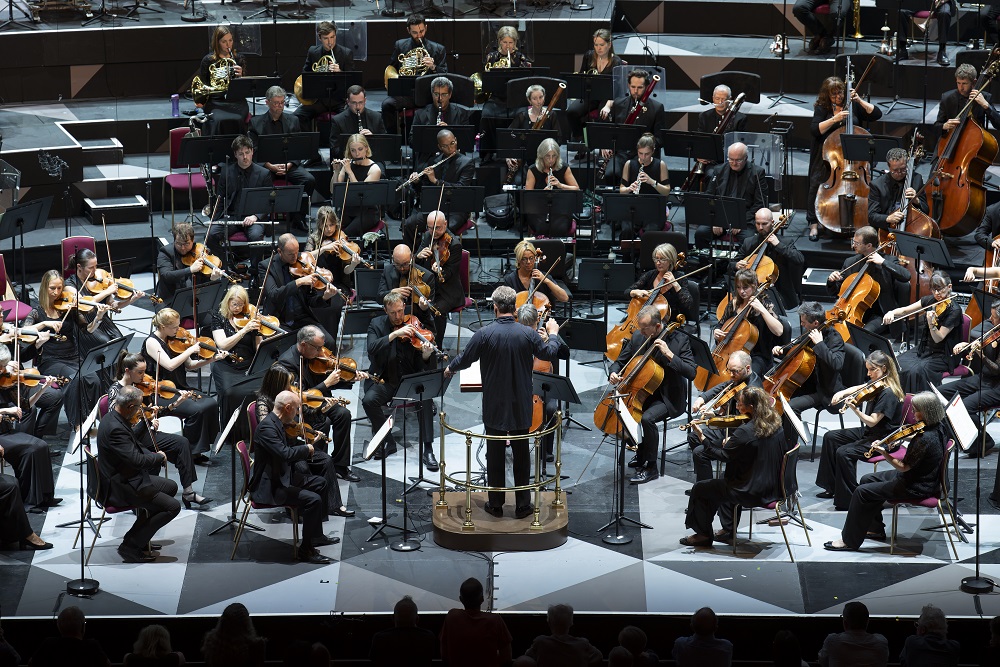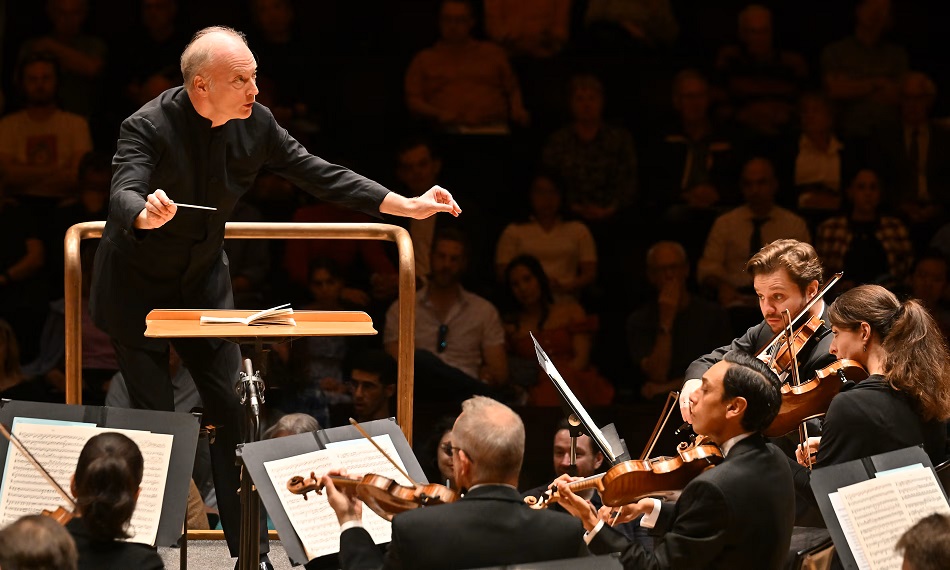
In concert – Seong-Jin Cho, London Philharmonic Orchestra / Edward Gardner: Wagner, Beethoven & Tippett

Seong-Jin Cho (piano), London Philharmonic Orchestra / Edward Gardner

Wagner Parsifal – Prelude to Act One (1878)
Beethoven Piano Concerto no.4 in G major Op.58 (1805-6)
Tippett Symphony no. 2 (1956-7)

Symphony Hall, Birmingham
Wednesday 10 April 2024

Reviewed by Richard Whitehouse

Although the London Philharmonic Orchestra’s ongoing season might not have been among its most enterprising, this evening’s concert confirmed how Edward Gardner is influencing both this orchestra’s programmes and its approach to standard repertoire as well as modern classics.

Beginning with the Prelude from Wagner’s Parsifal is certainly playing for high stakes and, while it afforded no revelations, this performance seemed nothing if not aware of the piece’s searching grandeur where the placing of motifs and those silences between them is crucial to its overall cohesion. A pity, perhaps, that Gardner opted for the ‘concert ending’ in which the close of the first act is laminated onto what went before instead of merely allowing the music to remain in expectancy, but this detracted only slightly from the majesty of what was heard.

Beethoven’s Fourth Piano Concerto then provided a perfect foil, not least in a performance so attentive to the interplay between soloist and orchestra. It helped that Seong-Jin Cho, winner of the Chopin International Competition in 2015, had an innate feeling for that ‘give and take’ necessary in this most integrated of the cycle; his fastidious while never uninvolving pianism heard to advantage over an initial movement where gradual evolution was uppermost, though his take on Beethoven’s earlier and less capricious cadenza was not lacking virtuosity. He and Gardner were at one in conveying the elemental call-and-response of the Andante, a brief but profound entry into a final Rondo whose vivacity was judiciously balanced with a ruminative poise, where lower woodwinds and strings emerged at the fore prior to the exhilarating close.

Some 66 years following its problematic premiere (restarted after a collapse of ensemble just minutes in), Tippett’s Second Symphony now enjoys regular revival though it could hardly be said to play itself. A keen advocate of this composer (witness his acclaimed recording of The Midsummer Marriage), Gardner paced the opening Allegro unerringly – pointing up contrast between its vigorous and yielding themes, while securing the requisite impetus in its lengthy development then a surging energy in its coda. Punctuated by Paul Beniston’s superb trumpet playing, the Adagio was almost as fine even if a slower underlying tempo might have brought even more depth to some of Tippett’s most evocative and spellbinding music; not least during its central build-up in the strings to a climax whose stark curtailing feels more than prescient.

Reservations as such centred on the Presto – undeniably well articulated in terms of rhythmic precision, while lacking the swiftness or velocity for its obsessive interplay and its Dionysiac culmination really to hit home. By contrast, the final Allegro was far from the anti-climax it can seem. Gardner had its measure from the jazzy introduction, via an inventive sequence of variations then sensuously descending melody on strings against shimmering woodwinds, to those cumulative ‘gestures of farewell’ that ended this performance in ecstatic ambivalence.

If not definitive, this was certainly an absorbing and memorable account as will hopefully be made available on the LPO’s own label (the concert having been broadcast live on Radio 3): one that rounded off what proved to be a judiciously planned and finely executed programme.

Click on the link to read more on the current LPO concert season, and on the names for more on pianist Seong-Jin Cho, conductor Edward Gardner and a website devoted to composer Sir Michael Tippett. The LPO’s new recording of The Midsummer Marriage can be found here

Published post no.2,148 – Sunday 14 April 2024

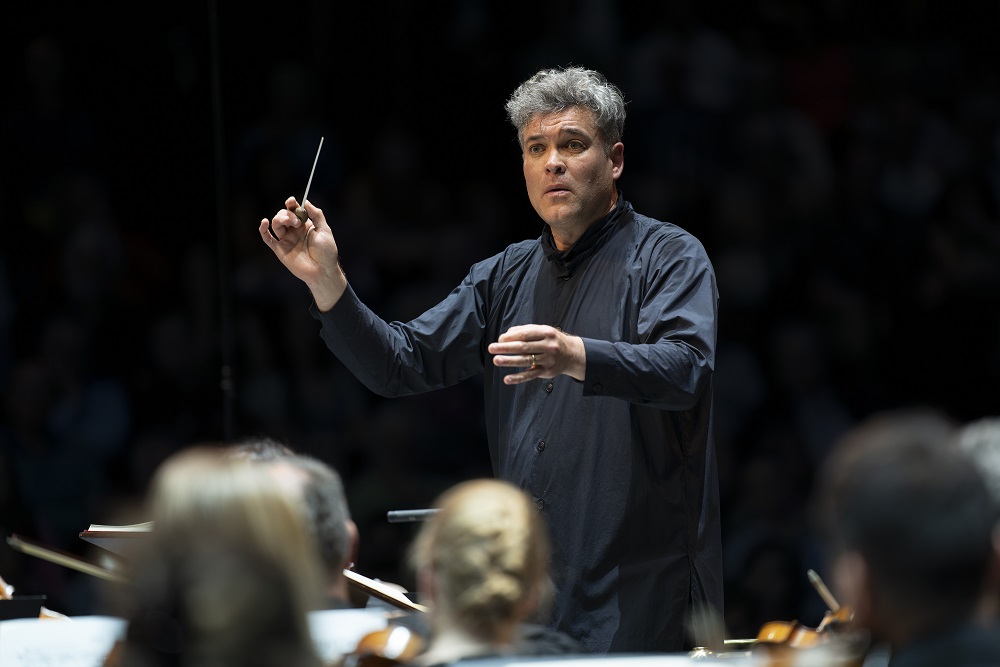
In concert – Sheku Kanneh-Mason, Soloists, Philharmonia Chorus, Royal Philharmonic Orchestra / Vasily Petrenko: Elgar, Weinberg & Rachmaninoff

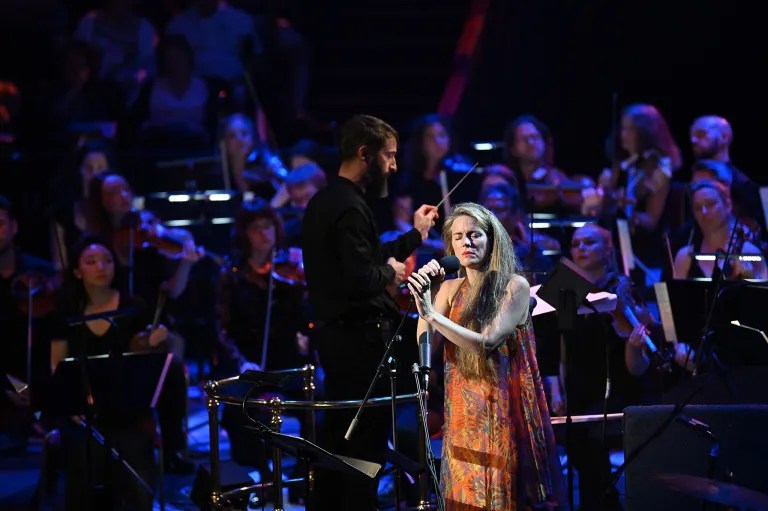
Sheku Kanneh-Mason (cello), Mirjam Mesak (soprano), Pavel Petrov (tenor), Andrii Kymach (baritone), Philharmonia Chorus, Royal Philharmonic Orchestra / Vasily Petrenko

Elgar In The South (Alassio) Op.50 (1904)
Weinberg Cello Concerto Op.43 (1948/1956)
Rachmaninoff The Bells Op.35 (1913)

Royal Festival Hall, London
Thursday 11 April 2024

Reviewed by Ben Hogwood Pictures (c) Chris Christodoulou

The Royal Philharmonic Orchestra and Vasily Petrenko continued their dual focus on Rachmaninoff and Elgar this season with a deeply satisfying programme. They began with Elgar on holiday, music to match the Mediterranean climate of a rather humid Royal Festival Hall. This was In The South, Elgar’s extended postcard from Alassio, Italy, a sudden burst of inspiration that the composer finished in double quick time. Petrenko and his charges caught the instinctive writing, launching the overture in high spirits that brought the spring sunshine in from outside. Their interpretation grew in stature as it progressed, the central statements from brass given impressive heft. Yet it was the quieter asides that proved most telling, notably a fine viola solo from Abigail Fenna, whose depiction of the ‘canto popolare’ was appropriately reserved and beautifully phrased.

Sheku Kanneh-Mason joined for Weinberg’s Cello Concerto, a fine work sharing the same key (C minor) and elegiac mood of its now neglected equivalent by Nikolai Myaskovsky, completed three years earlier. Sheku’s credentials in Shostakovich (he won the BBC Young Musician prize with a standout account of the Cello Concerto no.1) served him well here, and he was an eloquent guide in the thoughtful first movement. Again this was an interpretation growing in stature, from a silvery first movement to the persuasive habanera of a Moderato that grew increasingly sour in tone, aided by standout solos from trumpeter Matthew Williams. By the third movement Allegro the gloves were well and truly off, incisive solo playing carrying through to an assertive and deeply felt cadenza, before the finale responded with doleful phrases turning us back to the material of the first movement, emotions not fully resolved. The main theme carried more weight second time around, while Kanneh-Mason’s choice of the same composer’s Prelude no.18 for solo cello was ideal as an encore, setting the seal on a fine interpretation. Hopefully his thoughts on the concerto will be set down in the studio by Decca before long.

Rachmaninoff’s four-part choral symphony The Bells formed a dramatic second half, led by an extremely well-drilled Philharmonia Chorus (prepared by Gavin Carr), whose diction and ensemble were most impressive. On first glance the men appeared outnumbered, but when the telling moments came in the third and fourth movements they rose to the occasion with great conviction.

In tenor Pavel Petrov, soprano Mirjam Mesak and baritone Andrii Kymach, Petrenko could call on three excellent soloists, Mesak in particular impressing with her sensitive phrasing and vibrato, passionately singing The Mellow Wedding Bells. Her glittering dress was an ideal match for Poe’s verse, too. Petrov’s ringing delivery set the ideal tone in The Silver Sleigh Bells, while Kymach’s declamation was pitched just right for The Mournful Iron Bells, right after the frenzied scherzo, The Loud Alarm Bells.

The Royal Philharmonic Orchestra gave memorable contributions, with incisive woodwind, plangent brass, strings united as one, and percussion that added punctuation to the choral thunderclaps of The Loud Alarm Bells, Rachmaninoff effectively slamming the door shut on his deepest fears. Following this dramatic high point, the cor anglais solo of Patrick Flanaghan was all the more poignant – and Petrenko made sense of the major key ending, a chink of light in the darkness.

You can find more information on further concerts at the Royal Philharmonic Orchestra website

Published post no.2,146 – Friday 12 April 2024

In concert – Charlotte Saluste-Bridoux & Joseph Havlat @ Wigmore Hall: Szymanowski, Poulenc & Schubert

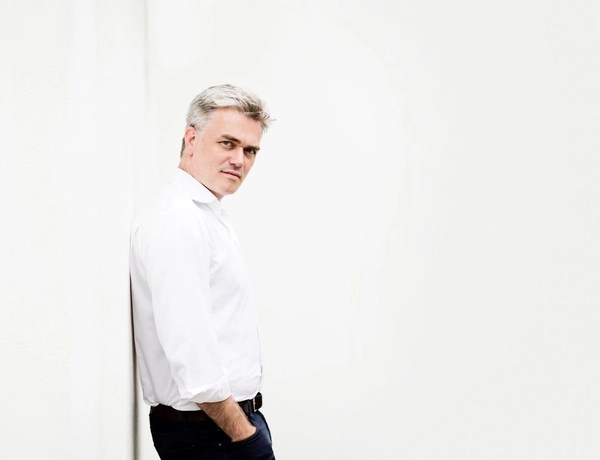
Charlotte Saluste-Bridoux (violin, above) and Joseph Havlat (piano, below)

Szymanowski 3 Myths Op.30 (1915)
Poulenc Violin Sonata (1943)
Szymanowski arr. Havlat 3 Kurpian Songs (from Op.58) (1930-32)
Schubert Rondo Brillant in B minor D895 (1826)

Wigmore Hall, London
Tuesday 10 April 2024 (1pm)

by Ben Hogwood

This recital was given under the umbrella of YCAT (Young Classical Artists Trust), the organisation supporting promising classical talent celebrating their 40th anniversary this year. Violinist Charlotte Saluste-Bridoux is one of the current roster, and with pianist Joseph Havlat she gave a captivating recital.

The two began with the highly perfumed 3 Myths of Karol Szymanowski, ideal concert material that can show off a performer’s virtuosity but also their descriptive potential and range of tonal colour. These pieces, written as part of a highly productive partnership Szymanowski enjoyed with violinist Pawel Kochanski, were declared by the composer to have created ‘a new…mode of expression for the violin’.

There was a sense of the new in this performance, notable for its wide range of instrumental colour. The first ‘myth’, La fontaine d’Aréthuse, was strongly characterised, the fountain vividly evoked by Havlat’s opening phrases before Saluste-Bridoux took control with fearless virtuosity. Both musicians were notable for their convincing melodic phrasing, the violin sound strikingly beautiful both with and without the mute. The musical links back to Wagner and Franck were clear, most notably in Narcisse, where the performers brought clarity to the dense counterpoint. This was descriptive music indeed, and Szymanowski’s sound world – unusually advanced for 1915 – took the audience far from the hall. The hollow piano towards the end of Dryades et Pan was notable, Havlat responding to the ghostly harmonics from the violin.

The excesses of Szymanowski were countered by one of Poulenc’s most substantial chamber works. The Violin Sonata has a very different profile to its more famous counterparts for wind instruments, being a troubled work bearing the imprint of the Second World War and personal bereavement. Completed in 1943, it is a work riddled with dark anxiety, though this performance brought out the bittersweet lyricism of the first movement. The nocturnal Intermezzo evoked the guitar, suggesting the influence of Debussy but soon holding the audience in suspense before the finale took off at quite a pace, as though looking to evade capture. Once again this was a performance of high technical standard, one that got beneath the surface to reveal the loss at the heart of Poulenc’s writing – the composer lamenting the Spanish poet Federico Garcia Lorca, who died in the Spanish Civil War.

We then heard three highly effective arrangements from Joseph Havlat of Szymanowski’s Kurpian Songs, selected from the twelve Polish folk texts set by the composer for singer and piano in 1932. As Prokofiev showed with his arrangements of 5 Poems of Anna Akhmatova for violin and piano, such a transcription can be extremely effective – and Havlat’s arrangements were just that, ideally balanced and equally spread between violin and piano. Saluste-Bridoux played with notable dexterity, the two performers enjoying the rustic Bzicem kunia and the sharp outbursts, tinged with regret, of A pod borem siwe kunie.

The musical outlook changed notably for Schubert’s Rondo brilliant, which was effectively an extended encore. The violin was arguably too full bodied to start with, the piano back in the mix, but as the Rondo progressed the balance was restored and we were able to enjoy Schubert’s humour, expressed through an oft-repeating, stop-start theme. This was successfully lodged in our heads by the end, capping an extremely fine recital. These are two artists to watch out for – especially with the Schubert recorded for Delphian Records.

Published post no.2,144 – Wednesday 10 April 2024

In concert – Stewart Goodyear, CBSO / Ilan Volkov: Ives, Zappa, Lewis & Gershwin

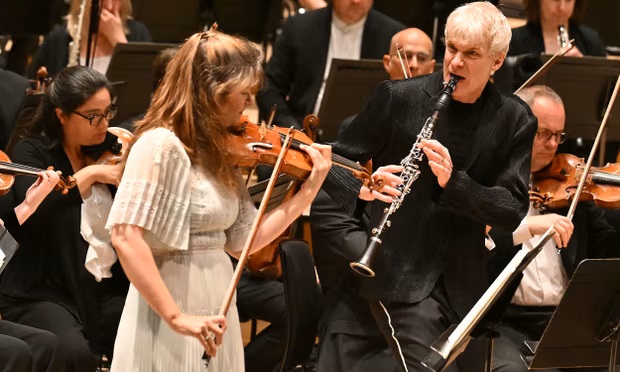
Stewart Goodyear (piano), City of Birmingham Symphony Orchestra / Ilan Volkov (above)

Ives Three Places in New England (1911-14, rev. 1929)
Zappa Bob in Dacron and Sad Jane (1982-3)
Lewis Memex (2014)
Gershwin orch. Grofé Rhapsody in Blue (1924, rev. 1942)

Symphony Hall, Birmingham
Wednesday 27 March 2024

Reviewed by Richard Whitehouse

Ilan Volkov is always a welcome presence on the Symphony Hall podium, and this evening he conducted the City of Birmingham Symphony Orchestra in a fascinating programme of works by American composers – three of them established in music notably removed from classical.

The concert was framed by what have now become repertoire pieces, but Ives’s Three Places in New England had to wait over half a century to be accorded this status. Using what sounded to be the most recent edition, Volkov stressed its late-Romantic impulsiveness and rhetorical eloquence, though some over-emphatic pauses or phrasing slightly undersold the cumulative majesty of The Saint Gaudens and coursing energy of Putnam’s Camp – which latter still teetered (rightly) on chaos at its close. If the build-up in The Housatonic at Stockbridge felt unduly precipitate, Rachel Pankhurst’s rendering of its cor anglais melody had ideal pathos.

The three decades since Frank Zappa’s untimely death have brought into focus his sheer range of musical preoccupations, though his pair of early 1980s albums with the London Symphony Orchestra made plain that being one of rock music’s finest guitarists and leading provocateurs was never enough. Despite their linkage via a ballet with its somewhat dubious scenario, Bob in Dacron and Sad Jane are individual entities and their respective two movements underline Zappa’s concern for musical and expressive diversity – whether in the reckless overkill of the male protagonist or halting fatalism of the female. Volkov secured dedicated playing from the CBSO as brought out Zappa’s debt to ‘third stream’ jazz as much as his modernist forebears.

George Lewis is another figure whose creativity ranges over multiple media – not least that of the orchestra which, thanks not least to Volkov’s advocacy, has gained some familiarity in the UK. Its title referring to a theoretical device for establishing connections across an otherwise unregulated body of information, Memex is typical of the composer through its complexity of textures which affords a heady virtuosity but also a measure of subtlety and inwardness, not least in those final stages when the earlier volatility gradually coalesces into something akin to resolution; as if all that information was, if not dispersed, at least finding discipline. Such, at least, was the impression left by this committed reading of a striking and absorbing piece.

It might have been a conceptual leap too far from here to Gershwin’s galvanizing of the ‘jazz age’ aesthetic almost a century earlier, though Rhapsody in Blue has lost relatively little of its edge during the interim – especially when Stewart Goodyear projected the steely spontaneity of its solo part with such gusto. Admittedly the large orchestral forces (a feature of each work heard tonight) lacked a degree of co-ordination in tutti sections, but Volkov was at one with his pianist in conveying the breezy and often brittle excitement of music which sounded as   if evolving in real-time – not least the final stages that emerged as a high-octane apotheosis.

No little excitement, then, was generated over the course of this performance as of this concert overall: just the sort of event the CBSO should be putting on each season, which latter would certainly be the poorer were artists such as Volkov not encouraged to follow their convictions.

Click on the link to read more on the current CBSO concert season, and on the names for more on pianist Stewart Goodyear, conductor Ilan Volkov and composers Frank Zappa and George Lewis.

Published post no.2,133 – Saturday 30 March 2024

In concert – Quatuor Danel: Shostakovich & Weinberg #3 @ Wigmore Hall

Quatuor Danel [Marc Danel & Gilles Millet (violins), Vlad Bogdanas (viola), Yovan Markovitch (cello)]

Shostakovich String Quartet no.4 in D major Op.83 (1949)
Weinberg String Quartet no.4 in E flat major Op.20 (1945)
Shostakovich String Quartet no.5 in B flat major Op.92 (1952)

Wigmore Hall, London
Tuesday 19 January 2024

by Richard Whitehouse Photo (c) Marco Borggreve

Having got past its second instalment this time around, the Quatuor Danel’s cycle of string quartets by Shostakovich and Weinberg tonight encountered its most impressive programme thus far; the latter’s Fourth Quartet being framed by the former’s Fourth and Fifth Quartets.

Given its public premiere over four years after completion (it seems likely there were private hearings in the interim), Shostakovich’s Fourth Quartet is one among several of his pieces in which Jewish melody and inflection predominates. The key surely lies in emphasizing these as a structural as much as, if not more than, an emotional facet – as the Danel demonstrated with a take on the preludial Allegretto whose fervour never seemed anecdotal. The ensuing Andantino’s heightened pathos becomes anguished at its climax, while the scherzo is one of those speculative movements whose intimations the Danel projects so convincingly. With its implacable heading to an impulsive culmination then its allusive subsiding into an equivocal half-close, the final Allegretto conveys a tangibly but by no means concretely human drama.

Arguably his first masterpiece in the genre, Weinberg’s Fourth Quartet finds this composer tackling the Beethovenian model head-on – albeit with an opening Allegro whose unhurried manner and burnished textures only takes on greater urgency in its latter stages. The Danel brought this out accordingly, then pointed up the expressive contrast with a scherzo whose driving and ingratiating main themes alternate without hope of resolution. No less potently realized was the interplay between strident rhetoric and halting processional in the ensuing Largo, its unrelieved sombreness tentatively countered by a final Allegro which hints at an affirmative end, only to dismiss such possibility with its desperate closing crescendo. Well- received at its premiere, this quartet should have secured Weinberg’s reputation forthwith.

Other than his Twelfth, the Fifth Quartet is Shostakovich’s finest such achievement – directly preceding his Tenth Symphony with which it shares a comparable formal as well as expressive inclusivity. The Danel launched its opening Allegro with ample resolve, as if to underline the cumulative momentum of an outwardly Classical sonata form whose strenuous development carries over into a heightened reprise, then on to a coda whose pizzicato undertow establishes an emotional distance that connects seamlessly with what follows in this continuous design.

What follows is the most inwardly profound of Shostakovich’s slow movements – its overall remoteness tempered by allusion to his recent works then embargoed, with a passing raptness that might or might not be inherently personal in import. The Danel maintained concentration unerringly here, then headed straight into a finale whose initial geniality duly gives way to an explosive central climax and, in turn, tentative retracing of earlier ideas before a coda whose fatalistic radiance yields the most affecting end to any of its composer’s large-scale statements.

It certainly brought out the best interpretively from the Danel, who still found energy for an encore in the guise of a Capriccio that Weinberg wrote in the wake of his First Symphony in 1943: its amiable if sometimes barbed playfulness an ideal way to conclude a superb recital.

You can hear the music from the concert below, in recordings made by Quatuor Danel:

For more information on the next concert in the series, visit the Wigmore Hall website. You can click on the names for more on composer Mieczysław Weinberg and Quatuor Danel themselves.

Published post no.2,125 – Friday 22 March 2024