Arcana at the opera: The Bartered Bride @ Garsington Opera

The Bartered Bride (Prodaná nevěsta) (1866)
Comic opera in Three Acts – music by Bedřich Smetana; Libretto by Karel Sabina
Sung in Czech with English surtitles.

Mařenka – Pumeza Matshikiza (soprano), Jeník – Oliver Johnston (tenor), Kecal – David Ireland (bass), Vašek – John Findon (tenor), Ludmila – Yvonne Howard (soprano), Krušina – William Dazeley (baritone), Mícha – John Savournin (bass), Háta – Louise Winter (mezzo-soprano), Ringmaster – Jeffrey Lloyd-Roberts (tenor), Esmeralda – Isabelle Peters (soprano)

Rosie Purdie (director), Kevin Knight (designer), Howard Hudson (lighting), Darren Royston (choreographer)

Circus Troupe, Garsington Opera Chorus, Philharmonia Orchestra / Jac van Steen

Garsington Opera, Wormsley
Friday 30 June 2023

review by Richard Whitehouse Photos by (c) Alice Pennefather

Smetana may have played down its status in the context of his output, but The Bartered Bride remains the foundation of Czech opera and is much the most performed work stemming from that tradition, making this revival of Garsington Opera’s 2019 production the more welcome.

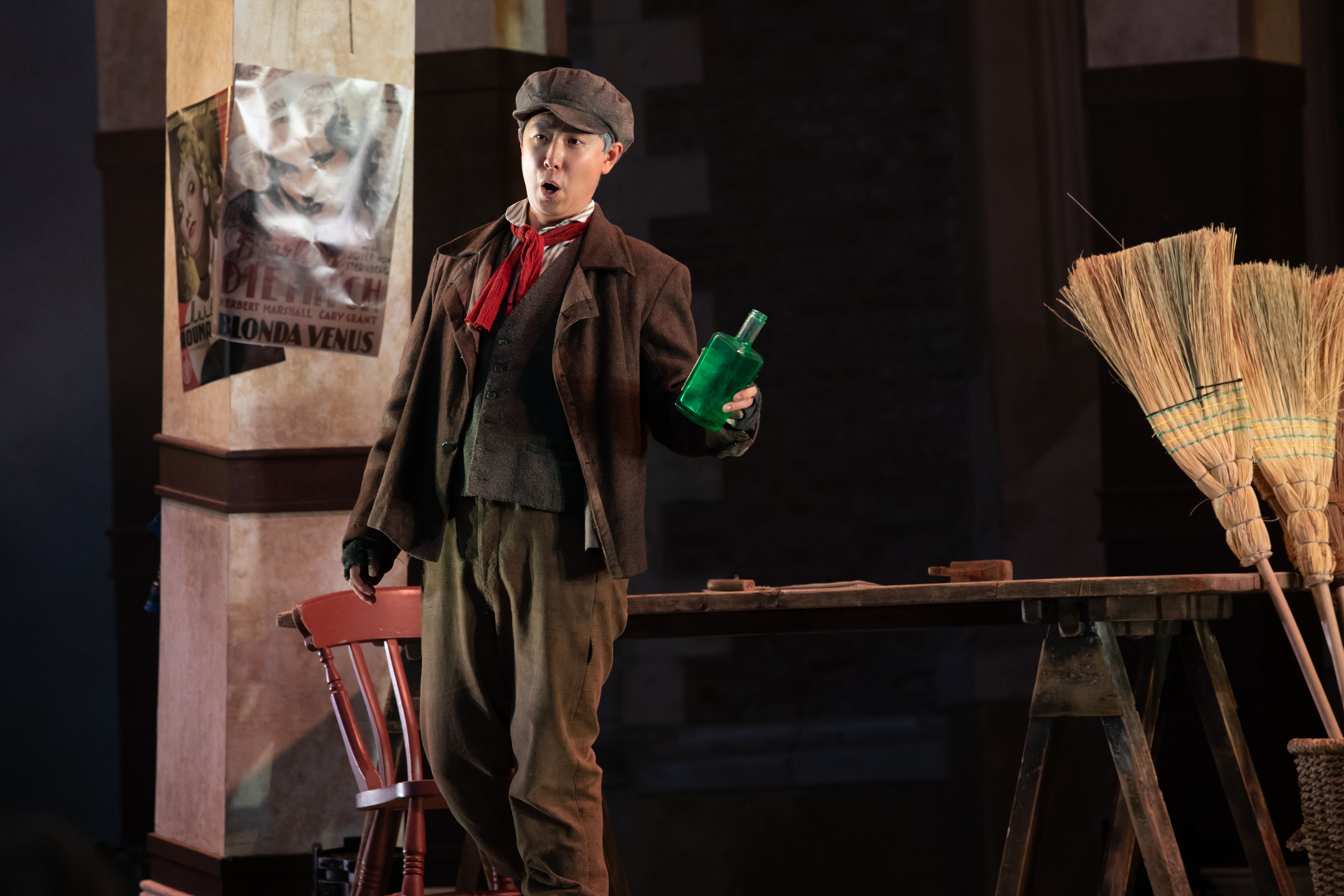
Rosie Purdie’s direction accorded wholly with Paul Curran’s original conception, transferring the scenario to a 1950s Britain where class restrictions and petty-mindedness were as much a given as in Bohemia a century before, yet the socio-political facet seemed as astutely handled as the cultural trappings of that first teenage generation were underlined without detriment to what was played out on stage. Kevin Knight’s designs clarified this setting most effectively, and Howard Hudson’s lighting was vivid without ever being garish. Most especially, Darren Royston’s choreography afforded communal togetherness during the crowd scenes while also ensuring that the circus troupe’s routines at the beginning of the third act came alive without any sense of their being a mere ‘add on’ to this production, and hence of the opera as a whole.
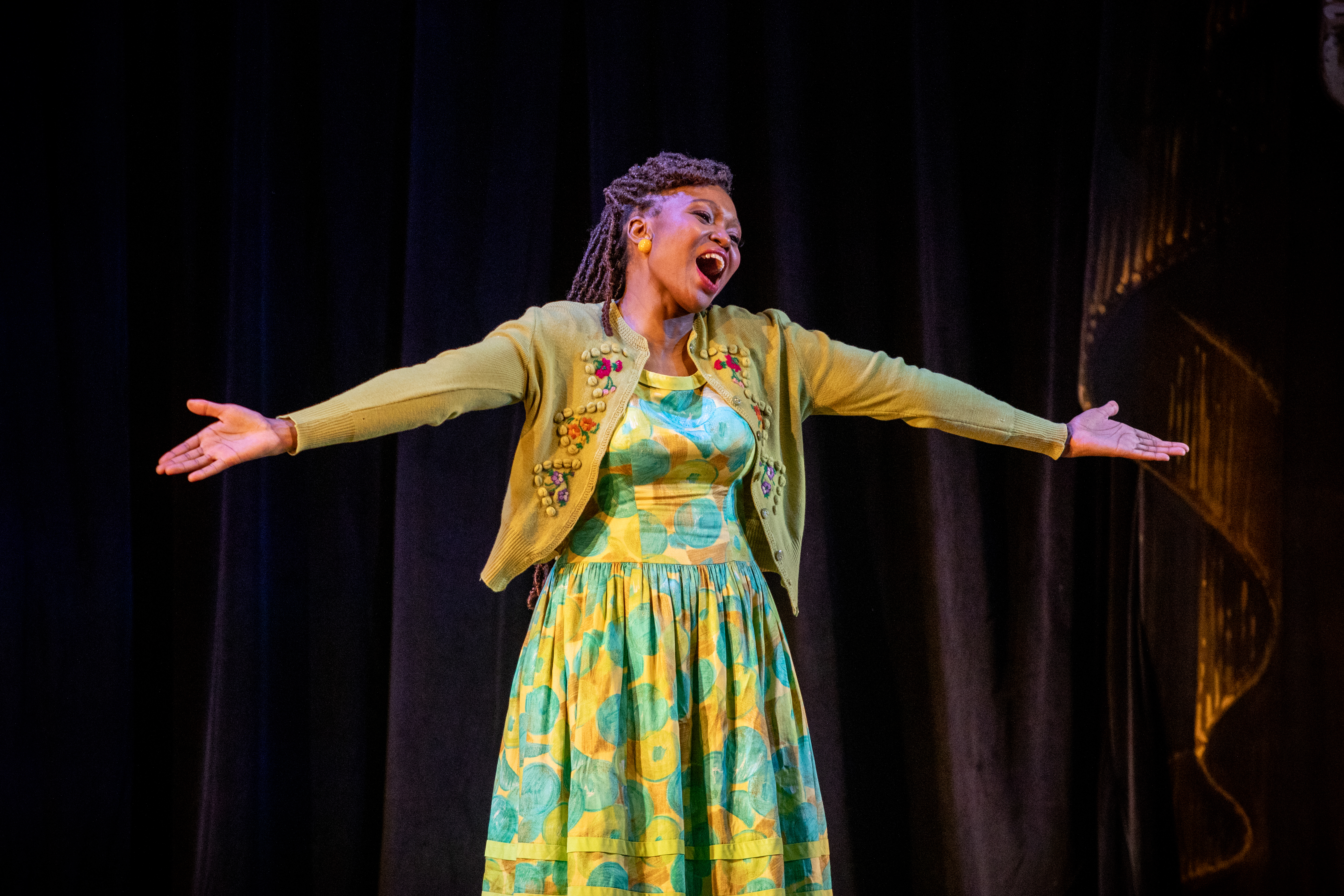
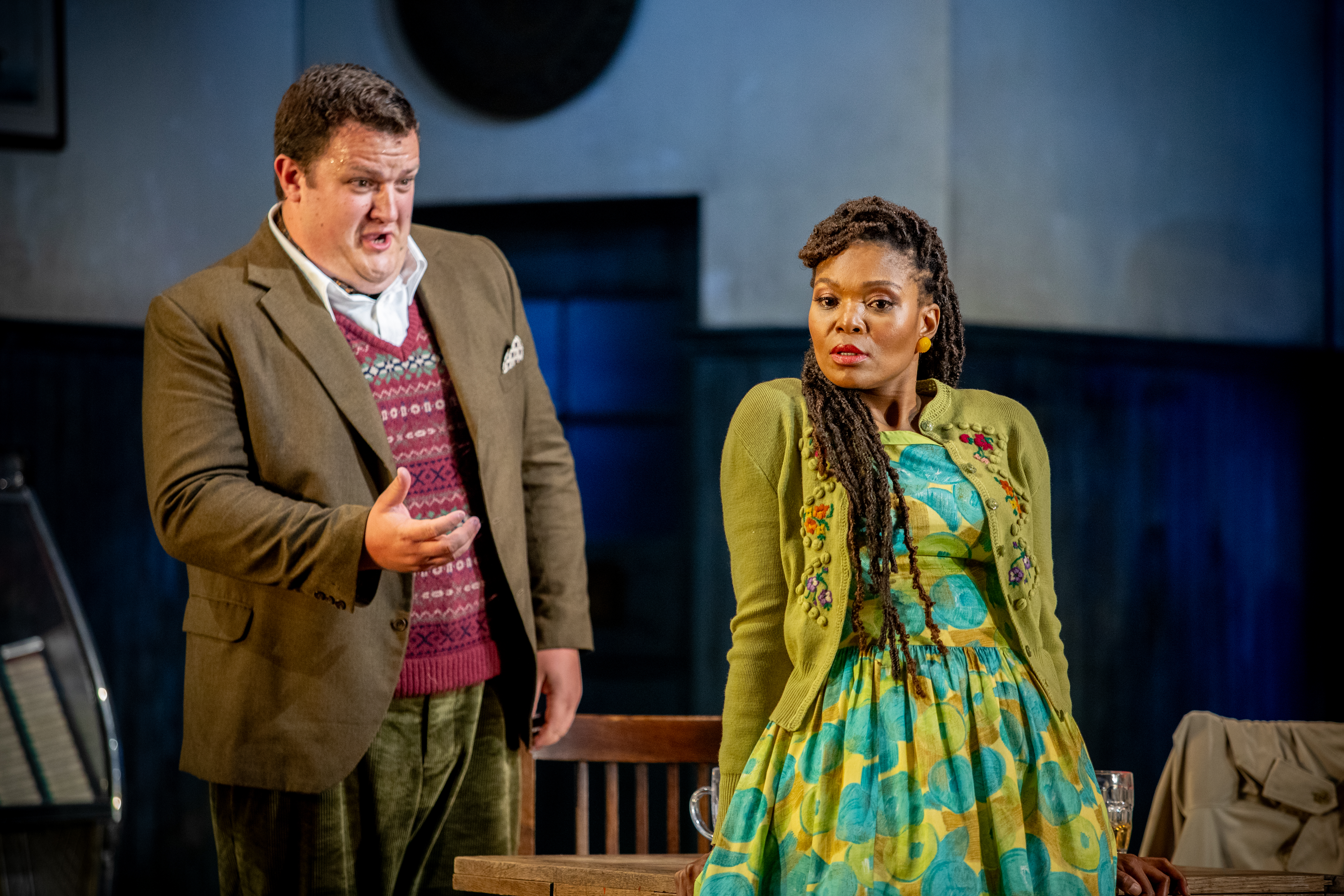
The casting could hardly have been bettered. Among the most wide-ranging role of any 19th-century opera, Mařenka was superbly taken by Pumeza Matshikiza (above) who conveyed pathos and real integrity of character to substantialize those comic capers unfolding on stage in what was an assumption to savour. Not comparable musically, that of Jeník is a notable role that Oliver Johnston rendered with verve and audible eloquence – such that his ostensibly hard-headed decisions could only be the outcome of an essentially sincere as well as selfless motivation.
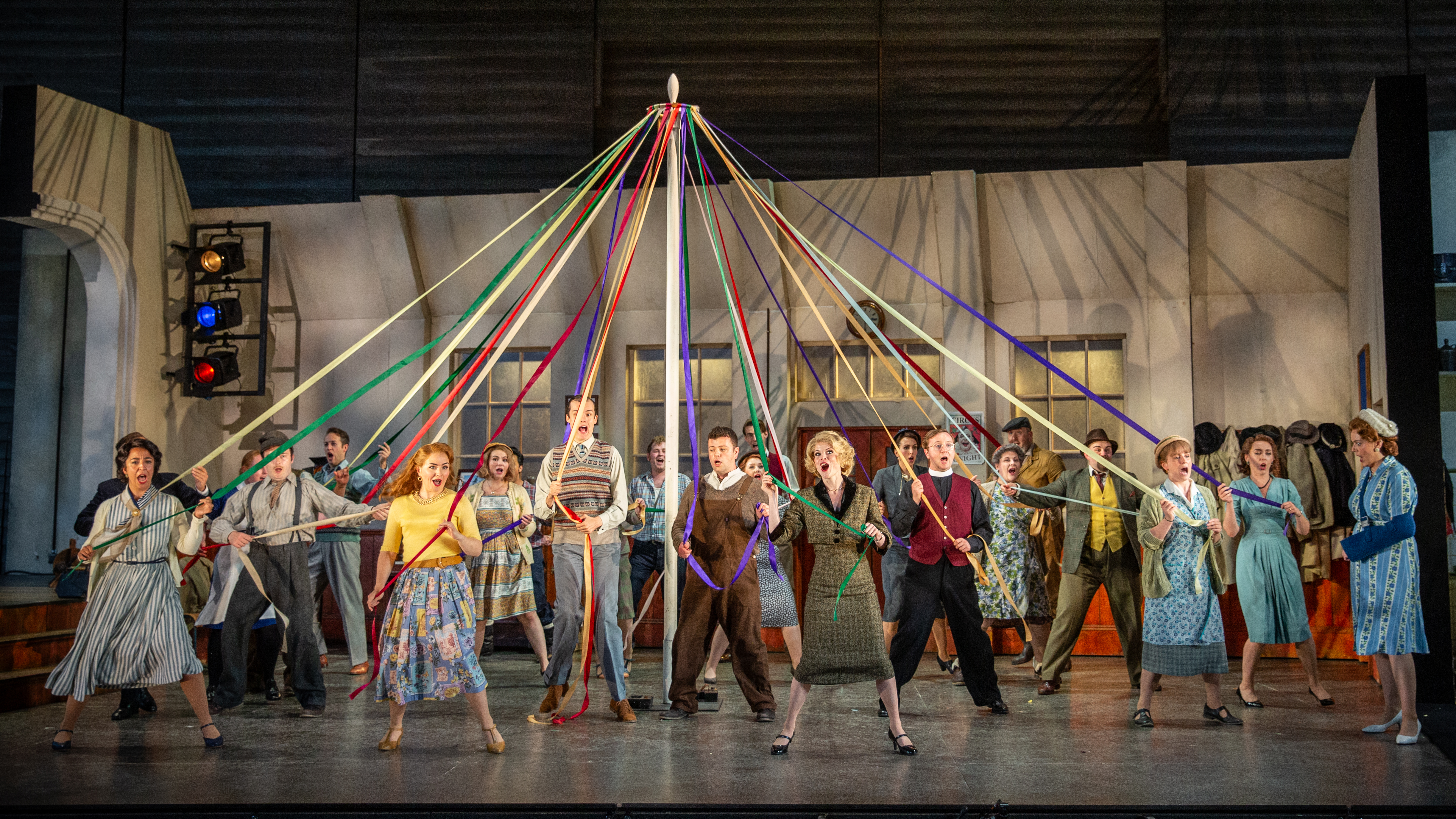
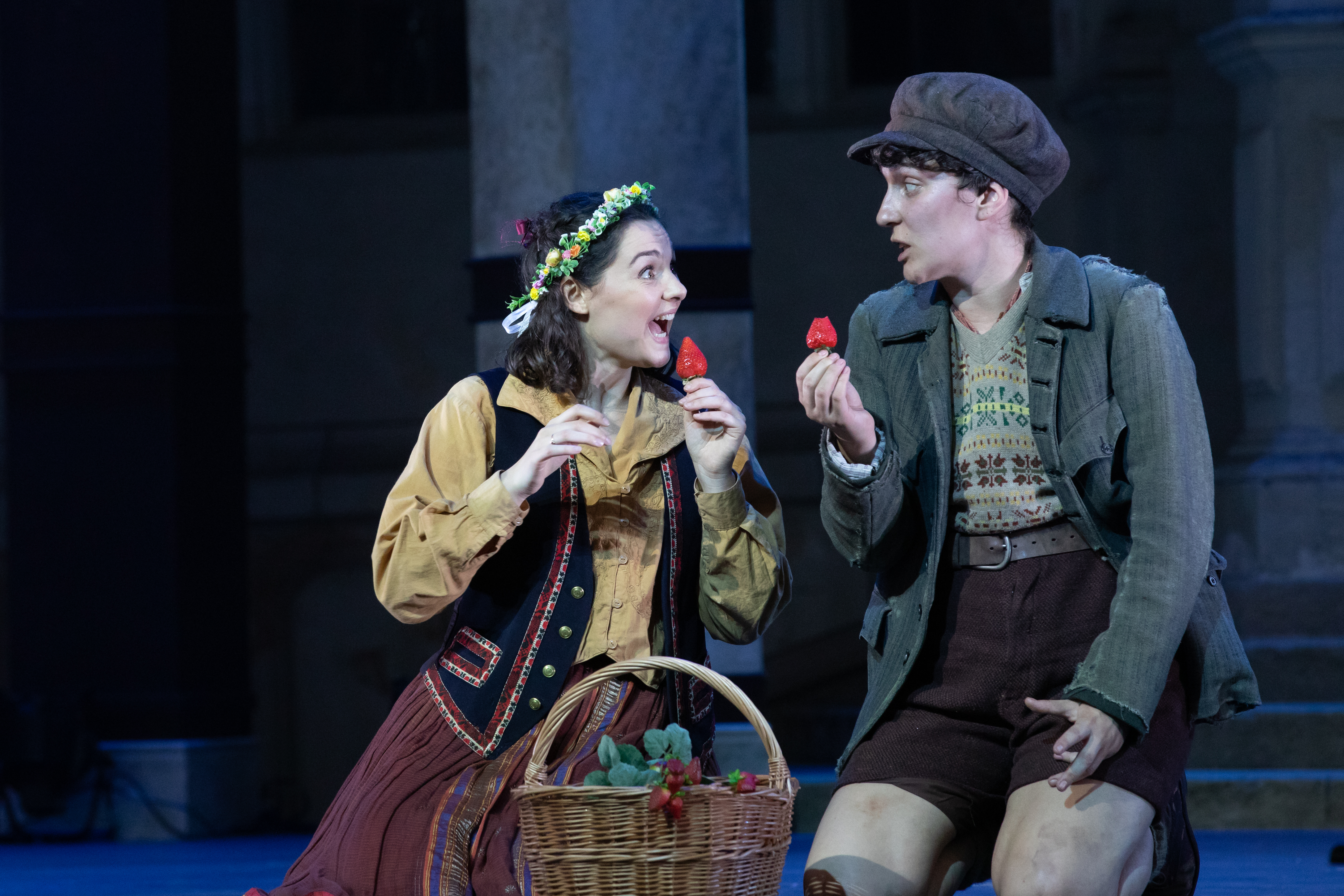
Notwithstanding that the secondary roles provide relatively little in terms of characterization, John Findon drew a degree of sympathy for the hapless Vašek, William Dazeley and Yvonne Howard were well matched as the warmly uncomprehending Kružina and Lumilla, while the scheming couple of Mícha and Háta saw a suitable response from John Savournin and Louise Winter, abetted in this respect by David Ireland’s roguish Kecal. Jeffrey Lloyd-Roberts was magnetic as the Ringmaster, and Isabelle Peters provided an entrancing cameo as Esmerelda.

The latter characters are part of a Circus Troupe that, fronted by Jennifer Robinson, brought the stage to life just after the dinner interval. Elsewhere, the hard-working Garsington Opera Chorus offered a reminder this is an opera second to none in terms of its choral contribution, while the Philharmonia sounded in its collective element under the assured direction of Jac van Steen, familiar in the UK through his extensive work with the BBC National Orchestra of Wales and Ulster Orchestra. In particular, the overture and set-pieces in each act had the requisite vigour and effervescence as has made them at least as familiar in the concert hall, and it remains a testament both to Smetana’s immersion in and understanding of his native music that only the ‘Furiant’ at the start of the second act derives from a traditional source.

The Bartered Bride has enjoyed numerous UK productions during recent decades – among which, this Garsington revival can rank with the finest in terms of musical immediacy and visual allure. Those not able to see it four years ago should certainly do so this time around.

For information on further performances, visit the Garsington Opera website. Click on the artist names for more information on Pumeza Matshikiza, Oliver Johnston, Jac van Steen, Philharmonia Orchestra and stage director Rosie Purdie

In concert – April Fredrick, Thomas Humphreys, English Symphony Chorus & Orchestra / Kenneth Woods: Voyage to America

April Fredrick (soprano), Thomas Humphreys (baritone), ESO Chorus, English Symphony Orchestra / Kenneth Woods

Dvořák Symphony no.9 in E minor Op.95 ‘From the New World’ (1893)
Sawyers Mayflower on the Sea of Time (2018) [World Premiere]

Worcester Cathedral
Saturday 17 June 2023

Reviewed by Richard Whitehouse

This final concert of the season by the English Symphony Orchestra brought us the premiere of a piece delayed from three years ago. Philip SawyersMayflower on the Sea of Time was to have been launched at the Three Choirs Festival in April 2020, but the pandemic derailed this as so many other events. Happily, the tenacity of conductor Kenneth Woods has paid off such that the composer’s largest work so far was finally heard, and in the venue originally intended, making for a notable addition to the English choral tradition and one wholly on its own terms.

Commissioned to mark the 400th anniversary of the sailing of the Mayflower from Leiden to Plymouth and thereby founding the United Sates of America, this is an oratorio in concept but equally a choral symphony in its overall design and thematic cohesion. Its libretto, mainly by the artist Philip Groom, features set-pieces for various figures from the Old and New Worlds duly taken by soprano and baritone soloists (those for treble being allotted to sopranos in the chorus), but these along with ones for chorus are drawn into an inherently musical evolution.

Formally, there are four continuous parts. Persecution and Journey, a sonata design such as informs the Pilgrims’ flight from religious persecution and their decision to cross the Atlantic; Arrival in the New World, a slow movement charting their embarkation and tentative initial interaction with native peoples; Survival and Making our Community, a scherzo where the Pilgrims’ industriousness and idealism quickly becomes its own justification; and Our New World, a rondo-finale whose looking to the future is framed by choruses of growing fervour.

As befits such a work, the choral writing is both extensive and resourceful – not least when it elides between depicting Pilgrims or Natives, and that of a more abstract commentary. No less assured, the writing for soprano and baritone allows Sawyers’ lyrical impulse free reign – not least in extended sections toward the end of the second and fourth parts; the latter, especially, rendering comparable passages by Delius or Tippett from a perspective wholly of the present. On either side, luminous and ecstatic choruses accentuate an essentially affirmative message.

The contributions of April Fredrick (no stranger to Sawyers via her long association with the ESO) and Thomas Humphreys could hardly be faulted for commitment or insight, while that of the ESO Chorus exuded a power and immediacy amplified by the resonance of Worcester Cathedral’s acoustic as to belie its relatively modest numbers. The ESO gave its collective all throughout, projecting the textural intricacy and emotional heft of music whose longer-term formal integration was securely conveyed through Woods’s precise yet unobtrusive direction.

Before the interval, Woods gave a notable account of Dvořák’s Ninth Symphony. The poised anticipation of its introduction and visceral drama of its coda were highlights of the opening Allegro, proceeded by a Largo of an eloquence epitomized by rapt cor anglais playing from Louise Braithwaite. Contrast between the incisiveness of the Scherzo’s outer sections and the lilting delicacy of its trio was pointedly underlined, then the final Allegro surged onward to a coda paying tribute to 19th-century symphonism while blazing a trail for what was to come.

Further information on the ESO’s latest Philip Sawyers release (Nimbus NI6436) can be found at the English Symphony Orchestra website. For more on the artists in this concert, click on the names of April Fredrick, Thomas Humphreys, Kenneth Woods and the English Symphony Orchestra themselves – and click here for more on composer Philip Sawyers.

Arcana at the opera: Hansel and Gretel @ Opera Holland Park (Young Artists Performance)

Hansel and Gretel (1893)
Opera in Three Acts – music by Engelbert Humperdinck; Libretto by Adelheid Wette
Sung in German with English surtitles. Orchestral reduction by Tony Burke

Hansel – Shakira Tsindos (mezzo-soprano), Gretel – Emily Christine Loftus (soprano), Peter – Edward Kim (baritone), Gertrud – Madeline Boreham (mezzo-soprano), The Gingerbread Witch – Ella de Jongh (mezzo-soprano), The Sandman – Claudia Haussmann (soprano), The Dew Fairy – Eleanor Broomfield (soprano)

Bence Kalo (director), Avishka Edrisinghe (repetiteur), Lily Wieland (deputy stage manager)

Opera Holland Park Chorus, Choir of Cardinal Vaughan Memorial School, City of London Sinfonia / Charlotte Corderoy

Holland Park, London
Friday 16 June 2023

review by Richard Whitehouse Photos by (c) Ali Wright

Performances by The Young Artists have been a welcome feature of Opera Holland Park this past decade – none more so than this staging of Hansel and Gretel, Humperdinck’s fairy-tale opera with its ‘rites of passage’ scenario ideally suited to singers at the outset of their careers.

An object lesson in less is more, Bence Kalo’s astute direction worked convincingly through conveying the essence of the siblings’ nocturnal journey – maybe more imagined then real, as was implied by the overture’s becoming a pantomime where a host of comedic and woodland characters assumed the spotlight. Neither was the subsequent element of danger played down, with the confrontation with the Witch taking on ominous overtones as cut across the farce and so made the latter’s demise then the freeing of her victims the more affecting in consequence.

The eponymous figures were as well matched vocally as visually. Shakira Tsindos proved a Hansel likable for all his (sic) gaucheness and gullibility – projecting the character with flair and immediacy, if marginally overdoing the slapstick in the third act. Emily Christina Loftus was a Gretel near ideal in her unforced eloquence, all the while exuding an awareness of the ‘outside world’ as made her the dramatic and musical focus during their sylvan wonderings. As an empathetic portrayal, it could hardly have been bettered technically or interpretively.

Absent throughout much of the opera, the roles of the parents are none the less crucial to its dramatic trajectory. Edward Kim was adept in channelling the warmth and guilelessness of Peter with no risk of sentimentality, making him a dependable figure whatever his failings. Madeline Boreham was forceful but never mean-spirited as Gertrud, her overt exasperation leavened by the anguish through which she lamented her family’s poverty, and recognizing the degree to which Humperdinck humanizes her character compared to the Grimm original.

The remaining roles were ably taken – not least the Witch of Ella de Jongh, who brought off the vocal as well as scenic change from pantomime dame to small-time dictator with aplomb. Claudia Haussmann was magnetic though a little edgy in tone as the Sandman, while Eleanor Broomfield conveyed real enchantment without unnecessary whimsy as the Dew Fairy. The choral contribution had the requisite poise and finesse, not least in those evocative moments when the shades of children vanished into the witch’s domain emerged out of the tonal ether.

The orchestra (City of London Sinfonia in its familiar summer guise) was its usual dependable self, the scaled-down complement of strings not lacking for presence situated at the centre of the platform. It helped that Charlotte Corderoy (above) was so evidently attuned to this score, pacing the unfolding drama with subtlety and purpose, while drawing instrumental felicities aplenty from such as the animated prelude and magical ‘dream-pantomime’ which frame the second act. In its mingled pathos and effervescence, the closing scene provided a fitting denouement.

A victim of its own success for much of the 130 years since its premiere, Hansel and Gretel remains an opera not just for Christmas and not just for children: a work in which innocence and experience are meaningfully conjoined, as was confirmed by this admirable production.

For information on further performances, visit the Opera Holland Park website – and you can meet the OHP Young Artists here. Click on the names for more information on Bence Kalo and Charlotte Corderoy

In concert: Pavel Haas Quartet at Wigmore Hall – Suk, Martinů & Korngold

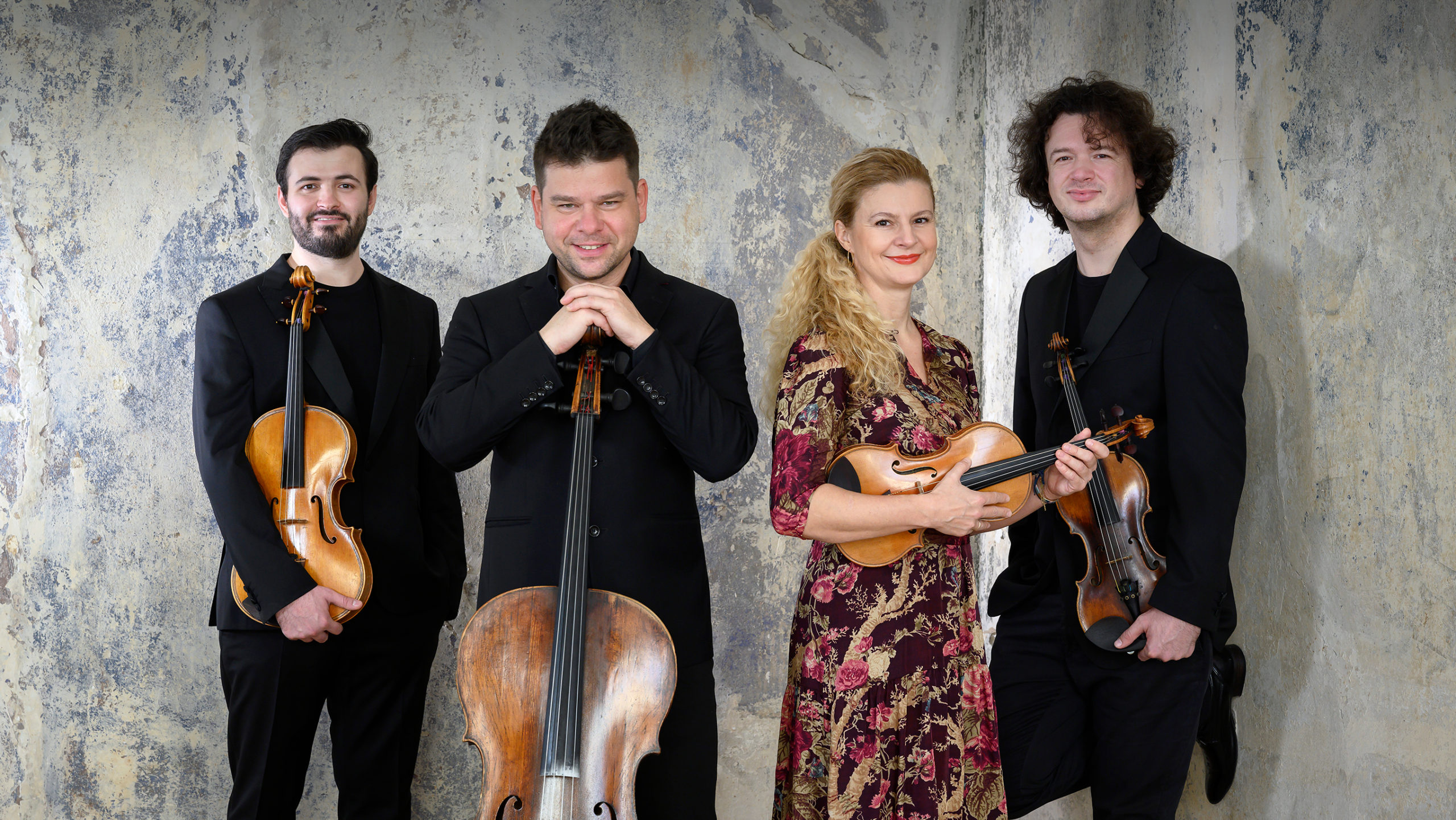
Pavel Haas Quartet [Veronika Jarůšková, Marek Zwiebel (violins), Šimon Truszka (viola), Peter Jarůšek (cello)]

Suk Meditation on an old Bohemian Chorale (St Wenceslas) Op.35a (1914)
Martinů String Quartet no.2 (1925)
Korngold String Quartet no.3 in D major Op.34 (1944-45)

Wigmore Hall
Monday 12 June 2023 1pm

by Ben Hogwood

An unusual and intriguing program from the Pavel Haas Quartet contained music by two fellow Czech composers (Suk and Martinů) and one (Korngold) born in Moravia before moving to America.

The quartet began with a moving piece by Suk, his Meditation on an old Bohemian Chorale (St Wenceslas). This poignant pre-war utterance carried an air of deep profundity right from the first phrase of Simon Truszka’s viola, its elegiac tone enhanced by relative lack of vibrato. The air of solemnity carried throughout, though there was considerable strength in depth as the music grew in stature.

Though a Czech composer, Martinů spent a good deal of time overseas – largely out of necessity. By his early 30s he was in Paris, studying with Roussel, bringing a neoclassical language and tidiness to his music. The String Quartet no.2, though, is a curiously lopsided work, very front heavy with its first movement a combination of substantial slow introduction and quick section. There were close links to the St Wenceslas Chorale here, too, found in the solemn intonations of the Andante. This was the spiritual heart of the piece, dark and uncertain at times and contrasting greatly with the thoughtful but lightly coloured manner in which the quartet began. A resolute first movement found a mood that Martinů reprised in the closing Allegro, a propulsive dance number with a spring in its step. There was an undeniable French flavour to the music here, which the Pavel Haas Quartet brought forward, its elegance at odds on occasion with the rustic dance tunes.

There was tension in the final work, too, though this was undeniably the making of a mature composer. The String Quartet no.3 was Erich Korngold’s last published chamber piece, adjacent in publication to the Violin Concerto, with which it shares the same key of D major. The Pavel Haas Quartet gave a superb account of the piece, exploring its unusual musical language through music that would have presented considerable technical challenges.

The awkward but compelling violin melody in the first movement was brilliantly negotiated by Veronika Jaruskova, who conveyed its uncertainties through sweet tones and phrases. In spite of a convincing and full bodied outburst from all four players, the movement was dominated by this figure, which left a question in the mind. The Scherzo went some way to answering this, a black and white film scene easy to conjure up in the mind as the furtive darting of the main theme ensued. Again this was brilliantly played, as was the heart melting trio, its big tune (from the recently completed score to Between Two Worlds) full of tender longing and given appropriate glissando for expression.

The silvery slow movement flickered in the half light like a candle burning low, but with the flame essentially undimmed. The quartet’s sense of purpose was key here, with burnished lower string tones as viola and cello often combined, a notable cushion on which the searching violin melodies (using material from The Sea Wolf) could rest. Romance was in the air but although some of the music was borne of Hollywood, its intimate confines gave the music a deeply personal air. The atmosphere was heightened as a thundercloud hovered over the Wigmore Hall.

The motorised finale brought conviction and a strong sense of homecoming, not dissimilar to its equivalent movement in the Violin Concerto. Although emphatic in its resolution there were moments where the quartet moved into a different tempo or unexpectedly distant harmonies, Korngold momentarily distracted by edgier thoughts until his focus returned.

The Korngold string quartets have had something of a renaissance of late, with several new recorded versions and a marked increase in performance. On this very cultured evidence it would be no surprise if the Pavel Haas Quartet committed their version to disc soon – but it is to be hoped the other works will join it, for this was a fine concert indeed.

For more livestreamed concerts from the Wigmore Hall, click here

In concert – CBSO Centre Stage: Bobbie-Jane Gardner & Tchaikovsky

Eugene Tzikindelean, Kirsty Lovie (violins), Adam Römer, aDavid BaMaung (violas), Eduardo Vassallo, aArthur Boutillier (cellos)

Gardner True Self (2023) [CBSO Centenary Commission: World Premiere]
Tchaikovsky String Sextet in D minor, Op. 70, ‘Souvenir de Florence’ (1890)a

CBSO Centre, Birmingham
Thursday 8 June 2023 (2pm)

Reviewed by Richard Whitehouse

This last of the City of Birmingham Symphony Orchestra’s Centre Stage programmes for this season brought together the most heard work for the relatively limited medium of string sextet with a Centenary Commission for string quartet by a composer born and based in Birmingham.

Best known for her diverse arrangements of African-American classics taking in Odetta and Alicia Keys, Bobbie-Jane Gardner has also written extensively for classical ensembles; most recently Up on the Toes (the slippery stair dance) for brass quintet (recorded by Onyx Brass), and now True Self. Taking its cue from the Buddhist virtue of absolute happiness, this latter unfolds along an ‘innocence to experience’ trajectory prior to a new awakening – the whole piece founded on a motif whose ‘childlike’ innocence is pervaded by its own vulnerability.

Harmonically subtle and rhythmically agile, True Self received what sounded a committed reading from the CBSO players – notably in the opening section when the music stirs gently but insistently into life, and towards the close when it touches on a resolution not so much tentative as anticipatory. Maybe these nine minutes could yet prove the first stage of a large-scale work or series of pieces? At any rate, it left a thoughtful and affecting impression, and will hopefully be taken up by other quartets seeking a worthwhile addition to the repertoire.

Souvenir de Florence has never been out of its respective repertoire, and this performance gave it its due – not least an impetuous opening Allegro as made the most of Tchaikovsky’s frequently dense part-writing, with a thrillingly climactic lead-back to the reprise, followed by an Adagio whose emotional build-ups were never indulged or overbearing. Even so, the speculative central interlude (with its edgy sul ponticello exchanges) might have benefitted from a touch more ambivalence to set the expansive sections either side into greater relief.

There was no doubting the trenchancy of the Allegretto, outwardly an intermezzo but with a scherzo-like capriciousness across its trio, while the unabashed rhetoric of the final Allegro was finely controlled as this movement reached a close of suitably breathless exhilaration.

You can read all about the 2023/24 season for Centre Stage at the CBSO website. Click on the composer name for more information on Bobbie-Jane Gardner, or visit her Soundcloud page