In concert – Nash Ensemble @ Wigmore Hall: Side by Side & Nash Inventions

Side by Side

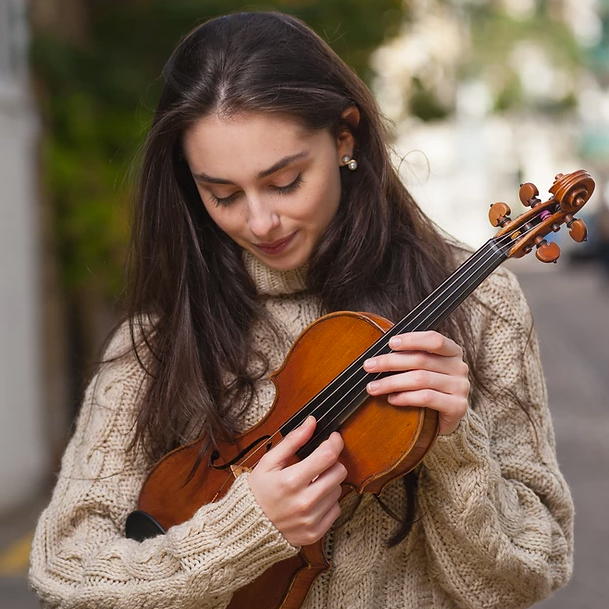
Royal Academy of Music Students [Christopher Vettraino (oboe), Silvia Bettoli, Johan Stone (horns), Magdalena Riedl (violin), Gordon Cervoni (viola)], Members of the Nash Ensemble – Adrian Brendel (cello), Alasdair Beatson (piano)

Colin Matthews Time Stands Still (2004)
Balency-Bearn Entre-Deux (2022)
Alberga No-Man’s-Land Lullaby (1996)
Keting before we were ocean (2021)
Colin Matthews Dual (2021)
Abrahamsen Congratulations Greeting (2022)

Nash Inventions

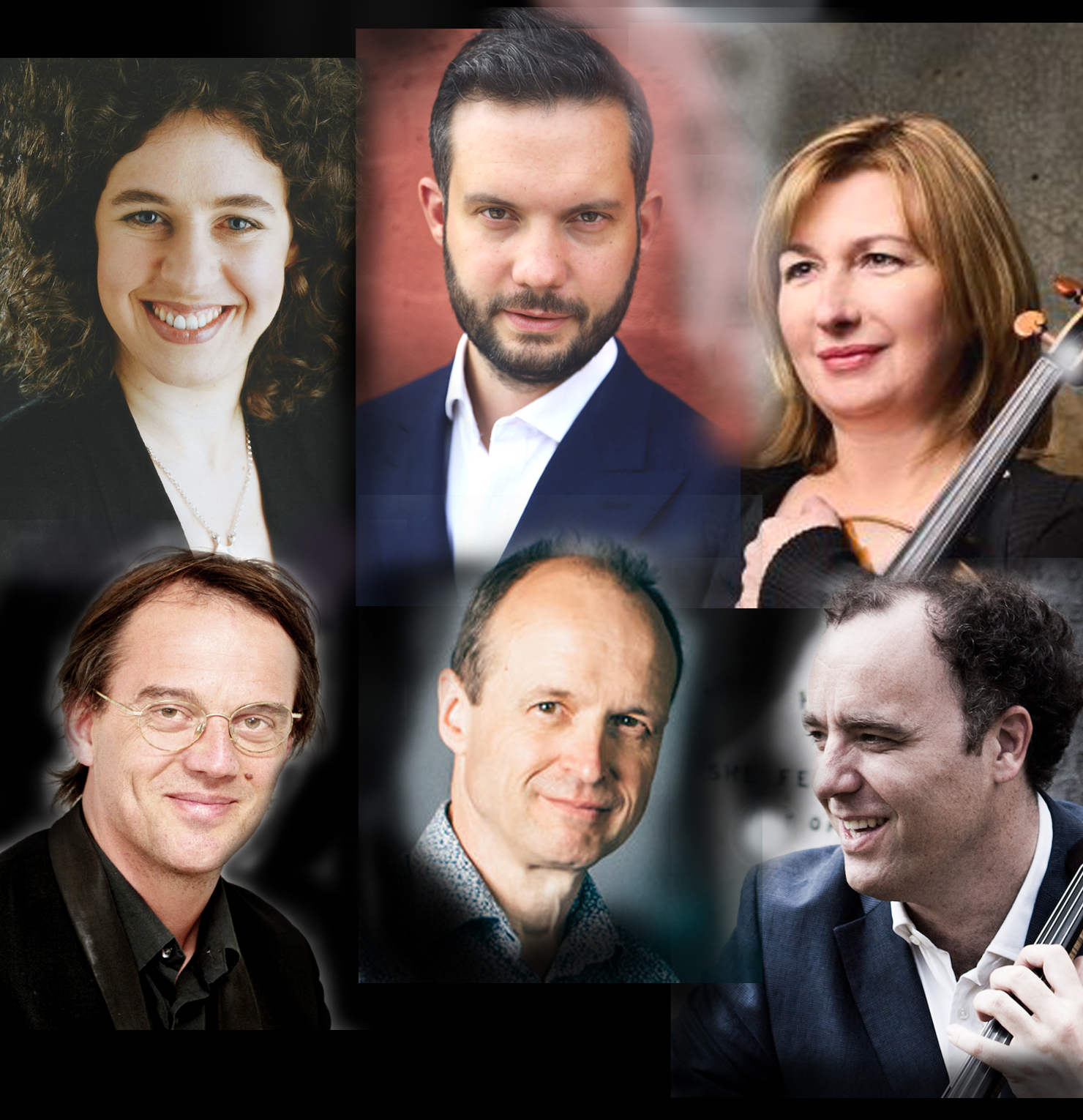
Claire Booth (soprano), Mark Padmore (tenor), Nash Ensemble [(Philippa Davies (flute), Gareth Hulse (oboe), Richard Hosford, Marie Lloyd (clarinets), Richard Watkins (horn), Sally Pryce (harp), Benjamin Nabarro, Michael Gurevich (violins), Lars Anders Tomter, Jennifer Stumm (violas), Adrian Brendel (cello), Graham Mitchell (double bass), Alasdair Beatson (piano)] / Martyn Brabbins

Casken Misted Land (2017)
Colin Matthews Seascapes (2021)
Anderson Van Gough Blue (2015); Three Songs (2018-22) [World Premiere of THUS]
Benjamin Viola, Viola (1997)
Turnage A Constant Obsession (2007)

Wigmore Hall, London
Tuesday 28 March 2023 (5pm and 7.30pm)

Reviewed by Richard Whitehouse

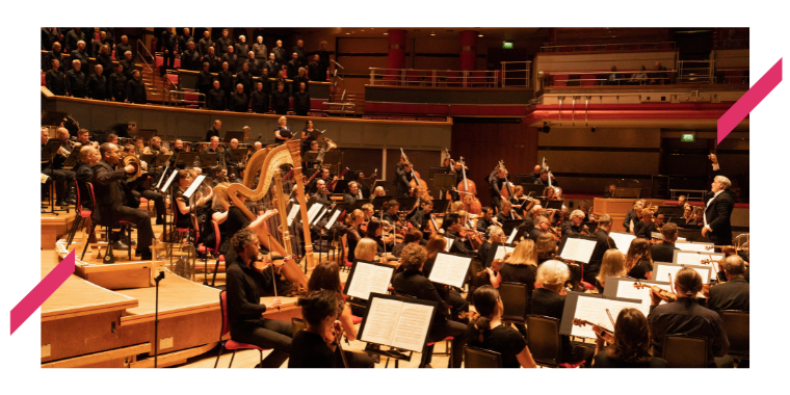
It has become such a fixture on the London calendar that Nash Inventions, given annually by the Nash Ensemble at Wigmore Hall, could easily be taken for granted. As tonight’s concert proved, however, the range and quality of those works performed is anything but predictable.

His long-time drawing inspiration from the landscape of the North-East might suggest Misted Land as a ready-made title for John Casken. Yet this quintet for clarinet and strings focusses on emotion as much, if not more than evocation by unfolding from the intangible impressions of its initial movement, via impulsive contrasts of its intermezzo, to a finale whose visceral progress is curtailed by a timely return to the initial equivocation. Richard Hosford made the most of his alternately insinuating and forceful writing in a piece that well deserved revival.
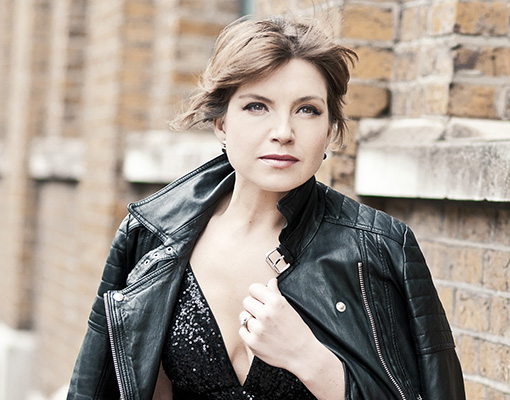
Although settings by Michael Tippett early on confirmed the musicality of his verse, Sidney Keyes (1922-43) has been relatively little set – making this selection by Colin Matthews in Seascapes the more welcome. From the unforced rhetoric of The Island City, it takes in the fleeting sensations of From : North Sea and the tense rumination of Night Estuary; a brief Interlude leading to the heartfelt expression of Seascape – one of Keyes’s greatest poems, in which Claire Booth’s commanding eloquence (above) more than vindicated the cycle as a whole.

Last in an informal trilogy centred on the colour, Van Gough Blue sees Julian Anderson pay tribute to this artist in a sequence traversing dawn to night. A speculative emergence of sound and texture in l’Aube, soleil naissant precedes the heady rhythmic and melodic interplay of Les Vignobles then mounting animation of Les Alpilles. Nothing, though, prepares for the inward rapture of Eygalières or the dance toward destruction of la nuit, peindre les étoiles: pieces wholly characteristic of this composer and as finely realized as anything he has written.

Further music by Anderson followed the interval – three in an ongoing series for soprano and ensemble identical to, but very different in usage from, that of Schoenberg’s Pierrot Lunaire. The viscerally sensual overload of Mallarmé’s Le Tombeau d’Edgar Poe (here made a tribute to Debussy in the centenary of his death) contrasted with the disarming sincerity of le 3 Mai – an email by composer Ahmed Essyad written during the pandemic, then lines by Longfellow in THUS – Claire Booth here enacting what is less a setting than a musical riposte to its text.

Writing what had become a tribute to Takemitsu 18 months after his death, George Benjamin turned what might have reflected the viola’s innate introspection into an intensive exploration by two of these instruments of how they might discover rhythmic then melodic and harmonic accord. Music diverse in content and logical in its unfolding, its technical challenges remain considerable – making this performance by Jennifer Stumm (having replaced Timothy Ridout at short notice) and Lars Anders Tomter the more engaging through its audible conviction.
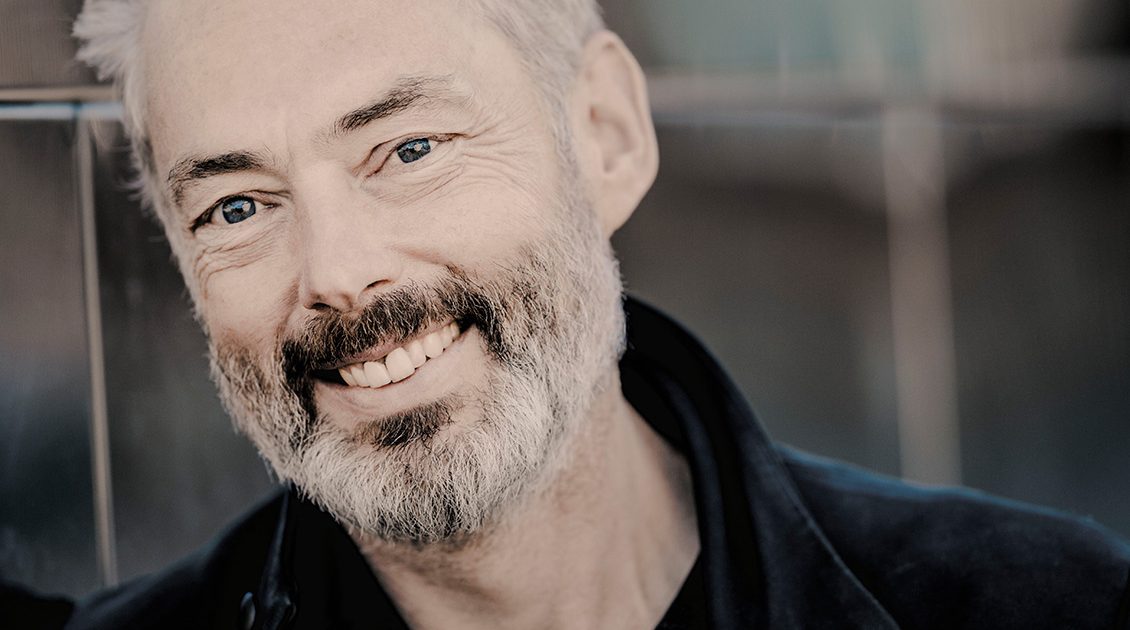
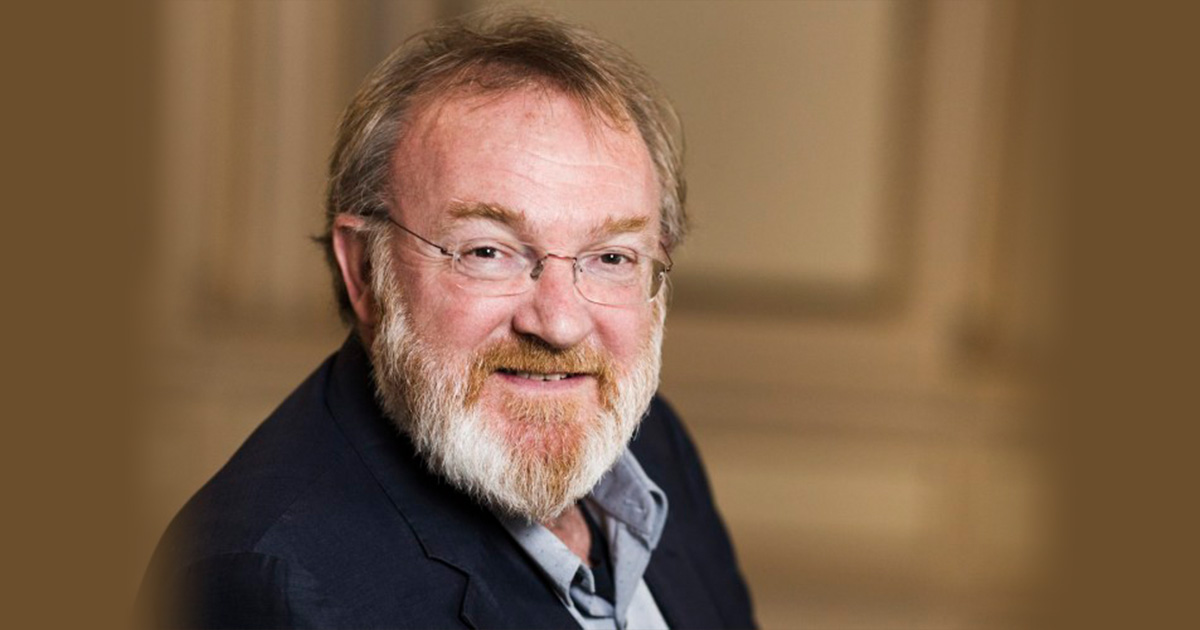
It might come a fair way back in his sizable output, but the song-cycle A Constant Obsession remains among Mark-Anthony Turnage’s finest vocal works. This reflection on ‘love’ – what it might be, what it becomes and what it could have been – is articulated across five settings of Keats, Hardy, Edward Thomas, Graves and Tennyson; its course predicted in a ‘Prologue’ and encapsulated in the bleakly humorous final poem. Mark Padmore (above) conveyed its measure now as 14 years before, as did Martyn Brabbins (below) with his attentive and unobtrusive direction.
The early evening slot brought together players from the Nash and Royal Academy of Music. Entre-Deux saw Andrea Balency-Béarn opening out the timbral and harmonic space between pitches with discreet elegance, and No-Man’s-Land Lullaby found Eleanor Alberga working toward a totemic melody with combative fervency. Sun Keting contributed music laced with nostalgia but also indignation in before we were ocean while, in Congratulations Greeting, Hans Abrahamsen commemorated the RAM’s bicentenary in lively and resourceful terms.

Colin Matthews provided a more quixotic take on that event in the subtle contrasted sections of Dual, with his music also opening and concluding this selection. Time Stands Still marked Simon Rattle’s 50th birthday in (surprisingly?) inward and even inscrutable terms, while 23 Frames marked the 30th anniversary of the Nash through that number of miniatures whose character felt as distinctive as their order was random. The outcome found this composer as his most entertaining, with no complaints if several ‘frames’ exceeded their 30-second remit.

A lengthy evening, then, and an impressive showcase for the Nash in term of marking those achievements past or present. Now is hardly the time for any complacency regarding events such as this, which remains a template for what is possible in matters of artistic excellence.

Click here for the Nash Ensemble website, and here for the Royal Academy of Music

In concert – Royal College of Music London students – Chamber Spotlight: Different Trains

Ed Driver Fruits Of Their Laboue (world premiere)
Ed Pelham (clarinet), Tabitha Bolter (horn), Aidan Campbell (bassoon), Stone Tung (trumpet), Eddie Curtis (bass trombone), Michal Oren (conductor)
Schoenfield Café Music (1987)
Rubie Besin (violin), Layla Ballard (cello), Alexander Doronin (piano)
Reich Different Trains (1988)
Jordan Brooks, Sara Belic (violins), Scott Storey (viola), Sam Hwang (cello)

Performance Hall, Royal College of Music
Wednesday 15 March 2023, 6pm

by Ben Hogwood

If you live in or around London, it is well worth reminding you that one of the best ways in which to experience classical music is to visit one of the enterprising colleges and academies in the city. They are packed with interesting recitals, with several lunchtime or early evening concerts per week, with interesting programmes and enthusiastic students ready to give them. The two most obvious examples are the Royal Academy of Music and the Royal College of Music, though more can be sought and found.

It was the Royal College of Music in which your reviewer spent an early evening hour. Currently excelling (on the strength of reviews) in a Respighi – Ravel double bill of opera, which sadly this reviewer did not have the time to experience, the college is enjoying a rich vein of musical form. This is due to a strikingly successful renovation of their ground floor space, and a very fine Performance Hall, suited for chamber-sized concerts such as this one. Here we had the chance to appraise the talent within the college, both at composer and performer levels.

The first piece was a world premiere, Ed Driver’s quintet Fruits Of Their Labour. Born in 2000, Driver is a composer of some repute, with recent accolades from the Birmingham Contemporary Music Group and a new piece for the Hermes Experiment just two of his recent notable attributes. Fruits of Their Labour proved an attractive curtain raiser for this concert, Driver enjoying the unusual quintet combination of clarinet, horn, bassoon, trumpet and bass trombone.

Based on a Czech folk song, the piece has a springlike feel as it alternates between dynamism and relative stillness, making the most of the colourful textures available. The energetic sections were contagious, but the slower passages made an arguably greater impact, their chorale-like figures filling the room.

In the latter stage Driver instructed that trumpet and bass trombone should pour water into their instruments, resulting in a sound between a gargle and something of a plumbing malfunction. While effective, the combination with the other instruments was a little superfluous, and when the music returned to its chorale figure the warmer colours were more attractive. On this evidence Driver is a composer of imagination and flair, one to keep in our sights. He received an excellent premiere performance, too, brilliantly played and conducted with authority by Michal Oren.

Next up was a piano trio with a difference. Paul Schoenfield wrote Café Music for the Saint Paul Chamber Orchestra in 1987, looking to bridge the gap between the music you might hear at Murray’s steakhouse in Minneapolis and that heard at the Minnesota ensemble’s home. He achieves his aim with music of great virtuosity and considerable humour, with a great number of enjoyable and quirky themes crammed into a three-movement, 15-minute piece. Rubie Besin, Layla Ballard and Alexander Doronin played these with considerable brio, the pianist in particular impressing with his combination of technical skill and rhythmic drive. The technical demands on the players meant there was not always room to bring the humourous sleights through at their fullest, but Besin and Ballard ensured the music had a smile on its face and a spring to its rhythms, their attractive tones bringing the melodies across with room to spare. The performance that had many flourishes, while allowing time for occasional reflection.

The main work of the evening, Steve Reich’s Different Trains, has become established as a lynchpin of the string quartet repertoire, a reflection of its strength and originality. Inspired by childhood journeys to visit his parents during the Second World War, the piece uses a collection of recordings of trains before, during and after the war – spliced together with interviews from a retired porter, Reich’s governess and two survivors of the Holocaust. Their speech patterns are taken up by the stringed instruments in performance.

This performance had a few balance issues, due to the complexity of balancing loud train noises with live strings in a small performance space, and as a result the words themselves were difficult to hear at times. Yet the quartet gave a fine performance, viola player Scott Storey and cellist Sam Hwang shaping the speech melodies with expression and guile. Violinists Jordan Brooks and Sara Belic added colourful and characterful phrases themselves, bringing rich treble to the train whistles and to some of the motifs generated by the interviews.

Different Trains lasts nearly half an hour, but it says much for the musical content that it passes in the blink of an eye. The quartet here should be congratulated for their musicality and concentration, bringing Reich’s music to energetic and often poignant life.

A fine concert, then – and a reminder to make the most of all this wonderful music if it’s on your doorstep!

For information on concerts at two of London’s central music education hubs, click on the names for concerts at the Royal College of Music and the Royal Academy of Music. Meanwhile you can listen to the premiere recording of Different Trains below

In concert – Esther Abrami, English Symphony Orchestra / Kenneth Woods – Robert Saxton, Bruch & Mendelssohn

Avie, London 15 Feb 2011

Esther Abrami (violin), English String Orchestra / Kenneth Woods

Saxton Scenes from the Epic of Gilgamesh (2022-3) [World Premiere]
Bruch Scottish Fantasy in E flat (1880)
Mendelssohn Symphony no.3 in A minor Op.56 ‘Scottish’ (1841-2)

Sheldonian Theatre, Oxford
Friday 10 March 2022

Reviewed by Richard Whitehouse

There cannot be any more historic or atmospheric performance venues than the Sheldonian Theatre in Oxford, which is still going strong after over 350 years and the setting for this latest contribution to the English Symphony Orchestra’s ‘21st-Century Symphony Project’.

Speaking only recently, Robert Saxton stated a reluctance to call his Scenes from the Epic of Gilgamesh a symphony and yet the piece, a result of many years’ thinking about the musical treatment right for one of the oldest written texts, has a formal cohesion and expressive unity comparable to previous instalments in the ESO’s project. Scored for late Classical forces of pairs of woodwind, horns and trumpets with timpani and strings, its textural clarity serves to imbue any illustrative aspect with an abstract focus duly sustained across the five movements.

Charting a deft course over its narrative, the work heads from the fluid motion of a Prologue to The Journey to the Forest of Cedar, whose passacaglia-like evolution finds this composer at its most harmonically alluring, then to From dawn to dusk and a scherzo as tensile as it is evocative. Lament distils a tangible emotional force into its gradual yet inexorable build-up, moving straight into an Apotheosis which opens out the melodic content of earlier ideas and so brings a powerful culmination as the hero is forced to seek his immortality by other means.

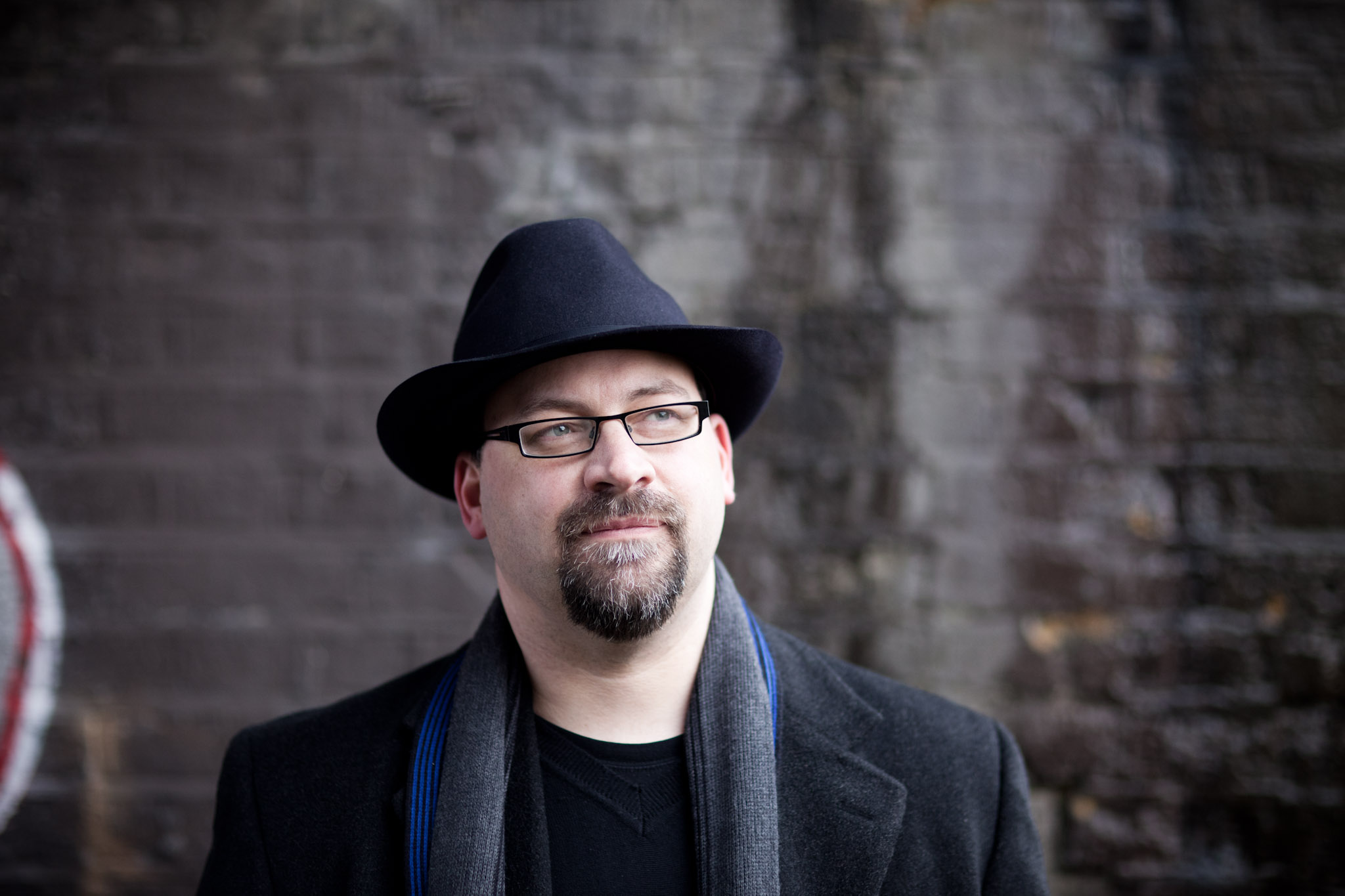
More overtly tonal it may have become, Saxton’s music still presents considerable challenges technical and interpretive. Suffice to add these were met with finesse and no little conviction by Kenneth Woods (above) and the ESO who, having previously recorded this work for future release, were fully conversant with its elusive while always approachable idiom. Almost four decades on from the flamboyant pieces which helped establish his name, Saxton revealed an orchestral mastery that will hopefully find an outlet in further such pieces – whether or not ‘symphonic’.

Tonight’s concert was also notable for featuring the ESO’s new Creative Partner and Artist in Residence – violinist Esther Abrami (above), her presence on social media enhanced by the release of her eponymous debut album for Sony. Stylishly attired (with an image that, for older readers, might recall Audrey Hepburn), she gave an account of Bruch’s Scottish Fantasy at its best in the transition from sombreness to eloquence of its Introduction and high-flown sentiments of an Andante in which the composer’s recourse to folk melodies is at its most felicitous. Before it, the Scherzo ideally needed more incisiveness for its engaging humour fully to register, with the final Allegro (given in abbreviated form) rather less than ‘warlike’ – though its mellifluous second theme enabled Abrami to conjure a tonal warmth which was never less than appealing.

After the interval, the ESO came fully into its own with an impressive take on Mendelssohn’s ‘Scottish’ Symphony. Whatever its genesis in his tour of that country when just 20, the work is demonstrably that of a composer who, having reached a creative mid-point, surveys his many successes but also failings. Hence the fatalistic aura such as informs the opening movement’s introduction or the tense agitation of its main Allegro – both of which were palpably brought out by Woods, who then gave the brief if scintillating scherzo its head. The highlight was an Adagio whose constant pivoting between pathos and anguish was graphically stated – aided by an orchestral discipline no less evident in the final Allegro, its martial overtones carrying through to a pause in which the decision to opt for tragedy or triumph is held in the balance.

That the work closes in triumph has often been felt its downfall but, as conveyed by Woods at a swift if not inflexible tempo, such an apotheosis is one of determination or even defiance in the face of whatever is to come. It certainly brought this concert to a memorable conclusion.

For more information on the artists in this concert, click on the links to read about Esther Abrami, Kenneth Woods and the English Symphony Orchestra. Click on the name to read more about composer Robert Saxton – who also has a page from his publisher here

In concert – Vilde Frang, CBSO Chorus and Orchestra / Mirga Gražinytė-Tyla – Elgar: Violin Concerto; The Panufniks & Schumann

Vilde Frang (violin), City of Birmingham Symphony Orchestra / Mirga Gražinytė-Tyla

Elgar Violin Concerto in B minor Op.61 (1909-10)
Andrzej & Roxanna Panufnik Five Polish Folk Songs (1940, rec. 1945, rev, 1959, orch. 2022) [CBSO Centenary Commission: World Premiere]
Schumann Symphony no.1 in B flat major Op.38 ‘Spring’ (1841)

Symphony Hall, Birmingham
Wednesday 8 March 2023

Reviewed by Richard Whitehouse

The relationship between Elgar and Schumann is a fascinating one, aspects of which surfaced in this coupling of the former’s Violin Concerto with the latter’s First Symphony; the City of Birmingham Symphony Orchestra joined by principal guest conductor Mirga Gražinytė-Tyla.

As with Sibelius not long before, Elgar was an able violinist whose solitary concerto for his instrument makes no technical concessions. There is also a symphonic dimension as seemed uppermost in the thoughts of Vilde Frang, her formidable technique (rightly) geared towards the work’s conveying emotions within an expansive while methodical framework. This was evident in the opening Allegro, the impetus of its initial tutti maintained by flexible handling of contrasted themes on to a climactic development whose intricacy was abetted by the clarity of the orchestral playing. Even finer was a central Andante whose main melodies, among the composer’s most affecting, were never indulged across the course of a movement where the expressive profile remains teasingly intangible right through to those soulful concluding bars.

Maybe the balance between display and insight slipped in the final Allegro molto, with Frang losing focus slightly during its more extrovert passages. Once the accompanied cadenza was underway, however, there was no doubting the rapport of soloist and orchestra as earlier ideas are recalled and speculatively transformed in what comes near to being a confession of intent. Nor was the sudden re-emergence of that earlier energy at all underplayed as the coda heads to its affirmative resolution: one whose conviction duly set the seal on a memorable reading.

After the interval, an additional item in the guise of Five Polish Folksongs written by Andrzej Panufnik after the outbreak of war, reconstructed at its close and orchestrated by his daughter Roxanna so the stark originals for children’s or female voices – with pairs of flutes, clarinets and bass clarinet – were cushioned by these richer orchestral textures. The CBSO Youth and Children’s choruses (finely prepared by Julian Wilkins) gave their all in what were appealing yet at times overly diffuse arrangements of settings that are best heard in their original guise.

So to Schumann’s ‘Spring’ Symphony, a piece whose encapsulating mid-Romantic sentiment seemed uppermost in MG-T’s insightful and, for the most part, convincing account. Evocative fanfares launched the opening Allegro in fine style, the often fitful momentum of its lengthy development vividly maintained through to a sparkling coda. Arguably too slow for its ‘song without words’ format, the Larghetto yet exuded undeniable pathos and made a spellbinding transition into the Scherzo. A (too?) leisurely take on its first trio took the listener unawares, but the winsome closing bars prepared well for a final Allegro whose animated progress was enlivened by delectable woodwind and horn playing on the way to its decisive close. Should MG-T return in future seasons, further Schumann symphonies would be more than welcome.

The CBSO returns next week in a rare UK hearing of Weinberg’s First Sinfonietta, alongside Schumann’s Piano Concerto with Kirill Gerstein and an extended selection from Prokofiev’s Romeo and Juliet – this latter and the Elgar also featuring in a Barbican concert the next day.

You can read all about the 2022/23 season and book tickets at the CBSO website, and click here for the Romeo and Juliet concert, repeated at the Barbican here. Click on the artist names for more on Vilde Frang and Mirga Gražinytė-Tyla, or composer Roxanna Panufnik

In concert – Alice Coote, Brenden Gunnell, Ashley Riches, CBSO Chorus and Orchestra / Ryan Wigglesworth – Elgar: The Dream of Gerontius

Alice Coote (mezzo-soprano), Brenden Gunnell (tenor), Ashley Riches (bass-baritone), CBSO Chorus, City of Birmingham Symphony Orchestra / Ryan Wigglesworth

Elgar The Dream of Gerontius Op.38 (1899-1900)

Symphony Hall, Birmingham
Thursday 2 March 2023

Reviewed by Richard Whitehouse

It may have had a disastrous premiere here in October 1900, but Birmingham has more than made amends to The Dream of Gerontius through many subsequent performances by the City of Birmingham Symphony Orchestra with conductors ranging from Vernon Handley to John Eliot Gardiner, two recordings from its previous chief conductors (Simon Rattle and Sakari Oramo), and tonight a reading which more than confirmed that this ground-breaking piece remains a touchstone of the choral repertoire almost 125 years on from that initial failure.

Although the innate Catholicism of John Henry Newman’s text no longer presents obstacles, the work’s technical demands remain considerable. Not least the characterizing of Gerontius himself, in which Brenden Gunnell acquitted himself with conviction – whether his wearied pallor then combative reckoning with Sancta fortis in Part One, or his wonderous musings then anguished acceptance of his purgatorial fate with Take me away in the longer second part. This role was consequently more believable and more empathetic because more human.

Not a little of that impression was abetted by Alice Coote’s contribution as the Angel. Less imperious than many predecessors (or contemporaries), the extent of her involvement only deepened as Part Two unfolded – the restraint, even reticence, of My work is done taking on heightened eloquence during There was a Mortal, before the Softly and gently of her farewell brought with it a transfiguring radiance as carried through to the close. This was a thoughtful and, increasingly, affecting approach to some of this work’s musical highpoints.

Nor should the contribution of Ashley Riches be underestimated, even though this is limited   to two, albeit crucial, appearances in either part. Arresting and suitably proclamatory at the Priest in Proficisere, anima Christiana, he brought unfailing gravity and powerfully wrought rhetoric to Angel of the Agony – the substance of whose musical presentation can be heard in Elgar’s music across the decades to come, whatever the extent to which the composer moved away from accepting those tenets of Catholic orthodoxy that are set out in Newman’s poem.

One of several works to which it has returned regularly over its half-century of existence, the CBSO Chorus brought its wealth of experience to a piece whose difficulties of ensemble and intonation cannot be gainsaid. From the halting appearances of the Assistants, through to the intricate polyphony of the Demons then cumulative grandeur of the Choir of Angelicals and distanced poise of the Souls in Purgatory, the authority of its contribution – prepared on this occasion by Julian Wilkins – added in no small measure to the impact of the performance.

As, of course, did that of the CBSO. Any regret over Andrew Davis’s indisposition was duly tempered by Ryan Wigglesworth’s tangible immersion and belief in this score – to which he brought a composer’s concern for clarity and cohesion, with a sense of pacing and a placing of its emotional climaxes which made appreciate anew the ambition and audacity of Elgar’s overall conception. Birmingham will doubtless hear many more performances of Gerontius over ensuing decades, with this one a marker as to what the work can and should represent.

You can read all about the 2022/23 season and book tickets at the CBSO website. Click on the artist names for more on Alice Coote, Brenden Gunnell, Ashley Riches and the CBSO Chorus. Meanwhile you can read more about Ryan Wigglesworth at two different locations – his composer profile from publisher Schott, and his conductor profile