BBC Proms #42 – Jan Lisiecki, BBC Scottish Symphony Orchestra / Thomas Dausgaard: Nielsen, Beethoven & Sibelius

Prom 42 – Jan Lisiecki (piano), BBC Scottish Symphony Orchestra / Thomas Dausgaard

Sibelius Symphony no.7 in C major Op.105 (1924)
Beethoven Piano Concerto no.4 in G major Op.58 (1804-6)
Nielsen Symphony no.4 FS76 ‘The Inextinguishable’ (1914-16)

Royal Albert Hall, London
Thursday 18 August 2022

Reviewed by Richard Whitehouse Photos (c) Chris Christodoulou

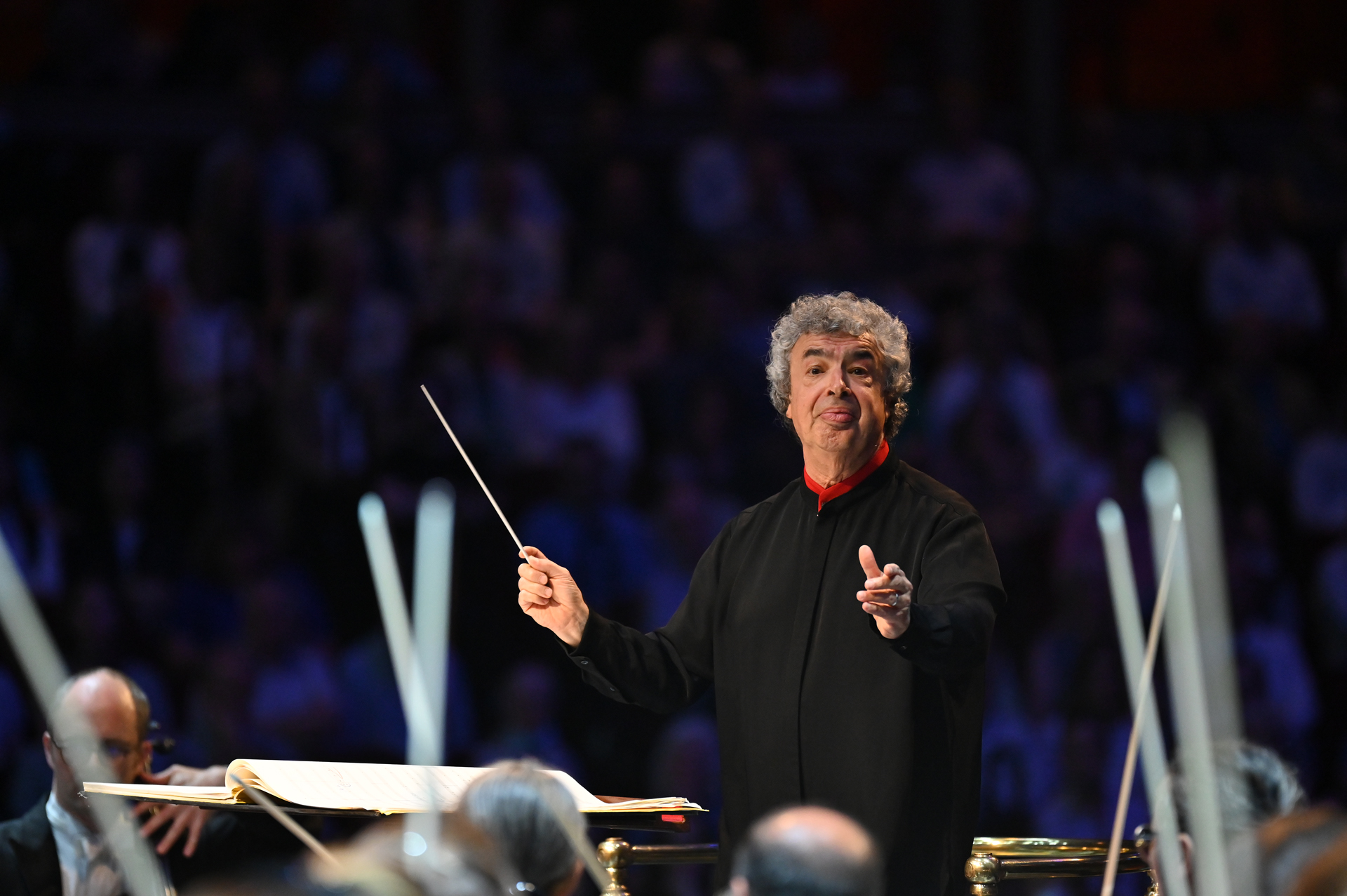
Ending his tenure as Chief Conductor of the BBC Scottish Symphony Orchestra, Thomas Dausgaard directed this programme which once again played to both his and the orchestra’s strengths – in the process underlining just what they have achieved together over the past six seasons.

He might not have scheduled Sibelius quite so assiduously as his one-time predecessor Osmo Vänskä, but Dausgaard is hardly less perceptive in this composer as was proven with his take on the Seventh Symphony. If not a tale of two parts, the first half that resonated more deeply – an introduction shot through with expectancy that preceded a powerful build-up to the first emergence of the trombone theme, and an effortlessly accelerating ‘scherzo’ as made feasible a central climax of rare intensity. From here tension dropped a little over the course of a lucid yet (in this context) over-extended ‘intermezzo’, and if the approach to the final return of the trombone theme had the right inexorability, the strings’ climactic response was a little reined-in emotionally. Nor did the fraught cadence into the home-key have the desired inevitability.

Whether or not the Sibelius should open a concert, Beethoven’s Fourth Piano Concerto made for an ideal continuation. Stepping in at the eleventh hour, Jan Lisiecki is no stranger to this music such that his lightly articulated if rarely insubstantial tone complemented Dausgaard’s incisive but never headlong accompaniment. Just occasionally in the opening movement this jewel-like pianism felt a little self-defeating, though not with a lucid rendering of the (more familiar) cadenza or transition from the Andante into the finale of heart-stopping eloquence. The latter movement had the necessary vigour but also an appealing intimacy, as in the lower strings’ transition towards the final return of the rondo theme or those ruminative woodwind asides before the decisive coda. Chopin’s C minor Nocturne (1838) made for a limpid encore.
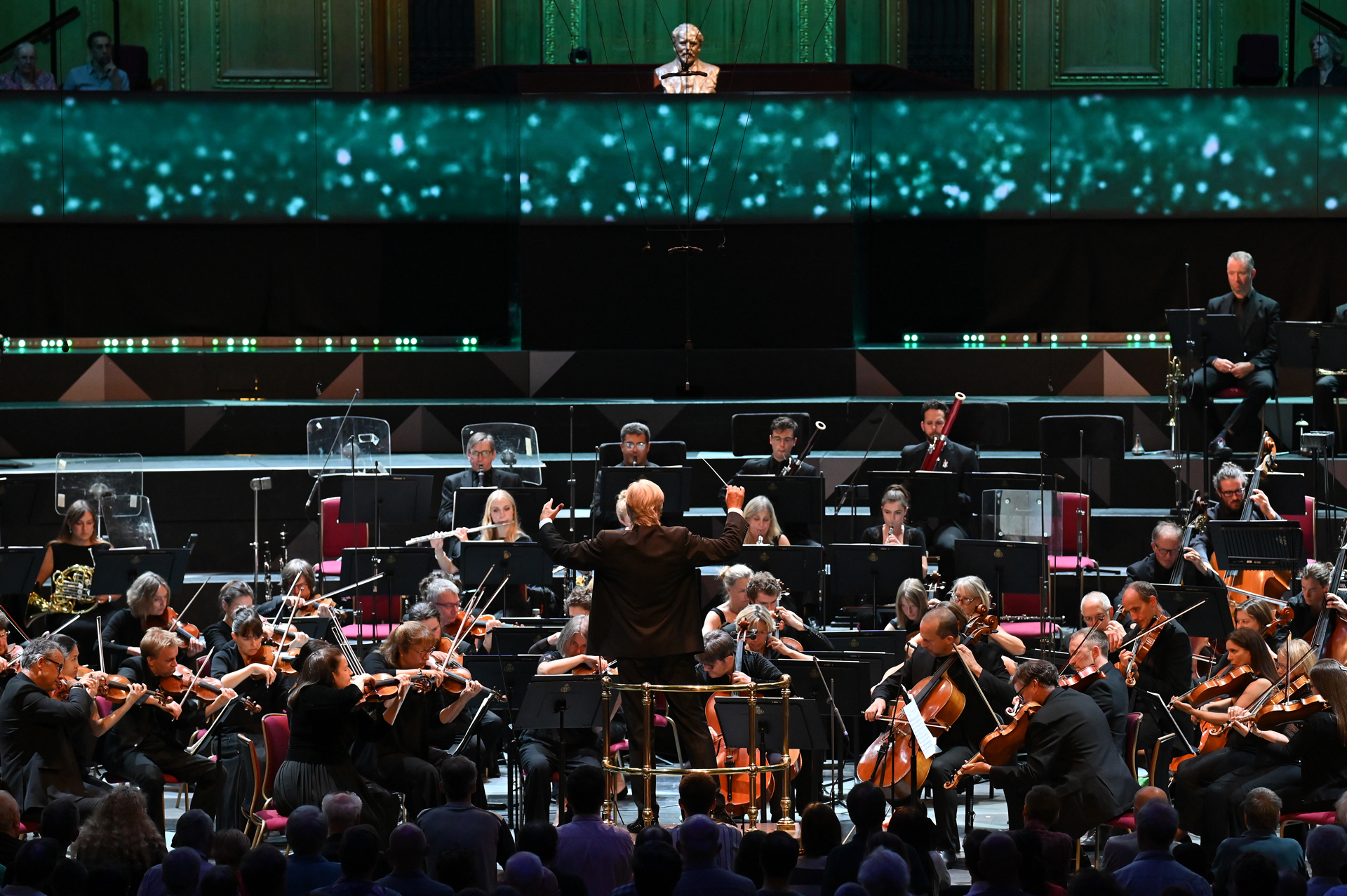
Keen to get on with proceedings, Dausgaard launched Nielsen’s Fourth Symphony after the interval before applause had subsided. Often a conductor willing to modify his approach, he might have steered the opening Allegro less forcefully given the textural detail that was lost in the Albert Hall’s ample expanse, but the twofold appearances of the ‘motto’ theme were magisterially rendered – the shocked transition into the intermezzo proving as mesmeric as this latter movement was affecting through its deft combination of winsomeness and pathos.

Equally memorable was Dausgaard’s handling of the slow movement, here exuding fervency without undue histrionics both in the searching string threnodies and the confiding passages either side – the latter of which provided a stealthy transition into the final Allegro. Here the placing of a second timpani set front-left in the arena made stretched the antiphonal contrast a little too obviously, but the music’s overall intent came across unscathed as the ‘motto’ made its climactic final appearance then those closing bars hit the ground as they should – running. Whether or not Dausgaard intended ‘Inextinguishable’ to sum up his music-making with the BBCSSO, or whether anything might be read into his wearing a Covid mask throughout, this concert was a worthy leave-taking. Hopefully he will not be absent from the UK for too long.

Click on the artist names for more information on Jan Lisiecki and Thomas Dausgaard, and for more information on the BBC Scottish Symphony Orchestra head to their website

BBC Proms #41 – Behzod Abduraimov, Elizabeth Watts, Benjamin Appl, BBC Scottish Symphony Orchestra / Thomas Dausgaard: Nielsen ‘Sinfonia espansiva’, Beethoven & Ravel

Prom 41 – Behzod Abduraimov (piano), Elizabeth Watts (soprano), Benjamin Appl (baritone), BBC Scottish Symphony Orchestra / Thomas Dausgaard

Ravel La Valse (1919-20)
Beethoven Piano Concerto no.1 in C major Op.15 (1795, rev. 1800)
Nielsen Symphony no.3 ‘Sinfonia espansiva’ (1910-11)

Royal Albert Hall, London
Wednesday 17 August 2022

Reviewed by Ben Hogwood Photos (c) Mark Allan

There is a changing of the guard in Glasgow. On his way in as chief conductor of the BBC Scottish Symphony Orchestra is the conductor, composer and pianist Ryan Wigglesworth, an exciting and evolving artist. He will replace Thomas Dausgaard, who leaves City Halls after six years and is signing off with two consecutive Proms of symphonies by his Danish compatriot, Carl Nielsen.

We began this concert in Paris, however, with a distinctly chilly account of Ravel’s La Valse. The horrors of the First World War encroach into Ravel’s writing, and were all too audible around the edges in this performance, which was brilliantly played and lucidly controlled. The feather-light strings of the opening bars ensured the dynamic contrasts were extreme, and when the full orchestra cut loose towards the end the effect was both exhilarating and terrifying, the ‘fatal whirring motion’ of Ravel’s inspiration collapsing in the final bars.

Dynamic contrasts were a feature, too, in a fine performance of Beethoven’s Piano Concerto no.1, with soloist Behzod Abduraimov. The Uzbek pianist was the ideal foil for the clarity of the reduced forces of the BBC SSO, giving an affectionate performance notable for its dance-like qualities. There were occasional rhythmic indulgences in the solo party, but these were both tasteful and well-managed, with Dausgaard alive to his flights of fancy. The dialogue with the orchestra was often exquisite, especially when piano and clarinet (Yann Ghiro) linked in the slow movement. Time stood still for an early example of one of Beethoven’s heavenly silences, before the Rondo danced its way into the minds of the audience for the interval. Stylishly played and with some attractive, witty touches, this was an endearing account of high technical quality. Abduraimov’s encore was slightly at odds with the feather-light touches displayed in the Beethoven, being a heavyweight performance of Mercutio from Prokofiev’s Romeo & Juliet transcriptions for piano. There were fireworks and great virtuosity, though the significance of choosing a Ukrainian-born composer should not be overlooked.

Dausgaard returned after the interval to conduct his compatriot’s ‘most Danish’ symphony. David Gutman’s ever-helpful Proms notes revealed that Nielsen’s Sinfonia espansiva was somehow not performed at the Proms until 1990, and even this was its first Royal Albert Hall performance in 23 years. It was a memorable encounter, the high voltage first movement immediately into gear with its repeated notes surging forward, bursting through the dam. The exultant first movement was complemented by the radiance of the second, with wordless vocals from on high in the gallery supplied by soprano Elizabeth Watts and baritone Benjamin Appl. The combination, over hushed strings, enchanted the hall and made the best possible use of its spatial options. Surrounding their contributions were winsome cadenzas from the BBC Scottish woodwind, portraying the great Danish outdoors with crisp outlines.

The third movement built its energy cumulatively, all the while pointing towards the finale, where we heard the Danish ‘ode to joy’ in luxurious tones from assembled strings and horns. This was music of wide-eyed optimism, galvanizing orchestra, audience and conductor alike to an emphatic signing off. With contributions from golden brass and thundering timpani, this performance was truly expansive – and served to emphasise what the Proms audiences have been missing with this symphony all these years!

For more information, click on the names to discover more on the BBC Scottish Symphony Orchestra and their new chief conductor Ryan Wigglesworth

BBC Proms #26 – The Labèques, BBC Symphony Orchestra / Semyon Bychkov: Julian Anderson premiere, Martinů & Rachmaninoff

Prom 26 – Katia and Marielle Labèque (pianos), BBC Symphony Orchestra / Semyon Bychkov (above)

Anderson Symphony No. 2 ‘Prague Panoramas’ (2020-22) (BBC co-commission: World premiere of complete work)
Martinů Concerto for Two Pianos and Orchestra H292 (1943)
Rachmaninoff Symphonic Dances Op.45 (1940)

Royal Albert Hall, London
Friday 5 August 2022

Reviewed by Richard Whitehouse Photo (c) Chris Christodoulou

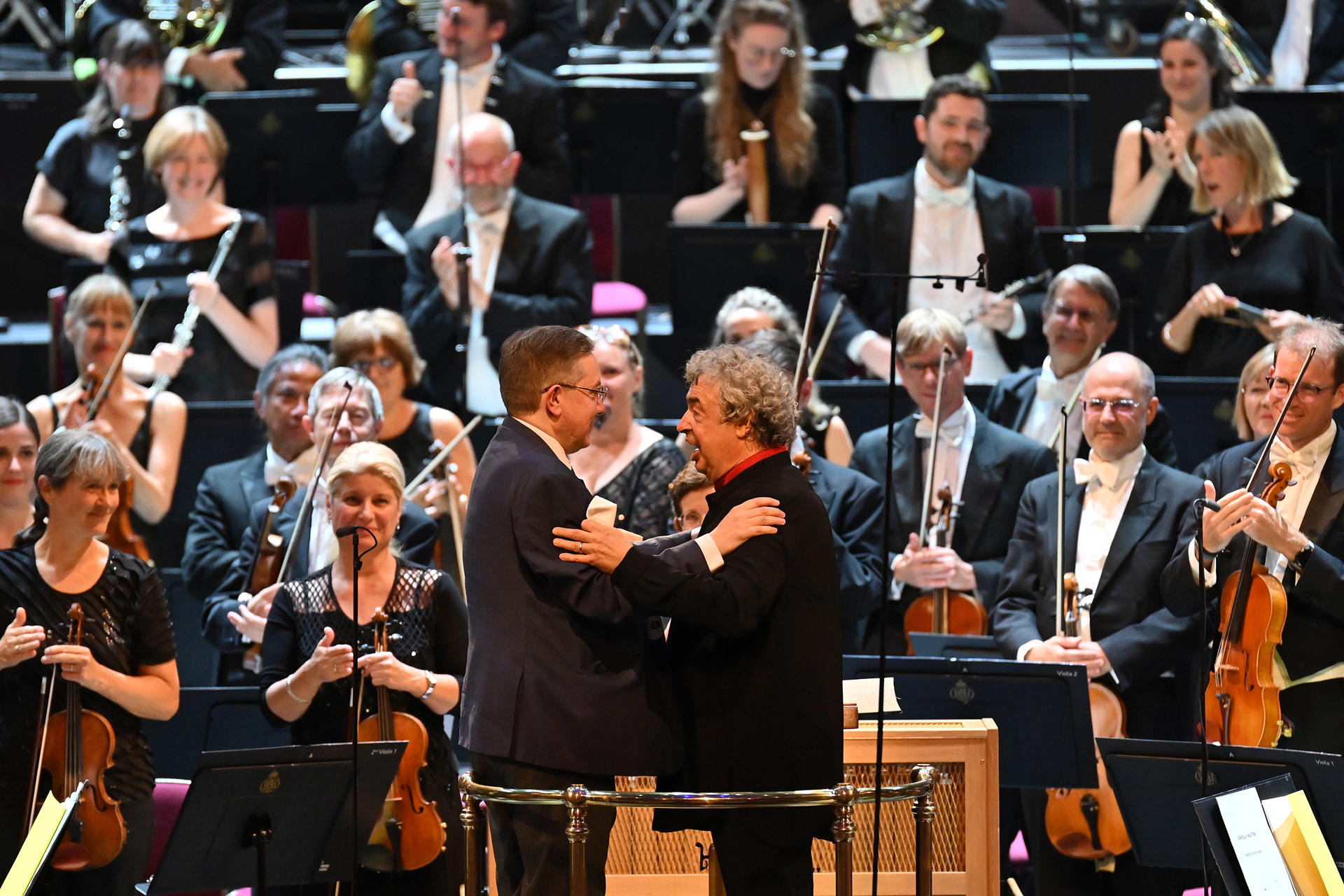
An unusually well-assembled concert this evening with what might be termed a programme of ‘three-by-threes’ – each of these three works having three movements which, in each case, results in a broadly symmetrical design, not least the Second Symphony by Julian Anderson (with the conductor, below).

Inspired by Josef Sudek’s photographs of Prague while utilizing two medieval Czech hymns, Prague Panoramas (might Prague Pictures be even more apposite?) is typical in its fusing evocativeness with precision. Not least the preludial opening movement, its stark alternation of quick-fire chords and silence evolving into aspiring melodic lines as build to a tumultuous if quickly curtailed climax, though this linear aspect comes to dominate the nocturnal central movement with its expressive intensifications then fades against a backdrop of bell resonance and luminously modal polyphony. The finale is a deftly organized rondo – its energetic main material, inspired by Josef Lada’s almost Rabelaisian depictions of pub brawls, interspersed with more lyrical ideas through to the heady peroration later subsiding into a calm postlude.

Although its first two movements had been heard in Munich and Prague, this was the work’s first complete performance and found the BBC Symphony at its collective best – not least the lambently interweaving woodwind and strings, the visceral impact of brass and a substantial array of percussion whose contribution was pervasive. Semyon Bychkov (under-appreciated as an exponent of contemporary music) duly brought out that unity-within-diversity such as gave this work an underlying focus across the 32 minutes of its eventful yet cohesive course.

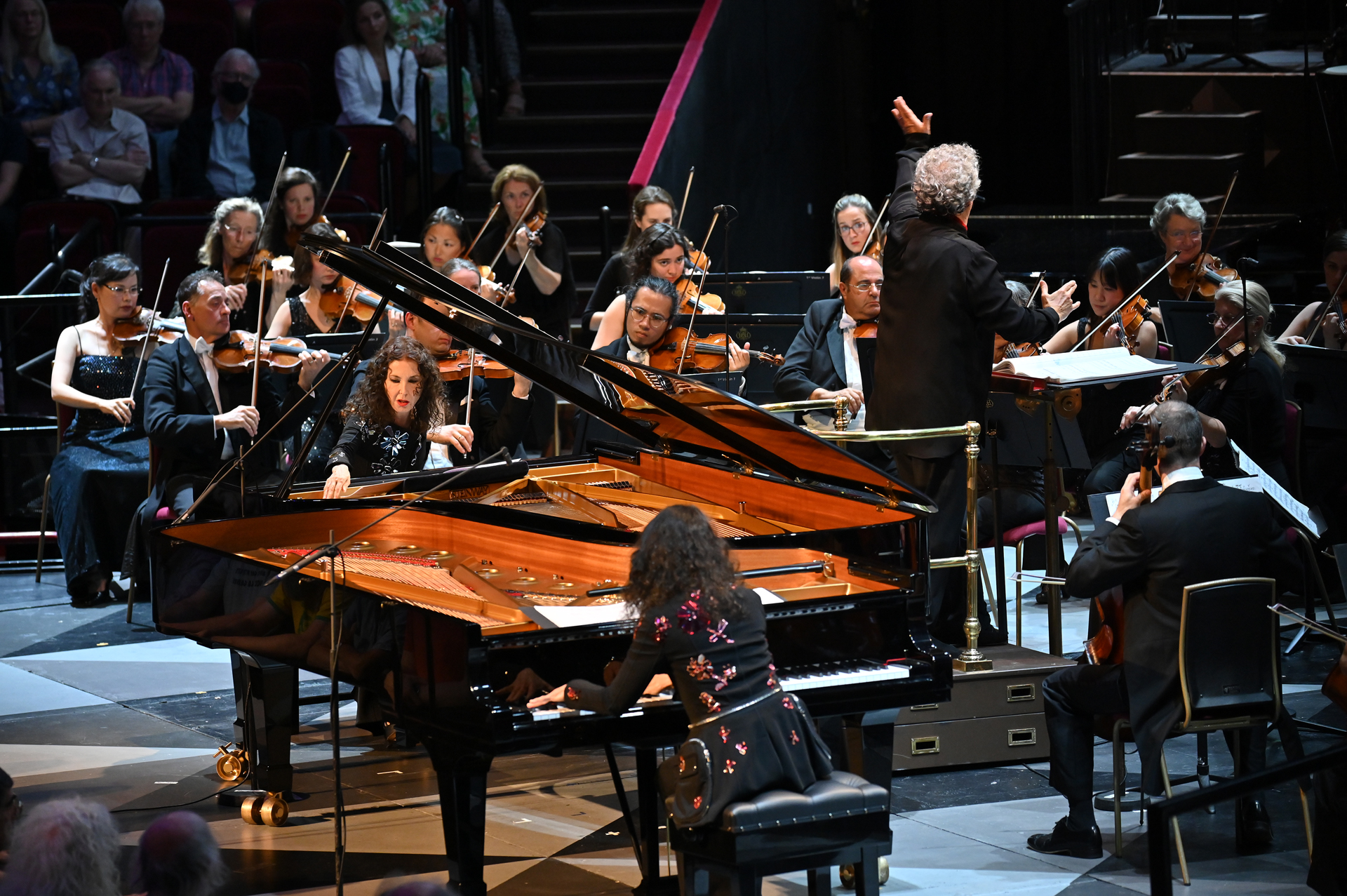
From Prague-inspired music by a British composer to that by a Czech composer in America – Martinů’s Concerto for Two Pianos may never have gained the plaudits of his earlier Double Concerto but it typifies this composer’s exile in a tried-and-tested interplay of folk-inflected melodicism with a harmonic acerbity recalling Prokofiev and rhythmic dexterity redolent of Stravinsky. Its undoubted highlight is a central Adagio whose almost ‘harmonie’ woodwind writing and circling piano figuration (had the composer come across the gamelan-influenced music of Colin McPhee?) feels mesmeric and affecting. Neither outer movement comes close in their audibly contrived amalgam of the rumbustious and lyrical, but this is music in which Katia and Marielle Labèque excel and tonight’s performance could rarely have been equalled.

Nor was there any doubting Bychkov’s authority in Rachmaninoff’s Symphonic Dances that followed the interval. Admittedly this now regularly played while technically exacting piece needed more rehearsal than the BBCSO was able to give it on this occasion, though the outer sections of the first dance had just the right ominous incisiveness and its middle part featured winsome alto saxophone from Martin Robertson. The second dance had irony and angularity aplenty, as was slightly offset by the strings’ less than unanimous response towards the close.

Its sombre ambivalence and intricate textures give the central span of the final dance a quality unique in this composer: if Bychkov might have endowed it with even greater intensity, there was no doubting his identity with this music here or on the way to its resplendent apotheosis.

For more information, click on the names of composer Julian Anderson – and for more on the artists, click on the names of Katia and Marielle Labèque, Semyon Bychkov and the BBC Symphony Orchestra. For more on this year’s BBC Proms as it continues, head to the Proms website

For more information, click on the names of composers Kalevi Aho and Kaija Saariaho – and for more on the artists, click on the names of Carolina Eyck, John Storgårds and the BBC Philharmonic Orchestra

BBC Proms #25 – Carolina Eyck, BBC Philharmonic Orchestra / John Storgårds: Kalevi Aho Theremin Concerto, Saariaho & Shostakovich

Prom 25 – Carolina Eyck (theremin), BBC Philharmonic Orchestra / John Storgårds

Aho Eight Seasons (Concerto for Theremin & Chamber Orchestra) (2011) (London premiere)
Saariaho Vista (2019) (Proms premiere)
Shostakovich Symphony no.15 in A major Op.141 (1971)

Royal Albert Hall, London
Thursday 4 August 2022

Reviewed by Richard Whitehouse Photo (c) Chris Christodoulou

John Storgårds has given some memorable Proms with the BBC Philharmonic in the decade since he became this orchestra’s guest conductor, and tonight was no exception for featuring a theremin concerto by Finnish composer Kalevi Aho. Its title Eight Seasons should be taken advisedly – the eight continuous sections encompassing a period from autumn to spring, as is reflected in the mostly restrained yet constantly changing textures which define a progression from the richness of Harvest to Midnight Sun with its serenity informed by new potential.

An instrument as fascinating to watch being played as it is to hear, the theremin has become the victim of its own ubiquity as an enhancer of atmosphere in film-scores and for musicians from Brian Wilson to Jonny Greenwood. Carolina Eyck was a dedicated exponent (evident in her encore-demonstration) – not least in the latter stages when her vocalise proved an enticing extension of her instrumental prowess, and the myriad timbral shifts more than compensated for the intermittent blandness of Aho’s acutely fastidious if not consistently involving music.

The layout of this piece (wind quintet and percussion alongside reduced strings) necessitated an early interval to prepare for those relatively lavish forces of Vista, Kaija Saariaho’s latest return to the orchestra and inspired by traversing the Californian coast from Los Angeles to San Diego. This is embodied over two cumulative movements – the expectancy of Horizons duly fulfilled with the mounting activity of Targets which itself subsides into an intensified recollection of the opening, now sounding as expansive as that ‘vista’ envisaged by the title.

Music so complex needs a sure hand to maintain its focus, the BBC Philharmonic responding with alacrity to Storgård’s attentive direction while he steered a convincing trajectory through what is likely Saariaho’s finest large-scale work for years – the intricacy and translucency of her writing having a panache which ensured this was manifestly a showpiece with substance. In particular, the sense of ideas being tentatively anticipated then vividly recalled added much to the evocative quality of music as formally substantial as it sounded expressively involving.

From recent Finnish orchestral works to Shostakovich’s last and most equivocal symphony is a fair step aesthetically, but Storgårds ensured the succession was a meaningful one. If it did not evince the ultimate in ominous irony, those laughs elicited from the opening movement’s stealthy activity and allusive inanity were for real – as, more regrettably, were those hesitant coughs denoting uneasy response to the slow movement’s emotional intensity as heightened by its sparseness of gesture, while not forgetting an eloquent response by cellist Peter Dixon.

Nor was the percussion found wanting in its almost concertante role, to the fore in a scherzo where the whimsical and sardonic found an unlikely accord. From its sombre initial gestures, Storgårds then had the measure of a finale whose central passacaglia built toward a powerful climax, and while tension dropped with the resumption of earlier ideas, the spectral transition into the coda was judiciously handled with the latter mesmeric in its deft profundity. Should the BBC Philharmonic need a new chief conductor, Storgårds might be worth approaching.

For more information, click on the names of composers Kalevi Aho and Kaija Saariaho – and for more on the artists, click on the names of Carolina Eyck, John Storgårds and the BBC Philharmonic Orchestra

Online concert – English Symphony Orchestra / Kenneth Woods: Music from Wyastone – Sibelius: Symphony no.6 & Tapiola

Sibelius Symphony no.6 in D minor Op.104 (1923); Tapiola Op.112 (1926)

English Symphony Orchestra / Kenneth Woods

Recorded at Wyastone Concert Hall, Monmouth, 1-2 March 2022

by Richard Whitehouse

A cycle of Sibelius symphonies by the English Symphony Orchestra got underway last year with an impressive account of the Seventh, making this second instalment the more pertinent for showing just how the composer had arrived at that work and where he went from there.

Only if the Sixth Symphony is viewed as neo-classical does it feel elusive, rather than a deft reformulation of Classical precepts as here. The first movement duly unfolded as a seamless evolution whose emotional contrasts are incidental – Kenneth Woods ensuring its purposeful course complemented the circling repetition of the following intermezzo, with its speculative variations upon that almost casual opening gesture. Ideally paced, the scherzo yielded a more incisive tone which the finale then pursued in a refracted sonata design as gained intensity up to its climactic mid-point. Tension dropped momentarily here, quickly restored in a disarming reprise of its opening and a coda whose evanescence was well conveyed; a reminder Sibelius Six is as much about eschewal of beginnings and endings in its seeking after a new cohesion.

A suitably expanded ESO then tackled Tapiola – Sibelius’s last completed major work, whose prefatory quatrain implies an elemental aspect duly rendered through the near/total absence of transition in music of incessant evolution. A quality to the fore in this perceptive reading with Woods finding the right balance between formal unity and expressive diversity throughout its underlying course. Just occasionally there was a lack of that ‘otherness’ as endows this music with its uniquely disquieting aura, yet a steadily accumulating momentum was rarely in doubt towards the seething climax, then a string threnody whose anguish can bestow only the most tenuous of benedictions. A reminder, too, that not the least reason Sibelius might have failed to complete his Eighth Symphony was because he had already realized it in the present work.

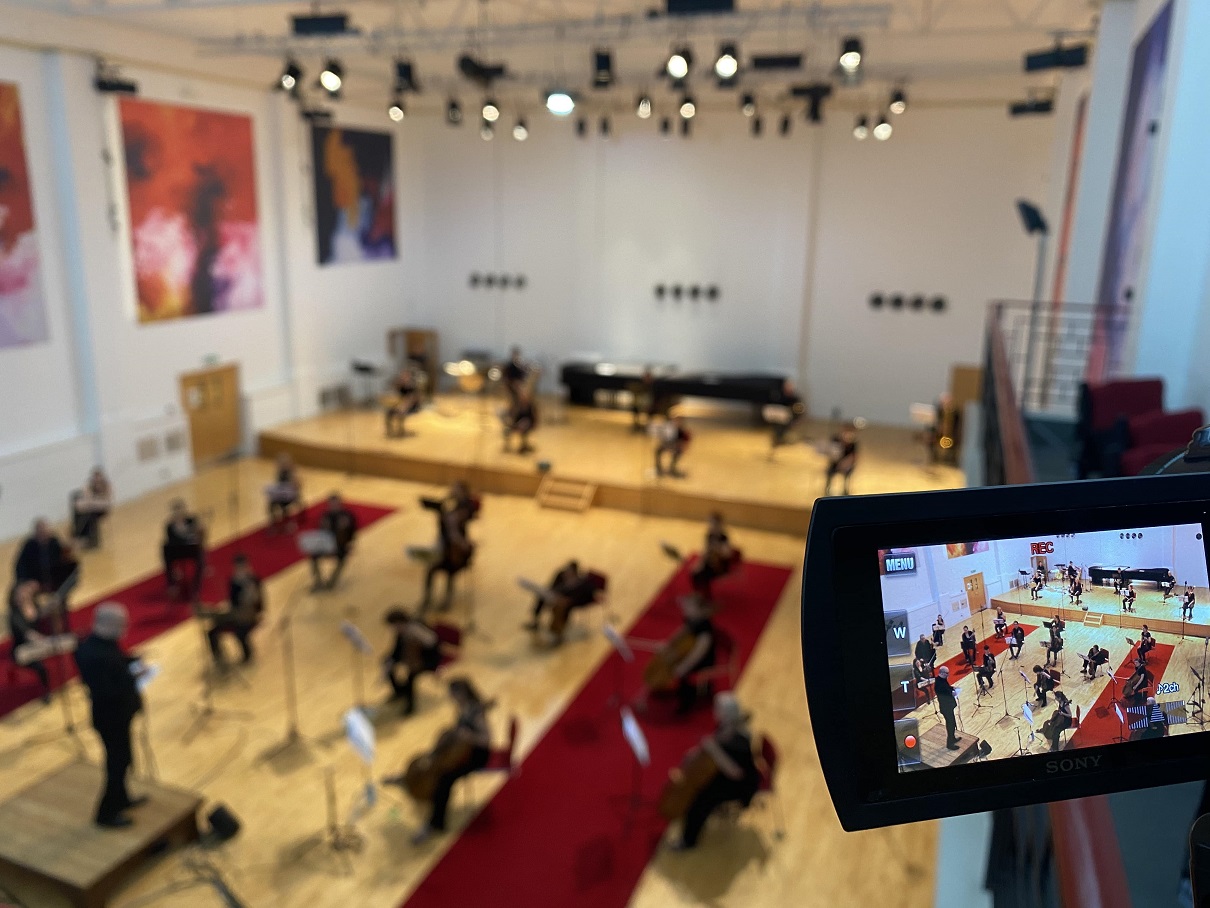
The ESO being heard to advantage in the spacious clarity of Wyastone Hall, these accounts will be worth getting to know on commercial release (with the Seventh Symphony) early next year, when this cycle will itself continue with recordings of the Fourth and Fifth Symphonies

These works are available for viewing on the English Symphony Orchestra website from 29 July – 1 August, then through ESO Digital by way of a subscription. Meanwhile click on the names for more on the English Symphony Orchestra and Kenneth Woods