Online concert – English String Orchestra / Kenneth Woods: Elgar Festival Highlights 2 – Elgar’s Strings

elgar-festival-2

Truscott Elegy for Strings (1944)
Tippett Little Music for Strings (1946)
Elgar Serenade in E minor, Op. 20 (1892)
Chambers The Tall-Eared Fox and the Wild-Eyed Man (1994)

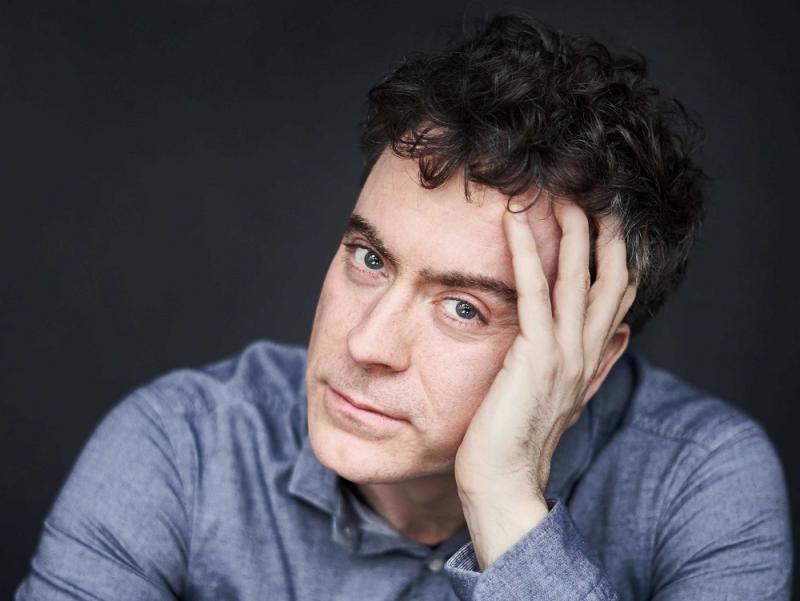
English String Orchestra / Kenneth Woods

Live performances at Guildhall, Worcester, Friday 29 October 2021

A further highlight from last year’s Elgar Festival, in the guise of an attractive miscellany that drew on the abundant body of music for strings, and which was persuasively rendered by the English String Orchestra that has been associated with this repertoire across several decades.

Interesting its principal conductor Kenneth Woods should have proposed a moratorium on the ESO’s performances of Elgar’s Serenade, as the three-year break evidently worked in favour of a piece here emerging as fresh and unjaded – whether in the capering motion of the initial Allegro as was ‘pleasurable’ indeed, the soulful intensity of a Larghetto centred on one of its composer’s most affecting melodies, or a final Allegretto which combines thematic elements with the deftest precision. 130 years on and this piece exhibits no signs of losing its appeal.

eso-woods

Sir Michael Tippett’s Little Music for Strings does seem to be gaining performances, which is only to the good of music as characteristic and accessible as this. Woods was rightly intent on imparting unity to the whole – tempering the rhetoric of the Prelude so it segued into the Fugue with its accumulation of textural weight and expressive intensity, before infusing the Air with a plaintiveness to which the vigorous Finale provided a natural foil. ESO performances in the presence of the composer need not detract from the excellence of its present-day incarnation.

The highlight, however, had come at the start with a revival of the Elegy by Harold Truscott. If the 22 piano sonatas are his greatest achievement, this is surely the piece to make his name more widely known – most likely his expression of acute regret over a failed relationship, and music that went unheard and unacknowledged in his lifetime. The ESO projected its questing tonal trajectory (redolent of later Nielsen) and plangent eloquence with unfailing conviction, so reinforcing its evident claim for a place near the heart of the repertoire for string orchestra.

A relative easing of emotional tension across this programme was made manifest by the final piece. Little known this side of the pond, Evan Chambers is widely respected as a composer and teacher – the present piece evincing his enthusiasm for Irish traditional music through its interplay of jigs which duly underpin the heady evocation that is The Tall-Eared Fox and the Wild-Eyed Man. That inspiration came from an encounter on the west coast of Wales serves to point up the playful irony of music such as strings and conductor alike attacked with relish.

An enjoyable piece, then, with which to round off a recital that was engaging and absorbing by turns. The ESO can be heard in further highlights from last year’s Elgar Festival towards the end of May – by which time, the 2022 edition will be only a few days away from starting.

This concert is available to view on the English Symphony Orchestra website from 29 April – 3 May

For further information on the 2022 Elgar Festival click here. For more on composer Harold Truscott click here, and for more on Evan Chambers click here. For more on the English String Orchestra, click here – and their conductor Kenneth Woods, click here

In concert – Mahan Esfahani, CBSO / Ludovic Morlot: A Journey Through Time

Mahan Esfahani (harpsichord), City of Birmingham Symphony Orchestra / Ludovic Morlot

Ravel Le Tombeau de Couperin (1914-17, orch. 1919)
Sørensen Sei Anime (2020) [CBSO Centenary Commission: UK premiere]
C.P.E. Bach Harpsichord Concerto in D major, H421 (c1745)
Stravinsky Pulcinella – Suite (1922)

Symphony Hall, Birmingham
Thursday 28 April 2022

Written by Richard Whitehouse

A concert with a difference this evening from the City of Birmingham Symphony Orchestra, featuring harpsichord concertos ‘ancient and modern’ alongside two staples of the chamber-orchestra repertoire from the early 20th century in a programme as balanced as it was equable.

His final major work for solo piano, Ravel’s Le Tombeau de Couperin (or at least four of its six movements) is more often heard in the orchestral transcription that accentuates its mood of searching pathos. Not least the Prélude, its liquid motion unerringly conveyed, or in the astringent humour of the Forlane. The Menuet featured a melting oboe contribution from Oliver Nordahl, then in the final Rigaudon Ludovic Morlot avoided an unduly rapid tempo – vividly characterizing the outer sections while drawing confessional intimacy from its trio.

Harpsichordists are infrequent visitors to orchestral concerts, so credit to Mahan Esfahani (above) for tackling two very different yet strikingly complementary works – including the first hearing in this country of another CBSO Centenary Commission. Inspired by matters mundane and metaphysical, the six short movements of Sei Anime have been likened by Bent Sørensen to a French Suite in its expressive contrasts. Unforced alternation of (relatively) slow and fast dances drew an always inquisitive response from the soloist, heard in the context of reduced yet diverse forces that included a range of percussion adeptly handled by Adrian Spillett and the ethereal tones of an accordion played by violinist Kirsty Lovie. By turns enchanting and disquieting, the piece raised many more questions than could be answered at a first hearing.

Esfahani was on familiar ground after the interval with a Harpsichord Concerto in D major by C.P.E. Bach (which this reviewer recalls last hearing at a 70th birthday concert by George Malcolm). If not among his more exploratory works in the medium, this certainly ranks among his most appealing – its three movements perfectly balanced as to form and content such that the lively interplay between soloist and strings in the initial Allegro is complemented with the urbanity and poise of its central Andante, the final Allegro maintaining a scintillating onward motion though to its close. Music such as this most engaging of present-day harpsichordists rendered with unceasing clarity and verve, not least in those cadenzas where the figured-bass writing brought an extemporization whose immediacy never drew attention from the music at hand.

Having proved the deftest of accompanists, Morlot presided over a sparkling account of the suite Stravinsky took from his ballet Pulcinella. Again, it was the lucidity of the woodwind that really came through – not least in the plaintive Serenata or the elegant Gavotta with its two graceful variations. Nor was there any lack of robustness in the opening Sinfonia or, thanks to trombonist Richard Watkin, deadpan humour in the Duetto. An eloquent take on the ensuing Menuetto prepared ideally for the Finale to bring about the uproarious close.
A rewarding concert which deserved a bigger attendance than it received. Those deterred by this ‘journey through time’ will no doubt feel on safer ground next Wednesday, when future chief conductor Kazuki Yamada directs a programme of Prokofiev, Bruch and Mendelssohn.

For more information on the CBSO’s 2021-22 season, click here

Meanwhile for more information on composer Bent Sørensen, click here – and for the artists, click on the names to access the websites of Mahan Esfahani and Ludovic Morlot

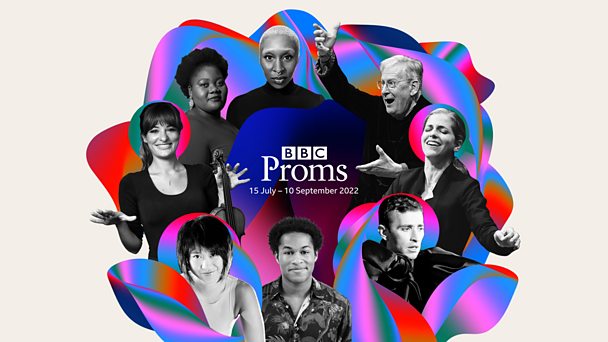
BBC Proms 2022 – a return to full fitness

by Ben Hogwood

How heartening it is to report on the announcement of a full-to-bursting BBC Proms season once again. The festival, now in its 127th year, is able to spread its wings post-pandemic, reaching out to the four corners of the British Isles to include large orchestral concerts and overseas artists once again.

There are of course far too many concerts to mention in full here, but some deserve an extra thick highlighter pen. From the small scale (Sir András Schiff playing Beethoven‘s last three piano sonatas) to the large (Sir Simon Rattle leading us and the London Symphony Orchestra from death to life in Mahler’s Resurrection Symphony) there looks to be something for almost everyone.

Concerts are spread much further afield this year, and an especially welcome move is the multi-region approach to the weekly chamber concerts, which will be broadcast from Belfast, Birmingham, Bristol, Cardiff, Glasgow, Liverpool, London and Truro. Outside of those appealing concerts, there really is such a huge variety

At a glance, the most appealing events include a tribute to Aretha Franklin curated by Jules Buckley, the wholly appropriate choice of Public Service Broadcasting to celebrate the centenary of the BBC in a newly commissioned piece, This New Noise, and concerts that bring centurion George Walker to the fore.

Lovers of British music will not be disappointed either. John Wilson conducts his Sinfonia of London band in Bax, Walton, Vaughan Williams, Elgar and the new Flute Concerto by Huw Watkins. The BBC Philharmonic Orchestra and Omer Meir Wellber will compare and contrast the Fourth Symphonies by Tippett and Vaughan Williams. Dame Ethel Smyth and Doreen Carwithen will get long-overdue appraisals – the Glyndebourne production of Smyth’s opera The Wreckers looks set to be essential, but so does her Mass in D major and Concerto for horn and violin. Meanwhile Carwithen’s String Quartet no.2 and Bishop Rock are welcome, though we could perhaps have done with one more piece from her.

Visitors from Germany (Berlin Philharmoniker), Austria (Vienna Radio Symphony Orchestra), Finland (Finnish Radio Symphony Orchestra) and Norway (Oslo Philharmonic Orchestra) provide four must-see concerts. To them we can add the Philadelphia Orchestra and Yannick Nézet-Séguin, who will perform Florence Price‘s Symphony no.1.

The music of Shostakovich will surely take on greater poignancy this season in the light of the awful tragedies unfolding in Ukraine – the Fifth, Tenth and Fifteenth Symphonies will all be loaded with extra meaning. The establishment of the Ukrainian Freedom Orchestra, however, will trump even these when they play the music of recently exiled composer Valentin Silvestrov, his Symphony no.7. Brought together by the Metropolitan Opera, New York, and the Polish National Opera, the brand new orchestra will by led by Canadian-Ukrainian conductor Keri-Lynn Wilson and will include recently refugeed Ukrainian musicians, Ukrainian members of European orchestras and leading musicians from Kyiv, Lviv, Kharkiv, Odesa and elsewhere in Ukraine.

This is just a flavour of the season, from which you will see that from first night Verdi to final night Sheku Kanneh-Mason and Lise Davidsen, there is so much to appreciate. Get over to the BBC Proms website and start planning!

In concert – Paul Lewis, CBSO / Christoph König: Mozart & Mahler

Paul Lewis (piano), City of Birmingham Symphony Orchestra / Christoph König

Mozart Piano Concerto No. 27 in B flat major, K595 (1788-91)

Mahler Symphony No. 5 in C sharp minor (1901-02)

Symphony Hall, Birmingham
Wednesday 21 April 2022, 2.15pm

Written by Richard Whitehouse

Back from a first European tour since the pandemic and following the Easter break, the City of Birmingham Symphony Orchestra hit the ground running with a programme of contrasts featuring Mozart’s last piano concerto and what is likely Mahler’s most popular symphony.

It may have been finished early during his final year, but Mozart’s 27th Piano Concerto was drafted several years earlier, while its relative inwardness as compared to those from 1785-6 need not be read as fatalistic; still less be taken for valediction. This was certainly how Paul Lewis approached it with a poised but never flaccid opening Allegro – its subtle contrasts of themes and dynamics creating their own, discreet momentum with an eloquent rendering of the development then a lucid cadenza such as brought the whole movement deftly full circle.

Might it be that this concerto is only as good as the best performances? Thanks to Lewis the central Larghetto never risked seeming plain spun or uniform, piano dovetailing into strings and woodwind to ingratiating effect. In the closing Allegro, Christoph König pointed up the dance-like robustness of its rondo theme with a lilting impetus as never faltered. This is one of Mozart’s few concertos where his own cadenzas survive; Lewis’s probing manner in the finale setting the seal on a reading as thoughtfully conceived as it was insightfully realized.

His recent recordings of Louise Farrenc having gained widespread praise, König is evidently a conductor in demand and his account of Mahler’s Fifth Symphony provided a decisive, no-nonsense take on this much-played piece. Not least an initial Funeral March whose bracing objectivity did not preclude a more visceral response to its frenzied climax or ominous close. Its successor’s competing strands of violence and resignation were purposefully juxtaposed, through to the as-yet provisional emergence of the chorale then a tellingly speculative coda.

Time and again the central Scherzo fails to fulfil its role as this work’s formal or expressive crux, and if König’s approach fell short of the ultimate conviction, it was more than usually cohesive – whether in the discursive unfolding of its ländler-informed sections or the central trio with its rustically evocative overtones. Equally persuasive were those transitions either side, thereby endowing the movement with a cohesive follow-through which paid dividends during a coda whose unalloyed ebullience more than usually indicated what was to follow.

Most conductors now make the famous Adagietto a soulful interlude rather than full-blown slow movement, König going further by making it an extended introduction to the closing Rondo. This evolved almost seamlessly through the gradual intensification of ideas already heard towards the re-emergence of that chorale, here blazing forth with an affirmation that did not pre-empt those final bars in their almost nonchalant affirmation. Mahler might have written deeper finales, but not one whose triumph over adversity was so potently achieved.

An impressive demonstration, too, of the CBSO’s collective prowess (while not neglecting that of trumpeter Matthew Williams) for what is well worth catching in Saturday’s repeat performance; before this orchestra offers ‘something completely different’ next Thursday.

For more information on the CBSO’s 2021-22 season, click here

Meanwhile for more information on the artists, click on the names to access the websites of Paul Lewis and Christoph König

In concert – Marija Vidović, Tamsin Waley-Cohen, Zagreb Philharmonic Orchestra / Jan Latham-Koenig – Pejačević, Sibelius & Mahler

tamsin-waley-cohen-c-patrick-allen

Pejačević Verwandlung, Op. 37b (1915), Liebeslied, Op. 39 (1915), Zwei Schmetterlingslieder, Op. 52 (1920)
Sibelius Violin Concerto in D minor Op. 47 (1903-04, rev. 1905)
Mahler Symphony no. 1 in D major (1899 version)

Marija Vidović (soprano), Tamsin Waley-Cohen (violin), Zagreb Philharmonic Orchestra / Jan Latham-Koenig

Cadogan Hall, London
Thursday 13 April 2022

Written by Richard Whitehouse. Photos (c) Patrick Allen (Tamsin Waley-Cohen), Paul Persky (Jan Latham-Koenig)

Visits from overseas orchestras are only now getting into their stride following the abeyance caused by the pandemic, so credit to the Zagreb Philharmonic for having undertaken its first UK tour in over half a century with a programme whose challenges were not to be gainsaid.

A recent BBC performance of her Symphony confirmed the significance of Dora Pejačević (1885-1923) in European music of the early 20th century, and it was a pleasure to encounter these four orchestral songs from her maturity. A setting of Karl Kraus’s Transformation won grudging admiration of Schoenberg; here, even more so in that of Rainer Maria Rilke’s Love Song with its winsome violin solo and fervent orchestral interlude, the influence of Strauss is directed towards audibly personal ends. Marija Vidović (above) gave them with no mean eloquence and did comparable justice to those charms of Karl Henckell’s verse in Two Butterfly Songs – the elegance of ‘Golden stars, little bluebells’ then the poise of ‘Flutter by, butterfly, flutter away’, each of them benefiting from especially deft contributions by the Zagreb musicians.

Tamsin Waley-Cohen duly joined the orchestra for Sibelius’s Violin Concerto – likely more popular than ever these days, here receiving a confident and forthright account that was at its most persuasive in a trenchant and cumulative take on the developmental cadenza toward the centre of the first movement, then an Adagio more than usually restive and even ominous as it unfolded. The soloist’s astringent tone might not be to all tastes, but it effectively banished any risk of expressive blandness while maintaining an impulsive interplay with the orchestra – not least in that opening Allegro’s combative coda or a finale which, while its Allegro was not ideally ‘non tanto’, generated an impressive momentum which carried through to a truly visceral close. Some solo Bach enabled Waley-Cohen to demonstrate a more inward touch.

A pity Jan Latham-Koenig (above) rarely appears in the UK, as his engagements seldom disappoint. For all its rawness and passing inelegances, this was as gripping an account of Mahler’s First Symphony as one is likely to encounter. Its opening movement was evocatively launched, the sounds of nature gradually admitting of a human presence such as filters through in its lilting exposition (not repeated) then comes to the fore with joyous immediacy in the coda. Robust and forthright, the scherzo’s outer sections found contrast in the ingratiating charm of its trio.

A symphony with a complex gestation (admirably set out in Timothy Dowling’s programme notes), its ensuing fantasy on a well-known children’s song is shot through with elements of klezmer and art-song in a portrayal of a huntsman’s funeral vividly ironic in its tragicomedy. Latham-Koenig was almost as persuasive in the lengthy finale – its Dante-esque contrasts of violence and supplication channelled convincingly to the spellbinding recollection of earlier motifs which made way for a chorale-dominated apotheosis of notably unsparing immediacy.

Few countries have yet had a composer for president, but Ivo Josipović served Croatia during 2010-15 and the encore of his Prelude to the Millenium sounded redolent of early Ligeti or Lutosławski in its uninhibited verve. The Zagreb musicians gave their collective all – to his evident pleasure.

For further information on the Zagreb Philharmonic Orchestra, click here – and for information on the artists, click on the names to find out more about Marija Vidović, Tamsin Waley-Cohen and Jan Latham-Koenig. Meanwhile for more on composer Dora Pejačević, click here