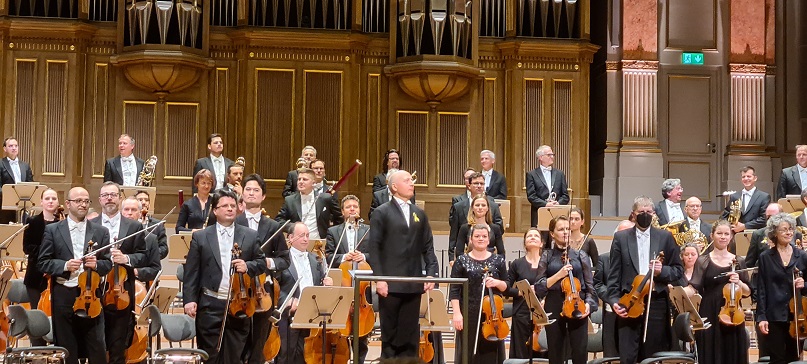
Online concert – English Symphony Orchestra / Kenneth Woods: Elgar Festival Highlights

eso-woods

Smyth The Wreckers – Overture (1906)
Elgar Variations on an Original Theme, Op. 36 ‘Enigma’ (1898-9)

English Symphony Orchestra / Kenneth Woods

Live performances at Worcester Cathedral, Saturday 30 October 2021

One of 2021’s welcome returns to the musical calendar, following its cessation in ‘lockdown year’, was the Elgar Festival – highlights from the final concert held at Worcester Cathedral last October comprising this latest in the English Symphony Orchestra’s digital online series.

The new production at this year’s Glyndebourne Festival should provide Ethel Smyth’s opera The Wreckers with a suitable reassessment. Never having entirely fallen out of the repertoire, the overture affords a decent overview of the emotional impulses found therein and makes for a forceful curtain-raiser. If its headlong opening pages and plangent ensuing melody – shared between cor anglais and oboe – set up a promise not entirely fulfilled, the hymnic fervour of its climax and the impetuous final surge were keenly projected in this forthright performance.

Elgar’s Enigma Variations has been a staple of British music since its premiere 123 years ago and, by definition, a regular feature of this festival. Neither time nor familiarity has (or should have) detracted from the originality of both its underlying conception and its musical content – attributes to the fore with this engrossing account. Kenneth Woods pointed up those formal divisions into which the 14 variations fall, prefaced by the hushed rendering of a theme whose mingled wistfulness and pathos set the tone not just of this work but also for Elgar’s maturity.

On to the first stage with the searching emotion of ‘C.A.E’ – followed by the quick succession of capriciousness in ‘H.D.S-P.’, insouciance in ‘R.B.T.’, then impetus in ‘W.M.B.’. The next three variations opened-out the expressive range accordingly – hence the alternation between the earnest and playful in ‘R.P.A.’, gentle whimsy of ‘Ysobel’ with its teasing viola part, and headlong energy of ‘Troyte’. The next two variations contrast genial elegance in ‘W.N.’ with rapt eloquence in ‘Nimrod’, here rightly conveying ardent passion instead of nostalgic regret.

The following two variations yield studies of a more complementary nature – thus the halting piquancy of ‘Dorabella’ during what becomes a relatively extended intermezzo, to which the swift animation of ‘G.R.S.’ (more probably his bull-dog Dan) functions as a decidedly terse scherzo. Especially persuasive was the next brace of variations – the thoughtful undulations of ‘B.G.N.’ as framed by its haunting cello solos, then the imaginative ‘***’ which romanza takes in easy affability and aching rumination over its unpredictable and speculative course.

Its considerable expanse (though how right Elgar was to extend those concluding stages from the perfunctory end he first envisaged) makes equating the final ‘E.D.U.’ variation with what went before a test of interpretive skill. Suffice to add this performance met its challenge head on – Woods gauging that initial crescendo as a basis from which the ensuing festivities could take off, allowing necessary breathing-space for the inward central interlude to leave its mark prior to resuming the earlier extroversion, then upping momentum for the opulent peroration.

Needless to add, the organ of Worcester Cathedral made its presence felt with those weighty pedals in the work’s closing bars – setting the seal on a memorable reading which benefitted from as spacious and well-balanced sound as has been achieved with this venerable acoustic.

You can watch this concert on the English Symphony Orchestra website, with free public viewing from 8-12 April 2022. The concert is available thereafter only to ESO Digital supporters.

For further information on the 2022 Elgar Festival click here, and for more on composer Dame Ethel Smyth click here Meanwhile for more on Kenneth Woods, click here
In concert – Tonhalle Orchester Zürich & Paavo Järvi: Sibelius Symphony no.2

paavo-jarvi-tonhalle

Sibelius Symphony no.2 in D major Op.43 (1901-2)

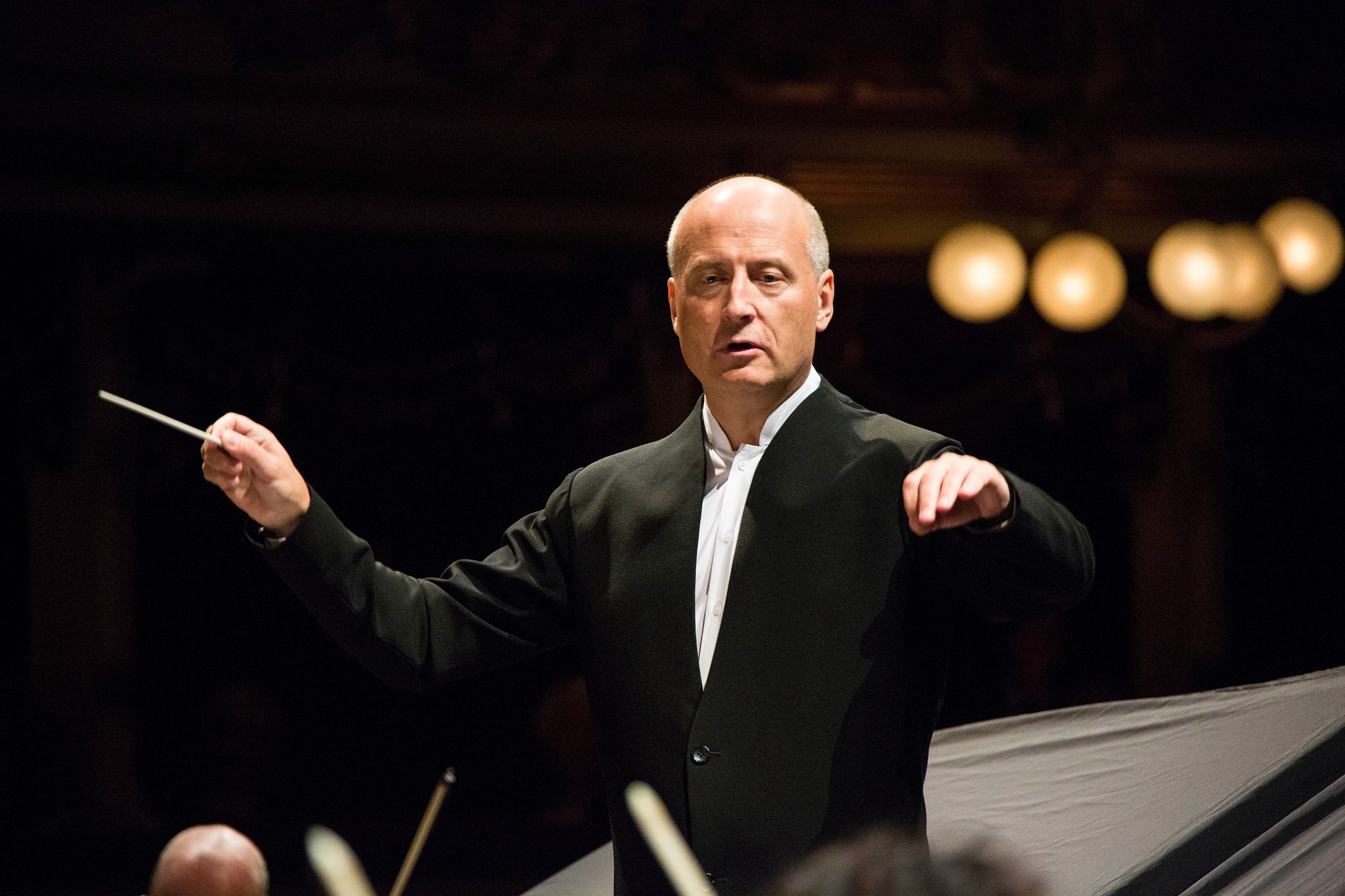
Tonhalle-Orchester Zürich / Paavo Järvi

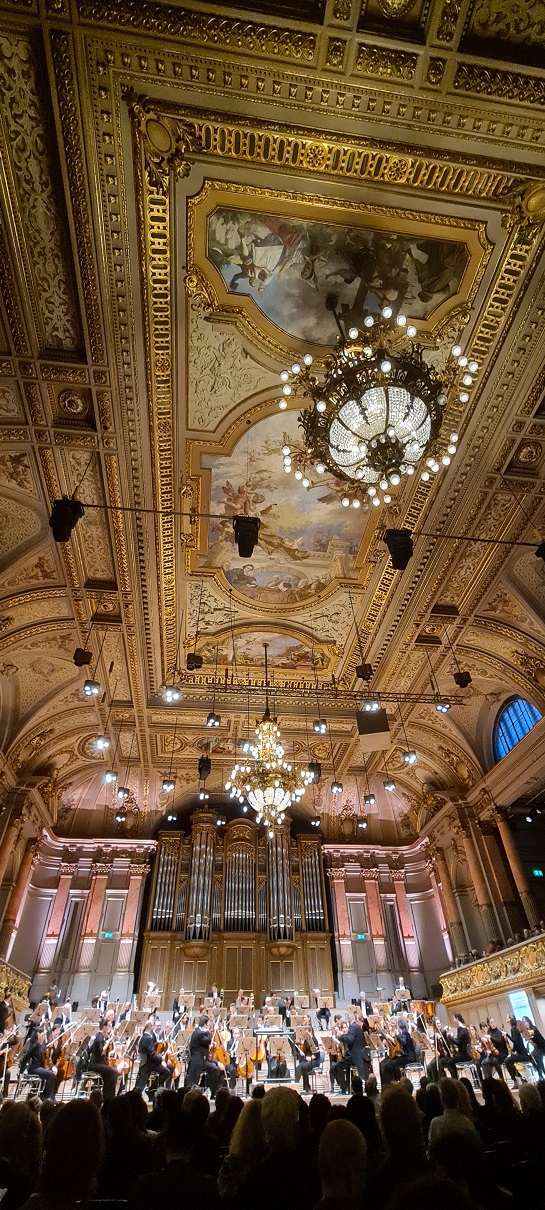
Grosser Saal, Tonhalle, Zürich
Tuesday 5 April 2022

Written by (and photos below) Ben Hogwood

Sometimes a single work in a classical concert is enough – especially if that work has the lasting power of Sibelius’s Second Symphony.

Paavo Järvi certainly thought so, programming the 45-minute work as part of a concert celebrating the visit of the annual IAMA conference. IAMA – International Artist Managers’ Association – is a vital industry body representing the interests not just of artist managers but of artists themselves, liaising with creative spaces such as the resplendent, refurbished Zürich Tonhalle. Their conference moves around Europe, so a visit from them is a great opportunity for the ‘host’ city to exhibit their creative wares.

The Tonhalle-Orchester did that in this concert with some aplomb, performing as they were in a venue opened by Brahms himself in 1895. The composer appears as part of a mural (partially visible in the photograph above) on the ceiling in the resplendent company of Haydn, Mozart, Beethoven and Gluck. Sibelius was too late for inclusion, of course.

In their company, his Second Symphony received a performance of poise and power, the music on occasion appearing to issue from the very earth beneath our feet. This was most notable in the second movement, whose sequence of tempo changes and shifts of mood was the defining feature of this performance. The Tonhalle-Orchester wind shone out, especially the bassoon’s main theme, while the double basses and cellos used their wonderful grainy sound to provide the most solid undercarriage for the white-hot exchanges above.

The orchestra are a technical powerhouse, their ensemble well-nigh perfect, as was demonstrated in the unity of the strings’ pizzicato in the second movement, and the cushioned, velvety tones with which the work began, a similar effect to waves lapping the shore of a lake.

After the emotional tumult of the second movement the third sprang forward almost in alarm, scurrying figures nervously bouncing off each other until the gradual crescendo to the start of the finale itself. This was carefully managed, and although you could argue Järvi and his charges peaked too soon they just kept getting louder and ever more exultant, aiming always at the end goal. The orchestra forged a fiery path, propelled by the lower strings but with searing contributions from brass and wind, not to mention rumbling timpani, all these elements once again tracing back to the earth itself.

Järvi led his charges with clear, largely cool direction, though his love of the music was clear in more animated sections, driving the orchestra on. They responded with clear and obvious enjoyment to his direction, the team reflecting Sibelius’ ultimately victorious charge to the finish in that glorious final cadence. A special performance with which to mark an auspicious occasion, as in that night conducted by Brahms 127 years ago.

Online concert – English Symphony Orchestra / Kenneth Woods: Adrian Williams: Symphony no.1

English Symphony Orchestra / Kenneth Woods

Adrian Williams Symphony no.1 (2018-19, rev. 2021)

Wyastone Concert Hall, Monmouth
Studio recording 1-2 December 2021

Written by Richard Whitehouse

The 21st Symphony Project, launched five years ago by the English Symphony Orchestra and Kenneth Woods, has seen several impressive premieres – with this First Symphony by Adrian Williams its most ambitious yet, whether in terms of underlying conception or overall impact.

Now in his mid-60s, Williams has been a notable presence – albeit on the periphery – of music in the UK for several decades (more information can be found via the web references below); his advocates including Raphael Wallfisch and the Amsterdam Sinfonietta. Regular listeners to the ESO’s digital concerts will have encountered his striking Chamber Concerto ‘Portraits of Ned Kelly’ and intricately wrought eloquence of Migrations for strings; aspects from both resurfacing here, if on a considerably larger scale and exuding correspondingly greater force.

Playing almost 50 minutes and scored for a sizable orchestra including triple woodwind, five horns, four trumpets and four percussionists with harp, piano and celesta, the present work is evidently a summation of where its composer has reached over the course of his musical (and likely extra-musical) odyssey. Not that there is anything gratuitous or self-indulgent about the outcome; indeed, for all its formal complexity and emotional reach, this is music created out of inherently basic motifs – its initial three notes and their rearrangement generating the first movement’s main themes as well as outlining a long-term tonal trajectory which, though not pursued as systematically as in the earlier symphonies of Robert Simpson, remains as a focus throughout the intervening activity and the focal-point toward which such activity is directed.

From its imposing Maestoso epigraph, the opening Stridente unfolds against the background of, without thereby adhering to, sonata-form principles – its motivic components drawn into a continuous and frequently combative evolution necessarily left unresolved at the close. There follows a Scherzando that eschews ternary design for a through-composed format proceeding by tension and release to its decisive ending. To say the ensuing Lento is the expressive crux of this work might detract from the plangent, desolate tone of music whose frequently sparse textures and elliptical harmonies re-affirm that ‘less is more’. Despite its Energico marking, the finale unfolds with slow-burning momentum made cumulative by channelling its motivic evolution towards a Dolente apotheosis whose outcome is as inevitable as it is transcendent.

An impressive piece in terms not only of ambition but also realization. There are considerable technical challenges on route, but these are met with conviction and no little resourcefulness by an expanded ESO often tested while never fazed during its eventful course. Woods directs with his customary discretion and an attention to detail that goes a long way toward clarifying music which feels ‘complex and luminous’ as much in spirit as by design. Whether or not the outer movements might yield greater panache could only be determined under live conditions.

It might also be noted the designation is no idle boast, Williams having been commissioned to write a successor the ESO will schedule at a future date. Even were it to pursue a wholly different course, the achievement of this First Symphony is one not likely to be diminished.

You can view this concert from 25-29 March at the ESO website, and thereafter for ESO digital supporters here. For more information on Adrian Williams, head to his website or an extensive biography on the MusicWeb International site

Online concert review – Louise Alder & Joseph Middleton @ Wigmore Hall – Songs by Amy Beach, Clara Schumann, Lili Boulanger, Alma Mahler & Libby Larsen

Louise Alder (soprano, above), Joseph Middleton (piano, below)

Beach 3 Browning Songs Op. 44 (1889-1900)
Clara Schumann Er ist gekommen Op. 12 No. 1; Warum willst du and’re fragen Op. 12 No. 3; Liebst du um Schönheit Op. 12 No. 2 (1841)
Lili Boulanger Clairières dans le ciel (excerpts): Elle était descendue au bas de la prairie; Vous m’avez regardé avec toute votre âme; Au pied de mon lit; Nous nous aimerons; Si tout ceci n’est qu’un pauvre rêve (1913-14)
Alma Mahler Laue Sommernacht (1910); Ich wandle unter Blumen (1910); Licht in der Nacht (1915)
Libby Larsen Try Me, Good King: Last Words of the Wives of Henry VIII (2000)

Wigmore Hall, London, 21 March 2022

Watch and listen

review of online broadcast by Ben Hogwood Picture of Louise Alder (c) Gerard Collett

Soprano Louise Alder and pianist Joseph Middleton are renowned for consistently original programming, and this recital for a BBC Radio 3 Lunchtime Concert at the Wigmore Hall recital was no exception. Assembling songs by five women composers, they offered a fascinating juxtaposition of style and text setting, offering further proof that the music of Clara Schumann and Alma Mahler need no longer operate in the shadows of their husbands.

Given the freshness of the air in Southern England it was entirely appropriate that the pair should begin with a vibrant song from Amy Beach, The year’s at the spring. The first in a trio of Robert Browning settings, it had a sprightly tread, in contrast to the Ah, Love, but a day! of Beach’s short cycle, where ‘summer has stopped’, which found the singer in a worrisome state but easily negotiating her higher range. The third song, I send my heart up to thee, was subtly prompted by Middleton’s arpeggiated piano

The Schumanns’ year of song was not just exclusive to Robert, with Clara publishing three settings of Friedrich Rückert that year. They made a powerful impact in this concert, with a tempestuous account of Er ist gekommen (He came in storm and rain). There was an intimate air to Warum willst du and’re fragen (Why enquire of others), tinged with longing and sung by Alder with a beautiful, natural tone. Liebst du um Schönheit (If you love for beauty) was lost in love, prompted by Middleton’s easily flowing piano.

In her all too brief life, Lili Boulanger gained for herself a reputation as a vocal composer of impressive standing, a view boosted by this quintet taken from Clairières dans le ciel, settings of 13 poems by Francis Jammes. When singing of the ‘girls who are too tall’ in Elle était descendue au bas de la prairie (She had reached the low-lying meadow), Alder soared to the heights, while the pair enjoyed Boulanger’s harmonically elusive writing, Middleton upholding the tension beautifully in Vous m’avez regardé avec toute votre âme (You gazed at me with all your soul).

Au pied de mon lit (At the foot of my bed) stood out as one of the most memorable songs of the recital. A character picture, it was vividly painted by the pair before a turbulent and passionate episode, notable for Alder’s sublime vibrato control at the end. The anticipation of Nous nous aimerons (We shall love each other) hung heavy on the air, with appropriately rich harmonies, before the singer’s lower range brought rich colour and notable control to the slow Si tout ceci n’est qu’un pauvre rêve (If all this is but a poor dream).

We then heard a trio of Alma Mahler settings, strongly chromatic and – in the case of Laue sommernacht (Mild summer night) – particularly sultry. The Heine setting Ich wandle unter Blumen ( I wander among flowers) was short but urgent, before a second setting of Bierbaum, Licht in der Nacht (A nocturnal light) brought us back to earth for deep contemplation. The song rose briefly to acknowledge the rapturous brightness of the star ‘above the house of our Lord Jesus Christ’ before sinking into the dark lower end of the piano once again.

Libby Larsen’s song cycle Try Me, Good King took as its inspiration the last words of the five executed wives of Henry VIII, giving Alder the opportunity to characterise each of the fated women. She did so with impressive power and guile, Katherine of Aragon hanging on high above a worrisome chord, with Anne Boleyn then fraught with trouble. As with the earlier songs Alder’s body language was a powerful visual aid, taking Boleyn’s words ‘Try me’ up to the very skies above. Larsen’s setting for Jane Seymour exhibited a special radiance, while Anne of Cleves was given a resolute if ultimately skewed march. The final Katherine Howard proclaiming her innocence to ultimately deaf ears, insisting her innocence before really scaling the heights of anguish.

As an encore, Alder and Middleton gave us Florence Price’s Night, a chance for the soprano to spread her wings with longer phrases. Perhaps surprisingly there was a hint of Richard Strauss here, enjoyed in the piano part by Middleton – the song capping an hour of discovery and vivid storytelling.

For information on Louise and Joseph’s album of French song on Chandos Records, Chère Nuit, click here

On record: Steve Elcock: Orchestral Music, Volume Three (Toccata)

elcock-3

Steve Elcock
Symphony No. 6 Op.30 ‘Tyrants Destroyed’ (2017)
Symphony No. 7 Op.33 (2020)
Manic Dancing Op. 25 (2015)

Marina Kosterina (piano, Manic Dancing), Siberian Symphony Orchestra / Dmitry Vasiliev

Producer/Engineer Sergei Zhiganov
Recorded 21-25 June 2021, Philharmonic Hall, Omsk

Toccata Classics TOCC0616 [75’54”]

Reviewed by Richard Whitehouse

What’s the story?

Toccata Classics continues its survey of Steve Elcock’s orchestral music with a third volume that features two of his most recent symphonies alongside his piano concerto malgré-lui, each demonstrating a visceral immediacy and a quixotic individuality as previously encountered.

What’s the music like?

After the Beethovenian dialectic of his Fifth Symphony, Elcock concentrated on smaller scale projects prior to its successor. Cast in two movements (the first slightly longer), this might be felt to emulate another totemic Fifth, that by Nielsen, but Elcock’s Sixth is a wholly different proposition. The opening Molto moderato unfolds incrementally and even hesitantly from its subdued beginnings on lower strings, so making the baleful climactic processional the more unnerving when it suddenly arrives. Nor does the ensuing Allegro bring any real catharsis – its gradual and methodical build-up (via that cumulative harmonic and rhythmic intensifying found in Pettersson but which Elcock has made his own) at length culminating in a vehement peroration which would seem to fulfil the remit of this work’s subtitle in unequivocal terms.

Three years on and the Seventh Symphony sees a very different approach. Here every aspect speaks of intended equivocation, the single movement redolent of Elcock’s Fourth in variety of incident yet eschewing its tonal and textural complexity for an overt transparency abetted by relatively modest instrumentation and modally informed clarity of content. Vestiges of an expanded sonata design can be sensed in the stealthy alternation of slower and faster tempos, leading to a central developmental crux as brings in its wake less a reprise than the statement of a melody evidently heard in a dream but whose eloquence and poise seem nothing if not tangible. From here the music heads back towards its modal origins, then it evanesces away for what is the deftest and most affecting conclusion in any of Elcock’s symphonies thus far.

Placed between these symphonies as (necessary) shock-absorber, Manic Dancing is another of Elock’s concertante pieces. The integration of piano and orchestra recalls the Sinfoniettas Giocosa and La Jolla by Martinů, even if the febrile velocity of its outer Allegros could hardly be mistaken for urbanity. The central Largo in the emotional heart in every sense – its limpid opening offset by a restiveness to the fore in twin climaxes, with cadenza-like facets emerging out of the texture before the animated music resumes its designedly manic course.

Does it all work?

Indeed, not least in underlining the overt distinctiveness of Elcock’s symphonies as taken on their own terms. As before, the playing of the Siberian Symphony Orchestra leaves nothing to chance in bringing out the sheer imagination and richness of the orchestral writing, with Dmitry Vasiliev ensuring that formal cohesion remain paramount. Marina Kosterina contributes animated and resourceful pianism, and those who have responded positively to earlier volumes in this series (TOCC0400/0445) will be gripped or maybe even a little disconcerted by this latest addition.

Is it recommended?

Yes, not least with sound of clarity and impact comparable to earlier instalments, and detailed notes from Francis Pott. Toccata will hopefully continue its series of Elcock’s chamber music, while the English Symphony Orchestra has recorded his Eighth Symphony for future release.

Listen

Buy

For further information, audio clips and purchase information visit the Toccata Classics website. For more on Steve Elcock you can visit the composer’s website