In concert – Boris Giltburg plays Granados, Albéniz, Ravel, Rachmaninoff & Prokofiev @ Wigmore Hall

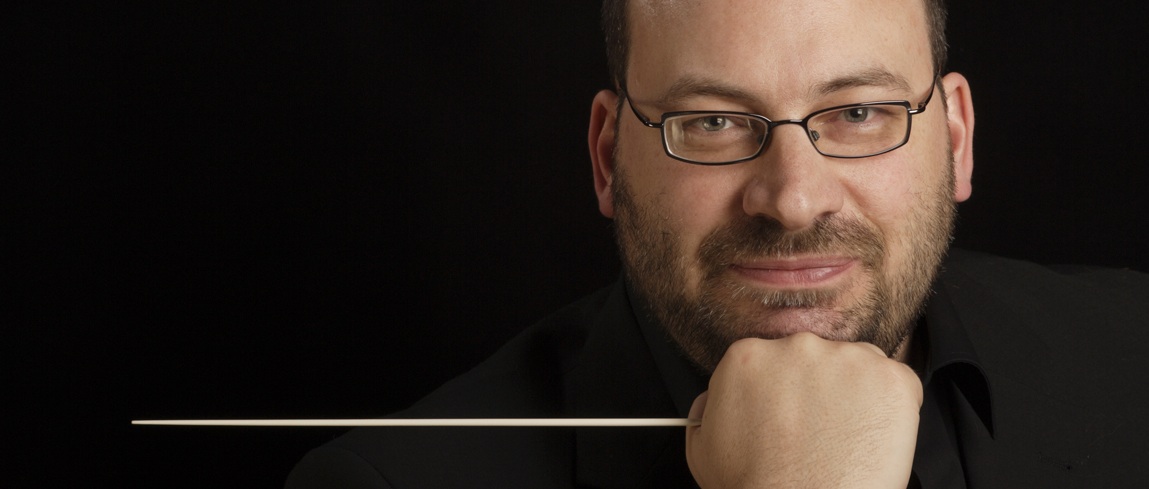
BorisGiltburg2-1440

Granados Goyescas: Quejas, o La maja y el ruiseñor (1909-12)
Albéniz Iberia (Book 3): El Albaicín (1907)
Ravel Miroirs (1904-5)
Rachmaninov Moments musicaux Op.16: no.2 in E flat minor, no.3 in B minor, no.4 in E minor (1896)
Prokofiev Piano Sonata No. 8 in B flat major Op. 84 (1939-44)

Boris Giltburg (piano, above)

Wigmore Hall, London
Monday 14 March 2022

Written by Ben Hogwood

Boris Giltburg

14 March 2022
22:19

This was the second concert in Boris Giltburg‘s Ravel series at the Wigmore Hall – but as he eloquently explained in the programme and from the stage, it was impossible to proceed without responding to the situation in Ukraine.

Born in Russia but of Israeli nationality, Giltburg’s judgement in this was carefully considered. Reminding us that music has the overwhelming ability to reflect conflict as well as providing an appropriate response to it, in Prokofiev‘s Piano Sonata no.8 he had found the most accurate reflection imaginable. Ukrainian-born Prokofiev wrote the piece during the Second World War, and it was premiered by Sviatoslav Richter in Moscow in 1944. Here its resonance was unmistakable, the work unfolding with a mixture of uncertainty and resolve, with searing outbursts and anguished thoughts that spoke of oppression and tragedy. Prokofiev’s trademark dissonances were descriptive, the percussive rhythms laden with military power. The second movement relented a little in search of lyricism, Giltburg finding parallels with the composer’s ballet scores of the period, with hints of Romeo & Juliet carried on the air. Meanwhile the third movement, a powerful presto, tore up the tarmac in its relentless drive forward while finding time to consider the repercussions. Giltburg’s precision and power were beyond reproach here, his performance incisive but deeply reflective of current events. The Wigmore Hall listened closely, moved to silence throughout but responding with sympathetic applause.

Because of this performance the rest of the concert could have paled into insignificance, but that would reckon without some powerhouse performances of music from earlier in the century. It was refreshing to hear two Spanish works for starters. The music of Granados and Albéniz does not get enough exposure, and it should do – both wrote under the influence of Debussy but had something of the French master’s gift for picture painting. Giltburg caught the baleful tones of Quejas, o La maja y el ruiseñor (Lament, or the maiden and the nightingale), while the sultry El Albaicín was vividly descriptive and alluring.

Ravel may have written Miroirs in 1905 but in these hands it still sounded so modern. Noctuelles (Moths), a remarkable piece of picture painting from the French composer, found its match here, Giltburg delighting in its irregular contours, while the cleaner lines of Oiseaux tristes were no less effective. The much-loved duo of Une barque sur l’océan and Alborada del gracioso were brillianly performed – the former capturing the rocking of the boat with uncanny accuracy, surging forward before checking against the spray – and the latter exploring syncopations and dynamic variations to thrilling effect. Finally La vallée des cloches was both reverent and mysterious, notable for meticulous pedal work from Giltburg to maintain the atmosphere.

Immediately before the Prokofiev we heard three of the young Rachmaninov‘s six Moments Musicaux, a breakthrough collection that helped establish him as a serious composer for the piano in 1896. They are of similar design to the pieces of the same name by Schubert, in a group of six but giving the pianist freedom through varying dimensions and moods. These are pieces Giltburg holds close to his heart, and a whirlwind account of the second piece was checked by the darker hues of the third, a funeral march. This provided much food for thought with its nagging motifs, the music returning to the same itch with ominous regularity, before the fourth piece took off at a rate of knots, fearsome virtuosity tempered by immaculate melodic phrasing.

After the Prokofiev had made its mark we heard the ideal foil as an encore, Giltburg playing the Bagatelle no.1 by Valentin Silvestrov. A Ukrainian composer, Silvestrov was born in 1937 and – according to a conversation between Giltburg and a member of the audience – appears to have safely relocated to Poland. The simplicity of this piece, after the crunch of the Prokofiev, was doubly moving.

For more information on Boris Giltburg you can visit his website

In concert – Clare Hammond, CBSO / Michael Seal: Nielsen, Grieg & Sibelius

clare-hammond-grieg

Nielsen Helios Overture FS32 (1903)
Grieg
Piano Concerto in A minor Op. 16 (1868)
Sibelius
Symphony No. 1 in E minor Op. 39 (1898-9)

Clare Hammond (piano, above), City of Birmingham Symphony Orchestra / Michael Seal

Symphony Hall, Birmingham
Wednesday 9 March 2022 (2.15pm)

Written by Richard Whitehouse

A Scandinavian programme this afternoon from the City of Birmingham Symphony Orchestra, featuring music by the three most famous of this region’s composers (so no representation for Sweden), and presided over with his customary authority by CBSO’s associate conductor Michael Seal.

Unusual nowadays to have a programme consisting of overture, concerto and symphony – but Nielsen’s Helios is as fine a curtain-raiser as any, its ‘sunrise to sunset’ scenario captured with one of the most graphic crescendos and diminuendos in the literature. Seal ensured this gradual emergence, and its faster evanescence, were unerringly paced – the horns’ echoing sonorities enfolded into the orchestral texture; and if the intervening intermezzo and fugato rather tread water by comparison, their role within the formal scheme made for a cohesive overall entity.

Whether or not Grieg tired of hearing or at least playing his Piano Concerto, he would surely have appreciated Clare Hammond’s take on its solo part. The inedible opening gesture might have been less than usually arresting, but the opening movement proceeded methodically and often poetically so its structural seams were barely in evidence – culminating in a resourceful account of the cadenza with the composer’s motivic ingenuity much in evidence. Easy to pass off as a bland interlude, the Adagio had an appealing poise that opened into keen pathos at its height. Trenchant rather than impetuous, the outer sections of the finale were rarely less than engaging but it was the warm soulfulness at the centre that really struck home; its return for a triumphal apotheosis did not quite avoid portentousness, but it ensured a decisive conclusion.

A distinctive and, for the most part, convincing performance which Hammond followed with the caressing harmony of the eleventh from Szymanowski’s Op. 33 Etudes – music in marked contrast to the existential drama of Sibelius’s First Symphony which came after the interval.

The latter work’s emergence against a background of fraught self-determination has inevitably taken on far greater resonance during recent weeks, and it was to Seal’s credit that he played down any tendency to overt sentiment – rendering the first movement, its sombre introduction limpidly realized by Oliver Janes, as the striking and frequently innovative study in expressive contrasts it should be. Nor was there any lack of Tchaikovskian pathos in the Andante, whose whimsical passages were as vividly delineated as those eruptive outbursts towards its climax.

The ensuing Scherzo had the right rhythmic tensility and, in its central trio, enticing whimsy – but it was the Finale as set the seal on this performance. The ‘Quasi una fantasia’ marking can result in emotional overkill but Seal kept its prolix follow-through in focus at all times – whether with the anguished recall of the work’s initial theme, surging impetus of its swifter sections, or the heart-on-sleeve immediacy of its ‘big tune’; pervaded by an ambivalence to the fore in a peroration which (almost) avoided histrionics on the way to its fatalistic close.

A fine response from the CBSO, playing here with burnished eloquence and Matthew Hardy making the most of a timpani part that has structural as well as expressive significance. Few having heard it are likely to underestimate this work’s status in Sibelius’s symphonic output.

For more information on the CBSO’s current season, visit their website. Meanwhile for more information on the artists, click on the names to access the websites of Clare Hammond and Michael Seal

In concert – Laura van der Heijden & Jâms Coleman @ Wigmore Hall – Pohádka: Tales from Prague to Budapest

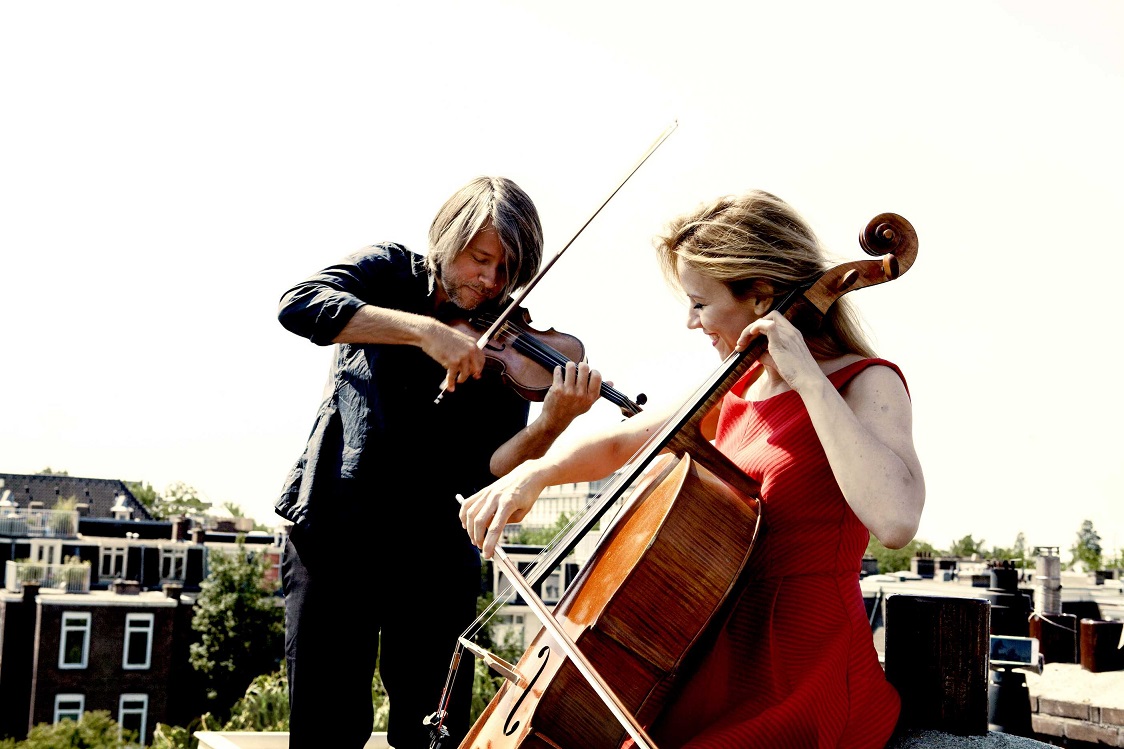
Laura van der Heijden (cello), Jâms Coleman (piano)

Janáček Pohádka (1910, rev. 1912-23)
Dvořák Gypsy Songs Op. 55: Songs my mother taught me (1880)
Kaprálová Navždy from Navždy Op. 12 (1936-7)
Mihály Movement for cello and piano (1962)
Kodály 3 Songs to Poems by Bela Balazs Op. posth.: Why are you saying that you do not love me (1907-9); Énekszó Op. 1: Slender is a silk thread (1907-9)
Sonatina for cello and piano (1909)
Janáček Violin Sonata (1914-15, rev.1916-22)

Wigmore Hall, London, 9 March 2022

reviewed by Ben Hogwood Pictures (c) Olivia Da Costa (Laura van der Heijden), Sim Canetty-Clarke (Jâms Coleman)

It bears repeating that times are tough for new artists in music. Competition is fierce, while opportunities for live performance and recording have been severely hampered over the last two years of lockdown and pandemic restrictions. How refreshing, then, to talk about two new artists, a long term agreement with Chandos and a chamber music album notable for its originality and depth of expression.

The new artists, cellist Laura van der Heijden and her musical partner, pianist Jâms Coleman, have been performing together since 2017. Their debut album, for which this concert was an official launch, looks at music from Central and Eastern Europe with its roots in folk, either written directly for cello and piano or falling naturally into a vocal range.

The album shares its title, Pohádka, with a three-part fairy tale for cello and piano by Janáček, based on a Russian tale. This began the concert, a picture book performance bringing the story to life with sharp characterisation and flair. Janacek used a good deal of his music to explore macabre storylines and this was no exception, though the lighter, more lyrical moments were good fun. van der Heijden’s tone was sonorous and projected easily to the back of the hall, while Coleman’s stylish playing was capped with limpid work in the second section.

We then heard arrangements of two songs from Dvořák and Vítězslava Kaprálová as an idea complement, the former transcribing beautifully from voice to cello, with tasteful ornamentation from the cello. It was good to hear more of Kaprálová, a talented Czech composer who tragically died from tuberculosis when she was just 25. Her music immediately cast a spell, Coleman’s mysterious chords matched by a remote but moving line from the cello in its higher register.

Different qualities were required for the music of Hungarian composer and conductor András Mihály. His Movement for cello and piano was a dramatic rollercoaster, and rather volatile at times – reflecting perhaps the differing styles at play in modern music when it was written in 1962. While there were undoubtedly elements of Bartók and even Webern in the music’s contours, which veered into atonality at times, there was a fierce expression suggesting Mihály’s music should be explored further. Both players responded with a terrific performance, mastering the technical demands.

Zoltán Kodály was also an influence on Mihály, and his music suits the cello hand in glove, whether in large-scale sonatas or shorter, folk-informed songs. We heard two songs here, the cello a doleful voice for Why are you saying that you do not love me, while Slender is a silk thread found Coleman beautifully spinning out the silvery tale. However the single-movement Sonatina for cello and piano, at just under 10 minutes, made a lasting impression with its passion, profound lyricism and subtle melancholy. The performers’ love for this piece was clear, and the high voltage account found them finishing each other’s musical sentences.

The same could be said for Janáček’s Violin Sonata, a pungent piece whose proximity to World War One is evident in the rapid fire of its phrases. The composer’s unusual musical language was once again wholly compelling, with broad lyrical statements countered by strange, abrupt full stops to his melodies. The parallels with the current situation in Ukraine were impossible to ignore, especially with the emotion both players brought to the second movement Ballada, its sweeping melodies reaching skyward. Ultimately the acidic third and fourth movements cast a cloud over the mood, the players vividly depicting the distant sound of gunfire alongside more thoughtful introspection. van der Heijden was commendably modest about her own arrangement of the Sonata, for cello and piano, an extremely successful version losing none of the intensity or fractious treble phrases. Both players were superb, their virtuosity and togetherness notable throughout.

This was an extremely rewarding concert, energetic and romantic in turn but also thought-provoking through its wartime undercurrents. Laura van der Heijden and Jâms Coleman deserve great credit for their refreshing take on a chamber music album, which bodes well for their ongoing relationship with one of Britain’s best classical independents. Theirs is a partnership to watch closely.

Watch and listen

In concert – Daniel Rowland, English Symphony Orchestra / Kenneth Woods: Poulenc, Philip Sawyers & Mozart

daniel-rowland

Poulenc Sinfonietta FP141 (1947)
Sawyers Viola Concerto (2020) [World Premiere]
Mozart Symphony No. 40 in G minor K550 (1788)

Daniel Rowland (violin), English Symphony Orchestra / Kenneth Woods

The Priory, Great Malvern
Saturday 5 March 2022

Written by Richard Whitehouse

Having relocated from Hereford to Great Malvern, the English Symphony Orchestra’s second concert this weekend followed a broadly similar format with, once again, a first public hearing for a recent concerto by its former Composer-in-Association and now its Composer Laureate.

First, though, a welcome revival for the Sinfonietta that Poulenc wrote for the founding of the BBC’s Third Programme (later Radio Three). The composer wrote little music for orchestra outside a concertante or theatrical context, making this piece from his maturity more valuable. Poulenc’s aesthetic may have been avowedly non-symphonic, but there is no lack of formal focus in an opening Allegro as was suitably impetuous here; nor of capering wit in a scherzo that only marginally outstays its welcome. Not so the Andante, whose fusion of ingratiating charm and restive pathos is almost a character portrait. A showcase, too, for woodwind such as the players seized upon gratefully – the orchestra entering into the spirit of the final Rondo with an abandon neatly offset by the introspective closing pages with their equivocal pay-off.

Not wishing to invoke the joke about buses, but Philip Sawyers had directly followed up the Double Concerto heard yesterday with a Viola Concerto for Daniel Rowland. The outward three-movement trajectory is retained, but the musical content is appreciably different – not least in the moderately paced Allegro whose substantial initial tutti outlines numerous ideas explored extensively if understatedly over what follows. Nor does the absence of a cadenza sell short a viola part whose plangent tones are enhanced with the translucent orchestration.

Almost inevitably less immediate than the corresponding movement of its predecessor, the central Andante is absorbing in its meditative soliloquy for the soloist – often in the company of solo wind and whose haunting demeanour is countered though never quite dispelled by the final Allegro. Here the lively refrain provides an outlet such as Rowlands, clearly as adept a violist as he is a violinist, despatched with no mean virtuosity. Once again, it was a sense of the whole work brought formally and expressively full circle as gave the coda its conviction.

Continuing their reverse traversal of Mozart’s final three symphonies, the ESO and Kenneth Woods (above) tonight gave the 40th – most dramatic of the trilogy and whose innovations are easy to take for granted, but whose opening Allegro is never less than compulsive when the trade-off between its indelible main theme and tensile accompaniment was so intently maintained through to the fatalistic coda. The Andante can often feel flaccid but not when directed with such attention to its lilting gait and expressive intensity, while the Menuetto had a rhythmic trenchancy and harmonic acerbity offset by its trio’s repose. The final Allegro unfolded at an ideal tempo – its second-half repeat vindicated by an altered emphasis on the development’s visceral opening sequence, with a heady ratcheting-up of emotion in those very closing bars.

Impressive music-making, and just what was needed in what are suddenly dangerous times. Reason enough, therefore, for having begun this concert (as on the previous night) with the Ukrainian national anthem: an opportunity, however brief, for some much-needed reflection.

For further information on the ESO’s 2021/22 season click here, and for more on composer Philip Sawyers click here Meanwhile for more information on the artists, click on the names to access the websites of Daniel Rowland and Kenneth Woods. Meanwhile for more on musical events at Great Malvern Priory, click here

In concert – Daniel Rowland, Maja Bogdanović, English Symphony Orchestra / Kenneth Woods: Philip Sawyers Double Concerto, Haydn & Mozart

rowland-bogdanovic

Haydn Symphony No. 96 in D major Hob.1/96 ‘The Miracle’ (1791)
Sawyers Concerto for Violin and Cello (2020) [World Premiere]
Mozart Symphony No. 41 in C major K551 ‘Jupiter’ (1788)

Daniel Rowland (violin), Maja Bogdanović (cello), English Symphony Orchestra / Kenneth Woods

St Peter’s Church, Hereford
Friday 4 March 2022

Written by Richard Whitehouse

The English Symphony Orchestra continued its season with this first in a pair of concerts that featured two recent concertos from its current Composer Laureate, heard alongside symphonic works which have long been – or, in one instance, should be – a part of the standard repertoire.

If not the most often heard of his ‘London Symphonies’, Haydn’s 96th is typical in its formal precision and expressive richness. Not least the opening movement, its ominous introduction the perfect foil to an energetic and often impetuous Allegro, then an Andante whose variations deftly alternate wit with pathos. The ESO’s playing was at its most felicitous both here and in a robust Menuetto, the piquant oboe melody of whose trio was elegantly rendered by Rebecca Wood. Nor was there any lack of incisiveness in the finale’s good-humoured dash to its finish.

Concertos for violin and cello have hardly been numerous, composers doubtless inhibited by Brahms’s example, so credit to Philip Sawyers for rising to the challenge in this piece for the compelling partnership of Daniel Rowland and Maja Bogdanović. As in Sawyers’s previous concertos (for cello, trumpet, and violin), there are three compact movements – the opening Allegro moderato conveying something of a preludial feel through its speculative progress and blurring of formal boundaries such that the music tails away uncertainly toward its close.

It is in the central Andante that this work came into its own, Sawyers’s own experience as a string player evident in the emotional raptness of the soloists’ dialogue and underpinned by eddying orchestral textures which did much to sustain the ongoing eloquence. If the Allegro Vivo, its main idea redolent of Poulenc (or, perhaps, Malcolm Arnold at his wittiest) risked seeming lightweight, the tensile interplay of the soloists along with a sense of the thematic elements coming audibly full circle made for an effervescent and ultimately decisive finale.

An impressive debut, then, for a piece which ought to find favour in this still limited medium. The soloists duly returned for Castillo Interior (2013) by Pēteris Vasks, inspired by the mystic St Teresa of Avila and creating a suitably fervent impression even when abbreviated as here.

Mozart’s final three symphonies will all be heard, in reverse order, over the remainder of the ESO’s current season. This evening brought the 41st whose Jupiter subtitle may have been a posthumous addition, but aptly evokes the work’s essence – not least with an initial Allegro both forthright and impulse as Kenneth Woods heard it. The ensuing Andante felt a little too swift for its ‘cantabile’ fully to register, but its confiding intimacy was fully in evidence – as was the lilting swing then pert elegance of the Menuetto. Woods favoured a rapid tempo for the final Allegro, and it was a tribute to these players that this music’s textural intricacy and underlying momentum were maintained across a lengthy traversal (with all repeats observed) through to a coda whose contrapuntal ingenuity and rhythmic elan were tangibly in evidence. Overall, a persuasive reading of a masterpiece which, as with its predecessor, is all too easily taken for granted. So, too, the assumption that peace will prevail in Europe – reason enough for this evening’s concert to have started with a rendition of the Ukrainian national anthem.

For further information on the ESO’s 2021/22 season click here, and for more on composer Philip Sawyers click here Meanwhile for more information on the artists, click on the names to access the websites of Maja Bogdanović, Daniel Rowland and Kenneth Woods. Meanwhile for more on musical events at St. Peter’s, Hereford, click here