In concert – Clara-Jumi Kang, CBSO / Ryan Bancroft – Coleridge-Taylor, Mendelssohn & Sibelius

clara-jumi-kang

Coleridge-Taylor Solemn Prelude in B minor, Op. 40 (1899)
Mendelssohn Violin Concerto in E minor, Op. 64 (1844)
Sibelius Symphony No. 2 in D, Op. 43 (1901-2)

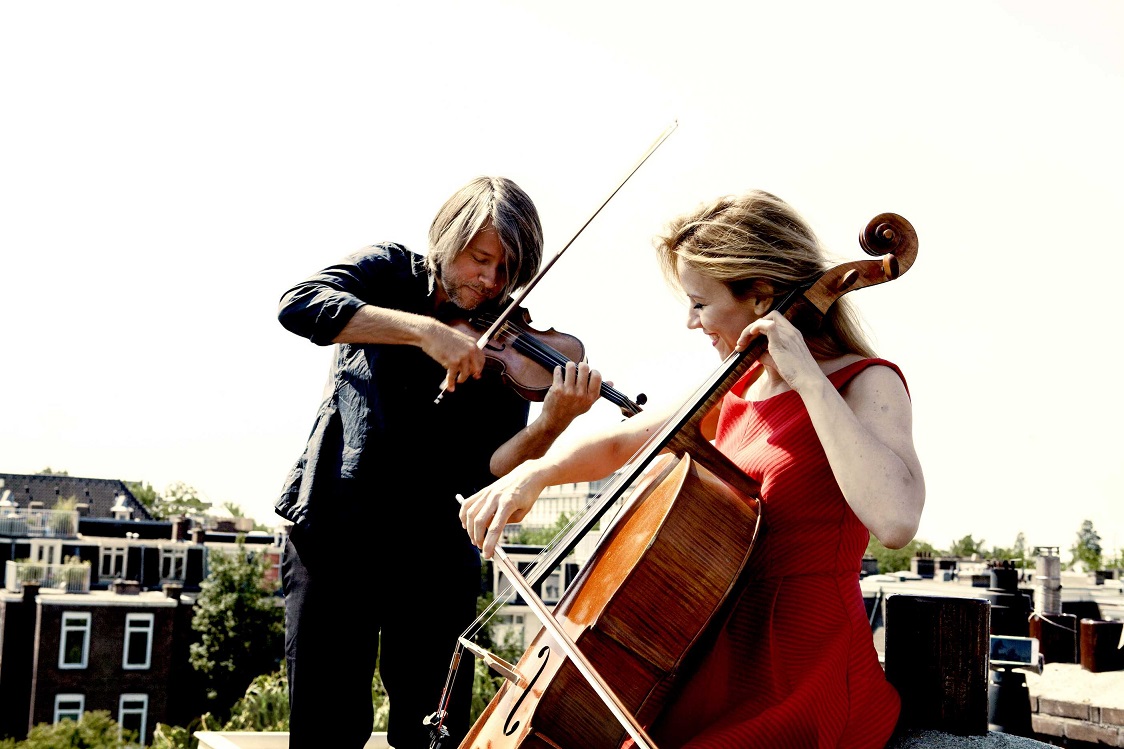
Clara-Jumi Kang (violin), City of Birmingham Symphony Orchestra / Ryan Bancroft

Symphony Hall, Birmingham
Thursday 13 January 2022

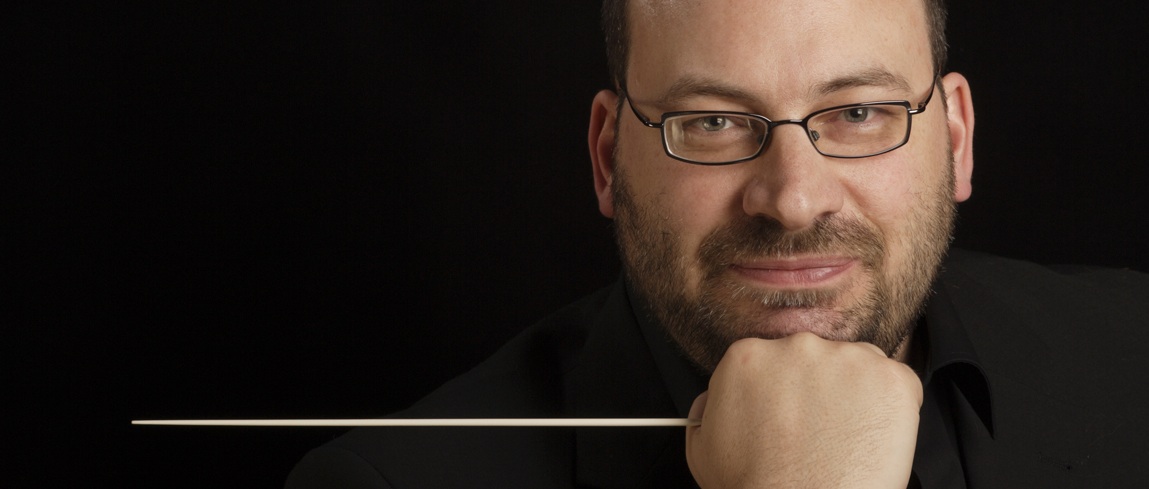
Written by Richard Whitehouse Ryan Bancroft picture (c) Benjamin Ealovega

Having seen in the new year in customary Viennese-style, the City of Birmingham Symphony Orchestra continued its season with this programme of repertoire staples along with what was (probably) only the third performance of a relatively early orchestral work by Samuel Coleridge-Taylor.

The recent revival of interest in Coleridge-Taylor hopefully means such enticing pieces as his Violin Concerto and Clarinet Quintet will be heard more frequently at concert hall and recital rooms. If the Solemn Prelude is not quite on their level, it certainly deserved more than total neglect following its premiere at Worcester Cathedral in 1899; a further hearing last July only made possible after the manuscript was relocated at the British Library. Combining Elgarian nobility with Brucknerian grandeur, its outer sections exude a portentousness complemented by the expressive immediacy at its centre; abetted here by Ryan Bancroft’s flexible handling of tempo so a welcome melodic spontaneity came to the fore. No undiscovered masterpiece, but an appealing work that doubtless fulfilled its remit back then and could do so again today.

Mendelssohn’s Violin Concerto has never lacked for performances during the 177 years of its existence such that familiarity can breed, if not contempt, then at least a certain predictability. Credit to Clara-Jumi Kang for reminding one how (to quote David Kettle’s apt description in the programme) ‘‘quietly innovative’’ the piece is as to formal continuity and motivic fluidity. Not that this was a low-key or understated reading – Kang bringing out the combative side of the opening Allegro (‘appassionato’ it duly was), not least her impetuous take on the central cadenza whose developmental function was tellingly underlined. The Andante melded warm lyricism and plaintive regret to a bewitching effect then, after its teasing entrée, the animated repartee of the finale was deftly rendered through to a vivacious coda and decisive conclusion.

Now in his early thirties, Bancroft (above) is into his second season as principal conductor of the BBC National Orchestra of Wales and takes up a similar post with Royal Stockholm Philharmonic in 2023. This account of Sibelius’s Second Symphony left little doubt as to his interpretative credentials, not least with a finely proportioned yet impulsive reading of the initial Allegretto, then an Andante as lacked in little in that formal focus essential if its fervour is not to become histrionic. To which, an attacca from one movement to the other might have been beneficial.

The latter movements run continuously in any case – and, after a scherzo by turns tensile and tender, the transition was unerringly handled such that the finale hit the ground running. This can easily become discursive or even sprawl but, with its ‘big tune’ kept in check and starkly modal second theme keenly ominous, it built purposefully and with some inevitability to an apotheosis that, while it evinced more in the way of triumph than catharsis, none the less set the seal on an idiomatic performance with the CBSO woodwind and brass often at their best.

After an evening of Stephen Sondheim (now the more poignant following his death last November), then chief conductor designate Kazudi Yamada returns on Wednesday 19 and Thursday 20 January in a programme of Strauss, Mozart and Mahler.

For more information on the next concerts with Kazudi Yamada you can visit the orchestra’s website. Meanwhile click on the links for information on Clara Jumi-Kang and Ryan Bancroft.

In concert – CBSO / Eduardo Strausser – Viennese New Year

cbso-viennese-new-year

Johann Strauss II Die Fledermaus (1874) – Overture; Tritsch-Tratsch, Op. 214 (1858)
Johann Strauss II / Josef Strauss Pizzicato Polka, Op. 335 (1869)
Lehár Die lustige Witwe (1905) – Vilja
Johann Strauss II Vergnügungszug, Op. 281 (1863-4); Im Krapfenwald’l, Op. 336 (1869); Frühlingsstimmen, Op. 410 (1882); Die Zigeunerbaron (1885) – Einzegsmarsch
Lehár Giuditta (1934) – Meine Lippen sie küssen so heiss
Johann Strauss II Wiener Bonbons, Op. 307 (1866)
Josef Strauss Feuerfest!, Op. 269 (1869)
Johann Strauss II Die Fledermaus (1874) – Mein Herr Marquis; Unter Donner und Blitz, Op. 324 (1868); An der schönen, blauen Donau, Op. 314 (1866)
Johann Strauss I Radetzky Marsch, Op. 228 (1848)

Jennifer France (soprano), City of Birmingham Symphony Orchestra / Eduardo Strausser

Symphony Hall, Birmingham
Sunday 9 January 2022

Written by Richard Whitehouse

The global reach of the Vienna Philharmonic’s annual event, not to mention the world-wide jamborees masterminded by André Rieu, may have rendered the Viennese New Year concert  from a wholly new perspective, but its content and purpose remain essentially the same – as was evident in this concert by the City of Birmingham Symphony Orchestra, which has long emerged from its Christmas break with such a programme as was performed this afternoon; a smattering of novelties complementing the evergreens whose absence would be unthinkable.

His introductions may have been intermittent, but Brazilian conductor Eduardo Strausser was an engaging exponent of Johann Strauss II’s music – not least the overture to his operetta The Bat that, after a halting start, unfolded with a sure sense of where this ingenious medley of its main items was headed. The rhythmic verve of the Tritsch-Tratsch polka was exactly caught, as also the nonchalance of the Pizzicato polka (in collaboration with Josef Strauss, too often neglected next to his famous sibling). Jennifer France joined the CBSO for a winning take on the ‘Vilja’ aria from Franz Lehár’s The Merry Widow, hearing it in English a reminder of this operetta’s massive success on both sides of the Atlantic. Following the heady élan of Strauss’s Excursion Train polka then the rustic charm of his In Krapfen’s Woods polka – its plethora of birdcalls effortlessly dispatched by the orchestra’s percussion – she returned for the Voices of Spring waltz, heard in its unexpected while effective vocal guise with verse by Robert Genée which made for a concert aria such as brought this first half to its close in impressive fashion.

The Entrance March from Strauss’s operetta The Gypsy Baron provided a suitably rousing entrée into the second half, Jennifer France duly raising the stakes with her sensual reading of the aria My lips give so fiery a kiss from Léhar’s musical comedy Giuditta, then Strausser drew unexpected pathos from Strauss’s Vienna Bonbons waltz – its title belying the music’s elegance and subtlety; quite a contrast, indeed, with Josef Strauss’s roof-raising Anvil polka-française (and a favourite of this writer since first encountering it on an anthology from the Hollywood Bowl Symphony Orchestra decades ago). The scintillating repartee of My lord marquis (aka Adele’s Laughing Song) from The Bat enabled Jennifer France to bow out in fine style, then it was on to the rip-roaring swagger of the Thunder and Lightning polka that once more kept the percussion section fully occupied.

The advertised programme came to an end with On the Beautiful Blue Danube waltz – a piece which never quite measures up to its evocative opening, even though Strausser drew enticements aplenty from the CBSO players. There followed the inevitable encore of Johann Strauss I’s Radetzky March, early regarded as having immortalized the Field Marshal who, as a master tactician (and putative war criminal) helped to maintain the Habsburg Empire’s dominance longer than might otherwise have been the case. Not an issue for those who clapped along to Strausser’s alert prompting, rounding off in fine style the start to this second half of the CBSO’s season which continues this Thursday with Ryan Bancroft for a programme featuring Coleridge-Taylor, Mendelssohn and Sibelius.

For more information on the forthcoming Ryan Bancroft concert, you can visit the orchestra’s website. Meanwhile click on the links for information on Eduardo Strasser and Jennifer France.

In concert – Elizabeth Watts & Julius Drake perform the music of Imogen & Gustav Holst @ Wigmore Hall

Elizabeth Watts (soprano, above), Julius Drake (piano, below)

Gustav Holst Calm is the morn Op. 16 No. 1 (1903-4), Persephone Op. 48 No. 1, Betelgeuse Op. 48 No. 12 (1929), The heart worships (1907), The Floral Bandit Op. 48 No. 6 (1929)
Imogen Holst Weathers (1926), 4 Songs from Tottel’s Miscellany: Shall I thus ever long, As lawrell leaves (1944), 10 Appalachian Folk Songs: My dearest dear, The brisk young lover, I must and I will get married (1938, world première performances)
Gustav Holst Hymns from the Rig Veda Op. 24 (1907-08)

Wigmore Hall, London, 3 January 2022

reviewed by Ben Hogwood from the online broadcast. Artist photos (c) Marco Borggreve

The songs of Gustav Holst have largely eluded British performers and concert audiences over the years, and a quick scan over retail sites reveals just the one recording in the last decade. The songs of Imogen Holst, meanwhile, are even more scarce, so it was doubly welcome that this imaginative recital from soprano Elizabeth Watts and pianist Julius Drake chose to pair works by father and daughter.

Holst senior was a composer capable of finding unusual stillness in music, as the Venus and Neptune movements from his orchestral suite The Planets testify. That talent extended to his songs, and we heard several examples where the composer took his time to set the scene, helped in extremely sympathetic performances from Watts and Drake.

Calm is the morn, a Tennyson setting, found a deep peace tinged with sorrow, though the high notes floated effortlessly by Watts were rather special. These contrasted vividly with the stately Betelgeuse, low in the range while contemplating the end of life – just as Neptune explored the boundaries of the living and the dead at the edge of the solar system. In theory Betelgeuse, with text by Holst’s good friend, the poet Humbert Wolfe, should be more effective with a male voice but Watts found the mysterious depths too. Drake’s tolling chords were the ideal foil, and indeed the pianist proved sensitive to every slight nuance in his scene setting, particularly the slow chorale figure of The heart worships. This was another setting that took its time but was all the more moving for it, with the soprano’s low range well controlled. The Floral Bandit, another Wolfe setting, flitted between quick piano figurations and a restless, high contour from the voice, deliberately uncertain in its direction. Meanwhile Watts’ fretful tones caught the urgency given to Persephone.

Holst was always a keen melodist, a quality that runs through Imogen’s music too. As her father did, she had a keen interest in folk melodies both from this country and further afield, and it was fascinating to compare Watts and Drake’s Anglo-American selection, sourced with help from the Benjamin Britten archive at the Red House, with the songs digitised for performance here.

Imogen’s writing celebrated the open air, its melodies often reaching for the sky. The first song Weathers revelled in its freedom, with a lovely pointed piano part to offset the folksy tune. Drake then enjoyed the trippy syncopations from the piano, combining with a bright soprano line for Shall I thus ever long, Watts keeping clarity in the quick moving words. The slightly elusive As lawrell leaves was next, before the three Appalachian folk settings, collected by Cecil Sharp, exhibited a powerful yearning quality. My Dearest dear kept the folk melody true but turned the melody beautifully. The brisk young lover could almost have been Gustav Holst himself, though Imogen’s piano parts felt more directly connected to the melody. There was an unexpectedly devastating beauty to the simple, sad, final verse, before I must and will get married took a lighter approach.

A rare performance of the complete set of Gustav Holst’s Hymns from the Rig Veda followed. It is remarkable to think these works were published in 1908, for they still sound forward looking today, written as they were after the composer made his own translations of the sacred texts.

Holst’s advanced harmonic thinking was distilled by Drake, while Watts took the longer and more complex melodic phrasing in her stride. The accumulating brightness of Ushas (Dawn) gave way to a stern Varuna I (Sky), where confession of sin was made and ultimately quashed. The sudden movements of Maruts (Stormclouds) came as something of a shock, with the flashing of sword blades, before Indra (God Of Storm and Battle) assumed a regal air with grand chords and a bold melody, strong as an ox under Watts’ delivery. Really impressive power from both in this song. Varuna II explored mysterious and ultimately deathly waters, the listener almost losing a harmonic centre, before Song of the Frogs charmed with its burbling activity. Vac (Speech) gave us another slow and concentrated song, while Creation was even more compelling with its haunting, mostly unaccompanied writing. Finally the wandering piano line for Faith found the soprano ‘rising in silent worship’.

This remarkable set of songs are not only harmonically adventurous but have words that are prescient for today’s climate and particularly the management of the Earth on which we live. Little did Holst know the way in which his work would be thought provoking nearly 115 years on. Watts recognised this, lending a lighter touch to her encore which was Imogen’s arrangement of Henry Carey‘s The Beau’s Lament, brightly sung.

This was a special concert, one of a kind – and a mention should be made for the quality of Wigmore Hall’s camera work, sensitive to both text and performers. Copyright restrictions may prevent them from doing so, but it would be wonderful to see Watts and Drake present this programme in recorded form, for they illuminated aspects of the Holst dynasty rarely glimpsed in the concert hall. Do watch it if you can.

Watch and listen

Sadly the Imogen Holst songs are not yet available in recorded form, but you can the selection from her father Gustav on the Spotify playlist below:

On record – Arnold: Symphony no.9 & Grand Concerto Gastronomique (Liepāja Symphony Orchestra / John Gibbons) (Toccata Classics)

toccata-arnold

Malcolm Arnold
Grand Concerto Gastronomique Op.76 (1961)
Symphony no.9 in D Op.128 (1986)

Anna Gorbachyova-Ogilvie (soprano, Concerto), Liepāja Symphony Orchestra / John Gibbons

Toccata Classics TOCC0613 [57’30”]

Producer Normands Slāva
Engineer Jānis Straume

Recorded 14-16 June 2021 at Great Concert Hall, Liepāja

Written by Richard Whitehouse

What’s the story?

Toccata Classics marks the centenary of Malcolm Arnold’s birth (falling on October 21st) in a pertinent coupling of his final symphonic statement with music finding this composer at his most irreverent and, by so doing, juxtaposes the two sides of his creativity to startling effect.

What’s the music like?

It was the compositional hiatus resulting from emotional breakdown then tortuous recovery as provided the catalyst for the Ninth Symphony, whose superficial simplicity belies the anguish beneath its surface. John Gibbons (who had earlier conducted this work in London, as part of a nine-year Arnold cycle, and Northampton) brings tangible expectancy to the opening Vivace, its arresting initial gestures soon revealing that textural starkness which goes on to define the whole work, with a circuitous evolution even more marked in the Allegretto – an intermezzo whose wistful theme effects less a series of variations than poignant searching for formal and expressive closure. The ensuing Giubiloso is more overtly a scherzo with its headlong motion or trenchant exchanges between wind and strings, yet even here a curious detachment prevails.

Arnold’s eight previous symphonies each concluded in a relatively short and decisive finale, but the Ninth’s final Lento proves anything but – its sustained slowness abetted by restrained dynamics and a sparseness of detail which could have made for unrelieved gloom were it not for those myriad ‘shades of grey’ the composer draws from his reduced palette. An additional factor is Gibbons’s pulse for this movement as a tactus (one-second) rather than crotchet beat, leading to a traversal several minutes less than earlier recordings by Andrew Penny (Naxos), Vernon Handley (BMG) or Rumon Gamba (Chandos) and, as a result, making the cadential chord one of benediction than resignation. Whether or not this approach convinces depends on how one views the symphony overall, but there can be no doubting its sincerity of intent.

Composed for the Astronautical Music Festival – the last of several events inspired by Gerard HoffnungGrand Concerto Gastronomique is Arnold at his most uproarious. Its designation ‘for Eater, Waiter Food and Large Orchestra’ betrays a visual aspect not essential for enjoying this 15-minute consumption of Brown Windsor soup, roast beef, cheese, Peach Melba – with a sensuous cameo by soprano Anna Gorbachyova-Ogilvie – then coffee with brandy; framed by a Prologue and Epilogue of due portentousness, but thankfully no ‘Mr Creosote’ in evidence.

Does it all work?

As a coupling, yes. As to content, the Ninth Symphony will likely always divide opinion as to whether it is what Arnold intended or merely the best that he was able to achieve after the traumas of the preceding decade, but no-one could accuse Gibbons of realizing it as other than a cohesive entity whose formal proportions are as precisely judged as its expressive trajectory is purposefully conveyed. Listeners not convinced by those earlier recordings should certainly hear this new account, lucidly and persuasively rendered by the Liepāja Symphony Orchestra.

Is it recommended?

Yes, enhanced by thought-provoking booklet notes from Timothy Bowers along with realistic sound. Should still-missing orchestral pieces by Arnold (notably the Op. 1 First Divertimento or the Op. 12 Symphonic Suite) come to light, Gibbons will hopefully be asked to record them.

Listen

Buy

You can discover more about this release at the Toccata Classics website, where you can also purchase the recording. You can read more about the Malcolm Arnold society at their website, while for more on each of the performers, click on the names Anna Gorbachyova-Ogilvie, Liepāja Symphony Orchestra and John Gibbons

In concert – Echoes/BCMG NEXT @ Centrala

bcmg-next-centrala

Anderson Scherzo (with trains) (1993)
Salonen
Pentatonic Étude (2008)
Birtwistle
Duets for Storab (1983)
Donatoni
Soft (1989)
Finnis
Brother (2012/15)

Musicians from BCMG NEXT

Centrala, Digbeth, Birmingham
Thursday 16 November 2021

Written by Richard Whitehouse

It may not be the most easily locatable arts venue of those within Birmingham’s inner suburbs, but Centrala – launched almost a decade ago as a base for the dissemination and promotion of Central and Easter European cultures – was an appealing space for this latest recital featuring NEXT musicians from Birmingham Contemporary Music Group. The performance area itself might have been compact to a fault, but there no feeling of excessive restriction in the course of what was a varied yet balanced programme of works stretching across almost four decades.

It began in invigorating fashion with a timely revival of Scherzo (with trains) whose premiere at Wigmore Hall was an early success for Julian Anderson – being one of his most engaging works for ensemble and a major contribution to its genre. Drawing inspiration from Thoreau as well as rhythms of high-speed trains, two clarinets (Heather Ryall and George Blakesley), basset horn (Beth Nichol) and bass clarinet (Emily Wilson) unfold an unpredictable discourse; one whose requirements of technique and coordination were met in this assured performance.

A pity that the scheduled account of Anna Thorvaldsdottir’s Spectra was lost through Covid-related issues, but a further hearing for Esa-Pekka Salonen’s Pentatonic Étude was certainly no hardship. This testing paraphrase on a passage from Bartók’s unfinished Viola Concerto puts the soloist through its paces, restating the original in an understated apotheosis realized by Cameron Howe with evident sensitivity. Also reappearing from NEXT’s recent recital at Coventry Cathedral was Harrison Birtwistle’s Duets for Storab. Written when the composer lived on the Inner Hebridean island of Raasay, its inspiration lies in locations each having the name of a Viking prince whose shipwreck, pursuit and death are charted over six evocative pieces. Flautists Rebecca Speller and Leila Hooton were heard in (mainly) whimsical accord.

The music of Franco Donatoni enjoyed a brief vogue here in the decade before his death, but there have been few performances since – so making this revival of Soft the more welcome. Written for the late Harry Sparnaay, the bass clarinet’s doughtiest champion, this tensile and eventful piece feels typical of his late maturity in the way that seemingly detached, and even arbitrary gestures gradually build into a cohesive and cumulative continuity; one in which the expressive possibilities of the instrument are explored intensively though with no little irony.

Heather Ryall proved no mean exponent of this piece, as were Claudia Dehnke and Cameron Howe of Brother by Edmund Finnis. Written while he was composer-in-residence with the London Contemporary Orchestra, its four movements chart a gradually elaborating interplay between violin and viola, evolving from the meditative and incremental to the energetic and demonstrative – without the rapport between these instruments drawing apart in the process. Suffice to add the present performance lacked for nothing in terms of incisiveness or finesse.

It also brought to a close this final BCMG event for 2021. Dates of further performances are being announced in the new year, and it would be a shame if these not to feature a return to Centrala – well worth a visit by anyone who happens to be passing through Birmingham B5.

Further information on the BCMG can be found at their website. For more on NEXT Musicians click here, then on each of the composers names for the websites of Julian Anderson (with an alternative here), Esa-Pekka Salonen, Harrison Birtwistle, Franco Donatoni and Edmund Finnis. Finally for more information on the Centrala venue, click here