Online concert – Steven Isserlis & Connie Shih mark the centenary of Saint-Saëns @ Wigmore Hall

steven-isserlis

Saint-Saëns Cello Sonata no.1 in C minor Op.32 (1872)
Liszt Romance oubliée S132 (1880)
Fauré Romance Op.69 (1894)
Saint-Saëns Romance in F major Op.36 (1874)
Bizet arr. Hollman Carmen fantaisie (not known)
Willaume La noce bretonne Op.14 (pub. 1924)
Holmès arr. Isserlis Noël d’Irlande (1897)
Hahn 2 improvisations sur des airs irlandais (1894 rev. 1911)
Saint-Saëns Cello Sonata no.2 in F major Op.123 (1905)

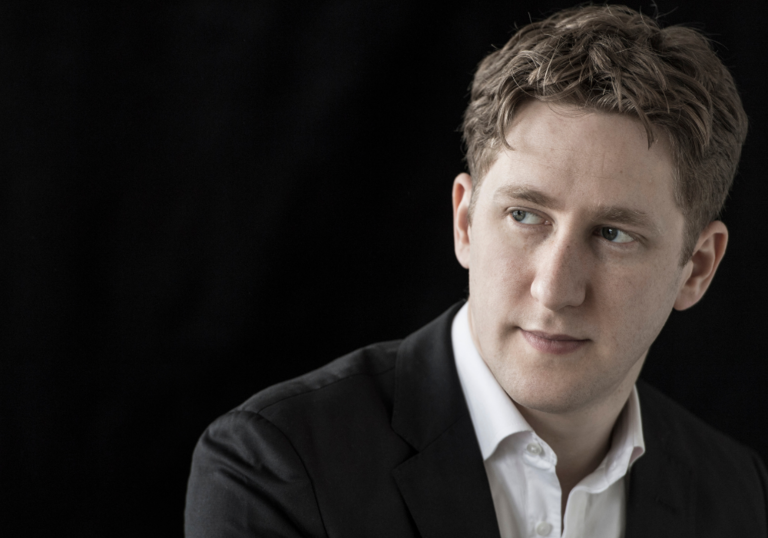
Steven Isserlis (cello, above), Connie Shih (piano, below)

Wigmore Hall, London
Thursday 16 December 2021

Written by Ben Hogwood

This well-devised program to mark the centenary of the death of Saint-Saëns was put together by cellist Steven Isserlis and his regular partner, pianist Connie Shih. They presented the composer’s two cello sonatas, the first of which was recorded by Isserlis back in 1992, in an intriguing historical context.

There is no room for shrinking violets in the first movement of the Cello Sonata no.1 in C minor Op.32, a relatively early work, and both performers threw themselves headlong into the music. Saint-Saëns was a virtuoso pianist, and on occasion his writing for the instrument is as demanding if not more so than the instrument it is ‘accompanying’. Here however the two were on equal terms, with plenty of cut and thrust in a dramatic first movement. The C minor casting and stormy start draw parallels with Beethoven, and these were built upon in the players’ compelling dialogue. The improvisatory slow movement was ideally poised, with an air of mystery in its central section where the cello was in its lowest register, complemented by twinkling figures from the piano. The Allegro moderato third movement returned us to powerful, passionate music, Isserlis’ double stopping passages immaculately delivered and Shih finding the necessary definition and phrasing in a superbly played piano part.

A full 32 years elapsed between the first sonata and its sequel, the Cello Sonata no.2 in F major Op.123. By this time the 70 year-old composer’s style had developed considerably. It is a substantial piece, running over 35 minutes, and is perhaps less-performed on that basis, not to mention the demands made on the performers. Isserlis and Shih showed what a fine work it is, however, in a performance that was gripping from the off, full of passion but also finding the more elusive statements in the quieter music, where Saint-Saëns could be found writing subtle but far-reaching sleights of harmony.

A joyous opening paragraph surged forward with considerable energy, powering an impressive and flowing first movement, Shih harnessing the power of the piano but continuing to hold a sensitive balance. She led off a capricious scherzo, whose variations were brilliantly characterized, from a limpid third variation (marked Tranquille) to a rippling Molto allegro that followed.

The heart of the piece, however, lies in the substantial Romance, a dreamy slow movement with a beautiful melody and a profound middle section turning towards the minor key. Both played with poise and affection, finding the centre of music the audience could fully lose themselves in. The last movement, which the composer promised ‘will wake anyone who’s slept through the rest of the piece’, was terrific, working from its deceptively innocuous opening phrase to throw off the shackles and end in celebratory mood. Isserlis was typically generous with his expression, with Shih deserving credit for her technical command and shapely melodic phrasing. The octaves towards the end were especially well-handled.

While the two sonatas were the main works of the concert, the complementary pieces were no less involving, providing an ideal foil. Firstly we heard from Saint-Saëns’ close friend Liszt, one of his few works for cello and piano. The Romance oubliée began with a recitative, with beautiful tone in the held notes from the cello, setting the (intense) mood. Then another great friend (and pupil), Fauré – whose Romance uses the whole range of the cello, starting in the mysterious depths and ending in the rarefied upper register. Saint-Saens’ own warm-hearted Romance in F major Op.36 was affectionately recounted, before the showstopping Carmen fantasie from Saint-Saëns’ friend and regular recital partner, Joseph Hollman. This was a showstopper, with quickfire dances and a pizzicato Habanera, stylishly done by Isserlis.

Shorter pieces followed from Gabriel Willaume, Reynaldo Hahn and Augusta Holmès, each with fascinating connections to the composer. Willaume’s La noce bretonne (The Breton wedding) was rather moving, its distant drone growing in feeling and power before passing by and disappearing again. Hahn’s 2 improvisations were songlike and affecting in their simplicity, a soulful Willow Tree especially, before an arrangement by Isserlis of Holmès song Noël d’Irlande, its pentatonic language easy to absorb.

This was a very fine concert, with playing of an exceptionally high standard by both artists, but crucially with the involvement that told us how Saint-Saëns, in particular, could combine virtuosity with deep feeling, contrary to some opinion. It is hard to imagine how his centenary could have been better observed – and it ended with a perfectly weighted account of The Swan, one of his most famous shorter pieces – taken as it is from Carnival of the Animals. Isserlis needed only to introduce it with a wave of the hand.

You can watch this concert on the Wigmore Hall website for the next 28 days – and you can hear most of the music played by Isserlis and Shih on the Spotify playlist below, with some of the recordings drawn from their recent album Music from Proust’s Salons. That disc can be heard (and purchased) from the BIS website

In concert – Colorado MahlerFest Orchestra / Kenneth Woods – MahlerFest XXXIV: Sawyers & Mahler Fifth Symphonies

MahlerFest01_square-01

Colorado MahlerFest Orchestra / Kenneth Woods

Sawyers Symphony No. 5 (2020) [World Premiere]
Mahler
Symphony no.5 in C sharp minor (1901-2)

Macky Auditorium, Boulder
Saturday 28th August 2021

Written by Richard Whitehouse

A programme of two five-movement Fifths might not have been what Kenneth Woods had envisaged at this stage of his symphonic traversal in the Colorado MahlerFest but, after an inevitably curtailed season last year, the need to jump-start the festival this time round was evident, and the present double-bill did so impressively. Mahler’s cycle is often viewed as the ‘end of the line’ for the genre of the symphony, yet its ongoing evolution is not hard to discern, and it is to Woods’s credit that he is making this aspect a crucial part of his tenure.

Woods has championed the music of Philip Sawyers for more than a decade, with this Fifth Symphony continuing along a stylistic path comparable to those two before it. Its immediate predecessor ended with an expansive Adagio as was his most impressive such movement so far, and the present work continues from such inward (never self-conscious) seriousness in a Moderato (each of the movements being designated with Shostakovich-like inscrutability) that overrides clear-cut sonata procedures for a gradual unfolding whose thoughtful opening theme takes on greater emotional intensity as it builds to an ominous climax then closes in a mood of some ambivalence. Here, as throughout, the writing for a standard orchestra (with fifth horn and harp though no percussion other than timpani) is never less than resourceful.

From here an Allegro picks-up the pace incrementally to capering and, in its middle stages, wistful effect; before the central Lento pursues a sustained course (not a little unlike that of Rubbra’s slow movements) over two cumulative paragraphs – the second of which climaxes with the most anguished music in the whole work, prior to the brief yet affecting coda from strings. More overtly a scherzo, the ensuing Presto also evinces greater expressive contrast between its impulsive outer sections and a chorale-like ‘trio’ of affecting poise. From here, the final Allegro is the most orthodox movement in its energetic and reflective main themes – taking in an intensive development and subtly modified reprise prior to an apotheosis that ensures a decisive yet, as might be expected from this composer, never bathetic conclusion.

On this first hearing, Sawyers’s new symphony proved a cohesive and absorbing piece – less arresting in content, perhaps, than either of its predecessors but with an unfailing formal logic and expressive eloquence that are not to be gainsaid. Interesting, too, this Fifth should mark something of a rapprochement with ‘classical’ tonality; whereas Mahler’s Fifth, which came after the interval, sets in motion that often fractious discourse which duly informs almost all this composer’s symphonic works from his final decade of creativity – indeed, of existence.

Pacing is crucial in Mahler’s symphonies, with this being no exception. From the outset of a trenchant trumpet solo, the Funeral March was almost ideally judged – its development not too histrionic, and coda whose eruptive force subsided into numbed uncertainty. Proceeding (rightly) without pause, its successor – as if a fantasia to the prelude just heard – steered with unobtrusive authority to its climactic if ill-fated chorale, and if the final return of the opening music lacked vehemence, the pulsating expectancy of the closing bars was tangibly rendered.

That the central Scherzo has long divided opinion is not in doubt (Otto Klemperer avoided the work because of it while Hermann Scherchen reduced it by two-thirds), and though Woods’s conception had its merits – a rustically evocative trio plus the transitions on either side – the unforced equability of its outer portions underlined just how closely this music verges on the platitudinous; its ländler-informed coyness and contrapuntal contrivance over-exploiting the potential of its content. At least the coda wrapped up this movement with real decisiveness.

The remaining movements were finely realized, Woods taking the Adagietto at a flowing yet flexible pace that enabled its rapture to emerge without risk of indulgence (here, as throughout, the strings’ articulation of grace notes served a structural as well as expressive purpose). The deftest of transitions duly prepared for a finale whose elaborate interplay of rondo and sonata elements was replete with a cumulative impetus as carried through to a fervent peroration, the chorale blazing forth during a close where affirmation and nonchalance were irresistibly fused.

It should be added that the playing of the Colorado MahlerFest Orchestra was of a consistently high standard – testifying to the excellence of the individual musicians as, also, their collective responsiveness to Woods’s technical acumen and interpretative insight. Its latter-day status as mainstream repertoire may have obscured its innovative qualities (and drawn attention away from its unevenness), but to hear this work so authoritatively realized and within the context of a major new symphonic statement says much for the continued importance of MahlerFest.

Further information on the Colorado MahlerFest can be found on their YouTube channel. For more on the festival, visit their website – and click on the names to visit the websites of Kenneth Woods and Philip Sawyers respectively.

In concert – Raphael Wallfisch, CBSO / Gergely Madaras: New Worlds – Sibelius, Jonathan Dove & Dvořák

gergely-madaras

Sibelius Finlandia Op.26 (1899)
Dove In Exile (2020) [CBSO Centenary Commission: UK Premiere]
Dvořák Symphony no.9 in E minor Op.95 ‘From the New World’ (1893)

Sir Simon Keenlyside (baritone), Raphael Wallfisch (cello, below), City of Birmingham Symphony Orchestra / Gergely Madaras

Symphony Hall, Birmingham
Thursday 9 December 2021

Written by Richard Whitehouse

Tonight’s concert from the City of Birmingham Symphony Orchestra amounted to a themed programme with late 19th century evergreens by Sibelius and Dvořák framing another of this orchestra’s Centenary Commissions in the first UK performance of a major work from Jonathan Dove.

In his introductory remarks, Dove spoke of In Exile as a hybrid of cantata, operatic scena and concerto; a fusion that has surprisingly few antecedents – one being Concerto on Old English Rounds by William Schuman, with viola and chorus as ‘soloists’. Here the roles were taken by baritone and cello during a half-hour piece whose texts, adapted by Dove’s regular librettist Alasdair Middleton, examine the state of exile from a perspective less about those emotions experienced in the adoptive country than of sensations evoked by what has been left behind.

Drawing on Medieval sources, Dante and Shakespeare then, from the early 20th-century, the Lebanese poet Kahlil Gibran and Irish scholar Douglas Hyde, to the Iranian-American Kaveh Bassiri, In Exile unfolds as a formally continuous and emotionally cumulative sequence whose traversal from the general to the specific is complemented by its undulating texture, enhanced with resourceful writing for strings and tuned percussion, which graphically evokes a journey of the mind as well as body. Simon Keenlyside gave a powerful rendering of the vocal part in all its burnished rhetoric, while Raphael Wallfisch (to whose mother, the cellist Anita Lasker-Wallfisch, this piece is dedicated) was no less searching as his ‘alter ego’ whose role takes in several exacting cadenza-like passages. Certainly, a work that should bear repeated hearings.

Making his debut with the CBSO, Gergely Madaras conducted with a sure sense of where this piece was headed, having opened the concert with a gripping account of Finlandia. Sibelius’s apostrophizing of his homeland can descend into bathos – Madaras ensuring otherwise in this tensile reading whose sombre brass, supplicatory woodwind and strings, then dashing central episode led into a lilting take on what became Finland’s unofficial national anthem, before the peroration urged the music on to a conclusion whose grandeur was shot-through with defiance.

There was equally much to admire in Dvořák’s New World after the interval, even though this was essentially a performance of two halves. Madaras’s listless way with the first movement’s introduction set the tone for a rather terse and short-winded account (made the more so by its lack of exposition repeat) of the Allegro, while Rachael Pankhurst’s eloquent rendering of the Largo’s soulful melody was hardly enhanced by peremptory changes in tempo, notably in the tense middle section. Not so the Scherzo, its coursing outer sections ideally complemented by the whimsical trio at its centre, then the final Allegro brought an impulsive response that kept its histrionics on a firm rein yet without losing sight of an intently growing momentum whose outcome was a powerfully wrought apotheosis – its radiant closing chord judged to perfection.

So, a well-conceived and finely executed concert featuring a conductor who will hopefully be returning in due course. The CBSO has three Choral Christmas concerts coming up later this month, then can be heard on January 9th in a Viennese New Year programme to see in 2022.

For more information on ‘A Choral Christmas’ click here. For more information on the January – July 2022 CBSO season, you can visit the orchestra’s website. Meanwhile click on the links for information on Jonathan Dove, Gergely Madaras, Sir Simon Keenlyside and Raphael Wallfisch.

On record – Peter Dickinson: Lockdown Blues (Somm Recordings)

lockdown-blues

Barber (arr. Dickinson) Canzonetta Op. 48 (1977-8)*
Berkeley
Andante Op.23/6 (1945)
Cage
In a Landscape (1948)
Dickinson
Blue Rose (1978); Freda’s Blues (2016); Lockdown Blues (2020)
Ellington (arr. Dickinson)
Twelve Melodies (1932-43)*
Gershwin
Three-Quarter Blues (c1925); Who Cares? (1931)
Goossens
Lament for a Departed Doll Op.18/10 (1917)
Lambert
Elegiac Blues (1927)
MacDowell
To a Wild Rose Op.51/1 (1896)
Poulenc
Pastourelle IFP69 (1927); Bal fantôme IFP64/4 (c1934)
Satie
Trois Gymnopédies IES26 (1888); Trois Gnossiennes IES24 Nos.1-3 (1889-90)

Peter Dickinson (piano)

SOMM Recordings SOMMCD0644 [68’24”]

Producer & Engineer Peter Newble

Recorded 16 and 17 April 2021 at Potton Hall, Westleton, Suffolk. * indicates first recordings

Written by Richard Whitehouse

What’s the story?

Peter Dickinson here turns the third phase of lockdown to his – and our – advantage with this collection of piano music touching on the blues and jazz which have long been a mainstay of his careers as performer and composer, and which also includes two notable first recordings.

What’s the music like?

The programme commences with the pensive sadness of Dickinson’s Freda’s Blues, written in memory of the widow of Lennox Berkeley, continuing with a poised and refreshingly non-mawkish take on MacDowell’s perennial To a Wild Rose – its blues and rag idioms made the basis of Dickinson’s Blue Rose. The empathetic feel of Lambert’s Elegiac Blues in memory of singer Florence Mills is affectingly caught, while Dickinson’s marrying of blues and Bach in Lockdown Blues recalls George Shearing’s pioneering such fusions. After the drollery of Poulenc’s Bal fantôme, Dickinson’s reworking of the Canzonetta which Barber intended for his unrealized Oboe Concerto proves a focal-point in its searching pathos. Such a quality is also to the fore in Berkeley’s limpid Andante, as is the alluring charm of Gershwin’s Three-Quarter Blues – and to which the whimsy of Poulenc’s Pastourelle provides a pertinent foil.

Whether as solo pianist or in recital with his sister Meriel, Dickinson has been unstinting in his advocacy of Satie and his reading of the original Gnossiennes (not those three published decades after the composer’s death) lacks for nothing in perception. Such is equally the case when, after the insinuating charm of Gershwin’s Who Cares? then the wistful eloquence of Goossens’s Lament for a Departed Doll, he renders Satie’s evergreen Gymnopédies with an objectivity that not unreasonably plays down the mystical aura often attributed to this music.

Perhaps the highlight here is Twelve Melodies that Dickinson has arranged from Ellington’s big-band numbers in what proved a veritable ‘golden age’ for such music and not previously recorded in this guise. Picking out a selection might hardly seem necessary, but the yearning of Solitude, eloquence of Lost in Meditation, questing emotions of Azure then the expressive warmth of Mood Indigo stand out in a sequence which concludes with the phlegmatic charm of Day-Dream then haunting atmosphere of Prelude to a Kiss. Moreover, Dickinson has one final trick up his sleeve with an elegant rendering of Cage’s In a Landscape – music in which this most recalcitrant of composers comes closest to his beloved Satie with its ineffable grace.

Does it all work?

Very much so, thanks not merely to the range of music covered but also through Dickinson’s insight. Into his 87th year when these recordings were made, his technique remains as fluent as his understanding and enjoyment are audible. Long able to accommodate the populist and the experimental within his own music, such inclusiveness extends to the idiomatic aspect of his interpretation and the deftness of his touch. Surely nothing can now prevent the Ellington set being taken up by pianists everywhere, with the numerous shorter pieces ideal as encores.

Is it recommended?

Indeed. The piano sound has a naturalness and clarity ideal for this music, while few writers other than Dickinson would be equally aware of technical details and chart standings. Here is looking forward to further releases by this always resourceful pianist in his ‘Indian summer’.

Listen & Buy

You can discover more about this release and listen to clips at the SOMM Recordings website, where you can also purchase the recording. For more information on Peter Dickinson, click here.

In concert – Hockley Social Club & the CBSO present: Symphonic Sessions 2 – Ooh la la

2021.12.02 - Hockley Social Club Symphonic Sessions - cr. Hannah Fathers-5185

Symphonic Sessions 2 – Ooh la la

Emer/Piaf J’m’en fous pas mal (1946)
Milhaud Suite Op.157b – Jeu (1936)
Lili Boulanger Nocturne, ILB10 No. 2 (1911)
Satie Gymnopédie No. 1, IES26 No. 1 (1888)
Gould Benny’s Gig – VI, Calypso; VII, Jaunty (1962)
Khachaturian Clarinet Trio in G minor – Allegro (1932)
Louiguy/Piaf La vie en rose (1947)

Gilles Les trois cloches (1940)
Tiersen Amélie – Comptine d’un autre été (2001)
Debussy Première rhapsodie, ICD73 (1909-10)
Gershwin Shall We Dance – Walking the Dog (1937)
Stravinsky L’Histoire du soldat, Suite – Tango, Valse, Ragtime; Danse du diable (1919)
Tormé/Wells The Christmas Song (1945)
Glanzberg/Contet Padam, padam… (1951)

Gabrielle Ducomble (singer), Oliver Janes (clarinet), Colette Overdijk (violin), Julian Atkinson (double bass), James Keefe (piano)

Hockley Social Club, Birmingham
Thursday 2 December 2021

Written by Richard Whitehouse Photos courtesy of Hannah Fathers

It might not have featured the eponymous song from John Cale, but this ‘Ooh la la’ certainly had more than its share of surprises in among the entertainment. The artistic and commercial success of the first Symphonic Sessions event held back in October meant that its successor, once again co-presented by Hockley Social Club (a beacon of light in the dreary surrounding of Newtown) and the City of Birmingham Symphony Orchestra, would not be long in coming. Soon enough for this to have taken on anticipations of Christmas in its overall aura, and with a cabaret element provided by Belgian chanteuse Gabrielle Ducomble, whose cover-versions of Édith Piaf have previously (and rightly) attracted widespread plaudits. The stage, or raised platform towards the centre of the venue, was ready for another varied and enjoyable evening.

The first set duly got off to a striking start with Michel Emer’s J’m’en fous pas mal, Gabrielle Ducomble bringing out the world-weariness of lyrics which Piaf all too easily made her own; and to which Jeu, third movement of Milhaud’s Suite for clarinet, violin and piano, provided a vivacious foil. The evocative poise of Lili Boulanger’s Nocturne was elegantly conveyed by Colette Overdijk, then James Keefe drew surprising nuances from electric piano for the first of Satie’s Gymnopédies. Oliver Janes and Julian Atkinson enjoyed putting two numbers from Morton Gould’s suite Benny’s Gig through their paces, the central scherzo of Khachaturian’s Clarinet Trio most engaging with its alternate vigour and suavity. Ducomble’s take on Louis Guglielmi’s La vie en rose, Piaf’s signature-song, brought this set to a warmly eloquent close.

After a ‘dessert interlude’, the second set found Ducomble leaving her mark on Jean Villard Gilles’s Les trois cloches (a Piaf song introduced to a new generation by Tina Arena), before the ‘Theme’ from Yann Tiersen’s music for the film Amélie injected an appealing whimsy. A sure highlight was Janes’s rendering of Debussy’s Première rhapsodie, sensuous and poetic by turns, then perfectly complemented by the coy jauntiness of Gershwin’s Walking the Dog (aka Promenade). Four dance pieces from the suite for violin, clarinet and piano arranged by Stravinsky from L’Histoire du soldat received an incisive response, then Ducomble offered a soulful take on Mel Tormé’s evergreen The Christmas Song. The faux affirmation of Norbert Glanzberg’s Padam, Padam… saw this Piaf-centred programme to its gently fatalistic ending.

Probably the only thing not really evident over the course of this evening was the ‘‘specially dressed bohemian finery of a rather festive feeling Hockley Social Club’’ as was detailed on the promotional flyer, but no matter. The reaction from a capacity house was never less than enthusiastic – doubtless abetted by the variety of food and drink (including another designer cocktail) available, with DJ sets from Pritt Kalsi which enhanced the ambience between the live music-making. Incidentally, those who enjoyed Gabrielle Ducomble’s singing can hear her in residence at London’s Brasserie Zédel in the final week of December, and Symphonic Sessions will be back in action sometime next spring – now established as an attraction well beyond the confines of B19 and likely to remain so throughout 2022, and hopefully beyond.

symphonic-sessions-2

Further information on Symphonic Sesions can be found here. For more information on Gabrielle Ducomble click here, and head to the Brasserie Zédel website for details on her residence there.